Your new post is loading...

|
Scooped by
Dr. Stefan Gruenwald
February 28, 2012 7:25 PM
|
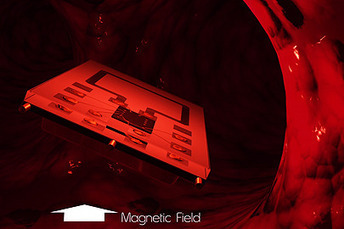
For 50 years, scientists searched for the secret to making tiny implantable devices that could travel through the bloodstream. Engineers at Stanford have demonstrated just such a device.
|
|
Scooped by
Dr. Stefan Gruenwald
February 28, 2012 12:52 PM
|
Medicine has certainly progressed in the past 50 years, but the day when tricorders diagnose every ailment instantly and treatments are tailored to our DNA seems as far off as ever. Eric Topol is trying to bridge that gap. In his new book, The Creative Destruction of Medicine, Topol—the chief academic officer at Scripps Health—calls on patients to demand true digital medicine now. Dr. Topol talks about genetics, gadgets, and his vision of a Khan Academy for doctors. http://tinyurl.com/7fel847
|
|
Scooped by
Dr. Stefan Gruenwald
February 21, 2012 3:44 PM
|
After Van VanderMeer was diagnosed with advanced lung cancer, the results of a genetic test offered some hope. Last year, the 64-year-old lawyer learned that his cancer featured a genetic rearrangement that might render it vulnerable to a drug being tested in clinical trials. But because the experimental drug, crizotinib, was being given only to patients who had failed chemotherapy, VanderMeer had to wait for more than a year to gain access to the drug. Even though VanderMeer's tumours had by then spread to both of his lungs, crizotinib vaporized them within two weeks.
|
|
Scooped by
Dr. Stefan Gruenwald
February 17, 2012 6:56 PM
|
A device that plugs into a smart phone lets clinicians diagnose cancer from the bedside. The nerve-racking wait for cancer-screening results can go on for several days, as clinicians analyze images and biopsies. A new handheld device could significantly shorten that stressful period. Scientists at Massachusetts General Hospital and Harvard Medical School have engineered a portable device that plugs into a smart phone and reduces the time it takes to detect cancer to just an hour. The device takes a small tissue sample and quickly analyzes it for telltale cancer proteins. When the latest prototype was tested on 50 patients with gastric-related cancer, it detected malignancies with 96 percent accuracy—better than existing laboratory-based tissue-sampling tests. http://tinyurl.com/aaumezb
|
|
Scooped by
Dr. Stefan Gruenwald
February 17, 2012 5:00 PM
|
It may look like an ordinary USB memory stick, but a little gadget that can sequence DNA while plugged into your laptop could have far-reaching effects on medicine and genetic research. The UK firm Oxford Nanopore built the device, called MinION, and claims it can sequence simple genomes – like those of some viruses and bacteria – in a matter of seconds. More complex genomes would take longer, but MinION could also be useful for obtaining quick results in sequencing DNA from cells in a biopsy to look for cancer, for example, or to determine the genetic identity of bone fragments at an archaeological dig. The company demonstrated today at the Advances in Genome Biology and Technology (AGBT) conference in Marco Island, Florida, that MinION has sequenced a simple virus called Phi X, which contains 5000 genetic base pairs.
|
|
Rescooped by
Dr. Stefan Gruenwald
from Tracking the Future
February 15, 2012 7:46 PM
|
It could be that we are on the verge of a great deluge of cognitive enhancement. Or it's possible that new brain-enhancing drugs and technologies will be nothing compared to how we've transformed our minds in the past. If it seems that making ourselves "artificially" smarter is somehow inhuman, it may be that similar activities are actually what made us human.
Via Szabolcs Kósa
|
|
Scooped by
Dr. Stefan Gruenwald
February 12, 2012 12:25 PM
|
MIT discovers yet another use for a simple webcam: measuring your pulse rate. It's desktop video-chatting and heart physician in one tiny unit. The work is the result of studies by graduate student Ming-Zher Poh, and it's all about a clever algorithm that looks at a webcam feed of your face and measures subtle brightness changes in your skin over time.
|
|
Scooped by
Dr. Stefan Gruenwald
February 11, 2012 12:35 PM
|
Department of Nanoengineering, University of California, San Diego scientists have developed a “microrocket” that can propel itself through acidic environments, such as the human stomach, without any external energy source, opening new medical and industrial applications.
|
|
Scooped by
Dr. Stefan Gruenwald
February 10, 2012 11:01 AM
|
Since the 1950s, researchers have been trying to mimic the abilities of red blood cells. These flexible discs carry oxygen throughout the body, squeezing through the smallest capillaries to do so. But the physical characteristics of red blood cells, including their doubly concave shape, have made them difficult to copy with precision. A group specializing in drug delivery has found a way to create biodegradable, biocompatible particles with the size, shape, and flexibility of red blood cells. Made of biodegradable and biocompatible polymers and proteins, these particles have the same size, shape, and flexibility as real red blood cells.
|
|
Scooped by
Dr. Stefan Gruenwald
February 9, 2012 7:49 PM
|
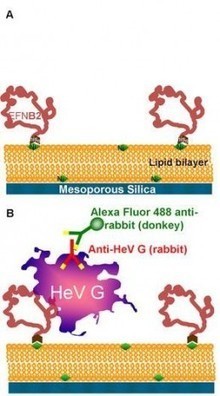
Researchers from the National Institute of Standards and Technology (NIST) and the Weill Cornell Medical College have designed artificial 'protocells' that can lure, entrap and inactivate a class of deadly human viruses. The technique offers a new research tool that can be used to study in detail the mechanism by which viruses attack cells, and might even become the basis for a new class of antiviral drugs.
|
|
Scooped by
Dr. Stefan Gruenwald
February 9, 2012 12:52 PM
|
Surgeon Anthony Atala demonstrates an early-stage experiment that could someday solve the organ-donor problem: a 3D printer that uses living cells to output a transplantable kidney. Using similar technology, Dr. Atala's young patient Luke Massella received an engineered bladder 10 years ago; we meet him onstage. It's exciting to see the development of 3D printing move from little objects to human organs. This advancement illustrates soon many objects will be printable from home - with a printer we drop resources into, or even a sorter that breaks apart other objects to salvage resources for new products.
|
|
Scooped by
Dr. Stefan Gruenwald
February 8, 2012 11:13 AM
|
Are you depressed, checking e-mail and Facebook, or home alone ruminating for hours? Cheer up. Scientists are inventing web-based, mobile and virtual technologies to treat depression and other mood disorders at a new National Institutes of Health-funded Northwestern University Feinberg School of Medicine center. In the works: a virtual human therapist to prevent depression, a medicine bottle that reminds you to take antidepressant medication and tells your doctor if the dosage needs adjusting, and a web-based social network to help cancer survivors relieve sadness and stress.
|
|
Scooped by
Dr. Stefan Gruenwald
February 8, 2012 10:46 AM
|
Why haven't we cured cancer yet? It seems like almost every day, we hear about another miraculous advance in cancer treatment. Drugs that cause tumors to shrink, gene therapies, and even a possible vaccine.
|
|
|
Scooped by
Dr. Stefan Gruenwald
February 28, 2012 7:24 PM
|
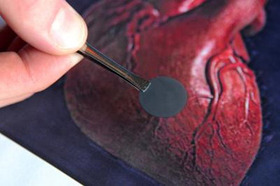
How can you mend a broken heart? Cardiologists have been wrestling with this question for years. The difficulty is that when one suffers a myocardial infarction (heart attack), the lack of blood supply to certain parts of the heart can eventually cause myocardial scarring. Myocardial scarring can lead to potentially life-threatening arrhythmias and increase the risk of a ventricular aneurism. Moreover, the loss of this healthy heart tissue is essentially permanent. Part of the heart literally dies.
|
|
Scooped by
Dr. Stefan Gruenwald
February 22, 2012 11:22 PM
|
Peter Skyllberg was trapped for two months inside his car. Miraculously, the freezing temperatures and scarce oxygen may actually have saved his life
|
|
Scooped by
Dr. Stefan Gruenwald
February 19, 2012 12:27 PM
|
Researchers with the UCLA Department of Radiation Oncology report that radiation treatment — despite killing half of all tumor cells during every treatment — transforms other cancer cells into treatment-resistant breast cancer stem cells.The generation of these breast cancer stem cells counteracts the otherwise highly efficient radiation treatment. If scientists can uncover the mechanisms and prevent this transformation from occurring, radiation treatment for breast cancer could become even more effective
|
|
Scooped by
Dr. Stefan Gruenwald
February 17, 2012 6:52 PM
|
A cure for cancer teems through our veins, but the trick is harnessing the immune system's tumour-destroying cells, say doctors. Now, a US team has developed a new way to turn a patient's T-cells against a deadly, metastasised skin cancer. A 55-year old man who received the immune boost lives tumour-free, more than two years after treatment. "He had a remarkable response," says Cassian Yee, an immunologist at Fred Hutchinson Cancer Research Center in Seattle, Washington, US, who developed the new treatment.
|
|
Rescooped by
Dr. Stefan Gruenwald
from innovation and diversity
February 17, 2012 12:30 PM
|
In the future, implantable computerized dispensaries will replace trips to the pharmacy or doctor’s office, automatically leaching drugs into the blood from medical devices embedded in our bodies. These small wireless chips promise to reduce pain and inconvenience, and they’ll ensure that patients get exactly the amount of drugs they need, all at the push of a button. http://tinyurl.com/73tkcj2
Via Jacek Rajewski
|
|
Scooped by
Dr. Stefan Gruenwald
February 15, 2012 3:39 PM
|
The International Cancer Genome Consortium (ICGC) is to decode the genomes from 25 000 cancer samples and create a resource of freely available data that will help cancer researchers around the world. "The International Cancer Genome Consortium initiative will profoundly alter our understanding of the development of human cancer, across the spectrum of tumour types," said Sir Paul Nurse, cancer scientist and 2001 Nobel Laureate for Physiology or Medicine.
|
|
Scooped by
Dr. Stefan Gruenwald
February 11, 2012 12:37 PM
|
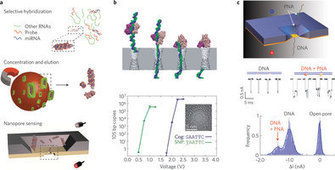
Nanopore analysis is an emerging technique that involves using a voltage to drive molecules through a nanoscale pore in a membrane between two electrolytes, and monitoring how the ionic current through the nanopore changes as single molecules pass through it. This approach allows charged polymers (including single-stranded DNA, double-stranded DNA and RNA) to be analysed with subnanometre resolution and without the need for labels or amplification. Recent advances suggest that nanopore-based sensors could be competitive with other third-generation DNA sequencing technologies, and may be able to rapidly and reliably sequence the human genome for under $1,000. In this article we review the use of nanopore technology in DNA sequencing, genetics and medical diagnostics.
|
|
Scooped by
Dr. Stefan Gruenwald
February 11, 2012 12:13 PM
|
Children’s Hospital Boston recently announced a $25,000 competition for the development of an interpretation and communication system that can deliver genomic information from the lab to physicians and patients. As the cost of genome sequencing continues to fall and may break the $1,000 barrier soon, the issue is no longer about acquiring genetic data but about what all the data means. Scientists around the world have been making progress interpreting the molecular language of DNA but, as the Human Genome Project revealed, the human genome contains at least 25,000 genes, so research can be slow going. Furthermore, what information is obtained and published in journals has a hard time finding its way into practices for physicians to understand and apply toward patient care.
|
|
Scooped by
Dr. Stefan Gruenwald
February 9, 2012 7:51 PM
|
Scientists at the Salk Institute for Biological Studies have identified a gene that tells cells to develop multiple cilia, tiny hair-like structures that move fluids through the lungs and brain. The finding may help scientists generate new therapies that use stem cells to replace damaged tissues in the lung and other organs.
|
|
Scooped by
Dr. Stefan Gruenwald
February 9, 2012 7:47 PM
|
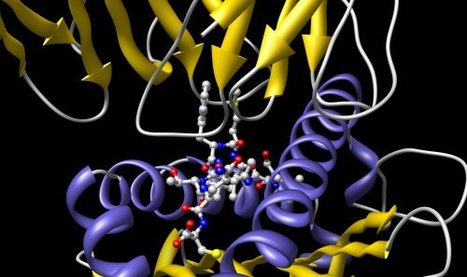
Biologists at the Salk Institute for Biological Studies have deciphered a molecular code that regulates availability of a brain channel that modulates neuronal excitability, a discovery that might aid efforts to treat drug addiction and mental disorders. The study showed that a regulatory factor called SNX27 targets a brain channel protein called GIRK (G-protein-coupled inwardly rectifying potassium channels) for destruction.
|
|
Scooped by
Dr. Stefan Gruenwald
February 9, 2012 12:47 PM
|
In its three-year pilot phase, the Norwegian Cancer Genomics Consortium will sequence the tumour genomes of 1,000 patients in the hope of influencing their treatments. It will also look at another 3,000 previously obtained tumour biopsies to get a better idea of the mutations in different cancers, and how they influence a patient's response to a drug. In a second phase, the project will build the laboratory, clinical and computing infrastructure needed to bring such care to the 25,000 Norwegians who are diagnosed with cancer each year.
|
|
Scooped by
Dr. Stefan Gruenwald
February 8, 2012 10:50 AM
|
MIT neuroscientist Sebastian Seung believes mapping of of the human brain's 100 billion neurons can be done --- one cubic millimeter of brain tissue at a time (http://www.connectomethebook.com/).
|