Your new post is loading...

|
Scooped by
Dr. Stefan Gruenwald
February 11, 2013 9:27 PM
|
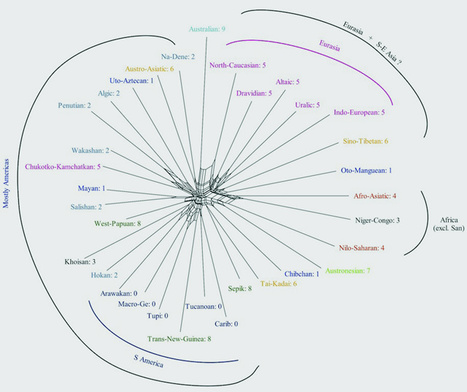
University of British Columbia and Berkeley researchers have used a sophisticated new computer system to quickly reconstruct protolanguages – the rudimentary ancient tongues from which modern languages evolved. University of British Columbia and Berkeley researchers have used a sophisticated new computer system to quickly reconstruct protolanguages – the rudimentary ancient tongues from which modern languages evolved The results, which are 85 per cent accurate when compared to the painstaking manual reconstructions performed by linguists, will be published next week in the Proceedings of the National Academy of Sciences. "We're hopeful our tool will revolutionize historical linguistics much the same way that statistical analysis and computer power revolutionized the study of evolutionary biology," says UBC Assistant Prof. of Statistics Alexandre Bouchard-Côté, lead author of the study. "And while our system won't replace the nuanced work of skilled linguists, it could prove valuable by enabling them to increase the number of modern languages they use as the basis for their reconstructions." Protolanguages are reconstructed by grouping words with common meanings from related modern languages, analyzing common features, and then applying sound-change rules and other criteria to derive the common parent. The new tool designed by Bouchard-Côté and colleagues at the University of California, Berkeley analyzes sound changes at the level of basic phonetic units, and can operate at much greater scale than previous computerized tools. The researchers reconstructed a set of protolanguages from a database of more than 142,000 word forms from 637 Austronesian languages—spoken in Southeast Asia, the Pacific and parts of continental Asia.
|
|
Scooped by
Dr. Stefan Gruenwald
February 5, 2013 11:22 AM
|
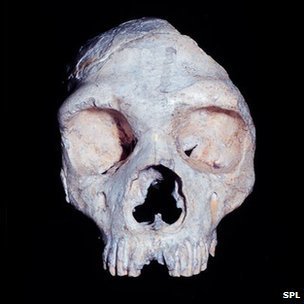
Scientists using a "more reliable" form of radiocarbon dating have re-assessed fossils from the region and found them to be far older than anyone thought. The work appears in the journal PNAS. Its results have implications for when and where we - modern humans - might have co-existed with our evolutionary "cousins", the Neanderthals. "The picture emerging is of an overlapping period [in Europe] that could be of the order of perhaps 3,000-4,000 years - a period over which we have a mosaic of modern humans being present and then Neanderthals slowly ebbing away, and finally becoming extinct," explained co-author Prof Thomas Higham from the Oxford Radiocarbon Accelerator Unit at the University of Oxford, UK. "What our research contributes is that in southern Spain, Neanderthals don't hang on for another 4,000 years compared with the rest of Europe. And the hunch must be that they go extinct in the south of Spain at the same time as everywhere else," he told BBC News. Though once thought to have been our ancestors, the Neanderthals are now considered an evolutionary dead end. They first appear in the fossil record hundreds of thousand of years ago and, at their peak, dominated a wide range, spanning Britain and Iberia in the west to Israel in the south and Uzbekistan in the east. Our own species, Homo sapiens, evolved in Africa, and displaced the Neanderthals after entering Europe somewhere around the 45,000-year mark. No-one can say for sure what, if any, active role modern humans had in the decline of Europe's Neanderthals. What is clear though is that some mixing must have occurred somewhere at some point. This is evident from DNA studies that prove Neanderthals made a small but significant contribution to the genetics of many modern humans. However, scientists think this interbreeding could have occurred outside Europe, in the eastern Mediterranean or Middle East region (the area archaeologists call the "Levant"), and quite probably even deeper in time - some 80,000-90,000 years or so ago.
|
|
Scooped by
Dr. Stefan Gruenwald
January 17, 2013 11:23 AM
|
A new DNA analysis method reveals how ancient skeletons would have looked in the flesh and even predicts hair and eye color.
For years, when museums, textbooks or other outlets attempted to illustrate what a particular ancient human skeleton would have looked like in the flesh, their method was admittedly unscientific—they basically had to make an educated guess. Now, though, a group of researchers from Poland and the Netherlands has provided a remarkable new option, described in an article they published in the journal Investigative Genetics on Sunday. By adapting DNA analysis methods originally developed for forensic investigations, they’ve been able to determine the hair and eye color of humans who lived as long as 800 years ago. The team’s method examines 24 locations in the human genome that vary between individuals and play a role in determining hair and eye color. Although this DNA degrades over time, the system is sensitive enough to generate this information from genetic samples—taken either from teeth or bones—that are several centuries old (although the most degraded samples can provide information for eye color only). As a proof of concept, the team performed the analysis for a number of people whose eye and hair color we already know. Among others, they tested the DNA of Władysław Sikorski, a former Prime Minister of Poland who died in a 1943 plane crash, and determined that Sikorski had blue eyes and blonde hair, which correctly matches color photographs. For example, in the paper, the researchers analyzed the hair and eye color for a female skeleton buried in the crypt of a Benedictine Abbey near Kraków, Poland, sometime between the 12th and 14th centuries. The skeleton had been of interest to archaeologists for some time, since male monks were typically the only people buried in the crypt. The team’s analysis showed that she had brown eyes and dark blond or brown hair. The team is not sure yet just how old a skeleton has to be for its DNA to be degraded beyond use—the woman buried in the crypt was the oldest one tested—so it’s conceivable that it might even work for individuals who’ve been in the ground for more than a millenium. The researchers suggest this sort of analysis could soon become part of a standard anthropological toolkit for evaluating human remains.
|
|
Scooped by
Dr. Stefan Gruenwald
January 8, 2013 10:56 AM
|
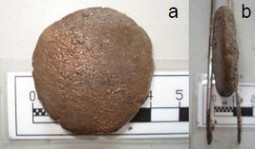
Two thousand years ago, people could not go to the nearest pharmacy for Cold-Eeze, but they appear to have concocted their very own zinc remedy, according to a new analysis of ancient remnants. Scientists have characterized the mineralogical and chemical ingredients of medicine from a 2,200-year-old shipwreck, revealing new insights into the pharmaceutical practices of the ancient world. A number of small, airtight tin containers thought to contain substances for therapeutic use were recovered from the remains of the shipwreck, discovered off the coast of Italy in the late 1980s. When scientists later unsealed one of the small containers, they found six well-preserved, grey tablets, each approximately the shape of a circular makeup sponge. A preliminary DNA analysis of the tablets in 2010 had revealed around a dozen herbal components, including carrots, parsley and wild onion, bound by clay. However, the total composition and medicinal characteristics remained unknown until now. To explore potential medicinal uses, researchers employed a combination of analytical techniques, including mass spectrometry, X-ray diffraction, and spectroscopy. They found that inorganic elements accounted for 80% of the total sample. Zinc, in the form of hydrozincite and smithsonite minerals, was by far the most abundant component, comprising three-quarters of the inorganic elements. Organic components, like wheat flour, vegetable and animal fats, beeswax, pollen grains, and other herbs accounted for the other 20%. “The research highlights the presence of zinc compounds as the active ingredients,” says Gianna Giachi, a chemist at the Superintendence for the Archaeological Heritage of Tuscany, in Florence, Italy.
|
|
Scooped by
Dr. Stefan Gruenwald
December 21, 2012 11:52 AM
|
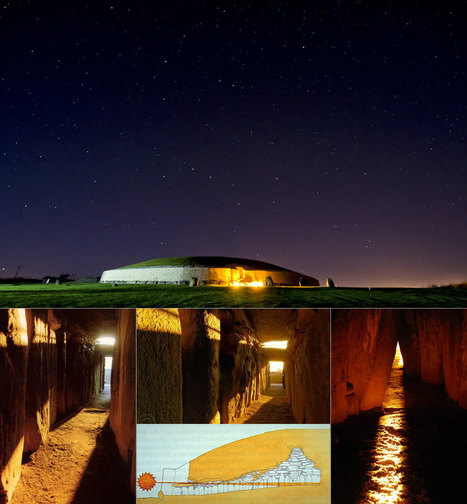
Predating the Maya civilization and Ancient Egypt, on December 21st 2012 the rising sun will align with the entrance to the Ancient Temple of Newgrange and illuminate its tomb. It was constructed 5,200 years ago by people with advanced knowledge of astronomy.
|
|
Scooped by
Dr. Stefan Gruenwald
December 7, 2012 12:59 PM
|
The Romani people—once known as “gypsies” or Roma—have been objects of both curiosity and persecution for centuries. Today, some 11 million Romani, with a variety of cultures, languages and lifestyles, live in Europe—and beyond. But where did they come from? A team of European researchers has now collected data on some 800,000 genetic variants (single nucleotides polymorphisms) in 152 Romani people from 13 different Romani groups in Europe. The team then contrasted the Romani sequences with those already known for more than 4,500 Europeans as well as samples from the Indian subcontinent, Central Asia and the Middle East. According to the analysis, the initial founding group of Romani likely departed from what is now the Punjab state in northwestern India close to the year 500 CE. From there, they likely traveled through Central Asia and the Middle East but appear to have mingled only moderately with local populations there. The subsequent doorway to Europe seems to have been the Balkan area—specifically Bulgaria—from which the Romani began dispersing around 1,100 CE. These travels, however, were not always easy. For example, after the initial group left India, their numbers took a dive, with less than half of the population surviving (some 47 percent, according to the genetic analysis). And once groups of Romani that would go on to settle Western Europe left the Balkan region, they suffered another population bottleneck, losing some 30 percent of their population. Local mixing was not constant over the past several centuries—even in the same groups. The genetic history, as told through this genome-wide analysis, reveals different social mores at different times. For example, Romani populations in Romania, Hungary, Slovakia, Bulgaria and Croatia show genetic patterns that suggest a limited pairing with local populations until recently. Whereas Romani populations in Portugal, Spain and Lithuania have genetic sequences that suggest they had previously mixed with local European populations more frequently but have “higher levels of recent genetic isolation from non-Romani Europeans,” the researchers noted in their paper.
|
|
Scooped by
Dr. Stefan Gruenwald
October 31, 2012 10:34 AM
|
DNA sequencing of 36 complete Y chromosomes has uncovered a previously unknown population explosion that occurred 40 to 50 thousand years ago, between the first expansion of modern humans out of Africa 60 to 70 thousand years ago and the Neolithic expansions of people in several parts of the world starting 10 thousand years ago. This is the first time researchers have used the information from large-scale DNA sequencing to create an accurate family tree of the Y chromosome, from which the inferences about human population history could be made. "We have always considered the expansion of humans out of Africa as being the largest population expansion of modern humans, but our research questions this theory," says Ms Wei Wei, first author from the Wellcome Trust Sanger Institute and the West China University of Medical Sciences. "The out-of-Africa expansion, which happened approximately 60,000 years ago, was extremely large in geographical terms with humans spreading around the globe. Now we've found a second wave of expansion that is much larger in terms of human population growth and occurred over a very short period, somewhere between 40,000 to 50,000 years ago."
|
|
Scooped by
Dr. Stefan Gruenwald
October 11, 2012 6:05 PM
|
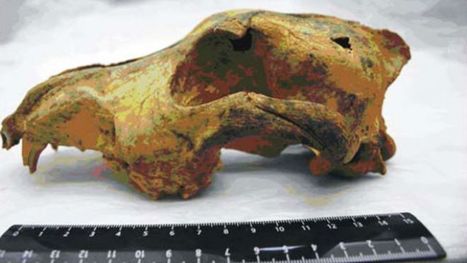
The bond between man and dog has always been extremely evident, an unconditioned friendship, at least from the dog’s part, which has lead the latter to be rightfully often referred to as man’s best friend. But how, why, and when did dogs become such a significant part of our lives. By domesticating farm animals like cattle, pigs or sheep, man has come a long way in sustaining himself, and one can assert that both animal domestication and farming played a major role in man’s socio-cultural and psychological evolution. But dogs? While some parts of the world today consume dog meat, and it’s been proven that some North American cultures devised clothing from fabric made out of dog hair, it’s rather safe to say that dogs weren’t domesticated with a practical goal in mind. Man’s ubiquitous need for company might have been the cause for the first domestication attempts, and one of the first such acts might have taken place in the freezing solitude of a cave in the middle of the last ice age.
Recently, scientists have come across a 33,000 year old dog fossil in Siberia, that bears the oldest signs of domestication by man so far found. A similar find was found in Belgium, when a dog fossil from the same period was discovered. When correlating the two, it seems that dog domestication didn’t result from a single event that than sparked a cultural phenomenon, but rather that it came naturally for man to befriend canines, as these isolated fossils suggest.
|
|
Scooped by
Dr. Stefan Gruenwald
October 8, 2012 1:45 AM
|
Dutch linguists have developed a new method using Bayesian phylogenetic approaches to analyze the evolution of structural features in more than 50 language families. The study explores how stable over time the structural features of languages are – aspects like word order, the inventory of sounds, or plural marking of nouns. “If at least some of them are relatively stable over long time periods, they promise a way to get at ancient language relationships,” the linguists stated in the paper. “But opinion has been divided, some researchers holding that universally there is a hierarchy of stability for such features, others claiming that individual language families show their own idiosyncrasies in what features are stable and which not.” Using a large database and many alternative methods they show that both positions are right: there are universal tendencies for some features to be more stable than others, but individual language families have their own distinctive profile. These distinctive profiles can then be used to probe ancient relations between what are today independent language families. This work thus has implications for our understanding of differential rates of language change, and by identifying distinctive patterns of change it provides a new window into very old historical processes that have shaped the linguistic map of the world. It shows that there is no conflict between the existence of universal tendencies and factors specific to a language family or geographic area.
|
|
Scooped by
Dr. Stefan Gruenwald
September 26, 2012 1:44 PM
|
The Khoe and San peoples in southern Africa play an important role for our understanding of the evolutionary history of humans. These peoples are directly descended from the first branching of the genealogical tree of today’s humans. This is shown in a study led by Uppsala University researchers and being presented in the early online version of the journal Science today. The study is based on an analysis of 2.3 million genetic variants from seven groups of the click-speaking Khoe and San peoples, a total of 220 individuals from southern Africa. The analysis is the largest genetic study ever of the Khoe and San peoples. These peoples belong to a branch that diverged from other peoples at least 100 000 years ago. This was long before modern human´s diaspora from Africa and even long before the evolutionary diversification of Pygmies in Central Africa and before the emergence of the hunters and gatherers of East Africa. The evolutionary history of humans in Africa is much more complex than we have believed so far. Our analyses show deep divergences among the various African peoples, with the deepest divergence involving the Khoe and San peoples, says Mattias Jakobsson, Uppsala University, who directed the study. When modern humans began to spread outside Africa 60-70 000 years ago, there were already clear stratification among African populations. Our data suggest that there was no single geographical origin but that several populations contributed genes to the ancestral population that lead to today’s humans.
|
|
Scooped by
Dr. Stefan Gruenwald
September 19, 2012 6:31 PM
|
In the future, globalization will destroy local races and lower rates of rare traits like blue eyes. According to Stephen Stearns, a Yaleprofessor of ecology and evolutionary biology, before the invention of the bicycle, the average distance between the birthplaces of spouses in England was 1 mile (1.6 kilometers). During the latter half of the 19th century, bikes upped the distance men went courting to 30 miles (48 km), on average. Scholars have identified similar patterns in other European countries. Widespread use of bicycles stimulated the grading and paving of roads, lending credence to the Fugate clan's excuse and making way for the introduction of automobiles. Love's horizons have kept expanding ever since. Stearns says globalization, immigration, cultural diffusion and the ease of modern travel will gradually homogenize the human population, averaging out more and more people's traits. Because recessive traits dependontwo copies of the same gene pairing up in order to get expressed, these traits will express themselves more rarely, and dominant traits will become the norm. In short, blue eyes and pale skin is out, brown eyes and dark skin is in. Already in the United States, another recessive trait, blue eyes, has grown far less common. A 2002 study by the epidemiologists Mark Grant and Diane Lauderdale found that only 1 in 6 non-Hispanic white Americans has blue eyes, down from more than half of the U.S. white population being blue-eyed just 100 years ago. The genetic mixing under way in the United States is also happening to a greater or lesser degree in other parts of the world, the researchers said. In some places, unique physical traits tailored to the habitat still confer an evolutionary advantage and thus might not bow out so easily; in other places, immigration happens much more slowly than it does elsewhere. According to Stearns, perfect homogenization of the human race will probably never occur, but in general, Earth is becoming more and more of a melting pot. A population forged from the long-term mixing of Africans, Native Americans and Europeans serves as an archetype for the future of humanity, Stearns said: A few centuries from now, we're all going to look like Brazilians.
|
|
Scooped by
Dr. Stefan Gruenwald
August 29, 2012 12:25 PM
|
A robust new phylogenetic tree resolves many long-standing issues in primate taxonomy. The genomes of living primates harbor remarkable differences in diversity and provide an intriguing context for interpreting human evolution. The phylogenetic analysis was conducted by international researchers to determine the origin, evolution, patterns of speciation, and unique features in genome divergence among primate lineages. The authors sequenced 54 gene regions from 186 species spanning the primate radiation. The analysis illustrates the importance of resolving complex, species-rich phylogenies using large-scale comparative genomic approach. Patterns of species and gene sequence evolution and adaptation relate not only to human genome organization and genetic disease sensitivity, but also to global emergence of zoonoses (human pathogens originating from non-human disease reservoirs), to mammalian comparative genomics, to primate taxonomy and to species conservation.
|
|
Scooped by
Dr. Stefan Gruenwald
August 17, 2012 10:46 AM
|
A brain in near-perfect condition is found in a body-less skull of a person who was decapitated over 2,600 years ago in England. One of the world's best preserved prehistoric human brains was recently found in a waterlogged U.K. pit. The brain belonged to an Iron Age man who was hanged and then decapitated, with his head falling in the pit shortly thereafter. Scientists believe that submersion in liquid, anoxic environments helps to preserve human brain tissue. The brain is the oldest known intact human brain from Europe and Asia, according to the authors, who also believe it's one of the best-preserved ancient brains in the world. The brain-containing skull was found at Heslington, Yorkshire, in the United Kingdom. O'Connor and her team suspect the site served a ceremonial function that persisted from the Bronze Age through the early Roman period. Many pits at the site were marked with single stakes. The remains of the man were without a body, but the scientists also found the headless body of a red deer that had been deposited into a channel. Laser imaging, chemical analysis and other examinations revealed that the brain naturally preserved over the millennia. The scientists found no evidence for bacterial or fungal activity, and described the tissue as being "odorless…with a resilient, tofu-like texture."
|
|
|
Scooped by
Dr. Stefan Gruenwald
February 10, 2013 12:25 AM
|
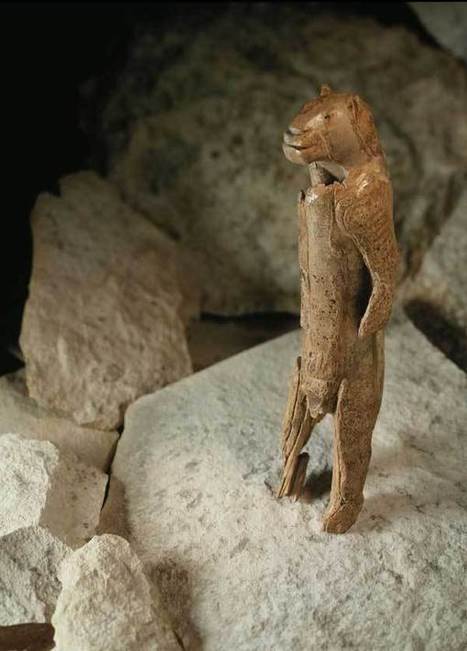
The star exhibit initially promised for the British Museum’s “Ice Age Art” show will not be coming—but for a good reason. New pieces of Ulm’s Lion Man sculpture have been discovered and it has been found to be much older than originally thought, at around 40,000 years. This makes it the world’s earliest figurative sculpture. The story of the discovery of the Lion Man goes back to August 1939, when fragments of mammoth ivory were excavated at the back of the Stadel Cave in the Swabian Alps, south-west Germany. This was a few days before the outbreak of the Second World War. When it was eventually reassembled in 1970, it was regarded as a standing bear or big cat, but with human characteristics.
The ivory from which the figure had been carved had broken into myriad fragments. When first reconstructed, around 200 pieces were incorporated into the 30cm-tall sculpture, with about 30% of its volume missing.
Further fragments were later found among the previously excavated material and these were added to the figure in 1989. At this point, the sculpture was recognised as representing a lion. Most specialists have regarded it as male, although paleontologist Elisabeth Schmid controversially argued that it was female, suggesting that early society might have been matriarchal.
The latest news is that almost 1,000 further fragments of the statue have been found, following recent excavations in the Stadel Cave by Claus-Joachim Kind. Most of these are minute, but a few are several centimetres long. Some of the larger pieces are now being reintegrated into the figure. Even more exciting than the discovery of new pieces, the sculpture’s age has been refined using radio-carbon dating of other bones found in the strata. This reveals a date of 40,000 years ago, while until recently it was thought to be 32,000 years old. Once reconstruction is completed, several tiny, unused fragments of the mammoth ivory are likely to be carbon dated, and this is expected to confirm the result.
This revised dating pushes the Lion Man right back to the oldest sculptures, which have been found in two other caves in the Swabian Alps. These rare finds are dated at 35,000 to 40,000 years, but the Lion Man is by far the largest and most complex piece. A few carved items have been found in other regions which are slightly older, but these have simple patterns, not figuration.
|
|
Scooped by
Dr. Stefan Gruenwald
January 22, 2013 6:43 PM
|
A genetic analysis has shown that Northern European people are a mixture of two very different ancestral populations - and one of these populations is related to Native Americans. The discovery applies to the British, Scandinavians, French and some Eastern Europeans, and explains some genetic similarities among what would otherwise seem to be very divergent groups. "There is a genetic link between the paleolithic population of Europe and modern Native Americans," says Nick Patterson of the Genetic Society of America. "The evidence is that the population that crossed the Bering Strait from Siberia into the Americas more than 15,000 years ago was likely related to the ancient population of Europe." By examining DNA, his team found that one of these ancestral populations was the first farming population of Europe, whose DNA lives on today in relatively unmixed form in Sardinians and the people of the Basque Country, as well as the Druze population in the Middle East. The other ancestral population is likely to have been the initial hunter-gathering population of Europe - very different from the farmers. Today, the hunter-gathering ancestral population of Europe seems to be most in evidence in the people of far Northeastern Siberia and Native Americans.
|
|
Scooped by
Dr. Stefan Gruenwald
January 14, 2013 9:14 PM
|
Australia experienced a wave of migration from India about 4,000 years ago, a genetic study suggests. It was thought the continent had been largely isolated after the first humans arrived about 40,000 years ago until the Europeans moved in in the 1800s. But DNA from Aboriginal Australians revealed there had been some movement from India during this period. The researchers believe the Indian migrants may have introduced the dingo to Australia. By looking at specific locations, called genetic markers, within the DNA sequences, the researchers were able to track the genes to see who was most closely related to whom. They found an ancient genetic association between New Guineans and Australians, which dates to about 35,000 to 45,000 years ago. At that time, Australia and New Guinea were a single land mass, called Sahul, and this tallies with the period when the first humans arrived. But the researchers also found a substantial amount of gene flow between India and Australia. Prof Stoneking from the Max Planck Institute for Evolutionary Anthropology in Leipzig, Germany, said: "We have a pretty clear signal from looking at a large number of genetic markers from all across the genome that there was contact between India and Australia somewhere around 4,000 to 5,000 years ago."
|
|
Scooped by
Dr. Stefan Gruenwald
December 30, 2012 3:58 PM
|
Southern Africa's bushmen, and their relatives the Khoe, veered off on their own path of genetic development 100,000 years ago, according to a new study. The split, gleaned from an analysis of genetic data, is the earliest divergence scientists have discovered in the evolution of modern humans. The Khoe and the San peoples - who speak click languages, and live across a wide swath of southern Africa from Namibia to Mozambique to South Africa - have long fascinated scientists. The San, in particular, were one of the last remaining hunter-gatherer societies, living well into the 20th century in a style anthropologists think was similar to humans' most ancient ancestors. The study published in the journal Science analyses the genes of 220 members of the Khoe and San groups. Researchers looked at 2.3 million genetic variations for each participant, learning important information about the Khoe-San and, more generally, the origins of modern humans.
|
|
Scooped by
Dr. Stefan Gruenwald
December 16, 2012 8:19 PM
|
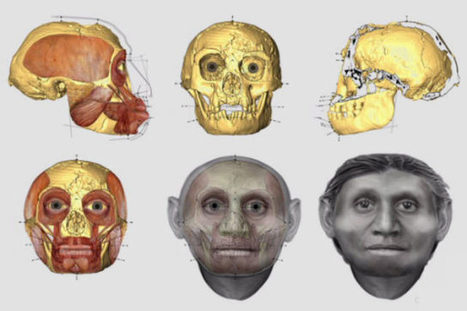
Dr. Susan Hayes, a facial anthropologist and an honorary senior research fellow at the University of Wollongong in Australia, has reported results of the forensic facial reconstruction of mysterious Homo floresiensis, a primitive hominin discovered in 2003 on the Indonesian island of Flores and nicknamed the Hobbit.
Dr. Hayes’ facial approximation of the female Homo floresiensis. Dr. Hayes works predominantly with archaeological remains of anatomically modern humans, including the Lapita People (Vanuatu), the Amerindian Huarpe (Argentina), and the first Maori to inhabit New Zealand. In her new study, Dr. Hayes has used so-called facial approximation techniques to show how Homo floresiensis might have once looked. “In the media it’s often called ‘facial reconstruction’, but because I’m evidence-based and work in archaeological science, we prefer the term ‘facial approximation’,” Dr Hayes said.
|
|
Scooped by
Dr. Stefan Gruenwald
December 5, 2012 9:01 PM
|
European Americans have a larger proportion of potentially harmful variants than African Americans --- probably an artefact of their original migration out of Africa. The human genome has been busy over the past 5,000 years. Human populations have grown exponentially, and new genetic mutations arise with each generation. Humans now have a vast abundance of rare genetic variants in the protein-encoding sections of the genome. A study published in Nature now helps to clarify when many of those rare variants arose. Researchers used deep sequencing to locate and date more than one million single-nucleotide variants — locations where a single letter of the DNA sequence is different from other individuals — in the genomes of 6,500 African and European Americans. The findings confirm their earlier work suggesting that the majority of variants, including potentially harmful ones, were picked up during the past 5,000–-10,000 years.
|
|
Scooped by
Dr. Stefan Gruenwald
October 27, 2012 4:04 PM
|
Unraveling the mystery of why the inhabitants of Ikaria, an island of 99 square miles that is home to almost 10,000 Greek nationals, live so long and so well. In 2000, another island of longevity has been identified - a region of Sardinia’s Nuoro province is a place with the highest concentration of male centenarians in the world. Social structure might turn out to be more important. In Sardinia, a cultural attitude that celebrated the elderly kept them engaged in the community and in extended-family homes until they were in their 100s. Studies have linked early retirement among some workers in industrialized economies to reduced life expectancy.
|
|
Scooped by
Dr. Stefan Gruenwald
October 10, 2012 7:02 PM
|
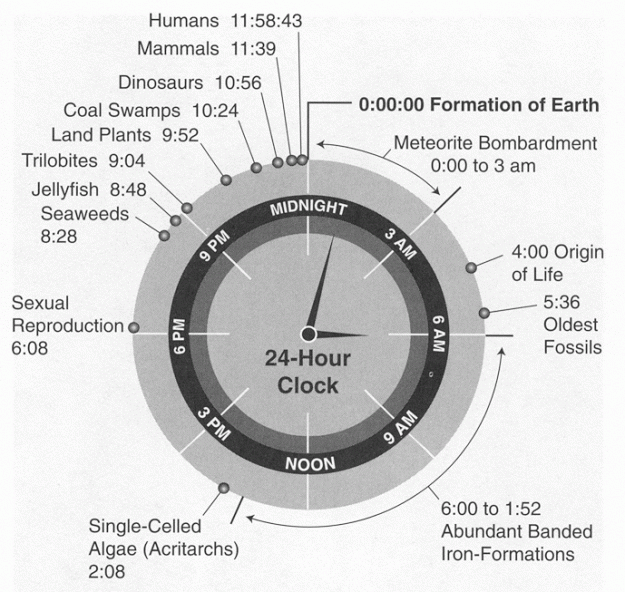
For decades the origin and evolution of life was restricted to the fossil record that recorded hard-shelled life. We now know, through determination of absolute ages by radioactive decay, that this record only record the last 500 m.y. or so of life. Prior to that, life existed as soft-bodied organisms, or even earlier, as single cell bacteria (prokaryotes) or single-celled organisms with nuclei (eukaryotes). The oldest microfossils, composed of single-celled organisms that probably were similar to cyanobacteria, are 3.5 b.y. old, and are found in Western Australia (not the same locality where the very old zircon mineral grains were found). More convincing evidence for life in the Archean comes from fossil layered microbial communities called stromatolites. Although the 3.5 b.y. old microfossils are still debated, people pretty much agree that the fossil record for life is undisputable by about 3.0 b.y., and stromatolites are part of this evidence. Fossil bacteria are universally accepted for the Proterozoic, where the images (and chemical compositions) are much more clear than the fuzzy images for the 3.5 b.y. old microfossils. The Proterozoic microfossils are much more similar to the modern cyanobacteria. The occurrence of cyanobacteria early in earth's history is critical, since their metabolic "waste product" is oxygen, and it was essential to produce high levels of oxygen in the earth's atmosphere before more complex life (which requires different means of metabolism and energy storage) could evolve. In the latest part of the Proterozoic (~ 600 m.y. ago), multi-cellular, complex life is recorded in the fossil record. The figure shown above casts the origin and evolution of life into a 24 hour clock.
|
|
Scooped by
Dr. Stefan Gruenwald
October 2, 2012 7:27 PM
|
People with blue eyes have a single, common ancestor, according to new research. A team of scientists has tracked down a genetic mutation that leads to blue eyes. The mutation occurred between 6,000 and 10,000 years ago. Before then, there were no blue eyes. "Originally, we all had brown eyes," said Hans Eiberg from the Department of Cellular and Molecular Medicine at the University of Copenhagen. The mutation affected the so-called OCA2 gene, which is involved in the production of melanin, the pigment that gives color to our hair, eyes and skin. "A genetic mutation affecting the OCA2 gene in our chromosomes resulted in the creation of a 'switch,' which literally 'turned off' the ability to produce brown eyes," Eiberg said. The genetic switch is located in the gene adjacent to OCA2 and rather than completely turning off the gene, the switch limits its action, which reduces the production of melanin in the iris. In effect, the turned-down switch diluted brown eyes to blue. If the OCA2 gene had been completely shut down, our hair, eyes and skin would be melanin-less, a condition known as albinism. The mutation is what regulates the OCA2 switch for melanin production. And depending on the amount of melanin in the iris, a person can end up with eye color ranging from brown to green. Brown-eyed individuals have considerable individual variation in the area of their DNA that controls melanin production. But they found that blue-eyed individuals only have a small degree of variation in the amount of melanin in their eyes.
|
|
Scooped by
Dr. Stefan Gruenwald
September 26, 2012 1:39 PM
|
In a stunning technical feat, an international team of scientists has sequenced the genome of an archaic Siberian girl 31 times over, using a new method that amplifies single strands of DNA. The sequencing is so complete that researchers have as sharp a picture of this ancient genome as they would of a living person's, revealing, for example that the girl had brown eyes, hair, and skin. "No one thought we would have an archaic human genome of such quality," says Matthias Meyer, a postdoc at the Max Planck Institute for Evolutionary Anthropology in Leipzig, Germany. "Everyone was shocked by the counts. That includes me." That precision allows the team to compare the nuclear genome of this girl, who lived in Siberia's Denisova Cave more than 50,000 years ago, directly to the genomes of living people, producing a "near-complete" catalog of the small number of genetic changes that make us different from the Denisovans, who were close relatives of Neandertals. "This is the genetic recipe for being a modern human," says team leader Svante Pääbo, a paleogeneticist at the institute. Ironically, this high-resolution genome means that the Denisovans, who are represented in the fossil record by only one tiny finger bone and two teeth, are much better known genetically than any other ancient human—including Neandertals, of which there are hundreds of specimens. The team confirms that the Denisovans interbred with the ancestors of some living humans and found that Denisovans had little genetic diversity, suggesting that their small population waned further as populations of modern humans expanded. "Meyer and the consortium have set up the field of ancient DNA to be revolutionized—again," says Beth Shapiro, an evolutionary biologist at the University of California, Santa Cruz, who was not part of the team. Evolutionary geneticist Sarah Tishkoff of the University of Pennsylvania agrees: "It's really going to move the field forward."
|
|
Scooped by
Dr. Stefan Gruenwald
August 30, 2012 5:39 PM
|
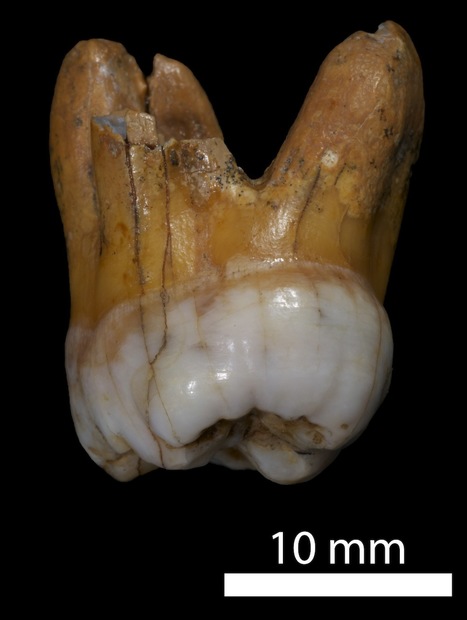
Sequencing our extinct relatives let us know how we differ from chimps and even from our ancestors. The discovery that a second branch of the human family shared Asia with our ancestors and the Neanderthals was a real shock, but the Denisovans have continued to surprise many. All we have of them is a bit of a finger and some molars, but those few fragments have yielded a wealth of DNA, and with it the knowledge that the Denisovans interbred with the ancestors of some modern human populations. Now, with the help of a new approach to sequencing ancient DNA, we actually know more about the Denisovans' genome than we do about Neanderthals'. In the process, we've discovered some of the changes that are distinct to modern humans. We've been attempting to sequence Neanderthal DNA for a while, but progress has been limited by the fact that less than five percent of the DNA we can get out of Neanderthal samples actually came from that individual—most of the DNA is bacterial, and there have been problems with contamination by modern human DNA. But the Denisovan samples have been completely different, as roughly 70 percent of the DNA obtained from them actually comes from the bones. The problem now is that we simply have so few samples that, even with such a fantastic yield, we were going to run out of DNA. So the people behind the genome effort (led by Svante Pääbo of the Max Planck Institute) came up with a new sequencing technique. Instead of working with double-stranded pieces of DNA, they separated the two strands and amplified and sequenced them separately. Now, even if one of the strands was damaged, it was possible to obtain sequence from the other. With the new technique, they were able to sequence each individual base an average of 30 times. Over 99.9 of the bases in the genome were sequenced at least once. That level of coverage is 20 times what we have available for Neanderthals. So, even though we have a host of Neanderthal skeletons and artifacts, we know more about the Denisovan genome. What has it told us? For one, based on the genome, the Denisovans had dark skin, eyes, and hair. It appears modern humans and Denisovans separated about 800,000 years ago. But the lineages came back in contact via the ancestors of modern-day Papuans. A full six percent of the Papuan genome appears to be derived from interbreeding with the Denisovans. And, intriguingly, the amount of Denisovan DNA was a bit lower on the X chromosome. One possible explanation for this if is male Denisovans did most of the mating with modern humans. The Denisovan and modern human lineages should have been picking up mutations at similar rates since the split. But, since this particular Denisovan died a while back, its genome should have ended up with fewer mutations than a modern human genome. By calculating this deficiency and then working back from the split with chimps, the authors estimate that the owner of the finger and molars died about 75,000 years ago. Overall, the changes within genes are relatively few, so we may have to look outside of the areas that code for proteins to find out more. But, as with the Neanderthal sequence, it may be that the differences between us and some of our closest relatives are going to be subtle, and very difficult to spot. And it's possible that there will be fewer than some of us modern humans would like to believe.
|
|
Scooped by
Dr. Stefan Gruenwald
August 29, 2012 11:55 AM
|
Japanese could become extinct in 1,000 years if current population trends continue, according to researchers. Researchers at Tohoku University Graduate School of Economics in Sendai unveiled a population clock — available on the university's website — that showed the nation ending up with no children aged under 15 by May 18, 3011. The calculation is based on the fact that the current population of children aged up to 14 — 16.6 million — is shrinking at the rate of one every 100 seconds, Agence France-Presse reported. The researchers reportedly did not take into account potential disasters, wars, or other global changes. "If the rate of decline continues, we will be able to celebrate the Children's Day public holiday on May 5, 3011 as there will be one child," AFP cited Hiroshi Yoshida, an economics professor at Tohoku University, as saying. "But 100 seconds later there will be no children left. The overall trend is towards extinction, which started in 1975 when Japan's fertility rate fell below two."
|