Your new post is loading...

|
Scooped by
Dr. Stefan Gruenwald
September 18, 2014 11:50 AM
|
Archaeologists set out Monday to use a revolutionary new deep sea diving suit to explore the ancient shipwreck where one of the most remarkable scientific objects of antiquity was found. The so-called Antikythera Mechanism, a 2nd-century BC device known as the world's oldest computer, was discovered by sponge divers in 1900 off a remote Greek island in the Aegean.
The highly complex mechanism of up to 40 bronze cogs and gears was used by the ancient Greeks to track the cycles of the solar system. It took another 1,500 years for an astrological clock of similar sophistication to be made in Europe.
|
|
Scooped by
Dr. Stefan Gruenwald
September 10, 2014 4:01 PM
|
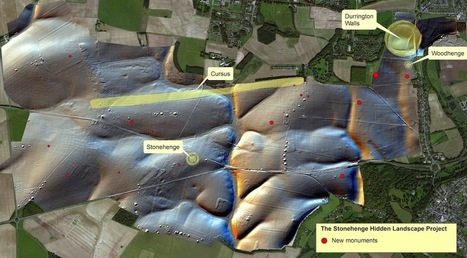
Every summer solstice, tens of thousands of people throng to Stonehenge, creating a festival-like atmosphere at the 4,400-year-old stone monument. For the 2015 solstice, they will have a bit more room to spread out. A just-completed four-year project to map the vicinity of Stonehenge reveals a sprawling complex that includes 17 newly discovered monuments and signs of 1.5 kilometre-round “super henge”.
The digital map — made from high-resolution radar and magnetic and laser scans that accumulated several terabytes of data — shatters the picture of Stonehenge as a desolate and exclusive site that was visited by few, says Vincent Gaffney, an archaeologist at the University of Birmingham, UK, who co-led the effort.
Take the cursus, a 3-kilometer-long, 100-meter-wide ditch north of Stonehenge that was thought to act as barrier. The team’s mapping uncovered gaps in the cursus leading to Stonehenge, as well as several large pits, one of which would have been perfectly aligned with the setting solstice Sun. New magnetic and radar surveys of the Durrington Walls (which had been excavated before) uncovered more than 60 now-buried holes in which stones would have sat, and a few stones still buried.
“They look as they may have been pushed over. That’s a big prehistoric monument which we never knew anything about,” says Gaffney, who calls the structure a ‘super henge.’ His team will discuss the work at the British Science Festival this week, and they plan to present it to the institutions that manage the site. “I’m sure it will guide future excavations,” Gaffney says.
|
|
Scooped by
Dr. Stefan Gruenwald
August 5, 2014 11:40 AM
|
In October 2004, excavation of fragmentary skeletal remains from the island of Flores in Indonesia yielded what was called "the most important find in human evolution for 100 years." Its discoverers dubbed the find Homo floresiensis, a name suggesting a previously unknown species of human.
Now detailed reanalysis by an international team of researchers including Robert B. Eckhardt, professor of developmental genetics and evolution at Penn State, Maciej Henneberg, professor of anatomy and pathology at the University of Adelaide, and Kenneth Hsü, a Chinese geologist and paleoclimatologist, suggests that the single specimen on which the new designation depends, known as LB1, does not represent a new species. Instead, it is the skeleton of a developmentally abnormal human and, according to the researchers, contains important features most consistent with a diagnosis of Down syndrome.
|
|
Scooped by
Dr. Stefan Gruenwald
June 8, 2014 1:43 PM
|
A new study indicates horse-riding Asians wove and wore wool trousers by around 3,000 years ago.
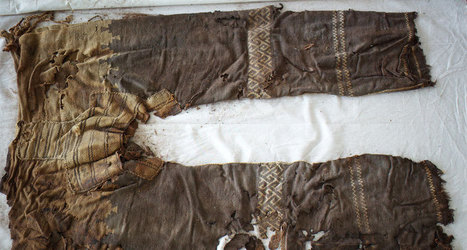
Two men whose remains were recently excavated from tombs in western China put their pants on one leg at a time, just like the rest of us. But these nomadic herders did so between 3,300 and 3,000 years ago, making their trousers the oldest known examples of this innovative apparel, a new study finds.
With straight-fitting legs and a wide crotch, the ancient wool trousers resemble modern riding pants, says a team led by archaeologists Ulrike Beck and Mayke Wagner of the German Archaeological Institute in Berlin. The discoveries, uncovered in the Yanghai graveyard in China’s Tarim Basin, support previous work suggesting that nomadic herders in Central Asia invented pants to provide bodily protection and freedom of movement for horseback journeys and mounted warfare, the scientists report May 22 in Quaternary International.
“This new paper definitely supports the idea that trousers were invented for horse riding by mobile pastoralists, and that trousers were brought to the Tarim Basin by horse-riding peoples,” remarks linguist and China authority Victor Mair of the University of Pennsylvania.
Previously, Europeans and Asians wore gowns, robes, tunics, togas or — as observed on the 5,300-year-old body of Ötzi the Iceman — a three-piece combination of loincloth and individual leggings. A dry climate and hot summers helped preserve human corpses, clothing and other organic material in the Tarim Basin. More than 500 tombs have been excavated in a graveyard there since the early 1970s.
Earlier research on mummies from several Tarim Basin sites, led by Mair, identified a 2,600-year-old individual known as Cherchen Man who wore burgundy trousers probably made of wool. Trousers of Scythian nomads from West Asia date to roughly 2,500 years ago.
|
|
Scooped by
Dr. Stefan Gruenwald
April 28, 2014 11:11 AM
|
U.S. researchers have used satellite images to track the movements and demographic health of an uncontacted tribe in the Brazilian state of Acre.
Remote surveillance is the only method to safely track uncontacted indigenous societies and may offer information that can improve their chances for long-term survival.
The scientists used Google Earth satellite imagery to estimate the area of the fields and the size of the village belonging to the tribe, as well as the living area of the tribe’s temporary housing, and compared that with similar estimates for 71 other Brazilian indigenous communities.
“We found that the estimated population of the village is no more than 40 people. A small, isolated village like this one faces an imminent threat of extinction,” said Dr Rob Walker, the first author of a paper appearing in theAmerican Journal of Human Biology.
“However, forced contact from the outside world is ill-advised, so a non-invasive means of monitoring the tribe is recommended.”
“A remote surveillance program using satellite images taken periodically of this group would help track the movements and demographic health of the population without disrupting their lives,” Dr Walker said.
Using information captured from remote surveillance, scientists can help shape policies that mitigate the threats of extinction including deforestation, illegal mining and colonization in these remote areas.
“Additionally, surveillance also can help locate isolated villages, track patterns of migration over time, and inform and create boundaries or buffer zones that would allow tribes to stay isolated,” Dr Walker added.
Amazonia harbors as many as 100 locations of isolated indigenous peoples.
|
|
Scooped by
Dr. Stefan Gruenwald
April 2, 2014 12:03 PM
|
Charred grains of barley, millet and wheat deposited nearly 5,000 years ago at campsites in the high plains of Kazakhstan show that nomadic sheepherders played a surprisingly important role in the early spread of domesticated crops throughout a mountainous east-west corridor along the historic Silk Road, suggests new research from Washington University in St. Louis.
"Our findings indicate that ancient nomadic pastoralists were key players in an east-west network that linked innovations and commodities between present-day China and southwest Asia," said study co-author Michael Frachetti, PhD, an associate professor of archaeology in Arts & Sciences at Washington University and principal investigator on the research project.
"Ancient wheat and broomcorn millet, recovered in nomadic campsites in Kazakhstan, show that prehistoric herders in Central Eurasia had incorporated both regional crops into their economy and rituals nearly 5,000 years ago, pushing back the chronology of interaction along the territory of the 'Silk Road' more than 2,000 years," Frachetti said.
The study, to be published April 2 in the Proceedings of the Royal Society B, establishes that several strains of ancient grains and peas had made their way across Eurasia thousands of years earlier than previously documented.
While these crops have been known to exist much earlier in ancient China and Southwest Asia, finding them intermingled in the Bronze Age burials and households of nomadic pastoralists provides some of the earliest concrete signs for east-west interaction in the vast expanse of Eurasian mountains and the first botanical evidence for farming among Bronze Age nomads.
Bread wheat, cultivated at least 6,000 years ago in Southwest Asia, was absent in China before 2500 B.C. while broomcorn millet, domesticated 8,000 years ago in China, is missing in southwest Asia before 2000 B.C. This study documents that ancient grains from eastern China and soutwest Asia had made their way to Kazakhstan in the center of the continent by 2700-2500 B.C. (nearly 5,000 years ago).
|
|
Scooped by
Dr. Stefan Gruenwald
February 28, 2014 11:49 AM
|
Genetic and environmental evidence indicates that after the ancestors of Native Americans left Asia, they spent 10,000 years in shrubby lowlands on a broad land bridge that once linked Siberia and Alaska. Archaeological evidence is lacking because it drowned beneath the Bering Sea when sea levels rose.
University of Utah anthropologist Dennis O'Rourke and two colleagues make that argument in the Friday, Feb. 28, issue of the journal Science. They seek to reconcile existing genetic and paleoenvironmental evidence for human habitation on the Bering land bridge – also called Beringia – with an absence of archaeological evidence.
O'Rourke says cumulative evidence indicates the ancestors of Native Americans lived on the Bering land bridge "in the neighborhood of 10,000 years," from roughly 25,000 years ago until they began moving into the Americas about 15,000 years ago once glacial ice sheets melted and opened migration routes.
O'Rourke co-authored the Science Perspective column – titled "Out of Beringia?" – with archaeologist John Hoffecker of the University of Colorado at Boulder, and Scott Elias, a paleoecologist at the University of London.
"Nobody disputes that the ancestors of Native American peoples came from Asia over the coast and interior of the land bridge" during an ice age called the "last glacial maximum," which lasted from 28,000 to at least 18,000 years ago, O'Rourke says,
The ice sheets extended south into the Pacific Northwest, Wyoming, Wisconsin and Ohio. Large expanses of Siberia and Beringia were cold but lacked glaciers.
The absence of archaeological sites and the inhospitable nature of open, treeless landscape known as tundra steppe mean that "archaeologists have not given much credence to the idea there was a population that lived on the Bering land bridge for thousands of years," he adds.
O'Rourke and colleagues say that in recent years, paleoecologists – scientists who study ancient environments – drilled sediment cores from the Bering Sea and Alaskan bogs. Those sediments contain pollen, plant and insect fossils, suggesting the Bering land bridge wasn't just barren, grassy tundra steppe but was dotted by "refugia" or refuges where there were brushy shrubs and even trees such as spruce, birch, willow and alder.
"We're putting it together with the archeology and genetics that speak to American origins and saying, look, there was an environment with trees and shrubs that was very different than the open, grassy steppe. It was an area where people could have had resources, lived and persisted through the last glacial maximum in Beringia," O'Rourke says. "That may have been critical for the people to subsist because they would have had wood for construction and for fires. Otherwise, they would have had to use bone, which is difficult to burn."
|
|
Scooped by
Dr. Stefan Gruenwald
February 13, 2014 1:31 AM
|
When a single genetic mutation first let ancient Europeans drink milk, it set the stage for a continental upheaval. During the most recent ice age, milk was essentially a toxin to adults because — unlike children — they could not produce the lactase enzyme required to break down lactose, the main sugar in milk. But as farming started to replace hunting and gathering in the Middle East around 11,000 years ago, cattle herders learned how to reduce lactose in dairy products to tolerable levels by fermenting milk to make cheese or yogurt. Several thousand years later, a genetic mutation spread through Europe that gave people the ability to produce lactase — and drink milk — throughout their lives. Young children almost universally produce lactase and can digest the lactose in their mother's milk. But as they mature, most switch off the lactase gene. Only 35% of the human population can digest lactose beyond the age of about seven or eight (2). “If you're lactose intolerant and you drink half a pint of milk, you're going to be really ill. Most people who retain the ability to digest milk can trace their ancestry to Europe, where the trait seems to be linked to a single nucleotide in which the DNA base cytosine changed to thymine in a genomic region not far from the lactase gene. There are other pockets of lactase persistence in West Africa (Nature 444, 994–996; 2006), the Middle East and south Asia that seem to be linked to separate mutations3 (so called 'Lactase hotspots'). The single-nucleotide switch in Europe happened relatively recently. Thomas and his colleagues estimated the timing by looking at genetic variations in modern populations and running computer simulations of how the related genetic mutation might have spread through ancient populations4. They proposed that the trait of lactase persistence, dubbed the LP allele, emerged about 7,500 years ago in the broad, fertile plains of Hungary.
|
|
Scooped by
Dr. Stefan Gruenwald
February 5, 2014 11:25 AM
|
There have been multiple plagues throughout history around the world, but none have been so deadly as the Black Death, which killed an estimated one in every four Europeans, and so exerted very strong selection. The Black Death didn’t just wipe out millions of Europeans during the 14th century. It left a mark on the human genome, favoring those who carried certain immune system genes, according to a new study. Those changes may help explain why Europeans respond differently from other people to some diseases and have different susceptibilities to autoimmune disorders.
Geneticists know that human populations evolve in the face of disease. Certain versions of our genes help us fight infections better than others, and people who carry those genes tend to have more children than those who don’t. So the beneficial genetic versions persist, while other versions tend to disappear as those carrying them die. This weeding-out of all but the best genes is called positive selection. But researchers have trouble pinpointing positively selected genes in humans, as many genes vary from one individual to the next.
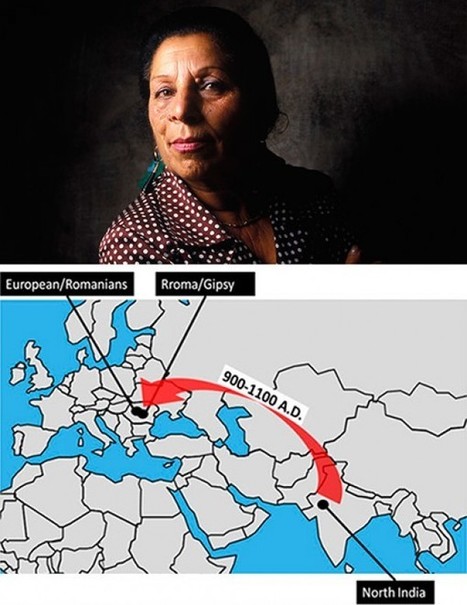
Genetically, the Rroma gypsies in Romania are still quite similar to the northwestern Indians, even though they have lived side by side with the Romanians for a millennium, the team found. But there were 20 genes in the Rroma and the Romanians that had changes that were not seen in the Indians’ versions of those genes, Netea and his colleagues report online today in the Proceedings of the National Academy of Sciences. These genes “were positively selected for in the Romanians and in the gypsies but not in the Indians,” Netea explains. “It’s a very strong signal.”
Those genes included one for skin pigmentation, one involved in inflammation, and one associated with susceptibility to autoimmune diseases such as rheumatoid arthritis. But the ones Netea and Bertranpetit were most excited about were a cluster of three immune system genes found on chromosome 4. These genes code for toll-like receptors, proteins which latch on to harmful bacteria in the body and launch a defensive response. “We knew they must be important for host defense,” Netea says.
What events in history might have favored these versions of the genes in gypsies and Romanians, but not in Indians? Netea and his colleagues tested the ability of the toll-like receptors to react to Yersinia pestis, the bacterium that caused the Black Death. They found that the strength of the immune response varied depending on the exact sequence of the toll-like receptor genes.
Netea and Bertranpetit propose that the Rroma and European Romanians came to have the same versions of these immune system genes because of the evolutionary pressure exerted by Y. pestis. Other Europeans, whose ancestors also faced and survived the Black Death, carried similar changes in the toll-like receptor genes. But people from China and Africa—two other places the Black Death did not reach—did not have these changes. The similarities in the other genes were likely caused by other conditions experienced by Rroma and Europeans, but not Indians.
|
|
Scooped by
Dr. Stefan Gruenwald
January 28, 2014 8:01 PM
|
A hunter-gatherer who lived in Europe some 7,000 years ago probably had blue eyes and dark skin, a combination that has largely disappeared from the continent in the millennia since, scientists said Tuesday. The discovery, published in the journal Nature this week, was made by scientists from the United States, Europe and Australia who analyzed ancient DNA extracted from a male tooth found in a cave in northern Spain.
"We have the stereotype that blue eyes are found only in light-skinned people but that's not necessarily the case," lead researcher Carles Lalueza-Fox said in a telephone interview Tuesday with The Associated Press.
Lalueza-Fox, who works at the Institute of Evolutionary Biology in Barcelona, Spain, said the man's skin would have been darker than most modern Europeans, while his eyes may have resembled those of Scandinavians, his closest genetic relatives today. The combination of blue eyes and dark skin, which is sometimes seen in people with mixed European and African ancestry, may once have been common among ancient European hunter-gatherers, he said.
The researchers also found the man had genes that indicated he was poor at digesting milk and starch, an ability which only spread among Europeans with the arrival of Neolithic farmers from the Middle East. The arrival of this group was also believed to have introduced several diseases associated with proximity to animals — and the genes that helped resist them.
But the hunter-gatherer whose remains were found in the La Brana caves, near Spanish city of Leon, already had some genes that would have helped him fight diseases such as measles, flu and smallpox. This came as a surprise to researchers, indicating that the genetic transition was already under way 7,000 years ago, Lalueza-Fox said. The lack of such genes among pre-Columbian populations in the Americas was one of the reasons they were so susceptible to these diseases when the Europeans arrived.
Researchers are hoping to make further discoveries from a second skeleton found at the site, said Lalueza-Fox.
|
|
Scooped by
Dr. Stefan Gruenwald
January 9, 2014 6:56 PM
|
The Genographic Project is a multiyear research initiative led by National Geographic Explorer-in-Residence Dr. Spencer Wells. Dr. Wells and a team of renowned international scientists are using cutting-edge genetic and computational technologies to analyze historical patterns in DNA from participants around the world to better understand our human genetic roots.
The three components of the project are: - To gather and analyze research data in collaboration with indigenous and traditional peoples around the world
- To invite the general public to join this real-time scientific project and to learn about their own deep ancestry by purchasing a Genographic Project Participation and DNA Ancestry Kit, Geno 2.0
- To use a portion of the proceeds from Geno 2.0 kit sales to further research and the Genographic Legacy Fund, which in turn supports community-led indigenous conservation and revitalization projects
The Genographic Project is anonymous, nonmedical, and nonprofit, and all results are placed in the public domain following scientific peer publication.
Introducing Geno 2.0: Building on the science from the first phase of the Genographic Project, we have developed a cutting-edge new test kit, called Geno 2.0, that enables members of the public to participate in the Genographic Project while learning fascinating insights about their own ancestry. The Geno 2.0 test examines a unique collection of nearly 150,000 DNA identifiers, called “markers,” that have been specifically selected to provide unprecedented ancestry-relevant information.
With a simple and painless cheek swab, you submit a sample of your DNA to our lab. We then run a comprehensive analysis to identify thousands of genetic markers on your mitochondrial DNA, which is passed down each generation from mother to child, to reveal your direct maternal deep ancestry. In the case of men, we will also examine markers on the Y chromosome, which is passed down from father to son, to reveal your direct paternal deep ancestry. In addition, for all participants, we analyze a collection of more than 130,000 other ancestry-informative markers from across your entire genome to reveal the regional affiliations of your ancestry, offering insights into your ancestors who are not on a direct maternal or paternal line.
|
|
Scooped by
Dr. Stefan Gruenwald
December 22, 2013 2:23 AM
|
Could Neanderthals talk? The latest X-ray analysis conducted at the Elettra Sincrotrone Trieste research center (Italy) on the hyoid bone of a Neanderthal Man found in 1989 on the archaeological site of Kebara (Israel), strongly supports this hypothesis. The paper was published in the international journal Plos One, and presents the results of a comparison between the biomechanical properties of the Kebara hyoid and those of the same bone in Homo sapiens. The study was conducted by an international research team with members from Elettra, the University of Chieti and ICTP (Unesco) in Italy, the University of New England and of New South Wales in Australia, and the University of Toronto in Canada.
Scholars dealing with the question of complex language and its evolution, already had focused their attention on the hyoid bone. This is the only bone of the vocal tract and therefore the only part that can fossilize. The hyoid provides support to the larynx and serves as anchor for the tongue and other muscles needed - at least in Homo sapiens - in phonation. It is already known, from the study of external morphology, that the hyoid bones of Homo neanderthalensis and modern man don't differ significantly, as they have a different shape from that of other primates such as chimpanzees. "This observation," says Ruggero D'Anastasio, paleontologist at the University of Chieti, "while being compatible with the use of language by this species of Homo that lived between two hundred and thirty thousand years ago, is in no way sufficient. To be able to say something about the function of the hyoid bone, it was crucial to analyze its internal microstructure, which remodels in response to the mechanical stress to which the bone is subjected."
"Although we plan to analyze other hyoids to further increase the significance of the data," says D' Anastasio, "I believe that this work represents a decisive step forward supporting the hypothesis that the Neanderthals were using complex language. Our results confirm in fact that the hyoid bone of the two species had the same type of biomechanical usage. That this also corresponds to the same function—that is speech—it really seems the most reasonable conclusion. Our results, added to other evidence coming from paleontology, archaeology and paleogenetics, goes in the same direction. The use of pigments, the subdivision of residential areas into zones, the use of animal remains (for instance feathers) as personal ornament and other behaviors that can be interpreted as forms of complex comunication, were attributed before only to Homo sapiens, but recently they have been been confirmed also for the Neanderthals. All this adds up to conclude that our ancestors could actually talk."
"Maybe the Neanderthals could also sing and dance to the sound of music," adds Claudio Tuniz, physicist Claudio Tuniz of the Abdus Salam International Centre for Theoretical Physics in Trieste "as suggested by our recent studies on the flute made from the femur of a bear, found in Slovenia on a site that was frequented by Neanderthals 60 millennia ago."
|
|
Scooped by
Dr. Stefan Gruenwald
December 17, 2013 11:31 AM
|
Base-2 system helped to simplify calculations centuries before Europeans rediscovered it.
When Leibniz demonstrated the advantages of the binary system for computations as early as 1703, he laid the foundation for computing machines. However, is a binary system also suitable for human cognition? One of two number systems traditionally used on Mangareva, a small island in French Polynesia, had three binary steps superposed onto a decimal structure. A recent study shows how this system functions, how it facilitated arithmetic, and why it is unique. The Mangarevan invention of binary steps, centuries before their formal description by Leibniz, attests to the advancements possible in numeracy even in the absence of notation and thereby highlights the role of culture for the evolution of and diversity in numerical cognition.
Cognitive scientist Rafael Nuñez at the University of California, San Diego, points out that the idea of binary systems is actually older than Mangarevan culture. “It can be traced back to at least ancient China, around the 9th century bc”, he says, and it can be found in the I Ching, a millennia-old Chinese text that inspired Leibniz. Nuñez adds that “other ancient groups, such as the Maya, used sophisticated combinations of binary and decimal systems to keep track of time and astronomical phenomena. Thus, the cognitive advantages underlying the Mangarevan counting system may not be unique.”
All the same, say Bender and Beller, a ‘mixed’ system such as this is not easy, nor an obvious set-up to create. “It’s puzzling that anybody would come up with such a solution, especially on a tiny island with a small population,” Bender and Beller say. But they add: “This very fact also demonstrates just how important culture is for the development of numerical cognition — for example, how in this case dealing with big numbers can motivate inventive solutions.”
Nuñez agrees; he adds that the study shows “the primacy of cultural factors underlying the invention of number systems, and the diversity in human numerical cognition”.
|
|
|
Scooped by
Dr. Stefan Gruenwald
September 18, 2014 11:35 AM
|
The modern European gene pool was formed when three ancient populations mixed within the last 7,000 years, Nature reports.
Blue-eyed, swarthy hunters mingled with brown-eyed, pale skinned farmers as the latter swept into Europe from the Near East. But another, mysterious population with Siberian affinities also contributed to the genetic landscape of the continent. The findings are based on analysis of genomes from nine ancient Europeans. Agriculture originated in the Near East - in modern Syria, Iraq and Israel - before expanding into Europe around 7,500 years ago.
Multiple lines of evidence suggested this new way of life was spread by a wave of migrants, who interbred with the indigenous European hunter-gatherers they encountered on the way. But assumptions about European origins were based largely on the genetic patterns of living people. The science of analysing genomic DNA from ancient bones has put some of the prevailing theories to the test, throwing up a few surprises.
In the new paper, Prof David Reich from the Harvard Medical School and colleagues studied the genomes of seven hunter-gatherers from Scandinavia, one hunter whose remains were found in a cave in Luxembourg and an early farmer from Stuttgart, Germany. The hunters arrived in Europe thousands of years before the advent of agriculture, hunkered down in southern refuges during the Ice Age and then expanded during a period called the Mesolithic, after the ice sheets had retreated from central and northern Europe.
Their genetic profile is not a good match for any modern group of people, suggesting they were caught up in the farming wave of advance. However, their genes live on in modern Europeans, to a greater extent in the north-east than in the south.
The early farmer genome showed a completely different pattern, however. Her genetic profile was a good match for modern people in Sardinia, and was rather different from the indigenous hunters. But, puzzlingly, while the early farmers share genetic similarities with Near Eastern people at a global level, they are significantly different in other ways. Prof Reich suggests that more recent migrations in the farmers' "homeland" may have diluted their genetic signal in that region today.
Prof Reich explained: "The only way we'll be able to prove this is by getting ancient DNA samples along the potential trail from the Near East to Europe... and seeing if they genetically match these predictions or if they're different.
|
|
Scooped by
Dr. Stefan Gruenwald
September 3, 2014 3:38 PM
|
Himalayas and tropical regions likely next hotspots for language extinction. The world's roughly 7000 known languages are disappearing faster than species, with a different tongue dying approximately every 2 weeks. Now, by borrowing methods used in ecology to track endangered species, researchers have identified the primary threat to linguistic diversity: economic development. Though such growth has been shown to wipe out language in the past on a case-by-case basis, this is the first study to demonstrate that it is a global phenomenon, researchers say.
Many people know about the threatened polar bear and extinct passenger pigeon, but few have heard of endangered and extinct languages such as Eyak in Alaska, whose last speaker died in 2008, or Ubykh in Turkey, whose last fluent speaker died in 1992, says Tatsuya Amano, a zoologist at the University of Cambridge in the United Kingdom and lead author of the new study. It’s well known that economic growth or the desire to achieve it can drive language loss, he notes—dominant languages such as Mandarin Chinese and English are often required for upward mobility in education and business, and economic assistance often encourages recipients to speak dominant languages. Whereas specific case studies demonstrate such forces at work, such as the transition from Cornish to English in the United Kingdom and from Horom to English in Nigeria, this is the first study to examine losses worldwide and rank economic growth alongside other possible influences, he says.
Data on the number and location of surviving fluent speakers of endangered languages are scant, but Amano and colleagues used the most complete source available—an online repository called Ethnologue—for their analysis, he says. From the database, the group was able to calculate the geographical range, number of speakers, and rate of speaker decline for languages worldwide and map that data within square grid cells roughly 190 km across, spanning the entire globe. Although they were able to obtain information about the range and number of speakers for more than 90% of the world’s estimated 6909 languages, they could only glean details about the rate of decline or growth for 9%, or 649, of those languages, Amano notes.
Next, they looked for correlations between language loss and factors such as a country's gross domestic product and levels of globalization as calculated by an internationally recognized index. In addition, they examined environmental factors such as altitude, which might contribute to language loss by affecting how easily communities can communicate and travel.
Of all the variables tested, economic growth was most strongly linked to language loss, Amano says. Two types of language loss hotspots emerged from the study, published online today in the Proceedings of the Royal Society B. One was in economically well developed regions such as northwestern North America and northern Australia; a second was in economically developing regions such as the tropics and the Himalayas. Certain aspects of geography seemed to act as a buffer or threat, Amano says. For example, recent declines appear to occur faster in temperate climates than in the tropics or mountainous regions—perhaps because it is easier to travel in and out of temperate regions, Amano says. More research is necessary to determine precisely what it is about economic development that kills languages, he adds. Figuring out how growth interacts with other factors such as landscape is the next step, he says.
"This is the first really solid statistical study I've seen which shows principles about language decline that we've know about, but hadn't been able to put together in a sound way," says Leanne Hinton, a linguist at the University of California, Berkeley. Economics is far from the whole story, however, she says. In the United States, for example, current attitudes toward endangered tongues stem in large part from historical policies that forced young American Indians to eschew their native tongues in order to learn English, she says. Generations of disease, murder, and genocide—both historic and present, in some regions—have also played an important role and were not included in the new study's analysis, she says.
Although the study is silent on the subject of interventions to help preserve endangered languages, there is a range of revitalization efforts that can serve as examples, such as the incorporation of the Hawaiian language into school curricula and daily government operations, she says.
|
|
Scooped by
Dr. Stefan Gruenwald
July 29, 2014 12:12 PM
|
The interactive map produced by researchers from Oxford University and UCL (University College London), details the histories of genetic mixing between each of the 95 populations across Europe, Africa, Asia and South America spanning the last four millennia.
The study, published this week in Science, simultaneously identifies, dates and characterises genetic mixing between populations. To do this, the researchers developed sophisticated statistical methods to analyse the DNA of 1490 individuals in 95 populations around the world. The work was chiefly funded by the Wellcome Trust and Royal Society.
'DNA really has the power to tell stories and uncover details of humanity's past,' said Dr Simon Myers of Oxford University's Department of Statistics and Wellcome Trust Centre for Human Genetics, co-senior author of the study.
'Because our approach uses only genetic data, it provides information independent from other sources. Many of our genetic observations match historical events, and we also see evidence of previously unrecorded genetic mixing. For example, the DNA of the Tu people in modern China suggests that in around 1200CE, Europeans similar to modern Greeks mixed with an otherwise Chinese-like population. Plausibly, the source of this European-like DNA might be merchants travelling the nearby Silk Road.'
The powerful technique, christened 'Globetrotter', provides insight into past events such as the genetic legacy of the Mongol Empire. Historical records suggest that the Hazara people of Pakistan are partially descended from Mongol warriors, and this study found clear evidence of Mongol DNA entering the population during the period of the Mongol Empire. Six other populations, from as far west as Turkey, showed similar evidence of genetic mixing with Mongols around the same time.
'What amazes me most is simply how well our technique works,' said Dr Garrett Hellenthal of the UCL Genetics Institute, lead author of the study. 'Although individual mutations carry only weak signals about where a person is from, by adding information across the whole genome we can reconstruct these mixing events. Sometimes individuals sampled from nearby regions can have surprisingly different sources of mixing.
'For example, we identify distinct events happening at different times among groups sampled within Pakistan, with some inheriting DNA from sub-Saharan Africa, perhaps related to the Arab Slave Trade, others from East Asia, and yet another from ancient Europe. Nearly all our populations show mixing events, so they are very common throughout recent history and often involve people migrating over large distances.'
The team used genome data for all 1490 individuals to identify 'chunks' of DNA that were shared between individuals from different populations. Populations sharing more ancestry share more chunks, and individual chunks give clues about the underlying ancestry along chromosomes.
'Each population has a particular genetic 'palette', said Dr Daniel Falush of the Max Planck Institute for Evolutionary Anthropology in Leipzig, co-senior author of the study.
'If you were to paint the genomes of people in modern-day Maya, for example, you would use a mixed palette with colours from Spanish-like, West African and Native American DNA. This mix dates back to around 1670CE, consistent with historical accounts describing Spanish and West African people entering the Americas around that time. Though we can't directly sample DNA from the groups that mixed in the past, we can capture much of the DNA of these original groups as persisting, within a mixed palette of modern-day groups. This is a very exciting development.'
|
|
Scooped by
Dr. Stefan Gruenwald
June 3, 2014 8:52 PM
|
Some 12,000 years ago, a teenage girl took a walk in what’s now the Yucatan Peninsula and fell 190 feet into a deep pit, breaking her pelvis and likely killing her instantly. Over time, the pit—part of an elaborate limestone cave system—became a watery grave as the most recent ice age ended, glaciers melted and sea levels rose.
In 2007, cave divers happened upon her remarkably preserved remains, which form the oldest, most complete and genetically intact human skeleton in the New World. Her bones, according to new research published in Science, hold the key to a question that has long plagued scientists: Who were the first Americans?
Prevailing ideas point to all Native Americans descending from ancient Siberians who moved across the Beringia land bridge between Asia and North America between 26,000 and 18,000 years ago. As time wore on, the thinking goes, these people spread southward and gave rise to the Native American populations encountered by European settlers centuries ago.
But therein lies a puzzle: "Modern Native Americans closely resemble people of China, Korea, and Japan… but the oldest American skeletons do not," says archaeologist and paleontologist James Chatters, lead author on the study and the owner of Applied Paleoscience, a research consulting service based in Bothell, Washington.
The small number of early American specimens discovered so far have smaller and shorter faces and longer and narrower skulls than later Native Americans, more closely resembling the modern people of Africa, Australia, and the South Pacific. "This has led to speculation that perhaps the first Americans and Native Americans came from different homelands," Chatters continues, "or migrated from Asia at different stages in their evolution."
The newly discovered skeleton—named Naia by the divers who discovered her, after the Greek for water—should help to settle this speculation. Though her skull is shaped like those of other early Americans, she shares a DNA sequence with some modern Native Americans. In other words, she’s likely a genetic great-aunt to indigenous people currently found in the Americas.
The new genetic evidence from Naia supports the hypothesis that the first people in America all came from northeast Asia by crossing a land bridge known as Beringia. When sea levels rose after the last Ice Age, the land bridge disappeared.
|
|
Scooped by
Dr. Stefan Gruenwald
April 4, 2014 1:44 PM
|
Before ancient DNA exposed the sexual proclivities of Neanderthals or the ancestry of the first Americans, there was the quagga. An equine oddity with the head of a zebra and the rump of a donkey, the last quagga (Equus quagga quagga) died in 1883. A century later, researchers published1 around 200 nucleotides sequenced from a 140-year-old piece of quagga muscle. Those scraps of DNA — the first genetic secrets pulled from a long-dead organism — revealed that the quagga was distinct from the mountain zebra (Equus zebra).
A few years ago, David Reich discovered a ghost. Reich, a population geneticist at Harvard Medical School in Boston, Massachusetts, and his team were reconstructing the history of Europe using genomes from modern people, when they found a connection between northern Europeans and Native Americans. They proposed that a now-extinct population in northern Eurasia had interbred with both the ancestors of Europeans and a Siberian group that later migrated to the Americas6.
Reich calls such groups ghost populations, because they are identified by the echoes that they leave in genomes — not by bones or ancient DNA. Ghost populations are the product of statistical models, and as such should be handled with care when genetic data from fossils are lacking, says Carlos Bustamante, a population geneticist at Stanford University in California. “When are we reifying something that's a statistical artefact, versus when are we understanding something that's a true biological event?”
An international team had sequenced the genome of Ötzi, a 5,300-year-old frozen corpse found in the Tyrolean Alps of Italy in 1991. The researchers wondered if Bustamante could help them to make sense of the ice-man's ancestry. Together, they showed that Ötzi was more closely related to humans who now live in Sardinia and Corsica than those in central Europe, evidence that the population of Europe when he was alive looked very different to how it does today9.
Bustamante has since plunged into the world of ancient DNA. His team is sequencing samples that chart the arrival of farming in Bulgaria, the transatlantic slave trade in the Americas and dog domestication. The group is developing tools to make sequencing ancient DNA cheaper and easier. “We want to democratize the field,” says Bustamante.
These discoveries are only the beginning. The Akey and Reich teams found that the genomes of east Asians possess, on average, slightly more Neanderthal DNA than do people of European ancestry. Akey sees this as possible evidence that Neanderthals interbred with ancient humans on at least two separate occasions: once with the ancestors of all Eurasians, and later with a population ancestral only to east Asians. And Akey believes that humans are likely to bear genetic scraps from other extinct species, including some that interbred with the ancestors of humans in sub-Saharan Africa.
|
|
Scooped by
Dr. Stefan Gruenwald
March 21, 2014 11:54 AM
|
Natural and social scientists develop new model of how 'perfect storm' of crises could unravel global system.
A new study sponsored by Nasa's Goddard Space Flight Center has highlighted the prospect that global industrial civilization could collapse in coming decades due to unsustainable resource exploitation and increasingly unequal wealth distribution.
Noting that warnings of 'collapse' are often seen to be fringe or controversial, the study attempts to make sense of compelling historical data showing that "the process of rise-and-collapse is actually a recurrent cycle found throughout history." Cases of severe civilizational disruption due to "precipitous collapse - often lasting centuries - have been quite common."
The research project is based on a new cross-disciplinary 'Human And Nature DYnamical' (HANDY) model, led by applied mathematician Safa Motesharrei of the US National Science Foundation-supported National Socio-Environmental Synthesis Center, in association with a team of natural and social scientists. The study based on the HANDY model has been accepted for publication in the peer-reviewed Elsevier journal, Ecological Economics.
It finds that according to the historical record even advanced, complex civilizations are susceptible to collapse, raising questions about the sustainability of modern civilization: "The fall of the Roman Empire, and the equally (if not more) advanced Han, Mauryan, and Gupta Empires, as well as so many advanced Mesopotamian Empires, are all testimony to the fact that advanced, sophisticated, complex, and creative civilizations can be both fragile and impermanent."
By investigating the human-nature dynamics of these past cases of collapse, the project identifies the most salient interrelated factors which explain civilizational decline, and which may help determine the risk of collapse today: namely, Population, Climate, Water, Agriculture, and Energy.
These factors can lead to collapse when they converge to generate two crucial social features: "the stretching of resources due to the strain placed on the ecological carrying capacity"; and "the economic stratification of society into Elites [rich] and Masses (or "Commoners") [poor]" These social phenomena have played "a central role in the character or in the process of the collapse," in all such cases over "the last five thousand years."
|
|
Scooped by
Dr. Stefan Gruenwald
February 27, 2014 3:13 PM
|
Scientists from the University of Cambridge have demonstrated that an abrupt weakening of the summer monsoon affected northwest India 4,100 years ago. The resulting drought coincided with the beginning of the decline of the metropolis-building Indus Civilisation, which spanned present-day Pakistan and India, suggesting that climate change could be why many of the major cities of the civilisation were abandoned.
The research, reported online on 25 February, 2014, in the journal Geology, involved the collection of snail shells preserved in the sediments of an ancient lake bed. By analysing the oxygen isotopes in the shells, the scientists were able to tell how much rain fell in the lake where the snails lived thousands of years ago.
The results shed light on a mystery surrounding why the major cities of the Indus Civilization (also known as the Harappan Civilization, after Harappa, one of the five cities) were abandoned. Climate change had been suggested as a possible reason for this transformation before but, until now, there has been no direct evidence for climate change in the region where Indus settlements were located.
Moreover, the finding now links the decline of the Indus cities to a documented global scale climate event and its impact on the Old Kingdom in Egypt, the Early Bronze Age civilisations of Greece and Crete, and the Akkadian Empire in Mesopotamia, whose decline has previously been linked to abrupt climate change.
"We think that we now have a really strong indication that a major climate event occurred in the area where a large number of Indus settlements were situated," said Professor David Hodell, from Cambridge's Department of Earth Sciences. "Taken together with other evidence from Meghalaya in northeast India, Oman and the Arabian Sea, our results provide strong evidence for a widespread weakening of the Indian summer monsoon across large parts of India 4,100 years ago."
|
|
Scooped by
Dr. Stefan Gruenwald
February 7, 2014 11:17 AM
|
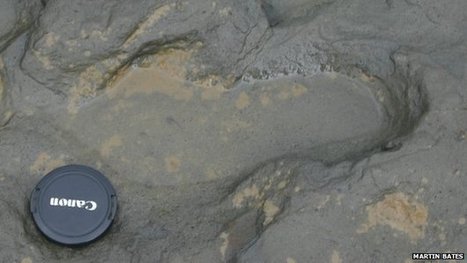
Scientists have discovered the earliest evidence of human footprints outside of Africa, on the Norfolk Coast in the East of England. The footprints are more than 800,000 years old and were found on the shores of Happisburgh. They are direct evidence of the earliest known humans in northern Europe. Details have been published in the Plos One.
The footprints have been described as "one of the most important discoveries, if not the most important discovery that has been made on Britain's shores," by Dr. Nick Ashton of the British Museum. "It will rewrite our understanding of the early human occupation of Britain and indeed of Europe," he said. The markings were first indentified in May last year during a low tide. Rough seas had eroded the sandy beach to reveal a series of elongated hollows.
Such discoveries are very rare. The Happisburgh footprints are the only ones of this age in Europe and there are only three other sets that are older, all of which are in Africa. The hollows were washed away not long after they were identified. The team were, however, able to capture the footprints on video that will be shown at an exhibition at London's Natural History Museum later this month.
|
|
Scooped by
Dr. Stefan Gruenwald
January 30, 2014 5:13 PM
|
Plague may have hastened the fall of the Roman Empire. Its DNA reveals ancient roots in China.
Scientists have reconstructed the genetic code of a strain of bacteria that caused one of the most deadly pandemics in history nearly 1,500 years ago. They did it by finding the skeletons of people killed by the plague and extracting DNA from traces of blood inside their teeth. This plague struck in the year 541, under the reign of the Roman emperor Justinian, so it's usually called the Justinian plague. The emperor actually got sick himself but recovered. He was one of the lucky ones.
"Some of the estimates are that up to 50 million people died," says evolutionary biologistDavid Wagner at Northern Arizona University. "It's thought that the Justinian plague actually led partially to the downfall of the Roman Empire." The plague swept through Europe, northern Africa and parts of Asia. Historians say that when it arrived in Constantinople, thousands of bodies piled up in mass graves. People started wearing name tags so they could be identified if they suddenly collapsed. Given the descriptions, scientists suspected that it was caused by the bacterium Yersinia pestis — the same kind of microbe that later caused Europe's Black Death in the 14th century.
The bacteria get spread by fleas. After someone gets infected from a flea bite, the microbes travel to the nearest lymph node and start multiplying. "And so you get this mass swelling in that lymph node, which is known as a buboe," says Wagner. "That's where the term bubonic plague comes from."
The Justinian plague has been hard to study scientifically. But recently, archaeologists stumbled upon a clue outside Munich.
Housing developers were digging up farmland when they uncovered a burial site with graves that dated as far back as the Justinian plague.
"They found some [graves] that had multiple individuals buried together, which is oftentimes indicative of an infectious disease," Wagner says. "And so in this particular case, we examined material from two different victims. One of those victims was buried together with another adult and a child, so it's presumed that they all may have died of the plague at the same time."
Skeletons were all that was left of the pair. But inside their teeth was dental pulp that still contained traces of blood — and the blood contained the DNA of plague bacteria.
|
|
Scooped by
Dr. Stefan Gruenwald
January 11, 2014 10:46 PM
|
Just offshore from the chock-a-block development of Southern California, archaeologists have discovered some of the oldest sites of human occupation on the Pacific Coast.
On Santa Rosa Island, one of the Channel Islands just 65 kilometers from Santa Barbara, nearly 20 sites have been found that reveal signs of prehistoric human activity, from massive middens of abalone shells to distinctive stone points and tool-making debris.
At least nine of the sites have what archaeologists say is “definitive evidence” of ancient Paleoindian occupation, about half of them having been dated to 11,000 to 12,000 years ago — making their inhabitants some of the earliest known settlers of North America’s West Coast.
“Finding these sites and the definitive evidence for early occupation is crucial and tells us that people were there, occupying the landscape at the end of the Pleistocene,” said Dr. Torben Rick of the Smithsonian Institution, who led the survey that uncovered the sites.
|
|
Scooped by
Dr. Stefan Gruenwald
January 9, 2014 5:52 PM
|
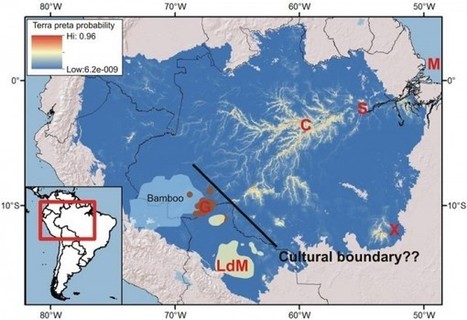
Statistical model predicts signs of agriculture in the rainforest. A new model of the Amazon predicts that terra preta is more likely to be found along rivers in the eastern part of the rainforest. The letters indicate known archaeological sites.
Look around the Amazon rainforest today and it’s hard to imagine it filled with people. But in recent decades, archaeologists have started to find evidence that before Columbus’s arrival, the region was dotted with towns and perhaps even cities. The extent of human settlement in the Amazon remains hotly debated, partly because huge swaths of the 6-million-square-kilometer rainforest remain unstudied by archaeologists. Now, researchers have built a model predicting where signs of pre-Columbian agriculture are most likely to be found, a tool they hope will help guide future archaeological work in the region.
In many ways, archaeology in the Amazon is still in its infancy. Not only is it difficult to mount large-scale excavations in the middle of a tropical rainforest, but until recently, archaeologists assumed there wasn’t much to find. Amazonian soil is notoriously poor quality—all the nutrients are immediately sucked up by the rainforest’s astounding biodiversity—so for many years, scientists believed that the kind of large-scale farming needed to support cities was impossible in the region. Discoveries of gigantic earthworks and ancient roads, however, hint that densely populated and long-lasting population hubs once existed in the Amazon. Their agricultural secret? Pre-Columbian Amazonians enriched the soil themselves, creating what archaeologists call terra preta.
Terra preta—literally “black earth”—is soil that humans have enriched to have two to three times the nutrient content of the surrounding, poor-quality soil, explains Crystal McMichael, a paleoecologist at the Florida Institute of Technology in Melbourne. Although there is no standard definition for terra preta, it tends to be darker than other Amazonian soils and to have charcoal and pre-Columbian pottery shards mixed in. Most of it was created 2500 to 500 years ago. Like the earthworks, terra preta is considered a sign that a particular area was occupied by humans in the pre-Columbian past.
By analyzing location and environmental data from nearly 1000 known terra preta sites and comparing it with information from soil surveys that reported no terra preta, McMichael and her team found patterns in the distribution of the enriched soil. The scientists concluded that terra pretais most likely to be found in central and eastern Amazonia on bluffs overlooking rivers nearing the Atlantic Ocean. It’s less common in western Amazonia, where runoff from the Andes tends to add nutrients to the soil naturally, and in highland areas such as Llanos de Moxos in Bolivia, which is home to many impressive pre-Columbian earthworks. By analyzing the environmental conditions most strongly associated with terra preta, the team was able to build a model predicting where undiscovered terra preta sites are most likely to be found. Overall, they suspect that there is probably about 154,063 km2 of terra preta in the Amazon, composing about 3.2% of the basin’s total area, they report online today in the Proceedings of the Royal Society B.
|
|
Scooped by
Dr. Stefan Gruenwald
December 19, 2013 1:39 AM
|
The most complete sequence to date of the Neanderthal genome, using DNA extracted from a woman's toe bone that dates back 50,000 years, reveals a long history of interbreeding among at least four different types of early humans living in Europe and Asia at that time, according to University of California, Berkeley, scientists.
Population geneticist Montgomery Slatkin, graduate student Fernando Racimo and post-doctoral student Flora Jay were part of an international team of anthropologists and geneticists who generated a high-quality sequence of the Neanderthal genome and compared it with the genomes of modern humans and a recently recognized group of early humans called Denisovans.
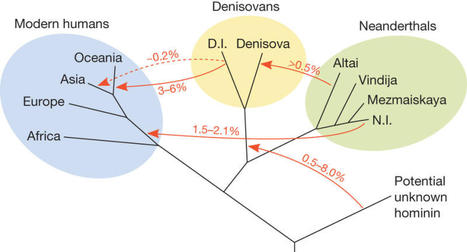
The comparison shows that Neanderthals and Denisovans are very closely related, and that their common ancestor split off from the ancestors of modern humans about 400,000 years ago. Neanderthals and Denisovans split about 300,000 years ago.
Though Denisovans and Neanderthals eventually died out, they left behind bits of their genetic heritage because they occasionally interbred with modern humans. The research team estimates that between 1.5 and 2.1 percent of the genomes of modern non-Africans can be traced to Neanthertals.
Denisovans also left genetic traces in modern humans, though only in some Oceanic and Asian populations. The genomes of Australian aborigines, New Guineans and some Pacific Islanders are about 6 percent Denisovan genes, according to earlier studies. The new analysis finds that the genomes of Han Chinese and other mainland Asian populations, as well as of native Americans, contain about 0.2 percent Denisovan genes.
The genome comparisons also show that Denisovans interbred with a mysterious fourth group of early humans also living in Eurasia at the time. That group had split from the others more than a million years ago, and may have been the group of human ancestors known as Homo erectus, which fossils show was living in Europe and Asia a million or more years ago.
"The paper really shows that the history of humans and hominins during this period was very complicated," said Slatkin, a UC Berkeley professor of integrative biology. "There was lot of interbreeding that we know about and probably other interbreeding we haven't yet discovered."
|