Your new post is loading...

|
Scooped by
Dr. Stefan Gruenwald
April 2, 2012 6:58 PM
|
Several years ago a Swedish-American company called Plantagon unveiled plans for a series of massive skyscraper greenhouses that stood to transform urban farming in large cities. While the spiraling vertical farms seemed too good to be true at the time, Plantagon broke ground on its very first vertical farm a few weeks ago in Linkoping, Sweden! The "Plantscraper" will grow and supply fresh vegetables while creating solutions to some of the most vexing city pollution issues. The design that was finally decided upon for the first Plantagon is no longer a sphere but an elegant tower.
|
|
Scooped by
Dr. Stefan Gruenwald
March 27, 2012 11:59 AM
|
Simulations at Sandia National Laboratories in New Mexico revealed a fusion reactor that surpasses the "break-even" point of energy input versus energy output, indicating a self-sustaining fusion reaction. If new computer simulations pan out in the real world, nuclear fusion, the powersource that makes stars shine, may be a practical possibility here on Earth, scientists say.
|
|
Scooped by
Dr. Stefan Gruenwald
March 19, 2012 9:50 PM
|
They stretch from Syria to Saudi Arabia, can be seen from the air but not the ground, and are virtually unknown to the public. They are the Middle East's own version of the Nazca Lines — ancient "geoglyphs," or drawings, that span deserts in southern Peru — and now, thanks to new satellite-mapping technologies, and an aerial photography program in Jordan, researchers are discovering more of them than ever before. They number well into the thousands. http://tinyurl.com/672wm24
|
|
Scooped by
Dr. Stefan Gruenwald
March 9, 2012 6:35 PM
|
The U.S.has reactors of the same designs that melted down at Fukushima Daiichi, but regulators hope changes could prevent a repeat of Japan's nuclear crisis. Japan still struggles with the effects of a powerful earthquake, devastating tsunami and multiple meltdowns at the Fukushima Daiichi nuclear power plant. http://tinyurl.com/8ynuk6q
|
|
Scooped by
Dr. Stefan Gruenwald
February 29, 2012 11:12 AM
|
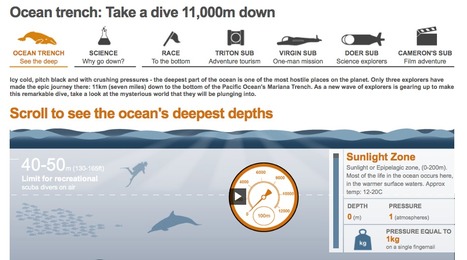
Icy cold, pitch black and with crushing pressures - the deepest part of the ocean is one of the most hostile places on the planet.
|
|
Scooped by
Dr. Stefan Gruenwald
February 24, 2012 2:22 PM
|
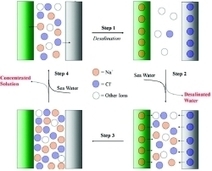
For the first time, researchers have designed an electrochemical cell that can desalinate seawater. They think that its cost and efficiency eventually could improve on standard techniques of purifying seawater. Worldwide demand for freshwater is skyrocketing as the population increases. Many of today’s desalination plants use reverse osmosis or evaporation, both of which require enormous amounts of energy to supply heaters or high-pressure pumps. To find cheaper, room-temperature, energy-efficient solutions, many researchers are looking to nanomaterials and electrochemistry.
|
|
Rescooped by
Dr. Stefan Gruenwald
from Tracking the Future
February 14, 2012 12:01 PM
|
The combined effects of climate change, energy scarcity, and water paucity require that we radically rethink our agricultural systems. Countries can and must reorient their agricultural systems toward modes of production that are not only highly productive, but also highly sustainable. Following the 2008 global food price crisis, many developing countries have adopted new food security policies and have made significant investments in their agricultural systems. Global hunger is also back on top of the international agenda. However, the question is not only how much is done, but also how it is done—and what kinds of food systems are now being rebuilt.
Via Szabolcs Kósa
|
|
Rescooped by
Dr. Stefan Gruenwald
from Singularity Scoops
February 9, 2012 6:20 PM
|
Chinese manufacturers make about 50 million solar panels a year --- over half the world's supply in 2010 --- and include four of the world's top five.
Via Frederic Emam-Zade Gerardino
|
|
Scooped by
Dr. Stefan Gruenwald
February 6, 2012 4:46 PM
|
Enough solar energy strikes the earth in one hour to power our civilization for a year, and futurists like Ray Kurzweil see us moving to an all-solar civilization in the span of a single human lifetime. Leaves are the ultimate solar panel. If we're going to power more of the world with the sun, we're going to need to imitate plants, one way or another. There are a number of competing visions for how a solar leaf will work and what it might be made from. Daniel Nocera at MIT is working on a combination of catalysts that use sunlight to--like a leaf--directly convert water into hydrogen. Another group of MIT researchers have successfully printed solar cells onto paper, conjuring visions of a future in which solar cells are as cheap as the morning paper.
|
|
Scooped by
Dr. Stefan Gruenwald
February 4, 2012 10:10 AM
|
Antarctica makes up more than 10 percent of the world's land mass, but it was long assumed that -- except for some hardy penguins -- it had virtually no life. With ice and snow blanketing virtually the entire continent, the environment was believed to be just too harsh and barren to support anything beyond occasional human visitors.
|
|
Scooped by
Dr. Stefan Gruenwald
February 2, 2012 12:50 PM
|
'By this time next week, the world will have 7 billion people in it, and this population growth will fundamentally change the way populations use resources like energy, water and food'
|
|
Scooped by
Dr. Stefan Gruenwald
February 1, 2012 11:33 AM
|
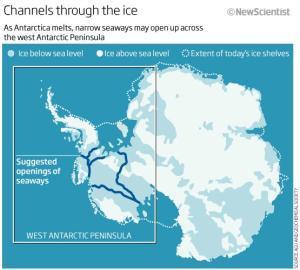
Without its icy cover, much of west Antarctica would lie beneath sea level, partly because the ice has weighed down the continent. If, when Earth's climate was warmer, Antarctica lost significant quantities of ice, areas of the ice sheet may have become thin and buoyant enough to float above the rocky continent. Seawater would then have flooded beneath the ice and created narrow channels across the continent between chunks of rock that retained their icy caps.
|
|
|
Scooped by
Dr. Stefan Gruenwald
March 28, 2012 10:43 AM
|
Innovative 3-D designs from an MIT team can more than double the solar power generated from a given area. Two small-scale versions of three-dimensional photovoltaic arrays were among those tested by Jeffrey Grossman and his team on an MIT rooftop to measure their actual electrical output throughout the day.
|
|
Scooped by
Dr. Stefan Gruenwald
March 20, 2012 3:02 PM
|
The world's oceans are turning acidic at what could be the fastest pace of any time in the past 300 million years, even more rapidly than during a monster emission of planet-warming carbon 56 million years ago. http://tinyurl.com/7b2xaa2
|
|
Scooped by
Dr. Stefan Gruenwald
March 9, 2012 9:56 PM
|
In recent years the number of large objects tracked by U.S. military sensors and listed in the official government catalogue has reached an all-time high of around 15,000 pieces of debris, plus about 1,000 active satellites. This growth in space debris has become a concern because of the threat posed to satellites and to piloted spacecraft. The very high speed of objects in orbit means that debris as small as a centimeter can seriously damage or destroy a satellite. And debris can linger in orbit for decades or longer at high altitudes so it builds up as more is produced. http://tinyurl.com/7v7fe5t
|
|
Rescooped by
Dr. Stefan Gruenwald
from Science News
March 2, 2012 7:28 PM
|
Scientists inspired by a camel's nostrils are set to achieve the impossible and grow a man-made forest in the desert. The £3.3 million giant open-air greenhouse in Qatar will bring plantlife to one of the most inhospitable spots on earth and it is all thanks to the humped mammal's nose. Using a trick of nature the Sahara Forest Project will use surface water and cold water pumped up from 200 metres below the sand to feed trees, vegetables and algae.
Via Sakis Koukouvis
|
|
Rescooped by
Dr. Stefan Gruenwald
from Science News
February 24, 2012 7:42 PM
|
|
|
Scooped by
Dr. Stefan Gruenwald
February 15, 2012 8:39 PM
|
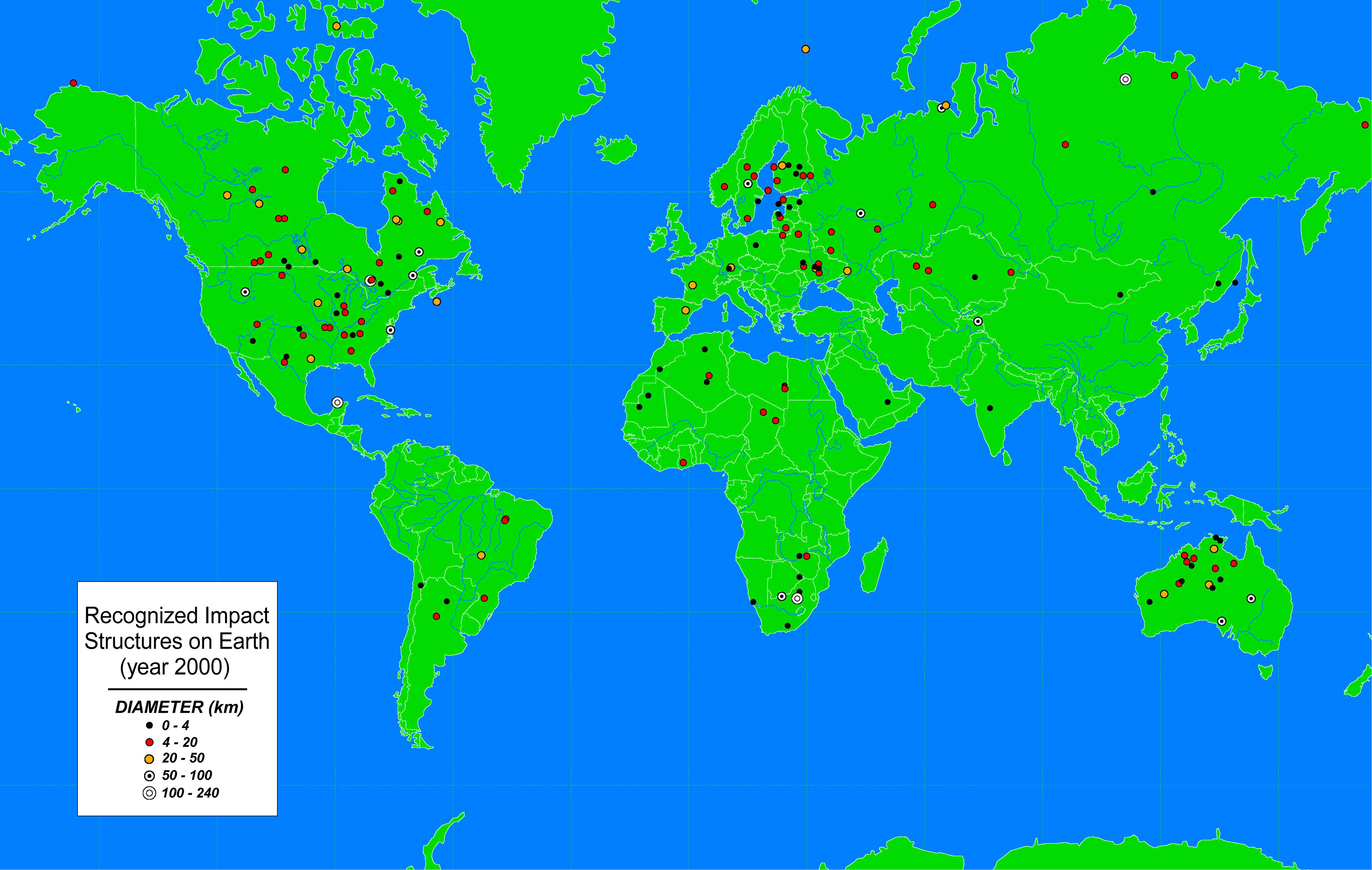
Recognized impact structures throughout the world
|
|
Rescooped by
Dr. Stefan Gruenwald
from Tracking the Future
February 14, 2012 11:59 AM
|
Dutch agricultural company PlantLab wants to change almost everything you know about growing plants. Instead of outdoors, they want farms to be in skyscrapers, warehouses, or underground using hydroponics or other forms of controlled environments. Instead of sunlight they use red and blue LEDs. Water? They need just 10% of the traditional requirements.
Via Szabolcs Kósa
|
|
Scooped by
Dr. Stefan Gruenwald
February 8, 2012 11:00 AM
|
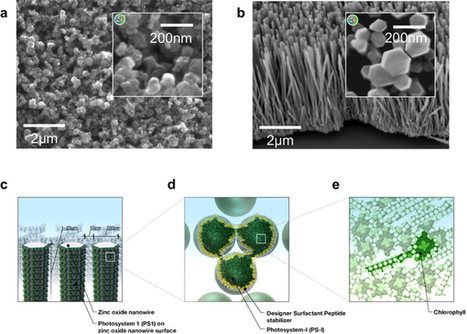
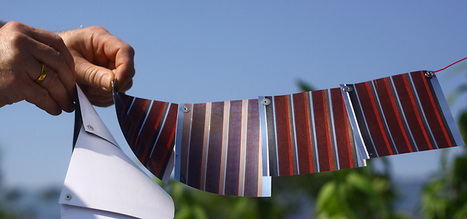
Within a few years, people in remote villages in the developing world may be able to make their own solar panels, at low cost, using otherwise worthless agricultural waste as their raw material. The new system’s efficiency is 10,000 times greater than in the previous version — although in converting just 0.1 percent of sunlight’s energy to electricity, it still needs to improve another tenfold or so to become useful.
|
|
Scooped by
Dr. Stefan Gruenwald
February 4, 2012 3:13 PM
|
Scientists believe that 80 percent of the volcanic eruptions on Earth take place in the ocean. Most of these volcanoes are thousands of feet deep, and difficult to find. But in May of 2009, scientists captured the deepest ocean eruption ever found. Nearly 4000 feet below the surface of the Pacific Ocean — in an area between Samoa, Fiji and Tonga - the West Mata volcano was discovered. The explosions of molten rock were spectacular. This volcano was producing Boninite lavas — believed to be among the hottest erupting on Earth.
|
|
Rescooped by
Dr. Stefan Gruenwald
from Tomorrow Now
February 4, 2012 12:24 AM
|
"Now we are in the 6th mass extinction event, which is a result of a competition for resources between one species on the planet – humans – and all others. The process towards extinction is mainly caused by habitat degradation, whose effect on biodiversity is worsened by the ongoing human-induced climate change."
Via Amanda Stoel
|
|
Scooped by
Dr. Stefan Gruenwald
February 1, 2012 1:40 PM
|
Nothing compares with the giant crystals found in Cueva de los Cristales, or Cave of Crystals. The limestone cavern and its glittering beams were discovered in 2000 by a pair of brothers drilling nearly a thousand feet below ground in the Naica mine, one of Mexico's most productive, yielding tons of lead and silver each year. The geologic processes that create lead and silver also provide raw materials for these gigantic crystals,. But as news spread of the massive crystals' discovery, the question confronting scientists became: How did crystals ever grow so big?
|
|
Scooped by
Dr. Stefan Gruenwald
February 1, 2012 2:57 AM
|
By the time the next billion people are added to the world's population, it will not only be a more crowded place but a perceptibly different one in terms of geography, age and modes of living on this planet. Yet even a small divergence from the projected fertility rates could spell very different outcomes.
|








![A Minefield in Earth Orbit: How Space Debris Is Spinning Out of Control [Interactive] | Amazing Science | Scoop.it](https://img.scoop.it/bBd7UGZT4eoQEJLXoRkwGDl72eJkfbmt4t8yenImKBVvK0kTmF0xjctABnaLJIm9)