Your new post is loading...

|
Scooped by
Dr. Stefan Gruenwald
August 8, 2018 11:33 AM
|
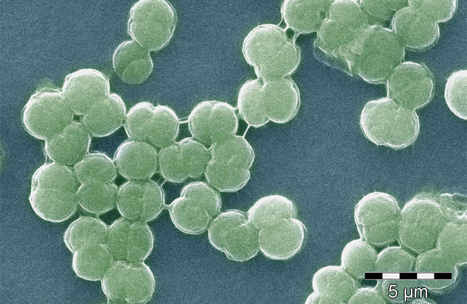
The oxygenation of Earth’s atmosphere was thanks, in part, to iron and silica particles in ancient seawater, according to a new study by geomicrobiologists at the University of Alberta. But these results solve only part of this ancient mystery. Early organisms called cyanobacteria produced oxygen through oxygenic photosynthesis, resulting in the oxygenation of Earth’s atmosphere. But cyanobacteria needed protection from the sun’s UV radiation in order to evolve. That’s where iron and silica particles in ancient seawater come in, according to Aleksandra Mloszewska, a former PhD student who conducted this research under the supervision of Kurt Konhauser, professor in the Department of Earth and Atmospheric Sciences, and George Owttrim, professor in the Department of Biological Sciences. The research team characterized the effect of UV stress on cyanobacteria and the degree of radiation through the seawater medium through a combination of microbiological, spectroscopic, geochemical and modeling techniques. Their results show that the presence of high silica and iron concentrations in early sea water allowed for the formation of iron-silica precipitates that remained suspended in the ocean for extended periods of time. “In effect, the iron-silica particles acted as an ancient ‘sunscreen’ for the cyanobacteria, protecting them from the lethal effects of direct UV exposure,” said Konhauser, the senior author from UAlberta. “This was critical on the early Earth before a sufficiently thick ozone layer was established that could enable marine plankton to spread across the globe, as is the case today.”
|
|
Scooped by
Dr. Stefan Gruenwald
July 9, 2018 8:01 PM
|
Researchers in Argentina have discovered what they say is the oldest-known giant dinosaur and it’s altering the way paleontologists view the evolution of dinosaurs as a whole.
A study recently published in Nature indicates the newly-discovered Ingentia prima is three times the size of the largest previously discovered dinosaur species from the Triassic period and would have weighed up to nine tonnes as an adult.
With this discovery, researchers are now rethinking the evolution of dinosaurs, as they previously believed giant dinosaurs didn’t exist until 25 million years later.
"Before this discovery, gigantism was considered to have emerged during the Jurassic period, approximately 180 million years ago, but Ingentia prima lived at the end of the Triassic, between 210 and 205 million years ago,” Cecilia Apaldetti, researcher at the University of San Juan and the study’s principal author, said in a news release.
For most dinosaurs, gigantism proved to be an evolutionary survival tool, especially among herbivores who could use their size as a form of defence against predators.
The researchers say the Ingentia prima, which loosely translates to “first giant,” was a four-legged herbivore that grew cyclically, meaning it would grow quickly for stretches of time and then stop growing for similar stretches, kind of like a tree.
|
|
Scooped by
Dr. Stefan Gruenwald
June 13, 2018 7:52 PM
|
Nitrogen fixation in the surface ocean impacts global marine nitrogen bioavailability and thus microbial primary productivity. Until now, cyanobacterial populations have been viewed as the main suppliers of bioavailable nitrogen in this habitat. Although PCR amplicon surveys targeting the nitrogenase reductase gene have revealed the existence of diverse non-cyanobacterial diazotrophic populations, subsequent quantitative PCR surveys suggest that they generally occur in low abundance. Now, a team of scientists used state-of-the-art metagenomic assembly and binning strategies to recover nearly one thousand non-redundant microbial population genomes from the TARA Oceans metagenomes. Among these, they provided the first genomic evidence for non-cyanobacterial diazotrophs inhabiting surface waters of the open ocean, which correspond to lineages within the Proteobacteria and, most strikingly, the Planctomycetes. Members of the latter phylum are prevalent in aquatic systems, but have never been linked to nitrogen fixation previously. Moreover, using genome-wide quantitative read recruitment, the group of scientists were able to demonstrate that the discovered diazotrophs were not only widespread but also remarkably abundant (up to 0.3% of metagenomic reads for a single population) in both the Pacific Ocean and the Atlantic Ocean northwest. These results extend decades of PCR-based gene surveys, and substantiate the importance of heterotrophic bacteria in the fixation of nitrogen in the surface ocean.
|
|
Scooped by
Dr. Stefan Gruenwald
May 28, 2018 2:14 PM
|
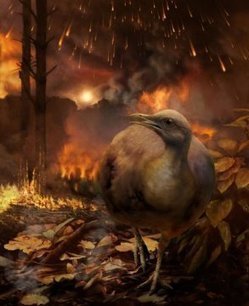
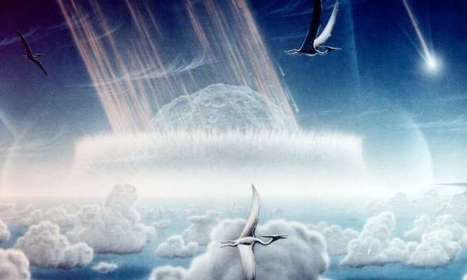
Sixty-six million years ago, the world burned. An asteroid crashed to Earth with a force one million times larger than the largest atomic bomb, causing the extinction of the dinosaurs. But dinosaurs weren't the only ones that got hit hard -- in a new study, scientists learned that the planet's forests were decimated, leading to the extinction of tree-dwelling birds. "Looking at the fossil record, at plants and birds, there are multiple lines of evidence suggesting that the forest canopies collapsed," says Regan Dunn, a paleontologist at the Field Museum in Chicago and a co-author on the study in Current Biology . "Perching birds went extinct because there were no more perches. We drew on a variety of approaches to stitch this story together," said Daniel Field, the paper's lead author, of the Milner Centre for Evolution at the University of Bath. "We concluded that the temporary elimination of forests in the aftermath of the asteroid impact explains why arboreal birds failed to survive across this extinction event. The ancestors of modern arboreal birds did not move into the trees until forests had recovered from the extinction-causing asteroid." The project's pollen expert, Antoine Bercovici of the Smithsonian Institution and the Denver Museum of Nature and Science, helped determine that the world's forests were destroyed by looking at microscopic fossils of pollen and spores. Dunn explains, "After a disaster like a forest fire or a volcanic eruption, the first plants to come back are the fastest colonizers -- especially ferns." That's because ferns don't sprout from seeds, but from spores, which are much smaller -- just a single cell. "Spores are minuscule, the size of a grain of pollen, so they're easily dispersed. They get picked up by the wind and go further than seeds can, and all they need to grow is a wet spot. The spores are tiny -- you could fit four across a single strand of your hair," says Dunn. "To see them, we take a sample of rock from the time frame just after the collision and dissolve it in acid. Then we purify it so that all that remains is the organic debris, like pollen, spores and little leaf bits, then we look at them under a microscope." Immediately after the asteroid hit, the fossil record shows the charcoal remains of burnt trees, and then, tons of fern spores. An abundance of fern spores in the fossil record often comes on the heels of a natural disaster that destroyed larger plants like trees. "Our study examined the fossil record from New Zealand, Japan, Europe and North America, which showed there was a mass deforestation across the globe at the end of the Cretaceous period," says co-author Bercovici. And with no more trees, the scientists found, tree-dwelling birds went extinct. The birds that did survive were ground-dwellers -- birds whose fossilized remains show longer, sturdier legs like we see in modern ground birds like kiwis and emus. The Cretaceous equivalent of robins and sparrows, with delicate little legs made for perching on tree branches, had no place to live. "Today, birds are the most diverse and globally widespread group of terrestrial vertebrate animals -- there are nearly 11,000 living species," says Field. "Only a handful of ancestral bird lineages succeeded in surviving the mass extinction event 66 million years ago, and all of today's amazing living bird diversity can be traced to these ancient survivors."
|
|
Scooped by
Dr. Stefan Gruenwald
May 2, 2018 1:47 PM
|
A newly found "transitional" bird fossil sheds light on a pivotal point in the pathway from dinosaurs to modern birds. Ichthyornis dispar lived in North America about 86 million years ago. The seagull-sized bird had a beak and a brain much like modern birds, but the sharp teeth and powerful jaws of dinosaurs like Velociraptor. "It shows us what the first bird beak looked like," said Bhart-Anjan Bhullar of Yale University, a study researcher. "It's a real mosaic of features, a transitional form." It has long been known that birds evolved from dinosaurs in what was a slow gradual process, involving feathers, wings and beaks. Evidence for feathers has shown up in the fossil record, but it has proved very difficult to study the anatomy of the tiny delicate skulls of ancient birds. The researchers combined fossil evidence from the complete skull and two previously overlooked cranial fossils with the latest CT scanning techniques to build an advanced 3D model of the skull of the primitive bird. As study researcher Daniel Field, from the University of Bath, put it, most skull fossils are "squashed flat during the fossilization process". He said the "extraordinary new specimen", which was discovered only recently, reveals similar brain proportions to that of a modern bird, while other parts of the skull more closely resemble those of predatory dinosaurs. Half-bird, half-dinosaur
Dr Steve Brusatte of the University of Edinburgh, who is not connected with the research, described the study as a game-changer in how we understand the evolution of the bird beak and brain. "The beaks of these primitive birds were very small and seem to have been evolving to take over some of the functions of the hand, like manipulating food and cleaning the feathers, that became impossible once the hands were incorporated into the wing," he said. "This helps to show that the evolution of birds from dinosaurs was a long and gradual process - it didn't just happen overnight, and for much of the Age of Dinosaurs there would have existed these creatures that looked half-dinosaur, half-bird." The famous naturalist Charles Darwin read about the fossil and said the work on "old birds" afforded support for the theory of evolution. A century or so on, the strange bird is filling in the gaps in our knowledge of these "extraordinary flying machines".
|
|
Rescooped by
Dr. Stefan Gruenwald
from Geology
April 25, 2018 2:22 PM
|
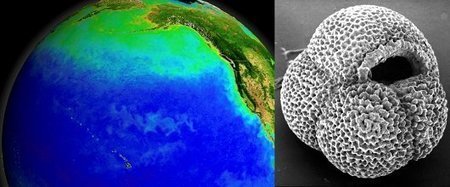
Changes in the circulation of the North Pacific Ocean about 15,000 years ago released large amounts of CO2 to the atmosphere, helping warm the planet and end the last Ice Age, according to research by scientists at the University of St Andrews. The new study, published today (23 April) in Nature Geoscience, also found that the changes in circulation resulted in a reduction of the amount of oxygen in the deep ocean. The findings will help scientists understand the processes controlling the exchange of CO2 and oxygen between the ocean and atmosphere. The researchers measured the chemical composition of the shells of tiny fossil plankton, called foraminifera, which they used to reconstruct the exchange of CO2 between the North Pacific Ocean and atmosphere at the end of the last Ice Age, a time when carbon dioxide levels in the atmosphere increased. They found the North Pacific released large amounts of CO2 to the atmosphere about 15,000 years ago, a time when ocean currents in the Atlantic were also changing rapidly. Findings showed that the release of CO2 by the North Pacific was caused by a change in its circulation and could explain a drop in oxygen levels in the Pacific Ocean seen at the same time, first discovered over 20 years ago. Scientists are observing a similar loss of oxygen from the ocean as the climate changes today. Lead author, Dr. Will Gray from the School of Earth and Environmental Sciences at the University of St Andrews, formerly of University College London, said: "Last week we saw worrying new studies showing us the ocean currents in the North Atlantic are slowing down. In our study we see very rapid changes in the climate of the North Pacific that we think are linked to past changes in ocean currents in the Atlantic. This gives us an example of the way that different parts of the climate system are connected, so that changes in circulation in one region can drive changes in CO2 and oxygen all the way over on the other side of the planet." Dr. Gray added: "The North Pacific Ocean is very big and just below the surface the waters are brimming with CO2; because of this, we really need to understand how this region can change in the future, and looking into the past is a good way to do that."
Via Dr. Catherine Russell
|
|
Scooped by
Dr. Stefan Gruenwald
April 20, 2018 1:27 PM
|
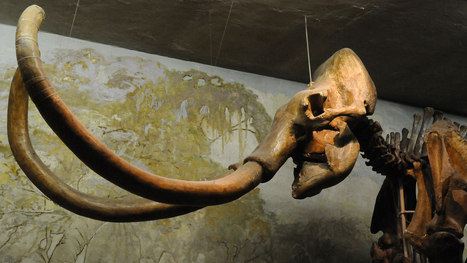
Homo sapiens, Neanderthals and other recent human relatives may have begun hunting large mammal species down to size — by way of extinction — at least 90,000 years earlier than previously thought, says a new study published in the journal Science. Elephant-dwarfing wooly mammoths, elephant-sized ground sloths and various saber-toothed cats highlighted the array of massive mammals roaming Earth between 2.6 million and 12,000 years ago. Prior research suggested that such large mammals began disappearing faster than their smaller counterparts — a phenomenon known as size-biased extinction — in Australia around 35,000 years ago. With the help of emerging data from older fossil and geologic records, the new study estimated that this size-biased extinction started at least 125,000 years ago in Africa. By that point, the average African mammal was already 50 percent smaller than those on other continents, the study reported, despite the fact that larger landmasses can typically support larger mammals. But as humans migrated out of Africa, other size-biased extinctions began occurring in regions and on timelines that coincide with known human migration patterns, the researchers found. Over time, the average body size of mammals on those other continents approached and then fell well below Africa’s. Mammals that survived during the span were generally far smaller than those that went extinct. The magnitude and scale of the recent size-biased extinction surpassed any other recorded during the last 66 million years, according to the study, which was led by the University of New Mexico’s Felisa Smith. “It wasn’t until human impacts started becoming a factor that large body sizes made mammals more vulnerable to extinction,” said the University of Nebraska-Lincoln’s Kate Lyons, who authored the study with Smith and colleagues from Stanford University and the University of California, San Diego. “The anthropological record indicates that Homo sapiens are identified as a species around 200,000 years ago, so this occurred not very long after the birth of us as a species. It just seems to be something that we do. “From a life-history standpoint, it makes some sense. If you kill a rabbit, you’re going to feed your family for a night. If you can kill a large mammal, you’re going to feed your village.” By contrast, the research team found little support for the idea that climate change drove size-biased extinctions during the last 66 million years. Large and small mammals seemed equally vulnerable to temperature shifts throughout that span, the authors reported.
|
|
Scooped by
Dr. Stefan Gruenwald
April 12, 2018 6:26 PM
|
A newly discovered ancient sea monster from the dinosaur age was nearly the size of a blue whale. About 205 million years ago, a ginormous sea monster — so large it was nearly the size of a modern blue whale — swam through the ocean, fueling its colossal body by preying on prehistoric squid and fish, a new study finds. The recent discovery of this creature's immense jawbone has helped researchers identify a previously unknown species and to solve a nearly 170-year-old mystery. In 1850, beachgoers in southern England found Late Triassic fossils by the shore that were so massive, they were thought to be the limb bones of giant dinosaurs, such as the long-necked sauropods. But now, thanks to the newfound jawbone finding, researchers think those bones likely belonged to the largest-known ichthyosaur (ik-thee-o-saur) ever found. These creatures, marine reptiles resembling modern-day dolphins, went extinct at the end of the dinosaur age, around 66 million years ago [Ancient Monsters of the Sea]. In May 2016, while walking on a beach in Lilstock, England, study co-researcher and fossil collector Paul de la Salle found pieces of a jawbone that, when pieced together, measured an astounding 3.1 feet (96 centimeters) long. After connecting with ichthyosaur researchers, including Dean Lomax, a paleontologist at The University of Manchester in England, and Judy Massare, professor emerita of geology at SUNY College at Brockport in New York, de la Salle determined that the specimen belonged to a giant ichthyosaur known as a shastasaurid from the Triassic, which lasted from 251 million to 199 million years ago. The researchers have yet to name the new species and are calling it the Lilstock specimen for now. Based on the jawbone's length, the researchers estimated that the Lilstock ichthyosaur measured more than 85 feet (26 meters) long, making it the largest ichthyosaur on record — up to 25 percent larger than the previous shastasaurid record holder, Shonisaurus sikanniensis, a 69-foot-long (21 m) beast found in British Columbia, the researchers said.
A team of researchers from several institutions across the U.S. has found evidence suggesting that there was an explosion of diversity in fish after the end-Cretaceous mass extinction. In their paper published in the journal Nature Ecology and Evolution, the team describes their genetic study involving more than 1800 species of fish and what they found. After the end-Cretaceous mass extinction—the one that killed off the dinosaurs—mammals became much more diverse and dominant. Without the dinosaurs to feast on them, they were free to prosper. Much less is known about what went on in the oceans. In this new effort, the researchers have added some new pieces to that puzzle. Prior research has suggested that the asteroid or comet that smashed into the Earth approximately 65 million years ago killed off more than the dinosaurs—approximately 50 percent of all species worldwide disappeared. These include many sharks and other reptiles, leaving a void of sorts in the world's oceans that allowed fish to flourish. And flourish they did, according to the researchers with this new effort. To learn more about what happened with sea creatures after the end-Cretaceous mass extinction, the researchers collected tissue samples from 118 acanthomorph species, looking specifically at 1,000 DNA sequences that were similar across the genomes of their samples—as part of that effort, they searched for variations in genetic sequences that offered clues regarding how closely related the fish were to one another. The researchers found that six large groups of fish originated over the course of 10 million years after the mass extinction. Of those groups, five were acanthomorphs (spiny-rayed fish). Today, there are approximately 18,000 members of the acanthomorphs species and they represent approximately one in three vertebrate species alive today. That so many of them originated in the time after the dinosaurs disappeared shows that they, like mammals, found the world a much friendlier place—one where they were allowed to prosper. Such an explosion suggests that sharks and other reptile populations and their diversity must have plunged, leaving a vast void for the acanthomorphs to fill. Still unclear is why acanthomorphs, rather than other fish species, became so dominant.
Via Mariaschnee
|
|
Scooped by
Dr. Stefan Gruenwald
January 8, 2018 4:52 PM
|
A scientist has finally confirmed with 3D models that legendary ice man Ötzi was indeed killed 5,300 years ago by an arrow. Ötzi, a 5,300-year-old mummified man, was found in 1991 in a glacier in the Alps between what is now Austria and Italy. Since the discovery, Ötzi has been examined by multiple teams of scientists, with new discoveries coming to light each time. Now an expert claims it was the arrow that delivered the fatal blow, severing the nerve to his shoulder and hitting his major vessels. Since his discovery on 19 December 1991 by German hikers, Ӧtzi has provided window into early human history. His mummified remains were uncovered in melting glacier in the mountainous border between Austria and Italy. Analysis of the body has told us that he was alive during the Copper Age and died a grisly death. Ötzi, who was 46 at the time of his death, had brown eyes, relatives in Sardinia, and was lactose intolerant. He was also predisposed to heart disease. Recent research focused on the DNA in the nuclei of Ötzi's cells, and it could yield further insights into the famous ice mummy's life.
|
|
Scooped by
Dr. Stefan Gruenwald
December 13, 2017 12:47 PM
|
In a discovery that seems straight out of Jurassic Park, researchers have identified a 99-million-year-old fossilized tick on a dinosaur feather. In a significant divergence from the Hollywood storyline, the fossils will not be yielding any dinosaur DNA. The tick’s last meal was not preserved, and even if it had been, the lifespan of DNA is too short for it to be successfully extracted. However, because they were trapped together, the fossils offer the first direct evidence of ticks feeding on dinosaur blood.The study also examined other ticks trapped in amber, including a previously unknown species that is thought to have also fed on feathered dinosaurs.
|
|
Scooped by
Dr. Stefan Gruenwald
November 10, 2017 1:28 PM
|
A pair of researchers at Tohoku University has found evidence suggesting that if the asteroid that struck the Earth near Chicxulub 66 million years ago had landed almost anywhere else, it would not have been as devastating to the biosphere. In their paper published in the journal Scientific Reports, Kunio Kaiho and Naga Oshima suggest that had the asteroid struck another part of the planet it is likely the dinosaurs would have survived. Scientists around the world have reached a consensus regarding the reason that the dinosaurs (except for bird relatives) went extinct—a large asteroid struck the Earth just off what is now the Yucatan peninsula, hurling so much soot and other material into the atmosphere that the planet became too cold (for approximately three years) for the dinosaurs and most other land animals to survive. But now, it appears that they might have survived had the asteroid struck almost anywhere else. To learn more about the event that had such a huge impact on the history of our planet, Kaiho and Oshima used a computer to analyze multiple data sources surrounding the impact and the location where it struck—the resulting simulation showed how much soot would have been generated based on the amount of hydrocarbon material in the ground near the impact site. Such hydrocarbons would include not just oil or coal deposits, but other rocks that also contained oil—more hydrocarbons would mean more soot and gases making their way into the atmosphere. The research pair also created a map showing surface hydrocarbon densities across the globe at the time. They found that the site where the asteroid struck was particularly dense in hydrocarbons—87 percent of the planet surface was less dense. That means, they claim, that if the asteroid had struck a place where it was less dense (which would have been almost anywhere else), much less soot would have been generated, and thus, the planet would not have cooled as much. And if the planet had not cooled so much, the dinosaurs might have survived, and that might have meant that we humans would never have had a chance to evolve.
Scientists have discovered traces of life more than half-a-billion years old that could change the way we think about how all animals evolved on Earth. The international team, including palaeontologist from The University of Manchester, found a new set of trace fossils left by some of the first ever organisms capable of active movement. Trace fossils are the tracks and burrows left by living organisms, not physical remains such as bones or body parts. The fossils were discovered in sediment in the Corumbá region of western Brazil, near the border with Bolivia. The burrows measure from under 50 to 600 micrometers or microns (μm) in diameter, meaning the creatures that made them were similar in size to a human hair which can range from 40 to 300 microns in width. One micrometer is just one thousandth of a millimeter. Dr Russell Garwood, from Manchester's School of Earth and Environmental Sciences, said: 'This is an especially exciting find due to the age of the rocks - these fossils are found in rock layers which actually pre-date the oldest fossils of complex animals - at least that is what all current fossil records would suggest.' The fossils found date back to a geological and evolutionary period known as the Ediacaran-Cambrian transition. This was when the Ediacaran Period, which spanned 94 million years from the end of the Cryogenian Period, 635 million years ago, moved into the Cambrian Period around 541 million years ago. To put that into context, dinosaurs lived between 230 and 65 million years ago in the Mesozoic Era.
Via Mariaschnee
|
|
|
Scooped by
Dr. Stefan Gruenwald
August 1, 2018 8:47 PM
|
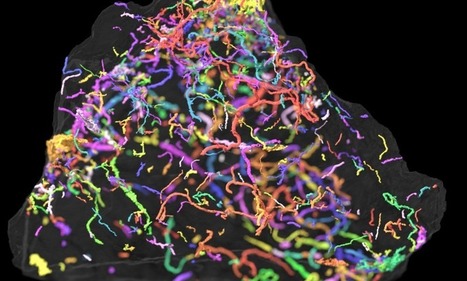
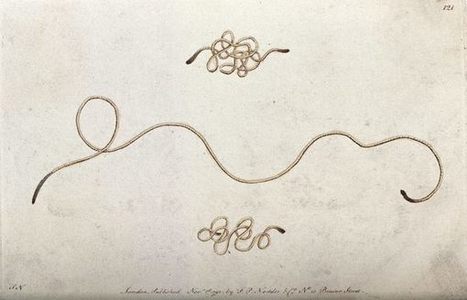
30,000 years ago, a ground squirrel burrowed out a spot for itself, about 10 inches in diameter at its widest, where it brought back seeds and other grassy and fruited plants to nibble on. The place where the squirrel chose to make its burrow is now known as Siberia, and the burrow is close to 100 feet below the surface and in a layer of permafrost. The squirrel, of course, is long gone. But tiny roundworms, a type of nematode, that also made their home there have lasted those tens of thousands of years, frozen and immobile. Now, though, scientists in Russia have revived them, making these worms—all of them female worms—the first multicellular organisms to have survived being frozen in Arctic permafrost. The permafrost layer of the polar parts of the world contains all sorts of tiny creatures, including bacteria, algae, yeasts, and amoebas, as well as moss spores and seeds. After spending thousands of years in deep freeze, these bits of life are thawing out, as the poles heat up and the permafrost softens. Previously, scientists found that a giant virus that they named Pithovirus was still viable after 30,000 years. In a new paper, published in Doklody Biological Sciences, the scientists describe how they analyzed 300 samples of permafrost. Of those, only two samples had viable nematodes in them. One came from the squirrel burrow; another came from a different permafrost deposit, part of a core drilling near the Alazeya River. That sample was about 42,000 years old. The samples contained two different types of roundworms, Panagrolaimus detritophagus and Plectus parvus. The scientists let them thaw out, and once they had, the worms seemed ready to go on with their lives, eating and moving, which is about the extent of what ringworms do with themselves.
|
|
Scooped by
Dr. Stefan Gruenwald
July 9, 2018 7:47 PM
|
The Jeerinah Formation in Western Australia, where a UW-led team found a sudden shift in nitrogen isotopes. “Nitrogen isotopes tell a story about oxygenation of the surface ocean, and this oxygenation spans hundreds of kilometers across a marine basin and lasts for somewhere less than 50 million years,” said lead author Matt Koehler. Earth’s oxygen levels rose and fell more than once hundreds of millions of years before the planetwide success of the Great Oxidation Event about 2.4 billion years ago, new research from the University of Washington shows. The evidence comes from a new study that indicates a second and much earlier “whiff” of oxygen in Earth’s distant past — in the atmosphere and on the surface of a large stretch of ocean — showing that the oxygenation of the Earth was a complex process of repeated trying and failing over a vast stretch of time. The finding also may have implications in the search for life beyond Earth. Coming years will bring powerful new ground- and space-based telescopes able to analyze the atmospheres of distant planets. This work could help keep astronomers from unduly ruling out “false negatives,” or inhabited planets that may not at first appear to be so due to undetectable oxygen levels. “The production and destruction of oxygen in the ocean and atmosphere over time was a war with no evidence of a clear winner, until the Great Oxidation Event,” said Matt Koehler, a UW doctoral student in Earth and space sciences and lead author of a new paper published the week of July 9 , 2018 in the Proceedings of the National Academy of Sciences (PNAS).
|
|
Scooped by
Dr. Stefan Gruenwald
May 30, 2018 11:20 AM
|
By comparing the genomes of different species, chiefly birds and turtles, the Kent team were able to determine how the overall genome structure (i.e. the chromosomes) of many people’s favorite dinosaur species – like Velociraptor orTyrannosaurus – might have looked through a microscope. The research was carried out in the laboratory of Professor Darren Griffin, of the University’s School of Biosciences, and is now published in the journal Nature Communications. It involved extrapolating the likely genome structure of a shared common ancestor of birds and turtles that lived around 260 million years ago – 20 million years before the dinosaurs first emerged. Dr Becky O’Connor, senior postdoctoral researcher and co-author of the Nature Communications paper, then traced how chromosomes changed over evolutionary time from a reptile ancestor to the present day. The team found that, although the individual chromosomes rearranged their genes internally, this did not occur much at all between the chromosomes – what the scientists describe as ‘a significant discovery’. Birds (which are themselves living dinosaurs) have a lot of chromosomes compared to most other species and that is possibly one of the reasons why they are so diverse. This research suggests that the pattern of chromosomes (karyotype) seen in early emerging dinosaurs and later theropods is similar to that of most birds and, again, may help explain their great diversity.
|
|
Scooped by
Dr. Stefan Gruenwald
May 15, 2018 1:33 PM
|
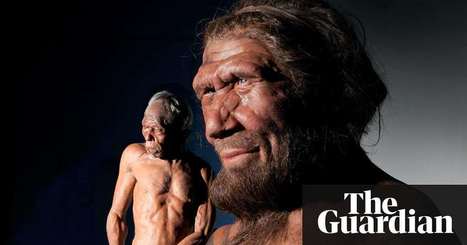
Scientists are preparing to create “miniature brains” that have been genetically engineered to contain Neanderthal DNA, in an unprecedented attempt to understand how humans differ from our closest relatives.
In the next few months the small blobs of tissue, known as brain organoids, will be grown from human stem cells that have been edited to contain “Neanderthalized” versions of several genes.
The lentil-sized organoids, which are incapable of thoughts or feelings, replicate some of the basic structures of an adult brain. They could demonstrate for the first time if there were meaningful differences between human and Neanderthal brain biology.
“Neanderthals are the closest relatives to everyday humans, so if we should define ourselves as a group or a species it is really them that we should compare ourselves to,” said Prof Svante Pääbo, director of the genetics department at the Max Planck Institute for Evolutionary Anthropology in Leipzig, Germany, where the experiments are being performed.
Pääbo previously led the successful international effort to crack the Neanderthal genome, and his lab is now focused on bringing Neanderthal traits back to life in the laboratory through sophisticated gene-editing techniques.
The lab has already inserted Neanderthal genes for craniofacial development into mice (heavy-browed rodents are not anticipated), and Neanderthal pain perception genes into frogs’ eggs, which could hint at whether they had a different pain threshold to humans. Now the lab is turning its attention to the brain.
“We’re seeing if we can find basic differences in how nerve cells function that may be a basis for why humans seem to be cognitively so special,” said Pääbo.
The research comes as the longstanding stereotype of Neanderthals as gormless and thuggish is being rewritten by emerging evidence that they buried their dead, produced cave art and had brains that were larger than our own.
|
|
Rescooped by
Dr. Stefan Gruenwald
from Geology
April 25, 2018 2:27 PM
|
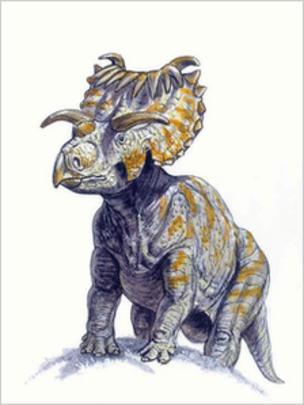
Scientists have unearthed two new species of giant plant-eating horned dinosaurs in southern Utah, US. The creatures lived on the "lost continent" of Laramidia in the Late Cretaceous period, some 68 to 99 million years ago. Laramidia was formed when a shallow sea flooded part of what is now North America and divided the continent in two. The findings were published in the journal Plos One. The scientists say the newly found dinos lived in the subtropical swampy environment. They were close relatives of the dinosaur Triceratops, and belonged to the family known as ceratopsians. Ceratops means horned face in Greek.
Via Dr. Catherine Russell
|
|
Scooped by
Dr. Stefan Gruenwald
April 25, 2018 10:56 AM
|
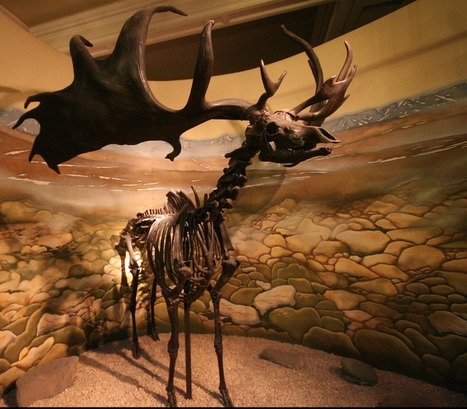
“Another megafauna to fall victim to the ending of an ice age was the Irish elk. Calling this animal an elk is actually a misnomer, as recent DNA analysis has shown that it was actually a deer — in fact, the largest deer to have ever lived,” the website writes. “Its antlers alone measured as much as 12 feet across. As with other animals that lived in the icy north during the Pleistocene, preserved specimens of the Irish elk can be readily found in melting permafrost, making it a prime candidate for being cloned.” The skulls, with their colossal antlers, are often mounted on the walls of castles and hunting lodges. While the science of cloning is still in its infancy, many scientists now believe it's only a matter of time before it becomes a viable option. According to Mother Nature Network, to “successfully clone an extinct animal, scientists need to find animal DNA that is almost entirely intact.”Thus, some species will make better candidates for resurrection than others. Because of the many well-preserved fossils of this majestic seven foot tall creature that exist around the world, it makes an obvious candidate for scientists experimenting with the cloning process. According to the University of California Museum of Paleontology, the Irish elk with its "arresting size and singular appearance is of great significance to paleontologists because of the way in which the animal has become involved in evolutionary debates down through the years." The website lists a theory that the Irish elk finally went extinct when the antlers became so large that the animals could no longer hold up their heads, or got entangled in the trees. To read more about the Irish elk, visit here.
|
|
Scooped by
Dr. Stefan Gruenwald
April 17, 2018 5:03 PM
|
It is commonly understood that the dinosaurs disappeared with a bang – wiped out by a great meteorite impact on the Earth 66 million years ago. But their origins have been less understood. In a new study, scientists from MUSE - Museum of Science, Trento, Italy, Universities of Ferrara and Padova, Italy and the University of Bristol show that the key expansion of dinosaurs was also triggered by a crisis – a mass extinction that happened 232 million years ago. In the new paper, published today in Nature Communications, evidence is provided to match the two events – the mass extinction, called the Carnian Pluvial Episode, and the initial diversification of dinosaurs. Dinosaurs had originated much earlier, at the beginning of the Triassic Period, some 245 million years ago, but they remained very rare until the shock events in the Carnian 13 million years later. The new study shows just when dinosaurs took over by using detailed evidence from rock sequences in the Dolomites, in north Italy – here the dinosaurs are detected from their footprints. First there were no dinosaur tracks, and then there were many. This marks the moment of their explosion, and the rock successions in the Dolomites are well dated. Comparison with rock successions in Argentina and Brazil, here the first extensive skeletons of dinosaurs occur, show the explosion happened at the same time there as well. Lead author Dr Massimo Bernardi, Curator at MUSE and Research associate at Bristol’s School of Earth Sciences, said: “We were excited to see that the footprints and skeletons told the same story. We had been studying the footprints in the Dolomites for some time, and it’s amazing how clear cut the change from ‘no dinosaurs’ to ‘all dinosaurs’ was.”
|
|
Scooped by
Dr. Stefan Gruenwald
April 12, 2018 6:22 PM
|
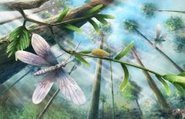
Pioneering new research has given an illuminating new insight into the metallic, iridescent colors found on the earliest known ancestors of moths and butterflies, which habited the earth almost 200 million years ago. An international team of researchers, including Dr Tim Starkey from the University of Exeter, have discovered new evidence for colour in Mesozoic fossils. The structural colors of the fossils studied resulted from light scattering by intricate microstructures, extending the evidence for these light-scattering structures in the insect fossil record by more than 130 million years. The research team examined fossilized remains dating back 180 million years, with some specimens originating from the Jurassic Coast, only a short distance from Exeter. Using powerful electron microscopes and using optical models, the team found microscopic ridges and grooves in the insect's wing scales, similar to those seen in today's moths. Models revealed these tiny features are photonic structures that would have produced metallic bronze to golden color appearances in the insect wings. The research is published in leading journal Science Advances on April 11 2018.
|
|
Scooped by
Dr. Stefan Gruenwald
March 15, 2018 2:16 PM
|
Imagine that you’re a voracious carnivore who sinks its teeth into the tail of a small reptile and anticipates a delicious lunch, when, in a flash, the reptile is gone and you are left holding a wiggling tail between your jaws. A new study by the University of Toronto Mississauga research team led by Professor Robert Reisz and PhD student Aaron LeBlanc, published March 5 in the open source journal, Scientific Reports, shows how a group of small reptiles who lived 289 million years ago could detach their tails to escape the grasp of their would-be predators — the oldest known example of such behaviour. The reptiles, called Captorhinus, weighed less than 2 kilograms and were smaller than the predators of the time. They were abundant in terrestrial communities during the Early Permian period and are distant relatives of all the reptiles today. As small omnivores and herbivores, Captorhinus and its relatives had to scrounge for food while avoiding being preyed upon by large meat-eating amphibians and ancient relatives of mammals. “One of the ways captorhinids could do this,” says first author LeBlanc, “was by having breakable tail vertebrae.” Like many present-day lizard species, such as skinks, that can detach their tails to escape or distract a predator, the middle of many tail vertebrae had cracks in them. It is likely that these cracks acted like the perforated lines between two paper towel sheets, allowing vertebrae to break in half along planes of weakness. “If a predator grabbed hold of one of these reptiles, the vertebra would break at the crack and the tail would drop off, allowing the captorhinid to escape relatively unharmed,” says Reisz, a Distinguished Professor of Biology at the University of Toronto Mississauga.
|
|
Scooped by
Dr. Stefan Gruenwald
January 2, 2018 3:53 PM
|
The world's oldest algae fossils are a billion years old, according to a new analysis by earth scientists at McGill University. Based on this finding, the researchers also estimate that the basis for photosynthesis in today's plants was set in place 1.25 billion years ago. The study, published in the journal Geology, could resolve a long-standing mystery over the age of the fossilized algae, Bangiomorpha pubescens, which were first discovered in rocks in Arctic Canada in 1990. The microscopic organism is believed to be the oldest known direct ancestor of modern plants and animals, but its age was only poorly dated, with estimates placing it somewhere between 720 million and 1.2 billion years. The new findings also add to recent evidence that an interval of Earth's history often referred to as the Boring Billion may not have been so boring, after all. From 1.8 to 0.8 billion years ago, archaea, bacteria and a handful of complex organisms that have since gone extinct milled about the planet's oceans, with little biological or environmental change to show for it. Or so it seemed. In fact, that era may have set the stage for the proliferation of more complex life forms that culminated 541 million years ago with the so-called Cambrian Explosion. "Evidence is beginning to build to suggest that Earth's biosphere and its environment in the latter portion of the 'Boring Billion' may actually have been more dynamic than previously thought," says McGill PhD student Timothy Gibson, lead author of the new study. To pinpoint the fossils' age, the researchers pitched camp in a rugged area of remote Baffin Island, where Bangiomorpha pubescens fossils have been found There,despite the occasional August blizzard and tent-collapsing winds, they collected samples of black shale from rock layers that sandwiched the rock unit containing fossils of the alga. Using the Rhenium-Osmium (or Re-Os) dating technique, applied increasingly to sedimentary rocks in recent years, they determined that the rocks are 1.047 billion years old. "That's 150 million years younger than commonly held estimates, and confirms that this fossil is spectacular," says Galen Halverson, senior author of the study and an associate professor in McGill's Department of Earth and Planetary Sciences. "This will enable scientists to make more precise assessments of the early evolution of eukaryotes," the celled organisms that include plants and animals. Because Bangiomorpha pubescens is nearly identical to modern red algae, scientists have previously determined that the ancient alga, like green plants, used sunlight to synthesize nutrients from carbon dioxide and water. Scientists have also established that the chloroplast, the structure in plant cells that is the site of photosynthesis, was created when a eukaryote long ago engulfed a simple bacterium that was photosynthetic. The eukaryote then managed to pass that DNA along to its descendants, including the plants and trees that produce most of the world's biomass today.
|
|
Scooped by
Dr. Stefan Gruenwald
December 1, 2017 4:16 PM
|
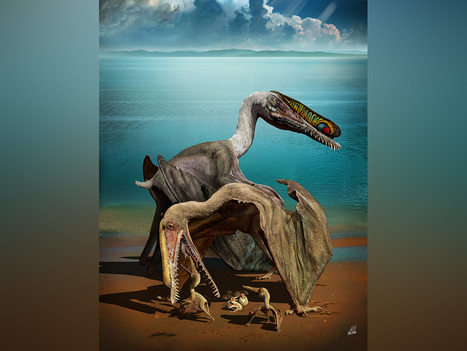
“Extraordinary.” “Stellar.” “Truly awesome.” “A world-class find.” That’s how paleontologists are reacting to the discovery of several hundred ridiculously well-preserved pterosaur eggs in China, some of them still containing the remains of embryos. “My first thought was extreme jealousy,” said David Unwin, a pterosaur expert and paleobiologist at the University of Leicester. “Really.” To understand why Unwin and others are freaking out about the discovery, published Thursday in the journal Science, you have to first appreciate how rare pterosaur eggs are. The pterosaurs were an order of flying reptiles that went extinct some 66 million years ago. They were not actually dinosaurs, but they went extinct at the same time. Along with bats and birds, they are the only vertebrates to truly fly. And though these creatures lorded over the skies for around 162 million years, only a handful of pterosaur egg fossils have ever been unearthed. And of those, paleontologists have just six three-dimensional eggs – that is, eggs not completely flattened by millions of years of being crushed under younger sediments. But now, we have a pterosaur egg extravaganza. According to the new research, a site in China’s Turpan-Hami Basin in Xinjiang has coughed up 215 beautiful, pliable and miraculously three-dimensional eggs – 16 of which contain embryonic remains. The researchers also suspect there could be as many as 300 more eggs within the same sandstone block. No wonder Xiaolin Wang, the study’s lead author and a paleontologist at the Chinese Academy of Sciences, said the discovery could be described as a sort of “pterosaur Eden.” Aside from breaking records, Unwin said there are practical reasons for why having more eggs is better. “When you have a really unique find, you basically can’t do anything to it because that’s all you’ve got.” But now that we have literally hundreds of eggs to work with, we have more options – such as cutting different eggs into cross-sections to study growth rates. What’s more, the egg treasure trove also boasts skeletons from what appear to be hatchlings, juveniles and adults. This, too, is an embarrassment of riches because it means scientists now have more information about how pterosaurs progressed from egg to adult than ever before. “This is by far the most exciting discovery that I know of,” said Alexander Kellner, co-author of the new study and paleontologist at the National Museum of the Federal University of Rio de Janeiro in Brazil.
|
|
Rescooped by
Dr. Stefan Gruenwald
from Geology
October 31, 2017 4:43 PM
|
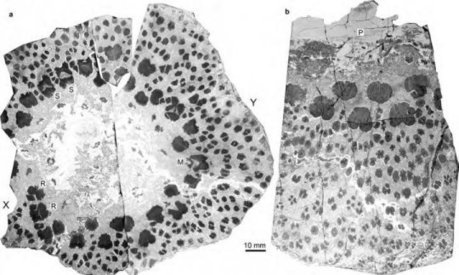
The first trees to have ever grown on Earth were also the most complex, new research has revealed. Fossils from a 374-million-year-old tree found in north-west China have revealed an interconnected web of woody strands within the trunk of the tree that is much more intricate than that of the trees we see around us today. The strands, known as xylem, are responsible for conducting water from a tree's roots to its branches and leaves. In the most familiar trees the xylem forms a single cylinder to which new growth is added in rings year by year just under the bark. In other trees, notably palms, xylem is formed in strands embedded in softer tissues throughout the trunk. Writing in the journal Proceedings of the National Academy of Sciences, the scientists have shown that the earliest trees, belonging to a group known as the cladoxlopsids, had their xylem dispersed in strands in the outer 5 cm of the tree trunk only, whilst the middle of the trunk was completely hollow. The narrow strands were arranged in an organized fashion and were interconnected to each other like a finely tuned network of water pipes. The team, which includes researchers from Cardiff University, Nanjing Institute of Geology and Paleontology, and State University of New York, also show that the development of these strands allowed the tree's overall growth. Rather than the tree laying down one growth ring under the bark every year, each of the hundreds of individual strands were growing their own rings, like a large collection of mini trees. As the strands got bigger, and the volume of soft tissues between the strands increased, the diameter of the tree trunk expanded. The new discovery shows conclusively that the connections between each of the strands would split apart in a curiously controlled and self-repairing way to accommodate the growth.
Via Dr. Catherine Russell
|