Your new post is loading...

|
Scooped by
Dr. Stefan Gruenwald
March 21, 2023 6:40 PM
|
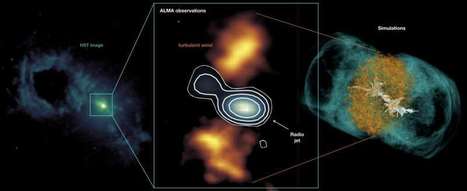
When matter falls into supermassive black holes in the centers of galaxies, it unleashes enormous amounts of energy and is called an active galactic nuclei (or AGN). A fraction of AGN release part of this energy as jets that are detectable in radio wavelengths that travel at velocities close to light speed. While the jet travels across the galaxy, it collides with the clouds and gas around it and in some cases may push this material away in the form of winds. However, which conditions preferentially trigger these winds to blow out the gas from galaxies are still poorly understood. The effect of jets impacting the content of the galaxies, like the stars, dust, and gas, plays an important role in how galaxies evolve in the Universe. The most powerful radio jets, hosted in ´radio-loud’ galaxies, are responsible for drastically changing the fate of galaxies because they heat the gas, preventing new star formation and galaxy growth. Computer simulations of relativistic jets piercing into disky galaxies predict that jets alter the shape of the surrounding gas by blowing bubbles as they penetrate further into the galaxy. One of the key elements in the simulations that make the jets efficient in driving winds is the angle between the gaseous disk and the jet’s direction of propagation. Surprisingly, less powerful jets, like the ones in ‘radio-quiet’ galaxies, are able to inflict more damage on the surrounding medium than the very powerful ones. An international scientific team, led by the IAC researcher Anelise Audibert, discovered an ideal case in which to study the interaction of the radio jet with the cold gas around a massive quasar: the Teacup galaxy. The Teacup is a radio-quiet quasar located 1.3 billion light years from us and its nickname comes from the expanding bubbles seen in the optical and radio images, one of which is shaped like the handle of a teacup.. In addition, the central region (around 3300 light-years in size) harbors a compact and young radio jet that has a small inclination relative to the galaxy disk. Effects on star formation Using observations performed in the Chilean desert with the Atacama Large Millimeter/submillimeter Array (ALMA), the team was able to characterize with an unprecedented level of detail the cold, dense gas in the central part of the Teacup. In particular, they detected the emission of carbon monoxide molecules that can only exist under certain conditions of density and temperature. Based on these observations, the team found that the compact jet, despite its low power, is not only clearly disrupting the distribution of the gas and heating it, but also accelerating it in an unusual way. The team expected to detect extreme conditions in the impacted regions along the jet, but when they analyzed the observations, they found that the cold gas is more turbulent and warmer in the directions perpendicular to the jet propagation. “This is caused by the shocks induced by the jet-driven bubble, which heats up and blows the gas in its lateral expansion”, explains A. Audibert. “Supported by the comparison with computer simulations, we believe that the orientation between the cold gas disk and the jet is a crucial factor in efficiently driving these lateral winds”, she adds. “It was previously believed that low-power jets had a negligible impact on the galaxy, but works like ours show that, even in the case of radio-quiet galaxies, jets can redistribute and disrupt the surrounding gas, and this will have an impact on the galaxy's ability to form new stars”, says Cristina Ramos Almeida, an IAC researcher and co-author of the study. The next step is to observe a larger sample of radio-quiet quasars with MEGARA, an instrument installed on the Gran Telescopio CANARIAS (GTC or Grantecan). The observations will help us to understand the impact of the jets on the more tenuous and hot gas, and to measure changes in star formation caused by winds. This is one of the goals of the QSOFEED project, developed by an international team led by C. Ramos Almeida at the IAC, whose aim is to discover how winds from supermassive black holes affect the galaxies that host them.
|
|
Scooped by
Dr. Stefan Gruenwald
March 16, 2023 4:18 PM
|
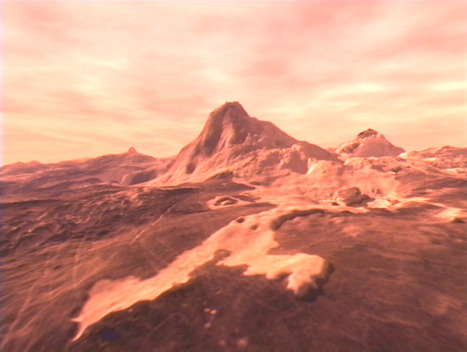
Venus appears to have volcanic activity, according to a new research paper that offers strong evidence to answer the lingering question about whether Earth's sister planet currently has eruptions and lava flows. Venus, although similar to Earth in size and mass, differs markedly in that it does not have plate tectonics. The boundaries of Earth's moving surface plates are the primary locations of volcanic activity. New research by University of Alaska Fairbanks Geophysical Institute research professor Robert Herrick revealed a nearly 1-square-mile volcanic vent that changed in shape and grew over eight months in 1991. Changes on such a scale on Earth are associated with volcanic activity, whether through an eruption at the vent or movement of magma beneath the vent that causes the vent walls to collapse and the vent to expand. The research was published today in the journal Science. Herrick studied images taken in the early 1990s during the first two imaging cycles of NASA's Magellan space probe. Until recently, comparing digital images to find new lava flows took too much time, the paper notes. As a result, few scientists have searched Magellan data for feature formation. "It is really only in the last decade or so that the Magellan data has been available at full resolution, mosaicked and easily manipulable by an investigator with a typical personal workstation," Herrick said. The new research focused on an area containing two of Venus' largest volcanoes, Ozza and Maat Mons. "Ozza and Maat Mons are comparable in volume to Earth's largest volcanoes but have lower slopes and thus are more spread out," Herrick said. Maat Mons contains the expanded vent that indicates volcanic activity. Herrick compared a Magellan image from mid-February 1991 with a mid-October 1991 image and noticed a change to a vent on the north side of a domed shield volcano that is part of the Maat Mons volcano. The vent had grown from a circular formation of just under 1 square mile to an irregular shape of about 1.5 square miles. The later image indicates that the vent's walls became shorter, perhaps only a few hundred feet high, and that the vent was nearly filled to its rim. The researchers speculate that a lava lake formed in the vent during the eight months between the images, though whether the contents were liquid or cooled and solidified isn't known. The researchers offer one caveat: a nonvolcanic, earthquake-triggered collapse of the vent's walls might have caused the expansion. They note, however, that vent collapses of this scale on Earth's volcanoes have always been accompanied by nearby volcanic eruptions; magma withdraws from beneath the vent because it is going somewhere else. The surface of Venus is geologically young, especially compared to all the other rocky bodies except Earth and Jupiter's moon Io, Herrick said. "However, the estimates of how often eruptions might occur on Venus have been speculative, ranging from several large eruptions per year to one such eruption every several or even tens of years," he said.
|
|
Scooped by
Dr. Stefan Gruenwald
March 16, 2023 4:09 PM
|
In a new study, University of California, Irvine astronomers describe how extraterrestrial life has the potential to exist on distant exoplanets inside a special area called the "terminator zone," which is a ring on planets that have one side that always faces its star and one side that is always dark. "These planets have a permanent day side and a permanent night side," said Ana Lobo, a postdoctoral researcher in the UCI Department of Physics & Astronomy who led the new work, which just published in The Astrophysical Journal. Lobo added that such planets are particularly common because they exist around stars that make up about 70 percent of the stars seen in the night sky -- so-called M-dwarf stars, which are relatively dimmer than our sun. The terminator is the dividing line between the day and night sides of the planet. Terminator zones could exist in that "just right" temperature zone between too hot and too cold. "You want a planet that's in the sweet spot of just the right temperature for having liquid water," said Lobo, because liquid water, as far as scientists know, is an essential ingredient for life. On the dark sides of terminator planets, perpetual night would yield plummeting temperatures that could cause any water to be frozen in ice. The side of the planet always facing its star could be too hot for water to remain in the open for long. "This is a planet where the dayside can be scorching hot, well beyond habitability, and the night side is going to be freezing, potentially covered in ice. You could have large glaciers on the night side," Lobo said. Lobo, alongside Aomawa Shields, UCI associate professor of physics & astronomy, modeled the climate of terminator planets using software typically used to model our own planet's climate, but with a few adjustments, including slowing down planetary rotation. It's believed to be the first time astronomers have been able to show that such planets can sustain habitable climates confined to this terminator region. Historically, researchers have mostly studied ocean-covered exoplanets in their search for candidates for habitability. But now that Lobo and her team have shown that terminator planets are also viable refuges for life, it increases the options life-hunting astronomers have to choose from. "We are trying to draw attention to more water-limited planets, which despite not having widespread oceans, could have lakes or other smaller bodies of liquid water, and these climates could actually be very promising," Lobo said. One key to the finding, Lobo added, was pinpointing exactly what kind of terminator zone planet can retain liquid water. If the planet is mostly covered in water, then the water facing the star, the team found, would likely evaporate and cover the entire planet in a thick layer of vapor. But if there's land, this effect shouldn't occur.
|
|
Scooped by
Dr. Stefan Gruenwald
March 15, 2023 4:30 PM
|
Astronomers using the SMARTS 1.5-meter Telescope at Cerro Tololo Inter-American Observatory in Chile, a Program of NSF's NOIRLab, have uncovered the first example of a phenomenally rare type of binary star system, one that has all the right conditions to eventually trigger a kilonova -- the ultra-powerful, gold-producing explosion created by colliding neutron stars. Such an arrangement is so vanishingly rare that only about 10 such systems are thought to exist in the entire Milky Way Galaxy. The findings are published today in the journal Nature. This unusual system, known as CPD-29 2176, is located about 11,400 light-years from Earth. It was first identified by NASA's Neil Gehrels Swift Observatory. Later observations with the SMARTS 1.5-meter Telescope allowed astronomers to deduce the orbital characteristics and types of stars that make up this system -- a neutron star created by an ultra-stripped supernova and a closely orbiting massive star that is in the process of becoming an ultra-stripped supernova itself. An ultra-stripped supernova is the end-of-life explosion of a massive star that has had much of its outer atmosphere stripped away by a companion star. This class of supernova lacks the explosive force of a traditional supernova, which would otherwise "kick" a nearby companion star out of the system. "The current neutron star would have to form without ejecting its companion from the system. An ultra-stripped supernova is the best explanation for why these companion stars are in such a tight orbit," said Noel D. Richardson at Embry-Riddle Aeronautical University and lead author of the paper. "To one day create a kilonova, the other star would also need to explode as an ultra-stripped supernova so the two neutron stars could eventually collide and merge." As well as representing the discovery of an incredibly rare cosmic oddity, finding and studying kilonova progenitor systems such as this can help astronomers unravel the mystery of how kilonovae form, shedding light on the origin of the heaviest elements in the Universe. "For quite some time, astronomers speculated about the exact conditions that could eventually lead to a kilonova," said NOIRLab astronomer and co-author André-Nicolas Chené. "These new results demonstrate that, in at least some cases, two sibling neutron stars can merge when one of them was created without a classical supernova explosion." Producing such an unusual system, however, is a long and unlikely process. "We know that the Milky Way contains at least 100 billion stars and likely hundreds of billions more. This remarkable binary system is essentially a one-in-ten-billion system," said Chené. "Prior to our study, the estimate was that only one or two such systems should exist in a spiral galaxy like the Milky Way."
|
|
Scooped by
Dr. Stefan Gruenwald
March 12, 2023 1:39 PM
|
|
|
Scooped by
Dr. Stefan Gruenwald
March 6, 2023 8:06 PM
|
Northwestern University and the University of California San Diego (UC San Diego) astrophysicists have discovered the tightest ultracool dwarf binary system ever observed. The two stars are so close that it takes them less than one Earth day to revolve around each other. In other words, each star's "year" lasts just 17 hours. The newly discovered system, named LP 413-53AB, is composed of a pair of ultracool dwarfs, a class of very low-mass stars that are so cool that they emit their light primarily in the infrared, making them completely invisible to the human eye. They are nonetheless one of the most common types of stars in the universe. Previously, astronomers had only detected three short-period ultracool dwarf binary systems, all of which are relatively young -- up to 40 million years old. LP 413-53AB is estimated to be billions of years old -- similar age to our sun -- but has an orbital period that is at least three times shorter than the all ultracool dwarf binaries discovered so far. The research was published on March 1 in the Astrophysical Journal Letters. "It's exciting to discover such an extreme system," said Chih-Chun "Dino" Hsu, a Northwestern astrophysicist who led the study. "In principle, we knew these systems should exist, but no such systems had been identified yet." Hsu is a postdoctoral researcher in Northwestern's Center for Interdisciplinary Exploration and Research in Astrophysics(CIERA). He began this study while a Ph.D. student at UC San Diego, where he was advised by Professor Adam Burgasser. The team first discovered the strange binary system while exploring archival data. Hsu developed an algorithm that can model a star based on its spectral data. By analyzing the spectrum of light emitted from a star, astrophysicists can determine the star's chemical composition, temperature, gravity and rotation. This analysis also shows the star's motion as it moves toward and away from the observer, known as radial velocity. When examining the spectral data of LP 413-53AB, Hsu noticed something strange. Early observations caught the system when the stars were roughly aligned and their spectral lines overlapped, leading Hsu to believe it was just one star. But as the stars moved in their orbit, the spectral lines shifted in opposite directions, splitting into pairs in later spectral data. Hsu realized there were actually two stars locked into an incredibly tight binary. Using powerful telescopes at the W.M. Keck Observatory, Hsu decided to observe the phenomenon for himself. On March 13, 2022, the team turned the telescopes toward the constellation Taurus, where the binary system is located, and observed it for two hours. Then, they followed up with more observations in July, October and December as well as January 2023. "When we were making this measurement, we could see things changing over a couple of minutes of observation," Burgasser said. "Most binaries we follow have orbit periods of years. So, you get a measurement every few months. Then, after a while, you can piece together the puzzle. With this system, we could see the spectral lines moving apart in real time. It's amazing to see something happen in the universe on a human time scale." The observations confirmed what Hsu's model predicted. The distance between the two stars is about 1% of the distance between the Earth and the sun. "This is remarkable, because when they were young, something like 1 million years old, these stars would have been on top of each other," said Burgasser. The team speculates that the stars either migrated toward each other as they evolved, or they could have come together after the ejection of a third -- now lost -- stellar member. More observations are needed to test these ideas. Hsu also said that by studying similar star systems researchers can learn more about potentially habitable planets beyond Earth. Ultracool dwarfs are much fainter and dimmer than the sun, so any worlds with liquid water on their surfaces -- a crucial ingredient to form and sustain life -- would need to be much closer to the star. However, for LP 413-53AB, the habitable zone distance happens to be the same as the stellar orbit, making it impossible to form habitable planets in this system.
|
|
Scooped by
Dr. Stefan Gruenwald
February 28, 2023 3:56 PM
|
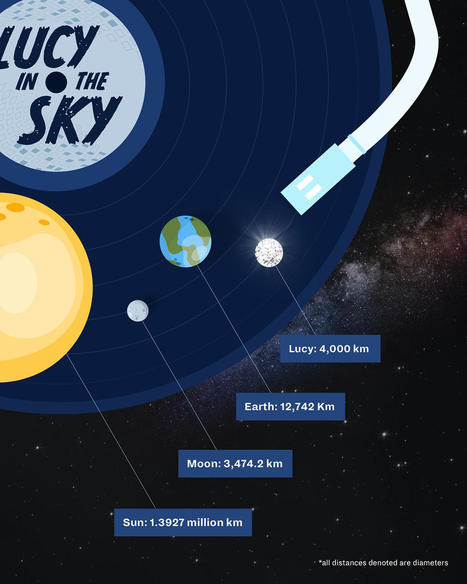
The largest diamond ever found is not on Earth, but faraway across the galaxy. It's an old burned out corpse of a star named BPM 37093 located only about 50 lightyears away from Earth in a region of the sky referred to as the constellation Centaurus. The white dwarf is a chunk of crystallized carbon that weighs 5 million trillion trillion pounds. That would equal a diamond of 10 billion trillion trillion carats.
Lucy. After it was discovered in 2004, astronomers nicknamed the space diamond Lucy after the Beatles song Lucy In The Sky With Diamonds. Lucy, also known as BPM 37093 and V*886 Cen, is the 886th variable star in the constellation Centaurus.
Star of Africa. By comparison, the largest such precious stones on Earth are the 545-caret Golden Jubilee Diamond and the 530-carat Great Star of Africa. The Golden Jubilee Diamond was found in 1985 and is in Thailand's Royal Palace as part of the crown jewels. The Great Star of Africa was found in 1905 and is in the Tower of London as part of the Crown Jewels of England.
White dwarf. A white dwarf is the hot cinder left behind when a star uses up its nuclear fuel and dies. It is made mostly of carbon and oxygen. and surrounded by a thin layer of hydrogen and helium gases. The Sun's diameter is 870,000 miles (1.4 million km). Lucy is tiny at a mere 2,500 miles (4,000 km) diameter. The Sun is 109 times the diameter of Earth. Lucy is only about 2/3rds the size of Earth. That's tiny for a star. However, Lucy's mass is about the same as our Sun. That's a lot of weight in a tiny ball. What is Lucy? Lucy is the most massive pulsating white dwarf currently known. Like other white dwarfs, Lucy probably is composed mostly of carbon and oxygen created by the past thermonuclear fusion of helium nuclei. While Lucy is a dead star now, it used to shine like our Sun. Lucy is very dim now, shining with only 1/2000th of the Sun's visual brightness. Lucy has a very thin atmosphere of hydrogen and helium. The atmosphere of our Sun is mostly hydrogen and helium.
How do they know? Astronomers had suspected since the 1960s that the interiors of white dwarfs would be crystallized and Lucy seems to confirm that. In its death struggles, the core of a star like Lucy or our own Sun becomes exposed and slowly cools down over time. Such a star begins to pulsate when the core surface temperature drops to about 12,000 degrees. By comparison, the Sun's core temperature now is about 27,000,000°F (15,000,000°C). Its surface temperature is about 11,000°F (6,000°C).
Lucy pulsates like a giant gong. Its internal pulsations are something like seismic waves inside Earth. Astronomers measured the pulsations to figure out Lucy's carbon interior was solidified (crystallized). Astronomers measured the pulsations hidden in Lucy's interior in the same way geologists use seismographs to measure earthquakes inside Earth.
Where to look. Lucy is not visible from Earth with the unaided eye. It must be viewed with a telescope and is best seen from Earth's Southern Hemisphere during March-June.
|
|
Scooped by
Dr. Stefan Gruenwald
February 27, 2023 6:57 PM
|
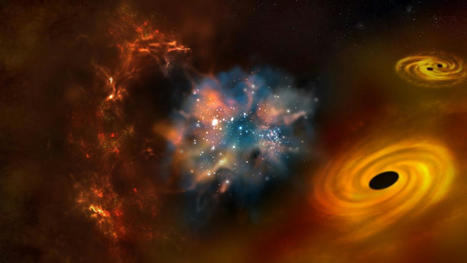
Astronomers from the University of Texas and the University of Arizona have discovered a rapidly growing black hole in one of the most extreme galaxies known in the very early Universe. The discovery of the galaxy and the black hole at its centre provides new clues on the formation of the very first supermassive black holes. The new work is published in Monthly Notices of the Royal Astronomical Society. Using observations taken with the Atacama Large Millimeter Array (ALMA), a radio observatory sited in Chile, the team have determined that the galaxy, named COS-87259, containing this new supermassive black hole is very extreme, forming stars at a rate 1000 times that of our own Milky Way and containing over a billion solar masses worth of interstellar dust. The galaxy shines bright from both this intense burst of star formation and the growing supermassive black hole at its center. The black hole is considered to be a new type of primordial black hole -- one heavily enshrouded by cosmic "dust," causing nearly all of its light to be emitted in the mid-infrared range of the electromagnetic spectrum. The researchers have also found that this growing supermassive black hole (frequently referred to as an active galactic nucleus) is generating a strong jet of material moving at near light speed through the host galaxy. Today, black holes with masses millions to billions of times greater than that of our own Sun sit at the centre of nearly every galaxy. How these supermassive black holes first formed remains a mystery for scientists, particularly because several of these objects have been found when the Universe was very young. Because the light from these sources takes so long to reach us, we see them as they existed in the past; in this case, just 750 million years after the Big Bang, which is approximately 5% of the current age of the Universe. What is particularly astonishing about this new object is that it was identified over a relatively small patch of the sky typically used to detect similar objects -- less than 10 times the size of the full moon -- suggesting there could be thousands of similar sources in the very early Universe. This was completely unexpected from previous data. The only other class of supermassive black holes we knew about in the very early Universe are quasars, which are active black holes that are relatively unobscured by cosmic dust. These quasars are extremely rare at distances similar to COS-87259, with only a few tens located over the full sky. The surprising discovery of COS-87259 and its black hole raises several questions about the abundance of very early supermassive black holes, as well as the types of galaxies in which they typically form. Ryan Endsley, the lead author of the paper and now a Postdoctoral Fellow at The University of Texas at Austin, says "These results suggest that very early supermassive black holes were often heavily obscured by dust, perhaps as a consequence of the intense star formation activity in their host galaxies. This is something others have been predicting for a few years now, and it's really nice to see the first direct observational evidence supporting this scenario."
|
|
Scooped by
Dr. Stefan Gruenwald
February 27, 2023 6:26 PM
|
Scanning the first images of a well-known early galaxy taken by NASA’s James Webb Space Telescope (JWST), Cornell astronomers were intrigued to see a blob of light near its outer edge. Their initial focus, and the infrared observatory’s target, was SPT0418-47, one of the brightest dusty, star-forming galaxies in the early universe, its distant light bent and magnified by a foreground galaxy’s gravity into a circle, called an Einstein ring. But a deeper dive into the early JWST data released last fall produced a serendipitous discovery: a companion galaxy previously hidden behind the light of the foreground galaxy, one that surprisingly seems to have already hosted multiple generations of stars despite its young age, estimated at 1.4 billion years old. “We found this galaxy to be super-chemically abundant, something none of us expected,” said Bo Peng, a doctoral student in astronomy, who led the data analysis. “JWST changes the way we view this system and opens up new venues to study how stars and galaxies formed in the early universe.” Peng is the lead author of “Discovery of a Dusty, Chemically Mature Companion to z~4 Starburst Galaxy in JWST Early Release Science Data,” published Feb. 17 in the Astrophysical Journal Letters, with eight co-authors who are current or former members of the Department of Astronomy in the College of Arts and Sciences. Earlier images of the same Einstein ring captured by the Atacama Large Millimeter/submillimeter Array (ALMA) in Chile contained hints of the companion resolved clearly by JSWT, but they couldn’t be interpreted as anything more than random noise, said Amit Vishwas, Ph.D. ’19, a research associate at the Cornell Center for Astrophysics and Planetary Sciences (CCAPS) and the paper’s second author. Investigating spectral data embedded in each pixel of images from JWST’s NIRSpec instrument, Peng identified a second new light source inside the ring. He determined that the two new sources were the images of a new galaxy being gravitationally lensed by the same foreground galaxy responsible for creating the ring, although they were eight to 16 times fainter – a testament to the power of JWST’s infrared vision.
|
|
Scooped by
Dr. Stefan Gruenwald
February 27, 2023 12:50 PM
|
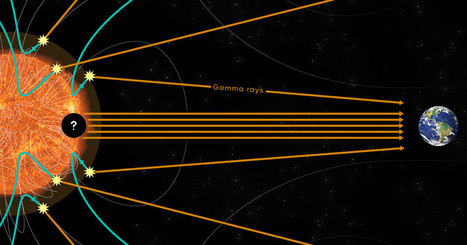
The sun radiates far more high-frequency light than expected, raising questions about unknown features of the sun’s magnetic field and the possibility of even more exotic physics. Several decade’s worth of telescope observations of the sun have revealed a startling mystery: Gamma rays, the highest frequency waves of light, radiate from our nearest star seven times more abundantly than expected. Stranger still, despite this extreme excess of gamma rays overall, a narrow bandwidth of frequencies is curiously absent. The surplus light, the gap in the spectrum, and other surprises about the solar gamma-ray signal potentially point to unknown features of the sun’s magnetic field, or more exotic physics. “It’s amazing that we were so spectacularly wrong about something we should understand really well: the sun,” said Brian Fields, a particle astrophysicist at the University of Illinois, Urbana-Champaign. The unexpected signal has emerged in data from the Fermi Gamma-ray Space Telescope, a NASA observatory that scans the sky from its outpost in low-Earth orbit. As more Fermi data have accrued, revealing the spectrum of gamma rays coming from the sun in ever-greater detail, the puzzles have only proliferated. “We just kept finding surprising things,” said Annika Peter of Ohio State University, a co-author of a recent white paper summarizing several years of findings about the solar gamma-ray signal. “It’s definitely the most surprising thing I’ve ever worked on.”
|
|
Scooped by
Dr. Stefan Gruenwald
February 27, 2023 12:45 PM
|
Employing an elegant music metaphor, Carl Sagan wrote, “It is not known whether there is a vast array of biological themes and counterpoints in the universe; whether there are places that have fugues, compared with which our one tune is a bit thin and reedy. Or it may be that our tune is the only tune around. Accordingly, the prospects for life on other planets must be considered in any general discussion of life.” Today a new generation of astrobiologists have taken Sagan’s prospect to heart. If life has managed to gain a foothold somewhere else in the cosmos, alien life could look very different than the varieties of life found on Earth. If we don’t have a broad, robust definition of what life is, we may miss it when searching for extraterrestrial life in the cosmos. In a recent white paper submitted to the Planetary Science and Astrobiology Decadal Survey 2023-2032, of the National Academies, a group of scientists, affiliated with NASA, SETI, and universities around the world, outlined a way forward in astrobiological research. They wrote “the probability that life in the universe would share a biochemical ancestry with life on Earth quickly diminishes the further away from Earth we explore.” It’s imperative, the scientists continued, “that we build foundational knowledge for life detection strategies that target universal biosignatures.” Aaron Goldman, a biologist from Oberlin College, who has been working on problems relating to the origin of life on Earth, says it’s important we distinguish what we mean when we talk about living and non-living entities, especially in the context of astrobiology. “The most successful definitions of life fall into two general categories: entropic definitions, which describe life through its ability to increase internal order at the expense of increasing disorder in the surrounding environment; and evolutionary definitions, which describe life through its ability to evolve by natural selection,” Goldman says. Entropic definitions detail life’s ability to harness sources of free energy, such as the sun, that feed metabolic processes which allow life to build structures and carry out its functions. The set of objects we call “life” are highly ordered and are low in entropy, according to this view. But the entropic view of life is not without its problems. A counterintuitive result of thinking about life this way means stars themselves could meet the criteria to be considered life. Nuclear fusion and fission in the star’s core maintain the structures and processes that are necessary to its stable physiology and anatomy—a type of stellar metabolism that mirrors the metabolic processes of biological organisms. It seems obvious, though, that stars are not living, or at least they are not in the same class of entities that we might call life. Similarly, it’s easy to see the appeal of evolutionary definitions of life as a self-sustaining system capable of Darwinian evolution. Evolution by natural selection has driven diversity and adaptation in all living things on Earth since the last universal common ancestor. The trouble with qualitative descriptions of life, like the entropic and evolutionary approaches, is they often present numerous gray areas and strange counter examples. In such cases we are left with a set of life’s features that serve as a litmus test for whether one set of phenomena qualifies as life or not. Are viruses alive? Being unable to replicate without infecting a host, and their lack of energy needs, might suggest they aren’t under both the entropic and evolutionary views. What about digital or synthetic lifeforms? A lot of people might say no because they don’t share the biological features with the entities that we do call living, and are composed of an entirely different substrate. Under one such set of criteria, our answers might say no, and under another they might say yes, while our intuition might tell us something else altogether. In recognizing the problems that can crop up when trying to apply these universal qualitative definitions of life, astrobiologists have asked, Are there quantifiable features of chemistry that can distinguish the characteristics of life in a way that can be applied in our search for extraterrestrial life? Could it be possible to build a “physics of life” from the ground up? One of the first attempts at setting out a quantifiable framework for identifying extraterrestrial biological processes was made in 2004 by NASA planetary scientist Chris McKay. McKay introduced the “lego principle,” which describes the blocks of molecules that constitute structures in biology, such as proteins. McKay noticed that in contrast to abiotic processes, biology does not draw from the full range of available organic molecules when producing structures associated with life. Amino acids, which are probably the most important set of organic molecules used in Earth-based living systems, have the quality of being chiral. This means they have a non-superimposable mirror image, or that each amino acid has a left-handed and a right-handed version of itself. Of the 20 amino acids used in proteins, Earth-based life only makes use of the left-handed version, whereas abiotic processes tend to use an even distribution of left-handed and right-handed organic molecules. McKay’s lego principle could be applied in the search for alien biochemistry in the solar system. Organic material sampled from promising sites for life, like Mars or Europa, could be tested for the chirality of one type of organic molecule over the other. Analyzing the concentration of organic molecules in these environments may reveal patterns indicative of life, even if those patterns do not involve the specific organic molecules exploited by Earth-based life. Could it be possible to build a “physics of life” from the ground up? Astrobiologist Sara Walker from Arizona State University and chemist Lee Cronin from the University of Glasgow have their own view of life. Their “assembly theory” suggests there is a quantifiable difference in the complexity of molecules that can be created by living processes compared to non-living ones. “Basically the idea is what underlies life is the physics that builds complexity in the universe,” Walker says. In a rudimentary way, for an atom to form a bond to create a molecule, an energy barrier has to be crossed, so as a molecule gets more complex, it gets increasingly unlikely that it was created by chance; or as Walker puts it, “the universe doesn’t make complex things for free.” Life, though, is able to bypass these energy barriers, opening up an extremely vast chemical space where a mind-boggling number of complex molecular structures can be realized. The goal of assembly theory, says Walker, is to “understand the circumstances when selection emerges and when you start building up complexity.” Assembly theory describes complex molecules with something called the molecular assembly index. The molecular assembly value of a molecule is determined by the shortest number of steps that are needed to create that molecule through its elementary building blocks (atoms and their bonds), and this number can be derived for a given molecule through analysis in mass spectrometers. Finding collections of molecules in space above a certain MA threshold would highly suggest the presence of processes that we might call living. For assembly theory, it is the intrinsic complexity of an object which determines whether it was the product of living processes.
|
|
Scooped by
Dr. Stefan Gruenwald
February 22, 2023 12:13 PM
|
How will Europa Clipper see through Europa's thick ice shell to study the moon's ocean? Engineers test one of two high-frequency radar antennas for Europa Clipper’s REASON instrument on a hilltop at NASA’s Jet Propulsion Laboratory in southern California. The antenna is the narrow copper rod, extending from either side of the tower at right and held straight by several cables and a crossbar. In Earth's gravity, the antenna requires support to keep it straight for testing. Credit: NASA/JPL-Caltech Earth and Jupiter’s moon Europa have something in common: a liquid water ocean. Despite being one-fourth of Earth’s diameter, Europa likely has a subsurface ocean containing more than twice as much water as we have on Earth. But Europa’s ocean is hidden beneath a shell of ice thicker than any ice on Earth. How will Europa Clipper see through it to study Europa’s ocean? Europa Clipper’s REASON instrument will peer through Europa’s ice with radar, seek the ocean below, and study the ice’s structure and thickness. Only a handful of spacecraft have visited the solar system’s outer planets, and none carried ice-penetrating radar to view oceans below the surface. In addition to Europa Clipper, the European Space Agency’s JUpiter ICy moons Explorer (or JUICE) spacecraft will carry an ice-penetrating radar called the Radar for Icy Moons Exploration (or RIME) instrument. JUICE will launch in 2023 and arrive in 2031, and Europa Clipper will launch in 2024 and arrive in 2030. While Europa Clipper and JUICE will be the first to carry this type of radar, it’s not a new technology. Ice-penetrating radar have been used by researchers to probe Earth’s ice sheets for over half a century. Researchers use ice-penetrating radar to study ice thickness, subglacial lakes, ice temperatures, the orientation of ice crystals within glaciers, and the topography and geology below ice. “Ice and radar are an awesome combination,” says Gregor Steinbrügge, a planetary scientist at NASA’s Jet Propulsion Laboratory (JPL) and an investigation scientist for the REASON instrument. “Ice is very transparent to radar unless the radar hits something different. That is useful on Earth for measuring glacier and ice shelf thickness, and how they change over time. Ice-penetrating radar is more important than ever for monitoring Earth. “It shows us how glaciers and ice sheets are responding to climate change,” said Dustin Schroeder, a radioglaciologist at Stanford University and a member of the REASON science team. A radioglaciologist is someone who studies glaciers, ice sheets, ice caps, and icy moons using radar. Researchers routinely fly planes with ice-penetrating radar over Greenland and Antarctica, whose combined ice sheets contain more than 99 percent of Earth’s freshwater ice. Ice-penetrating radars allow scientists to calculate the ice’s volume and how much oceans will rise as the ice melts. The radar observations provide essential inputs for computer models, allowing scientists to estimate future sea level rise and produce assessments for the Intergovernmental Panel on Climate Change (IPCC).
|
|
Scooped by
Dr. Stefan Gruenwald
February 21, 2023 4:26 PM
|
Punctuating the darkness at the end of the universe could be silent fireworks—explosions of the remnants of stars that were never supposed to explode. The end of the universe as we know it will not come with a bang. Most stars will very, very slowly fizzle as their temperatures fade to zero. Dr. Matt Caplan “It will be a bit of a sad, lonely, cold place,” said theoretical physicist Matt Caplan, who added no one will be around to witness this long farewell happening in the far far future. Most believe all will be dark as the universe comes to an end. “It’s known as ‘heat death,’ where the universe will be mostly black holes and burned-out stars,” said Caplan, who imagined a slightly different picture when he calculated how some of these dead stars might change over the eons. New theoretical work by Caplan, an assistant professor of physics at Illinois State University, finds that many white dwarfs may explode in supernova in the distant far future, long after everything else in the universe has died and gone quiet. In the universe now, the dramatic death of massive stars in supernova explosions comes when internal nuclear reactions produce iron in the core. Iron cannot be burned by stars—it accumulates like a poison, triggering the star’s collapse creating a supernova. But smaller stars tend to die with a bit more dignity, shrinking and becoming white dwarfs at the end of their lives. This is the way the universe ends: not with a whimper, but a bang Science magazine explores Dr. Matt Caplan's work on black dwarf supernovas. “Stars less than about 10 times the mass of the sun do not have the gravity or density to produce iron in their cores the way massive stars do, so they can’t explode in a supernova right now,” said Caplan. “As white dwarfs cool down over the next few trillion years, they’ll grow dimmer, eventually freeze solid, and become ‘black dwarf’ stars that no longer shine.” Like white dwarfs today, they’ll be made mostly of light elements like carbon and oxygen and will be the size of the earth but contain about as much mass as the sun, their insides squeezed to densities millions of times greater than anything on earth. But just because they’re cold doesn’t mean nuclear reactions stop. “Stars shine because of thermonuclear fusion—they’re hot enough to smash small nuclei together to make larger nuclei, which releases energy. White dwarfs are ash, they’re burnt out, but fusion reactions can still happen because of quantum tunneling, only much slower, Caplan said. “Fusion happens, even at zero temperature, it just takes a really long time.” He noted this is the key for turning black dwarfs into iron and triggering a supernova. "It’s hard to imagine anything coming after that, black dwarf supernova might be the last interesting thing to happen in the universe", says Matt Caplan. Caplan’s new work, accepted for publication by Monthly Notices of the Royal Astronomical Society, calculates how long these nuclear reactions take to produce iron, and how much iron black dwarfs of different sizes need to explode. He calls his theoretical explosions “black dwarf supernova” and calculates that the first one will occur in about 10 to the 1100th years. “In years, it’s like saying the word ‘trillion’ almost a hundred times. If you wrote it out, it would take up most of a page. It’s mindbogglingly far in the future.” Of course, not all black dwarfs will explode. “Only the most massive black dwarfs, about 1.2 to 1.4 times the mass of the sun, will blow.” Still, that means as many as 1 percent of all stars that exist today, about a billion trillion stars, can expect to die this way. As for the rest, they’ll remain black dwarfs. “Even with very slow nuclear reactions, our sun still doesn’t have enough mass to ever explode in a supernova, even in the far far future. You could turn the whole sun to iron and it still wouldn’t pop.” Caplan calculates that the most massive black dwarfs will explode first, followed by progressively less massive stars, until there are no more left to go off after about 10^32000 years. At that point, the universe may truly be dead and silent. “It’s hard to imagine anything coming after that, black dwarf supernova might be the last interesting thing to happen in the universe. They may be the last supernova ever.” By the time the first black dwarfs explode, the universe will already be unrecognizable. “Galaxies will have dispersed, black holes will have evaporated, and the expansion of the universe will have pulled all remaining objects so far apart that none will ever see any of the others explode. It won’t even be physically possible for light to travel that far.”
|
|
|
Scooped by
Dr. Stefan Gruenwald
March 17, 2023 3:34 PM
|
After analyzing the achondrite meteorite samples, researchers discovered that water comprised less than two millionths of their mass. For comparison, the wettest meteorites -- a group called carbonaceous chondrites -- contain up to about 20% of water by weight, or 100,000 times more than the meteorite samples studied by Newcombe and her co-authors. This means that the heating and melting of planetesimals leads to near-total water loss, regardless of where these planetesimals originated in the solar system and how much water they started out with. Newcombe and her co-authors discovered that, contrary to popular belief, not all outer solar system objects are rich in water. This led them to conclude that water was likely delivered to Earth via unmelted, or chondritic, meteorites. Newcombe said their findings have applications beyond geology. Scientists of many disciplines -- and especially exoplanet researchers -- are interested in the origin of Earth's water because of its deep connections with life. "Water is considered to be an ingredient for life to be able to flourish, so as we're looking out into the universe and finding all of these exoplanets, we're starting to work out which of those planetary systems could be potential hosts for life," Newcombe said. "In order to be able to understand these other solar systems, we want to understand our own."
|
|
Scooped by
Dr. Stefan Gruenwald
March 16, 2023 4:12 PM
|
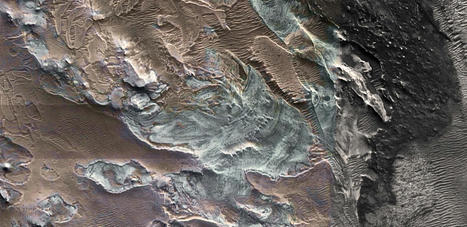
In a groundbreaking announcement at the 54th Lunar and Planetary Science Conference held in The Woodlands, Texas, scientists revealed the discovery of a relict glacier near Mars' equator. Located in Eastern Noctis Labyrinthus at coordinates 7° 33' S, 93° 14' W, this finding is significant as it implies the presence of surface water ice on Mars in recent times, even near the equator. This discovery raises the possibility that ice may still exist at shallow depths in the area, which could have significant implications for future human exploration. The surface feature identified as a "relict glacier" is one of many light-toned deposits (LTDs) found in the region. Typically, LTDs consist mainly of light-colored sulfate salts, but this deposit also shows many of the features of a glacier, including crevasse fields and moraine bands. The glacier is estimated to be 6 kilometers long and up to 4 kilometers wide, with a surface elevation ranging from +1.3 to +1.7 kilometers. This discovery suggests that Mars' recent history may have been more watery than previously thought, which could have implications for understanding the planet's habitability. "What we've found is not ice, but a salt deposit with the detailed morphologic features of a glacier. What we think happened here is that salt formed on top of a glacier while preserving the shape of the ice below, down to details like crevasse fields and moraine bands," said Dr. Pascal Lee, a planetary scientist with the SETI Institute and the Mars Institute, and the lead author of the study. The presence of volcanic materials blanketing the region hints of how the sulfate salts might have formed and preserved a glacier's imprint underneath. When freshly erupted pyroclastic materials (mixtures of volcanic ash, pumice, and hot lava blocks) come in contact with water ice, sulfate salts like the ones commonly making up Mars' light-toned deposits may form and build up into a hardened, crusty salt layer. "This region of Mars has a history of volcanic activity. And where some of the volcanic materials came in contact with glacier ice, chemical reactions would have taken place at the boundary between the two to form a hardened layer of sulfate salts," explains Sourabh Shubham, a graduate student at the University of Maryland's Department of Geology, and a co-author of the study. "This is the most likely explanation for the hydrated and hydroxylated sulfates we observe in this light-toned deposit."
|
|
Scooped by
Dr. Stefan Gruenwald
March 15, 2023 4:40 PM
|
Wouldn’t finding life on other worlds be easier if we knew exactly where to look for it? Researchers have limited opportunities to collect samples on Mars or elsewhere or access remote sensing instruments when hunting for life beyond Earth. In a paper published in Nature Astronomy, an interdisciplinary study led by SETI Institute Senior Research Scientist Kim Warren-Rhodes, mapped the sparse life hidden away in salt domes, rocks and crystals at Salar de Pajonales at the boundary of the Chilean Atacama Desert and Altiplano. Warren-Rhodes then worked with co-investigators Michael Phillips (Johns Hopkins Applied Physics Lab) and Freddie Kalaitzis (University of Oxford) to train a machine learning model to recognize the patterns and rules associated with their distributions so it could learn to predict and find those same distributions in data on which it was not trained. In this case, by combining statistical ecology with AI/ML, the scientists could locate and detect biosignatures up to 87.5% of the time (versus ≤10% by random search) and decrease the area needed for search by up to 97%.
“Our framework allows us to combine the power of statistical ecology with machine learning to discover and predict the patterns and rules by which nature survives and distributes itself in the harshest landscapes on Earth.,” said Rhodes. “We hope other astrobiology teams adapt our approach to mapping other habitable environments and biosignatures. With these models, we can design tailor-made roadmaps and algorithms to guide rovers to places with the highest probability of harboring past or present life—no matter how hidden or rare.” A video clip showing the major concepts of integrating datasets from orbit to the ground is presented. The first frames zoom in from a global view to an orbital image of Salar de Pajonales. The salar is then overlain with an interpretation of its compositional variability derived from ASTER multispectral data. The next sequence of frames transitions to drone-derived images of the field site within Salar de Pajonales. Note features of interest that become identifiable in the scene, starting with polygonal networks of ridges, then individual gypsum domes and polygonal patterned ground, and ending with individual blades of selenite. The video ends with a first-person view of a set of gypsum domes studied in the article using machine learning techniques. Video credit: M. Phillips Ultimately, similar algorithms and machine learning models for many different types of habitable environments and biosignatures could be automated onboard planetary robots to efficiently guide mission planners to areas at any scale with the highest probability of containing life. Rhodes and the SETI Institute NASA Astrobiology Institute (NAI) team used the Salar de Pajonales, as a Mars analog. Pajonales is a high altitude (3,541 m), high U/V, hyperarid, dry salt lakebed, considered inhospitable to many life forms but still habitable.
During the NAI project’s field campaigns, the team collected over 7,765 images and 1,154 samples and tested instruments to detect photosynthetic microbes living within the salt domes, rocks and alabaster crystals. These microbes exude pigments that represent one possible biosignature on NASA’s Ladder of Life Detection.
At Pajonales, drone flight imagery connected simulated orbital (HiRISE) data to ground sampling and 3D topographical mapping to extract spatial patterns. The study’s findings confirm (statistically) that microbial life at the Pajonales terrestrial analog site is not distributed randomly but concentrated in patchy biological hotspots strongly linked to water availability at km to cm scales. Next, the team trained convolutional neural networks (CNNs) to recognize and predict macro-scale geologic features at Pajonales—some of which, like patterned ground or polygonal networks, are also found on Mars—and micro-scale substrates (or ‘micro-habitats’) most likely to contain biosignatures.
Like the Perseverance team on Mars, the researchers tested how to effectively integrate a UAV/drone with ground-based rovers, drills and instruments (e.g., VISIR on ‘MastCam-Z’ and Raman on ‘SuperCam’ on the Mars 2020 Perseverance rover).
|
|
Scooped by
Dr. Stefan Gruenwald
March 15, 2023 4:25 PM
|
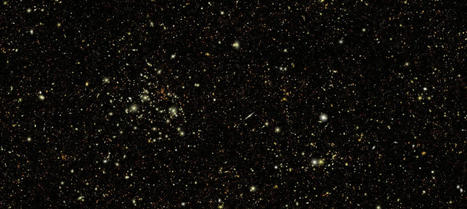
The synthetic galaxy catalog will help test Roman's capabilities and foster collaboration with the Rubin project. Scientists have created a gargantuan synthetic survey that shows some of what we can expect from NASA's Nancy Grace Roman Space Telescope, slated to launch in the mid-2020s, and the Vera C. Rubin Observatory's Legacy Survey of Space and Time (LSST), funded by the National Science Foundation and the Department of Energy. Though it represents just a small chunk of the real future surveys, this simulated version contains a staggering number of galaxies – 33 million of them, along with 200,000 foreground stars in our home galaxy. The team drew data from a mock universe originally developed to support science planning with the Vera C. Rubin Observatory, which is located in Chile and set to begin full operations in 2024, and the Rubin/LSST Dark Energy Science Collaboration. Because the Roman and Rubin/LSST simulations use the same source data, astronomers can compare them and see what they can expect to learn from pairing the telescopes’ observations once they’re both actively scanning the universe. The work put in now will also help both teams make the most of the data they collect in the future. "The idea there was to use the same simulated data, so that downstream we can foster more collaboration," said James Chiang, a lead scientist at the Department of Energy's SLAC National Accelerator Laboratory and a researcher on the project. "I'm excited to work with everyone and see things come together."
|
|
Scooped by
Dr. Stefan Gruenwald
March 6, 2023 8:18 PM
|
This observation from the NASA/ESA/CSA James Webb Space Telescope contains three different images of the same supernova-hosting galaxy, all of which were created by a colossal gravitational lens. Gravitational lensing occurs when a massive celestial body causes a sufficient curvature of spacetime to bend the path of light traveling past or through it, almost like a vast lens. In this case, the lens is the galaxy cluster RX J2129, located around 3.2 billion light-years from Earth in the constellation Aquarius. This annotated image of the cluster highlights the three images of the lensed galaxy, including the one where the supernova was detected. Astronomers discovered the supernova in the triply-lensed background galaxy using observations from the NASA/ESA Hubble Space Telescope, and they suspected that they had found a very distant Type Ia supernova. These supernovae always produce a fairly consistent luminosity — at the same distance, one looks as bright as any other — which makes them particularly helpful to astronomers. As their distance from Earth is proportional to how dim they appear in the night sky, objects with known brightness can be used as 'standard candles' to measure astronomical distances. The gravitational lens has created three lensed images of the background galaxy, which are not uniform in size, position or age. Because mass in the galaxy cluster is distributed unevenly, rays of light emitted by the supernova are bent by the lens in different amounts, and so they take longer or shorter paths to the viewer — resulting in separate images. The light that took the longest path gives us the oldest image of the galaxy, in which the supernova is still visible. The next image is of the galaxy as it appears roughly 320 days later than the first one, and the last image roughly 1000 days after the first. At both later points in time, the supernova has already faded from view. The name for the transient is AT 2022riv. This observation was captured by Webb's Near-InfraRed Camera to measure the brightness of the lensed supernova. As part of the same programme, NIRSpec spectroscopy of the supernova was also obtained, which will allow comparison of this distant supernova to Type Ia supernovae in the nearby Universe. This is an important way to verify that one of astronomers’ tried-and-tested methods of measuring vast distances works as expected. [Image description: The main image shows a large elliptical galaxy, surrounded by many small similar galaxies in a cluster, and background stars and galaxies. Three smaller pull-outs show three lensed images of a background galaxy, close up.]
|
|
Scooped by
Dr. Stefan Gruenwald
March 6, 2023 10:59 AM
|
Galaxies come in many different shapes and sizes, but the basic ingredients seem fairly consistent. There's usually a big black hole at the center, a bunch of stars and gas, and a generous serving of dark matter that helps glue the whole thing together. While dark matter is, well, dark, the stars, gas, and swirling core of heated material stand out with the radiant beauty of a city in the night. However, one newly discovered dwarf galaxy located a mere 94 million light-years away is defying expectations. It's named FAST J0139+4328, and it's not emitting any optical light. In fact, it's barely emitting any light at all. FAST J0139+4328 appears to be what is known as a dark galaxy. Aside from a small smattering of stars, the galaxy seems to be made up almost entirely of dark matter. A paper describing the discovery has been accepted for publication in The Astrophysical Journal Letters, and is available on the preprint server arXiv. "This is the first time that an isolated dark galaxy has been detected in the nearby Universe" write a team of astronomers led by Jin-Long Xu of the Chinese Academy of Sciences in Beijing. Dark matter is currently the leading explanation for a weird discrepancy between the amount of normal, or baryonic, matter observed in corners of the Universe and the strength of the gravity required to hold it together. Put simply, there's just not enough baryonic matter to account for all the gravity. Galaxies are spinning so fast that they should fly apart without something else binding it all together. Whatever is responsible for this extra gravity remains elusive. It doesn't seem to interact with normal matter in any way other than through gravity; nor does it emit any form of radiation we can currently detect. We simply can't see the source of this extra mass. Still, reserving a space for some kind of unknown material goes a long way towards resolving the problems we observe. However, dark matter theory isn't perfect either. One problems is a discrepancy between simulations of the dark matter distribution in the Universe and the number of dwarf galaxies we see out there orbiting larger galaxies. There are way fewer dwarf galaxies than the simulations suggest there ought to be. This is known as the dwarf galaxy problem. It is possible we're simply unable to detect some kinds of dwarf galaxy, such as those with very few stars, consisting primarily of gas and dark matter. Finding enough of them would help resolve the whole shortfall in dwarf galaxies.
|
|
Scooped by
Dr. Stefan Gruenwald
February 28, 2023 1:33 PM
|
The first stars in the cosmos may have topped out at over 10,000 times the mass of the sun, roughly 1,000 times bigger than the biggest stars alive today, a new study has found. Nowadays, the biggest stars are 100 solar masses. But the early universe was a far more exotic place, filled with mega-giant stars that lived fast and died very, very young, the researchers found. And once these doomed giants died out, conditions were never right for them to form again. The cosmic Dark Ages More than 13 billion years ago, not long after the Big Bang, the universe had no stars. There was nothing more than a warm soup of neutral gas, almost entirely made up of hydrogen and helium. Over hundreds of millions of years, however, that neutral gas began to pile up into increasingly dense balls of matter. This period is known as the cosmic Dark Ages. In the modern day universe, dense balls of matter quickly collapse to form stars. But that’s because the modern universe has something that the early universe lacked: a lot of elements heavier than hydrogen and helium. These elements are very efficient at radiating energy away. This allows the dense clumps to shrink very rapidly, collapsing to high enough densities to trigger nuclear fusion – the process that powers stars by combining lighter elements into heavier ones. But the only way to get heavier elements in the first place is through that same nuclear fusion process. Multiple generations of stars forming, fusing, and dying enriched the cosmos to its present state. Without the ability to rapidly release heat, the first generation of stars had to form under much different, and much more difficult, conditions. Cold fronts To understand the puzzle of these first stars, a team of astrophysicists turned to sophisticated computer simulations of the dark ages to understand what was going on back then. They reported their findings in January in a paper published to the preprint database arXiv and submitted for peer review to the Monthly Notices of the Royal Astronomical Society.
|
|
Scooped by
Dr. Stefan Gruenwald
February 27, 2023 6:54 PM
|
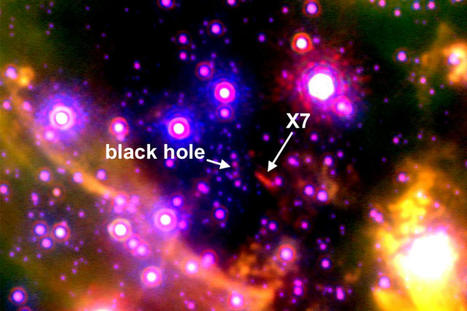
Research by UCLA and Keck Observatory scientists concluded that the mysterious X7 object could be a debris cloud from a stellar collision. For two decades, scientists have observed an elongated object named X7 near the supermassive black hole at the center of the Milky Way and wondered what it was. Was it pulled off a larger structure nearby? Was its unusual form the result of stellar winds or was it shaped by jets of particles from the black hole? Now, having examined the evolution of X7 using 20 years of data gathered by the Galactic Center Orbit Inintiative, astronomers from the UCLA Galactic Center Group and the Keck Observatory propose that it could be a cloud of dust and gas that was ejected during the collision of two stars. Over time, they report, X7 has stretched, and it is being pulled apart as the black hole drags it closer, exerting its tidal force upon the cloud. They expect that within the next few decades, X7 will disintegrate and the gas and dust of which it is composed will eventually be drawn toward the black hole, which is called Sagittarius A*, or Sgr A*. The study is published in The Astrophysical Journal. "No other object in this region has shown such an extreme evolution," said Anna Ciurlo, a UCLA assistant researcher and the paper's lead author. "It started off comet-shaped and people thought maybe it got that shape from stellar winds or jets of particles from the black hole. But as we followed it for 20 years we saw it becoming more elongated. Something must have put this cloud on its particular path with its particular orientation." X7 has a mass of about 50 Earths and is on an orbital path around Sgr A* that would take 170 years to complete. But that might never happen. Based on its trajectory, the team estimates that X7 will make its closest approach to Sgr A* around the year 2036, and then likely spiral toward Sgr A* and disappear. "We anticipate the strong tidal forces exerted by the galactic black hole will ultimately tear X7 apart before it completes even one orbit," said co-author Mark Morris, UCLA professor of physics and astronomy.
|
|
Scooped by
Dr. Stefan Gruenwald
February 27, 2023 6:24 PM
|
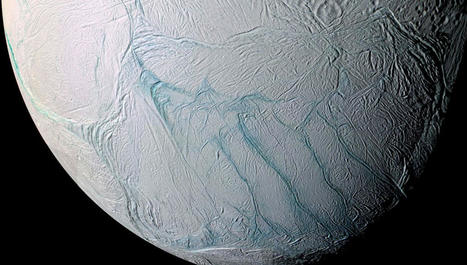
A new model explains some peculiar observations of Cassini and could help with the search for life on the icy moon. Underneath its icy shell, Enceladus harbors a deep water-ocean with hydrothermal activity at its bottom. And on the southern pole of the moon, a region called the tiger stripes is known to have geysers. And these geysers launch material into space and ended up forming the E-ring. The E-ring is quite unlike all the other rings of Saturn. It is much wider, roughly the Earth-Moon distance, and much thicker than the other rings. It is also rich in microscopic particles of ice and silica and the Cassini mission identified the icy moon Enceladus as its creator. It is unclear how the nano-silica particles seen by Cassini formed but one suggestion sees them as coming from the seafloor of Enceladus, and new models agree with the idea. Materials can be lifted from the moon’s seafloor and taken to the icy shell in a matter of months. “Our model shows that these grains may be transported through the ocean interior on timescales faster than previously thought,” Assistant Professor Emily Hawkins, from Loyola Marymount University, said in a statement. “The nano-silica material is thought to be important in the generation of life on the icy moon. Ultimately, our research aids in the understanding of the habitability of Enceladus, and will guide future missions to the outer solar system moon.” What keeps the interior of Enceladus going is the tidal forces it experiences as it goes around Saturn in a strongly elliptical orbit. The forces squish the rocky core and the ice shell and the bottom of the ocean gets heated by hydrothermal vents that form there. “It’s like boiling a pot on a stove. Tidal friction adds heat to the ocean and causes upwelling currents of warm water,” explained planetary scientist Ashley Schoenfeld, the article’s lead author and a graduate student at the University of California, Los Angeles. “What our study shows is that these flows are strong enough to pick up materials from the seafloor and bring them to the ice shell that separates the ocean from the vacuum of space.” While it takes only a few months for particles to rise from the seafloor, it is unclear how long its takes for them to be sprayed into space. The process might be quick or it could involve more complex processes related to the ice shell. The team is now looking further into this distant ocean evolution and investigating what might end up in space. But it is clear that understanding the composition of the E-rings might provide fantastic insights into what lies beneath the ice shelf. Maybe even life.
|
|
Scooped by
Dr. Stefan Gruenwald
February 27, 2023 12:48 PM
|
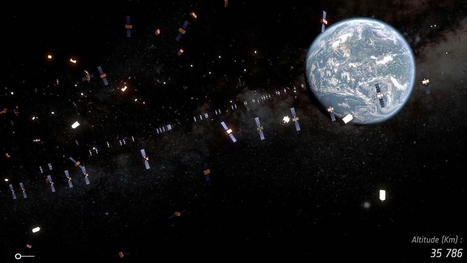
Just 10 years ago, a mere thousand or so operational satellites may have orbited our planet, but there will be tens or even hundreds of thousands a decade from now. Experts have been sounding alarm bells for years that Earth orbit is getting a bit too crowded. So how many satellites can we actually launch to space before it gets to be too much? Jonathan McDowell is an astrophysicist and astronomer at the Harvard-Smithsonian Center for Astrophysics who studies super-energetic phenomena in the universe such as jet-emitting black holes in galactic centers. In recent years, however, McDowell has gained prominence for his work in a completely different field of space research. In his monthly digital circular called Jonathan's Space Report(opens in new tab), McDowell tracks the growing number of satellite launches and the ballooning number of objects in Earth orbit. The project started with an ambition to "provide a pedantic historical record of the space age," but has, in a way, become a chronicle of the environmental destruction of the near Earth environment. In his frequent media appearances, McDowell has been vocal about his views on the future of the increasingly overcrowded near-Earth space. "It's going to be like an interstate highway, at rush hour in a snowstorm with everyone driving much too fast," he told Space.com when asked what the situation in orbit will be like if existing plans for satellite megaconstellations such as SpaceX's Starlink, OneWeb and Amazon Kuiper come to fruition. "Except that there are multiple interstate highways crossing each other with no stoplights."
|
|
Scooped by
Dr. Stefan Gruenwald
February 22, 2023 2:26 PM
|
In a new paper published in the journal Nature Astronomy, astronomers with Breakthrough Listen Initiative — the largest ever scientific research program aimed at finding evidence of alien civilizations — present a new machine learning-based method that they apply to more than 480 hours of data from the Robert C. Byrd Green Bank Telescope, observing 820 nearby stars. The method analyzed 115 million snippets of data, from which it identified around 3 million signals of interest. The authors then inspected the 20,515 signals and they identified 8 previously undetected signals of interest, although follow-up observations of these targets have not re-detected them. “The key issue with any techno-signature search is looking through this huge haystack of signals to find the needle that might be a transmission from an alien world,” said Dr. Steve Croft, an astrophysicist at the University of California, Berkeley and a member of the Breakthrough Listen team. “The vast majority of the signals detected by our telescopes originate from our own technology — GPS satellites, mobile phones, and the like. Our algorithm gives us a more effective way to filter the haystack and find signals that have the characteristics we expect from techno-signatures.” Classical techno-signature algorithms compare scans where the telescope is pointed at a target point on the sky with scans where the telescope moves to a nearby position, in order to identify signals that may be coming from only that specific point. These techniques are highly effective. For example, they can successfully identify the Voyager 1 space probe, at a distance of 20 billion km, in observations with the Green Bank Telescope. But all of these algorithms struggle in crowded regions of the radio spectrum, where the challenge is akin to listening for a whisper in a crowded room. The process developed by the team inserts simulated signals into real data, and trains an artificial intelligence algorithm known as an auto-encoder to learn their fundamental properties. The output from this process is fed into a second algorithm known as a random forest classifier, which learns to distinguish the candidate signals from the noisy background. “In 2021, our classical algorithms uncovered a signal of interest, denoted BLC1, in data from the Parkes telescope,” said Breakthrough Listen’s principal investigator Dr. Andrew Siemion, an astronomer at the University of California, Berkeley.
|
|
Scooped by
Dr. Stefan Gruenwald
February 21, 2023 4:39 PM
|
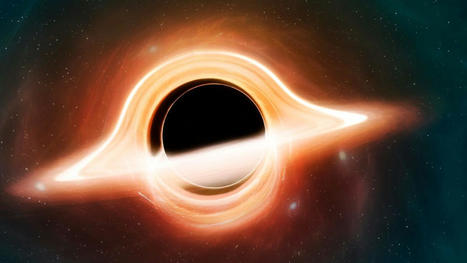
Black holes may be the origin of dark energy, according to a study by a team of researchers led by the University of Hawaii. When astronomers discovered that the universe is expanding at an accelerating rate, they theorized that some force must be pushing things farther apart and overcoming gravity, which should be slowing things down. That force was suggested to be dark energy, but no one has ever figured out from where it comes. But a team of 17 international researchers led by the University of Hawaii has discovered the first evidence for the origin point of dark energy: Black holes. Black holes acquire mass in two ways: accretion of gas and mergers with other black holes. But in studying nine billion years of black hole evolution in dormant giant elliptical galaxies, the researchers discovered that the older black holes are much larger than they should be based on those two methods of growth. That means there must be another way these black holes are acquiring mass. Researchers suggest the answer is dark energy in the form of vacuum energy, "a kind of energy included in spacetime itself ... [that] pushes the universe further apart, accelerating the expansion," according to a statement. "If the theory holds, then this is going to revolutionize the whole of cosmology, because at last we've got a solution for the origin of dark energy that's been perplexing cosmologists and theoretical physicists for more than 20 years," Dr. Chris Pearson of STFC RAL Space, a co-author of a study on the discovery, said in a statement. The idea that black holes are a source of dark energy isn't new. In fact, it's part of Einstein's theory of general relativity. But this is the first time astronomers have obtained observational evidence to support the theory. "We're really saying two things at once: That there's evidence the typical black hole solutions don't work for you on a long, long timescale, and we have the first proposed astrophysical source for dark energy," said study author Duncan Farrah, University of Hawaii astronomer, in the statement. A paper on the team's research was published in The Astrophysical Journal Letters on February 15th, 2023.
|