WormAtlas: A database of behavioral and structural anatomy of Caenorhabditis elegans. Complete neuronal map of the C. elegans roundworm. Provided is a compilation of an updated version of C. elegans wiring diagram (280 nonpharyngeal neurons (CANL/R were excluded since they have no obvious synapses), covering 6393 chemical synapses, 890 electrical junctions, and 1410 neuromuscular junctions).
The idea that your mother tongue shapes your experience of the world may be true after all. Seventy years ago, in 1940, a popular science magazine published a short article that set in motion one of the trendiest intellectual fads of the 20th century.
In a new MIT study, researchers used optogenetics to show that memories reside in very specific brain cells, and that simply activating a tiny fraction of brain cells can recall an entire memory.
Japanese scientists have now measuree the brain activity of honeybees as they form a killer swarm around their worst enemy, the giant hornet. The Japanese honeybees' response to a hive-invading giant hornet is efficient and dramatic; they form a "bee ball" around it, serving to cook and asphyxiate it.
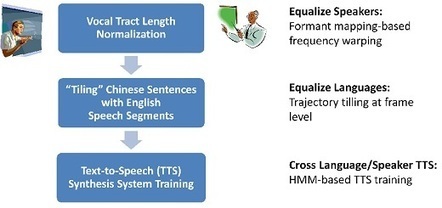
Voice user interface needs to output responses in TTS synthesized speech. Sometimes it is even more desirable to have the response in mixed languages, e.g. in a foreign country, it would be convenient if a user of car-navigation system who is not fluent in that particular foreign language can hear instructions in mixed-codes, i.e., entities like street names synthesized in the local language and routing directions in the user’s native language. The mixed-coded TTS can be easily built by a truly bilingual speaker. However, it is usually difficult to find such a talent. We demo a new approach in turning monolingual TTS into multi-lingual one. Out of a speaker’s monolingual recordings, our algorithm can render speech sentences of different languages for building mixed-coded, bilingual TTS systems. For this system, recordings of 26 languages are used to build TTS of corresponding languages. By using the new approach, any mixed language pair out of the 26 languages can be build.
How can our brains decipher even garbled nonsense? A key factor could be context.
You might not realize it, but your brain is a code-cracking machine.
For emaxlpe, it deson't mttaer in waht oredr the ltteers in a wrod aepapr, the olny iprmoatnt tihng is taht the frist and lsat ltteer are in the rghit pcale. The rset can be a toatl mses and you can sitll raed it wouthit pobelrm.
Our five senses–sight, hearing, touch, taste and smell–seem to operate independently, as five distinct modes of perceiving the world. In reality, however, they collaborate closely to enable the mind to better understand its surroundings. We can become aware of this collaboration under special circumstances. In some cases, a sense may covertly influence the one we think is dominant. When visual information clashes with that from sound, sensory crosstalk can cause what we see to alter what we hear.
Ever wondered how you were supposed to keep up with the never-ending stream of content and data in your life? Not to worry, the elves of the Internet are busy at work, creating everything from magical little algorithms that automatically execute basic tasks to sophisticated utility apps that run in the background, taking care of all the minutiae in your daily life. Forget about hiring a personal assistant, you can “hire” off-the-shelf algorithms and digital apps that do all the heavy lifting for you. If that doesn't work, just ask Siri. Your life is an algorithm, your brain is an operating system, now go get some sleep.
Scientists have created a brain implant that not only allows monkeys to control a computer with their thoughts, it also allows them to “feel” the virtual objects. The new, two-way, brain-machine-brain interface represents a major breakthrough in the field of neuroprosthetics. Bolstered by the results, the scientists plan to test the technology on a quadriplegic in just three years.
Scientists have created a brain implant that allows monkeys to control a virtual arm and feel virtual objects inside a computer.
This is done by implanting electrodes in the motor cortex and the somatosensory cortex, which is a major part of the brain that controls movements and senses touch. If this project succeeds, it will become possible to add sensory to prosthetic limbs.
Noted science-fiction writer Isaac Asimov predicted that one day, we'd "have computer outlets in every home, each of them hooked up to enormous libraries where anyone can ask any question and be given answers, be given reference materials, be something you're interested in knowing, from an early age, however silly it might seem to someone else," and with this appliance, be able to truly enjoy learning instead of being forced to learn mundane facts and figures. His insight has proven to be amazingly accurate, as we now live in a world with the Internet, where nearly the entire wealth of human knowledge can live at our fingertips or even in our pockets.
It could be that we are on the verge of a great deluge of cognitive enhancement. Or it's possible that new brain-enhancing drugs and technologies will be nothing compared to how we've transformed our minds in the past. If it seems that making ourselves "artificially" smarter is somehow inhuman, it may be that similar activities are actually what made us human.
Are You Living In a Computer Simulation? Perhaps at least one of the following propositions is true: (1) the human species is very likely to go extinct before reaching a “posthuman” stage; (2) any posthuman civilization is extremely unlikely to run a significant number of simulations of their evolutionary history (or variations thereof); (3) we are possibly living in a computer simulation. It follows that the belief that there is a significant chance that we will one day become posthumans who run ancestor-simulations is false, unless we are currently living in a simulation. A number of other consequences of this result are also possible.
Awakening from anesthesia is often associated with an initial phase of delirious struggle before the full restoration of awareness and orientation to one's surroundings. Scientists now know why this may occur: primitive consciousness emerges first. Using brain imaging techniques in healthy volunteers, a team of scientists led by Adjunct Professor Harry Scheinin, M.D. from the University of Turku, Finland in collaboration with investigators from the University of California, Irvine, have now imaged the process of returning consciousness after general anesthesia. The emergence of consciousness was found to be associated with activations of deep, primitive brain structures rather than the evolutionary younger neocortex.
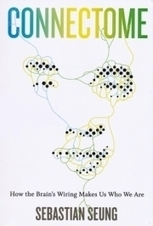
M.I.T. scientist Sebastian Seung describes the audacious plan to find the connectome--a map of every single neuron in the brain. What makes us who we are? Where is our personal history recorded, or our hopes? What explains autism or schiziphrenia or remarkable genius?
Systems neuroscientists are pushing aside their electrophysiology rigs to make room for the tools of 'optogenetics'. Neuroscience is a field in the process of reinvention.
Researchers at Linköping University in Sweden have taken a step closer to solving the mystery of how 100 billion neurons are created. Alenius and his colleagues are the first to go through all of the fruit fly’s 753 gene regulatory genes, called transcription factors. They have identified a set of seven that, in different combinations, are required to create each of the 34 neuron groups in the antenna. A surprising finding is that most transcription factors perform two tasks simultaneously: they can activate odorant receptors’ expression; while at the same time turning off others in the same cell.
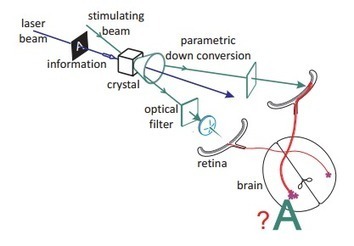
In a study published on April 19, 2011 in the journal Molecular Therapy, researchers at the McGovern Institute for Brain Research at MIT and the University of Southern California used optogenetic technology to restore vision in blind mice.
Pain? Just turn it off! It may sound like science fiction, but researchers based in Munich, Berkeley and Bordeaux have now succeeded in inhibiting pain-sensitive neurons on demand, in the laboratory. The crucial element in their strategy is a chemical sensor that acts as a light-sensitive switch.
The physicist Niels Bohr once defined an expert as "a person who has made all the mistakes that can be made in a very narrow field". A new study, forthcoming in Psychological Science, and led by Jason Moser at Michigan State University, expands on this important concept. The question at the heart of the paper is simple: Why are some people so much more effective at learning from their mistakes? After all, everybody screws up. The important part is what happens next. Do we ignore the mistake, brushing it aside for the sake of our self-confidence? Or do we investigate the error, seeking to learn from the snafu?
Creating the Board of Awesomeness was a labor of love for the Labs team, but we were blown away by how much you loved it as well. So well that it went everywhere -- and eventually needed to be rebuilt. Well, the labs team hates to waste an opportunity to make anything better, so we started thinking about what they could do to improve it. So here it is, your 'Board of Imagination'.
Oxford University scientists have come up with a new approach that turns functional magnetic resonance imaging (fMRI) into a full numerical measure of how the brain is working. Doctors may be able to use this new MRI approach to provide a lot more clinically useful information about patients coming in with strokes, brain injuries or a variety of other conditions.
The breakthrough technology announced by IBM researchers has been long sought: a way to use pulses of light in waveguides instead of electrons in wires for chip connections. Electrons generate heat, which limits has fast chips can work and requires a lot of power for cooling. Light has no such limitations.
The new technology could accelerate the performance of supercomputers a thousand times, taking us from the current 2.6 petaflops (10E15 or quadrillion operations per second) Chinese Tianhe-1A supercomputer to an exaflop (10E18 or a quintillion operations per second) supercomputer in just 8 years (“flops” stands for “floating point operations per second”).
IBM has been shipping computers for more than 65 years, and it is finally on the verge of creating a true electronic brain.
Big Blue is announcing today that it, along with four universities and the Defense Advanced Research Projects Agency (DARPA), have created the basic design of an experimental computer chip that emulates the way the brain processes information.
To get content containing either thought or leadership enter:
To get content containing both thought and leadership enter:
To get content containing the expression thought leadership enter:
You can enter several keywords and you can refine them whenever you want. Our suggestion engine uses more signals but entering a few keywords here will rapidly give you great content to curate.


 Your new post is loading...