Last month, dozens of news outlets reported the story of Charlotte Neve, the seven-year-old girl from Lancashire who awoke from a coma after hearing one of her favourite songs. "It's a complete miracle," the girl's mother, Leila, told The Sun. "I thought I was going to lose my little girl. I climbed into her hospital bed to give her a cuddle … and Adele came on the radio. I started singing it to her because she loves her and we used to sing that song together. Charlotte started smiling and I couldn't believe it."
There are other, similar cases. Earlier this year, Bee Gees singer Robin Gibb fell into a coma after contracting pneumonia, and reportedly emerged from it 12 days later after family members began playing familiar music and singing to him. Such cases provide anecdotal evidence that familiar music has beneficial effects on comatose patients. Now, French researchers have conducted the first scientific study of this phenomenon, and their preliminary findings suggest that familiar music probably can increase arousal in coma patients, and may also enhance their cognitive processes.
UC Irvine scientists have discovered intriguing differences in the brains and mental processes of an extraordinary group of people who can effortlessly recall every moment of their lives since about age 10. The phenomenon of highly superior autobiographical memory -- first documented in 2006 by UCI neurobiologist James McGaugh and colleagues in a woman identified as "AJ" -- has been profiled on CBS's "60 Minutes" and in hundreds of other media outlets. But a new paper in the peer-reviewed journal Neurobiology of Learning & Memory's July issue offers the first scientific findings about nearly a dozen people with this uncanny ability.
All had variations in nine structures of their brains compared to those of control subjects, including more robust white matter linking the middle and front parts. Most of the differences were in areas known to be linked to autobiographical memory. Surprisingly, the people with stellar autobiographical memory did not score higher on routine laboratory memory tests or when asked to use rote memory aids. Yet when it came to public or private events that occurred after age 10½, "they were remarkably better at recalling the details of their lives," said McGaugh, senior author on the new work.
These are not memory experts across the board. They're 180 degrees different from the usual memory champions who can memorize pi to a large degree or other long strings of numbers," LePort noted. "It makes the project that much more interesting; it really shows we are homing in on a specific form of memory." She said interviewing the subjects was "baffling. You give them a date, and their response is immediate. The day of the week just comes out of their minds; they don't even think about it. They can do this for so many dates, and they're 99 percent accurate. It never gets old."
UCI researchers and staff have assessed more than 500 people who thought they might possess highly superior autobiographical memory and have confirmed 33 to date, including the 11 in the paper. Another 37 are strong candidates who will be further tested.
A clue to understanding certain cognitive and mental disorders may involve two parts of the brain which were previously thought to have independent functions, according to a McGill University team of researchers led by Prof. Yogita Chudasama, of the Laboratory of Brain and Behavior, Department of Psychology.
The McGill team discovered a critical interaction between two prominent brain areas: the hippocampus, a well-known memory structure made famous by Dr. Brenda Milner’s patient H.M., and the prefrontal cortex, which is involved in decision-making and inhibiting inappropriate behaviours. The interaction between the hippocampus and the prefrontal cortex shows that brain circuits function not just as specific parts of the brain, but are linked together and work as a system.
People with tinnitus -- a constant ringing or buzzing in the ears -- can take heart from a new study by neuroscientists that points to several new strategies for alleviating the problem. In experiments on rats, researchers have shown that tinnitus results from decreased inhibition in the auditory cortex. Thus, training that boosts inhibition or drugs that increase the levels of inhibitory neurotransmitter may alleviate the symptoms.
Tinnitus is most frequently caused by hearing loss. Sustained loud noises, as from machinery or music, as well as some drugs can damage the hair cells in the inner ear that detect sounds. Because each hair cell is tuned to a different frequency, damaged or lost cells leave a gap in hearing, typically a specific frequency and anything higher in pitch. Experiments in the past few years have shown that the ringing doesn't originate in the inner ear, though, but rather in regions of the brain -- including the auditory cortex -- that receives input from the ear. These neurons in the auditory cortex generate phantom perceptions and neurons that have lost sensory input from the ear become more excitable and fire spontaneously, primarily because these nerves have "homeostatic" mechanisms to keep their overall firing rate constant no matter what.
One treatment strategy, then, is to retrain patients so that these brain cells get new input, which should reduce spontaneous firing. This can be done by enhancing the response to frequencies near the lost frequencies. Experiments over the past 30 years have shown that the brain is plastic enough to reorganize in this way when it loses sensory input. When a finger is amputated, for example, the region of the brain receiving input from that finger may start handling input from neighboring fingers. The goal is to find or develop drugs that inhibit the spontaneous firing of the idle neurons in the auditory cortex. Hearing loss causes changes at junctions between nerve cells, the so-called synapses, that both excite and inhibit firing.
Acquista Online La Prescrizione Di Perdita Di Peso Crediamo che i farmaci a volte possano essere molto urgenti da assumere. Se hai urgente bisogno di farmaci, possiamo anche fornirti una consegna espressa,
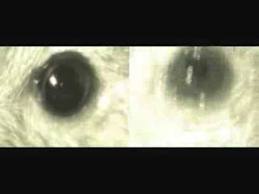
A team of University of California, Berkeley, scientists in collaboration with researchers at the University of Munich and University of Washington, in Seattle, has discovered a chemical that temporarily restores some vision to blind mice, and is working on an improved compound that may someday allow people with degenerative blindness to see again.
The approach could eventually help those with retinitis pigmentosa, a genetic disease that is the most common inherited form of blindness, as well as age-related macular degeneration, the most common cause of acquired blindness in the developed world. In both diseases, the light sensitive cells in the retina — the rods and cones — die, leaving the eye without functional photoreceptors.
The chemical, called AAQ, acts by making the remaining, normally “blind” cells in the retina sensitive to light, said lead researcher Richard Kramer, UC Berkeley professor of molecular and cell biology. AAQ is a photoswitch that binds to protein ion channels on the surface of retinal cells. When switched on by light, AAQ alters the flow of ions through the channels and activates these neurons much the way rods and cones are activated by light. Because the chemical eventually wears off, it may offer a safer alternative to other experimental approaches for restoring sight, such as gene or stem cell therapies, which permanently change the retina. It is also less invasive than implanting light-sensitive electronic chips in the eye.
Anyone who has looked at the jagged recording of the electrical activity of a single neuron in the brain must have wondered how any useful information could be extracted from such a frazzled signal.
But over the past 30 years, researchers have discovered that clear information can be obtained by decoding the activity of large populations of neurons.
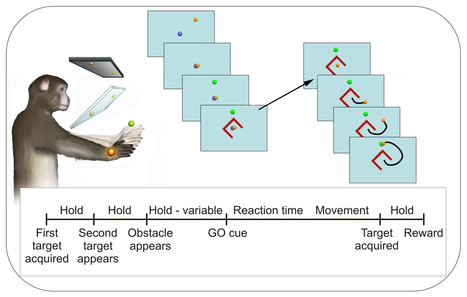
Now, scientists at Washington University in St. Louis, who were decoding brain activity while monkeys reached around an obstacle to touch a target, have come up with two remarkable results.
Their first result was one they had designed their experiment to achieve: they demonstrated that multiple parameters can be embedded in the firing rate of a single neuron and that certain types of parameters are encoded only if they are needed to solve the task at hand.
Their second result, however, was a complete surprise. They discovered that the population vectors could reveal different planning strategies, allowing the scientists, in effect, to read the monkeys’ minds.
Bruce Bridgeman lived with a flat view of the world, until a trip to the cinema unexpectedly made him see the world in 3D. The question is how it happened.
On 16 February this year, Bridgeman went to the theatre with his wife to see Martin Scorsese’s 3D family adventure. Like everyone else, he paid a surcharge for a pair of glasses, despite thinking they would be a complete waste of money. Bridgeman, a 67-year-old neuroscientist at the University of California in Santa Cruz, grew up nearly stereoblind, that is, without true perception of depth. All that changed when the lights went down and the previews finished. Almost as soon as he began to watch the film, the characters leapt from the screen in a way he had never experienced.
Conventional wisdom says that what happened to Bridgeman is impossible. Like many of the 5-10% of the population living with stereoblindness, he was resigned to seeing a world without depth. What Bridgeman experienced in the theatre has been observed in clinics previously – the most famous case being Sue Barry, or “Stereo Sue”, who according to the author and neurologist Oliver Sacks first experienced stereovision while she was undergoing vision therapy. Her visual epiphany came during the course of professional therapy in her late-forties. The question is why after several decades of living in a flat, two-dimensional world did Bridgeman’s brain spontaneously begin to process 3D images?
The connection between music and the brain is the subject of a symposium at the Association for Psychological Science conference in Chicago. They will discuss the remarkable ways our brains enable us to appreciate, remember and play music, and how we can harness those abilities in new ways. There are more facets to the mind-music connection than there are notes in a major scale, but it's fascinating to zoom in on a few to see the extraordinary affects music can have on your brain.
Scientists think of these annoying sound segments as "ear worms." They don't yet know much about why they happen, but research is making headway on what's going on. The songs that get stuck in people's heads tend to be melodically and rhythmically simple, says Daniel Levitin, a psychologist who studies the neuroscience of music at McGill University in Montreal, Quebec. It's usually just a segment of the song, not the entire thing from beginning to end. A common method of getting rid of an ear worm is to listen to a different song -- except, of course, that song might plant itself in your thoughts for awhile.
Given how easily song snippets get stuck in our heads, music must be linked to some sort of evolutionary adaptation that helped our ancestors. Bone flutes have been dated to about 40,000 to 80,000 years ago, so people were at least playing music. Experts assume that people were probably singing before they went to the trouble of fashioning this instrument.
Music is strongly associated with the brain's reward system. It's the part of the brain that tells us if things are valuable, or important or relevant to survival. It appears that humans are the only primates who move to the beat of music. Aniruddh Patel at the Neurosciences Institute in San Diego, California, speculates that this is because our brains are organized in a different way than our close species relatives. Grooving to a beat may be related to the fact that no other primates can mimic complex sounds.
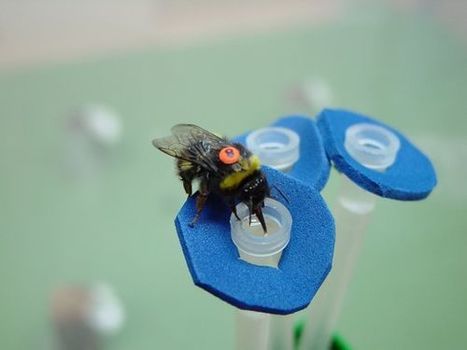
In a landmark 2010 study, researchers found that bumblebees were able to figure out the most efficient routes among several computer-controlled "flowers," quickly solving a complex problem that even stumps supercomputers. We already know bees are pretty good at facial recognition, and researchers have shown they can also be effective air-quality monitors.
Bumblebees can solve the classic "traveling salesman" problem, which keeps supercomputers busy for days. They learn to fly the shortest possible route between flowers even if they find the flowers in a different order, according to the British study.
The traveling salesman problem is a problem in computer science; it involves finding the shortest possible route between cities, visiting each city only once. Bees are the first animals to figure this out, according to Queen Mary University of London researchers.
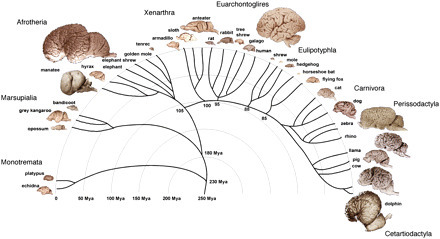
Neuroscientists have become used to a number of “facts” about the human brain: It has 100 billion neurons and 10- to 50-fold more glial cells; it is the largest-than-expected for its body among primates and mammals in general, and therefore the most cognitively able; it consumes an outstanding 20% of the total body energy budget despite representing only 2% of body mass because of an increased metabolic need of its neurons; and it is endowed with an overdeveloped cerebral cortex, the largest compared with brain size. These facts led to the widespread notion that the human brain is literally extraordinary: an outlier among mammalian brains, defying evolutionary rules that apply to other species, with a uniqueness seemingly necessary to justify the superior cognitive abilities of humans over mammals with even larger brains. These facts, with deep implications for neurophysiology and evolutionary biology, are not grounded on solid evidence or sound assumptions, however. The recent development of a method that allows rapid and reliable quantification of the numbers of cells that compose the whole brain has provided a means to verify these facts. With 86 billion neurons and just as many nonneuronal cells, the human brain is a scaled-up primate brain in its cellular composition and metabolic cost, with a relatively enlarged cerebral cortex that does not have a relatively larger number of brain neurons yet is remarkable in its cognitive abilities and metabolism simply because of its extremely large number of neurons.
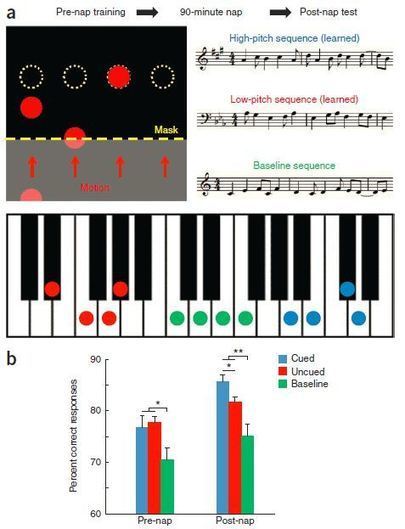
Memories can be reactivated during sleep and strengthened in the process, Northwestern University research suggests.
In the Northwestern study, research participants learned how to play two artificially generated musical tunes with well-timed key presses. Then while the participants took a 90-minute nap, the researchers presented one of the tunes that had been practiced, but not the other. By using EEG methods to record the brain’s electrical activity, the researchers ensured that the soft musical cues were presented during slow-wave sleep (deep sleep, not REM sleep, or dreaming), a stage of sleep previously linked to cementing memories. Participants made fewer errors when pressing the keys to produce a melody that had been presented while they slept, compared to the melody not presented.
SONGBIRDS LEARN MELODIES DURING SLEEP
When zebra finches learn their songs from their father early in life, their brain is active during sleep. The researchers, Sharon Gobes, Thijs Zandbergen and Johan Bolhuis, have demonstrated that the way in which zebra finches learn their songs is very similar to the way in which children learn to speak. In both cases learning takes place during early youth and involves considerable practise. Also, in children and songbirds alike, different brain regions are involved in learning and in speaking or singing. The new research shows that, just as in human infants, the brain of the young zebra finch is also active during sleep. This makes songbirds a good animal model to study the role of sleep in human speech acquisition.
Hawking, 70, has been working with scientists at Standford University who are developing a the iBrain - a tool which picks up brain waves and communicates them via a computer.
The scientist, who has motor neurone disease and lost the power of speech nearly 30 years ago, currently uses a computer to communicate but is losing the ability as the condition worsens. But he has been working with Philip Low, a professor at Stanford and inventor of the iBrain, a brain scanner that measures electrical activity. Researchers will unveil their latest results at a conference in Cambridge next month, and may demonstrate the technology on Hawking.
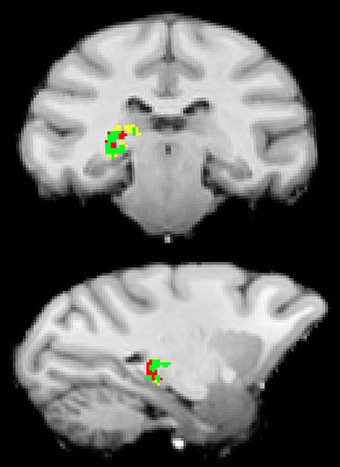
Princeton University researchers have found that the pulvinar, a mysterious region deep in the human brain, acts like a switchboard operator to make sure that separate areas of the brain are communicating about the same external information most important to our behavior at a given moment. The pulvinar uses electrical impulses to synchronize and allow more effective communication between brain cells in the visual cortex, which processes visual information. The researchers produced neural connection maps that show the pulvinar's connection to these brain regions. In this scan, the pulvinar communicates with the occipital lobe (yellow) and the temporal lobe (red) individually, and with both (green).
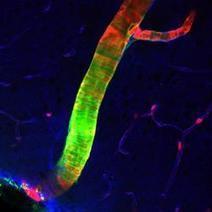
A previously unrecognized system that drains waste from the brain at a rapid clip has been discovered by neuroscientists at the University of Rochester Medical Center. The highly organized system acts like a series of pipes that piggyback on the brain’s blood vessels, sort of a shadow plumbing system that seems to serve much the same function in the brain as the lymph system does in the rest of the body – to drain away waste products.
Scientists have known that cerebrospinal fluid or CSF plays an important role cleansing brain tissue, carrying away waste products and carrying nutrients to brain tissue through a process known as diffusion. The newly discovered system circulates CSF to every corner of the brain much more efficiently, through what scientists call bulk flow or convection.
While the previously discovered system works more like a trickle, percolating CSF through brain tissue, the new system is under pressure, pushing large volumes of CSF through the brain each day to carry waste away more forcefully.
The glymphatic system is like a layer of piping that surrounds the brain’s existing blood vessels. The team found that glial cells called astrocytes use projections known as “end feet” to form a network of conduits around the outsides of arteries and veins inside the brain – similar to the way a canopy of tree branches along a well-wooded street might create a sort of channel above the roadway.
Those end feet are filled with structures known as water channels or aquaporins, which move CSF through the brain. The team found that CSF is pumped into the brain along the channels that surround arteries, then washes through brain tissue before collecting in channels around veins and draining from the brain.
B.
http://www.articlesbase.com/science-articles/life-is-simpler-than-they-tell-us-817144.html Now we can appreciate the fractal nature of life's evolution. It is ever-continuous ever-enhanced ever-complexed cooperation. Now we can understand why, and grosso modo how, all the organs and processes and signals found in multicelled organisms have their origins in the monocells communities, cultures. And this includes the functions of serotonin and melatonin and, yes, the evolution of neural cells and the neural systems with their intricate outer-membrane shapes and functionings and with their high energy consumption requirements.
C.
http://www.immunityageing.com/content/2/1/17/comments Melatonin Origin And Function
Dov Henis (2009-02-03)
Melatonin's role was to signal that the genes are asleep, their functional activities are shut off, and it is time for the security and maintenance crews to do their tasks, especially to clean up the intercell environment, for keeping the community of cells in proper state.
Singing mice (scotinomys teguina) are from the tropical cloud forests in the mountains of Costa Rica; and, as their name hints, they use song to communicate. University of Texas at Austin researcher Steven Phelps is examining these unconventional rodents to gain insights into the genes that contribute to the unique singing behavior—information that could help scientists understand and identify genes that affect language in humans.
The song of the singing mouse song is a rapid-fire string of high-pitched chirps called trills used mostly used by males in dominance displays and to attract mates. Up to 20 chirps are squeaked out per second, sounding similar to birdsong to untrained ears. But unlike birds, the mice generally stick to a song made up of only a single note. Most rodents make vocalizations at a frequency much too high for humans to hear. But other rodents typically don't vocalize to the extent of singing mice, which use the song to communicate over large distances in the wild.
What could cause this kind of song expression genetically? Center stage is a special gene called FOXP2. FOXP2 is famous because it's the only gene that's been implicated in human speech disorders. Having at least one mutated copy of the gene has been associated with a host of language problems in humans, from difficulty understanding grammar to an inability to make the precise mouth movements needed to speak a clear sentence. The FOXP2 gene is remarkably similar overall between singing mice, lab mice and humans. Recent research has found that when an animal hears a song from the same species, neurons that carry FOXP2 become activated. So FOXP2 may play a role in integrating song information. Learning what activates FOXP2 and what genes are activated by it could provide clues into how outside stimuli affects gene expression and what genes are important in the understanding and integration of information.
When it comes to intelligence, what factors distinguish the brains of exceptionally smart humans from those of average humans? As science has long suspected, overall brain size matters somewhat, accounting for about 6.7 percent of individual variation in intelligence. More recent research has pinpointed the brain’s lateral prefrontal cortex, a region just behind the temple, as a critical hub for high-level mental processing, with activity levels there predicting another 5 percent of variation in individual intelligence.
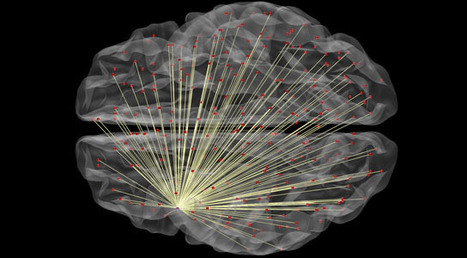
Now, new research from Washington University in St. Louis suggests that another 10 percent of individual differences in intelligence can be explained by the strength of neural pathways connecting the left lateral prefrontal cortex to the rest of the brain.
The study is the first to provide compelling evidence that neural connections between the lateral prefrontal cortex and the rest of the brain make a unique and powerful contribution to the cognitive processing underlying human intelligence, says Cole, whose research focuses on discovering the cognitive and neural mechanisms that make human behavior uniquely flexible and intelligent.
Neuroscientist Kenneth Hayworth believes that he can live forever, the Chronicle of Higher Education reports. But first he has to die.
“The human race is on a beeline to mind uploading: We will preserve a brain, slice it up, simulate it on a computer, and hook it up to a robot body,” he says. He wants that brain to be his brain. He wants his 100 billion neurons and more than 100 trillion synapses to be encased in a block of transparent, amber-colored resin — before he dies of natural causes.
Among some connectomics scholars, there is a grand theory: We are our connectomes. Our unique selves — the way we think, act, feel — is etched into the wiring of our brains. Unlike genomes, which never change, connectomes are forever being molded and remolded by life experience. A human connectome would be the most complicated map the world has ever seen. Yet it could be a reality before the end of the century, if not sooner, thanks to new technologies that “automate the process of seeing smaller."
Hayworth has founded the Brain Preservation Foundation, which offer a cash prize for the first individual or team to preserve the connectome of a large mammal. A dependable brain-preservation protocol is possible within five years, Hayworth says. “We might have a whole mouse brain preserved very soon.”
The part of the brain used by people who can "see like a bat" has been identified by researchers in Canada. Some blind people have learned to echolocate by making clicking noises with their tongue and listening to the returning echoes.
Action for Blind People said further research could improve the way the technique is taught. Bats and dolphins bounce sound waves off their surroundings and by listening to the echoes can "see" the world around them.
Some blind humans have also trained themselves to do this, allowing them to explore cities, cycle and play sports. Researchers looked at two patients who use echolocation every day. EB, aged 43, was blinded at age 13 months. LB, 27, had been blind since age 14. They were recorded echolocating, while microphones were attached to their ears. The recordings were then played while their brain activity was being recorded in an fMRI machine and increased activity in the calcarine cortex was discovered.
Johns Hopkins researchers, working with an international consortium, say they have generated stem cells from skin cells from a person with a severe, early-onset form of Huntington’s disease (HD), and turned them into neurons that degenerate just like those affected by the fatal inherited disorder. The general midlife onset and progressive brain damage of HD are especially cruel, slowly causing jerky, twitch-like movements, lack of muscle control, psychiatric disorders and dementia, and — eventually — death.
By creating “HD in a dish,” the researchers say they have taken a major step forward in efforts to better understand what disables and kills the cells in people with HD, and to test the effects of potential drug therapies on cells that are otherwise locked deep in the brain. Although the autosomal dominant gene mutation responsible for HD was identified in 1993, there is no cure. No treatments are available even to slow its progression.
Two powerful brain chemical systems (GABA and glycin) work together to paralyze skeletal muscles during rapid eye movement (REM) sleep, according to new research in the July 11 issue of The Journal of Neuroscience. The finding may help scientists better understand and treat sleep disorders, including narcolepsy, tooth grinding, and REM sleep behavior disorder.
During REM sleep — the deep sleep where most recalled dreams occur — your eyes continue to move but the rest of the body’s muscles are stopped, potentially to prevent injury. In a series of experiments, University of Toronto neuroscientists Patricia L. Brooks and John H. Peever, PhD, found that the neurotransmitters gamma-aminobutyric acid (GABA) and glycine caused REM sleep paralysis in rats by “switching off” the specialized cells in the brain that allow muscles to be active. This finding reversed earlier beliefs that glycine was a lone inhibitor of these motor neurons.
“The study’s findings are relevant to anyone who has ever watched a sleeping pet twitch, gotten kicked by a bed partner, or has known someone with the sleep disorder narcolepsy,
Robot avatars have got a step closer to being the real world doubles of those who are paralysed or have locked-in-syndrome. Scientists have made a robot move on a human's behalf by monitoring thoughts about movement.
The man-machine link joined a man in a brain scanner in Israel and a robot wandering a laboratory in France. The person controlling the robot could also see through the eyes of his electronic surrogate. The researchers are now working on ways to make the man-machine link more sensitive and to let people speak via the robot.
The research project connected a robot to a man having his brain scanned using fMRI (Functional Magnetic Resonance Imaging). This monitors blood flowing through the brain and can spot when areas associated with certain actions, such as movement, are in use. Using brain scanners is a step beyond current efforts to link up men and machines. Much recent work involved teleoperated robots in which humans manipulate controls, such as joysticks, to make a robot move.
By contrast, the scanning approach is more subtle and attempts to fool the human subject into thinking that they are embodied in the robot. Eventually the small robot will be swapped for one the size of an average human.
The experiment helping to prove the technology works linked up student Tirosh Shapira who was in a lab at Bar-Ilan University, Israel, with a small two-legged robot thousands of kilometres away at Beziers Technology Institute in France.
The Special Issue on Mind Uploading (Vol. 4, issue 1, June 2012) of the International Journal of Machine Consciousness “constitutes a significant milestone in the history of mind uploading research: the first-ever collection of scientific and philosophical papers on the theme of mind uploading,” as Ben Goertzel and Matthew Ikle’ note in the Introduction to this issue.
“Mind uploading” is an informal term that refers to transferring the mental contents from a human brain into a different substrate, such as a digital, analog, or quantum computer. It’s also known as “whole brain emulation” and “substrate-independent minds.”
Serious mind uploading researchers have emerged recently, taking this seemingly science-fictional notion seriously and pursuing it via experimental and theoretical research programs, Goertzel and Ilke’ note.
Tammet has been "studied repeatedly" by researchers in Britain and the United States, and has been the subject of several peer-reviewed scientific papers.Professor Allan Snyder at the Australian National University has said of Tammet: "Savants can't usually tell us how they do what they do. It just comes to them. Daniel can describe what he sees in his head.
That's why he's exciting. He could be the 'Rosetta Stone'
to science." In his mind, he says, each positive integer up to 10,000 has its own unique shape, color, texture and feel. He has described his visual image of 289 as particularly ugly, 333 as particularly attractive, and pi as beautiful.
The number 6 apparently has no distinct image yet what he describes as an almost small nothingness, opposite to the number 9 which he calls large and towering. Tammet has described 25 as energetic and the "kind of number you would invite to a party". In his memoir, Tammet states experiencing a synaesthetic and emotional response for words and numbers, but not letters in algebraic contexts.
Tammet holds the European record for reciting pi from memory to 22,514 digits in five hours and nine minutes on 14 March 2004. Tammet has reportedly learned 10 languages, including Romanian, Gaelic, Welsh, and Icelandic which he learned in a week for a TV documentary.
To get content containing either thought or leadership enter:
To get content containing both thought and leadership enter:
To get content containing the expression thought leadership enter:
You can enter several keywords and you can refine them whenever you want. Our suggestion engine uses more signals but entering a few keywords here will rapidly give you great content to curate.


 Your new post is loading...