Membranes and barriers are used all the time in industrial and lab settings, and you may even have a few of them around the home. They can help keep materials apart that need to be separated, or can selectively allow certain materials to mix while holding others back. Graphene, the two-dimensional hexagonal lattice of carbon, is thought to be completely impermeable to all gases and liquids. That would obviously make it an extremely effective barrier film.
Initial experiments with gases such as helium, hydrogen, nitrogen, and argon found that almost no gas was able to move across the membrane over a period of a few days. Calculations on these results yielded a helium permeation rate below 10-12 g/cm2*s*bar, consistent with values reported elsewhere for pure graphene films—basically no gas was getting through. Computing the bulk permeability of the material gave a value of approximately 10-15mm*g/cm2*s*bar. Put into more useful terms, this means that less gas will seep through a submicron thick GO film than would pass through a 1 mm thick glass barrier in an equivalent amount of time!
Carrying out a similar experiment with common liquids (ethanol, hexane, acetone, decane, and propanol) revealed that no weight loss could be detected after several days of the fluid resting on the membrane. This set an upper limit on liquid bulk permeability of 10-11 mm*g/cm2*s*bar. However, something unexpected happened when they repeated the test with water. There was a huge weight and the evaporation rate was nearly the same as though there was no membrane or barrier in place.
After this unexpected result, the authors repeated the test with helium to ensure that no physical damage had occurred to the membrane; no helium leakage was observed. In fact, it was only when the membrane was a couple of microns thick that any resistance to the flow of water was observed. Computing the bulk permeability of water gave a result of 10-5 mm*g/cm2*s*bar, a value 1010 (10,000,000,000) times greater than that for helium. This membrane was essentially impermeable to a small, inert gas, but allowed water to freely move through it.
Five times tougher than steel, spider silk is virtually indestructible. Labs in Britain, Germany and America claim to be on the verge of unlocking the secret of this super material, but what spiders do naturally is proving to be a tough act to follow on a commercial scale.
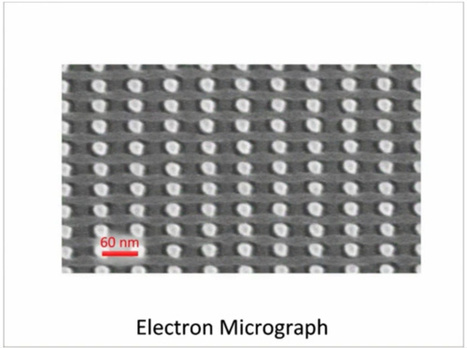
Researchers at MIT have found a new way of making complex three-dimensional structures using self-assembling polymer materials that form tiny wires and junctions. The work has the potential to usher in a new generation of microchips and other devices made up of submicroscopic features.
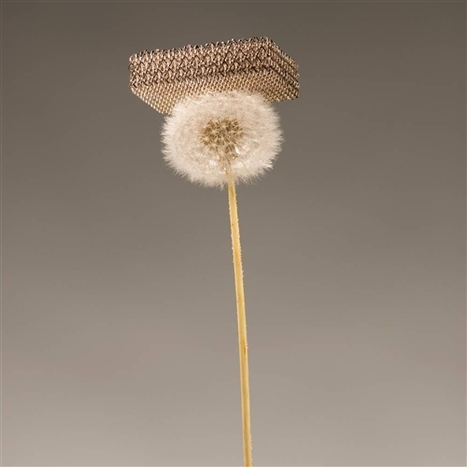
Researchers have created a new kind of metal that rates as the world's lightest material — and just might show up in future batteries and shock absorbers.
A team of researchers from Harvard University have invented a way to keep any metal surface free of ice and frost. The treated surfaces quickly shed even tiny, incipient condensation droplets or frost simply through gravity. The technology prevents ice sheets from developing on surfaces—and any ice that does form, slides off effortlessly.
Researchers at MIT have found a new way of making complex three-dimensional structures using self-assembling polymer materials that form tiny wires and junctions.
One of the biggest challenges facing the silicon photovoltaic industry is making solar cells that are economically viable. To meet this goal, the module cost, which is currently about $1/watt, needs to be decreased to just half that.
At the heart of the device are silicon nanowires covered by a thin cap of gold. By adjusting the ratio of metal to silicon – a technique the engineers refer to as tuning the geometries – they capitalize on favorable nanoscale physics in which the reflected light from the two materials cancel each other to make the device invisible.
Oil absorbance is one of a range of potential innovations for the material created in a single step by researchers at Rice University and Penn State. The team found for the first time that boron puts kinks and elbows into the nanotubes as they grow and promotes the formation of covalent bonds, which give the sponges their robust qualities.
A team led by Johns Hopkins engineers has discovered some previously unknown properties of a common memory material, paving the way for development of new forms of memory drives, movie discs and computer systems that retain data more quickly, last longer and allow far more capacity than current data storage media.
The research focused on an inexpensive phase-change memory alloy composed of germanium, antimony and tellurium, called GST, for short. The material is already used in rewritable optical media, including CD-RW and DVD-RW discs. But by using diamond-tipped tools to apply pressure to the materials, the Johns Hopkins-led team uncovered new electrical resistance characteristics that could make GST even more useful to the computer and electronics industries. This phase-change memory is more stable than the material used in the current flash drives. It works 100 times faster and is rewritable millions of times.
Engineers at Brown University and QD Vision Inc. have created nanoscale single crystals that can produce the red, green, or blue laser light needed in digital displays. The size determines color, but all the pyramid-shaped quantum dots are made the same way of the same elements. In experiments, light amplification required much less power than previous attempts at the technology. The team’s prototypes are the first lasers of their kind.
One of the most instantly recognizable features of glass is the way it reflects light. But a new way of creating surface textures on glass, developed by researchers at MIT, virtually eliminates reflections, producing glass that is almost unrecognizable because of its absence of glare — and whose surface causes water droplets to bounce right off, like tiny rubber balls.
The new “multifunctional” glass, based on surface nanotextures that produce an array of conical features, is self-cleaning and resists fogging and glare, the researchers say. Ultimately, they hope it can be made using an inexpensive manufacturing process that could be applied to optical devices, the screens of smartphones and televisions, solar panels, car windshields and even windows in buildings.
Black magnetic ferrofluid is made up of nano-sized, iron-containing particles suspended in water or an organic solvent. When a magnetic field is applied, the ferrofluid puffs out, creating some alien-looking shapes and formations. Originally discovered in the 1960s at NASA, ferrofluids have found many modern uses. They form liquid seals around the spinning drive shafts of hard disks, dampen unwanted resonances to help improve the sound quality of loudspeakers, and have even found their way into museum art exhibits.
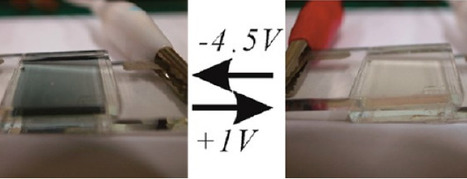
Buildings would save energy on air conditioning if they installed smart windows that change color to block out sunlight on hot days. Some smart windows are on the market, but they are expensive. A new one-step method for making window coatings of transparent color-changing nanowires could simplify and bring down the cost of the window manufacturing process.
According to the National Renewable Energy Laboratory, buildings use 71% of the electricity consumed in the U.S.; about 30% of that load comes from the electricity needed to make up for energy lost through windows. Electrochromic windows, which darken or lighten depending on the voltage across them, could help by darkening to block heat transfer from infrared light.
Brookhaven scientists used a technique called electron holography to capture images of the electric fields created by the materials’ atomic displacement with picometer precision — that’s the trillionths-of-a-meter scale crucial to understanding these promising nanoparticles. By applying different levels of electricity and adjusting the temperature of the samples, researchers demonstrated a method for identifying and describing the behavior and stability of ferroelectrics at the smallest-ever scale, with major implications for data storage.
"This kind of detail is just amazing — for the first time ever we can actually see the positions of atoms and link them to local ferroelectricity in nanoparticles,” said Brookhaven physicist Yimei Zhu. “This kind of fundamental insight is not only a technical milestone, but it also opens up new engineering possibilities.”
Direct polarization images of individual ferroelectric nano cubes captured with electron holography. The fringing field, or “footprint” of electric polarization, can be seen clearly in (a), but it vanishes when the material is subjected to high temperatures (b). The lower images show that no fringing field can be observed before application of electricity (c), but a clear field emanates after current is applied (d).
Ferroelectrics are perhaps best understood as the mysterious cousins of more familiar ferromagnetic materials, commonly seen in everything from refrigerator magnets to computer hard drives. As the name suggests, ferromagnetics have intrinsic magnetic dipole moments, meaning that they are always oriented toward either “north” or “south.” These dipole moments tend to align themselves on larger scales, giving rise to the magnetization responsible for attraction and repulsion. Applying an external magnetic field can actually flip that magnetization, allowing programmers and engineers to manipulate the material.
ME 599: Nanoparticles and Nanomanufacturing Video Course - taught by Professor John Hart at the University of Michigan, discusses the properties, synthesis, assembly and applications of nanostructures and nanostructured materials. The course has 24 individual lectures, each 90 min long.
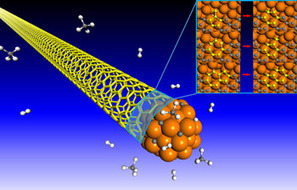
At the right temperature, with the right catalyst, there’s no reason a perfect single-walled carbon nanotube 50,000 times thinner than a human hair can’t be grown a meter long. That calculation is one result of a study by collaborators at Rice, Hong Kong Polytechnic and Tsinghua universities who explored the self-healing mechanism that could make such extraordinary growth possible. That’s important to scientists who see high-quality carbon nanotubes as critical to advanced materials and, if they can be woven into long cables, power distribution over the grid of the future.
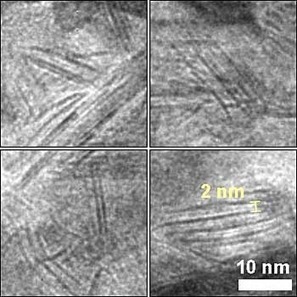
Nanotechnology is increasingly being researched for applications in the construction industry and cement – as the most important building material – is a particular focus. Apart from reducing the damaging environmental side effects of cement production, another research focus is on reinforcing concrete to improve its mechanical performance. The problem with carbon nanotubes is that they are water insoluble. In order to make them compatible with water chemistry, they must be functionalized in advance. To get around this problem, Ayuela and a team of scientists from the Donostia International Physics Center (DIPC), Materials Physics Center (CSIC-UPV/EHU),Tecnalia and University of the Basque Country (UPV/EHU) in Spain and at the Technische Universität Dresden in Germany have proposed inorganic oxide nanotubes as natural means of reinforcements of cement pastes, in view of their chemically compatibility with the cement-water system. Their new approach may help scientists to synthesize nanotubes made of calcium silicate hydrates,which the team proposes as ideal mechanical reinforcements for cement pastes.
Glass as thin and as flexible as a sheet of paper that can be printed on rolls just like a newspaper will be available to phone makers as soon as this month, said Dipak Chowdhury, head of Corning’s ultra-flexible thin-glass project Willow.
Since layers of glass are stacked inside smart phones, this technology will make smart phones up to 7 fold thinner.
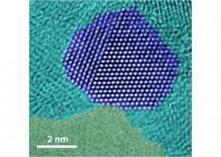
This image, made with a high-resolution transmission electron microscope, shows atoms on the surface of an industrial catalyst used in methanol production. A study by scientists from SLAC, Stanford and Germany reveals that the catalyst’s copper surface (dark blue) is folded into “steps” and decorated with particles of zinc oxide (turquoise). These defects increase its activity, while other defects in the copper nanoparticle stabilize this highly efficient configuration. Understanding the catalyst in all its complexity is a step toward improving the process for manufacturing methanol, an important industrial chemical that could become the basis for a clean energy economy.
Graphene has many promising applications on its own, but pairing the two-dimensional material with the semiconductor titanium dioxide (TiO2) extends its capabilities even further. A team of chemists at the University of Notre Dame in Notre Dame, Indiana, has demonstrated that graphene oxide (GO)-TiO2 films, when illuminated, cause electrons to hop from one side of the film to the other. When adding silver ions to the picture, this electron hopping can create films that have a semiconductor on one side of the GO and metal on the other. The resulting semiconductor-graphene-metal (SGM) films could serve as highly sensitive chemical sensors.
Hydrogen gas offers one of the most promising sustainable energy alternatives to limited fossil fuels. But traditional methods of producing pure hydrogen face significant challenges in unlocking its full potential, either by releasing harmful carbon dioxide into the atmosphere or requiring rare and expensive chemical elements such as platinum.
Now, scientists at the U.S. Department of Energy’s (DOE) Brookhaven National Laboratory have developed a new electrocatalyst that addresses one of these problems by generating hydrogen gas from water cleanly and with much more affordable materials. The novel form of catalytic nickel-molybdenum-nitride – described in a paper published online May 8, 2012 in the journal Angewandte Chemie International Edition – surprised scientists with its high-performing nanosheet structure, introducing a new model for effective hydrogen catalysis.
Two research groups have invented two new materials that may compete with graphene as the solution for faster, more powerful electronic devices of the future.
MIT researchers have created a thin film of bismuth-antimony that allows electrons to “travel like a beam of light” — hundreds of times faster than in conventional silicon chips.In thermoelectric generators and coolers, the faster electron flow (and ability to function as an insulator) might lead to much more efficient power production. The new material could even allow for designing electronic devices made of the same material with varying properties, deposited one layer atop another, rather than layers of different materials.
Researchers at Technical University in Germany and Aix-Marseille University in France created silicine by condensing silicon vapor onto a silver plate to form a single layer of atoms, New Scientist reports. The new material may lead to smaller, cheaper electronic devices than graphene because it can be integrated more easily into silicon chip production lines.
Graphene responds strongly to light at terahertz frequencies and this could be fine-tuned to make practical devices. That is the conclusion of researchers in the US who believe that their findings could help lead to graphene finding use in a wide range of applications that include medical imaging and security screening.
Terahertz radiation lies between the microwave and mid-infrared regions of the electromagnetic spectrum. It passes through clothing and packaging but is strongly absorbed by metals and other inorganic substances, making it of great interest to those developing airport security scanners. However, the radiation has proven extremely difficult to create, manipulate and detect.
New materials that have the potential to create acoustically shielded environments may be on the way. In the latest development, researchers have shown how creating materials that have meandering paths for sound waves can result in a negative acoustic index of refraction. More importantly, these materials may actually be manufacturable and work for sound waves in air—the stuff we might consider noise.
In simulated data (see picture), a sound wave impinging from the bottom gets redirected to the right by a triangular prism made of an acoustic metamaterial. If this were ordinary refraction, the wave would be deflected somewhat leftward as it emerged from the prism. (Credit: Z. Liang and J. Li/Physical Review Letters).
To get content containing either thought or leadership enter:
To get content containing both thought and leadership enter:
To get content containing the expression thought leadership enter:
You can enter several keywords and you can refine them whenever you want. Our suggestion engine uses more signals but entering a few keywords here will rapidly give you great content to curate.


 Your new post is loading...