Your new post is loading...

|
Scooped by
Dr. Stefan Gruenwald
November 5, 2012 12:33 PM
|
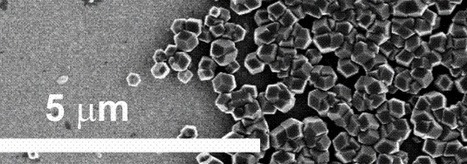
A new nano-material mimics the brilliant color and water resistance of butterfly wings. "Specifically, we’re interested in putting this kind of material on the outside of buildings," says Shu Yang. "The structural color we can produce is bright and highly decorative, and it won’t fade away like conventional pigmentation color does.
|
|
Scooped by
Dr. Stefan Gruenwald
October 30, 2012 11:11 AM
|
Biology is inspiring an effort to create new materials that can repair themselves when damaged. According to experts, the first products with truly self-healing properties may be just around the corner. But it was a 2001 study led by Scott White from the University of Illinois at Urbana-Champaign, that really helped to kick-start the field. The group infused a plastic-like polymer with microscopic capsules containing a liquid healing agent. Cracking open the material caused the capsules to rupture, releasing the healing agent. When the agent made contact with a catalyst embedded in the material, a chemical reaction bonded the two faces of the crack together. The polymer recovered some 75% of its original toughness. In the last decade, the team has developed and refined its capsule-based systems, recently demonstrating an electrical circuit that healed itself when damaged. Microcapsules in the gold circuit released liquid metal in response to damage, swiftly restoring electrical conductivity, and bringing self-repairing electronic chips a step closer.
|
|
Scooped by
Dr. Stefan Gruenwald
October 17, 2012 11:28 AM
|
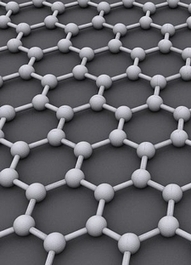
Platinum works well as a catalyst in hydrogen fuel cells, but it has at least two drawbacks: It is expensive, and it degrades over time. Brown chemists have engineered a cheaper and more durable catalyst using graphene, cobalt, and cobalt-oxide — the best nonplatinum catalyst yet. The oxygen reduction reaction occurs on the cathode side of a hydrogen fuel cell. Oxygen functions as an electron sink, stripping electrons from hydrogen fuel at the anode and creating the electrical pull that keeps the current running through electrical devices powered by the cell. The reaction requires a catalyst, and platinum is currently the best one, but it’s very expensive and has a very limited supply, and that’s why you don’t see a lot of fuel cell use aside from a few special purposes. Thus far scientists have been unable to develop a viable alternative. A few researchers have developed new catalysts that reduce the amount of platinum required, but an effective catalyst that uses no platinum at all remains elusive. Lab tests showed that the new graphene-cobalt material was a bit slower than platinum in getting the oxygen reduction reaction started, but once the reaction was going, the new material actually reduced oxygen at a faster pace than platinum. The new catalyst also proved to be more stable, degrading much more slowly than platinum over time. After about 17 hours of testing, the graphene-cobalt catalyst was performing at around 70 percent of its initial capacity. The platinum catalyst the team tested performed at less than 60 percent after the same amount of time. Cobalt is an abundant metal, readily available at a fraction of what platinum costs. Graphene is a one-atom-thick sheet of carbon atoms arranged in a honeycomb structure. Developed in the last few years, graphene is renowned for its strength, electrical properties, and catalytic potential.
|
|
Scooped by
Dr. Stefan Gruenwald
October 13, 2012 12:46 AM
|
Researchers at Britain’s University of Leeds and Japan’s Tokyo University of Agriculture and Technology use bacteria to organically grow tiny magnets which can store bits of data. Conventionally, hard disks are manufactured by breaking down a big magnet into nanoscale pieces called grains which are deposited on a disc. A few hundred grains form a magnetic region which can store one bit of information. The increasing capacity of storage devices is the result of the miniaturization of components. But this can’t go on indefinitely and hard disk manufacturers are quickly reaching the limits of traditional electronic manufacturing as computer components get smaller. The machines traditionally used to build them are clumsy at such small scales. Nature has provided us with the perfect tool to circumvent this problem’, said Dr Sarah Staniland in a press release. Instead of using the top down approach of breaking down a magnet, the researchers are having nature build tiny magnets from scratch. For this purpose the team used the bacterium Magnetsopirilllum magneticum, a naturally magnetic microorganism. It uses its magnetic property to navigate along the earth’s magnetic lines. The bacterium derives its magnetism from ingesting iron. Once in its system the iron interacts with a protein producing a magnetic mineral called magnetite. Once they understood how the Magnetsopirilllum magneticum worked its magic, the team figured out how to replicate this process outside its body. They coated a surface in gold and added the protein in a chessboard pattern. When the surface is dipped in an iron solution, those squares covered with the protein start producing nanocrystals of magnetite. Each square covered with nanomagnets can store one bit. The research is still at an experimental stage. The squares are 20 micrometers wide, that’s 2000 times larger than magnetic bits in conventional hard drives. But Staniland is confident they can bring the size down. It is not just the problem of the fast approaching miniaturization limits of silicon-based electronics the researchers are hoping to solve. They’re looking to radically change the future of electronics. ‘Our aim is to develop a toolkit of proteins and chemicals which could be used to grow computer components from scratch’, Staniland said.
|
|
Scooped by
Dr. Stefan Gruenwald
September 25, 2012 5:52 PM
|
Rice University chemist Peter Wolynes and graduate student Apiwat Wisitsorasak determined in a new study that a process called chemical vapor deposition, which is used industrially to make thin films, could yield a glass that withstands tremendous stress without breaking. With the modifications, Wolynes’ theory can now predict the ultimate strength of any glass, including the common varieties made from silica and more exotic types made of polymers and metals. If metal glass sounds odd, blame it on the molecules inside. Glass is unique because of its molecular structure. It freezes into a rigid form when cooled. But unlike ice, in which water molecules take on regular crystalline patterns—think of snowflakes—the molecules in glass are suspended randomly, just as they were as a liquid, with no particular pattern. All glasses share the ability to handle a great deal of strain before giving way, sometimes explosively. Exactly how much strain a glass can handle is determined by how much energy it can absorb before its intrinsic elastic qualities reach their limitations. And that seems to be as much a property of the way the glass is manufactured as the material it’s made of.
|
|
Scooped by
Dr. Stefan Gruenwald
September 20, 2012 7:06 PM
|
A scrambled-up material has broken the record for converting heat into electricity. Disorder may be the key to creating a new generation of energy-harvesting technologies. Laptop owners and car mechanics alike know that heat is a major by-product of any kind of work. In power stations, for example, only one-third of the energy that goes into the generator comes out as electricity — the rest radiates away as 'waste heat' before it can turn a turbine. Kanatzidis and his team began with one of the most well-known thermoelectrics: lead telluride (PbTe), which usually has an ordered lattice structure. The researchers scattered in a few sodium atoms to boost the material's electrical conductivity, then shoved in some nanocrystals of strontium telluride (SrTe), another thermoelectric material. The crystals allowed electrons to pass, but disrupted the flow of heat at short scales, preserving the temperature gradient. The final step was to stop heat flow over longer scales. To do this, the team created a fractured version of their pretty thermoelectric crystal. The fracturing did the trick: the cracks allowed electrons to move but reflected heat vibrations in the crystal. The material had a conversion efficiency of about 15% — double that of normal PbTe thermoelectrics.
|
|
Scooped by
Dr. Stefan Gruenwald
September 16, 2012 11:03 AM
|
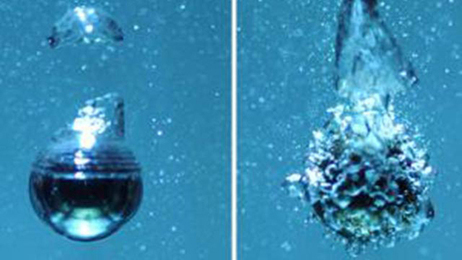
Superhydrophobic spheres were created by coating them with a commercially available product that made the surface rough and strongly water-repellent. They were heated to 400 °C. Over this temperature, the coating would deteriorate. The hot spheres were dropped into water at room temperature. A layer of water vapor formed around it, and it was kept there as they cooled down, with no explosive boiling or bubbling. The result in itself was dramatic and somewhat unexpected. This phenomenon could be used to reduce the drag on surfaces, such as the tiny channels in microfluidic devices. The next step involves creating vapor layers at much lower temperatures than the boiling point of water. A surface could be designed that would make this vapor state more stable. If this could be formed around a ship, it would discourage barnacles and algae from attaching themselves.
|
|
Scooped by
Dr. Stefan Gruenwald
September 6, 2012 11:12 AM
|
A team of experts in mechanics, materials science, and tissue engineering at Harvard have created an extremely stretchy and tough gel that may pave the way to replacing damaged cartilage in human joints. Called a hydrogel, because its main ingredient is water, the new material is a hybrid of two weak gels that combine to create something much stronger. Not only can this new gel stretch to 21 times its original length, but it is also exceptionally tough, self-healing, and biocompatible—a valuable collection of attributes that opens up new opportunities in medicine and tissue engineering.
|
|
Scooped by
Dr. Stefan Gruenwald
August 25, 2012 1:20 AM
|
It’s a matchup worthy of a late-night cable movie: put a school of starving piranha and a 300-pound fish together, and who comes out the winner? The surprising answer—given the notorious guillotine-like bite of the piranha—is Brazil’s massive Arapaima fish. The secret to Arapaima’s success lie in its intricately designed scales, which could provide “bioinspiration” for engineers looking to develop flexible ceramics. The inspiration for this study came from an expedition in the Amazon basin that Marc Meyers, a professor at the Jacobs School of Engineering at UC San Diego, took years ago. The mechanical and aerospace engineering professor wondered at the Arapaima's armor-like protective scales. How could it live in piranha-infested lakes, where no other animals could survive? Meyers and colleagues set up a lab experiment that pits piranha against Arapaima by using a machine that resembles an industrial-strength hole punch. Piranha teeth were attached to the top “punch,” which was pressed down into Arapaima scales embedded in a soft rubber surface (which mimics the soft underlying muscle on the fish) on the lower “punch.” The teeth can partially penetrate the scale, but crack before they can puncture the muscle. In the case of Arapaima, the ingeniously designed scales serve as peace through strength, allowing them to coexist with piranha when the two are crowded into Amazon basin lakes during the region’s dry season. The combination of hard and soft materials, the researchers note, give the scales several ways to repel the bite. The scales overlap like shingles on the fish, and each scale has a “very hefty mineralized layer on top of it. People living in the Amazon sometimes use the ridged Arapaimas scales (which can be nearly four inches in length) as nail files. The corrugated surface keeps the scales’ thick mineralized surface intact while the fish flexes as it swims. Ceramic surfaces of constant thickness are strained when forced to follow a curved surface, but the corrugations allow the scales to be bent more easily without cracking.
|
|
Scooped by
Dr. Stefan Gruenwald
August 23, 2012 5:30 PM
|
Engineering researchers at Rensselaer Polytechnic Institute made a sheet of paper from the world's thinnest material, graphene, and then zapped the paper with a laser or camera flash to blemish it with countless cracks, pores, and other imperfections. The result is a graphene anode material that can be charged or discharged 10 times faster than conventional graphite anodes used in today's lithium (Li)-ion batteries for today’s mobile phones, laptop and tablet computers, and even electric automobiles. The intentional imperfections are critical for the device’s ability to quickly accept or discharge large amounts of energy. As seen in this photo, the graphene paper displays both structural rigidity and integrity. The research team started investigating graphene as a possible replacement for the graphite used as the anode material in today's Li-ion batteries. Essentially a single layer of the graphite found commonly in our pencils or the charcoal we burn on our barbeques, graphene is an atom-thick sheet of carbon atoms arranged like a nanoscale chicken-wire fence. In previous studies, Li-ion batteries with graphite anodes exhibited good energy density but low power density, meaning they could not charge or discharge quickly. This slow charging and discharging was because lithium ions could only physically enter or exit the battery's graphite anode from the edges, and slowly work their way across the length of the individual layers of graphene. The solution was to use a known technique to create a large sheet of graphene oxide paper. This paper is about the thickness of a piece of everyday printer paper, and can be made nearly any size or shape. The research team then exposed some of the graphene oxide paper to a laser, and other samples of the paper were exposed to a simple flash from a digital camera. In both instances, the heat from the laser or photoflash literally caused mini-explosions throughout the paper, as the oxygen atoms in graphene oxide were violently expelled from the structure. The aftermath of this oxygen exodus was sheets of graphene pockmarked with countless cracks, pores, voids, and other blemishes. The pressure created by the escaping oxygen also prompted the graphene paper to expand five-fold in thickness, creating large voids between the individual graphene sheets.
|
|
Scooped by
Dr. Stefan Gruenwald
August 16, 2012 1:58 PM
|
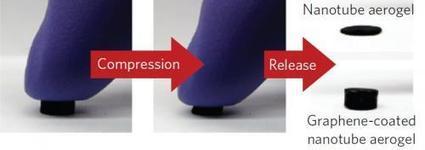
Like donning a Superman’s cape, fragile carbon nanotube (CNT) aerogels that are covered by a graphene coating can be transformed from a material that easily collapses under compression to one that can resist large amounts of compression and completely recover its original shape after removal of the load. The superelasticity and fatigue resistance provided by the graphene coating could make CNT aerogels useful in a variety of areas, including as electrodes, artificial muscles, and other mechanical structures. While a normal gel consists mostly of liquid material with a cross-linked network that gives it its solid-like structure, an aerogel is created by replacing the liquid material in a gel with a gas. Researchers do this by drying the original gel at a critical temperature. The resulting aerogel is a lightweight material made of 99.9% air by volume, yet one that is also dry, rigid, and strong like a solid.
|
|
Scooped by
Dr. Stefan Gruenwald
August 15, 2012 11:10 AM
|
For the first time, X-ray scientists have combined high-resolution imaging with 3-D viewing of the surface layer of material using X-ray vision in a way that does not damage the sample. This new technique expands the range of X-ray research possible for biology and many aspects of nanotechnology, particularly nanofilms, photonics, and micro- and nano-electronics. This new technique also reduces “guesswork” by eliminating the need for modeling-dependent structural simulation often used in X-ray analysis. Scientists from the Advanced Photon Source and Center for Nanoscale Materials at the U.S. Department of Energy’s (DOE) Argonne National Laboratory have blended the advantages of 3-D surface viewing from grazing-incident geometry scattering with the high-resolution capabilities of lensless X-ray coherent diffraction imaging (CDI).
|
|
Scooped by
Dr. Stefan Gruenwald
August 3, 2012 12:50 PM
|
Using commercially available hydrophobic sand it is possible to build an underwater sandcastle. Since the force between beads remain constant, but the effective weight of the sandcastle is reduced by a factor of 3, it is possible to build more spectacular sandcastles underwater than above. The different elements of this sandcastle were molded under water, saturated with interstitial air. After molding, a syringe was used to suck out air from the elements, reducing the “fluid” volume fraction from about 40% to about 10% in order to increase the strength of the material before simply moving them into place by hand.
|
|
|
Scooped by
Dr. Stefan Gruenwald
November 2, 2012 12:02 AM
|
Researchers at Harvard University in the US have made a new type of optical coating that appears to change colour when its thickness is varied by just a few nanometres. The film, which is less than 20 nm thick, could be used to customize the colour of metal surfaces – a phenomenon that could not only be exploited to make pretty jewellery, but also a host of technologically advanced devices, including ultrathin light detectors and filters, displays, modulators and even solar cells.
Conventional dielectric optical coatings, which are a key component of almost every optical device, are typically made of layers of transparent (or "lossless") material, with each layer being at least a quarter wavelength of light in thickness. The new ultrathin optical coatings made by Federico Capasso's team are different in that they comprise nanometre-thick, and nearly opaque, highly light-absorbing dielectric materials, such as semiconductors. The researchers have shown, for example, that adding a 7 nm layer of germanium to the surface of a gold sample changes its colour from gold to pink. Adding another 4 nm layer makes it violet, and another 4 nm turns the coating dark blue (4 nm is less than 15 atoms thick).
The effect is similar to what we see when there is a thin film of oil of the road on a wet day and we see many different colours, explains Capasso. The colours appear thanks to interfering light waves as they pass through the oil into the water below and then are reflected back up. Some wavelengths of incident and reflected light constructively interfere with one another and are "boosted", while others destructively interfere and are absorbed.
|
|
Scooped by
Dr. Stefan Gruenwald
October 29, 2012 10:58 AM
|
Scientists have demonstrated methods that could see higher-performance computer chips made from tiny straws of carbon called nanotubes. Carbon nanotubes have long been known to have electronic properties superior to current silicon-based devices. But difficulties in manipulating them have hampered nanotube-based chips. The race is on in the semiconductor chip industry to replace current silicon technology - methods to make smaller and therefore faster devices will soon come up against physical limits on just how small a silicon device can be. Though single nanotubes have shown vastly superior speed and energy characteristics in lab demonstrations, the challenge has been in so-called integration - getting billions of them placed onto a chip with the precision the industry now demands. Current chips are made using lithography, in which large wafers of silicon are layered with other materials of different electronic properties and then devices are simply "etched" out using a focused beam of electrons or charged atoms. To address the integration challenge, Dr Hannon and his colleagues came up with a solution - two of them in fact. The first was a chemical that coats nanotubes and makes them soluble in water. The second was a solution that binds to the first chemical and to the element hafnium, but not to silicon. Then they simply "double-dipped" the chip into the two solutions - one chemical stuck to the hafnium, and the other chemical acted as the second part of a two-part epoxy, tightly binding nanotubes to the hafnium regions on the chip but not to silicon. The result was a series of neatly aligned nanotube devices, already wired up within the pattern, at a density of a billion per square centimeter. "That's one nanotube every 150 or 200 nanometer or so," explained Dr Hannon. "That's not good enough to make a microprocessor yet - it's a factor of 10 away. "But it's a factor of 100 better than has been done previously."
|
|
Rescooped by
Dr. Stefan Gruenwald
from Science News
October 16, 2012 1:57 AM
|
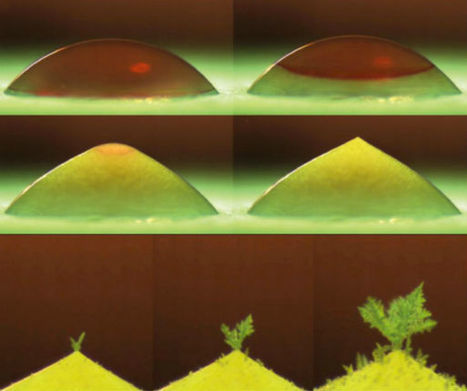
Frozen water droplets take on a whole new shape when they freeze: Instead of staying round, they form a pointy tip, and eventually sprout a tiny forest of ice crystals on their surface. In order to observe these effects, researchers dripped tiny beads of water on a plate kept at a chilly -20°C. In the 18 seconds that it took the 4-millimeter-diameter droplets (top row) to solidify, researchers snapped photos of the water freezing from the bottom up. During the final stage of freezing, the ice drops developed a pointy tip (middle row), which continued to grow and eventually formed delicate ice crystals on the surface, the team reported last month in Physics of Fluids. Researchers believe the unusual pointy tip is caused by the vertical expansion of the ice combined with the surface tension on remaining liquid. Once frozen, the sharp tip of the drop attracts water vapor from the air, and produces treelike ice crystals (bottom row).
Via Sakis Koukouvis
|
|
Scooped by
Dr. Stefan Gruenwald
September 29, 2012 8:01 PM
|
The method involves growing semiconductor-nanowires on graphene. To achieve this, researchers “bomb” the graphene surface with gallium atoms and arsenic molecules, thereby creating a network of minute nanowires. The result is a one-micrometre thick hybrid material which acts as a semiconductor. By comparison, the silicon semiconductors in use today are several hundred times thicker. The semiconductors’ ability to conduct electricity may be affected by temperature, light or the addition of other atoms. Graphene is the thinnest material known, and at the same time one of the strongest. It consists of a single layer of carbon atoms and is both pliable and transparent. The material conducts electricity and heat very effectively. And perhaps most importantly, it is very inexpensive to produce. “Given that it’s possible to make semiconductors out of graphene instead of silicon, we can make semiconductor components that are both cheaper and more effective than the ones currently on the market,” explains Helge Weman of the Norwegian University of Science and Technology (NTNU). Dr Weman is behind the breakthrough discovery along with Professor Bjørn-Ove Fimland. “A material comprising a pliable base that is also transparent opens up a world of opportunities, one we have barely touched the surface of,” says Dr Weman. “This may bring about a revolution in the production of solar cells and LED components. Windows in traditional houses could double as solar panels or a TV screen. Mobile phone screens could be wrapped around the wrist like a watch. In short, the potential is tremendous.”
|
|
Scooped by
Dr. Stefan Gruenwald
September 23, 2012 2:20 PM
|
In a study that could lead to advances in the emerging fields of optical computing and nanomaterials, researchers at Missouri University of Science and Technology report that a new class of nanoscale slot waveguides pack 100 to 1,000 times more transverse optical force than conventional silicon slot waveguides. In a recent study, Gao and Yang describe the unusual optical and mechanical properties of nanometer-scale metal-dielectric structures called metamaterials. The researchers created computer simulations of nanometer-scale models of metamaterial slot waveguides, which are structures designed to channel beams of light from one area to another. Waveguides function like tiny filaments or the wires of an integrated circuit, but on a much smaller scale. For their study, the Missouri S&T researchers simulated slot waveguides made of layered structures of a metal (in this case, silver) and a dielectric material (germanium), arranged like the alternating bread and meat in a club sandwich. A nanometer - visible only with the aid of a high-power electron microscope - is one billionth of a meter, and some nanomaterials are only a few atoms in size. Gao and Yang simulated what would happen with modeled identical waveguides - each 40 nanometers wide and 30 nanometers tall - that were stacked with a tiny air gap between them. They then measured the transverse optical force between the two waveguides. Optical force refers to the way beams of light can be made to attract or repel each other, as magnets do. In their experiments on the simulated metamaterials, the Missouri S&T researchers found that "the transverse optical forces in slot waveguides of hyperbolic metamaterials can be over two orders of magnitude stronger than that in conventional dielectric slot waveguides.
|
|
Scooped by
Dr. Stefan Gruenwald
September 19, 2012 6:51 PM
|
Tiny amount of water can turn a liquid suspension into a gel. Scientists in Germany have shown that a suspension of particles can be transformed from a viscous fluid to an elastic gel by adding a small quantity of a second liquid – as long as the second liquid does not mix with the bulk fluid. They say that the second liquid binds the particles more tightly together, and found that this enhanced binding takes place even when the liquid itself adheres poorly to the particles. Applications of this work, say the researchers, include lighter and cheaper foams as well as improved manufacturing of paints and other suspensions. Being able to control the flow of suspensions – small, solid particles dispersed in a fluid – is important in the manufacture of many commercial products, such as coatings and foodstuffs. For example, it is better if paint is less viscous when it is being mixed during production, but more viscous when in its finished state so that it sticks to walls and does not drip. In the latest research Erin Koos and Norbert Willenbacher of the Karlsruhe Institute of Technology have demonstrated a new and practical method for adjusting the viscosity of a suspension. In their experiment, they first dispersed hydrophilic (or water-attracting) glass beads, each about 25 µm in diameter, into an organic solvent. Then they added water to this suspension so that it made up just 1% of the suspension by weight. When they stirred, the initially viscous fluid transformed into a gel-like material.
|
|
Scooped by
Dr. Stefan Gruenwald
September 8, 2012 10:56 AM
|
Named NU-109 and NU-110, the materials belong to a class of crystalline nanostructure known as metal-organic frameworks (MOFs) that are promising vessels for natural gas storage for vehicles, catalysts, and other sustainable materials chemistry. The materials’ promise lies in their vast internal surface area. If the internal surface area of one NU-110 crystal the size of a grain of salt could be unfolded, the surface area would cover a desktop. Put another way, the internal surface area of one gram of NU-110 would cover one-and-a-half football fields. The research team, led by Omar Farha, research associate professor of chemistry in the Weinberg College of Arts and Sciences, has synthesized, characterized, and computationally simulated the behavior of the two MOFs that display the highest experimental Brunauer-Emmett-Teller surface areas of any porous material on record, 7,000 m2/g; that is, one kilogram of the material contains an internal surface area that could cover seven square kilometers. The extremely high surface area, which is normally not accessible due to solvent molecules that stay trapped within the pores, was achieved using a carbon dioxide activation technique. As opposed to heating, which can remove the solvent but also damage the MOF material, the carbon dioxide-based technique removes the solvent gently and leaves the pores completely intact.
|
|
Scooped by
Dr. Stefan Gruenwald
September 3, 2012 10:37 AM
|
Oil and water’s disdain for each other is legendary, but once forced to comingle they’re nearly impossible to separate. Now scientists have developed a specialized filter that cleanly separates the two, allowing water to pass through and leaving oil behind. Such filters could prove useful for cleaning up oil spills or cleaning water at treatment plants. Oil and water both stick to their own, staying on opposite sides of the room at a molecular cocktail party. But add a chemical called a surfactant — molecules that are partly attracted to water and partly attracted to oil — and you’ve got a social lubricant that forces water and oil to mingle. Once this socializing happens, it’s difficult to undo. One way to get them apart is with a filtering membrane coated with water-hating molecules — such membranes allow oil through, but not water. Think of a nonstick Teflon pan, says materials scientist Anish Tuteja, who led the new work. Oil moves smoothly across such surfaces but water beads up. But these filters require energy to force stuff through them, and they often become fouled after a few hours. Also, water is denser than oil, so it can sit on top of such filters, making it harder for oil to get through. The new membrane is the opposite of Teflon, allowing water to pass through it, but not oil. And it works with gravity alone.
|
|
Scooped by
Dr. Stefan Gruenwald
August 24, 2012 11:22 AM
|
Stronger than steel, cheap, and made from renewable wood pulp, nanocrystalline cellulose is a nanomaterial that's set to take the technological world by storm. THE hottest new material in town is light, strong and conducts electricity. What's more, it's been around a long, long time. Nanocrystalline cellulose (NCC), which is produced by processing wood pulp, is being hailed as the latest wonder material. Japan-based Pioneer Electronics is applying it to the next generation of flexible electronic displays. IBM is using it to create components for computers. Even the US army is getting in on the act, using it to make lightweight body armour and ballistic glass. To ramp up production, the US opened its first NCC factory in Madison, Wisconsin, on 26 July, marking the rise of what the US National Science Foundation predicts will become a $600 billion industry by 2020. So why all the fuss? Well, not only is NCC transparent but it is made from a tightly packed array of needle-like crystals which have a strength-to-weight ratio that is eight times better than stainless steel. Even better, it's incredibly cheap. The US facility is the second pilot production plant for cellulose-based nanomaterials in the world. The much larger CelluForce facility opened in Montreal, Canada, in November 2011 and is now producing a tonne of NCC a day.
|
|
Scooped by
Dr. Stefan Gruenwald
August 21, 2012 11:34 AM
|
Recent improvements to a type of material known as aerogel could lead to a new generation of highly insulating clothing, a major conference has heard. Aerogels have been around for a long time, and have been described as "solid smoke" because they are so light. But these traditional types - made from silica - are fragile and brittle. By altering the composition and structure of these materials, scientists have now produced aerogels that are hundreds of times stronger. A thick piece actually can support the weight of a car. And they can be produced in a thin form, a film so flexible that a wide variety of commercial and industrial uses are possible. The new types of aerogel could yield highly insulating clothing that would keep people warm with less bulk than traditional "thermal" garments. It could also potentially be used in the walls of fridges and freezers, reducing their thickness and increasing storage space.
|
|
Scooped by
Dr. Stefan Gruenwald
August 16, 2012 1:38 PM
|
Scientists from A*STAR's Institute of Materials Research and Engineering (IMRE) will partner with companies to develop, prototype and conduct pilot large scale manufacturing of nanoimprinted materials with better performance and at potentially lower cost than current production methods. Fast, high-volume production of plastics with specially engineered surfaces will soon be available using a cheaper and simpler method. IMRE and its Industrial Consortium On Nanoimprint (ICON) partner companies are piloting roll-to-roll nanoimprint technology to mass produce two types of patterned nanoimprinted plastic films. These are films with low reflectivity and better viewing angles, as well as durable, scratch-resistant films with 'self-cleaning' surfaces. This technology can be more cost effective than conventional batch production as ICON uses roll-to-roll processing, which enables the continuous, high throughput production of such materials on a large scale. Potential applications of such mass-produced anti-reflective films are in the mobile device and tablet markets while the self-cleaning plastics can be applied to surfaces such as walls of buildings.
|
|
Scooped by
Dr. Stefan Gruenwald
August 11, 2012 9:08 PM
|
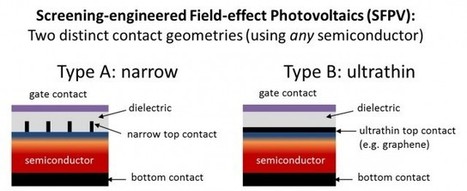
Researchers from the University of California and Berkeley Lab have discovered a way of making photovoltaic cells out of any semiconducting material, not just beautiful, expensive crystals of silicon. In principle, this could open the door to much cheaper solar power.
|