 Your new post is loading...

|
Scooped by
Dr. Stefan Gruenwald
May 16, 2023 12:53 AM
|
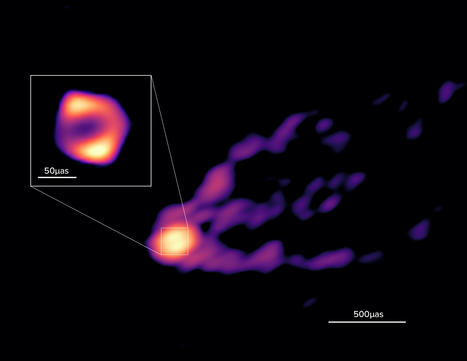
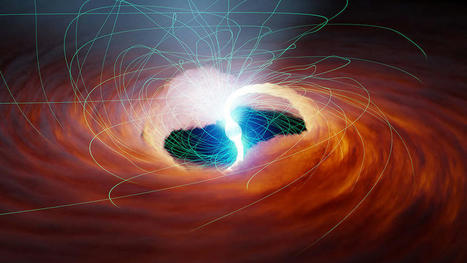
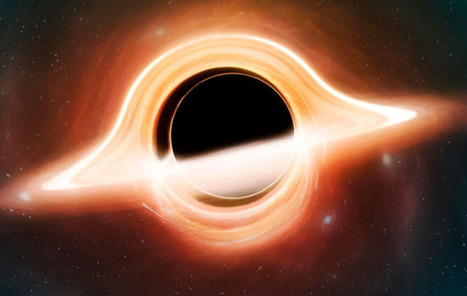
Scientists studying the supermassive black hole at the heart of the M87 galaxy have revealed the origins of the monster's powerful jet and imaged the jet and its source together for the first time. What's more, the observations have revealed that the black hole's ring is much larger than scientists previously believed. The observations were published (April 26, 2023) in the prestigious science magazine Nature. The Global mm-VLBI Array (GMVA) united radio telescopes around the world to produce these new results, including the National Science Foundation's National Radio Astronomy Observatory (NRAO) and Green Bank Observatory (GBO), Atacama Large Millimeter/ submillimeter Array (ALMA), Very Long Baseline Array (VLBA), and Green Bank Telescope (GBT). The SMBH at the center of the M87 galaxy is the most recognizable in the universe. It was the first black hole to be captured in an image, created by the Event Horizon Telescope (EHT) and made public in 2019. The image of its dense, dark core framed by an amorphous glowing ring made international headlines. "M87 has been observed over many decades, and 100 years ago we knew the jet was there, but we couldn't place it in context," said Ru-Sen Lu, an astronomer at the Shanghai Astronomical Observatory, leader of a Max Planck Research Group at the Chinese Academy of Sciences, and lead author of the new paper. "With GMVA, including the premier instruments at NRAO and GBO, we're observing at a lower frequency so we're seeing more detail— and now we know there are more details to see." Eduardo Ros, an astronomer and the Scientific Coordinator for Very Long Baseline Interferometry (VLBI) at the Max Planck Institute for Radio Astronomy added, "We've seen the ring before, but now we see the jet. This puts the ring in context—and it's bigger than we thought. If you think of it like a fire-breathing monster, before, we could see the dragon and the fire, but now we can see the dragon breathing the fire."
|
|
Scooped by
Dr. Stefan Gruenwald
May 15, 2023 6:28 PM
|
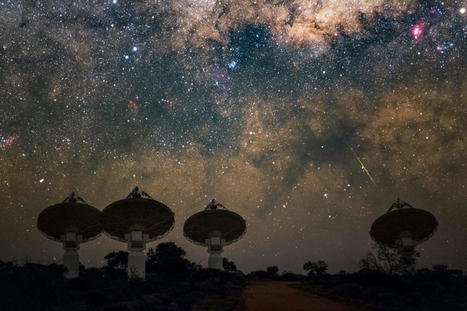
Since its discovery in 2007, fast radio bursts (FRBs) have baffled astronomers. FRBs are powerful, millisecond-long radio bursts from space that produces as much energy during their brief existence as the Sun produces over a few days. Very little is known about what or how most FRBs are produced; most come from outside our Milky Way galaxy. However, one FRB that has never stopped repeating has been highlighted by a NEW study recently published in Science. Using the five-hundred-meter Aperture Spherical Radio Telescope (FAST) in China, astronomers identified the repeated burst in 2022 as FRB 20190520B. FRB 20190520B, which produces radio bursts a few times an hour, occasionally at different radio frequencies, is the rarest repeating FRB of all. Astronomers hurried to extend the original study using additional radio frequencies after discovering this exciting phenomenon. Powerful magnetic fields surrounding the burst Further research revealed that FRB 20190520B is located in a 3.9 billion light-year-distance dwarf galaxy, home to an incredibly dense environment. The FRB source is surrounded by substances that emit powerful, long-lasting radio waves. The exploding source was speculated to be a young neutron star in a complex environment as a result of this. The burst emits potent signals at relatively high radio frequencies, according to observations of FRB 20190520B made with the CSIRO Parkes radio telescope in New South Wales, the Green Bank Telescope in the United States, and the Murriyang radio telescope in Australia. The electromagnetic waves in these high-frequency transmissions turned out to be highly polarized, which means they are "waving" in one direction considerably more powerfully than in others. Different frequencies cause this polarization to shift in direction, and monitoring how much it varies lets us know how strong the magnetic field was when the signal passed through. This polarization measurement indicates a highly magnetized environment surrounding FRB 20190520B. Additionally, throughout the 16 months that astronomers monitored the source, the magnetic field's strength appeared to change and even reverse directions twice. The magnetic field's direction around an FRB has never been seen to alter. Binary System Hypothesis Recent observations of recurrent FRBs are most commonly explained by binary systems, consisting of a neutron star and another massive star or a black hole. The most recent findings support the concept involving a big star. However, other possibilities cannot yet be ruled out. Strong stellar winds and well-organized magnetic fields are known to surround massive stars. A reversal is anticipated in the direction of the magnetic field direction if the source of the bursts were going in and out of the stellar wind region as it moved through its orbit. This explanation is supported by the timing of the magnetic field reversal, the observed variability in the apparent field strength, and the concentrated plasma surrounding the burst source.
|
|
Scooped by
Dr. Stefan Gruenwald
May 14, 2023 1:41 PM
|
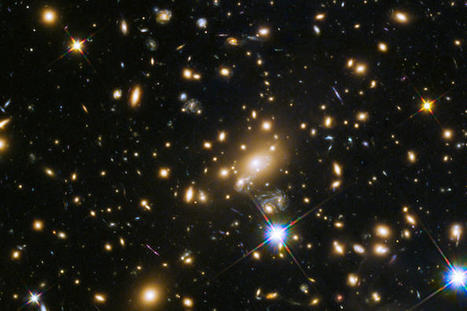
Thanks to data from a magnified, multiply imaged supernova, a team led by University of Minnesota Twin Cities researchers has successfully used a first-of-its-kind technique to measure the expansion rate of the Universe. Their data provide insight into a longstanding debate in the field and could help scientists more accurately determine the Universe's age and better understand the cosmos. The work is divided into two papers, respectively published in Science, one of the world's top peer-reviewed academic journals, and The Astrophysical Journal, a peer-reviewed scientific journal of astrophysics and astronomy. In astronomy, there are two precise measurements of the expansion of the Universe, also called the "Hubble constant." One is calculated from nearby observations of supernovae, and the second uses the "cosmic microwave background," or radiation that began to stream freely through the Universe shortly after the Big Bang. However, these two measurements differ by about 10 percent, which has caused widespread debate among physicists and astronomers. If both measurements are accurate, that means scientists' current theory about the make-up of the universe is incomplete. "If new, independent measurements confirm this disagreement between the two measurements of the Hubble constant, it would become a chink in the armor of our understanding of the cosmos," said Patrick Kelly, lead author of both papers and an assistant professor in the University of Minnesota School of Physics and Astronomy. "The big question is if there is a possible issue with one or both of the measurements. Our research addresses that by using an independent, completely different way to measure the expansion rate of the Universe." The University of Minnesota-led team was able to calculate this value using data from a supernova discovered by Kelly in 2014 -- the first ever example of a multiply imaged supernova, meaning that the telescope captured four different images of the same cosmic event. After the discovery, teams around the world predicted that the supernova would reappear at a new position in 2015, and the University of Minnesota team detected this additional image. These multiple images appeared because the supernova was gravitationally lensed by a galaxy cluster, a phenomenon in which mass from the cluster bends and magnifies light. By using the time delays between the appearances of the 2014 and 2015 images, the researchers were able to measure the Hubble Constant using a theory developed in 1964 by Norwegian astronomer Sjur Refsdal that had previously been impossible to put into practice. The researchers' findings don't absolutely settle the debate, Kelly said, but they do provide more insight into the problem and bring physicists closer to obtaining the most accurate measurement of the Universe's age. "Our measurement favors the value from the cosmic microwave background, although it is not in strong disagreement with the supernova value," Kelly said. "If observations of future supernovae that are also gravitationally lensed by clusters yield a similar result, then it would identify an issue with the current supernova value, or with our understanding of galaxy-cluster dark matter." Using the same data, the researchers found that some current models of galaxy-cluster dark matter were able to explain their observations of the supernovae. This allowed them to determine the most accurate models for the locations of dark matter in the galaxy cluster, a question that has long plagued astronomers. This research was funded primarily by NASA through the Space Telescope Science Institute and the National Science Foundation.
|
|
Scooped by
Dr. Stefan Gruenwald
May 5, 2023 12:52 PM
|
A "beautiful effect" predicted by quantum electrodynamics (QED) can explain the puzzling first observations of polarized X-rays emitted by a magnetar -- a neutron star featuring a powerful magnetic field, according to a Cornell astrophysicist. The extremely dense and hot remnant of a massive star, boasting a magnetic field 100 trillion times stronger than Earth's, was expected to generate highly polarized X-rays, meaning that the radiation's electromagnetic field did not vibrate randomly but had a preferred direction. But scientists were surprised when NASA's Imaging X-ray Polarimetry Explorer (IXPE) satellite last year detected that lower- and higher-energy X-rays were polarized differently, with electromagnetic fields oriented at right angles to each other. The phenomenon can be naturally explained as a result of "photon metamorphosis" -- a transformation of X-ray photons that has been theorized but never directly observed, said Dong Lai, Ph.D. '94, the Benson Jay Simon '59, MBA '62, and Mary Ellen Simon, M.A. '63, Professor of Astrophysics in the College of Arts and Sciences. "In this observation of radiation from a faraway celestial object, we see a beautiful effect that is a manifestation of intricate, fundamental physics," Lai said. "QED is one of the most successful physics theories, but it had not been tested in such strong magnetic field conditions." Lai is the author of "IXPE Detection of Polarized X-rays from Magnetars and Photon Mode Conversion at QED Vacuum Resonance," published April 18, 2023 in Proceedings of the National Academy of Sciences (PNAS). The research builds on calculations Lai and Wynn Ho, Ph.D. '03, published 20 years ago, incorporating observations NASA reported last November of the magnetar 4U 0142+61, located 13,000 light-years away in the Cassiopeia constellation. Quantum electrodynamics, which describes microscopic interactions between electrons and photons, predicts that as X-ray photons exit the neutron star's thin atmosphere of hot, magnetized gas, or plasma, they pass through a phase called vacuum resonance. There, Lai said, photons, which have no charge, can temporarily convert into pairs of "virtual" electrons and positrons that are influenced by the magnetar's super-strong magnetic field even in vacuum, a process called "vacuum birefringence." Combined with a related process, plasma birefringence, conditions are created for the polarity of high-energy X-rays to swing 90 degrees relative to low-energy X-rays, according to Lai's analysis. "You can think about the polarization as two flavors of photons," he said. "A photon suddenly converting from one flavor to another -- you don't usually see this kind of thing. But it's a natural consequence of the physics if you apply the theory under these extreme conditions." The IXPE mission did not see the polarization swing in observations of another magnetar, called 1RXS J170849.0-400910, with an even stronger magnetic field. Lai said that's consistent with his calculations, which suggest vacuum resonance and photon metamorphosis would occur very deep inside such a neutron star. Lai said his interpretation of IXPE's observations of the magnetar 4U 0142+61 helped constrain its magnetic field and rotation, and suggested that its atmosphere was likely composed of partially ionized heavy elements. Ongoing study of X-rays from some of the universe's most extreme objects, including neutron stars and black holes, he said, enables scientists to probe the behavior of matter in conditions that can't be replicated in labs, and adds to understanding of the universe's beauty and diversity. "The observations by IXPE have opened a new window for studying the surface environment of neutron stars," Lai said. "This will lead to new insights into these enigmatic objects."
|
|
Scooped by
Dr. Stefan Gruenwald
April 24, 2023 12:39 PM
|
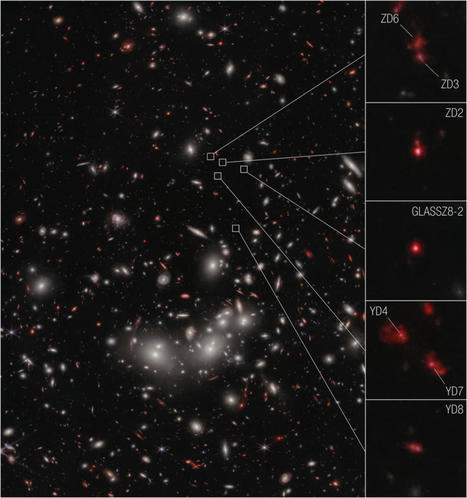
NASA’s James Webb Space Telescope has begun to shed light on formative years in the history of the universe that have thus far been beyond reach: the formation and assembly of galaxies. For the first time, a protocluster of seven galaxies has been confirmed at a distance that astronomers refer to as redshift 7.9, or a mere 650 million years after the big bang. Based on the data collected, astronomers calculated the nascent cluster’s future development, finding that it will likely grow in size and mass to resemble the Coma Cluster, a monster of the modern universe. “This is a very special, unique site of accelerated galaxy evolution, and Webb gave us the unprecedented ability to measure the velocities of these seven galaxies and confidently confirm that they are bound together in a protocluster,” said Takahiro Morishita of IPAC-California Institute of Technology, the lead author of the study published in the Astrophysical Journal Letters. The precise measurements captured by Webb’s Near-Infrared Spectrograph (NIRSpec) were key to confirming the galaxies’ collective distance and the high velocities at which they are moving within a halo of dark matter – more than two million miles per hour (about one thousand kilometers per second). The spectral data allowed astronomers to model and map the future development of the gathering group, all the way to our time in the modern universe. The prediction that the protocluster will eventually resemble the Coma Cluster means that it could eventually be among the densest known galaxy collections, with thousands of members. “We can see these distant galaxies like small drops of water in different rivers, and we can see that eventually they will all become part of one big, mighty river,” said Benedetta Vulcani of the National Institute of Astrophysics in Italy, another member of the research team. Galaxy clusters are the greatest concentrations of mass in the known universe, which can dramatically warp the fabric of spacetime itself. This warping, called gravitational lensing, can have a magnifying effect for objects beyond the cluster, allowing astronomers to look through the cluster like a giant magnifying glass. The research team was able to utilize this effect, looking through Pandora’s Cluster to view the protocluster; even Webb’s powerful instruments need an assist from nature to see so far. Exploring how large clusters like Pandora and Coma first came together has been difficult, due to the expansion of the universe stretching light beyond visible wavelengths into the infrared, where astronomers lacked high-resolution data before Webb. Webb’s infrared instruments were developed specifically to fill in these gaps at the beginning of the universe’s story. The seven galaxies confirmed by Webb were first established as candidates for observation using data from the Hubble Space Telescope’s Frontier Fields program. The program dedicated Hubble time to observations using gravitational lensing, to observe very distant galaxies in detail. However, because Hubble cannot detect light beyond near-infrared, there is only so much detail it can see. Webb picked up the investigation, focusing on the galaxies scouted by Hubble and gathering detailed spectroscopic data in addition to imagery. The research team anticipates that future collaboration between Webb and NASA’s Nancy Grace Roman Space Telescope, a high-resolution, wide-field survey mission, will yield even more results on early galaxy clusters. With 200 times Hubble's infrared field of view in a single shot, Roman will be able to identify more protocluster galaxy candidates, which Webb can follow up to confirm with its spectroscopic instruments. The Roman mission is currently targeted for launch by May 2027.
|
|
Scooped by
Dr. Stefan Gruenwald
April 20, 2023 3:36 PM
|
These objects are more than 100 times brighter than they should be. Observations by the agency’s NuSTAR X-ray telescope support a possible solution to this puzzle.
Exotic cosmic objects known as ultra-luminous X-ray sources produce about 10 million times more energy than the Sun. They’re so radiant, in fact, that they appear to surpass a physical boundary called the Eddington limit, which puts a cap on how bright an object can be based on its mass. Ultra-luminous X-ray sources (ULXs, for short) regularly exceed this limit by 100 to 500 times, leaving scientists puzzled.
In a recent study published in The Astrophysical Journal, researchers report a first-of-its-kind measurement of a ULX taken with NASA’s Nuclear Spectroscopic Telescope Array (NuSTAR). The finding confirms that these light emitters are indeed as bright as they seem and that they break the Eddington limit. A hypothesis suggests this limit-breaking brightness is due to the ULX’s strong magnetic fields. But scientists can test this idea only through observations: Up to billions of times more powerful than the strongest magnets ever made on Earth, ULX magnetic fields can’t be reproduced in a lab.
Breaking the Limit
Particles of light, called photons, exert a small push on objects they encounter. If a cosmic object like a ULX emits enough light per square foot, the outward push of photons can overwhelm the inward pull of the object’s gravity. When this happens, an object has reached the Eddington limit, and the light from the object will theoretically push away any gas or other material falling toward it.
That switch – when light overwhelms gravity – is significant, because material falling onto a ULX is the source of its brightness. This is something scientists frequently observe in black holes: When their strong gravity pulls in stray gas and dust, those materials can heat up and radiate light. Scientists used to think ULXs must be black holes surrounded by bright coffers of gas. But in 2014, NuSTAR data revealed that a ULX by the name of M82 X-2 is actually a less-massive object called a neutron star. Like black holes, neutron stars form when a star dies and collapses, packing more than the mass of our Sun into an area not much bigger than a mid-size city.
This incredible density also creates a gravitational pull at the neutron star’s surface about 100 trillion times stronger than the gravitational pull on Earth’s surface. Gas and other material dragged in by that gravity accelerate to millions of miles per hour, releasing tremendous energy when they hit the neutron star’s surface. (A marshmallow dropped on the surface of a neutron star would hit it with the energy of a thousand hydrogen bombs.) This produces the high-energy X-ray light NuSTAR detects.
The recent study targeted the same ULX at the heart of the 2014 discovery and found that, like a cosmic parasite, M82 X-2 is stealing about 9 billion trillion tons of material per year from a neighboring star, or about 1 1/2 times the mass of Earth. Knowing the amount of material hitting the neutron star’s surface, scientists can estimate how bright the ULX should be, and their calculations match independent measurements of its brightness. The work confirmed M82 X-2 exceeds the Eddington limit.
|
|
Scooped by
Dr. Stefan Gruenwald
April 18, 2023 4:54 PM
|
Astronomers have picked up eight mysterious radio signals that could be coming from aliens sending messages with technology more advanced than our own. The electromagnetic waves were detected using state of the art AI, or deep learning. The signals were sourced to areas surrounding five ‘nearby’ stars 30 to 90 light years away. The pulses were ‘hiding in plain sight’ among a huge number of recordings from more than six years ago. An international team developed a computer algorithm to analyze the unimaginably large amount of information in more detail. Lead author Peter Ma, an undergraduate at the University of Toronto, said his team searched through 150 TB of data from 820 nearby stars. One terabyte could hold 1,000 copies of the Encyclopedia Brittanica. “The dataset had previously been searched through in 2017 by classical techniques but labeled as devoid of interesting signals.” It was collected by the Green Bank Telescope in West Virginia, which is bigger than the Statue of Liberty and part of the Breakthrough Listen project aimed at identifying extra terrestrial activity. No ‘targets of interest’ were originally indicated. But the new neural network found this to be far from the case. Manual re-examination also confirmed the findings shared several key characteristics. The signals were narrow band, meaning they had a small spectral width of just a few Hz (Hertz). Natural phenomena tend to be broadband. “The key issue with any techno-signature search is looking through this huge haystack of signals to find the needle that might be a transmission from an alien world,” explained Dr. Steve Croft, a California astrophysicist with the Breakthrough Listen team (and one of Ma’s research advisors). “Peter’s algorithm gives us a more effective way to filter the haystack and find signals that have the characteristics we expect from techno-signatures.” Furthermore, the readings, reported in the journal Nature Astronomy, were ‘sloped’, indicating acceleration. They also appeared only when the instrument focused on a specific celestial source, disappearing when it pointed away. Radio is a great way to send interstellar information. It passes through dust and gas at the speed of light—20,000 times faster than our best rockets. Many SETI (search for extraterrestrial intelligence) efforts use antennas to eavesdrop on any signals aliens might be transmitting. “These results dramatically illustrate the power of applying modern machine learning and computer vision methods to data challenges in astronomy, resulting in both new detections and higher performance,” said co-author Dr. Cherry Ng, of the French National Centre for Scientific Research in Paris. “Application of these techniques at scale will be transformational for radio techno-signature science.” The researchers are now planning to deploy the algorithm on the SETI Institute’s COSMIC tool in New Mexico, where Jodie Foster heard an alien signal in the 1997 movie Contact. It’s been surveying 40 million stars for ‘techno-signatures’ Since SETI experiments began in 1960 with Frank Drake’s Project Ozma at the same Green Bank Observatory used in this latest work, technological advances have enabled researchers to collect more data than ever. The massive volume requires supercomputers and AI to break new ground in the quest to answer the old fundamental question, ‘Are we alone?’.
|
|
Scooped by
Dr. Stefan Gruenwald
April 18, 2023 4:41 PM
|
Researchers have developed a computer vision-based approach to sharpening images captured by ground-based telescopes. While vital to humanity’s existence on Earth, the planet’s atmosphere is a major nuisance for astronomers trying to learn more about what’s beyond Earth. The cosmos would be much easier to study without the pesky atmosphere. Researchers at Northwestern University in Chicago and Tsinghua University in Beijing have unveiled a new artificial intelligence-powered approach to cleaning up images captured by ground-based telescopes. The primary culprit behind blurry images is shifting pockets of air in the atmosphere. These air pockets can obfuscate the shapes of celestial bodies and can also affect the measurements scientists can make of distant objects, leading to incorrect conclusions. Space-based telescopes, such as Hubble and the James Webb Space Telescope, avoid this issue altogether by leaving Earth’s atmosphere. However, space telescopes are monumentally expensive and always in high demand by astronomers. Ground-based telescopes are easier to build, more affordable, and much simpler to fix when issues arise. To deal with the blur caused by the atmosphere, ground-based telescopes are often built in arid climates and at high altitudes. Even still, blur must be dealt with. The light emanating from distant stars, planets, and galaxies travels a very long way to reach Earth. The light’s journey may encounter different gravitational effects, which can warp the light as observed from Earth. However, the light must also travel through Earth’s atmosphere before it reaches ground-based telescopes. “Even clear night skies still contain moving air that affects light passing through it. That’s why stars twinkle and why the best ground-based telescopes are located at high altitudes where the atmosphere is thinnest,” Northwestern explains. Alexander describes the effect as “a bit like looking up from the bottom of a swimming pool.” The atmosphere is much less dense than water, but the concept is similar. The resulting blur is a significant problem for astrophysicists analyzing images for important cosmological data. The apparent shape of galaxies sheds light on large-scale cosmological structures and their gravitational effects. “Slight differences in shape can tell us about gravity in the universe. These differences are already difficult to detect. If you look at an image from a ground-based telescope, a shape might be warped. It’s hard to know if that’s because of a gravitational effect or the atmosphere,” Alexander says. If an image is blurry, it’s hard to conclude much about the shape of what’s being observed. By removing the blur precisely and mathematically, the true nature of distant objects can be measured and analyzed. Scientists use numerous software-based approaches to process images to make them sharper and more useful. However, the new computer-vision algorithm, first seen on Space, approach promises better and faster results. The algorithm the team built has been explicitly adapted for processing astronomical images captured by ground-based telescopes, the first time such AI technology has been used for this purpose. The team has trained the AI on data simulated to match the Vera C. Rubin Observatory, which will house the world’s largest digital camera when it opens next year in Chile. The new algorithm will be immediately compatible as soon as the telescope is ready for operations. It’s like the impressive observatory has received an upgrade before it even starts its stargazing. “Photography’s goal is often to get a pretty, nice-looking image,” says Northwestern’s Emma Alexander, the study’s senior author. “But astronomical images are used for science. By cleaning up images in the right way, we can get more accurate data. The algorithm removes the atmosphere computationally, enabling physicists to obtain better scientific measurements. At the end of the day, the images do look better as well.” Alexander is an assistant professor of computer science at Northwestern’s McCormick School of Engineering, where she leads the Bio Inspired Vision Lab. The new study was co-authored by Tianao Li, an undergraduate student in electrical engineering at Tsinghua University and a research intern in Alexander’s lab. The team’s optimization algorithm, built upon a deep learning network trained on astronomical images, produces images with 38.6 percent less error than classic methods for removing blur and 7.4 percent less error compared to modern methods. That may not seem like a huge difference, but it is in the realm of astronomy. Relatively small improvements in accuracy and efficiency can have massive, far-reaching benefits to cutting-edge astronomy.
|
|
Scooped by
Dr. Stefan Gruenwald
April 18, 2023 4:36 PM
|
An international team of scientists, led by a researcher at The University of Manchester, have developed a novel AI (artificial intelligence) approach to extract technical astronomy terminology into simple understandable English in their recent publication. The new research is a result of the international RGZ EMU (Radio Galaxy Zoo EMU) collaboration and is transitioning radio astronomy language from specific terms, such as FRI (Fanaroff-Riley Type 1), to plain English terms such as “hourglass” or “traces host galaxy”. In astronomy, technical terminology is used to describe specific ideas in efficient ways that are easily understandable amongst professional astronomers. However, this same terminology can also become a barrier to including non-experts in the conversation. The RGZ EMU collaboration is building a project on the Zooniverse citizen science platform, which asks the public for help in describing and categorizing galaxies imaged through a radio telescope. Modern astronomy projects collect so much data that it is often impossible for scientists to look at it all by themselves, and a computer analysis can still miss interesting things easily spotted by the human eye. Micah Bowles, Lead author and RGZ EMU data scientist, said: “Using AI to make scientific language more accessible is helping us share science with everyone. With the plain English terms we derived, the public can engage with modern astronomy research like never before and experience all the amazing science being done around the world.”
|
|
Scooped by
Dr. Stefan Gruenwald
April 8, 2023 3:43 PM
|
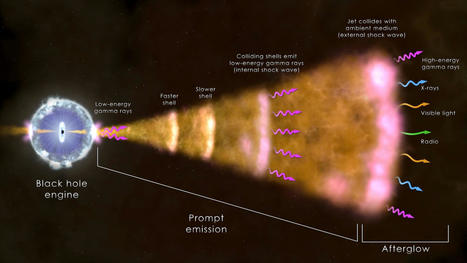
On October 9, 2022, an intense pulse of gamma-ray radiation swept through our solar system, overwhelming gamma-ray detectors on numerous orbiting satellites, and sending astronomers on a chase to study the event using the most powerful telescopes in the world. The new source, dubbed GRB 221009A for its discovery date, turned out to be the brightest gamma-ray burst (GRB) ever recorded. In a new study that appears today in Astrophysical Journal Letters, observations of GRB 221009A spanning from radio waves to gamma-rays, including critical millimeter-wave observations with the Center for Astrophysics | Harvard & Smithsonian's Submillimeter Array (SMA) in Hawaii, shed new light on the decades-long quest to understand the origin of these extreme cosmic explosions. This study is part of a series of discoveries that are to be published as a collection in Astrophysical Journal Letters. The gamma-ray emission from GRB 221009A lasted over 300 seconds. Astronomers think that such "long-duration" GRBs are the birth cry of a black hole, formed as the core of a massive and rapidly spinning star collapses under its own weight. The newborn black hole launches powerful jets of plasma at near the speed of light, which pierce through the collapsing star and shine in gamma-rays. With GRB 221009A being the brightest burst ever recorded, a real mystery lay in what would come after the initial burst of gamma-rays. "As the jets slam into gas surrounding the dying star, they produce a bright 'afterglow' of light across the entire spectrum," says Tanmoy Laskar, assistant professor of physics and astronomy at the University of Utah, and lead author of the study. "The afterglow fades quite rapidly, which means we have to be quick and nimble in capturing the light before it disappears, taking its secrets with it." As part of a campaign to use the world's best radio and millimeter telescopes to study the afterglow of GRB 221009A, astronomers Edo Berger and Yvette Cendes of the Center for Astrophysics (CfA) rapidly gathered data with the SMA. "This burst, being so bright, provided a unique opportunity to explore the detailed behavior and evolution of an afterglow with unprecedented detail—we did not want to miss it," says Edo Berger, professor of astronomy at Harvard University and the CfA. "I have been studying these events for more than twenty years, and this one was as exciting as the first GRB I ever observed."
|
|
Scooped by
Dr. Stefan Gruenwald
March 31, 2023 12:58 PM
|
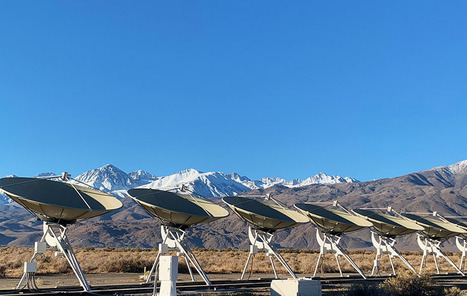
When the immense Arecibo radio telescope in Puerto Rico collapsed in 2020, it left gaping holes in astronomy. Now, a team from the California Institute of Technology (Caltech) hopes to address some of the gaps with a very different instrument: a tightly packed array of relatively inexpensive radio dishes that aims to quickly image radio sources across wide swaths of the sky. A nearly completed prototype array in California that the team calls a “radio camera” is already locating dozens of the distant, enigmatic eruptions called fast radio bursts (FRBs). Next year, the team hopes to begin construction on a much larger array with 2000 dishes that, together, will match the size of Arecibo. Maura McLaughlin of West Virginia University is a leader of NANOGrav (the North American Nanohertz Observatory for Gravitational Waves), an effort to search for gravitational waves from supermassive black holes that relied on Arecibo for half its data. She says they took “a big sensitivity hit” when it was lost. “We really need a new telescope with a similar collecting area,” she says, and Caltech’s planned Deep Synoptic Array (DSA) fits that bill. “It will be a game changer.” To gain sensitivity, radio astronomers can build big dishes like Arecibo or arrays of smaller dishes. But in most such arrays, the dishes are widely spaced, which sharpens their resolution but creates “a data deluge problem,” says Caltech’s Gregg Hallinan, DSA principal investigator (PI). Producing an image from a scattered array is like looking through a fragmented mirror, he says, and recreating the information from the missing parts is a complex nonlinear process known as deconvolution that can take weeks—or even years. Many astronomers just want to regularly survey the sky for new objects or monitor sources for subtle changes without a heavy processing burden. Caltech’s solution, Hallinan says, is to “fill the mirror up” by packing low-cost dishes together. That makes deconvolution easier and should enable DSA to construct images in real time. The team has nearly finished assembling its prototype, the DSA-110, a T-shaped array of 95 dishes spaced 1 meter apart at Caltech’s Owens Valley Radio Observatory in California plus another 15 “outriggers” spread out more than a kilometer distant. To keep construction costs to $4 million, the instrument uses commercially available 4.6-meter dishes, homemade amplifiers, and wave-channeling feeds fashioned out of cake tins. Most radio telescopes require expensive cryogenic cooling to reduce amplifier noise, but Caltech’s engineers have squeezed similar performance out of room-temperature circuits. Co-PI Vikram Ravi admits they perform less well in the summer heat. With a wide field of view, DSA-110 is good at detecting FRBs, intense blasts of radio waves lasting only milliseconds, coming from all over the sky. Several thousand have been detected, but little more than a dozen have been traced to their home galaxies, which might hold clues to what is powering the bursts. DSA-110 aims to localize many more. If a burst is detected, data from the outrigger dishes allow the telescope to zoom in and pin the FRB to its galaxy.
|
|
Scooped by
Dr. Stefan Gruenwald
March 28, 2023 12:39 PM
|
Black holes exist in our universe. That’s widely accepted today. Physicists have detected the X-rays emitted when black holes feed, analyzed the gravitational waves from black hole collisions and even imaged two of these behemoths. But mathematician Elena Giorgi of Columbia University studies black holes in a different way. “Black holes are mathematical solutions to the Einstein equation,” Giorgi says — the “master equation” that is the basis of the general theory of relativity. She and other mathematicians seek to prove theorems about these solutions and otherwise probe the math of general relativity. Their goal: unlock unsuspected truths about black holes or verify existing suspicions. Within general relativity, “one can understand clean mathematical statements and study those statements, and they can give an unambiguous answer within that theory,” says Christoph Kehle, a mathematician at ETH Zurich’s Institute for Theoretical Studies. Mathematicians can solve equations that have bearing on questions about the nature of black holes’ formation, evolution and stability. Last year, in a paper posted online at arXiv.org, Giorgi and colleagues settled a long-standing mathematical question about black hole stability. A stable black hole, mathematically speaking, is one that if poked, nudged or otherwise disturbed will eventually settle back into being a black hole. Like a rubber band that has been stretched and then released, the black hole doesn’t rip apart, explode or cease to exist, but returns to something like its former self. Black holes seem to be physically stable — otherwise they couldn’t endure in the universe — but proving it mathematically is a different beast. And a necessary feat, Giorgi says. If black holes are stable, as researchers presume, then the math describing them had better reflect that stability. If not, something is wrong with the underlying theory. “Most of my work,” Giorgi says, “is about proving things that we already expected to be true.” Mathematics has a history of big contributions in the realm of black holes. In 1916, Karl Schwarzschild published a solution to Einstein’s equations for general relativity near a single spherical mass. The math showed a limit to how small a mass could be squeezed, an early sign of black holes. More recently, British mathematician Roger Penrose won the 2020 Nobel Prize in physics for his calculations showing that black holes were real-world predictions of general relativity. In a landmark paper published in 1965, Penrose described how matter could collapse to form a black hole with a singularity at its center.
|
|
Scooped by
Dr. Stefan Gruenwald
March 23, 2023 6:20 PM
|
In just a few hours of observations, the space telescope revealed a dynamic atmosphere on a planet 40 light-years from Earth. Researchers observing with NASA’s James Webb Space Telescope have pinpointed silicate cloud features in a distant planet’s atmosphere. The atmosphere is constantly rising, mixing, and moving during its 22-hour day, bringing hotter material up and pushing colder material down. The resulting brightness changes are so dramatic that it is the most variable planetary-mass object known to date. The team, led by Brittany Miles of the University of Arizona, also made extraordinarily clear detections of water, methane, and carbon monoxide with Webb’s data, and found evidence of carbon dioxide. This is the largest number of molecules ever identified all at once on a planet outside our solar system. Cataloged as VHS 1256 b, the planet is about 40 light-years away and orbits not one, but two stars over a 10,000-year period. “VHS 1256 b is about four times farther from its stars than Pluto is from our Sun, which makes it a great target for Webb,” Miles said. “That means the planet’s light is not mixed with light from its stars.” Higher up in its atmosphere, where the silicate clouds are churning, temperatures reach a scorching 1,500 degrees Fahrenheit (830 degrees Celsius). Instruments aboard the James Webb Space Telescope known as spectrographs, one on its Near Infrared Spectrograph (NIRSpec) and another on its Mid-Infrared Instrument (MIRI), observed planet VHS 1256 b. The resulting spectrum shows signatures of silicate clouds, water, methane, and carbon monoxide. Within those clouds, Webb detected both larger and smaller silicate dust grains, which are shown on a spectrum. “The finer silicate grains in its atmosphere may be more like tiny particles in smoke,” noted co-author Beth Biller of the University of Edinburgh in Scotland. “The larger grains might be more like very hot, very small sand particles.” VHS 1256 b has low gravity compared to more massive brown dwarfs, which means that its silicate clouds can appear and remain higher in its atmosphere where Webb can detect them. Another reason its skies are so turbulent is the planet’s age. In astronomical terms, it’s quite young. Only 150 million years have passed since it formed – and it will continue to change and cool over billions of years. In many ways, the team considers these findings to be the first “coins” pulled out of a spectrum that researchers view as a treasure chest of data. They’ve only begun identifying its contents. “We’ve identified silicates, but better understanding which grain sizes and shapes match specific types of clouds is going to take a lot of additional work,” Miles said. “This is not the final word on this planet – it is the beginning of a large-scale modeling effort to fit Webb’s complex data.” Although all of the features the team observed have been spotted on other planets elsewhere in the Milky Way by other telescopes, other research teams typically identified only one at a time. “No other telescope has identified so many features at once for a single target,” said co-author Andrew Skemer of the University of California, Santa Cruz. “We’re seeing a lot of molecules in a single spectrum from Webb that detail the planet’s dynamic cloud and weather systems.” The team came to these conclusions by analyzing data known as spectra gathered by two instruments aboard Webb, the Near-Infrared Spectrograph (NIRSpec) and the Mid-Infrared Instrument (MIRI). Since the planet orbits at such a great distance from its stars, the researchers were able to observe it directly, rather than using the transit technique or a coronagraph to take this data. There will be plenty more to learn about VHS 1256 b in the months and years to come as this team – and others – continue to sift through Webb’s high-resolution infrared data. “There’s a huge return on a very modest amount of telescope time,” Biller added. “With only a few hours of observations, we have what feels like unending potential for additional discoveries.” What might become of this planet billions of years from now? Since it’s so far from its stars, it will become colder over time, and its skies may transition from cloudy to clear. The researchers observed VHS 1256 b as part of Webb’s Early Release Science program, which is designed to help transform the astronomical community’s ability to characterize planets and the disks where they form. The team’s paper, entitled “The JWST Early Release Science Program for Direct Observations of Exoplanetary Systems II: A 1 to 20 Micron Spectrum of the Planetary-Mass Companion VHS 1256-1257 b,” will be published in The Astrophysical Journal Letters on March 22, 2023.
|
|
|
Scooped by
Dr. Stefan Gruenwald
May 16, 2023 12:51 AM
|
Astronomers at the Institute for Advanced Study and the Flatiron Institute, along with their collaborators, have utilized artificial intelligence (AI) to improve a method of calculating the mass of massive clusters of galaxies. The AI revealed that by incorporating a simple term into an existing equation, researchers can now achieve much more accurate mass estimates than ever before. The newly enhanced calculations will allow scientists to determine the basic characteristics of the universe with greater precision, according to a report by the astrophysicists, which was published in the Proceedings of the National Academy of Sciences (PNAS). “It’s such a simple thing; that’s the beauty of this,” says study co-author Francisco Villaescusa-Navarro, a research scientist at the Flatiron Institute’s Center for Computational Astrophysics (CCA) in New York City. “Even though it’s so simple, nobody before had thought of this and found this term. People have been working on this for decades, and still they were not able to find this. That really shows you the power of AI, which gets smarter every month.” Understanding the universe requires knowing where and how much stuff there is. Galaxy clusters are the most massive objects in the universe: A single cluster can contain anything from hundreds to thousands of galaxies, along with plasma, hot gas, and dark matter. The cluster’s gravity holds these components together. Understanding such galaxy clusters is crucial to pinning down the origin and continuing evolution of the universe. Perhaps the most crucial quantity determining the properties of a galaxy cluster is its total mass. But measuring this quantity is difficult — galaxies cannot be ‘weighed’ by placing them on a scale. The problem is further complicated because the dark matter that makes up much of a cluster’s mass is invisible. Instead, scientists deduce the mass of a cluster from other observable quantities. In the early 1970s, Rashid Sunyaev, current distinguished visiting professor at the Institute for Advanced Study’s School of Natural Sciences, and his collaborator Yakov B. Zel’dovich developed a new way to estimate galaxy cluster masses. Their method relies on the fact that as gravity squashes matter together, the matter’s electrons push back. That electron pressure alters how the electrons interact with particles of light called photons. As photons left over from the Big Bang’s afterglow hit the squeezed material, the interaction creates new photons. The properties of those photons depend on how strongly gravity is compressing the material, which in turn depends on the galaxy cluster’s heft. By measuring the photons, astrophysicists can estimate the cluster’s mass. However, this ‘integrated electron pressure’ is not a perfect proxy for mass, because the changes in the photon properties vary depending on the galaxy cluster. Wadekar and his colleagues thought an artificial intelligence tool called ‘symbolic regression’ might find a better approach. The tool essentially tries out different combinations of mathematical operators — such as addition and subtraction — with various variables, to see what equation best matches the data. The work was led by Digvijay Wadekar of the Institute for Advanced Study in Princeton, New Jersey, along with researchers from the CCA, Princeton University, Cornell University, and the Center for Astrophysics | Harvard & Smithsonian.
|
|
Scooped by
Dr. Stefan Gruenwald
May 15, 2023 6:08 PM
|
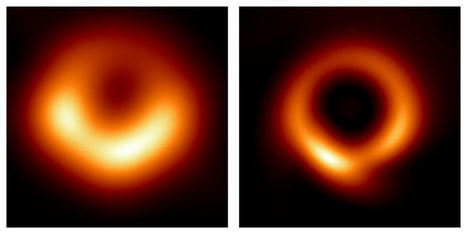
The famous first image of a black hole just got two times sharper. A research team used artificial intelligence to dramatically improve upon its first image from 2019, which now shows the black hole at the center of the M87 galaxy as darker and bigger than the first image depicted. AI algorithms—in particular, neural networks that use many interconnected nodes and are able to learn to recognize patterns—are perfectly suited for picking out the patterns of galaxies. Astronomers began using neural networks to classify galaxies in the early 2010s. Now the algorithms are so effective that they can classify galaxies with an accuracy of 98%. Astronomers working on SETI, the Search for Extraterrestrial Intelligence, use radio telescopes to look for signals from distant civilizations. Early on, radio astronomers scanned charts by eye to look for anomalies that couldn't be explained. More recently, researchers harnessed 150,000 personal computers and 1.8 million citizen scientists to look for artificial radio signals. Now, researchers are using AI to sift through reams of data much more quickly and thoroughly than people can. This has allowed SETI efforts to cover more ground while also greatly reducing the number of false positive signals. Another example is the search for exoplanets. Astronomers discovered most of the 5,300 known exoplanets by measuring a dip in the amount of light coming from a star when a planet passes in front of it. AI tools can now pick out the signs of an exoplanet with 96% accuracy. Making new discoveries AI has proved itself to be excellent at identifying known objects—like galaxies or exoplanets—that astronomers tell it to look for. But it is also quite powerful at finding objects or phenomena that are theorized but have not yet been discovered in the real world. Teams have used this approach to detect new exoplanets, learn about the ancestral stars that led to the formation and growth of the Milky Way, and predict the signatures of new types of gravitational waves. To do this, astronomers first use AI to convert theoretical models into observational signatures—including realistic levels of noise. They then use machine learning to sharpen the ability of AI to detect the predicted phenomena. Finally, radio astronomers have also been using AI algorithms to sift through signals that don't correspond to known phenomena. Recently a team from South Africa found a unique object that may be a remnant of the explosive merging of two supermassive black holes. If this proves to be true, the data will allow a new test of general relativity—Albert Einstein's description of space-time. Making predictions and plugging holes As in many areas of life recently, generative AI and large language models like ChatGPT are also making waves in the astronomy world. The team that created the first image of a black hole in 2019 used a generative AI to produce its new image. To do so, it first taught an AI how to recognize black holes by feeding it simulations of many kinds of black holes. Then, the team used the AI model it had built to fill in gaps in the massive amount of data collected by the radio telescopes on the black hole M87. Using this simulated data, the team was able to create a new image that is two times sharper than the original and is fully consistent with the predictions of general relativity. Astronomers are also turning to AI to help tame the complexity of modern research. A team from the Harvard-Smithsonian Center for Astrophysics created a language model called astroBERT to read and organize 15 million scientific papers on astronomy. Another team, based at NASA, has even proposed using AI to prioritize astronomy projects, a process that astronomers engage in every 10 years.
|
|
Scooped by
Dr. Stefan Gruenwald
May 14, 2023 1:37 PM
|
New research led by Sascha Kempf of the Laboratory for Atmospheric and Space Physics (LASP) at CU Boulder finds that Saturn's rings are no more than 400 million years old. That's much younger than Saturn itself, which formed around 4.5 billion years ago. "In a way, we've gotten closure on a question that started with James Clerk Maxwell," said Kempf, associate professor in the Laboratory for Atmospheric and Space Physics (LASP) at CU Boulder. The researchers arrived at that closure by studying what might seem like an unusual subject: dust. Kempf explained that tiny grains of rocky material wash through Earth's solar system on an almost constant basis. In some cases, this flux can leave behind a thin layer of dust on planetary bodies, including on the ice that makes up Saturn's rings. In the new study, he and his colleagues set out to put a date on Saturn's rings by studying how rapidly this layer of dust builds up -- a bit like telling how old a house is by running your finger along its surfaces. "Think about the rings like the carpet in your house," Kempf said. "If you have a clean carpet laid out, you just have to wait. Dust will settle on your carpet. The same is true for the rings." It was an arduous process: From 2004 to 2017, the team used an instrument called the Cosmic Dust Analyzer aboard NASA's late Cassini spacecraft to analyze specks of dust flying around Saturn. Over those 13 years, the researchers collected just 163 grains that had originated from beyond the planet's close neighborhood. But it was enough. Based on their calculations, Saturn's rings have likely been gathering dust for only a few hundred million years. The planet's rings, in other words, are new phenomena, arising (and potentially even disappearing) in what amounts to a blink of an eye in cosmic terms. "We know approximately how old the rings are, but it doesn't solve any of our other problems," Kempf said. "We still don't know how these rings formed in the first place." From Galileo to Cassini Researchers have been captivated by these seemingly-translucent rings for more than 400 years. In 1610, Italian astronomer Galileo Galilei first observed the features through a telescope, although he didn't know what they were. (Galileo's original drawings make the rings look a bit like the handles on a water jug). In the 1800s, Maxwell, a scientist from Scotland, concluded that Saturn's rings couldn't be solid but were, instead, made up of many individual pieces. Today, scientists know that Saturn hosts seven rings comprised of countless chunks of ice, most no bigger than a boulder on Earth. Altogether, this ice weighs about half as much as Saturn's moon Mimas and stretches nearly 175,000 miles from the planet's surface. Kempf added that for most of the 20th Century, scientists assumed that the rings likely formed at the same time as Saturn. But that idea raised a few issues -- namely, Saturn's rings are sparkling clean. Observations suggest that these features are made up of roughly 98% pure water ice by volume, with only a tiny amount of rocky matter. "It's almost impossible to end up with something so clean," Kempf said. Cassini offered an opportunity to put a definitive age on Saturn's rings. The spacecraft first arrived at Saturn in 2004 and collected data until it purposefully crashed into the planet's atmosphere in 2017. The Cosmic Dust Analyzer, which was shaped a bit like a bucket, scooped up small particles as they whizzed by. Engineers and scientists at LASP designed and built a much more sophisticated dust analyzer for NASA's upcoming Europa Clipper mission, which is scheduled to launch in 2024.
|
|
Scooped by
Dr. Stefan Gruenwald
April 25, 2023 12:09 PM
|
Astronomers sorted through 200,000 Hubble images and made tens of thousands of measurements on them to look for any residual background glow in the sky, in an ambitious project called SKYSURF. Aside from a tapestry of glittering stars, and the glow of the waxing and waning Moon, the nighttime sky looks inky black to the casual observer. But how dark is dark? To find out, astronomers decided to sort through 200,000 images from NASA's Hubble Space Telescope and made tens of thousands of measurements on these images to look for any residual background glow in the sky, in an ambitious project called SKYSURF. This would be any leftover light after subtracting the glow from planets, stars, galaxies, and from dust in the plane of our solar system (called zodiacal light). When researchers completed this inventory, they found an exceedingly tiny excess of light, equivalent to the steady glow of 10 fireflies spread across the entire sky. That's like turning out all the lights in a shuttered room and still finding an eerie glow coming from the walls, ceiling, and floor. The researchers say that one possible explanation for this residual glow is that our inner solar system contains a tenuous sphere of dust from comets that are falling into the solar system from all directions, and that the glow is sunlight reflecting off this dust. If real, this dust shell could be a new addition to the known architecture of the solar system. This idea is bolstered by the fact that in 2021 another team of astronomers used data from NASA's New Horizons spacecraft to also measure the sky background. New Horizons flew by Pluto in 2015, and a small Kuiper belt object in 2018, and is now heading into interstellar space. The New Horizons measurements were done at a distance of 4 billion to 5 billion miles from the Sun. This is well outside the realm of the planets and asteroids where there is no contamination from interplanetary dust. New Horizons detected something a bit fainter that is apparently from a more distant source than Hubble detected. The source of the background light seen by New Horizons also remains unexplained. There are numerous theories ranging from the decay of dark matter to a huge unseen population of remote galaxies. "If our analysis is correct there's another dust component between us and the distance where New Horizons made measurements. That means this is some kind of extra light coming from inside our solar system," said Tim Carleton, of Arizona State University (ASU). "Because our measurement of residual light is higher than New Horizons we think it is a local phenomenon that is not from far outside the solar system. It may be a new element to the contents of the solar system that has been hypothesized but not quantitatively measured until now," said Carleton.
|
|
Scooped by
Dr. Stefan Gruenwald
April 22, 2023 1:17 PM
|
The far side of the moon would benefit several types of astronomy. The most obvious one is radio astronomy, which can be conducted from the side of the Moon that always faces away from Earth – the so-called "far side". The lunar far side is permanently shielded from the radio signals generated by humans on Earth. During the lunar night, it is also protected from the Sun. These characteristics makes it probably the most “radio-quiet” location in the whole solar system as no other planet or moon has a side that permanently faces away from the Earth. It is therefore ideally suited for radio astronomy. Radio waves are a form of electromagnetic energy – as are, for example, infrared, ultraviolet and visible-light waves. They are defined by having different wavelengths in the electromagnetic spectrum. Radio waves with wavelengths longer than about 15m are blocked by Earth’s ionoshere. But radio waves at these wavelengths reach the Moon’s surface unimpeded. For astronomy, this is the last unexplored region of the electromagnetic spectrum, and it is best studied from the lunar far side. Observations of the cosmos at these wavelengths come under the umbrella of “low frequency radio astronomy”. These wavelengths are uniquely able to probe the structure of the early universe, especially the cosmic “dark ages” – an era before the first galaxies formed. At that time, most of the matter in the universe, excluding the mysterious dark matter, was in the form of neutral hydrogen atoms. These emit and absorb radiation with a characteristic wavelength of 21cm. Radio astronomers have been using this property to study hydrogen clouds in our own galaxy – the Milky Way – since the 1950s. Because the universe is constantly expanding, the 21cm signal generated by hydrogen in the early universe has been shifted to much longer wavelengths. As a result, hydrogen from the cosmic “dark ages” will appear to us with wavelengths greater than 10m. The lunar far side may be the only place where we can study this. The astronomer Jack Burns provided a good summary of the relevant science background at the recent Royal Society meeting, calling far side of the moon a “pristine, quiet platform to conduct low radio frequency observations of the early Universe’s Dark Ages, as well as space weather and magnetospheres associated with habitable exoplanets”. Signals from other stars As Burns says, another potential application of far side radio astronomy is trying to detect radio waves from charged particles trapped by magnetic fields – magnetospheres – of planets orbiting other stars. This would help to assess how capable these exoplanets are of hosting life. Radio waves from exoplanet magnetospheres would probably have wavelengths greater than 100m, so they would require a radio-quiet environment in space. Again, the far side of the Moon will be the best location. A similar argument can be made for attempts to detect signals from intelligent aliens. And, by opening up an unexplored part of the radio spectrum, there is also the possibility of making serendipitous discoveries of new phenomena. We should get an indication of the potential of these observations when NASA’s LuSEE-Night mission lands on the lunar far side in 2025 or 2026. Crater depths The Moon also offers opportunities for other types of astronomy as well. Astronomers have lots of experience with optical and infrared telescopes operating in free space, such as the Hubble telescope and JWST. However, the stability of the lunar surface may confer advantages for these types of instrument. Moreover, there are craters at the lunar poles that receive no sunlight. Telescopes that observe the universe at infrared wavelengths are very sensitive to heat and therefore have to operate at low temperatures. JWST, for example, needs a huge sunshield to protect it from the sun’s rays. On the Moon, a natural crater rim could provide this shielding for free. The Moon’s relatively low gravity may also enable the construction of much larger telescopes than is feasible for free-flying satellites. These considerations have led the astronomer Jean-Pierre Maillard to suggest that the Moon may be the future of infrared astronomy. The cold, stable environment of permanently shadowed craters may also have advantages for the next generation of instruments to detect gravitational waves – “ripples” in space-time caused by processes such as exploding stars and colliding black holes. Moreover, for billions of years the Moon has been bombarded by charged particles from the sun – solar wind – and galactic cosmic rays. The lunar surface may contain a rich record of these processes. Studying them could yield insights into the evolution of both the Sun and the Milky Way. For all these reasons, astronomy stands to benefit from the current renaissance in lunar exploration. In particular, astronomy is likely to benefit from the infrastructure built up on the Moon as lunar exploration proceeds. This will include both transportation infrastructure – rockets, landers and other vehicles – to access the surface, as well as humans and robots on-site to construct and maintain astronomical instruments.
|
|
Scooped by
Dr. Stefan Gruenwald
April 18, 2023 4:58 PM
|
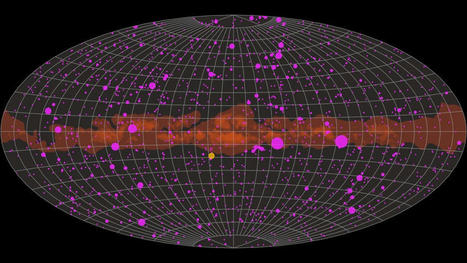
Most of the gamma ray sources in this animation are blazars, supermassive black holes with relativistic jets pointed at Earth. We’ve come a long way since gamma rays were discovered. The late 1800s and early 1900s were a time of great scientific advancements. Scientists were just getting a handle on the different types of radiation. Radium featured prominently in the experiments, including one by French scientist Paul Ulrich Villard in 1900. Radium decays readily, and scientists had already identified alpha and beta radiation coming from radium samples. But Villard was able to identify a third type of penetrating radiation so powerful even a layer of lead couldn’t stop it: gamma rays. Now we have a gamma ray detector in space, and it’s showing us how the Universe sparkles with this powerful energy. Gamma rays are the most energetic form of light in the Universe, and as a new animation shows, the sky practically sparkles with flickering gamma-ray sources. The animation contains a year’s worth of observations from the Large Area Telescope (LAT) on NASA’s Fermi Gamma-ray Space Telescope. Each yellow circle is a gamma-ray source, and the expansion and contraction show how the source brightens and dims. The yellow circle is the Sun’s following its seemingly sinusoidal path relative to Earth. The animation represents an entire year of observations. Each frame in the animation represents three days. The reddish-orange band that runs through the middle of the animation is the Milky Way’s central plane, which is a consistent gamma-ray producer.
|
|
Scooped by
Dr. Stefan Gruenwald
April 18, 2023 4:45 PM
|
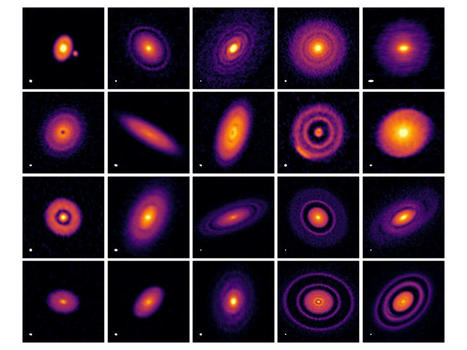
New research from the University of Georgia reveals that artificial intelligence can be used to find planets outside of our solar system. The recent study demonstrated that machine learning can be used to find exoplanets, information that could reshape how scientists detect and identify new planets very far from Earth. "One of the novel things about this is analyzing environments where planets are still forming," said Jason Terry, doctoral student in the UGA Franklin College of Arts and Sciences department of physics and astronomy and lead author on the study. "Machine learning has rarely been applied to the type of data we're using before, specifically for looking at systems that are still actively forming planets." The first exoplanet was found in 1992, and though more than 5,000 are known to exist, those have been among the easiest for scientists to find. Exoplanets at the formation stage are difficult to see for two primary reasons. They are too far away, often hundreds of lights years from Earth, and the disks where they form are very thick, thicker than the distance of the Earth to the sun. Data suggests the planets tend to be in the middle of these disks, conveying a signature of dust and gases kicked up by the planet. The research showed that artificial intelligence can help scientists overcome these difficulties. "This is a very exciting proof of concept," said Cassandra Hall, assistant professor of astrophysics, principal investigator of the Exoplanet and Planet Formation Research Group, and co-author on the study. "The power here is that we used exclusively synthetic telescope data generated by computer simulations to train this AI, and then applied it to real telescope data. This has never been done before in our field, and paves the way for a deluge of discoveries as James Webb Telescope data rolls in." The James Webb Space Telescope, launched by NASA in 2021, has inaugurated a new level of infrared astronomy, bringing stunning new images and reams of data for scientists to analyze. It's just the latest iteration of the agency's quest to find exoplanets, scattered unevenly across the galaxy. The Nancy Grace Roman Observatory, a 2.4-meter survey telescope scheduled to launch in 2027 that will look for dark energy and exoplanets, will be the next major expansion in capability—and delivery of information and data—to comb through the universe for life. he Webb telescope supplies the ability for scientists to look at exoplanetary systems in an extremely bright, high resolution, with the forming environments themselves a subject of great interest as they determine the resulting solar system. "The potential for good data is exploding, so it is a very exciting time for the field," Terry said.
|
|
Scooped by
Dr. Stefan Gruenwald
April 18, 2023 4:38 PM
|
A phenomenon called "skyglow" is stealing our celestial view, and the impact is far more dramatic when observed by the unaided human eye. Light pollution has robbed eight out of 10 Americans, and nearly a third of all humans, of a view of our own home galaxy, according to new research out Thursday. The problem is something called "skyglow," which is the cumulative, diffuse brightening of the light sky from artificial light sources. A new study published in the journal Science uses crowdsourced data from a program called Globe at Night, which is run by the National Science Foundation-funded NOIRLab, a network of observatories. It finds that skyglow as perceived by human eyes is more of a problem compared with satellite measurements of artificial light on Earth. The study is the latest addition to a growing body of scientific literature on light pollution stretching back at least half a century. By analyzing over 50,000 citizen scientist observations, the researchers found an increase in sky brightness of 9.6% over the past decade, compared to just two per cent per year measured by satellites. "At this rate of change, a child born in a location where 250 stars were visible would be able to see only around 100 by the time they turned 18," said the study's lead author Christopher Kyba, a researcher at the German Research Centre for Geosciences, in a statement. The authors estimate that 80% of people in the US and 30% worldwide aren't able to see the ethereal arc of the Milky Way on a clear night. Part of the problem with what we're able to see with unaided eyes has to do with the types of lighting in use. "LED lights have a strong effect on our perception of sky brightness," said Kyba. "This could be one of the reasons behind the discrepancy between satellite measurements and the sky conditions reported by Globe at Night participants." Satellites also have a hard time detecting light that is emitted horizontally from sources more prominent in cities like billboards or storefronts.
|
|
Scooped by
Dr. Stefan Gruenwald
April 8, 2023 3:57 PM
|
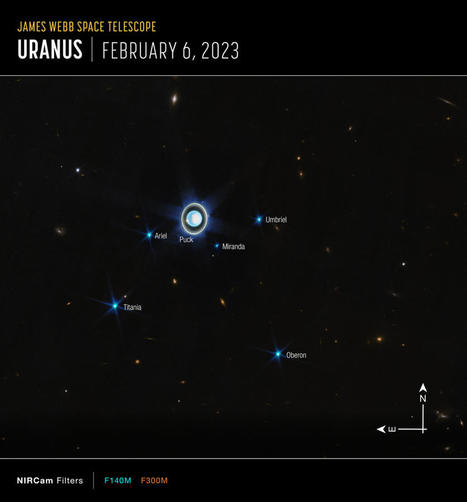
Following in the footsteps of the Neptune image released in 2022, NASA’s James Webb Space Telescope has taken a stunning image of the solar system’s other ice giant, the planet Uranus. The new image features dramatic rings as well as bright features in the planet’s atmosphere. When Voyager 2 looked at Uranus, its camera showed an almost featureless blue-green ball in visible wavelengths. With the infrared wavelengths and extra sensitivity of Webb we see more detail, showing how dynamic the atmosphere of Uranus really is. On the right side of the planet there's an area of brightening at the pole facing the Sun, known as a polar cap. This polar cap is unique to Uranus -- it seems to appear when the pole enters direct sunlight in the summer and vanish in the fall; these Webb data will help scientists understand the currently mysterious mechanism. Webb revealed a surprising aspect of the polar cap: a subtle enhanced brightening at the center of the cap. The sensitivity and longer wavelengths of Webb's NIRCam may be why we can see this enhanced Uranus polar feature when it has not been seen as clearly with other powerful telescopes like the Hubble Space Telescope and Keck Observatory. At the edge of the polar cap lies a bright cloud as well as a few fainter extended features just beyond the cap's edge, and a second very bright cloud is seen at the planet's left limb. Such clouds are typical for Uranus in infrared wavelengths, and likely are connected to storm activity. This planet is characterized as an ice giant due to the chemical make-up of its interior. Most of its mass is thought to be a hot, dense fluid of "icy" materials -- water, methane, and ammonia -- above a small rocky core. Uranus has 13 known rings and 11 of them are visible in this Webb image. Some of these rings are so bright with Webb that when they are close together, they appear to merge into a larger ring. Nine are classed as the main rings of the planet, and two are the fainter dusty rings (such as the diffuse zeta ring closest to the planet) that weren't discovered until the 1986 flyby by Voyager 2. Scientists expect that future Webb images of Uranus will reveal the two faint outer rings that were discovered with Hubble during the 2007 ring-plane crossing. Webb also captured many of Uranus' 27 known moons (most of which are too small and faint to be seen here); the six brightest are identified in the wide-view image. This was only a short, 12-minute exposure image of Uranus with just two filters. It is just the tip of the iceberg of what Webb can do when observing this mysterious planet. In 2022, the National Academies of Sciences, Engineering, and Medicine identified Uranus science as a priority in its 2023-2033 Planetary Science and Astrobiology decadal survey. Additional studies of Uranus are happening now, and more are planned in Webb's first year of science operations.
|
|
Scooped by
Dr. Stefan Gruenwald
April 2, 2023 1:01 PM
|
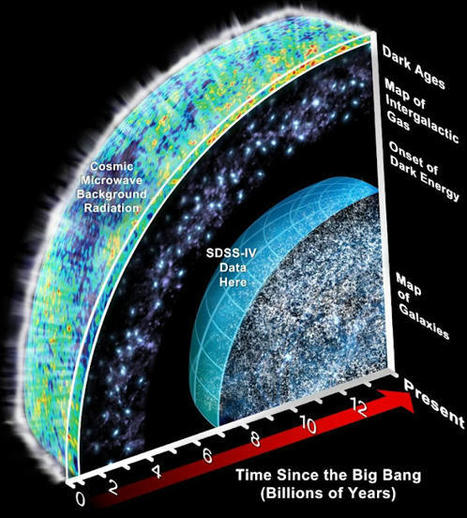
The universe is expanding, with every galaxy beyond the Local Group speeding away from us. Today, most of the universe's galaxies are already receding faster than the speed of light. All galaxies currently beyond 18 billion light-years are forever unreachable by us, no matter how much time passes. Our universe is full of stars and galaxies everywhere and in all directions. From our vantage point, we observe up to 46.1 billion light years away. Our visible universe contains an estimated ~ 2 trillion galaxies. However, most of them are already permanently unavailable for us.
|
|
Scooped by
Dr. Stefan Gruenwald
March 28, 2023 2:32 PM
|
Two of Uranus’ moons may be home to active oceans hidden beneath their surfaces. The new finding was uncovered when astronomers looked back at radiation data that Voyager 2 captured about the planet when it passed by over 40 years ago. According to that new data, the moons Ariel and Miranda could possibly house underground liquid water oceans. It’s an intriguing discovery that only helps to heighten the need for better exploration of Uranus and its 27 different moons. By getting a better understanding of the possible oceans on Uranus’ moons, we could possibly learn more about the moons themselves, where they originated from, and even whether or not they were ever capable of housing life of some significance. A new study on the findings has been accepted for publication in the journal Geophysical Research Letters. The study details the radiation readings that astronomers looked at, some of which seem to suggest that at least one of these two Uranus moons is ejecting material into space, possibly from an underground ocean. The exact cause and means by which the plasma is being ejected into the solar system are unclear, as the readings we have to look at are all 40 years old at this point. However, with scientists calling for new missions to Uranus, we could likely see more data on the possibility that Uranus’ moons are harboring active oceans in the coming decades. Learning more about our solar system’s planets has always been a goal for astronomers. However, getting spacecraft to many of those planets isn’t always easy. That also doesn’t take into account the overall cost of such missions, either. The hope is that these suggestions that Uranus’ moons are hiding oceans could help spur the movement to create Uranus-focused exploration missions. Further, if NASA and other agencies show enough interest in exploring Uranus and the possibility of these moon-based oceans, then we could see more priority put on Uranus-focused exploration in the near future.
|
|
Scooped by
Dr. Stefan Gruenwald
March 27, 2023 2:12 PM
|
New measurements by the James Webb Space Telescope found that a rocky exoplanet orbiting a star known as TRAPPIST-1 most likely has no atmosphere. The finding squashes hopes that this intriguing world might host life. But don't despair — there are six more Earth-like exoplanets in the TRAPPIST-1 star system, and now that Webb has proven its ability to study them, we can hope for some more exciting news in the not so distant future. Astronomers used the James Webb Space Telescope's Mid-Infrared Instrument (MIRI) to measure the temperature of the planet TRAPPIST-1b. Out of the seven planets that make up the TRAPPIST-1 star system, this planet orbits the closest to the parent star and is about 1.4 times as large as Earth. The measurement, which according to the European Space Agency (ESA) represents Webb's first detection of "any form of light" emitted by a rocky exoplanet, revealed that the planet's daytime temperature was a scorching 446 degrees Fahrenheit (230 degrees Celsius). Astronomers think that's too high for the planet to have an atmosphere. Thomas Greene, an astrophysicist in the Space Science and Astrobiology Division at NASA's Ames Research Center in California who led the observations, told Space.com in an email that he had hoped for a different result. "Some theory groups predicted that the planet would have a dense atmosphere, while others thought it might not," Greene said. "I was more disappointed than surprised to see it had no atmosphere." The distance between TRAPPIST-1b and its star is only about one hundredth of the sun-Earth distance. That's 40 times closer than the distance between the sun and the solar system's innermost planet Mercury. Although the star at the center of the TRAPPIST-1 system is much dimmer than our sun, the planet still receives about four times as much starlight as Earth receives from the sun. Astronomers therefore didn't expect this planet to be habitable prior to ruling out the presence of an atmosphere. The observation, however, is still a breakthrough, as it shows that Webb can directly gather information about such distant Earth-like worlds. In the TRAPPIST-1 system, there are at least three planets — TRAPPIST-1e, 1f and 1g — that have conditions for the existence of liquid water on their surfaces and therefore might host life. The TRAPPIST-1 system is a hugely popular target for exoplanet research and the best explored planetary system other than our own solar system, according to NASA. Located some 40 light-years away from the sun, the star at the center of the TRAPPIST-1 system is a so-called M dwarf. Sometimes also referred to as red dwarfs, these stars are the smallest known type of stars capable of burning hydrogen in their cores. They range in size from 0.08 to 0.6 times the size of the sun and are the most numerous type of star in our galaxy, the Milky Way. "There are about ten times as many M stars like TRAPPIST-1 than G stars like the sun," Greene wrote. "M stars are also about twice as likely to have rocky, Earth-sized planets. Therefore about 95% of the Earth-sized rocky planets in the Milky Way will have stars like TRAPPIST-1 and not like the sun."
|


















buy GLUCOMANNAN KONJAC
Price: $345.0 $210.0Buy Greenstone Xanax online
Price: $150.0 – $850.0Buy hydrocodone online
Price: $150.0 – $500.0Buy Lortab Online
Price: $180.0 – $500.0Buy Meridia online
Price: $300.0 $240.0buy methadone 40mg online
Price: $400.0 $230.0Buy Modafinil Online
Price: $250.0 – $650.0Buy Morphine Online
Price: $150.0 – $600.0buy Morphine online
Price: $300.0 $200.0Buy Norco without script
Price: $150.0 – $450.0Buy Oramorph Online
Price: $150.0 – $350.0Buy original adderall online
Price: $150.0 – $500.0Buy original darvocet online
Buy original klonopin online
Price: $200.0 – $450.0Buy oxycodone online
Price: $200.0 – $1,000.0buy Pethidine Injection 2ml