Your new post is loading...

|
Scooped by
Dr. Stefan Gruenwald
April 4, 2012 12:52 PM
|
It has been commonly accepted that human ancestors managed to tame the power of fire around 350,000 years ago, after Neanderthal tribes migrated from Africa into Europe. It was believed that Neanderthals had been in Europe for 600,000 years prior to harnessing fire. However, in South Africa researchers have found evidence that humans had used fire much earlier than that. Francesco Berna, from the University of Boston, filed a reportabout his team's findings at a North Cape excavation, which uncovered blocks of sediment one million years old that contained traces of burnt plant matter and animal bones. When submitted to an infrared microspectroscopy, the molecular evidence showed that the bones had been heated to over 500 degrees Celsius.
|
|
Scooped by
Dr. Stefan Gruenwald
April 2, 2012 10:38 AM
|
By studying fossil raindrops, scientists have revealed valuable information about the early atmosphere of Earth. The research could dramatically improve models of Earth's ancient, and will help astrobiologists understand the environmental conditions in which life arose on our planet.
|
|
Scooped by
Dr. Stefan Gruenwald
March 25, 2012 11:02 AM
|
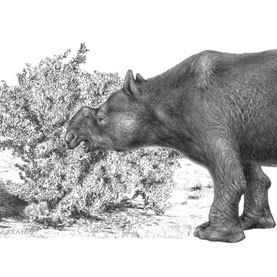
The disappearance roughly 40,000 years ago of dozens of large mammals in Australia — including rhinoceros-sized wombats and tapir-like marsupials — was caused by human hunting and not by climate change, according to a new study by Australian scientists. Details here: http://tinyurl.com/73nzzs9
|
|
Scooped by
Dr. Stefan Gruenwald
March 23, 2012 11:45 AM
|
FOSSIL feathers provided the definitive proof that birds descended from dinosaurs. There is one extinct beast that doesn't fit the picture, though. It is called Longisquama insignis, and it lived 230 to 240 million years ago - just before the dinosaurs evolved, and 70 to 80 million years before the first fossils of feathered dinobirds. Why, then, did Longisquama sport what look suspiciously like feathers? http://tinyurl.com/6rrzgcx
|
|
Scooped by
Dr. Stefan Gruenwald
March 9, 2012 11:09 AM
|
A team of paleontologists has discovered the oldest animal with a skeleton. Called Coronacollina acula, the organism is between 560 million and 550 million years old, which places it in the Ediacaran period, before the explosion of life and diversification of organisms took place on Earth in the Cambrian. http://tinyurl.com/7hzdjtb
|
|
Rescooped by
Dr. Stefan Gruenwald
from Science News
February 29, 2012 10:31 AM
|
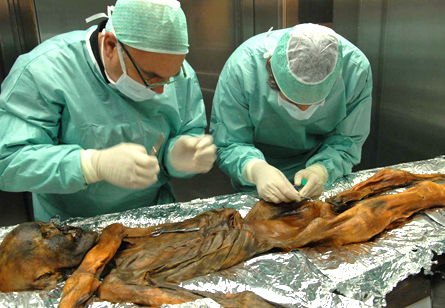
By peering deeply into the DNA of the mummy known as Ötzi, geneticists have expanded the rap sheet on the 5,300-year-old Iceman: He had brown eyes, brown hair and blood type O, was lactose intolerant and his modern-day relatives live on Corsica and Sardinia.
Via Sakis Koukouvis
|
|
Scooped by
Dr. Stefan Gruenwald
February 15, 2012 9:31 PM
|
Scientists have used the exquisitely preserved, fossilised remains of a Jurassic bush-cricket to recreate its chirp. http://gu.com/p/359yc
|
|
Scooped by
Dr. Stefan Gruenwald
February 6, 2012 1:10 PM
|
Humanity’s advances to date have been accompanied by great leaps in the density, diversity, and virtuality of our societies, and in the miniaturization and efficiency of our technologies. Among these and other variables determining social progress, two stand out as particularly special. The more our intelligence gains access to “Inner Space,” both to the domain of very small size scales (“Physical Inner Space”), and to the domain of very powerful brain-based and computer-based simulations (“Virtual Inner Space”) the faster we learn to generate major new economic, social, and adaptation benefits for civilization. This “race to Inner Space” may turn out to be the dominant developmental trend for our species.
|
|
Scooped by
Dr. Stefan Gruenwald
February 5, 2012 11:14 AM
|
Bacteria found on the bottom of the Arctic Ocean might have the longest life-cycle on Earth, surviving for as much as 100 million years in hibernation while waiting for the ice to thaw enough for them to be viable again.
|
|
|
Scooped by
Dr. Stefan Gruenwald
April 4, 2012 12:48 PM
|
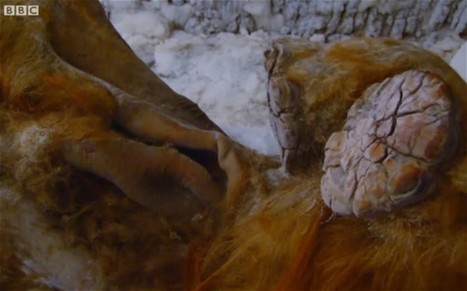
The body of an “exquisitely preserved” young woolly mammoth has been discovered, and shows the pre-historic animals had “strawberry-blonde” hair. The juvenile mammoth, which was found in a frozen cliff in Siberia, gives an important insight into the unknown secrets of the animal including hair and eye color. An examination of its body, described by scientists as having “huge significance”, is even said to show human beings “stole” their food from hunting lions, with wounds consistent with attack from both predators. The well-preserved mammal, which has been named Yuka, is thought to have been between three and four years old when it died and still has its foot pads and ginger hair in tact. It may have laid unnoticed in its icy tomb for more than 10,000 years, experts said, with its injuries being perfectly frozen in time.
|
|
Scooped by
Dr. Stefan Gruenwald
March 28, 2012 10:53 AM
|
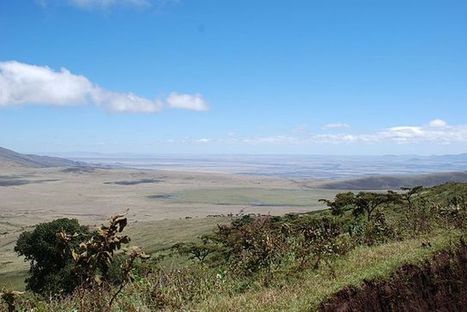
Sediments from an ancient lake indicate both halves of the Rift Valley formed at about the same time, 25 million years ago. We now believe that the western portion of the rift formed about 25 million years ago, and is approximately as old as the eastern part, instead of much younger as other studies have maintained,” said Michael Gottfried, a Michigan State University geologist, in a press release.
|
|
Scooped by
Dr. Stefan Gruenwald
March 24, 2012 1:07 AM
|
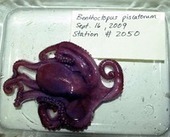
This octopus from the Arctic tweaks its RNA to make nervous system proteins that work better in the cold. The Antarctic octopus edits its RNA at nine sites that change the amino acid sequence of the potassium channel, the researchers report online today in Science. One of these sites, known as I321V, was particularly important for adapting to the cold: The change more than doubles the potassium channel's closing speed.
|
|
Scooped by
Dr. Stefan Gruenwald
March 16, 2012 2:50 PM
|
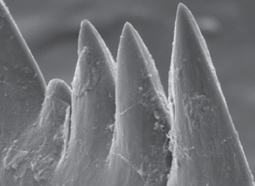
An extinct primitive marine vertebrate had the sharpest dental structures ever known — with tips just one-twentieth of the width of a human hair, but able to apply pressures that could compete easily with those from human jaws. The razor-sharp teeth belonged to conodonts, jawless vertebrates that evolved some 500 million years ago in the Precambrian eon and went extinct during the Triassic period, around 200 million years ago. The creatures roamed the planet for longer than any other vertebrate so far–– and despite their lack of jaws, they were the first creatures to evolve teeth. http://tinyurl.com/7qelmlr
|
|
Scooped by
Dr. Stefan Gruenwald
March 5, 2012 9:18 PM
|
Even after being locked in rock for millions of years, some ancient beetle fossils retain their metallic rainbow sheen. But a new study finds that these bugs undergo changes during fossilization that makes them look slightly redder than they did in life. http://tinyurl.com/7ycz6wu
|
|
Scooped by
Dr. Stefan Gruenwald
February 22, 2012 9:33 PM
|
Paleontologist Kenneth Lacovara is looking to print out some robot dinosaurs. He wants to use a 3-D printer to create dinosaur bones, based on real fossils, to use in scaled-down robo-saurs. In the same way that document programs can shrink a page to 50 or 20 or 2 percent of its original size, a 3-D printing program can shrink a blueprint for 100-foot-long skeletons to a more manageable size for study.
|
|
Scooped by
Dr. Stefan Gruenwald
February 7, 2012 2:43 PM
|
The Max Planck Institute for Evolutionary Anthropology, in Leipzig, Germany, has completed the genome sequence of a Denisovan, a representative of an Asian group of extinct humans related to Neandertals. As sequencing source, 10 milligram of a small finger bone fragment that was used, found in the Denisova-Cave in Southern Sibiria.
|
|
Scooped by
Dr. Stefan Gruenwald
February 5, 2012 12:12 PM
|
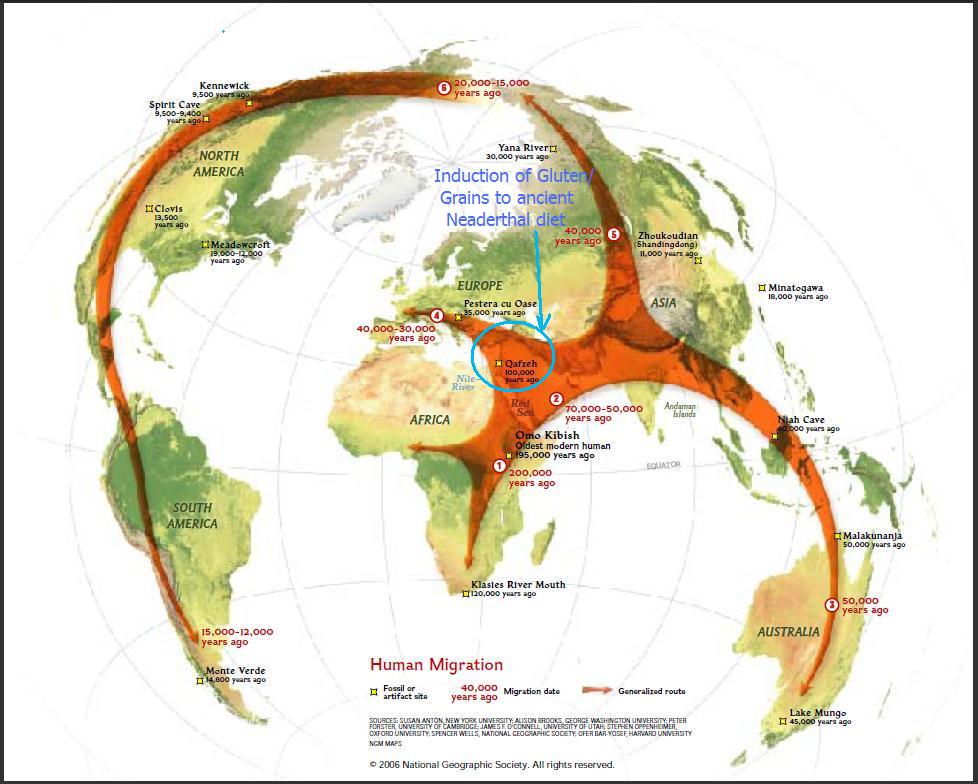
Where do you really come from? And how did you get to where you live today? DNA studies suggest that all humans today descend from a group of African ancestors who—about 60,000 years ago—began a remarkable journey. The Genographic Project (http://genographic.nationalgeographic.com) is seeking to chart new knowledge about the migratory history of the human species by using sophisticated laboratory and computer analysis of DNA contributed by hundreds of thousands of people from around the world. In this unprecedented and of real-time research effort, the Genographic Project is closing the gaps of what science knows today about humankind's ancient migration stories.
|
|
Scooped by
Dr. Stefan Gruenwald
February 1, 2012 1:47 AM
|
The origin of life is surely one of the most important questions in biology. How did inanimate molecules give rise to the “endless forms most beautiful” that we see today, and where did this event happen? Some of the most popular theories suggest that life began in a hellish setting, in rocky undersea vents that churn out superheated water from deep within the earth. But there is an icy alternative worth considering.
|