


Biological and Geologic Timeline of the Earth. The origin of the Earth and the Moon. The evolution of life on Earth.

 Your new post is loading... Your new post is loading...
 Scoop.it!
Biological and Geologic Timeline of the Earth. The origin of the Earth and the Moon. The evolution of life on Earth. 
No comment yet.
Sign up to comment
Scoop.it!

From
phys

Giant insects ruled the prehistoric skies during periods when Earth's atmosphere was rich in oxygen. Then came the birds. After the evolution of birds about 150 million years ago, insects got smaller despite rising oxygen levels.
Scoop.it!

It took some 10 million years for Earth to recover from the greatest mass extinction of all time, latest research has revealed. Life was nearly wiped out 250 million years ago, with only 10 per cent of plants and animals surviving. It is currently much debated how life recovered from this cataclysm, whether quickly or slowly. There were apparently two reasons for the delay, the sheer intensity of the crisis, and continuing grim conditions on Earth after the first wave of extinction.
The end-Permian crisis, by far the most dramatic biological crisis to affect life on Earth, was triggered by a number of physical environmental shocks -- global warming, acid rain, ocean acidification and ocean anoxia. These were enough to kill off 90 per cent of living things on land and in the sea.
Scoop.it!
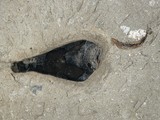
Scientists have for the first time confirmed pigment in two fossilized ink sacs from cuttlefish-like animals living about 160 million years ago, a new study says. The ancient ink's similarity to modern squid ink suggests this defensive weapon hasn't evolved much since the Jurassic period (prehistoric time line). The brownish-black fossil pigment—a type of melanin called eumelanin—is widespread in the animal kingdom, for example in bird feathers, squid ink, and human hair and skin. The substance has various functions, including protection from the sun and camouflage.
Scoop.it!

From
phys
A new study by scientists from Denmark and Germany has found live bacteria trapped in red clay deposited on the ocean floor some 86 million years ago. The bacteria use miniscule amounts of oxygen and move only extremely slowly. An estimated 90 percent of the Earth’s microbial life may exist under the sea floor, but studying them was difficult because the methods have been developed in studying bacteria with rapid life-cycles.
Similar life forms could exist on other planets; if microbial life had ever existed, they could remain alive even if cut off from the surface for millions of years.
Scoop.it!
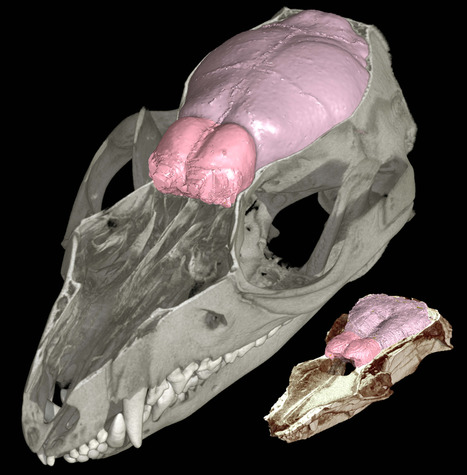
Mammals first evolved their characteristic large brains to enable a stronger sense of smell, scientists claim. The paleontologists used CT scanners to reconstruct the brains of two of the earliest known mammal species, both from the Jurassic fossil beds of China. The 3-D scans revealed that even these tiny 190-million-year-old animals had developed brains larger than expected for specimens of their period, particularly in the brain area for smell.
Scoop.it!

Horses were domesticated 6,000 years ago on the grasslands of Ukraine, southwest Russia and west Kazakhstan, a genetic study shows. Domestic horses then spread across Europe and Asia, breeding with wild mares along the way.
Scoop.it!
From
www
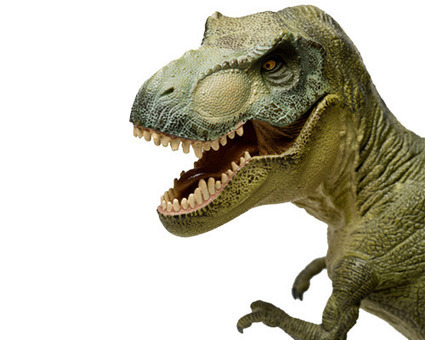
Can lost species ever become un-extinct? In the 1993 science fiction film "Jurassic Park," dinosaurs are cloned back to life after their DNA is discovered still intact within the bellies of ancient mosquitoes that were preserved in amber. While the science of cloning is still in its infancy, many scientists now believe it's only a matter of time before many extinct animals again walk the Earth.
Via Sakis Koukouvis
Scoop.it!
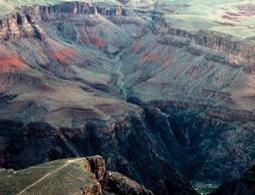
Complex animals first appeared 850 million years ago but didn't evolve into a great variety of forms until the Cambrian period, 540 million years ago. Why the delay? Answering this is difficult, in part because rocks that formed immediately before the Cambrian appear to have vanished. Cambrian rocks often sit on much older layers, creating the Great Unconformity - a geological formation seen around the world, including in the Grand Canyon.
Shanan Peters of the University of Wisconsin-Madison and Robert Gaines of Pomona College in Claremont, California, now suggest this crucial rock record may have dissolved into the ocean. The pair examined Cambrian rocks and found chemical evidence that the oceans at the time were rich in minerals from weathered rock that would have turned them alkaline. What triggered this erosion, which lasted tens of millions of years, is not known.
Scoop.it!
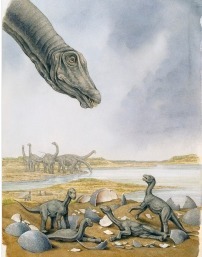
Some dinosaurs grew to gigantic sizes to avoid competition from their own young, rather than to take advantage of abundant oxygen, high temperatures and large territorial ranges, say two studies. But their largeness may also have proved their undoing.
Some have argued that dinosaurs were able to grow quickly and fuel large bodies when temperatures were warm, oxygen levels were high, and land masses such as the supercontinent Gondwana provided abundant living space.
Scoop.it!

The discovery of a well-preserved juvenile woolly mammoth suggests that ancient humans "stole" mammoths from hunting lions, scientists say. Bernard Buigues of the Mammuthus organisation acquired the frozen mammoth from tusk hunters in Siberia. Scientists completed an initial assessment of the animal, known as Yuka, in March this year. Wounds indicate that both lions and humans may have been involved in the ancient animal's death.
Scoop.it!
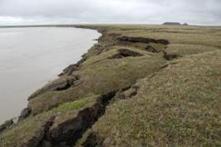
In a new study reported in Nature, climate scientist Rob DeConto of the University of Massachusetts Amherst and colleagues elsewhere propose a simple new mechanism to explain the source of carbon that fed a series of extreme warming events about 55 million years ago, the Paleocene-Eocene Thermal Maximum (PETM), and a sequence of similar, smaller warming events afterward.
Scoop.it!

Regenerated Pleistocene Age plant. David Gilichinsky/Institute of Physicochemical and Biological Problems in Soil, Russian Academy of Sciences The plant in this picture dates from the Pleistocene Age, 30,000 years ago, before agriculture, before... Via Paulo Mealha
|
Scoop.it!
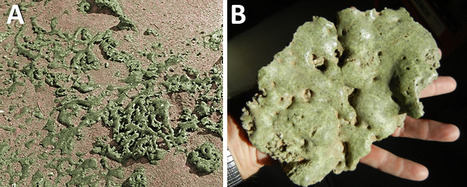
An 18-member international team of researchers that includes James Kennett, professor of earth science at UC Santa Barbara, has discovered melt-glass material in a thin layer of sedimentary rock in Pennsylvania, South Carolina, and Syria. According to the researchers, the material -- which dates back nearly 13,000 years -- was formed at temperatures of 1,700 to 2,200 degrees Celsius (3,100 to 3,600 degrees Fahrenheit), and is the result of a cosmic body impacting Earth.
These new data are the latest to strongly support the controversial Younger Dryas Boundary (YDB) hypothesis, which proposes that a cosmic impact occurred 12,900 years ago at the onset of an unusual cold climatic period called the Younger Dryas. This episode occurred at or close to the time of major extinction of the North American megafauna, including mammoths and giant ground sloths; and the disappearance of the prehistoric and widely distributed Clovis culture.
Scoop.it!

Spike in carbon-14 levels indicates a massive cosmic event — but supernovae and solar flares ruled out.
Just over 1,200 years ago, the planet was hit by an extremely intense burst of high-energy radiation of unknown cause, scientists studying tree-ring data have found. The radiation burst, which seems to have hit between ad 774 and ad 775, was detected by looking at the amounts of the radioactive isotope carbon-14 in tree rings that formed during the ad 775 growing season in the Northern Hemisphere. The increase in 14C levels is so clear that the scientists, led by Fusa Miyake, a cosmic-ray physicist from Nagoya University in Japan, conclude that the atmospheric level of 14C must have jumped by 1.2% over the course of no longer than a year, about 20 times more than the normal rate of variation.
Scoop.it!

Researchers have identified what they say are the oldest-known musical instruments in the world. The flutes, made from bird bone and mammoth ivory, come from a cave in southern Germany which contains early evidence for the occupation of Europe by modern humans - Homo sapiens. Scientists used carbon dating to show that the flutes were between 42,000 and 43,000 years old.
Scoop.it!
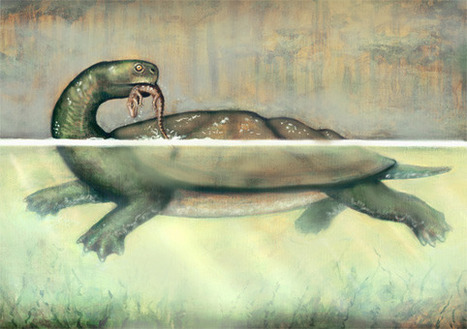
Researchers working in Colombia has discovered the fossilized remains of a giant freshwater turtle that lived some 60 million years ago. The turtle, named Carbonemys cofriniior the "coal turtle", had a shell measuring 5 feet 7 inches and an overall size comparable to a Smart car.
Scoop.it!
A prehistoric relative of the giant panda has been discovered in Spain, a new study says—which suggests that the charismatic Chinese bears might have originated in Europe.
The 11-million-year-old species, dubbed Agriarctos beatrix, lived in humid forests in what's now Spain, according to scientists who recently found the animal's fossil teeth near the city of Zaragoza (map). The teeth give paleontologists a lot of information about a species, according to study leader Juan Abella, a paleobiologist at the Museo Nacional de Ciencias Naturales in Madrid, Spain.
Scoop.it!
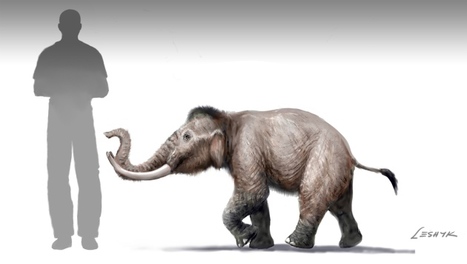
Evolution crafted pint-sized pachyderm on Mediterranean island.
VIDEO: http://www.youtube.com/watch?v=JCRbJZaOTUc&feature=colike Via Sakis Koukouvis
Scoop.it!
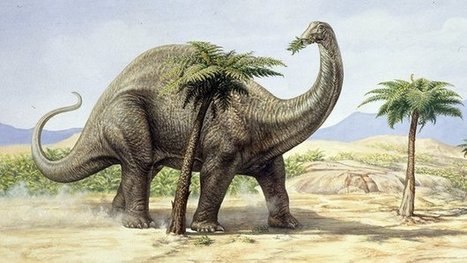
Giant dinosaurs could have warmed the planet with their flatulence, say researchers.
British scientists have calculated the methane output of sauropods, including the species known as Brontosaurus. Previous studies have suggested that the Earth was up to 10C (18F) warmer in the Mesozoic Era. By scaling up the digestive wind of cows, they estimate that the population of dinosaurs - as a whole - produced 520 million tonnes of gas annually. They suggest the gas could have been a key factor in the warm climate 150 million years ago. Current methane emissions amount to around 500 million tonnes a year from a combination of natural sources, such as wild animals, and human activities including dairy and meat production.
Scoop.it!
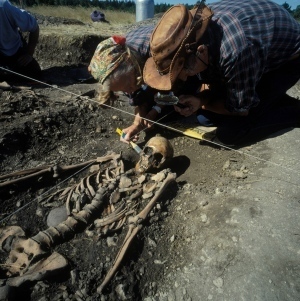
Geneticists analysing DNA from Neolithic burial sites in Sweden have made a surprising discovery. The genetic make-up of one individual — a female farmer known as Gök4 — bears a startling similarity to that of modern-day Mediterraneans. And the woman's genome provides clues as to how agriculture spread across Europe.
Scoop.it!

The tricky thing about the wheel is not conceiving of a cylinder rolling on its edge. It's figuring out how to connect a stable, stationary platform to that cylinder. Wheels are the archetype of a primitive, caveman-level technology. But in fact, they're so ingenious that it took until 3500 B.C. for someone to invent them. By that time — it was the Bronze Age — humans were already casting metal alloys, constructing canals and sailboats, and even designing complex musical instruments such as harps.
Scoop.it!

From
io9
Dinosaurs once ruled the Earth — but now it appears they ruled in Hell. Ancient charcoal deposits suggest wildfires ran rampant throughout the Cretaceous period, meaning dinosaurs had to spend 80 million years looking out for the next inferno.
So just why was the Cretaceous so fiery? First, the greenhouse effect was actually stronger back then than it is today, and this mean global temperatures were hotter. In such a world, random lightning strikes were much more likely to start fires than they are now. It also didn't help that there was actually more oxygen in the atmosphere in the Cretaceous than there is now, and that made the air itself more combustible.
Unlike today, where you generally need drought conditions to take hold before wildfires become a serious problem, the Cretaceous — which lasted from about 145 to 65 million years ago — was hot enough and had high enough oxygen levels that even very moist plants could easily burn.
Videos about dinosaurs: http://tinyurl.com/7ewez9s
Scoop.it!

Rising levels of carbon dioxide really did bring about the end of the most recent ice age, say researchers. By compiling a global climate record, a team has shown that regions in which concentrations of greenhouse gases increased after the warming were exceptions to the big picture.
There are many ideas about what caused the end of the last ice age 10,000 years ago, but a lack of data has hindered testing of hypotheses. It has been known that changes in temperature and CO2 levels were closely correlated during this time, but no one has been able to prove that CO2 caused the warming.
Scoop.it!
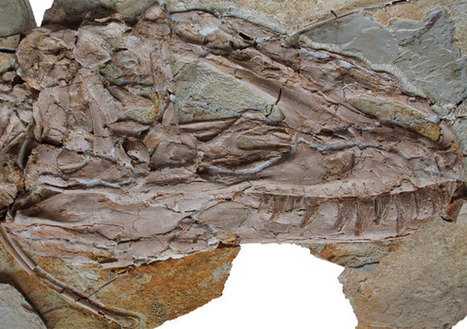
Meet the largest feathered animal in history – an early version of Tyrannosaurus rex, clad in long, fuzzy filaments. This newly discovered beast has been named Yutyrannus huali, a mix of Mandarin and Latin that means “beautiful feathered tyrant”. And its existence re-opens a debate about whether the iconic T.rex might have been covered in feathers.
|





