There is evidence that some microbial life had migrated from the Earth’s oceans to land by 2.75 billion years ago, though many scientists believe such land-based life was limited because the ozone layer that shields against ultraviolet radiation did not form until hundreds of millions years later.
But new research from the University of Washington suggests that early microbes might have been widespread on land, producing oxygen and weathering pyrite, an iron sulfide mineral, which released sulfur and molybdenum into the oceans. Sulfur could have been released into sea water by other processes, including volcanic activity. But evidence that molybdenum was being released at the same time suggests that both substances were being liberated as bacteria slowly disintegrated continental rocks. If that is the case, it likely means the land-based microbes were producing oxygen well in advance of what geologists refer to as the “Great Oxidation Event” about 2.4 billion years ago that initiated the oxygen-rich atmosphere that fostered life as we know it. In fact, the added sulfur might have allowed marine microbes to consume methane, which could have set the stage for atmospheric oxygenation. Before that occurred, it is likely large amounts of oxygen were destroyed by reacting with methane that rose from the ocean into the air.
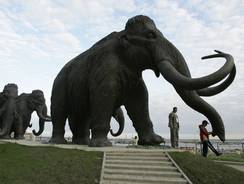
Scientists have discovered well-preserved frozen woolly mammoth fragments deep in Siberia that may contain living cells, edging a tad closer to the "Jurassic Park" possibility of cloning a prehistoric animal, the mission's organizer said Tuesday.
Russia's North-Eastern Federal University said an international team of researchers had discovered mammoth hair, soft tissues and bone marrow some 328 feet underground during a summer expedition in the northeastern province of Yakutia.
Expedition chief Semyon Grigoryev said Korean scientists with the team had set a goal of finding living cells in the hope of cloning a mammoth. Scientists have previously found bones and fragments but not living cells.
The most-studied mass extinction in Earth history happened 65 million years ago and is widely thought to have wiped out the dinosaurs. New University of Washington research indicates that a separate extinction came shortly before that, triggered by volcanic eruptions that warmed the planet and killed life on the ocean floor.
The well-known second event is believed to have been triggered by an asteroid at least 6 miles in diameter slamming into Mexico’s Yucatán Peninsula. But new evidence shows that by the time of the asteroid impact, life on the seafloor – mostly species of clams and snails – was already perishing because of the effects of huge volcanic eruptions on the Deccan Plateau in what is now India.
“The eruptions started 300,000 to 200,000 years before the impact, and they may have lasted 100,000 years,” said Thomas Tobin, a UW doctoral student in Earth and space sciences. The eruptions would have filled the atmosphere with fine particles, called aerosols, that initially cooled the planet but, more importantly, they also would have spewed carbon dioxide and other greenhouse gases to produce long-term warming that led to the first of the two mass extinctions.
An international team of scientists has discovered the oldest record of arthropods -- invertebrate animals that include insects, arachnids, and crustaceans -- preserved in amber. The specimens, one fly and two mites found in millimeter-scale droplets of amber from northeastern Italy, are about 100 million years older than any other amber arthropod ever collected.
"Amber is an extremely valuable tool for paleontologists because it preserves specimens with microscopic fidelity, allowing uniquely accurate estimates of the amount of evolutionary change over millions of years," said corresponding author David Grimaldi, a curator in the American Museum of Natural History's Division of Invertebrate Zoology and a world authority on amber and fossil arthropods.
Globules of fossilized resin are typically called amber. Amber ranges in age from the Carboniferous (about 340 million years ago) to about 40,000 years ago, and has been produced by myriad plants, from tree ferns to flowering trees, but predominantly by conifers. Even though arthropods are more than 400 million years old, until now, the oldest record of the animals in amber dates to about 130 million years. The newly discovered arthropods break that mold with an age of 230 million years. They are the first arthropods to be found in amber from the Triassic Period.
The amber droplets, most between 2-6 millimeters long, were buried in outcrops high in the Dolomite Alps of northeastern Italy and excavated by Eugenio Ragazzi and Guido Roghi of the University of Padova. About 70,000 of the miniscule droplets were screened for inclusions -- encased animal and plant material -- by a team of German scientists led by Alexander Schmidt, of Georg-August University, Göttingen, resulting in the discovery of the three arthropods. The tiny arthropods were studied by Grimaldi and Evert Lindquist, an expert on gall mites at Agriculture and Agri-Food Canada in Ottawa.
The mass extinction that wiped out the dinosaurs 65 million years ago was almost unprecedented in its size. There may be a simple reason why three-quarters of Earth's species disappeared during the event – there were actually two extinctions at the end of the Cretaceous, each devastating species in distinct environments. Famously, the dinosaurs met their end when a massive meteorite crashed into Mexico's Yucatán Peninsula around 65 million years ago. The extinction paved the way for the rapid evolutionary diversification of mammals.
Tom Tobin from the University of Washington in Seattle found two layers in the rocks, which formed in a shallow sea, where several species of shelled animals went extinct. One of the layers dates to the time of the impact, but the other layer is 40 metres below. Dating showed that the lower extinction occurred some 150,000 years before the meteorite hit – at the peak of the Indian eruptions. Tobin's team looked at isotopic ratios in the rock to work out the temperatures at the time: the first extinction followed a 7 °C rise in polar ocean temperatures – probably a result of global warming triggered by the Indian volcanism. Comparable numbers of species in the region went extinct in each event. Surprisingly, though, the types of animals affected differed strikingly.
The case for multiple factors contributing to the extinction is adding up, says David Archibald, a vertebrate palaeontologist recently retired from San Diego State University, California, who was not involved in either study. "I'm not suggesting the [meteorite] impact didn't have tremendous effects, and it probably was necessary for the extinctions, but there were other things leading up to it," he says.
The late Stone Age may have had an earlier start in Africa than previously thought — by some 20,000 years. A new analysis of artifacts from a cave in South Africa reveals that the residents were carving bone tools, using pigments, making beads and even using poison 44,000 years ago. These sorts of artifacts had previously been linked to the San culture, which was thought to have emerged around 20,000 years ago.
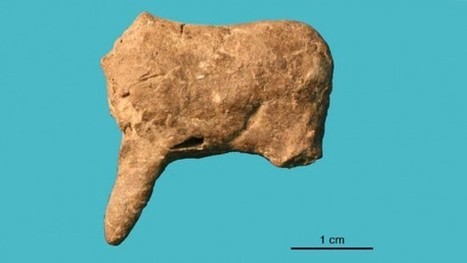
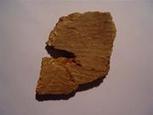
Evidence of a community of unknown prehistoric artists and craftspeople who “invented” ceramics during the last Ice Age – thousands of years before pottery became commonplace – has been found in modern-day Croatia.
The finds consist of 36 fragments, most of them apparently the broken-off remnants of modelled animals, and come from a site called Vela Spila on the Adriatic coast. Archaeologists believe that they were the products of an artistic culture which sprang up in the region about 17,500 years ago. Their ceramic art flourished for about 2,500 years, but then disappeared.
Most histories of the technology begin with the more settled cultures of the Neolithic era, which began about 10,000 years ago. Now it is becoming clear that the story is much more complex. Over thousands of years, ceramics were invented, lost, reinvented and lost again. The earliest producers did not make crockery, but seem to have had more artistic inclinations.
Sea levels may rise much higher than previously thought, according to scientists from The Australian National University, who have used fossil corals to understand how warmer temperatures in the past promoted dramatic melting of polar ice sheets.
Dr. Andrea Dutton, formerly of the Research School of Earth Sciences (RSES) in the ANU College of Physical and Mathematical Sciences, teamed up with Professor Kurt Lambeck of the RSES to analyse fossil corals around the world from the last interglacial period, 125,000 years ago.
They built an extensive database by compiling age and elevation data of fossil corals that live near the sea surface, and used a model to factor in the physics of how changing masses of ice sheets would affect regional sea level at the various fossil coral sites.
They concluded that sea level during the last interglacial period peaked at 5.5 to 9 metres above present sea level.
Early dinosaurs probably looked a lot more like Big Bird than scientists once suspected. A newly discovered, nearly complete fossilized skeleton hints that all dinosaurs may have sported feathers.
“It suggests that the ancestor of all dinosaurs might have been a feathered animal,” says study author Mark Norell, a paleontologist at the American Museum of Natural History in New York.
Researchers have found feathered dinosaurs before, but this one is more distantly related to birds than any previously discovered. Called Sciurumimus albersdoerferi, it belongs to a group of massive dinosaurs called megalosaurs that had sharp teeth, claws and a heavy-duty frame. The specimen — a youngster that lived about 150 million years ago — is only 70 centimeters long, but it could have grown up to 10 meters, about the length of a school bus.
What may be the oldest fragments of the modern human genome found yet have now been revealed -- DNA from the 7,000-year-old bones of two cavemen unearthed in Spain, researchers say. These findings suggest the cavemen there were not the ancestors of the people found in the region today.
The skeletons of two young adult males were discovered by chance in 2006 by cave explorers in a cavern high in the Cantabrian mountain range, whose main entrance is found at 4,920 feet (1,500 meters) altitude. Winters there are notably cold, which helped preserve the DNA in the bones. These bones date back to the Mesolithic period, before agriculture spread to the Iberian Peninsula with Neolithic settlers from the Middle East. These cavemen were hunter-gatherers, judging by the ornament that one was found with of red-deer canines embroidered onto a cloth.
Scientists have recently sequenced the genomes of our closest extinct relatives, the Neanderthals and the Denisovans. When it came to our lineage, the oldest modern human genomes recovered yet came from Ötzi the Iceman, a 5,300-year-old mummy found in the Alps in 1991. Researchers have salvaged DNA from even older human cells, but this comes from the mitochondria that generate energy for our bodies, and not from the nucleus where our chromosomes are housed.
One of the strongest lines of evidence that dinosaurs were cold-blooded, like modern reptiles, has been knocked down. Prior studies of dinosaur bones uncovered what are known as "lines of arrested growth". The creatures were presumed to be cold-blooded because modern cold-blooded animals show these same lines. But scientists have studied the bones of 41 modern mammal species from around the world, finding every one had these lines as well. The idea that dinosaurs are cold-blooded, or ectothermic, goes back to the 19th Century. But a number of discoveries 1960s have been challenging that notion.
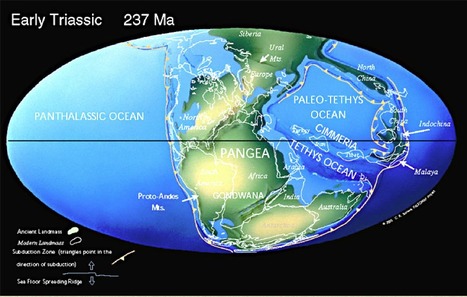
Select one of the times from the list on the left and travel through time and check out what the Earth looked liked in the far distant past or what it might look like far into the future. At each stop there is more information about the particular geological time period.
The discovery of a mummified Korean child with relatively preserved organs enabled an Israeli-South Korean scientific team to conduct a genetic analysis on a liver biopsy, which revealed a unique hepatitis B virus (HBV) genotype C2 sequence common in Southeast Asia.
Additional analysis of the ancient HBV genomes may be used as a model to study the evolution of chronic hepatitis B and help understand the spread of the virus, possibly from Africa to East-Asia. It also may shed further light on the migratory pathway of hepatitis B in the Far East from China and Japan to Korea, as well as to other regions in Asia and Australia where it is a major cause of cirrhosis and liver cancer.
The reconstruction of the ancient hepatitis B virus genetic code is the oldest full viral genome described in the scientific literature to date. It was reported in the May 21, 2012, edition of the scientific journal Hepatology by a research team from the Hebrew University of Jerusalem’s Koret School of Veterinary Medicine, the Robert H. Smith Faculty of Agriculture, Food and Environment; the Hebrew University’s Faculty of Medicine, the Hadassah Medical Center’s Liver Unit; Dankook University and Seoul National University in South Korea.
Carbon 14 tests of the clothing of the mummy suggest that the boy lived around the 16th century during the Korean Joseon Dynasty. The viral DNA sequences recovered from the liver biopsy enabled the scientists to map the entire ancient hepatitis B viral genome.
Did a massive comet explode over Canada 12,900 years ago, wiping out both beast and man in North America and propelling the earth back into an ice age?
In a recent study, Richard Firestone found concentrations of spherules (micro-sized balls) of metals and nano-sized diamonds in a layer of sediment dating 12,900 years ago at 10 of 12 archaeological sites that his team examined. The mix of particles is thought to be the result of an extraterrestrial object, such as a comet or meteorite, exploding in the earth’s atmosphere. Among the sites examined was USC’s Topper, one of the most pristine U.S. sites for research on Clovis, one of the earliest ancient peoples.
Younger-Dryas is what scientists refer to as the period of extreme cooling that began around 12,900 years ago and lasted 1,300 years. While that brief ice age has been well-documented – occurring during a period of progressive solar warming after the last ice age – the reasons for it have long remained unclear. The extreme rapid cooling that took place can be likened to the 2004 sci-fi blockbuster movie “The Day After Tomorrow.”
Firestone’s team presented a provocative theory: that a major impact event – perhaps a comet – was the catalyst. His copious sampling and detailed analysis of sediments at a layer in the earth dated to 12,900 years ago, also called the Younger-Dryas Boundary (YDB), provided evidence of micro-particles, such as iron, silica, iridium and nano-diamonds. The particles are believed to be consistent with a massive impact that could have killed off the Clovis people and the large North American animals of the day. Thirty-six species, including the mastodon, mammoth and saber-toothed tiger, went extinct and also humans suffered a major set-back.
A new set of fossil footprints discovered in Joggins, Nova Scotia, near Amherst, have been identified as the world’s smallest known fossil vertebrate footprints. The footprints were found at the UNESCO World Heritage Site, the Joggins Fossil Cliffs. A fossil specimen of the ichnogenus Batrachichnus salamandroides was collected by local amateur paleontologist Gloria Melanson, daughter of Don Reid, the famed Keeper of the Joggins Cliffs, while walking the Joggins beach.
“This was one of the most exciting finds I have ever made and I am very pleased that, along with my colleagues, we are able to share it with the world. Every big fossil find is by chance; it's all about being lucky and recognizing what you’re looking at. When I saw the very small tail and toes I knew we had something special. I never thought it would be the world’s smallest,” said Melanson.
The footprints belonged to a small amphibian which would have roamed the Earth 315 million years ago, a creature not unlike a salamander. Small trackways of these animals at Joggins are common, but none so small as the one discovered recently. The 48-mm-long trackway preserves approximately 30 footprints with the front feet measuring 1.6 mm long and back feet measuring 2.4 mm long. Study of the footprints by paleontologists at Saint Mary's University (student Matt Stimson) and the New Mexico Museum of Natural History (Dr. Spencer Lucas) has revealed the trace maker was a juvenile amphibian, similar to a salamander (temnospondyl or microsaur) with an estimated body length of only 8 mm from snout to tail.
In 775 C.E., while Charlemagne was ruling his Frankish kingdom, something mysterious struck Earth. An analysis of the rings of two Japanese cedar trees (typical tree rings shown above), reported online today in Nature, reveals that from 774 to 775 C.E., the atmospheric level of radioactive carbon-14 jumped by 1.2%. This indicates that cosmic rays—high-speed, charged particles from space—bombarded our planet and converted some atmospheric nitrogen-14 into carbon-14. Earlier work had found a rise in radioactive carbon during the same decade; the new discovery means that scientists have been able to narrow down the date of impact to within just 1 year. The scientists argue against two logical suspects: solar flares are too weak to do the job, and no supernova explosion was seen at the time, nor do any nearby supernova remnants date back to Charlemagne's time. There's also nothing unusual in the history books. So the cause remains a mystery, but whatever it was, something similar could presumably strike again.
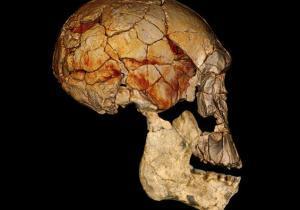
Researchers think they have found a new kid on the Paleolithic ‘block’ — a third species of humans coexisting with Homo erectus and Homo habilis almost 2 million years ago. Habilis, Erectus, say hello to your new ‘cousin,’ Homo rudolfensis. This latest thinking comes from the analysis of fossils discovered in Kenya. The researchers published their findings Thursday in the science journal Nature. Dr. Meave Leakey, of the famous paleontology family, led the Koobi Fora Research Project.
"The new fossils confirm the presence of two contemporary species of early Homo, in addition to Homo erectus, in the early Pleistocene of eastern Africa," the team has suggested.
Between 2007 and 2009, the team found three human fossils, which are from 1.78 to 1.95 million years old. The finds include a face, a complete lower jaw and part of a second lower jaw.
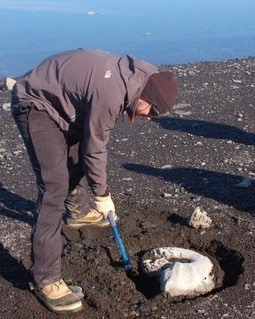
Drilling of the seabed off Antarctica has revealed that rainforest grew on the frozen continent 52 million years ago, scientists discovered, warning it could be ice-free again within decades.
The study of sediment cores drilled from the ocean floor off Antarctica's east coast revealed fossil pollens that had come from a "near-tropical" forest covering the continent in the Eocene period, 34-56 million years ago.
Kevin Welsh, an Australian scientist who travelled on the 2010 expedition, said analysis of temperature-sensitive molecules in the cores had showed it was "very warm" 52 million years ago, measuring about 20 degrees Celsius (68 F).
Welsh said higher levels of carbon dioxide in the atmosphere were thought to be the major driver of the heat and ice-free conditions on Antarctica, with CO2 estimates of anywhere between 990 to "a couple of thousand" parts per million.
CO2 is presently estimated at about 395ppm, and Welsh said the most extreme predictions by the Intergovernmental Panel on Climate Change (IPCC) would see ice again receding on Antarctica "by the end of the century".
Scientists have used the latest computer-imaging technology to produce stunning three-dimensional pictures of a 49 million-year-old spider trapped inside an opaque piece of fossilized amber resin.
University of Manchester researchers, working with colleagues in Germany, created the intricate images using X-ray computed tomography to study the remarkable spider, which can barely be seen under the microscope in the old and darkened amber. As well as documenting the oldest ever huntsman spider, especially through a short film revealing astounding details, the scientists showed that even specimens in historical pieces of amber, which at first look very bad, can yield vital data when studied by computed tomography.
Permian Extinction 250 Millions years ago, which caused extinction of 95% of all living species in both animals & plants life. This extinctions was slow and took nearly 80000 years in 3 stages:
1- Increase in world temperature by 5 degrees Centigrade casued by super lengthy eruptions of Siberian Trapes
2-melting the frozen resoviours of Methan gas in the seabeds and releasing Carbon 12 (C12), which is a green house gas and raised sea temp by anothre 5 degrees, and that casued
3-world temp raised 10 degrees and that caused the mass extinctions
it took Earth millions of years to recover and after 20 millions years from then Dinosaurs first appeared.
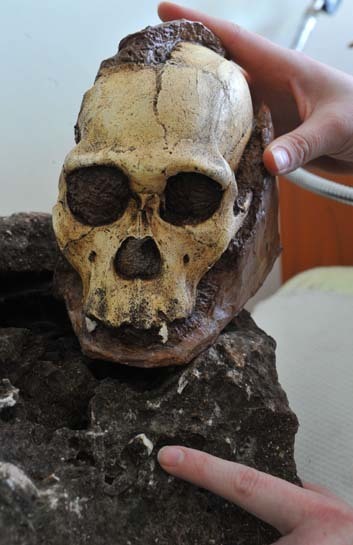
South African scientists claim to have uncovered the most complete skeleton yet of an ancient relative of man, hidden in a rock excavated from an archaeological site three years ago. The remains of a juvenile hominid skeleton, of the newly identified Australopithecus (southern ape) sediba species, are the most complete early human ancestor skeleton ever discovered. The skeleton is thought to be about 2 million years old. The upright-walking tree climber would have been aged between nine and 13 years when he or she died.
It is not certain whether the species, which had long arms, a small brain and a thumb, was a direct ancestor of humans' genus, Homo, or simply a close relative.
Pottery fragments found in a south China cave have been confirmed to be 20,000 years old, making them the oldest known pottery in the world, archaeologists say. The findings add to recent efforts that have dated pottery piles in east Asia to more than 15,000 years ago, refuting conventional theories that the invention of pottery correlates to the period about 10,000 years ago when humans moved from being hunter-gathers to farmers. The research by a team of Chinese and American scientists also pushes the emergence of pottery back to the last ice age, which might provide new explanations for the creation of pottery,
The humble fungus may have been responsible for bringing to an end Earth's period of accumulating coal reserves, say researchers. During the 60 million-year-long Carboniferous period on Earth vast carbon beds were laid down from the burial of ancient forests in marshy swamps. The trees did not decay but were instead converted into peat and under extreme pressure to coal. But 300 million years ago, something changed to stop this deposition of coal.
Scientists now suggest it may have been the rise of fungi capable of digesting the polymer lignin, which among other things keeps plant cell walls rigid. This hypothesis comes from the study of 31 genomes of mainly wood decay fungi - a group called Agaricomycetes. This group includes white rot fungi, which can digest all components of plant biomass - cellulose, hemicellulose and lignin.
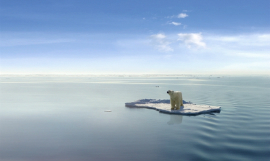
An unexpectedly warm period about 15 million years ago temporarily thawed Antarctica, turning the continent green around its edges, a new study says.
Antarctica developed its ice sheets about 34 million years ago. But during the more recent warm period, the interior landscape would've resembled tundra found in parts of modern-day Chile and New Zealand, and the coasts would've been lined with beeches and a type of conifer.
The surprising evidence comes from "abundant" remains of leaf waxes in sediment cores taken from deep beneath Antarctica's Ross Ice Shelf, said study leader Sarah Feakins, a biogeochemist at the University of Southern California. The sediments had blown off Antarctic soils into the ocean during the Miocene, a mild period in Earth's history between about 15 and 20 million years ago.
The Arctic even went through ice-free periods of extreme warmth over the past 2.8 million years, based on a new analysis of deep sediment in Russia. The team led by Martin Melles of the University of Cologne, Germany, drilled into an iced-over lake formed by a meteorite impact on the Chukchi Peninsula in Siberia for the longest sediment core ever collected in the terrestrial Arctic.
Since the meteorite struck an area of Lake El'gygytgyn that was not eroded by glaciers, the sediment record reaches back nearly 30 times further in time than ice cores from Greenland that cover the past 110,000 years.
The sediment reveals periods of extreme warmth that show the polar regions are much more vulnerable to change than previously thought, and are difficult to explain by greenhouse gases alone, according to the study in the journal Science.
Humans and Neanderthals are close cousins. So close, in fact, that some researchers argue the two hominids might actually be members of the same species. But a few years ago, anthropologists discovered a mysterious new type of hominid that shook up the family tree. Known only from a finger fragment, a molar tooth and the DNA derived from both, the Denisovans lived in Asia and were contemporaries of Neanderthals and modern humans. And they might have been Neanderthals’ closest relatives. A recent study of virus “fossils” provides new evidence of this relationship.
Hidden inside each, embedded in our DNA, are the genetic remnants of viral infections that afflicted our ancestors thousands, even millions of years ago. Most known virus fossils are retroviruses, the group that includes HIV. Consisting of a single strand of RNA, a retrovirus can’t reproduce on its own. After the retrovirus invades a host cell, an enzyme reads the RNA and builds a corresponding strand of DNA. The virus-derived DNA then implants itself into the host cell’s DNA. By modifying the host’s genetic blueprints, the virus tricks the host into making new copies of the retrovirus. These virus fossils have distinct genetic patterns that scientists can identify during DNA analyses. After the Human Genome Project was finished in 2003, researchers estimated that about 8 percent of human DNA is made up of virus DNA.
A team led by Jack Lenz of the Albert Einstein College of Medicine in New York used virus fossils as a way to sort out the degree of relatedness among humans, Neanderthals and Denisovans. The researchers discovered that most of the ancient viruses found in Denisovans and Neanderthals are also present in humans, implying that all three inherited the viral genetic material from a common ancestor. However, the team also found one virus fossil present in Neanderthals and Denisovans that is missing in humans. This implies Denisovans are more closely related to Neanderthals than we are. Humans must have split off from the lineage leading to Neanderthals and Denisovans; then the infection occurred, and then Neanderthals and Denisovans split from each other.
To get content containing either thought or leadership enter:
To get content containing both thought and leadership enter:
To get content containing the expression thought leadership enter:
You can enter several keywords and you can refine them whenever you want. Our suggestion engine uses more signals but entering a few keywords here will rapidly give you great content to curate.


 Your new post is loading...