Your new post is loading...

|
Scooped by
Dr. Stefan Gruenwald
February 1, 2012 6:54 PM
|
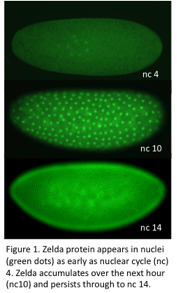
When a female fruit fly makes an egg, she packs it full of everything a developing embryo needs for the earliest stages of its life: a yolk to feed it, and proteins and RNAs to drive its vital cellular processes. Fueled by these maternally deposited molecules, development begins with a series of rapid cell divisions during which there is little, if any, activation of the embryo’s own genome. However, within a few hours, after around 14 cell divisions, the fertilized egg breaks free of its mother’s influence, at a period known as the maternal-to-zygotic transition (MZT). In Drosophila, the MZT is preceded by the transcription of a small number of genes that initiate sex determination, patterning, and other early developmental processes; and the zinc-finger protein Zelda (ZLD) plays a central role in their transcriptional activation.
|
|
Scooped by
Dr. Stefan Gruenwald
February 1, 2012 4:02 PM
|
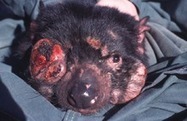
Australia’s Tasmanian devil is more beloved now as it faces extinction from an infectious cancer called Devil facial tumor disease (DFTD). The devils spread it through fighting and mating. The sore tumors grow so large the animal can no longer eat. As of 2006, it was estimated that the Tasmanian Devil could be extinct between 10 and 20 years, with only aproximately 20,000 to 50,000 left. Since there is no cure, it’s a race to keep healthy ones in captivity as the only means to keep DFTD from spreading. It’s still unnerving because no one wants to see a species become potentially extinct in captivity like the thylacine (Tasmanian Tiger) did in 1936. http://en.wikipedia.org/wiki/Devil_facial_tumour_disease
|
|
Scooped by
Dr. Stefan Gruenwald
February 1, 2012 2:23 PM
|
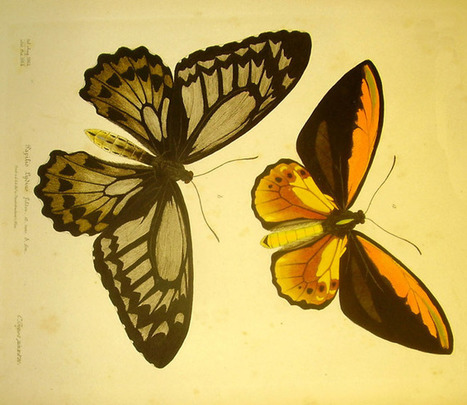
Dozens of butterfly species are endangered or threatened. A handful are shown in this photo gallery, but most don’t even have a picture on the internet. If they disappear, their beauty could be remembered as nothing more than a disembodied name.
|
|
Scooped by
Dr. Stefan Gruenwald
February 1, 2012 12:39 PM
|
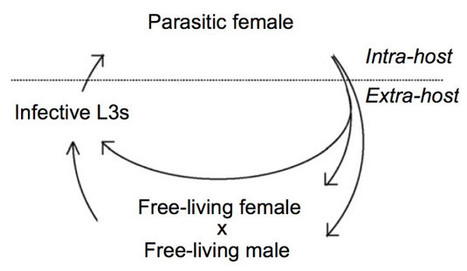
The little roundworm Strongyloides ratti has distinct parasitic and free-living adults, living in the rat small intestine and the soil, respectively. Reproductive parasitic adults have a maximum lifespan of 403 days. By contrast the maximum lifespan of free-living adults is only 5 days. Thus, the two adults of S. ratti have evolved strikingly different rates of aging. Parasitic nematode species are frequently longer-lived than free-living species, presumably reflecting different extrinsic mortality rates in their respective niches. Parasitic and free-living female Strongyloides ratti are morphologically different, yet genetically identical. The 80-fold difference in lifespan is the greatest plasticity in aging yet reported, must largely reflect evolved differences in gene expression.
|
|
Scooped by
Dr. Stefan Gruenwald
February 1, 2012 12:21 PM
|
Recent research has shown that the transcription and translation of genes, or even the presence of DNA in the cell, are not necessary for the daily ("circadian") rhythms to occur. This article gives a nice summary about the history of circadian rhythms discoveries.
|
|
Scooped by
Dr. Stefan Gruenwald
February 1, 2012 12:06 PM
|
For decades, scientists have known that DNA consists of four basic units -- adenine, guanine, thymine and cytosine. Those four bases have been taught in science textbooks and have formed the basis of the growing knowledge regarding how genes code for life. Yet in recent history, scientists have expanded that list from four to six. Now, researchers from the UNC School of Medicine have discovered the seventh and eighth bases of DNA. These last two bases -- called 5-formylcytosine and 5 carboxylcytosine -- are actually versions of cytosine that have been modified by Tet proteins, molecular entities thought to play a role in DNA demethylation and stem cell reprogramming.
|
|
Scooped by
Dr. Stefan Gruenwald
February 1, 2012 1:51 AM
|
Life must have begun with a simple molecule that could reproduce itself – and now we think we know how to make one.
|
|
Scooped by
Dr. Stefan Gruenwald
February 1, 2012 1:44 AM
|
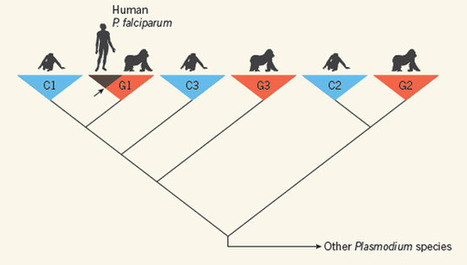
Several million years ago, Plasmodium falciparum – the parasite that causes most cases of human malaria – jumped into humans from other apes. We’ve known as much for decades but for all this time, we’ve pinned the blame on the wrong species. A new study reveals that malaria is not, as previously thought, a disease that came from chimpanzees; instead it’s an unwanted gift from gorillas. Until now, the idea of chimps as the source of human malaria seemed like a done deal. Just last year, I covered a study which said that a related chimp parasite called Plasmodium reichenowi is the ancestor of P.falciparum.According to Stephen Rich from the University of Massachussetts,P.reichenowi crossed the species barrier from chimps to humans just once in history – a defining moment that gave rise to P.falciparum. But to Weimin Liu from the University of Alabama, something wasn’t quite right. People seemed to have settled on a chimpanzee conclusion without thoroughly testing for Plasmodium in other apes. Fortunately, Liu’s team was well placed to fill in those blanks. For their research, they had already amassed a massive collection of ape faeces: an unenviable collection of 1,827 samples from chimps, 805 from gorillas and 107 from bonobos. Virtually all of these samples came from wild apes with little human contact; only 28 came from a habituated group of gorillas. Liu scoured all of these samples for Plasmodium DNA, sequenced what he could find, and built a family tree that charted the evolutionary relationships between them. His results were very clear. For a start, Plasmodium parasites don’t infect either eastern gorillas or bonobos, but they do infect chimpanzees and western gorillas. That narrows down the source of human malaria to these two apes. Liu also found that all of the samples of P. falciparum taken from humans were most closely related to a single lineage of gorilla parasites. P.reichenowiis an exclusively chimp parasite, belonging to a different branch of thePlasmodium family tree. The answer was clear: P.falciparum did not evolve from P.reichenowi and it didn’t come from chimpanzees. Instead, it jumped into humans from western gorillas.
|
|
Scooped by
Dr. Stefan Gruenwald
February 1, 2012 1:32 AM
|
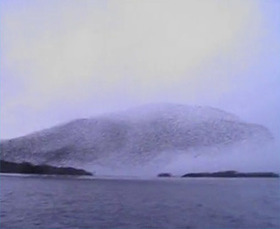
This is your moment of zen today. Two adventurers set out in a canoe and happened upon a starlings (collectively known as a murmuration) doing their amazing collective dance in the sky. Watch the video. Just take it in. The starlings coordinated movements do not seem possible, but then there they are doing it. Scientists have been similarly fascinated by starling movement. Those synchronized dips and waves seem to hold secrets about perception and group dynamics. Last year, Italian theoretical physicist Giorgio Parisi took on the challenge of explaining the murmuration. What he found, as ably explained by Brandon Keim, is that the math equations that best describe starling movement are borrowed "from the literature of 'criticality,' of crystal formation and avalanches -- systems poised on the brink, capable of near-instantaneous transformation." They call it "scale-free correlation," and it means that no matter how big the flock, "If any one bird turned and changed speed, so would all the others." It's a beautiful phenomenon to behold. And neither biologists nor anyone else can yet explain how starlings seem to process information and act on it so quickly. It's precisely the lack of lag between the birds' movements that make the flocks so astonishing. Having imported a theoretical physicist to model the flock movement, perhaps a computer scientist would be the right choice to describe the individual birds' behavior. Are quantum effects involved?
|
|
Scooped by
Dr. Stefan Gruenwald
February 1, 2012 12:33 AM
|
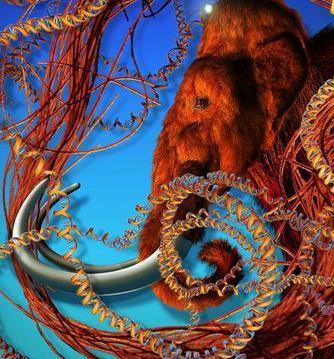
Natural selection has been wiping out species with subpar adaptive strategies. Among the casualties: dinosaurs, mammoths, Neanderthals, and all manner of megafauna that we’d all love to see first-hand. Alas, mother nature hasn’t been particularly forgiving of species selected against: for four billion years, extinction meant extinction. That is until 2009 when scientists used frozen tissue to successfully clone the Pyrenean ibex, a kind of goat native to the Pyrenees Mountains between Spain and France, making it the first species to become un-extinct. Video collection about cloning: http://tinyurl.com/76dgxqm
|
|
Scooped by
Dr. Stefan Gruenwald
February 1, 2012 12:26 AM
|
The single-celled organism "Tetrahymena thermophila" has not two but seven sexes, and each one can mate with any of the others, which opens up the field of sexual attraction considerably. Unfortunately, they all look alike. What's more, the different sexes are not equally common – thanks to the peculiar way each individual's sex is determined. http://tinyurl.com/6xeoymh
|
|
Scooped by
Dr. Stefan Gruenwald
February 1, 2012 12:00 AM
|
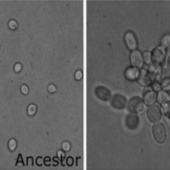
A team from the University of Minnesota, was able to artificially evolve a culture of brewer's yeast into it's multicellular form basically by overfeeding it. The culture was housed in flasks and bathed in an extremely nutrient-rich medium. Once a day, researchers would shake the flasks, then harvested the fast-sinking yeast clumps to start new cultures—the equivalent of natural selection. After just a few weeks, the yeast clumped together and after two months, the clumps had merged into multicelled organisms. What's more, the new creatures showed cell specialization, a juvenile stage, and multicellular offspring. "Multicellularity is the ultimate in cooperation," said evolutionary biologist Michael Travisano, co-author of the study. "Multiple cells make make up an individual that cooperates for the benefit of the whole. Sometimes cells give up their ability to reproduce for the benefit of close kin."
|
|
Scooped by
Dr. Stefan Gruenwald
January 31, 2012 11:29 PM
|
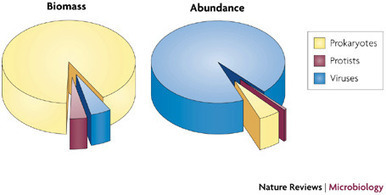
Viruses are by far the most abundant 'lifeforms' in the oceans and are the reservoir of most of the genetic diversity in the sea. The estimated 10^30 viruses in the ocean, if stretched end to end, would span farther than the nearest 60 galaxies. Every second, approximately 10^23 viral infections occur in the ocean. These infections are a major source of mortality, and cause disease in a range of organisms, from shrimp to whales. As a result, viruses influence the composition of marine communities and are a major force behind biogeochemical cycles. Each infection has the potential to introduce new genetic information into an organism or progeny virus, thereby driving the evolution of both host and viral assemblages. Probing this vast reservoir of genetic and biological diversity continues to yield exciting discoveries. Viruses can be found in every environment on the Earth, but their importance is perhaps most evident in the oceans, where they are known to be the reservoir of most of the genetic diversity. Viruses kill approximately 20% of the oceanic microbial biomass daily, which has a significant impact on nutrient and energy cycles. This Review highlights areas in which marine virology is advancing quickly or seems to be poised for paradigm-shifting discoveries. Developing the necessary techniques to obtain accurate and reproducible estimates of the distribution and abundance of marine viruses has been a challenge for researchers. Sub-populations of both viruses and host cells can now be discriminated using flow cytometry. Viral abundance generally co-varies with prokaryotic abundance and productivity, but marked differences in this relationship have been reported in different marine environments. Quantifying the effects of viruses on marine prokaryotic and eukaryotic heterotrophic and autotrophic communities is also a challenging area, and remains one of the biggest obstacles to incorporating viral-mediated processes into global models of nutrient and energy cycling. Our knowledge of the diversity of viruses in marine environments has increased greatly with the development of metagenomic approaches. The interactions between viruses and the organisms they infect ultimately control the genetic diversity of viruses and potentially influence the composition of microbial communities. However, the experimental evidence that supports the hypothesis that viruses regulate microbial diversity in nature is ambiguous. This is perhaps not surprising as the effects of viruses on their host cells depend on transient associations, which might lead us to expect that the influences of viruses on host populations will also be spatially and temporally variable. Viruses/bacteria video collection: http://tinyurl.com/7plkwe3
|
|
|
Scooped by
Dr. Stefan Gruenwald
February 1, 2012 4:09 PM
|
.Water is one of the planet's weirdest liquids, and many of its most bizarre features make it life-giving. Unlike many liquids, it takes a lot of heat to warm water up even a little, a quality that allows mammals to regulate their body temperature. Researchers recently found that the hydrogen-oxygen bonds are slightly longer than deuterium-oxygen ones, which is what you would expect if quantum uncertainty was affecting water's structure (Physical Review Letters, DOI: 10.1103/physrevlett.107.145501). We are used to the idea that the cosmos's physical constants are fine-tuned for life. Now it seems water's quantum forces can be added to this "just right" list.
|
|
Scooped by
Dr. Stefan Gruenwald
February 1, 2012 3:20 PM
|
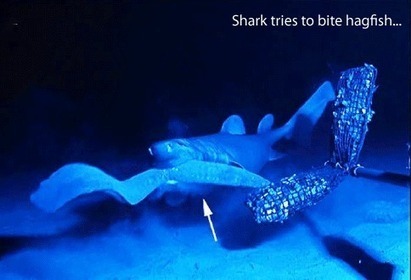
The hagfish looks like an easy meal. Its sinuous, eel-like body has no obvious defences, but any predator that moves in for a bite is in for a nasty surprise. The hagfish releases a quick-setting slime that clogs up the predator’s gills, causing it to gag, choke and flee. Scientists have known about this repulsive defence for decades, but Vincent Zintzen has finally filmed it in the wild. His videos also prove that hagfish, generally thought to be scavengers of the abyss, are also active hunters that can drag tiny fish from their burrows. Hagfish are sometimes classed as fish although that’s in dispute, for they lack both backbones and jaws. Instead, their mouths contain a wide plate of cartilage, armed with two rows of horny teeth. It uses these to rasp away at carcasses that sink from above. Watch a dying whale settle on the ocean floor, and it will soon be covered in writhing hagfishes. They are disgusting feeders. They burrow deep into corpses and eat their way out, and can even absorb nutrients through their skin. And if they’re threatened or provoked, they produce slime – lots of slime, oozing from the hundreds of pores that line their bodies. The slime consists of large mucus proteins called mucins, linked together by longer protein threads. When it mixes with seawater, it massively expands, becoming almost a thousand times more dilute than other animal mucus.
|
|
Scooped by
Dr. Stefan Gruenwald
February 1, 2012 12:47 PM
|
When a bacterial cell divides into two daughter cells and those two cells divide into four more daughters, then 8, then 16 and so on, the result, biologists have long assumed, is an eternally youthful population of bacteria. However, new research concludes that not only do bacteria age, but that their ability to age allows them to improve the evolutionary fitness of their population by diversifying their reproductive investment between older and more youthful daughters.
|
|
Scooped by
Dr. Stefan Gruenwald
February 1, 2012 12:27 PM
|
Caenorhabditis elegans, as the roundworm is properly known, is a tiny, transparent animal just a millimeter long. In nature, it feeds on the bacteria that thrive in rotting plants and animals. It is a favorite laboratory organism for several reasons, including the comparative simplicity of its brain, which has just 302 neurons and 8,000 synapses, or neuron-to-neuron connections. These connections are pretty much the same from one individual to another, meaning that in all worms the brain is wired up in essentially the same way. Such a system is considerably easier to understand than the human brain, a structure with billions of neurons, 100,000 miles of biological wiring and 100 trillion synapses.
|
|
Scooped by
Dr. Stefan Gruenwald
February 1, 2012 12:08 PM
|
MIT researchers have found evidence of a massive network connecting bacteria from around the world: 10,000 unique genes flowing via horizontal gene transfer (HGT) among 2,235 bacterial genomes. HGT is an ancient method for bacteria from different lineages to acquire and share useful genetic information they didn’t inherit from their parents. The MIT team’s work illustrates the vast scale and rapid speed with which genes can proliferate across bacterial lineages.
|
|
Scooped by
Dr. Stefan Gruenwald
February 1, 2012 1:58 AM
|
Why does the universe exist? For that matter, why do people? Can you even be sure that you do? 13.7 billion years ago, the universe was born in a cosmic fireball. Roughly 10 billion years later, the planet we call Earth gave birth to life, which eventually led to you. The probability of that sequence of events is absolutely minuscule, and yet it still happened. Take a step back from the unlikeliness of your own personal existence and things get even more mind-boggling. Why does the universe exist at all? Why is it fine-tuned to human life? Why does it seem to be telling us that there are other universes out there, even other yours?
|
|
Scooped by
Dr. Stefan Gruenwald
February 1, 2012 1:48 AM
|
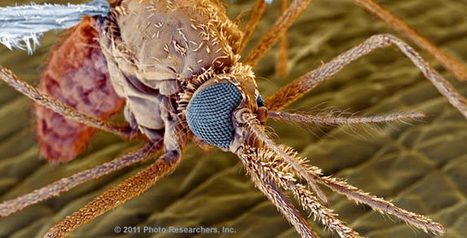
Imagine an insect repellant that not only is thousands of times more effective than DEET – the active ingredient in most commercial mosquito repellants – but also works against all types of insects, including flies, moths and ants. That possibility has been created by the discovery of a new class of insect repellant made in the laboratory of Vanderbilt Professor of Biological Sciences and Pharmacology Laurence Zwiebel and published iit in Proceedings of the National Academy of Sciences. In preliminary tests with mosquitoes, the researchers found the new class of repellant, called Vanderbilt University Allosteric Agonist or VUAA1, to be thousands of times more effective than DEET. The compound works by affecting insects’ sense of smell through a newly discovered molecular channel. “If a compound like VUAA1 can activate every mosquito odorant receptor at once, then it could overwhelm the insect’s sense of smell, creating a repellant effect akin to stepping onto an elevator with someone wearing too much perfume, except this would be far worse for the mosquito,” said Patrick Jones, a post-doctoral fellow who conducted the study with graduate students David Rinker and Gregory Pask.
|
|
Scooped by
Dr. Stefan Gruenwald
February 1, 2012 1:42 AM
|
The Russian sample-return spacecraft will carry a zoo of microbes to Phobos and back to test whether life can survive the interplanetary journey.
|
|
Scooped by
Dr. Stefan Gruenwald
February 1, 2012 12:34 AM
|
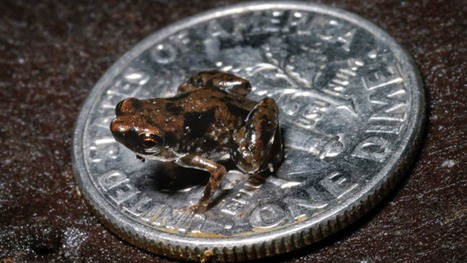
A frog that can perch on the tip of your pinkie with room to spare has been claimed as the world's smallest vertebrate species, out-tinying a fish that got the title in 2006. But the discoverer of another weensy fish disputes the claim.
|
|
Scooped by
Dr. Stefan Gruenwald
September 27, 2017 2:53 PM
|
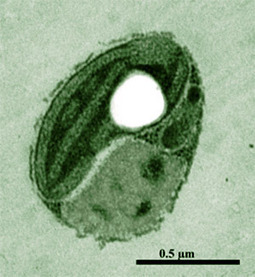
Many animals transform themselves almost beyond recognition in the course of their lives. Caterpillars become butterflies and tadpoles become frogs, and if we couldn't watch them do so we might not even suspect that the two stages were the same creature. Spectacular as these shifts are, they are only shape-shifting. A tadpole and a frog are both animals, so both must take in food from their surroundings. Not so Mesodinium chamaeleon. This newly discovered single-celled organism is a unique mixture of animal and plant.
|
|
Scooped by
Dr. Stefan Gruenwald
February 1, 2012 12:21 AM
|
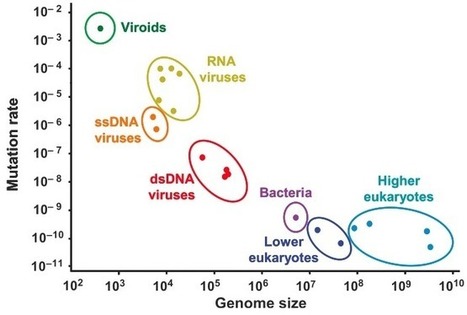
Called hammerhead viroids, their mutation rates are orders of magnitude more rapid than those of viruses, the next-most-primitive organisms, which are orders of magnitude more rapid than lowly bacteria. Thus, the hammerhead viroid blueprint of life is being constantly redrawn. Such an accelerated mutation rate could have been useful four billion years ago, after a few quirky chemicals assembled into ribonucleic acid, or RNA — DNA’s single-stranded forerunner.
|
|
Scooped by
Dr. Stefan Gruenwald
September 27, 2017 2:52 PM
|
Starting with normal skin cells, scientists from The Scripps Research Institute have produced the first stem cells from endangered species. Such cells could eventually make it possible to improve reproduction and genetic diversity for some species, possibly saving them from extinction, or to bolster the health of endangered animals in captivity. Video collection about stem cells: http://tinyurl.com/7so5xyp
|