Your new post is loading...

|
Scooped by
Gilbert C FAURE
February 2, 3:28 AM
|
What Your IgG Test Results Mean (and Don’t Mean)
TL;DR: IgG sensitivity tests can’t tell you what foods you're sensitive to.
IgG sensitivity tests claim to work by measuring levels of IgG antibodies in your blood against specific foods. Some test up to 100 foods, and the idea is that if your body makes a lot of IgG to a certain food, it means your immune system sees that food as a “problem.” Companies that make these tests say this immune response may be linked to symptoms like bloating, fatigue, headaches, or skin issues. Based on the results, they recommend avoiding foods that show high IgG levels.
However, these tests measuring IgG antibodies, aren't scientifically proven. Experts, including the American Academy of Allergy, Asthma, and Immunology (AAAAI), say IgG antibodies actually show normal exposure and tolerance to a food. Meaning that your body tolerates those foods, not that you're sensitive to them!
These tests are expensive and can lead to unnecessary food restrictions and can cause anxiety, nutrient deficiencies, and a bad relationship with food.
✅ An elimination diet, done with a healthcare professional, is still the best way to pinpoint food sensitivities. It takes time, but it’s the most trusted method!
https://lnkd.in/dBhYfZf2
https://lnkd.in/dYJ47Wjh
#Debunked #FoodSensitivity #GutHealth #EliminationDiet
|
|
Scooped by
Gilbert C FAURE
November 12, 2025 5:08 AM
|
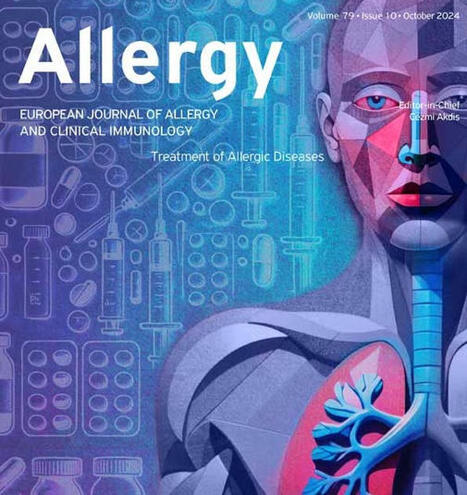
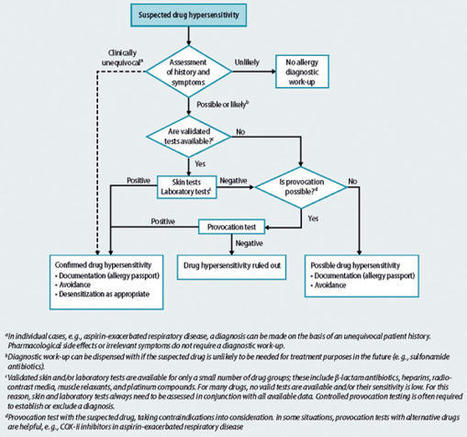
Very proud to present our November issue. Drug #hypersensitivity reactions (DHRs) constitute a major concern in clinical practice, as they compromise patient safety and restrict the use of essential medications. These immune-mediated adverse drug reactions occur after exposure to therapeutic doses and can manifest with a broad clinical spectrum, ranging from mild cutaneous reactions to severe, potentially fatal conditions.
This issue opens with an editorial by Li et al., highlighting the inaugural EAACI Hong Kong Allergy School where global experts in drug allergy gathered under the theme “East Meets West” to call for harmonized international definitions of drug hypersensitivity and standardized criteria for identifying low-risk penicillin allergy, underscoring the urgent need to reduce mislabelling and advance safe, evidence-based delabelling practices worldwide. Leonardi et al. provide a comprehensive overview of the clinical presentations, diagnostic approaches, and treatment strategies for drug-induced ocular adverse events. Cortellini et al. present data and recommendations on the characteristics of hypersensitivity reactions to antiplatelet drugs and the associated diagnostic procedures, to maximize their safety and effectiveness. Gelincik et al. review current knowledge on the pathomechanisms of hypersensitivity reactions to quinolones, including diagnostic tests and cross-reactivities, and propose a practical diagnostic approach for clinicians. Hutten et al. highlight significant discrepancies between studies on cross-allergy to beta-lactam antibiotics, particularly concerning recommendations for safe alternatives. Labella et al. investigate the utility of direct single-dose drug provocation testing without prior skin testing in adult European patients at low risk of penicillin allergy. Bilgic-Eltan et al. analyze the discrepancies between suspected and confirmed drug hypersensitivity in a well-defined cohort of patients with inborn errors of immunity. Helevä et al. evaluate the benefits of aspirin treatment after desensitization in patients with chronic rhinosinusitis with nasal polyps, asthma, and N-ERD. Goh et al. explore haptenated ligands presented by HLA-A*02:01, characterize the T cell repertoire involved in penicillin-induced reactions in a hypersensitive patient, and investigate whether a dominant penicillin-specific T cell receptor clonotype recognizes haptenated HLA peptides. Bertolotti et al. present the thoroughly documented case of a patient with delayed cross-reactivity to all seven available iodinated contrast media. Cho, Jo, and Park et al. leverage the WHO global pharmacovigilance database to identify the ten drugs most frequently associated with severe cutaneous adverse reactions, providing large-scale epidemiological insights into delayed drug hypersensitivities and contributing to global drug safety. Céspedes and Pérez-Moreno et al. demonstrate that IgG removal enhances…………..
journalallergy.com
|
|
Scooped by
Gilbert C FAURE
July 30, 2025 4:30 AM
|
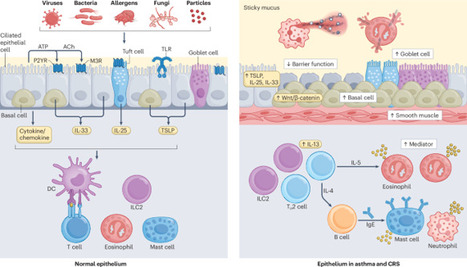
Asthma and chronic rhinosinusitis (CRS) are common chronic inflammatory diseases of the respiratory tract that have increased in prevalence over the past five decades. The clinical relationship between asthma and CRS has been well recognized, suggesting a common pathogenesis between these diseases. Both diseases are driven by complex airway epithelial cell and immune cell interactions that occur in response to environmental triggers such as allergens, microorganisms and irritants. Advances, including a growing understanding of the biology of the cells involved in the disease, the application of multiomics technologies and the performance of large-scale clinical studies, have led to a better understanding of the pathophysiology and heterogeneity of asthma and CRS. This research has promoted the concept that these diseases consist of several endotypes, in which airway epithelial cells, innate lymphoid cells, T cells, B cells, granulocytes and their mediators are distinctly involved in the immunopathology. Identification of the disease heterogeneity and immunological markers has also greatly improved the protocols for biologic therapies and the clinical outcomes in certain subsets of patients. However, many clinical and research questions remain. In this Review, we discuss recent advances in characterizing the immunological mechanisms of asthma and CRS, with a focus on the main cell types and molecules involved in these diseases. In this Review, Kato and Kita discuss the complex interactions between airway epithelial cells and immune cells that contribute to the development of asthma and chronic rhinosinusitis. They highlight recent advances in understanding the clinical heterogeneity of these diseases and explain the progress that has been made in developing new therapies.

|
Suggested by
LIGHTING
February 17, 2025 6:19 AM
|
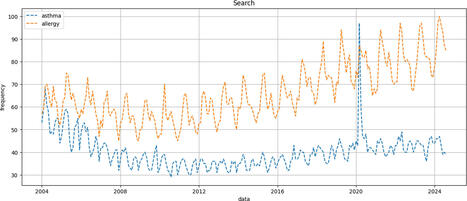
Background Google Trends (GT) is a free tool that provides insights into the public’s interest and information-seeking behavior on specific topics. In this study, we utilized GT data on patients’ search history to better understand their questions and information needs regarding asthma.
|
|
Scooped by
Gilbert C FAURE
December 3, 2024 4:27 AM
|
An injection given during some asthma and COPD attacks is more effective than the current treatment of steroid tablets, reducing the need for further treatment
|
|
Scooped by
Gilbert C FAURE
October 6, 2024 4:42 AM
|
"A blog about allergy, asthma & immunology"
|
|
Scooped by
Gilbert C FAURE
April 5, 2024 7:29 AM
|
|
|
Scooped by
Gilbert C FAURE
January 20, 2024 4:59 AM
|
|
|
Scooped by
Gilbert C FAURE
January 10, 2024 3:00 AM
|
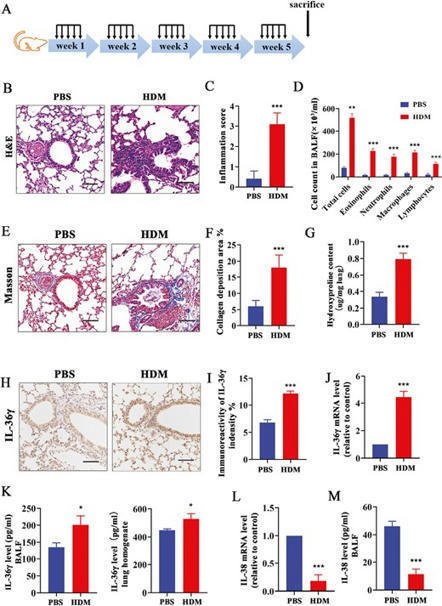
IL-36γ was upregulated in the lungs of chronic asthma mice, and it contributed to the airway remodeling. IL-38 can alleviate the airway remodeling in asthma by
|
|
Scooped by
Gilbert C FAURE
December 29, 2023 3:53 AM
|
|
|
Scooped by
Gilbert C FAURE
September 24, 2023 11:12 AM
|
"A blog about allergy, asthma & immunology"
|
|
Scooped by
Gilbert C FAURE
August 2, 2023 5:30 AM
|
|
|
Scooped by
Gilbert C FAURE
February 22, 2023 11:37 AM
|
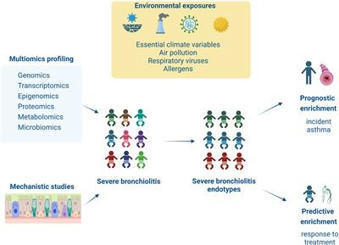
Severe bronchiolitis (i.e., bronchiolitis or first episode of wheeze requiring hospitalization) during infancy is a heterogeneous condition associated with an increased risk for childhood asthma development (1,2). Bronchiolitis cohort studies have identified early-life environmental, genetic and immune risk factors for childhood asthma development by carrying out analysis at single level (e.g., associations with respiratory virus types, host immune response or the microbiome composition of the host) (3,4). However, severe bronchiolitis pathogenesis involves interaction of factors at multiple levels (e.g., genome, epigenome, transcriptome, metabolome, microbiome). Optimistically, the increasing use of omics methodologies in observational studies allows for a more holistic approach, that can shed light on severe bronchiolitis pathophysiology by identifying distinct biological processes associated with long-term sequelae like asthma (5). In addition, mechanistic studies are required to validate and test identified pathogenetic pathways from omics studies.To further address the issues outlined above, our Research Topic congregates evidence from observational and interventional studies exploring the severe bronchiolitis to childhood asthma causal pathway with the aim to identify severe bronchiolitis endotypes that can guide predictive (i.e., response to treatment) and prognostic (i.e., association with long-term respiratory sequelae) enrichment strategies (see Figure 1). Th
|
|
|
Scooped by
Gilbert C FAURE
December 28, 2025 5:34 AM
|
Bronchiectasis and asthma can co-exist in the same patient, and the characteristics may be different from bronchiectasis alone. Here the authors characterise the function of ILC3 cells and how IL-17C potentiates IL-17A expression promoting a neutrophil dominated asthma endotype in mouse...
|
|
Scooped by
Gilbert C FAURE
August 7, 2025 3:35 AM
|
"A blog about allergy, asthma & immunology"
|
|
Scooped by
Gilbert C FAURE
May 24, 2025 2:13 AM
|
📢 One of the most appreciated/liked articles in the social media of Allergy published in 2024:
Open Access: Navigating the evolving landscape of atopic dermatitis: Challenges and future opportunities: The 4th Davos declaration. Claudia Traidl-Hoffmann
Read the article here: doi.org/10.1111/all.16247
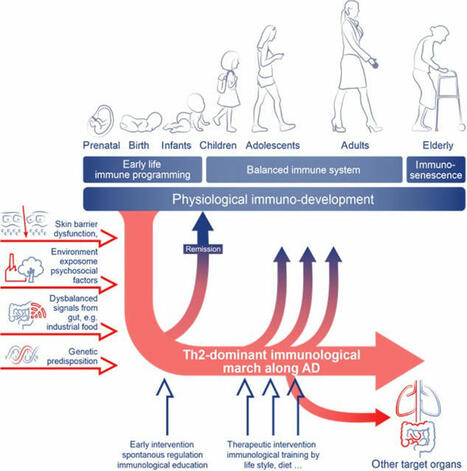
With over 170 references and 6 figures, this article summarizes the key points discussed during the Global Allergy Forum in Davos. During this event, scientific experts and stakeholders met to address the increasing prevalence of #atopicdermatitis (AD). Topics covered include: #epithelialbarrier maintenance and disturbances in atopic diseases; #environmental changes as a driving force of atopic diseases; immunological march along the course of AD; neuroimmunology, systemic inflammation and comorbidities; therapeutic, educational, and global economic aspects; future directions
Read more articles published in #Allergy on #asthma here: https://lnkd.in/dvHaYziZ
#Allergy_journal
|
|
Scooped by
Gilbert C FAURE
January 19, 2025 10:43 AM
|
|
|
Scooped by
Gilbert C FAURE
November 30, 2024 1:45 PM
|
|
|
Scooped by
Gilbert C FAURE
April 18, 2024 6:08 AM
|
The inflammation process plays a crucial role in allergic respiratory diseases, such as asthma and allergic rhinitis. Although the pulmonary epithelium, the carpet of cells that forms the inner surface of the lungs, is recognized as a major player in the respiratory inflammation that causes these diseases, the underlying mechanisms are still poorly understood.
|
|
Scooped by
Gilbert C FAURE
February 11, 2024 6:41 AM
|
An overactive population of natural killer cells in children with eczema may worsen skin damage and provoke allergic sensitivity or development of asthma.
|
|
Scooped by
Gilbert C FAURE
January 16, 2024 1:13 PM
|
|
|
Scooped by
Gilbert C FAURE
January 5, 2024 1:16 PM
|
"A blog about allergy, asthma & immunology"
|
|
Scooped by
Gilbert C FAURE
October 30, 2023 11:03 AM
|
The following is a summary of “Evidence-based use of antihistamines for treatment of allergic conditions,” published in the October 2023 issue of Allergy, Asthma & Immunology by Linton, et al. H1 antihistamines have been used to treat allergic diseases like allergic rhinitis and hives since the...
|
|
Scooped by
Gilbert C FAURE
August 13, 2023 2:51 AM
|
OBJECTIVE: Sublingual immunotherapy (SLIT) has been widely applied to treat patients with allergic rhinitis (AR). However, meta-analyses on th
|
|
Scooped by
Gilbert C FAURE
March 11, 2023 12:04 PM
|
|