Your new post is loading...

|
Scooped by
Susan Myburgh
February 2, 2023 9:30 PM
|
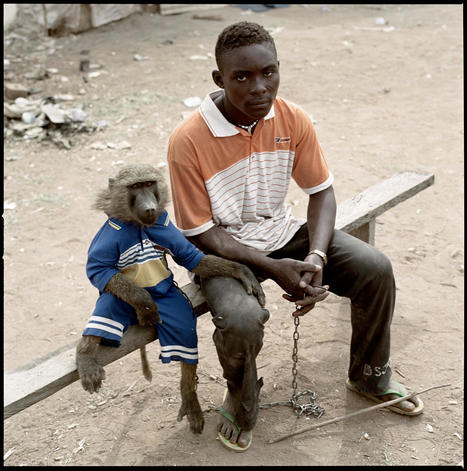
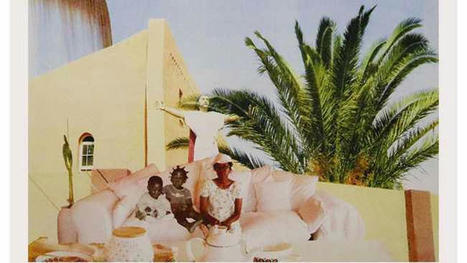
Artists push us to question and engage with the world around us, but their art and their creative process are frequently met with skepticism. African artists know this dynamic all too well. “This no be art” (Ghanaian pidgin for “this is not art”) is a phrase all too often heard at exhibitions and...
|
|
Scooped by
Susan Myburgh
February 2, 2023 9:28 PM
|
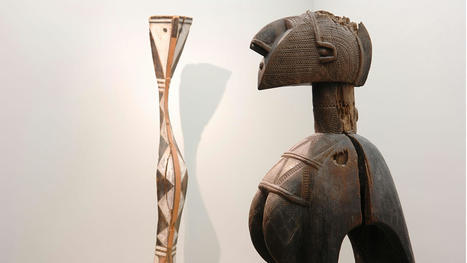
Museums & Social Issues - Contested Conservation. Guest editors: Dr. Lotte Arndt, researcher at the Technische Universität Berlin, arndt[at]tu-berlin.de Prof. Dr. Noémie Etienne, professor at the University of Vienna, noemie.etienne[at]univie.ac.at Museum conservation in the West has long focused on the physical preservation of objects. Today, the heritage regime is being questioned and challenged in many ways. If collecting, storing, and exhibiting have participated as epistemological tools in the classification of the world, can artifacts be reconnected to living practices? What changes are needed for concerned communities to take agency in storage? How can we rethink cultural transmission and reconceive the role of collections without reconducting the cultural hegemonies inscribed in their history? The special issue focuses on how conservation approaches and conceptions can be transformed by opening them up to multiple, even divergent, approaches. We aim to discuss object conservation not only as a Western practice with scientific ambitions starting in the late 19th century, but as a set of proceedings for preserving and transmitting, transforming and recontextualising in museums and beyond. Access to collections and rights to decide upon cultural heritage, even if this leads to its physical alterations or disappearance, are key questions. Since the 1990s, object conservators have challenged the narrative of Western supremacy in the field of conservation (Clavir 2002; Wharton 2012). Scholars and activists have long underlined the need for critical reconsideration and ‘decolonizing’ the discipline (Sully 2007). The need for collaboration with concerned groups, especially indigenous communities, is included in the Burra Charter, which focuses on cultural heritage preservation and was adopted in 1979. Today, conservators and curators are increasingly aware of the benefits and necessity of shared expertise, and decisions are often made in discussion with different stakeholders that include creators and their descendants (Tchatchouang Ngoupeyou 2018-2019; German Museum Association 2021; Fowler Museum 2021). Nevertheless, so-called “inclusion” also has limitations and its own political agenda (Ahmed 2012; Singh 2018). Ideally, conservation decisions should be made in consensus between different constituencies, such as indigenous communities, conservators, curators, scholars, and other stakeholders. But what if the conservation process produces disagreements? What are the troubles, controversies, discontinuities, brought, among others, by the coloniality (Quijano 2007) of museums? What toxic traces did the conservation process leave in the collections? Can different conceptions of conservation coexist, and transform each other? The special issue aims to foster transdisciplinary knowledge circulation and exchange ranging from decades-long Indigenous activism to contexts where debates are only beginning. Furthermore, we seek to bring together museum practitioners, artists, academics, and activists. Thus, along with full articles, we will also encourage more conversational pieces such as interviews. Among possible topics: - Transmission and living practices in and beyond museums - New materialist approaches to conservation - Indigenous collections care - Museum as places for stewardship - Chemical conservation, its toxic remnants, and alternatives - Conservation and human remains - Co-curation and collaboration Ways of Caring “Conservation”, “preventative conservation”, “curative conservation,” or sometimes “restoration” are among the terms used to describe object preservation in museums. They carry social implications related to expertise and science. But many ways of caring do exist, based on different epistemologies and terminologies. The special issue will explore diverse ways of taking care of material and immaterial culture outside of the Global North, in the museum and beyond. What words could be used to describe ways of caring for material culture in these contexts? And how, for instance, can Indigenous care practices inform/transform other cultures? Indigenous rights and museum collections In several countries, primarily with internal colonization, such as the USA, New Zealand, and Australia, years of advocacy by Indigenous groups have resulted in changes to heritage and land regulations and have allowed, to varying degrees, concerned communities to take part in museum decisions and practices. This includes rights to access, maintenance requirements, spaces for cultural or spiritual practice, including feeding, touching, dancing, soaking, fumigation and fire, or taking artifacts out of the museum, exhibition co-curation, repatriation, and burial. The editors invite contributions on transformed practices in storage and beyond, or conversely, on situations where museums are reluctant to involve concerned external individuals and groups or to change practices. Conservation and Ecology Today, ecological concerns are reaching the field of cultural heritage. Conservators are working towards using more sustainable products. Advocacy for decolonizing conservation practices encourages this movement. Indigenous fumigation, for instance, employs natural products. Which new connections exist between ecological and postcolonial sensitivities? How is artifact conservation and the conservation of animals, minerals and nature articulated (similarities and differences in terms of highly regulated policies, colonial supervision, and dispossession of Indigenous knowledge)? Toxic collections In many collections, decades of chemical treatments have left heavy residues. How to think about and deal with the poisonous effects of conservation? How do museums address these legacies? What questions do they raise in the context of restitution and open storage practices? What policies of decontamination could be employed? How do museums in the Global South and elsewhere address the consequences of chemical modernity in their practices and collections? Alternate Histories Not only are the histories of conservation often focused on the West but key actors have predominantly identified as white male were leaders in the field of conservation science, publishing widely and consulting internationally. Yet a variety of actors do exist, from the material supplier to the local crafts(wo-)man. Strong traditions of conservation exist outside Europe and the United States. How to tell the story from the point of view of missing actors? What alternate conservation histories remain to be written? Submission guidelines: Authors are encouraged to send an abstract and brief biography to the editors at arndt[at]tu-berlin.de and noemie.etienne[at]univie.ac.at by March 15, 2023. Selected authors will then be invited to elaborate a full manuscript and send it through the journal’s website: https://www.tandfonline.com/journals/ymsi20 . Please respect the journal guidelines: https://www.tandfonline.com/action/authorSubmission?show=instructions&journalCode=ymsi20 All texts will be subject to double-blind peer review. Important dates Abstract & bio – 500 words for abstract March 15, 2023 Notification to authors April 1, 2023 Submission of full papers – 5000-8000 words June 30, 2023 Peer-review Final submission March 1, 2024 References: Ahmed, Sara. On Being Included. Racism and Diversity in Institutional Life. Duke University Press, 2012. Clavir, Miriam. Preserving What is Valued: Museums, Conservation, and First Nations. Vancouver: UBC Press, 2002. Fowler, Caroline, Nagel, Alexander, eds. The Expanded Field of Conservation, Williamstown, Clark Visual Studies, 2022. Quijano, Aníbal, “Coloniality and Modernity/Rationality”, Cultural Studies, 2007, 21:2-3, 168-178, DOI: 10.1080/09502380601164353. Singh, Kavita and Mirjam Brusius, eds., Museum Storage and Meaning: Tales from the Crypt. Abingdon: Routledge, 2018. Sully, Dean, ed. Decolonising Conservation: Caring for Maori Meeting Houses outside New Zealand. Walnut Creek: Left Coast Press, 2007. Tchatchouang Ngoupeyou, Honoré. “L’intégration des acteurs locaux dans les politiques de conservation des musées camerounais” In: Patrimoines: revue de l’Institut national du patrimoine, 2018-2019, no. 14: 164-169. Wharton, Glenn. The Painting King: Art, Activism, and Authenticity in Hawai’i. Honolulu: University of Hawai’i Press, 2012. German Museums Association, Guidelines on Dealing with Collections from ColonialContexts, 3rd edition, 2021. Fowler Museum, Share the Mic. Decolonizing an African Art Museum, 23 March 2021, https://fowler.ucla.edu/events/share-the-mic-decolonizing-an-african-museum/.
|
|
Scooped by
Susan Myburgh
October 4, 2022 2:58 AM
|
ldquo;The exhibition is showcasing some of the works that made Benin Nigeria famous.
|
|
Scooped by
Susan Myburgh
October 4, 2022 2:57 AM
|
So if you want to incorporate a little bit of Africa into your wardrobe, online African clothing store is the way to go.
|
|
Scooped by
Susan Myburgh
October 4, 2022 2:55 AM
|
Cape Town/London – A new fortnightly African Art Business News Digest launches this week.Each edition will share selected top, recent stories as th...
|
|
Scooped by
Susan Myburgh
October 3, 2022 7:55 PM
|
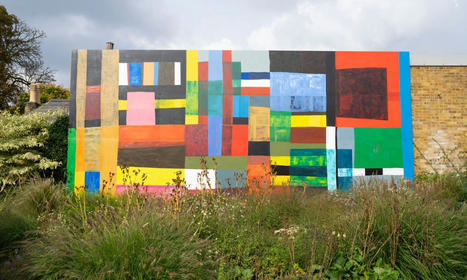
Cut From the Same Cloth is Ed Cross's first solo exhibition of paintings by Wole Lagunju (b.1966, Oshogbo, Nigeria, based in North Carolina)...
|
|
Scooped by
Susan Myburgh
October 3, 2022 7:53 PM
|
Will full restitution of African tribal art ever be realized and if so, how prepared are African countries to receive such priceless treasures? Kampala, Uganda | DOMINIC MUWANGUZI | The conversation on the return of African art, popularly known as tribal artefacts by art scholars, has once again...
|
|
Scooped by
Susan Myburgh
October 3, 2022 7:47 PM
|
an iconography of authority.
|
|
Scooped by
Susan Myburgh
October 3, 2022 7:46 PM
|
Named for Nigeria’s country code, +234 Connect is a celebration of African creativity and expression.Visitors have the opportunity to explore two … Powered by WPeMatico...
|
|
Scooped by
Susan Myburgh
October 3, 2022 7:46 PM
|
Shot in Cape Town, South Africa, All That Is Buried showcases the talents of poet Zizipho Bam, writer Sindiswa Busuku, artist/activist Haroon Gunn-Salie and musician Dizu Plaatjies as they move between their homes, work and sites of inspiration in and around the city.
|
|
Scooped by
Susan Myburgh
September 7, 2022 5:31 AM
|
Old African Fine Art and Hand-Crafted African Jewelry...
|
|
Scooped by
Susan Myburgh
September 6, 2022 11:42 PM
|
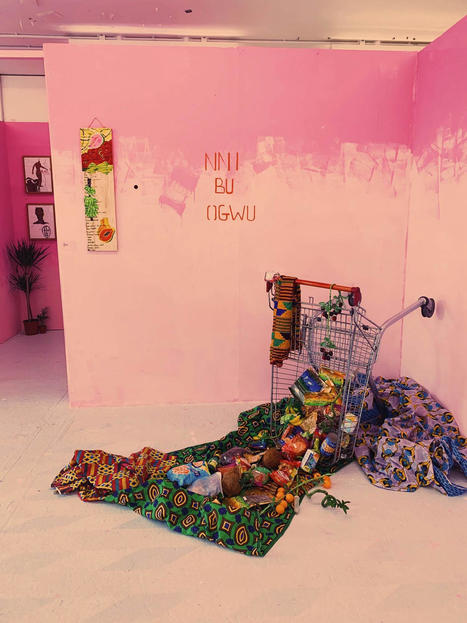
New York-based artist Chiizii’s ‘Nni Bu Ogwu’ archival collection examines pre- and post-colonial Igbo dietary practices.
|
|
Scooped by
Susan Myburgh
August 23, 2022 5:48 AM
|
African Art In Funiture | As beautiful and timeless as art could be, our homes and office furniture should not be left out.
|
|
|
Scooped by
Susan Myburgh
February 2, 2023 9:29 PM
|
Curator Esther Tisa talks about the challenges in tracking down where art objects came from and who traded in them.
|
|
Scooped by
Susan Myburgh
February 2, 2023 9:28 PM
|
Read stories about Home Decore on Medium. Discover smart, unique perspectives on Home Decore and the topics that matter most to you like Interior Design, Dream House, Home Builders Sydney, New Home Desgin, Decoration, Homedecorationideas, Luxury Homes, Home, and Trendco.
|
|
Scooped by
Susan Myburgh
October 4, 2022 2:57 AM
|
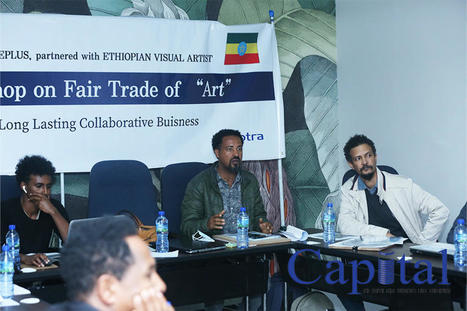
A training organized by SharePlus Global Partners, a Korean company and the Ethiopian Visual Artists Association was conducted on Friday August 26. The training aims to provide assistance on how to use online product promotion software to promote fair art products and competency-building education...
|
|
Scooped by
Susan Myburgh
October 4, 2022 2:56 AM
|
Africa’s premier concept store Merchants on Long launches an online store showcasing a curated selection of African design.
|
|
Scooped by
Susan Myburgh
October 4, 2022 2:55 AM
|
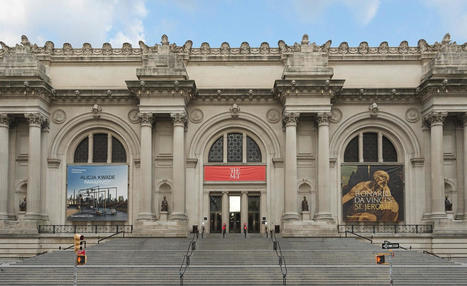
New York federal agents have seized 27 looted antiquities worth more than U.S.$13 million from New York's Metropolitan Museum of Art and they will now be returned to Italy and Egypt.
|
|
Scooped by
Susan Myburgh
October 3, 2022 7:54 PM
|
Cape Town is one of South Africa's favorite cities, it's also a great place to discover artists and craftspeople doing amazing things in local galleries.
|
|
Scooped by
Susan Myburgh
October 3, 2022 7:53 PM
|
Iconic moves is an art work that tells a progressive iconic movement established to change the traditional politics of African countries.
|
|
Scooped by
Susan Myburgh
October 3, 2022 7:47 PM
|
In 2004, Novel Chegou left his home country, Cameroon, in search of a better life in South Africa. With high hopes and not much money, he sold African crafts - beads, masks, and carved stones - next to the village green in Stellenbosch to save for his studies at the town's university.
|
|
Scooped by
Susan Myburgh
October 3, 2022 7:46 PM
|
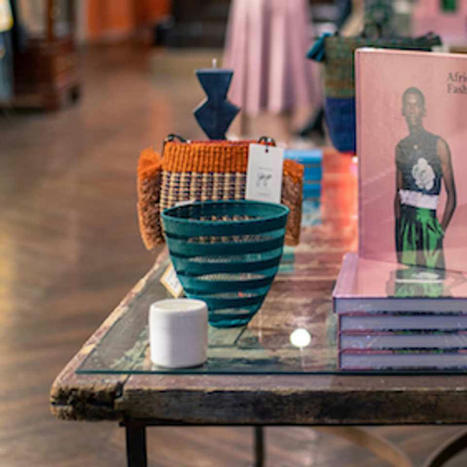
Africa Fashion sets out to celebrate the creativity and style of Africa and its diaspora. It is political, it’s about Blackness, and...

|
Suggested by
admin@makaleti.com
September 8, 2022 3:53 AM
|
Best 20 Interior Design Tips 2022
|
|
Scooped by
Susan Myburgh
September 6, 2022 11:42 PM
|
The Ghanaian artist was just starting to receive the acclaim he deserved, winning last year’s Maria Lassnig prize.His widow talks about the daunting task of completing his joyous final work...
|
|
Scooped by
Susan Myburgh
August 23, 2022 5:49 AM
|
The ANNA Award’s mission is to identify, honour, and support a new generation of South African women artists.
|


 Scoop.it!