Your new post is loading...

|
Scooped by
Institut sur la gouvernance (IGOPP)
August 7, 2019 11:28 AM
|
For several decades now, investors have increasingly focused on issues involving executive compensation. Remember Graef S. Crystal? Back in 1992 the former compensation consultant to the largest corporations became an activist focused on “excess” pay arrangements for U.S. corporate CEOs (his book was “In Search of Excess – the Overcompensation of American Executives”). Every company faces the same questions, he explained: in terms of compensation of the senior management team, how much and how? He explored the various approaches of the day and set the foundation for conversation about CEO comp over the ensuing years.
|
|
Scooped by
Institut sur la gouvernance (IGOPP)
August 6, 2019 11:04 AM
|
This essay offers a historical account of the Delaware Court of Chancery’s greatest case, Belton v. Gebhart, a seminal civil rights decision. The circumstances surrounding the Belton case illuminate the limits and potential of shareholder activism to bolster civil rights in the modern context. They vividly illustrate how advancing civil rights requires a range of tactics that leverage public, private, and philanthropic resources. Shareholder activism works best as part of a multipronged activist strategy, not as a substitute for other types of activism. Examining a historical civil rights example is instructive for thinking about how shareholder activism might advance the modern civil rights agenda.
|
|
Scooped by
Institut sur la gouvernance (IGOPP)
August 5, 2019 11:05 AM
|
Vicki Hollub is an engineer who spent time on three continents working her way up to the top of Occidental Petroleum Corp. She doesn’t have much experience at M&A, and that has made her an easy target for critics. Her recent bid to deepen the company’s bet in the red-hot Permian Basin is bold. Built on the $38 billion acquisition of Anadarko Petroleum Corp., the expansion plan requires costly capital from Warren Buffett—money necessary to circumvent an Occidental shareholder vote that Anadarko wanted to avoid.
Carlyle Group LP (CG.O) emulated its peers on Wednesday with plans to convert from a publicly traded partnership into a corporation, and went one step further by announcing it will become the first U.S. private equity firm to hold shareholder votes.
Two major developments are shaping modern capital markets. The first development is the dramatic increase in the size and influence of institutional investors, mostly mutual funds. Institutional investors today collectively own 70-80% of the entire U.S. capital market, and a small number of fund managers hold significant stakes at each public company. The second development is the rising influence of activist hedge funds, which use proxy fights and other tools to pressure public companies into making business and governance changes.
MANY people believe that business ethics is an oxymoron – in other words, a contradiction in terms, like “airline food” or “military intelligence”. That said, many of us rush to buy commercial products and services from the very people whose principles we say we distrust. We like their stuff, just not their methods, it seems.
The forced departure of nearly one-tenth of the work force at a Toronto geriatric hospital has put the spotlight on the growing problem of fraudulent employee benefits claims
There needs to be a deal between the European Commission and Italy
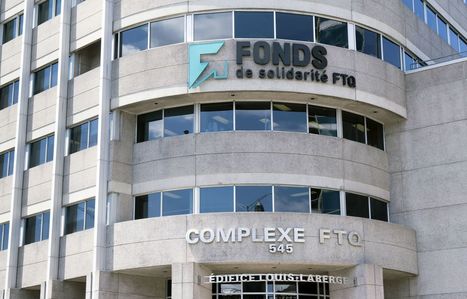
Le Fonds de solidarité FTQ affiche une solide performance. Derrière un profit record de 1,13 milliard et un rendement global de 7,8 % pour l’exercice se cache un rendement de 12,4 % des investissements privés auprès des entreprises québécoises, distançant de très loin les indices de référence.
Le site Web d’une pétition établie la semaine dernière qui demande au gouvernement du Canada de remplacer le numéro d’assurance sociale (NAS) des victimes de vols de données affiche lundi qu’elle a recueilli plus de 74 200 noms sur un objectif de 75 000.
Activist investors have been dubbed barbarians in the boardroom but traditional asset managers support their growing presence in global markets, according to research.
The long swell in dealmaking may be subsiding
Activist shareholders help ousted CEO of Japan’s Lixil Group achieve a rare comeback
|
|
|
Scooped by
Institut sur la gouvernance (IGOPP)
August 7, 2019 11:22 AM
|
In 1990, Professor Harry Markowitz was awarded the Nobel Prize in Economics for his groundbreaking work on the importance of portfolio diversification to achieving better risk-adjusted returns, which serves as the basis of modern portfolio theory. [1] The value of diversified investing is now being challenged by a small group of academics who claim that ownership of diversified portfolios may create anti-competitive effects.
|
|
Scooped by
Institut sur la gouvernance (IGOPP)
August 5, 2019 11:09 AM
|
It's hard to read the business news without coming across reports about the salaries, bonuses, and stock option packages awarded to chief executives of publicly traded companies. Making sense of the numbers to assess how companies are paying their top brass is not easy. Investors must ensure that executive compensation is working in their favor. Here are a few guidelines when analyzing a company's compensation program.
|
|
Scooped by
Institut sur la gouvernance (IGOPP)
August 1, 2019 11:09 AM
|
In 1927, Benjamin Graham pressured Northern Pipeline Company to distribute its excess cash to shareholders. When the company refused, he ran a proxy fight to put himself on the board of directors. Graham later became famous as Warren Buffett's mentor and the father of value investing. But at the time he was taking a path untrodden as an obscure fund manager intervening in a public company's governance.
Wall Street’s top activist investors are taking on an increasing prominence in Europe, with over $82 billion of capital now invested by shareholders publicly trying to force change in companies. Activist investors are individuals or groups that purchase substantial amounts of shares of a public company in an attempt to obtain seats on the board and change how it operates.
Related party transactions falling could be a sign of improving corporate governance in the country.
Ringing the Nasdaq market bell was the thrill of a lifetime — both when I did it as a founder and also vicariously as a VC via my incredible founders who have taken their companies public. There’s nothing like seeing the baby you nurtured mature into a multibillion-dollar public entity.
Facebook’s digital currency could become one of the world’s biggest financial entities
Investors went “gaga” over the “mini-flurry” of flotations including Uber, Beyond Meat and Slack this year, says Andy Serwer in Yahoo Finance. But perhaps that is just because such opportunities are rarer than they used to be. Between 1980 and 2000 around 310 companies went public every year in the US; this year there will be just 230.
Le service d’espionnage canadien a régulièrement obtenu des rapports provenant du secteur de l’énergie sur des menaces perçues, et a conservé ces informations dans leurs dossiers au cas où elles se révéleraient utiles ultérieurement, indiquent des documents récemment rendus publics.
Royal Dutch Shell has been walking a fine line between investing in its traditional oil and gas businesses while pledging to develop new ones for a low-carbon future.
L'Assemblée nationale française a approuvé jeudi un impôt modeste visant les géants de l'internet tels que Google, Amazon et Facebook, et le gouvernement français espère que d'autres pays feront de même.
Corporate governance became very popular after the Enron scandal in 2001 and the subsequent Sarbanes-Oxley (SOX) Act in 2002. Corporate governance itself is a wide-ranging term, which describes the processes, policies, procedures, internal controls, laws, and institutions involved in guiding the organization’s performance to increasing long term shareholder value (Khan, 2011).
|