


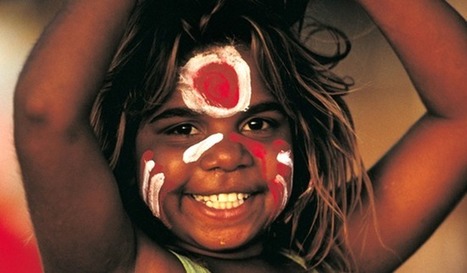

Summary: Students will analyse an Aboriginal Image. They will use their detective skills to work out what is happening in each image.

 Your new post is loading...
 Your new post is loading...
Your new post is loading...
 Scoop.it!
Summary: Students will analyse an Aboriginal Image. They will use their detective skills to work out what is happening in each image.
Maree Whiteley's insight:
Important note:The following lesson could be enhanced by acknowledging the sources of the images as part of the lesson procedure, therefore modelling best practice in crediting your source. Also some of the images have been taken out of the context of their original website. This is a teaching point that could be shared with your students, ie the pros and cons of 'googling' for images... 
Scoop.it!

Indigenous Australians have long held their own seasonal calendars based on the local sequence of natural events. To the right is a map of Australia with hyperlinks to the corresponding seasonal calendars for given regions.
Maree Whiteley's insight:
A fabulous resource for classrooms around Australia...
Scoop.it!
Maree Whiteley's insight:
Recommended for pre-service teachers but a great resource for EVERY teacher!
Scoop.it!

In January 2012, ACARA announced that following a period of public consultation, revisions would be made to the first draft of the Australian Curriculum's History Curriculum in order to better reflect the history of the Stolen Generations. The changes would impact school years intermittently from Year 3 to Year 10, with the importance of marking both National Sorry Day and the Anniversary of the Apology as a school being taught, among other topics.
Maree Whiteley's insight:
Resources for Sorry Day May 26...excellent links to AC History
Scoop.it!
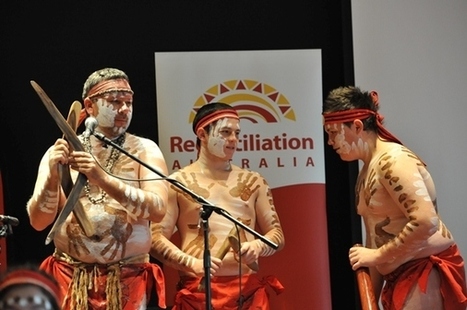
National Reconciliation Week is held annually from 27 May to 3 June. It is a time to celebrate and build on the respectful relationships shared by Aboriginal and Torres Strait Islander people and other Australians.Preceded by National Sorry Day on 26 May, National Reconciliation Week is framed by two key events in Australia’s history, which provide strong symbols for reconciliation:
Maree Whiteley's insight:
Why?...acknowledging the past, reconciling the present and developing partnerships for the future.
Scoop.it!
Peter Garrett is the Education Minister and he supports constitutional recognition of Aboriginal and Torres Strait Islander peoples. Here he is to tell you why.
Scoop.it!
Maree Whiteley's insight:
Stories of the Stolen Generation you will not find in the New Norcia exhibition

Maree Whiteley's curator insight,
February 26, 2013 10:09 PM
March is Women in History month...stories of six women of the Stolen Generation. 
Jamie Mitchell's curator insight,
March 8, 2016 1:12 AM
Stories of the Stolen Generation you will not find in the New Norcia exhibition
Scoop.it!

Indigenous Viewer Advice Aboriginal and Torres Strait Islander viewers are advised that the following program may contain images and voices of people who have passed away. Downloads and a complete Apology Transcript Video: Prime Minister Kevin Rudd, MP - Apology to Australia's Indigenous peoples (WMV)7.7MB - 4min, 3secVideo: Prime Minister Kevin Rudd, MP - Apology to Australia's Indigenous peoples (MOV) 16MB - 4min, 3secAudio: Prime Minister Kevin Rudd, MP - Apology to Australia's Indigenous peoples (MP3) 1.2MB - 3min, 40sec - 48kbps Mono
Maree Whiteley's insight:
" ...we honour the Indigenous peoples of this land, the oldest continuing cultures in human history. We reflect on their past mistreatment. We reflect in particular on the mistreatment of those who were Stolen Generations - this blemished chapter in our nation's history...We apologise for the laws and policies of successive Parliaments and governments that have inflicted profound grief, suffering and loss on these our fellow Australians...K Rudd

Agnes Kharshiing's curator insight,
October 19, 2013 1:19 AM
A very Humble Gesture which few would do...Thank You...and thanks for sharing...
Scoop.it!
Maree Whiteley's insight:
Did you know??? The first Australian cricket team to travel overseas was an Aboriginal team, made up of stockmen who had learned the game on Victorian cattle stations. The team travelled to England in 1868 for a series of matches against county teams, 10 years before the Australian Eleven team travelled to England for the first official representative Test match on British soil.
Scoop.it!

Ancient stories have inspired central Australian women in a craft that has risen to fine art.
Maree Whiteley's insight:
Great story of 'country and place'...thanks SMH
Scoop.it!

Aboriginal and Torres Strait Islander communities are strong, rich and diverse. Aboriginal and Torres Strait Islander Identity is central to this priority and is intrinsically linked to living, learning Aboriginal and Torres Strait Islander communities, deep knowledge traditions and holistic world view. A conceptual framework based on Aboriginal and Torres Strait Islander Peoples’ unique sense of Identity has been developed as a structural tool for the embedding of Aboriginal and Torres Strait Islander histories and cultures within the Australian curriculum. This sense of Identity is approached through the interconnected aspects of Country/Place, People and Culture. Embracing these elements enhances all areas of the curriculum. The Aboriginal and Torres Strait Islander priority provides opportunities for all learners to deepen their knowledge of Australia by engaging with the world’s oldest continuous living cultures. This knowledge and understanding will enrich their ability to participate positively in the ongoing development of Australia.

Catherine Smyth's curator insight,
February 26, 2013 8:13 PM
Primary teachers need to embed Aboriginal and Torres Strait Islander perspectives in their teaching. Use the ideas in this website to frame planning. 
Clare O'Connor's curator insight,
April 2, 2013 2:32 AM
This is going to be a Cross-curricular priority, so I thought it useful to add for our RMLP teachers and in-house education providers.
Scoop.it!

The Rivers hold deep emotional significance for historic and contemporary peoples who have drawn upon them as a functional, pleasure and spiritual resource according to project co- manager Winthrop Professor Susan Broomhall. "The Swan and Canning Rivers are a defining cultural focus of Perth's communities (Aboriginal and non-Aboriginal) and this project provides an easy-to-use framework for the community to express its often very personal, very deep and dear connections to our internationally recognised riverscape," Professor Broomhall said.
Scoop.it!

The Australian Children's Television Foundation has produced a multi-platform education resource based on the animation Wadu Matyidi. This resource, designed for primary-aged students, provides the opportunity for students to explore Adnyamathanha language, culture, stories and traditions. Via Catherine Smyth
|
Scoop.it!
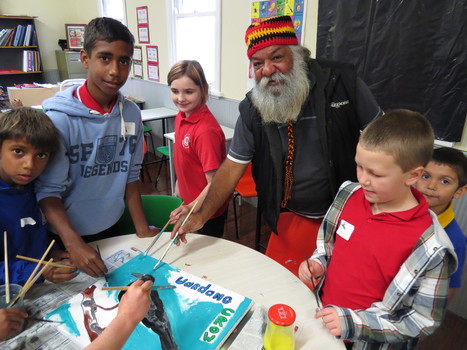
WEST Northam and Northam Primary School combined last Tuesday to celebrate National Aboriginal and Islander Day Observance Committee (NAIDOC) Day last Tuesday.
Maree Whiteley's insight:
Have you got a story to share? Call your local newspaper and spread the love...
Scoop.it!

Super Nomads: 50,000 To 30,000 Years AgoSeries 1| Episode 1Documentary/Factual 56 mins CC The story of how people arrived and thrived on our continent. With startling new archaeological discoveries revealing how the first Australians adapted, migrated, fought and created in dramatically changing environments.
Maree Whiteley's insight:
AC History Year 7 Ancient Australia
Scoop.it!
Maree Whiteley's insight:
Great addition to any classroom or playspace...culture and environment!
Scoop.it!

Level: Year 7 Topic: The ancient past – Narrabeen Man Australian Curriculum: History reference – Depth Study 1 Investigating the Ancient Past: Ancient Australia This unit presents a learning sequence for a topic, the mystery of Narrabeen Man, which is a case study for investigating the nature of the sources for ancient Australia and what they reveal about Australia’s past.
Maree Whiteley's insight:
"The learning sequence models an inquiry based approach where students are supported in conducting their own investigation"
Scoop.it!

The Dot Com Mob - Connecting Indigenous Communities.
Maree Whiteley's insight:
"Dot Com Mob aims to improve the lives of people living in remote Australian Indigenous communities by providing access to:Technology Centres, Youth IT Training, and Digital Inclusion Projects"
Scoop.it!
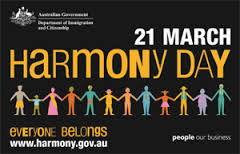
Australia’s cultural diversity is one of our greatest strengths and is at the heart of who we are. We all make up the pages of a bigger Australia and we all have a story to tell. We invite you to tell your story with each other – in workplaces, on social network sites, at schools or within communities.You may also choose to share your story with all Australians by taking a photo, filming a video, or writing an article.Share your story today.
Maree Whiteley's insight:
What's your story?

Dean Dray's curator insight,
March 28, 2014 7:02 PM
This stimulus could be used in a stage 3 classroom, to encourage the students to participate in personal reflection (Hinett, 2008). It could be used as a lead up activity towards Harmony Day or to get students to think about the cultural cohesiveness of Australia. Students can brainstorm as a group, why they think Australia is a popular location for people to live. Here the teacher can introduce new factual information to stimulate student thinking. Introducing words such as education, health, to seek refuge, employment ect.
Brainstorm and list the birthplace of children in the class and their parents or grandparents. Graph these results and discuss the outcomes, e.g. country where most were born, reasons why there are so many different groups represented in the graph. Use ABS data to compare own class or school to the Australia in general. This numeracy strategy will assist students in comparing class, school or local community with Australia. Does the community have a similar multicultural make-up as other parts of Australia?
This activity will get students to visually understand that there are many people living in Australia whom have a connection to another country. This will support students in understanding that other nations have assisted in shaping the Australian people of today.
Hinett, K. 2008. Improving learning through reflection – part one. [online] Available at: http://www.heacademy.ac.uk/assets/documents/resources/database/id485_improving_learning_part_one.pdf [Accessed: 28 Mar 2014].
Scoop.it!

The Schools Reconciliation Challenge 2013 is NOW OPEN! Engage your students in learning about Aboriginal Australia and profile your school's commitment to Reconciliation! Read the 2013 Teaching Kit as an online magazine below or download a copy for printing.The Teaching Kit contains all the information you need to participate, as well as fact sheets, art activities and other resources.
Maree Whiteley's insight:
Even if you're not in NSW this is a fabulous resource for teachers...
Scoop.it!

A unit of work for Years 3 and 4 to explore aspects of Australian Aboriginal and Torres Strait Islander cultures, using the picture books You and Me: Our Place by Leonie Norrington and Dee Huxley and Yorta Yorta stories retold in Stories from the Billabong.
Scoop.it!
Catherine Smyth's curator insight,
February 10, 2013 11:05 PM
This website gives a sense of the people, land, language and traditional technologies and knowledge of the Burarra people of Arnhem Land, in Australia's Northern Territory. Visit the Burarra PeopleQuestacon's Burarra Gathering Online Adventure let's you learn about Burarra traditional technology.Visit the Burarra People Online AdventureYou can take a virtual trip to the land of the Burarra people, and be guided by Danaja, a young Burarra man, and his grandfather, Wala Wala. You will need to complete a permit to travel onto Aboriginal land. You will also have to decide whether to travel in the wet or the dry season. 
Jasmine Chan's curator insight,
April 5, 2016 8:43 AM
Outcome: - describe features of places and the connections people have with places GE1-1 Inquiry question: How are people connected to places? What factors affect people’s connection to places? This is a fantastic interactive resource to help students gain a deeper understanding of Aboriginal land and the connection between Burarra people with their land; Arnhem Land, sea and animals. It is an engaging and fun resource, which invites students to the life and daily activities of the traditional Burarra people through detailed and realistic animation. Stanner (1979) reiterates the meaning of land and country to Aboriginal and Torres Strait Islander people, where inanimate objects such as mountains, flora and fauna take on human like qualities (Van Issum, 2012, p. 62). As such, through this animated adventure, students can achieve an authentic experience with another culture and how different people connect to place. Teaching ideas This resource could be used in small groups using iPads. It should be taken account that not all schools can provide sufficient iPads, so another option could be using the IWB with the whole class. Before this, the class will complete a KWL Chart together. KWL Charts are a useful visible thinking strategy, which allows students to think about what they already know, what they want to know and what they already know (Lyman, 1981 In Ritchhart & Perkins, 2008, p. 59). By implementing visible thinking strategies, classroom tasks become more learning oriented rather than work oriented (Marshall, 1988 In Ritchhart & Perkins, 2008, p. 61). References: Commonwealth of Australia. (2008). Questacon-The National Science and Technology Centre: Burarra Gathering. Retrieved 8th April, 2016 from http://www.questacon.edu.au/burarra-gathering/welcome-to-burarra-gathering Ritchhart, R. & Perkins, D. (2008). Teaching students to think. Educational Leadership, 65(5), 57-61. Retrieved 8th April, 2016 from http://www.visiblethinkingpz.org/VisibleThinking_html_files/06_AdditionalResources/makingthinkingvisibleEL.pdf Van Issum, H. (2012). Why we need Aboriginal and Torres Strait Islander perspectives. In Taylor, Fahey, Kriewaldt & Boon. Place and Time. Explorations in Teaching Geography and History. Frenchs Forest: Pearson Australia
Scoop.it!
Maree Whiteley's insight:
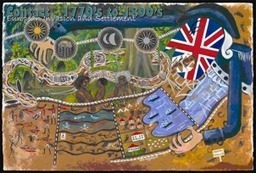
The posters provide an Aboriginal perspective on the history of Aboriginal people in Queensland, Australia.It allows participants to discover the story for themselves, via pictorial posters that Legislative Acts and Policies had on Land, Life, Identity, Culture and Clashes on Aboriginal people since invasion and colonization." Crossing Cultures project

Pelly Morganson's curator insight,
August 9, 2015 12:47 PM
Great visual representations of Aboriginal identity
Scoop.it!
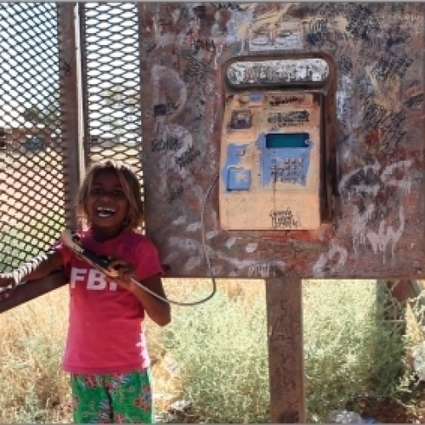
We Don't Need A Map: A Martu experience of the Western Desert
Maree Whiteley's insight:
Amazing stories of 'country and place'...
Scoop.it!

12 Canoes is a broadband website presenting, in an artistic, cultural and educational context, the stories, art and environment of the Yolngu people who live around the Arafura swamp in north-eastern Arnhem Land.
|









Please see comment below...
Important note:The following lesson could be enhanced by acknowledging the sources of the images as part of the lesson procedure, therefore modelling best practice in crediting your source. Also some of the images have been taken out of the context of their original website. This is a teaching point that could be shared with your students, ie the pros and cons of 'googling' for images...