21st Century Learning and Teaching
792.5K views | +17 today
21st Century Learning and Teaching
Related articles to 21st Century Learning and Teaching as also tools...
Curated by Gust MEES
Your new post is loading...

Popular Tags

Current selected tag: 'Education-Evolution'. Clear
Scooped by Gust MEES
February 17, 2018 11:21 AM
Scoop.it!

5 tips for substantially improving blog engagement | #Blogs #Blogging #WritingSkills #DigitalSkills 

5 tips for substantially improving blog engagement | #Blogs #Blogging #WritingSkills #DigitalSkills  | 21st Century Learning and Teaching | Scoop.it

Every business values their company blog for different reasons, but in order to accomplish any worthy goal, you need to ensure your blog has a high level of engagement with readers. Having said that, are you doing everything possible to increase blog engagement with your readership?

Increase blog engagement in 5 easy steps
Blog engagement is important for a number of reasons. First and foremost, it allows you to reach your target audience and have considerable influence over them. Secondly, it enhances your SEO standing and enables you to prove to the search engines that your content is valuable and worthy of prime real estate in the search results.

“Google notices whenever blog visitors leave comments and posts as well as when they post a response,” SEO Service Agents explains. “For the search engines, they will see that your blog is active and very much alive.  Not to mention the fact that your rankings in the SERP’s will benefit from mentions of your content on social media platforms.  The end result is that all of this will generate more visitor traffic. And that is exactly what you are looking for.”

But what exactly is the goal? In other words, what does it look like for a blog to have high levels of engagement? From a big-picture perspective, you want blog visitors to read and engage with your posts, comment and share on social media, and return to your blog regularly to check for new content.

The big question is, how? How do you get readers to do these things on a steady and ongoing basis? While there are numerous strategies you can use to get the desired results, here are a few keys that leading brands have discovered over the years.


Learn more / En savoir plus / Mehr erfahren:


https://gustmees.wordpress.com/?s=blogs


https://www.scoop.it/t/21st-century-learning-and-teaching/?&tag=blogs


Gust MEES's insight:

Every business values their company blog for different reasons, but in order to accomplish any worthy goal, you need to ensure your blog has a high level of engagement with readers. Having said that, are you doing everything possible to increase blog engagement with your readership?

Increase blog engagement in 5 easy steps
Blog engagement is important for a number of reasons. First and foremost, it allows you to reach your target audience and have considerable influence over them. Secondly, it enhances your SEO standing and enables you to prove to the search engines that your content is valuable and worthy of prime real estate in the search results.

“Google notices whenever blog visitors leave comments and posts as well as when they post a response,” SEO Service Agents explains. “For the search engines, they will see that your blog is active and very much alive.  Not to mention the fact that your rankings in the SERP’s will benefit from mentions of your content on social media platforms.  The end result is that all of this will generate more visitor traffic. And that is exactly what you are looking for.”

But what exactly is the goal? In other words, what does it look like for a blog to have high levels of engagement? From a big-picture perspective, you want blog visitors to read and engage with your posts, comment and share on social media, and return to your blog regularly to check for new content.

The big question is, how? How do you get readers to do these things on a steady and ongoing basis? While there are numerous strategies you can use to get the desired results, here are a few keys that leading brands have discovered over the years.


Learn more / En savoir plus / Mehr erfahren:


https://gustmees.wordpress.com/?s=blogs


https://www.scoop.it/t/21st-century-learning-and-teaching/?&tag=blogs


No comment yet.
Scooped by Gust MEES
February 17, 2018 10:22 AM
Scoop.it!

5 ways to build a blog from scratch | #Blogs #Blogging #WritingSkills #DigitalSkills

5 ways to build a blog from scratch | #Blogs #Blogging #WritingSkills #DigitalSkills | 21st Century Learning and Teaching | Scoop.it

You don’t need to make excuses. There are lots of legitimate reasons why you haven’t prioritized your blog. Maybe you are a one-person marketing team and need to focus your attention on paid promotion and social media. Perhaps you come from an industry that is traditionally offline and your company has only recently started building a digital presence. Maybe you used to have a blog, but due to other pressing concerns, it has remained stagnant for months or even years.

Whatever your excuse, it’s not too late to get a blog up and running before the new year. And it’s easier than you think! Maintaining a content hub on your website is essential for building organic traffic and generating inbound leads. A good blog helps google find you, provides material for you to share on social media, and demonstrates your industry expertise and brand credibility. Here are 5 simple tips to help you activate an older blog, or start blogging from scratch...


Learn more / En savoir plus / Mehr erfahren:


https://gustmees.wordpress.com/?s=blogs


https://www.scoop.it/t/21st-century-learning-and-teaching/?&tag=blogs

 

Gust MEES's insight:

You don’t need to make excuses. There are lots of legitimate reasons why you haven’t prioritized your blog. Maybe you are a one-person marketing team and need to focus your attention on paid promotion and social media. Perhaps you come from an industry that is traditionally offline and your company has only recently started building a digital presence. Maybe you used to have a blog, but due to other pressing concerns, it has remained stagnant for months or even years.

Whatever your excuse, it’s not too late to get a blog up and running before the new year. And it’s easier than you think! Maintaining a content hub on your website is essential for building organic traffic and generating inbound leads. A good blog helps google find you, provides material for you to share on social media, and demonstrates your industry expertise and brand credibility. Here are 5 simple tips to help you activate an older blog, or start blogging from scratch...


Learn more / En savoir plus / Mehr erfahren:


https://gustmees.wordpress.com/?s=blogs


https://www.scoop.it/t/21st-century-learning-and-teaching/?&tag=blogs
 

No comment yet.
Scooped by Gust MEES
February 17, 2018 8:09 AM
Scoop.it!

Gamasutra - Alt.Ctrl.GDC Showcase: Mark Wars | #Coding #Maker #MakerED #MakerSpaces #LEARNingByDoing #Robots

Gamasutra - Alt.Ctrl.GDC Showcase: Mark Wars | #Coding #Maker #MakerED #MakerSpaces #LEARNingByDoing #Robots | 21st Century Learning and Teaching | Scoop.it

The 2018 Game Developer's Conference will feature an exhibition called Alt.Ctrl.GDC dedicated to games that use alternative control schemes and interactions. Gamasutra will be talking to the developers of each of the games that have been selected for the showcase. You can find all of the interviews here.

Mark Wars will have players drawing lines with markers in order to guide their ever-moving robot to a goal before their opponent can. However, as they take turns drawing lines, there is nothing stopping them from drawing a line that will mislead their opponent's robot, creating a constant sabotage between players as well.


Learn more / En savoir plus / Mehr erfahren:


https://www.scoop.it/t/21st-century-learning-and-teaching/?&tag=Coding


https://www.scoop.it/t/21st-century-learning-and-teaching/?&tag=makerspace


Gust MEES's insight:

The 2018 Game Developer's Conference will feature an exhibition called Alt.Ctrl.GDC dedicated to games that use alternative control schemes and interactions. Gamasutra will be talking to the developers of each of the games that have been selected for the showcase. You can find all of the interviews here.

Mark Wars will have players drawing lines with markers in order to guide their ever-moving robot to a goal before their opponent can. However, as they take turns drawing lines, there is nothing stopping them from drawing a line that will mislead their opponent's robot, creating a constant sabotage between players as well.


Learn more / En savoir plus / Mehr erfahren:


https://www.scoop.it/t/21st-century-learning-and-teaching/?&tag=Coding


https://www.scoop.it/t/21st-century-learning-and-teaching/?&tag=makerspace


No comment yet.
Scooped by Gust MEES
February 16, 2018 9:31 PM
Scoop.it!

Visual Programming | Visuino Arduino tutorials - YouTube | #VideoTutorials #Coding #Maker #MakerED #MakerSpaces #PracTICE 

In computing, a visual programming language (VPL) is any programming language that lets users create programs by manipulating program elements graphically rather than by specifying them textually.[1][2] A VPL allows programming with visual expressions, spatial arrangements of text and graphic symbols, used either as elements of syntax or secondary notation.


For example, many VPLs (known as dataflow or diagrammatic programming)[3] are based on the idea of "boxes and arrows", where boxes or other screen objects are treated as entities, connected by arrows, lines or arcs which represent relations.


Learn more / En savoir plus / Mehr erfahren:


https://www.scoop.it/t/21st-century-learning-and-teaching/?&tag=Visual+programming


https://en.wikipedia.org/wiki/Visual_programming_language


No comment yet.
Scooped by Gust MEES
February 16, 2018 5:38 PM
Scoop.it!

How to assemble a killer content team | #Curation #ContentCuration #Journalism #Press #SocialMedia #Blogs #Publishing #Marketing #ContentMarketing #ContentStrategy

How to assemble a killer content team | #Curation #ContentCuration #Journalism #Press #SocialMedia #Blogs #Publishing #Marketing #ContentMarketing #ContentStrategy | 21st Century Learning and Teaching | Scoop.it
So you want to do content marketing – and in a big way. This isn’t going to be a tentative test. You’re making an aggressive, committed, all-in push to create and engage an audience for the long-term.

First of all – good for you! Content marketing is effective, and increasingly more effective than advertising. And as it gets harder and harder for advertising to work, we expect more companies to make serious, committed shifts like this.

But now that you know you’re serious, you’re going to need to hire people. This assumes, of course, that you’ve decided to keep this thing in-house rather than hire an agency.

I think that’s smart. Here’s why:

Good content marketing involves the entire company – sales, customer service, management, even accounting and development. An in-house team will always have better communication channels with those departments than an agency will. You’ll see each other in the elevator, at the Christmas party, and at any other company-wide function.


There’s no question of everyone being “on the team” with an in-house content program. This isn’t always so with agencies. There are sometimes lingering questions about what an agency’s priorities really are.


Great content marketing rises up from your company’s DNA. Your brand voice, your value proposition, your understanding of your customers… these are so core to your company that I worry about hiring an agency to define it for you.
With the agency thing settled, you now need to go build your team. The question becomes: What are your goals? What’s your budget? Those answers will inform how big of a team you’ll need and who you’ll hire first.


Learn more / En savoir plus / Mehr erfahren:


https://www.scoop.it/t/21st-century-learning-and-teaching/?&tag=press


https://gustmees.wordpress.com/2014/02/26/curation-the-21st-century-way-to-learn-on-its-own-pace-and-to-organize-the-learning/


Gust MEES's insight:
So you want to do content marketing – and in a big way. This isn’t going to be a tentative test. You’re making an aggressive, committed, all-in push to create and engage an audience for the long-term.

First of all – good for you! Content marketing is effective, and increasingly more effective than advertising. And as it gets harder and harder for advertising to work, we expect more companies to make serious, committed shifts like this.

But now that you know you’re serious, you’re going to need to hire people. This assumes, of course, that you’ve decided to keep this thing in-house rather than hire an agency.

I think that’s smart. Here’s why:

Good content marketing involves the entire company – sales, customer service, management, even accounting and development. An in-house team will always have better communication channels with those departments than an agency will. You’ll see each other in the elevator, at the Christmas party, and at any other company-wide function.


There’s no question of everyone being “on the team” with an in-house content program. This isn’t always so with agencies. There are sometimes lingering questions about what an agency’s priorities really are.


Great content marketing rises up from your company’s DNA. Your brand voice, your value proposition, your understanding of your customers… these are so core to your company that I worry about hiring an agency to define it for you.
With the agency thing settled, you now need to go build your team. The question becomes: What are your goals? What’s your budget? Those answers will inform how big of a team you’ll need and who you’ll hire first.


Learn more / En savoir plus / Mehr erfahren:


https://www.scoop.it/t/21st-century-learning-and-teaching/?&tag=press


https://gustmees.wordpress.com/2014/02/26/curation-the-21st-century-way-to-learn-on-its-own-pace-and-to-organize-the-learning/


No comment yet.
Scooped by Gust MEES
February 16, 2018 4:37 PM
Scoop.it!

BIBB - Bundesinstitut für Berufsbildung (BIBB) | #WeiterBildung #ModernEDU #ModernSociety #PracTICE

BIBB - Bundesinstitut für Berufsbildung (BIBB) | #WeiterBildung #ModernEDU #ModernSociety #PracTICE | 21st Century Learning and Teaching | Scoop.it

Die Arbeitswelt der Zukunft bedingt einen höheren Stellenwert der beruflichen Weiterbildung, so der Präsident des Bundesinstituts für Berufsbildung (BIBB), Friedrich Hubert Esser. "In einer Arbeitswelt von morgen mit steigenden Datenmengen, kürzer werdenden Halbwertszeiten von Wissen sowie einer erhöhten Flexibilität am Arbeitsplatz ist berufliche Weiterbildung schon lange nicht mehr Kür, sondern Pflicht", betont Esser in der aktuellen Ausgabe der BIBB-Fachzeitschrift "Berufsbildung in Wissenschaft und Praxis - BWP" mit dem Schwerpunktthema "Weiterbildung".

Der digitale Transformationsprozess, der Einsatz von Robotern sowie der wachsende Einfluss künstlicher Intelligenz sorge für bislang nicht gekannte strukturelle Verschiebungen in Arbeits- und Produktionsprozessen. Arbeiten und Lernen werden sich von Grund auf ändern. "Der Umgang mit leistungsstarken IT-Infrastrukturen sowie das Arbeiten und Lernen in Virtual- und Augmented-Reality-Umgebungen oder mithilfe von Erklärvideos und Tutorials sind längst keine Zukunftsmusik mehr", so der BIBB-Präsident weiter.


Learn more / En savoir plus / Mehr erfahren:


https://gustmees.wordpress.com/2016/09/19/some-practice-examples-that-will-influence-education/


Gust MEES's insight:

Die Arbeitswelt der Zukunft bedingt einen höheren Stellenwert der beruflichen Weiterbildung, so der Präsident des Bundesinstituts für Berufsbildung (BIBB), Friedrich Hubert Esser. "In einer Arbeitswelt von morgen mit steigenden Datenmengen, kürzer werdenden Halbwertszeiten von Wissen sowie einer erhöhten Flexibilität am Arbeitsplatz ist berufliche Weiterbildung schon lange nicht mehr Kür, sondern Pflicht", betont Esser in der aktuellen Ausgabe der BIBB-Fachzeitschrift "Berufsbildung in Wissenschaft und Praxis - BWP" mit dem Schwerpunktthema "Weiterbildung".

Der digitale Transformationsprozess, der Einsatz von Robotern sowie der wachsende Einfluss künstlicher Intelligenz sorge für bislang nicht gekannte strukturelle Verschiebungen in Arbeits- und Produktionsprozessen. Arbeiten und Lernen werden sich von Grund auf ändern. "Der Umgang mit leistungsstarken IT-Infrastrukturen sowie das Arbeiten und Lernen in Virtual- und Augmented-Reality-Umgebungen oder mithilfe von Erklärvideos und Tutorials sind längst keine Zukunftsmusik mehr", so der BIBB-Präsident weiter.


Learn more / En savoir plus / Mehr erfahren:


https://gustmees.wordpress.com/2016/09/19/some-practice-examples-that-will-influence-education/


No comment yet.
Scooped by Gust MEES
February 16, 2018 12:22 PM
Scoop.it!

IJNet - International Journalist's Network | #Press #Publishers #ContentCuration #Curation #Journalism 

IJNet - International Journalist's Network | #Press #Publishers #ContentCuration #Curation #Journalism  | 21st Century Learning and Teaching | Scoop.it

IJNet delivers the latest on global media innovation, news apps and tools, training opportunities and expert advice for professional and citizen journalists worldwide. Produced by the International Center for Journalists, IJNet follows the shifting journalism scene from a global perspective in seven languages - Arabic, Chinese, English, Persian, Portuguese, Russian and Spanish.


Learn more / En savoir plus / Mehr erfahren:


https://www.scoop.it/t/21st-century-learning-and-teaching/?&tag=press


Gust MEES's insight:

IJNet delivers the latest on global media innovation, news apps and tools, training opportunities and expert advice for professional and citizen journalists worldwide. Produced by the International Center for Journalists, IJNet follows the shifting journalism scene from a global perspective in seven languages - Arabic, Chinese, English, Persian, Portuguese, Russian and Spanish.


Learn more / En savoir plus / Mehr erfahren:


https://www.scoop.it/t/21st-century-learning-and-teaching/?&tag=press


Gilbert C FAURE's comment, February 16, 2018 1:24 PM
scoop.it inside october 2017!
Scooped by Gust MEES
February 14, 2018 2:27 AM
Scoop.it!

Vom Dozent zum Lerncoach | Hochschule Luzern | #Courses #ProfessionalDevelopment #Coaching #LEARNing2LEARN

Vom Dozent zum Lerncoach | Hochschule Luzern | #Courses #ProfessionalDevelopment #Coaching #LEARNing2LEARN | 21st Century Learning and Teaching | Scoop.it
Mit der Wendung «vom Dozent zum Coach» geht es um Rolle und Funktion lehrender Berufe – und damit auch um deren Identität in der Zukunft. Es geht um einen tiefgreifenden Umbruch im Berufsbild. Im hochschuldidaktischen Fachdiskurs ist schon länger deutlich, wie wichtig diese Entwicklung ist – in der Praxis sieht es teilweise noch anders aus.


Solange sich Lehrende als primäre Informationsquelle sehen, als «Sender von Inhalt», solange bleibt die offene, digitalisierte Wissensgesellschaft zu erheblichen Teilen aussen vor. Hingegen entsteht starker Schub ins digitale Netz, sobald Dozierende sich in ihrer Haltung und ihrem Handeln zu Coaches entwickeln.


Learn more / En savoir plus / Mehr erfahren:


https://gustmees.wordpress.com/?s=coaching


https://www.scoop.it/t/21st-century-learning-and-teaching/?&tag=Coaching


Gust MEES's insight:
Mit der Wendung «vom Dozent zum Coach» geht es um Rolle und Funktion lehrender Berufe – und damit auch um deren Identität in der Zukunft. Es geht um einen tiefgreifenden Umbruch im Berufsbild. Im hochschuldidaktischen Fachdiskurs ist schon länger deutlich, wie wichtig diese Entwicklung ist – in der Praxis sieht es teilweise noch anders aus.


Solange sich Lehrende als primäre Informationsquelle sehen, als «Sender von Inhalt», solange bleibt die offene, digitalisierte Wissensgesellschaft zu erheblichen Teilen aussen vor. Hingegen entsteht starker Schub ins digitale Netz, sobald Dozierende sich in ihrer Haltung und ihrem Handeln zu Coaches entwickeln.


Learn more / En savoir plus / Mehr erfahren:


https://gustmees.wordpress.com/?s=coaching


https://www.scoop.it/t/21st-century-learning-and-teaching/?&tag=Coaching


exitpaydayloans's comment, February 14, 2018 10:54 PM
nice
Scooped by Gust MEES
February 13, 2018 3:09 PM
Scoop.it!

L'algorithme - qu'est-ce que c'est ? | #BigData #ICT #Ethics

L'algorithme - qu'est-ce que c'est ? | #BigData #ICT #Ethics | 21st Century Learning and Teaching | Scoop.it
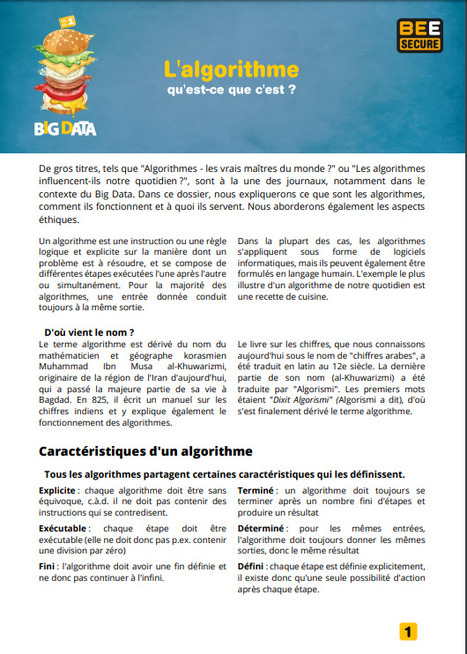
De gros titres, tels que "Algorithmes - les vrais maîtres du monde ?" ou "Les algorithmes influencent-ils notre quotidien ?", sont à la une des journaux, notamment dans le contexte du Big Data. Dans ce dossier, nous expliquerons ce que sont les algorithmes, comment ils fonctionnent et à quoi ils servent. Nous aborderons également les aspects éthiques.

Un algorithme est une instruction ou une règle logique et explicite sur la manière dont un problème est à résoudre, et se compose de différentes étapes exécutées l'une après l'autre ou simultanément. Pour la majorité des algorithmes, une entrée donnée conduit toujours à la même sortie. Dans la plupart des cas, les algorithmes s'appliquent sous forme de logiciels informatiques, mais ils peuvent également être formulés en langage humain. L'exemple le plus illustre d'un algorithme de notre quotidien est une recette de cuisine.

D'où vient le nom ?


Le terme algorithme est dérivé du nom du mathématicien et géographe korasmien Muhammad Ibn Musa al-Khuwarizmi, originaire de la région de l'Iran d'aujourd'hui, qui a passé la majeure partie de sa vie à Bagdad. En 825, il écrit un manuel sur les chiffres indiens et y explique également le fonctionnement des algorithmes. Le livre sur les chiffres, que nous connaissons aujourd'hui sous le nom de "chiffres arabes", a été traduit en latin au 12e siècle. La dernière partie de son nom (al-Khuwarizmi) a été traduite par "Algorismi". Les premiers mots étaient "Dixit Algorismi" (Algorismi a dit), d'où s'est finalement dérivé le terme algorithme.


Learn more / En savoir plus / Mehr erfahren:


https://www.scoop.it/t/21st-century-learning-and-teaching/?&tag=Algorithm


https://www.scoop.it/t/21st-century-learning-and-teaching/?&tag=Big+Data...


Gust MEES's insight:
De gros titres, tels que "Algorithmes - les vrais maîtres du monde ?" ou "Les algorithmes influencent-ils notre quotidien ?", sont à la une des journaux, notamment dans le contexte du Big Data. Dans ce dossier, nous expliquerons ce que sont les algorithmes, comment ils fonctionnent et à quoi ils servent. Nous aborderons également les aspects éthiques.

Un algorithme est une instruction ou une règle logique et explicite sur la manière dont un problème est à résoudre, et se compose de différentes étapes exécutées l'une après l'autre ou simultanément. Pour la majorité des algorithmes, une entrée donnée conduit toujours à la même sortie. Dans la plupart des cas, les algorithmes s'appliquent sous forme de logiciels informatiques, mais ils peuvent également être formulés en langage humain. L'exemple le plus illustre d'un algorithme de notre quotidien est une recette de cuisine.

D'où vient le nom ?


Le terme algorithme est dérivé du nom du mathématicien et géographe korasmien Muhammad Ibn Musa al-Khuwarizmi, originaire de la région de l'Iran d'aujourd'hui, qui a passé la majeure partie de sa vie à Bagdad. En 825, il écrit un manuel sur les chiffres indiens et y explique également le fonctionnement des algorithmes. Le livre sur les chiffres, que nous connaissons aujourd'hui sous le nom de "chiffres arabes", a été traduit en latin au 12e siècle. La dernière partie de son nom (al-Khuwarizmi) a été traduite par "Algorismi". Les premiers mots étaient "Dixit Algorismi" (Algorismi a dit), d'où s'est finalement dérivé le terme algorithme.


Learn more / En savoir plus / Mehr erfahren:


https://www.scoop.it/t/21st-century-learning-and-teaching/?&tag=Algorithm


https://www.scoop.it/t/21st-century-learning-and-teaching/?&tag=Big+Data...


No comment yet.
Scooped by Gust MEES
February 12, 2018 12:52 PM
Scoop.it!

FIRST Global Challenge | International robotics challenge to ignite a passion for STEM

FIRST Global Challenge | International robotics challenge to ignite a passion for  STEM | 21st Century Learning and Teaching | Scoop.it

Mexico City: Each year, the FIRST Global Challenge is held in a different country. This year's challenge will be hosted in Mexico City, Mexico. Hear the announcement from our founder himself -- Dean Kamen. https://youtu.be/i0KJfh-3_ck More information coming soon!


Learn more / En savoir plus / Mehr erfahren:


https://www.scoop.it/t/21st-century-learning-and-teaching/?&tag=First+Global


Gust MEES's insight:

Mexico City: Each year, the FIRST Global Challenge is held in a different country. This year's challenge will be hosted in Mexico City, Mexico. Hear the announcement from our founder himself -- Dean Kamen. https://youtu.be/i0KJfh-3_ck More information coming soon!


Learn more / En savoir plus / Mehr erfahren:


https://www.scoop.it/t/21st-century-learning-and-teaching/?&tag=First+Global


No comment yet.
Scooped by Gust MEES
February 11, 2018 9:37 AM
Scoop.it!

6 surprisingly simple ways to become a more confident writer | #Blogs #Blogging #Writing #Curation

6 surprisingly simple ways to become a more confident writer | #Blogs #Blogging #Writing #Curation | 21st Century Learning and Teaching | Scoop.it
There’s an epidemic sweeping through the content writing industry. People are spending more time curating other people’s content than crafting their own original pieces. In a world where it’s easy to simply grab something from someone else and share it with your audience, you may be falling prey to this dangerous trend.

You may assume that convenience is the primary issue; however, a lack of confidence may be to blame.

How a lack of confidence hurts your writing
Confidence is a fickle thing. One minute, you can have all the confidence in the world and the next moment it’s gone. There are so many different factors in play and the average person has a pretty poor outlook on their potential.

“Often people think of confidence as something that the lucky few are born with and the rest are left wishing for. Not true,” business consultant Margie Warrell assures people. “Confidence is not a fixed attribute; it’s the outcome of the thoughts we think and the actions we take. No more; no less. It is not based on your actual ability to succeed at a task but your belief in your ability to succeed.”

When you look at writing, in particular, this means confidence isn’t tied to your talent as a writer, but in your belief that you can be successful. Once you look at it through this lens, it becomes apparent that a lack of confidence can have a tremendously negative impact on your efforts.


Learn more / En savoir plus / Mehr erfahren:


https://gustmees.wordpress.com/?s=blogs


https://gustmees.wordpress.com/?s=curation


Gust MEES's insight:
There’s an epidemic sweeping through the content writing industry. People are spending more time curating other people’s content than crafting their own original pieces. In a world where it’s easy to simply grab something from someone else and share it with your audience, you may be falling prey to this dangerous trend.

You may assume that convenience is the primary issue; however, a lack of confidence may be to blame.

How a lack of confidence hurts your writing
Confidence is a fickle thing. One minute, you can have all the confidence in the world and the next moment it’s gone. There are so many different factors in play and the average person has a pretty poor outlook on their potential.

“Often people think of confidence as something that the lucky few are born with and the rest are left wishing for. Not true,” business consultant Margie Warrell assures people. “Confidence is not a fixed attribute; it’s the outcome of the thoughts we think and the actions we take. No more; no less. It is not based on your actual ability to succeed at a task but your belief in your ability to succeed.”

When you look at writing, in particular, this means confidence isn’t tied to your talent as a writer, but in your belief that you can be successful. Once you look at it through this lens, it becomes apparent that a lack of confidence can have a tremendously negative impact on your efforts.


Learn more / En savoir plus / Mehr erfahren:


https://gustmees.wordpress.com/?s=blogs


https://gustmees.wordpress.com/?s=curation


No comment yet.
Scooped by Gust MEES
February 8, 2018 3:16 PM
Scoop.it!

LEGO: Roboterbausatz Boost im Test |  #Coding #Maker #MakerED #PracTICE #MakerSpaces 

LEGO: Roboterbausatz Boost im Test |  #Coding #Maker #MakerED #PracTICE #MakerSpaces  | 21st Century Learning and Teaching | Scoop.it
Bisher waren Legos Roboterbausätze teuer und lockten mit ihrem Ingenieurs-Charme bestenfalls Erstsemester an. Boost soll nun auch die Jüngsten an das Programmieren heranführen.

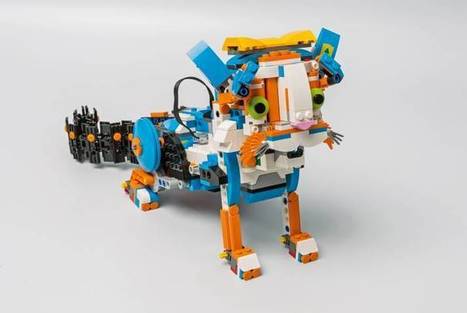
Lust auf Lego? Das Set 17101 – Code-Name „Boost“ – hat einiges zu bieten. Herzstück ist der Move-Hub – ein per Bluetooth LE ansprechbarer Controller, an den sich bis zu zwei zusätzliche Aktoren/Sensoren anschließen lassen; er wird mit sechs AAA-Batterien bestückt. Zwei Motoren, ein Gyrosensor und eine RGB-LED sind im Move-Hub bereits integriert. Ein weiterer Motor und ein kombinierter Farb-/Entfernungssensor sind im Set enthalten. Der Move-Hub bildet die Basis für fünf spannende Grundmodelle vom klassischen Roboter über eine Technokatze bis zur Legofabrik. Die Modelle lassen sich per App in Bewegung setzen und programmieren.


Learn more / En savoir plus / Mehr erfahren:


https://www.scoop.it/t/21st-century-learning-and-teaching/?&tag=LEGO


Gust MEES's insight:
Bisher waren Legos Roboterbausätze teuer und lockten mit ihrem Ingenieurs-Charme bestenfalls Erstsemester an. Boost soll nun auch die Jüngsten an das Programmieren heranführen.

Lust auf Lego? Das Set 17101 – Code-Name „Boost“ – hat einiges zu bieten. Herzstück ist der Move-Hub – ein per Bluetooth LE ansprechbarer Controller, an den sich bis zu zwei zusätzliche Aktoren/Sensoren anschließen lassen; er wird mit sechs AAA-Batterien bestückt. Zwei Motoren, ein Gyrosensor und eine RGB-LED sind im Move-Hub bereits integriert. Ein weiterer Motor und ein kombinierter Farb-/Entfernungssensor sind im Set enthalten. Der Move-Hub bildet die Basis für fünf spannende Grundmodelle vom klassischen Roboter über eine Technokatze bis zur Legofabrik. Die Modelle lassen sich per App in Bewegung setzen und programmieren.


Learn more / En savoir plus / Mehr erfahren:


https://www.scoop.it/t/21st-century-learning-and-teaching/?&tag=LEGO


No comment yet.
Scooped by Gust MEES
February 6, 2018 11:02 AM
Scoop.it!

First Steps with the Arduino-UNO R3 | Maker, MakerED, Coding | SMART V3.0 ROBOT CAR Kit | #MakerSpaces #PracTICE 

First Steps with the Arduino-UNO R3 | Maker, MakerED, Coding | SMART V3.0 ROBOT CAR Kit | #MakerSpaces #PracTICE  | 21st Century Learning and Teaching | Scoop.it

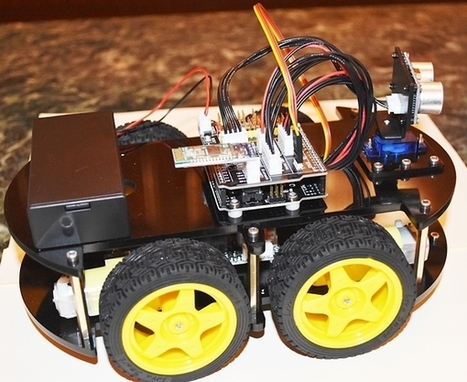
First impressions . . The Kit is delivered in a well organized plastic box with a poster inside of all the parts with description and a CD with the PDF Manual, Code and Libraries. The manual in PDF format is actually very well documented an nobody should have problems to follow the instructions.…


Learn more / En savoir plus / Mehr erfahren:


https://www.scoop.it/t/21st-century-learning-and-teaching/?&tag=ARDUINO


https://gustmees.wordpress.com/?s=arduino


Gust MEES's insight:

First impressions . . The Kit is delivered in a well organized plastic box with a poster inside of all the parts with description and a CD with the PDF Manual, Code and Libraries. The manual in PDF format is actually very well documented an nobody should have problems to follow the instructions.…


Learn more / En savoir plus / Mehr erfahren:


https://www.scoop.it/t/21st-century-learning-and-teaching/?&tag=ARDUINO


https://gustmees.wordpress.com/?s=arduino


No comment yet.
Scooped by Gust MEES
February 17, 2018 11:08 AM
Scoop.it!

Arduino Comparison Guide - learn.sparkfun.com | #Coding #Maker #MakerED #MakerSpaces #Creativity #LEARNingByDoing 

Arduino Comparison Guide - learn.sparkfun.com | #Coding #Maker #MakerED #MakerSpaces #Creativity #LEARNingByDoing  | 21st Century Learning and Teaching | Scoop.it

Introduction
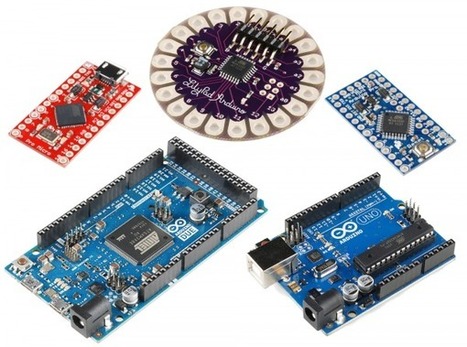
Let’s face it, there are a a lot of different Arduino boards out there. How do you decide which one you need for your project? In this tutorial, we’ll take a look at the diverse world of Arduino boards. We’ll begin with a tabular overview of the features each board has. Then we’ll delve deeper into each board, examining the pros, cons, and example use-cases.

Arduino is an open-source electronics prototyping platform based on flexible, easy-to-use hardware and software. It’s intended for artists, designers, hobbyists, and anyone interested in creating interactive objects or environments. Or more simply, you load on some code and it can read sensors, perform actions based on inputs from buttons, control motors, and accept shields to further expand it’s capabilities. Really, you can do almost anything.

All Arduino boards have one thing in common: they are programmed through the Arduino IDE. This is the software that allows you to write and upload code. Beyond that, there can be a lot of differences. The number of inputs and outputs (how many sensors, LEDs, and buttons you can use on a single board), speed, operating voltage, and form factor are just a few of the variables. Some boards are designed to be embedded and have no programming interface (hardware) which you would need to buy separately. Some can run directly from a 3.7V battery, others need at least 5V. Check the chart on the next page to find the right Arduino for your project.

Learn more / En savoir plus / Mehr erfahren:


https://www.scoop.it/t/21st-century-learning-and-teaching/?&tag=Coding


https://www.scoop.it/t/21st-century-learning-and-teaching/?&tag=makerspace


Gust MEES's insight:

Introduction
Let’s face it, there are a a lot of different Arduino boards out there. How do you decide which one you need for your project? In this tutorial, we’ll take a look at the diverse world of Arduino boards. We’ll begin with a tabular overview of the features each board has. Then we’ll delve deeper into each board, examining the pros, cons, and example use-cases.

Arduino is an open-source electronics prototyping platform based on flexible, easy-to-use hardware and software. It’s intended for artists, designers, hobbyists, and anyone interested in creating interactive objects or environments. Or more simply, you load on some code and it can read sensors, perform actions based on inputs from buttons, control motors, and accept shields to further expand it’s capabilities. Really, you can do almost anything.

All Arduino boards have one thing in common: they are programmed through the Arduino IDE. This is the software that allows you to write and upload code. Beyond that, there can be a lot of differences. The number of inputs and outputs (how many sensors, LEDs, and buttons you can use on a single board), speed, operating voltage, and form factor are just a few of the variables. Some boards are designed to be embedded and have no programming interface (hardware) which you would need to buy separately. Some can run directly from a 3.7V battery, others need at least 5V. Check the chart on the next page to find the right Arduino for your project.

Learn more / En savoir plus / Mehr erfahren:


https://www.scoop.it/t/21st-century-learning-and-teaching/?&tag=Coding


https://www.scoop.it/t/21st-century-learning-and-teaching/?&tag=makerspace


No comment yet.
Scooped by Gust MEES
February 17, 2018 8:26 AM
Scoop.it!

DIYODE Magazine is a print and digital publication supporting electronics enthusiasts and makers | #Coding #MakerED #MakerSpaces

DIYODE Magazine is a print and digital publication supporting electronics enthusiasts and makers | #Coding #MakerED #MakerSpaces | 21st Century Learning and Teaching | Scoop.it

DIYODE Magazine is a print and digital publication supporting electronics enthusiasts and makers.


Learn more / En savoir plus / Mehr erfahren:


https://www.scoop.it/t/21st-century-learning-and-teaching/?&tag=Coding


https://www.scoop.it/t/21st-century-learning-and-teaching/?&tag=makerspace


Gust MEES's insight:

DIYODE Magazine is a print and digital publication supporting electronics enthusiasts and makers.


Learn more / En savoir plus / Mehr erfahren:


https://www.scoop.it/t/21st-century-learning-and-teaching/?&tag=Coding


https://www.scoop.it/t/21st-century-learning-and-teaching/?&tag=makerspace


No comment yet.
Scooped by Gust MEES
February 17, 2018 7:04 AM
Scoop.it!

The FinTech Big 5: RegTech, Blockchain, InsurTech, AI and Financial Inclusion

The FinTech Big 5: RegTech, Blockchain, InsurTech, AI and Financial Inclusion


Going in to 2018, we have chosen five areas of interest to focus on. Each represents a vital area of innovation in the financial industry, and has a particular relevance to Luxembourg’s thriving financial technology ecosystem.

Each week we will be choosing one of the topics to focus on, both in the content we share on social media, but also in a dedicated newsletter looking at the top five stories from that week. First, let’s introduce the topics:


1. Regulatory Technology (RegTech)

2. Blockchain

3. Insurance Technology (InsurTech)

4. Artificial Intelligence

5. Financial Inclusion

Learn more / En savoir plus / Mehr erfahren:


https://www.scoop.it/t/21st-century-learning-and-teaching/?&tag=blockchain


https://www.scoop.it/t/21st-century-learning-and-teaching/?&tag=AI


https://www.scoop.it/t/luxembourg-europe/?&tag=FinTech


https://www.scoop.it/t/luxembourg-europe/?&tag=LHoFT


Gust MEES's insight:

The FinTech Big 5: RegTech, Blockchain, InsurTech, AI and Financial Inclusion


Going in to 2018, we have chosen five areas of interest to focus on. Each represents a vital area of innovation in the financial industry, and has a particular relevance to Luxembourg’s thriving financial technology ecosystem.

Each week we will be choosing one of the topics to focus on, both in the content we share on social media, but also in a dedicated newsletter looking at the top five stories from that week. First, let’s introduce the topics:


1. Regulatory Technology (RegTech)

2. Blockchain

3. Insurance Technology (InsurTech)

4. Artificial Intelligence

5. Financial Inclusion

Learn more / En savoir plus / Mehr erfahren:


https://www.scoop.it/t/21st-century-learning-and-teaching/?&tag=blockchain


https://www.scoop.it/t/21st-century-learning-and-teaching/?&tag=AI


https://www.scoop.it/t/luxembourg-europe/?&tag=FinTech


https://www.scoop.it/t/luxembourg-europe/?&tag=LHoFT


No comment yet.
Scooped by Gust MEES
February 16, 2018 6:40 PM
Scoop.it!

Thinking Classroom | #ModernEDU #ModernLEARNing #Communication #SoftSkills #Analyzing 

Thinking Classroom | #ModernEDU #ModernLEARNing #Communication #SoftSkills #Analyzing  | 21st Century Learning and Teaching | Scoop.it

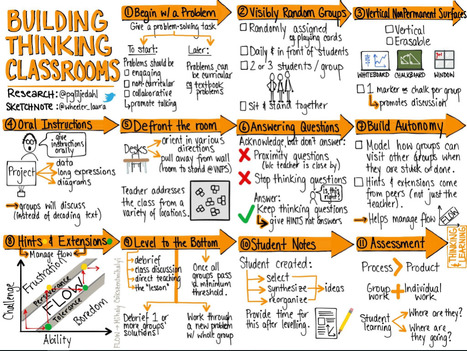
THINKING CLASSROOM PHILOSOPHY IN 4 QUESTIONS


What ?

Teach learners how to think and learn Discover, value and use learners' strengths and interests
Combine the best new educational practices with the best traditional ones
Build and enrich learning relationships
Develop growth mindset characteristics and grit


Why ?

Because learners need knowledge, flexible skills and grit to succeed
Because future economic & life success depends on skills and creativity
Because everyone learns in a unique way
Because education must continually prepare learners for an exciting but uncertain future
Because of Article 13a, UN Convention on the Rights of the Child


How ?

By continually increasing the effectiveness of teaching
By teaching for character as well as content
By valuing each learner for what they do well
By educating for skills, character and values as well as knowledge
By preparing learners for their futures not our pasts
By valuing, supporting and resourcing all educators


What if...

All learners were engaged, excited and interested in their lessons?
'School' evolved to match different lifestyles and different learning styles?
Teachers had time to enjoy their profession and real opportunities to thrive?
There was only one initiative and it was called "Learning"?


Learn more / En savoir plus / Mehr erfahren:


https://www.scoop.it/t/21st-century-learning-and-teaching/?&tag=Soft+Skills


http://peterliljedahl.com/wp-content/uploads/Building-Thinking-Classrooms-Feb-14-20151.pdf


Gust MEES's insight:

THINKING CLASSROOM PHILOSOPHY IN 4 QUESTIONS


What ?

Teach learners how to think and learn Discover, value and use learners' strengths and interests
Combine the best new educational practices with the best traditional ones
Build and enrich learning relationships
Develop growth mindset characteristics and grit


Why ?

Because learners need knowledge, flexible skills and grit to succeed
Because future economic & life success depends on skills and creativity
Because everyone learns in a unique way
Because education must continually prepare learners for an exciting but uncertain future
Because of Article 13a, UN Convention on the Rights of the Child


How ?

By continually increasing the effectiveness of teaching
By teaching for character as well as content
By valuing each learner for what they do well
By educating for skills, character and values as well as knowledge
By preparing learners for their futures not our pasts
By valuing, supporting and resourcing all educators


What if...

All learners were engaged, excited and interested in their lessons?
'School' evolved to match different lifestyles and different learning styles?
Teachers had time to enjoy their profession and real opportunities to thrive?
There was only one initiative and it was called "Learning"?


Learn more / En savoir plus / Mehr erfahren:


https://www.scoop.it/t/21st-century-learning-and-teaching/?&tag=Soft+Skills


No comment yet.
Scooped by Gust MEES
February 16, 2018 5:06 PM
Scoop.it!

The 7 Cs of an Innovative Environment | #ModernEDU #ModernLEARNing #Creativity

The 7 Cs of an Innovative Environment | #ModernEDU #ModernLEARNing #Creativity | 21st Century Learning and Teaching | Scoop.it

Learn more / En savoir plus / Mehr erfahren:


https://www.scoop.it/t/21st-century-learning-and-teaching/?&tag=7+Cs+of+Effective+21st+Century+Teaching


Gust MEES's insight:

Learn more / En savoir plus / Mehr erfahren:


https://www.scoop.it/t/21st-century-learning-and-teaching/?&tag=7+Cs+of+Effective+21st+Century+Teaching


No comment yet.
Scooped by Gust MEES
February 16, 2018 1:02 PM
Scoop.it!

4D Systems | 4D-Workshop-4-IDE | #Coding #Maker #MakerED #MakerSpaces 

Introducing 4D Systems' All New Workshop4 IDE Supports multiple development environments, to cater for different user requirements and skill level. Workshop4 is a comprehensive software IDE for Microsoft Windows that provides an integrated software development platform for all of the 4D family of processors and modules.


The IDE combines the Editor, Compiler, Linker and Downloader to develop complete 4DGL application code. All user application code is developed within the Workshop4 IDE. Workshop4 includes four development environments, for the user to choose based on application requirements or even user skill level. Designer This environment enables the user to write 4DGL code in its natural form to program the display module. ViSi - Genie An advanced environment that doesn’t require any 4DGL coding at all, it is all done automatically for you.


Simply lay the display out with the objects you want (similar to ViSi), set the events to drive them and the code is written for you automatically. ViSi -Genie provides the latest rapid development experience from 4D Systems. ViSi A visual programming experience that enables drag-and-drop type placement of objects to assist with 4DGL code generation and allows the user to visualise how the display will look while being developed.


Serial This environment is also provided to transform the display module into a slave serial display module, allowing the user to control the display from any host microcontroller or device with a serial port. 


Learn more / En savoir plus / Mehr erfahren:


https://www.scoop.it/t/21st-century-learning-and-teaching/?&tag=ARDUINO


https://www.scoop.it/t/21st-century-learning-and-teaching/?&tag=Visuino+-+Visual+Development+for+Arduino


https://www.scoop.it/t/21st-century-learning-and-teaching/?&tag=4D+Systems


Gust MEES's insight:
Introducing 4D Systems' All New Workshop4 IDE Supports multiple development environments, to cater for different user requirements and skill level. Workshop4 is a comprehensive software IDE for Microsoft Windows that provides an integrated software development platform for all of the 4D family of processors and modules.


The IDE combines the Editor, Compiler, Linker and Downloader to develop complete 4DGL application code. All user application code is developed within the Workshop4 IDE. Workshop4 includes four development environments, for the user to choose based on application requirements or even user skill level. Designer This environment enables the user to write 4DGL code in its natural form to program the display module. ViSi - Genie An advanced environment that doesn’t require any 4DGL coding at all, it is all done automatically for you.


Simply lay the display out with the objects you want (similar to ViSi), set the events to drive them and the code is written for you automatically. ViSi -Genie provides the latest rapid development experience from 4D Systems. ViSi A visual programming experience that enables drag-and-drop type placement of objects to assist with 4DGL code generation and allows the user to visualise how the display will look while being developed.


Serial This environment is also provided to transform the display module into a slave serial display module, allowing the user to control the display from any host microcontroller or device with a serial port. 


Learn more / En savoir plus / Mehr erfahren:


https://www.scoop.it/t/21st-century-learning-and-teaching/?&tag=ARDUINO


https://www.scoop.it/t/21st-century-learning-and-teaching/?&tag=Visuino+-+Visual+Development+for+Arduino


https://www.scoop.it/t/21st-century-learning-and-teaching/?&tag=4D+Systems


No comment yet.
Scooped by Gust MEES
February 16, 2018 9:41 AM
Scoop.it!

Arduino: Connect 4D Systems ViSi Genie Smart Display | #Coding #Maker #MakerED #MakerSpaces 

Arduino: Connect 4D Systems ViSi Genie Smart Display | #Coding #Maker #MakerED #MakerSpaces  | 21st Century Learning and Teaching | Scoop.it
Connect 4D Systems ViSi Genie smart Touch Screen Display to Arduino, and program it - Quick and Easy!. Find this and other hardware projects on Hackster.io.


Learn more / En savoir plus / Mehr erfahren:


https://www.scoop.it/t/21st-century-learning-and-teaching/?&tag=ARDUINO


https://www.scoop.it/t/21st-century-learning-and-teaching/?&tag=Visuino+-+Visual+Development+for+Arduino


Gust MEES's insight:
Connect 4D Systems ViSi Genie smart Touch Screen Display to Arduino, and program it - Quick and Easy!. Find this and other hardware projects on Hackster.io.


Learn more / En savoir plus / Mehr erfahren:


https://www.scoop.it/t/21st-century-learning-and-teaching/?&tag=ARDUINO


https://www.scoop.it/t/21st-century-learning-and-teaching/?&tag=Visuino+-+Visual+Development+for+Arduino


No comment yet.
Scooped by Gust MEES
February 13, 2018 3:49 PM
Scoop.it!

Qu'est-ce que le Big Data – et quel impact a-t-il sur ma vie ? | Le surfeur transparent | #ICT #Privacy 

Qu'est-ce que le Big Data – et quel impact a-t-il sur ma vie ? | Le surfeur transparent | #ICT #Privacy  | 21st Century Learning and Teaching | Scoop.it
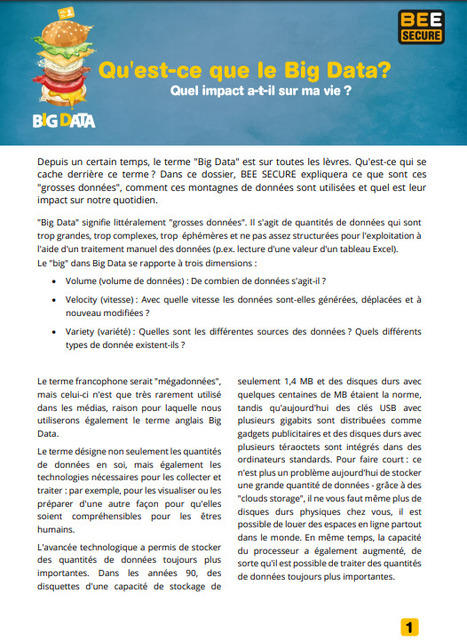
Depuis un certain temps, le terme "Big Data" est sur toutes les lèvres. Qu'est-ce qui se cache derrière ce terme ? Dans ce dossier, BEE SECURE expliquera ce que sont ces "grosses données", comment ces montagnes de données sont utilisées et quel est leur impact sur notre quotidien.

"Big Data" signifie littéralement "grosses données". Il s'agit de quantités de données qui sont trop grandes, trop complexes, trop éphémères et ne pas assez structurées pour l'exploitation à l'aide d'un traitement manuel des données (p.ex. lecture d'une valeur d'un tableau Excel). Le "big" dans Big Data se rapporte à trois dimensions :

Volume (volume de données) : De combien de données s'agit-il ?
Velocity (vitesse) : Avec quelle vitesse les données sont-elles générées, déplacées et à nouveau modifiées ?
Variety (variété) : Quelles sont les différentes sources des données ? Quels différents types de donnée existent-ils ?
Le terme francophone serait "mégadonnées", mais celui-ci n'est que très rarement utilisé dans les médias, raison pour laquelle nous utiliserons également le terme anglais Big Data.

Le terme désigne non seulement les quantités de données en soi, mais également les technologies nécessaires pour les collecter et traiter : par exemple, pour les visualiser ou les préparer d'une autre façon pour qu'elles soient compréhensibles pour les êtres humains.

L'avancée technologique a permis de stocker des quantités de données toujours plus importantes. Dans les années 90, des disquettes d'une capacité de stockage de seulement 1,4 MB et des disques durs avec quelques centaines de MB étaient la norme, tandis qu'aujourd'hui des clés USB avec plusieurs gigabits sont distribuées comme gadgets publicitaires et des disques durs avec plusieurs téraoctets sont intégrés dans des ordinateurs standards. Pour faire court : ce n'est plus un problème aujourd'hui de stocker une grande quantité de données - grâce à des "clouds storage", il ne vous faut même plus de disques durs physiques chez vous, il est possible de louer des espaces en ligne partout dans le monde. En même temps, la capacité du processeur a également augmenté, de sorte qu'il est possible de traiter des quantités de données toujours plus importantes.

D'où viennent les données du Big Data ?
De manière générale, les données considérées comme "Big Data" peuvent venir de tous les domaines de vie imaginables pour lesquels des données sont nécessaires. De manière générale, nous ne devons pas oublier en tant qu'utilisateurs que toutes les données qui peuvent être collectées seront en effet collectées. La liste suivante n'est donc en aucun cas exhaustive, mais elle offre un aperçu des sources de données du Big Data :


Learn more / En savoir plus / Mehr erfahren:


https://www.scoop.it/t/21st-century-learning-and-teaching/?&tag=Algorithm


https://www.scoop.it/t/21st-century-learning-and-teaching/?&tag=Big+Data...


Gust MEES's insight:
Depuis un certain temps, le terme "Big Data" est sur toutes les lèvres. Qu'est-ce qui se cache derrière ce terme ? Dans ce dossier, BEE SECURE expliquera ce que sont ces "grosses données", comment ces montagnes de données sont utilisées et quel est leur impact sur notre quotidien.

"Big Data" signifie littéralement "grosses données". Il s'agit de quantités de données qui sont trop grandes, trop complexes, trop éphémères et ne pas assez structurées pour l'exploitation à l'aide d'un traitement manuel des données (p.ex. lecture d'une valeur d'un tableau Excel). Le "big" dans Big Data se rapporte à trois dimensions :

Volume (volume de données) : De combien de données s'agit-il ?
Velocity (vitesse) : Avec quelle vitesse les données sont-elles générées, déplacées et à nouveau modifiées ?
Variety (variété) : Quelles sont les différentes sources des données ? Quels différents types de donnée existent-ils ?
Le terme francophone serait "mégadonnées", mais celui-ci n'est que très rarement utilisé dans les médias, raison pour laquelle nous utiliserons également le terme anglais Big Data.

Le terme désigne non seulement les quantités de données en soi, mais également les technologies nécessaires pour les collecter et traiter : par exemple, pour les visualiser ou les préparer d'une autre façon pour qu'elles soient compréhensibles pour les êtres humains.

L'avancée technologique a permis de stocker des quantités de données toujours plus importantes. Dans les années 90, des disquettes d'une capacité de stockage de seulement 1,4 MB et des disques durs avec quelques centaines de MB étaient la norme, tandis qu'aujourd'hui des clés USB avec plusieurs gigabits sont distribuées comme gadgets publicitaires et des disques durs avec plusieurs téraoctets sont intégrés dans des ordinateurs standards. Pour faire court : ce n'est plus un problème aujourd'hui de stocker une grande quantité de données - grâce à des "clouds storage", il ne vous faut même plus de disques durs physiques chez vous, il est possible de louer des espaces en ligne partout dans le monde. En même temps, la capacité du processeur a également augmenté, de sorte qu'il est possible de traiter des quantités de données toujours plus importantes.

D'où viennent les données du Big Data ?
De manière générale, les données considérées comme "Big Data" peuvent venir de tous les domaines de vie imaginables pour lesquels des données sont nécessaires. De manière générale, nous ne devons pas oublier en tant qu'utilisateurs que toutes les données qui peuvent être collectées seront en effet collectées. La liste suivante n'est donc en aucun cas exhaustive, mais elle offre un aperçu des sources de données du Big Data :


Learn more / En savoir plus / Mehr erfahren:


https://www.scoop.it/t/21st-century-learning-and-teaching/?&tag=Algorithm


https://www.scoop.it/t/21st-century-learning-and-teaching/?&tag=Big+Data...


No comment yet.
Scooped by Gust MEES
February 12, 2018 6:33 PM
Scoop.it!

11 Ways to Make Learning Easier | Social Learning | #ModernLEARNing #SocialMedia #PLN #PKM

11 Ways to Make Learning Easier | Social Learning | #ModernLEARNing #SocialMedia #PLN #PKM | 21st Century Learning and Teaching | Scoop.it
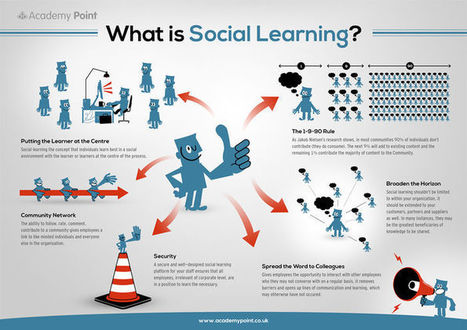
Learning doesn't have to be a "loner" experience.


Russian psychologist Lev Vygotsky suggested that knowledge is constructed through our interactions with others.
MOOCs (Massive Open Online Learning) leverage our inherent social needs by bringing people together to learn the same material in a virtual group. Students can express what they're feeling and experiencing with others in a shared space, making the learning journey more enjoyable and less daunting.


As people gain confidence, they often enjoy friendly competition with fellow learners to push themselves to compete exercises and assignments. Recognition is part of our need for building self-esteem—and some courses have gamification built in to reward student accomplishments and community helpfulness.


Learn more / En savoir plus / Mehr erfahren:


https://www.scoop.it/t/21st-century-learning-and-teaching/?tag=Social+Learning


Gust MEES's insight:
Learning doesn't have to be a "loner" experience.


Russian psychologist Lev Vygotsky suggested that knowledge is constructed through our interactions with others.
MOOCs (Massive Open Online Learning) leverage our inherent social needs by bringing people together to learn the same material in a virtual group. Students can express what they're feeling and experiencing with others in a shared space, making the learning journey more enjoyable and less daunting.


As people gain confidence, they often enjoy friendly competition with fellow learners to push themselves to compete exercises and assignments. Recognition is part of our need for building self-esteem—and some courses have gamification built in to reward student accomplishments and community helpfulness.


Learn more / En savoir plus / Mehr erfahren:


https://www.scoop.it/t/21st-century-learning-and-teaching/?tag=Social+Learning


Doug Reid's curator insight, February 13, 2018 1:23 AM

This is an interesting intro to social constructionism as it applies to eLearning.  I hope the MOOCs do what they suggest and are not just an attempt to throw jargon out there.

Koen Mattheeuws's curator insight, February 15, 2018 6:02 AM
Laat je niet overdonderen door het feit dat het er elf zijn. Van zodra je er enkele uitkiest en toepast kun je (leer)winst boeken. 
Scooped by Gust MEES
February 12, 2018 12:05 PM
Scoop.it!

5 Examples of How Big Data Analytics in Healthcare Saves Lives | #ICT #STEM 

5 Examples of How Big Data Analytics in Healthcare Saves Lives | #ICT #STEM  | 21st Century Learning and Teaching | Scoop.it

Big data analytics can play a crucial role in helping patients get healthcare at a lower cost.

Today, healthcare costs are much higher than they should be and have been growing steadily over the past 20 years. In fact, according to a study by McKinsey, healthcare expenses represent nearly 17.6% of United States’ GDP. Due to the rising cost of healthcare, it’s time to look at smart, data-driven ideas.

From autonomous cars to Internet of Things, big data has percolated almost every industry. It’s no surprise that the healthcare industry, with its large amount of data, is on the verge of big data-driven transformation, perhaps more than any other field.

Healthcare analytics has the potential to reduce treatment costs, predict outbreak of epidemics as well as preventable diseases and improve the quality of life. Here are 5 examples of how big data analytics in healthcare can help save lives.


Learn more / En savoir plus / Mehr erfahren:


https://www.scoop.it/t/21st-century-learning-and-teaching/?&tag=Big+Data...


Gust MEES's insight:

Big data analytics can play a crucial role in helping patients get healthcare at a lower cost.

Today, healthcare costs are much higher than they should be and have been growing steadily over the past 20 years. In fact, according to a study by McKinsey, healthcare expenses represent nearly 17.6% of United States’ GDP. Due to the rising cost of healthcare, it’s time to look at smart, data-driven ideas.

From autonomous cars to Internet of Things, big data has percolated almost every industry. It’s no surprise that the healthcare industry, with its large amount of data, is on the verge of big data-driven transformation, perhaps more than any other field.

Healthcare analytics has the potential to reduce treatment costs, predict outbreak of epidemics as well as preventable diseases and improve the quality of life. Here are 5 examples of how big data analytics in healthcare can help save lives.


Learn more / En savoir plus / Mehr erfahren:


https://www.scoop.it/t/21st-century-learning-and-teaching/?&tag=Big+Data... 


No comment yet.
Scooped by Gust MEES
February 9, 2018 7:33 AM
Scoop.it!

Hacking STEM: Activity Library | #Microsoft #EDUcation #Coding #Arduino #Maker #MakerED #MakerSpaces #LEARNingByDoing #Creativity 

Hacking STEM: Activity Library | #Microsoft #EDUcation #Coding #Arduino #Maker #MakerED #MakerSpaces #LEARNingByDoing #Creativity  | 21st Century Learning and Teaching | Scoop.it
Microsoft offers STEM resources to help educators engage students with project-based lessons that compliment current STEM curriculum. A small incubation team inside of Microsoft focuses on developing next generation hardware, software, and services for K-12 education. Our goal is to support teachers in building inquiry and project-based activities that embed computational and design thinking into existing middle school curriculum.


We want to democratize STEM for 21st century learners and demonstrate how all schools can provide affordable opportunities to bring science in the classroom.


Learn more / En savoir plus / Mehr erfahren:


https://www.scoop.it/t/21st-century-learning-and-teaching/?&tag=Coding


https://www.scoop.it/t/21st-century-learning-and-teaching/?&tag=makerspace


Gust MEES's insight:
Microsoft offers STEM resources to help educators engage students with project-based lessons that compliment current STEM curriculum. A small incubation team inside of Microsoft focuses on developing next generation hardware, software, and services for K-12 education. Our goal is to support teachers in building inquiry and project-based activities that embed computational and design thinking into existing middle school curriculum.


We want to democratize STEM for 21st century learners and demonstrate how all schools can provide affordable opportunities to bring science in the classroom.


Learn more / En savoir plus / Mehr erfahren:


https://www.scoop.it/t/21st-century-learning-and-teaching/?&tag=Coding


https://www.scoop.it/t/21st-century-learning-and-teaching/?&tag=makerspace


No comment yet.
Scooped by Gust MEES
February 7, 2018 6:02 PM
Scoop.it!

5 ways to get your readers to actually finish your articles | #Press #Journalism #Publishers #Blogging

5 ways to get your readers to actually finish your articles | #Press #Journalism #Publishers #Blogging | 21st Century Learning and Teaching | Scoop.it

The challenge of dwindling attention spans
There’s a well-recycled statistic out there that says the human attention span has dwindled from 12 seconds at the start of the century to less than 8 seconds today. And while some people argue the legitimacy of this data point, the reality is that attention spans certainly aren’t getting any better. The multisensory nature of the internet, social media, and other digital technologies is rewiring the human brain and making it harder for people to stay focused on singular tasks and objectives – both online and offline.


Learn more / En savoir plus / Mehr erfahren:


https://www.scoop.it/t/21st-century-learning-and-teaching/?&tag=press


https://gustmees.wordpress.com/2014/02/26/curation-the-21st-century-way-to-learn-on-its-own-pace-and-to-organize-the-learning/


Gust MEES's insight:

The challenge of dwindling attention spans
There’s a well-recycled statistic out there that says the human attention span has dwindled from 12 seconds at the start of the century to less than 8 seconds today. And while some people argue the legitimacy of this data point, the reality is that attention spans certainly aren’t getting any better. The multisensory nature of the internet, social media, and other digital technologies is rewiring the human brain and making it harder for people to stay focused on singular tasks and objectives – both online and offline.


Learn more / En savoir plus / Mehr erfahren:


https://www.scoop.it/t/21st-century-learning-and-teaching/?&tag=press


https://gustmees.wordpress.com/2014/02/26/curation-the-21st-century-way-to-learn-on-its-own-pace-and-to-organize-the-learning/


No comment yet.