


Have you just finished writing your next blog post? Then this is what you'll need to do next. Before hitting the publish button you should spell-check your article and optimize …

 Your new post is loading...
 Scoop.it! Have you just finished writing your next blog post? Then this is what you'll need to do next. Before hitting the publish button you should spell-check your article and optimize … 
No comment yet.
Sign up to comment
Scoop.it!

This year, I admitted a hard truth to myself. I wasn't having my students write enough. In an attempt to follow Kelly Gallagher’s advice that students should write more than we can assess, I decided Check also:
- https://gustmees.wordpress.com/2013/03/25/practice/ - http://gustmees.wordpress.com/2013/06/01/what-you-should-know-about-blogging/ - http://gustmees.wordpress.com/2013/06/15/ideas-for-valuable-homework-practice/ - https://gustmees.wordpress.com/2012/07/28/how-to-prepare-for-giving-a-good-course/
- http://gustmees.wordpress.com/2013/01/23/is-your-professional-development-up-to-date/
Gust MEES's insight:
Check also:
- https://gustmees.wordpress.com/2013/03/25/practice/ - http://gustmees.wordpress.com/2013/06/01/what-you-should-know-about-blogging/ - http://gustmees.wordpress.com/2013/06/15/ideas-for-valuable-homework-practice/ - https://gustmees.wordpress.com/2012/07/28/how-to-prepare-for-giving-a-good-course/
- http://gustmees.wordpress.com/2013/01/23/is-your-professional-development-up-to-date/
Scoop.it!

Why would I start educational blogging with my students ? what is its benefits on their overall learning ? These are two legitimate questions you need to ponder on before embarking on a blogging journey with your class. In fact asking critical questions should not only be limited to your tech practices with your students but should cover all your teaching practice. Through questions we discover our weak points to work on and through inquiry we unearth new inspiring fountains of knowledge.
Gust MEES's insight:

Pedeta Deutscher's comment,
May 31, 2013 11:14 PM
Blogs are a great way for students to engage in learning especially those who are reluctant to within the classroom, this is often a way for them to share their views.

Jimena Acebes Sevilla's curator insight,
June 1, 2013 12:41 PM
Razones por las que es útil crear un blog para la clase.
Scoop.it!
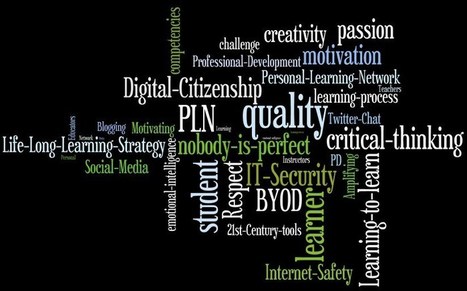
KEYWORDS FOR THIS FREE COURSE AND WHAT YOU WILL LEARN: . Blog, blogging, Flow Chart, Interests, Proactive Thinking, 21st Century Tools, motivation, engaging your learners (students), Learni...
Gust MEES's insight:
Check also:
- https://gustmees.wordpress.com/2012/07/28/how-to-prepare-for-giving-a-good-course/
- https://gustmees.wordpress.com/2013/01/23/is-your-professional-development-up-to-date/
- http://www.scoop.it/t/21st-century-learning-and-teaching?tag=Critical-Thinking
- http://www.scoop.it/t/21st-century-learning-and-teaching?tag=Creativity
- http://www.scoop.it/t/21st-century-learning-and-teaching?tag=Curation
- http://www.scoop.it/t/21st-century-learning-and-teaching?tag=Proactive+Thinking

Gust MEES's curator insight,
March 26, 2013 6:14 PM
Check also:
- https://gustmees.wordpress.com/2012/07/28/how-to-prepare-for-giving-a-good-course/
- https://gustmees.wordpress.com/2013/01/23/is-your-professional-development-up-to-date/
- http://www.scoop.it/t/21st-century-learning-and-teaching?tag=Critical-Thinking
- http://www.scoop.it/t/21st-century-learning-and-teaching?tag=Creativity
- http://www.scoop.it/t/21st-century-learning-and-teaching?tag=Curation
- http://www.scoop.it/t/21st-century-learning-and-teaching?tag=Proactive+Thinking
Scoop.it!

A cultural holiday in Cologne (Germany) in 2011. Visiting the Tutankhamun Exhibition in Cologne (Germany) in January 2011. A small report about that exhibition and about Cologne in Germany as also ...
Gust MEES's insight:
Check out the Picas Slideshow, beautiful images, fascinating history of Egypt... Find out how YOU can teach your students for creating a blog and display the images and videos as shown in this blog (as an example)...
Let flow your creativity and your students...
Scoop.it!

cc licensed ( BY ) flickr photo shared by cambodia4kidsorg As a school division, we are deep into developing blogs as portfolios with our students. To do this with approximately 10,000 students is...
Gust MEES's insight:
Check this out, please, very interesting...
Scoop.it!

I have always told my clients that every blog post needs to have at least one image, and I stick to that rule myself. Here are ten benefits to making sure that every time you write a blog post, you include at least one great image.
Scoop.it!

What Does Student Blogging Exactly Do?
Read more, a MUST: http://www.pernilleripp.com/2012/10/what-does-student-blogging-exactly-do.html
Scoop.it!

A blog without an audience is like...a library without books, a car without an engine, Beyonce without a ring.
The idea is deceptively simple. Four teachers agree to have their students comment on each other's blogs in an organized fashion. Each week, one of the four gets a turn as the spotlight class. The other three classes visit and leave comments. Over the course of a month, every student's work gets read and commented upon. Along the way, students learn about respectful online communication. They may decide to revise their thinking if a commenter shares a perspective they haven't considered.
Read more, very interesting: http://www.edutopia.org/blog/quad-blogging-technology-classroom-suzie-boss
Scoop.it!

George Couros (@gcouros on Twitter) is the Division Principal of Innovative Teaching and Learning for Parkland School Division, a large district near Edmonton, Alberta.
As many school administrators are enjoying their summer break, we all tend to think of ways that we can make our school better in the upcoming year. Often, I point school principals and district leaders to a powerful post by Will Richardson that helps us point the finger right at ourselves when we are looking to push our school ahead. Richardson states:
"Meaningful change ain't gonna happen for our kids if we're not willing to invest in it for ourselves first. At the heart, it's not about schools . . . it's about us."
Read more: http://www.edutopia.org/blog/21st-century-PLNs-school-leaders-george-couros
Scoop.it!

Truth be told, his visual describing the ‘Perfect Blog Post‘ will give you some excellent insights on how to structure your content in a way that gets people engaged and ready to take action.
Read more: http://www.famousbloggers.net/perfect-blog-post-infographic.html
Scoop.it!

Everyone thinks their blog post is the most entertaining, informative, must-know compilation of research and Internet fodder on the planet. And that’s good, to a point—everyone should be lucky to have that much confidence. But in reality? Your blog post isn’t about you; it’s about everyone you want to read it. Based on this great Infographic there are 15 questions to ask before you hit that “publish” button. Chloe Thompson of TMG has added a few to the mix.
Consider this as your blogging checklist: [Part 1.] 1. What was the main point of this post? Have I made it clearly? If you can’t articulate your main points in the time it takes to brew a coffee, take some time to hone in on your point. Content, fashion, product reviews – content consumers need to know WHY they’re reading your post, and they need to know quickly. 2. Have I written something useful? Think to yourself: Why are others going to share my post? 3. Have I written something unique? Do yourself a 5-second favor before you hit publish and Google your topic. Has someone else written it, and done a better job? Rework yours until it’s different, relevant and much better than your neighbor’s. 4. Has this post taken me closer to or further away from my blog’s goals? Does it reflect my blog’s brand? Every blog has a voice, and a purpose. If your blog post doesn’t suit the current blog’s voice, it decreases the connection you’ve made with your readers. Plain and simple. 5. Have I used a title that draws people into my post?
By Chloe Thompson - http://bit.ly/L73w7z Source: http://bit.ly/KHggvA Infographic - http://bit.ly/Qxym7V Via maxOz
Scoop.it!

Alimenter un blog, ça prend beaucoup de temps et c'est la raison pour laquelle il est indispensable de savoir optimiser sa veille technologique.
En savoir plus : http://www.fredzone.org/10-conseils-pour-optimiser-sa-veille-technologique-554#
|
Scoop.it!

If you have a web service that supports remote users, you will know that malevolent login attempts are an everyday occurrence.
Gust MEES's insight:
Scoop.it!

With WordPress powering more than 60 million websites worldwide, anything to improve the safety and security of its users is to be welcomed.
Scoop.it!
KEYWORDS FOR THIS FREE COURSE AND WHAT YOU WILL LEARN: . Blog, blogging, Flow Chart, Interests, Proactive Thinking, 21st Century Tools, motivation, engaging your learners (students), Learni...
Gust MEES's insight:
Check also:
- https://gustmees.wordpress.com/2012/07/28/how-to-prepare-for-giving-a-good-course/
- https://gustmees.wordpress.com/2013/01/23/is-your-professional-development-up-to-date/
- http://www.scoop.it/t/21st-century-learning-and-teaching?tag=Critical-Thinking
- http://www.scoop.it/t/21st-century-learning-and-teaching?tag=Creativity
- http://www.scoop.it/t/21st-century-learning-and-teaching?tag=Curation
- http://www.scoop.it/t/21st-century-learning-and-teaching?tag=Proactive+Thinking
Gust MEES's curator insight,
April 8, 2013 11:41 AM
Check also:
- https://gustmees.wordpress.com/2012/07/28/how-to-prepare-for-giving-a-good-course/
- https://gustmees.wordpress.com/2013/01/23/is-your-professional-development-up-to-date/
- http://www.scoop.it/t/21st-century-learning-and-teaching?tag=Critical-Thinking
- http://www.scoop.it/t/21st-century-learning-and-teaching?tag=Creativity
- http://www.scoop.it/t/21st-century-learning-and-teaching?tag=Curation
- http://www.scoop.it/t/21st-century-learning-and-teaching?tag=Proactive+Thinking
Scoop.it!

10 great student blogs to inspire students and schools to start blogging. Use blogging to build ongoing writing, design and technology skills!
Gust MEES's insight:
Check them out and learn more...
Scoop.it!

You've always wanted to write, and blogging is a great first step. Here's how to get started.
Gust MEES's insight:
A MUST read!
Scoop.it!

It has been a very busy few weeks starting back at school for another year. I have enjoyed getting to know my students and starting the routine for a new school year. In the first few days, I have ...
Gust MEES's insight:
I follow Ashley since long on WordPress and I recommend her for her very good view of how being a teacher, follow her also and exchange some practices, I encourage you to do so... She is doing a great job on her blog, follow it...
Scoop.it!

The Teach100 is an education blog ranking application that it updated daily to show you the most current, popular education news.
Gust MEES's insight:
Very interesting...
Scoop.it!

A few months ago Educational Technology and Mobile Learning posted a detailed guide on how Teachers can Use Blogging in Education. We are glad this post has received a wide interaction from... Via Jon Samuelson, Christine Heine

SLS Guernsey's curator insight,
January 23, 2015 3:43 AM
Blogging is a really important tool to help with literacy skills. Give it a try. 
Denis Lundie's curator insight,
January 23, 2015 7:18 AM
Writing for the web, in all forms, is an essential communication skill. All languages should teach the techniques and rules that apply to writing for the web.
Scoop.it!

Teachers looking to provide a safe and positive blogging platform for their classrooms are turning to Kidblog.org as their online environment.
Read more: http://blog.teachercast.net/kidblog-is-todays-hottest-blogging-platform/
Scoop.it!

For the past few months Michael Drennan's GCSE and A level students have been doing all their writing via student blogs.
Students realise how high the bar of public domain writing is. This can be initially intimidating, but that removes all apathy or sense of the humdrum. Asking all students to write blogs as learning unfolds and interlinks empowers the teacher to be more supportive because they're less tied to the bureaucracy; it raises challenge levels; it enables IT-skilling; it lets students see their own progress and differentiates well; it means more productive and accelerating learning-talk over rote-writing.
Gust MEES: check out also here to get some ideas... http://gustmees.wordpress.com/2012/06/30/tutankhamun-exhibition-in-cologne-de/
Read more:
Scoop.it!

A cultural holiday in Cologne (Germany) in 2011. Visiting the Tutankhamun Exhibition in Cologne (Germany) in January 2011. A small report about that exhibition and about Cologne in Germany as also ...
Gust MEES: Find out how you can use a blog for multidisciplinary purpose... by using rich multimedia...
Read more: http://gustmees.wordpress.com/2012/06/30/tutankhamun-exhibition-in-cologne-de/
Scoop.it!

Robin Good: Some really valuable and long-tested advice on specific, immediately applicable things you can do to your writing and to the formatting of your content to make sure it looks professional, and it gets more people to read and appreciate it.
The advice contained in this infographic is excellent and I have been using each and every single one of these ten rules for a long time now on MasterNewMedia. If you have not yet started to consider some of this variables, dive into this infographic and start reserving some mental and production space for them too.
Highlights:
A) Impatient searchers Jakob Nielsen’s seminal web usability study from 1997 showed that 79% of web users scan rather than read. Think about how you use the web. You’re in search of information. And if you don’t find it on the page you’re visiting, you click away and look elsewhere. What can you do to engage your readers so they lean into your content, stay on your pages and interact with your information?
B) Make it snappy To write successfully for the web, you need to forget some of what you learned in English composition class. Accept that people scan web pages rather than reading them in detail, and work with this reality rather than fighting it. C) Structure your paragraphs in the inverted pyramid style. This means stating your conclusion first, then supporting it with the sentences that follow. This helps scanners to move from point to point, and decide where they’d like to dive in deeper. 1. Embrace the line break There are few easier ways to make your content more readable. And try writing some paragraphs with one sentence only. 2. Break up your content with compelling subheads Is there a compelling story? Will they get the gist of your information?
3. Use bulleted lists 4. Use deep captions Studies have shown that image captions are consistently some of the most-read copy on a page. Try pairing a strong image with a “deep caption.” Deep captions are two to three sentences long. That’s long enough to intrigue your reader to dig in to your whole article.
5. Add highly relevant links Internal links back to your own cornerstone content will keep people on your site and reading your best material. External links demonstrate that you’ve researched the topic and want to highlight other experts. 6. Use strategic formatting Add emphasis to your web copy by bolding important concepts. You reader will be able to scan through and pick out the most important information at a glance. Emphasize the key points so the scanner can quickly pick them out. 7. Harness the power of numbers Think those numbered list posts are tired? Think again. Numbers are an incredibly effective way to both capture attention and to keep the reader oriented. 8. Check your dual readership path Does the reader get the gist? Have you pulled out the most interesting and relevant words, the words that will pull your scanner in and turn her into a reader?
Excellent. It works. 9/10
By Pamela Wilson -- http://bit.ly/LzBnQm Source: http://bit.ly/LIOp4n Infographic by BlueGlass -- http://bit.ly/LzBNpN Via maxOz, Robin Good
|







Check also:
- http://www.scoop.it/t/21st-century-learning-and-teaching?tag=Blogging