21st Century Learning and Teaching
757.0K views | +83 today
21st Century Learning and Teaching
Related articles to 21st Century Learning and Teaching as also tools...
Curated by Gust MEES
Your new post is loading...

Popular Tags

Current selected tag: 'EDUcation 4.0'. Clear
Scooped by Gust MEES
April 23, 2018 3:21 PM
Scoop.it!

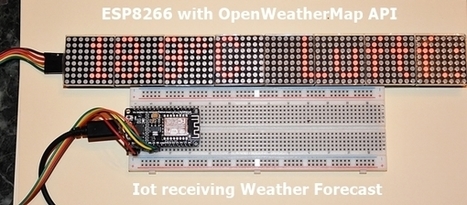
First Steps with the ESP8266 Wi-Fi Module | Maker, MakerED, Coding | Scrolling Text (Time, Temp., Humidity…) with 8×8 LED MATRIX 

First Steps with the ESP8266 Wi-Fi Module | Maker, MakerED, Coding | Scrolling Text (Time, Temp., Humidity…) with 8×8 LED MATRIX  | 21st Century Learning and Teaching | Scoop.it

In our previous blog post (Tutorial…), we were playing around with a LED MATRIX <===> First Steps with the Arduino-UNO R3 | Maker, MakerED, Coding | Scrolling Text with 8×8 LED MATRIX  <===> and we will continue to use the LED MATRIX, but this time with a Wi-Fi connection. We will use the module “ESP8266” which you can purchase worldwide around as it is very popular and it costs ONLY 7.49 €.


Learn more / En savoir plus / Mehr erfahren:


https://www.scoop.it/t/21st-century-learning-and-teaching/?&tag=ARDUINO


https://www.scoop.it/t/21st-century-learning-and-teaching/?&tag=ESP8266+WiFi+Module


Gust MEES's insight:

In our previous blog post (Tutorial…), we were playing around with a LED MATRIX <===> First Steps with the Arduino-UNO R3 | Maker, MakerED, Coding | Scrolling Text with 8×8 LED MATRIX  <===> and we will continue to use the LED MATRIX, but this time with a Wi-Fi connection. We will use the module “ESP8266” which you can purchase worldwide around as it is very popular and it costs ONLY 7.49 €.


Learn more / En savoir plus / Mehr erfahren:


https://www.scoop.it/t/21st-century-learning-and-teaching/?&tag=ARDUINO


https://www.scoop.it/t/21st-century-learning-and-teaching/?&tag=ESP8266+WiFi+Module


No comment yet.
Scooped by Gust MEES
April 20, 2018 8:52 AM
Scoop.it!

How I2C Communication Works and How To Use It with Arduino - YouTube | #Coding #Maker #MakerED #MakerSpaces #LEARNingByDoing 

https://howtomechatronics.com/tutoria... ► Find more details, circuit schematics and source codes here.

In this tutorial we will learn how the I2C communication protocol works and also we will make a practical example of it with the Arduino Board and a sensor which uses this protocol. You can watch the following video or read the written tutorial below.

Visit HowToMechatronics.com for more Tutorials, Tips, Projects and How It Works videos:
https://howtomechatronics.com/


Learn more / En savoir plus / Mehr erfahren:


https://www.scoop.it/t/21st-century-learning-and-teaching/?&tag=ARDUINO


Gust MEES's insight:

https://howtomechatronics.com/tutoria... ► Find more details, circuit schematics and source codes here.

In this tutorial we will learn how the I2C communication protocol works and also we will make a practical example of it with the Arduino Board and a sensor which uses this protocol. You can watch the following video or read the written tutorial below.

Visit HowToMechatronics.com for more Tutorials, Tips, Projects and How It Works videos:
https://howtomechatronics.com/


Learn more / En savoir plus / Mehr erfahren:


https://www.scoop.it/t/21st-century-learning-and-teaching/?&tag=ARDUINO


No comment yet.
Scooped by Gust MEES
April 15, 2018 10:30 AM
Scoop.it!

Weekend Project: 3D Printed OKAY 2 Synth Brings Music to the Maker's Ears | #MakerED #MakerSpaces #LEARNingByDoing #3DPrinting #Coding #Electronics

Weekend Project: 3D Printed OKAY 2 Synth Brings Music to the Maker's Ears | #MakerED #MakerSpaces #LEARNingByDoing #3DPrinting #Coding #Electronics | 21st Century Learning and Teaching | Scoop.it

Oskitone’s new and improved OKAY 2 is a mind-blowing DIY synth that you can 3D print and put together on your own. Hone your 3D printing and soldering skills with this sweet musical instrument and let the sounds sweep you away!

Looking for a new musical instrument to play? Why not use your 3D printer to create a synthesizer that is completely tailored to your style? Well, we’ve got a great project for all the musically-minded makers to take on over the weekend.

Last year, the San Francisco-based one-man musical instrument studio Oskitone released its first version of the OKAY synth, and has since refined the concept in a variety of ways. The new and improved OKAY 2 is an analog, monophonic, square wave synthesizer that is largely made up of 3D printed parts. It was designed on OpenSCAD and EAGLE by a man named Tommy, who is in charge of Oskitone.


Learn more / En savoir plus / Mehr erfahren:


https://www.scoop.it/t/21st-century-learning-and-teaching/?&tag=makered


Gust MEES's insight:

Oskitone’s new and improved OKAY 2 is a mind-blowing DIY synth that you can 3D print and put together on your own. Hone your 3D printing and soldering skills with this sweet musical instrument and let the sounds sweep you away!

Looking for a new musical instrument to play? Why not use your 3D printer to create a synthesizer that is completely tailored to your style? Well, we’ve got a great project for all the musically-minded makers to take on over the weekend.

Last year, the San Francisco-based one-man musical instrument studio Oskitone released its first version of the OKAY synth, and has since refined the concept in a variety of ways. The new and improved OKAY 2 is an analog, monophonic, square wave synthesizer that is largely made up of 3D printed parts. It was designed on OpenSCAD and EAGLE by a man named Tommy, who is in charge of Oskitone.


Learn more / En savoir plus / Mehr erfahren:


https://www.scoop.it/t/21st-century-learning-and-teaching/?&tag=makered


No comment yet.
Scooped by Gust MEES
April 13, 2018 6:01 PM
Scoop.it!

What’s the secret of success while innovating? | Motivation, Courage, Engagement, NEVER Give UP… | #ModernEDU #ModernLEARNing with about #ICT #SocialMedia #Curation #Blogs #PLN #PKM

What’s the secret of success while innovating? | Motivation, Courage, Engagement, NEVER Give UP… | #ModernEDU #ModernLEARNing with about #ICT #SocialMedia #Curation #Blogs #PLN #PKM | 21st Century Learning and Teaching | Scoop.it

What's the secret of success while innovating? I hear you screaming already: I would like to be innovative, I even have some ideas BUT I am fearing about WHAT OTHERS would say and think about!! To be honest, NEVER look about WHAT OTHERS would say, innovation is something NEW and the new will…


Learn more / En savoir plus / Mehr erfahren:


https://gustmees.wordpress.com


Gust MEES's insight:

What's the secret of success while innovating? I hear you screaming already: I would like to be innovative, I even have some ideas BUT I am fearing about WHAT OTHERS would say and think about!! To be honest, NEVER look about WHAT OTHERS would say, innovation is something NEW and the new will…


Learn more / En savoir plus / Mehr erfahren:


https://gustmees.wordpress.com


No comment yet.
Scooped by Gust MEES
April 13, 2018 8:26 AM
Scoop.it!

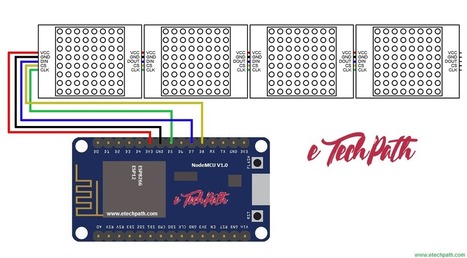
How to Control MAX7219 LED Matrix with ESP8266 WiFi Module | #Maker #MakerED #MakerSpaces #Coding

How to Control MAX7219 LED Matrix with ESP8266 WiFi Module | #Maker #MakerED #MakerSpaces #Coding | 21st Century Learning and Teaching | Scoop.it

About this Project:


In this project we will learn how to interfacing ESP8266 module with MAX7219 matrix display to scrolling text message from web user interface. We will use Arduino IDE to program ESP module in this project. I am using MajicDesigns MD_MAX72xx library for running this project, also the code is very similar to included example in the library with some improvements in web user interface html code.


Learn more / En savoir plus / Mehr erfahren:


https://www.scoop.it/t/21st-century-learning-and-teaching/?&tag=ARDUINO


Gust MEES's insight:

About this Project:


In this project we will learn how to interfacing ESP8266 module with MAX7219 matrix display to scrolling text message from web user interface. We will use Arduino IDE to program ESP module in this project. I am using MajicDesigns MD_MAX72xx library for running this project, also the code is very similar to included example in the library with some improvements in web user interface html code.


Learn more / En savoir plus / Mehr erfahren:


https://www.scoop.it/t/21st-century-learning-and-teaching/?&tag=ARDUINO


No comment yet.
Scooped by Gust MEES
April 10, 2018 5:17 PM
Scoop.it!

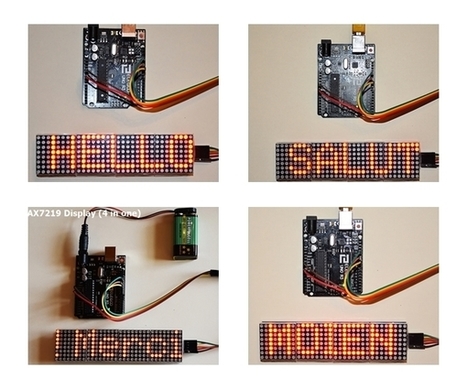
First Steps with the Arduino-UNO R3 | Maker, MakerED, Coding | Scrolling Text with 8×8 LED MATRIX  | #MakerSpaces #LEARNingByDoing

First Steps with the Arduino-UNO R3 | Maker, MakerED, Coding | Scrolling Text with 8×8 LED MATRIX  | #MakerSpaces #LEARNingByDoing | 21st Century Learning and Teaching | Scoop.it

Scrolling Text with 8x8 LED MATRIX (4 Modules in One) . . . As we were playing around already with LED's in previous blog posts let us NOW try out a LED Matrix "4 in one"; its four (4) singular displays soldered on one piece of a single printed circuit board (PCB)...


Learn more / En savoir plus / Mehr erfahren:


https://www.scoop.it/t/21st-century-learning-and-teaching/?&tag=ARDUINO


Gust MEES's insight:

Scrolling Text with 8x8 LED MATRIX (4 Modules in One) . . . As we were playing around already with LED's in previous blog posts let us NOW try out a LED Matrix "4 in one"; its four (4) singular displays soldered on one piece of a single printed circuit board (PCB)...


Learn more / En savoir plus / Mehr erfahren:


https://www.scoop.it/t/21st-century-learning-and-teaching/?&tag=ARDUINO


No comment yet.
Scooped by Gust MEES
April 9, 2018 7:01 PM
Scoop.it!

Laterales Denken – Wikipedia | #QuerDenker #Entrepreneurs OUT of #SchoolCocoon #Mentality

Laterales Denken - Wikipedia

Laterales Denken (vom lateinischen latus für „Seite"), umgangssprachlich auch Querdenken genannt, ist eine Denkmethode, die im Rahmen der Anwendung von Kreativitätstechniken zur Lösung von Problemen oder Ideenfindung eingesetzt werden kann.

Laterales Denken


Laterales Denken (vom lateinischen latus für „Seite“), umgangssprachlich auch Querdenken genannt, ist eine Denkmethode, die im Rahmen der Anwendung von Kreativitätstechniken zur Lösung von Problemen oder Ideenfindung eingesetzt werden kann.

Der Begriff wurde 1967 von Edward de Bono eingeführt und seitdem in zahlreichen Veröffentlichungen verwendet. Gelegentlich wird in der Fachsprache auch der Begriff nichtlineares Denken gebraucht. Umgangssprachlich sagt man auch Querdenken oder um die Ecke denken. Das Antonym lautet vertikales oder lineares Denken.

Edward de Bono hat außerdem den Begriff „paralleles Denken“ geprägt, der die Fähigkeit beschreibt, in Bezug auf ein beliebiges Thema systematisch verschiedene Denk- und Wahrnehmungsperspektiven einzunehmen. Das wichtigste Beispiel für das parallele Denken sind die Denkhüte von De Bono. Sie werden inzwischen weltweit in großen Organisationen in den Bereichen Kreativität, aber auch Kommunikation und Teamentwicklung eingesetzt.

Das Konzept de Bonos unterscheidet sich nur in Nuancen von dem Joy Paul Guilfords. Dieser verwendete an Stelle von lateralem Denken den Terminus divergentes Denken bzw. anstelle von vertikalem Denken den Terminus konvergentes Denken. Aufgrund ihrer starken Ähnlichkeit werden die Begriffspaare weitestgehend synonym verwendet.[1]

Im Gegensatz zum vertikalen Denken, das Schritt für Schritt (kontinuierlich) verläuft und auf eingeübten Mustern beruht, ist das laterale Denken durch folgende Grundsätze charakterisiert:

Es wird zugelassen, dass vorliegende Informationen subjektiv bewertet und selektiv verwendet werden. Details werden nicht analytisch, sondern intuitiv erfasst.


Gedankliche Sprünge und Assoziationen werden zugelassen, nicht jedes Zwischenergebnis muss richtig sein.


Ja/Nein-Entscheidungen werden vermieden. Auch nicht durchführbare Lösungen können ein Schritt zum besseren Verständnis des Problems sein.


Konventionelle Denkmuster werden in Frage gestellt, indem z. B. bewusst nach der unwahrscheinlichsten Lösung eines Problems gesucht wird.


Ausgangssituation und Rahmenbedingungen werden nicht als unveränderlich hingenommen.


Learn more / En savoir plus / Mehr erfahren:


https://www.scoop.it/t/21st-century-learning-and-teaching/?&tag=Entrepreneurs


Gust MEES's insight:

Laterales Denken


Laterales Denken (vom lateinischen latus für „Seite“), umgangssprachlich auch Querdenken genannt, ist eine Denkmethode, die im Rahmen der Anwendung von Kreativitätstechniken zur Lösung von Problemen oder Ideenfindung eingesetzt werden kann.

Der Begriff wurde 1967 von Edward de Bono eingeführt und seitdem in zahlreichen Veröffentlichungen verwendet. Gelegentlich wird in der Fachsprache auch der Begriff nichtlineares Denken gebraucht. Umgangssprachlich sagt man auch Querdenken oder um die Ecke denken. Das Antonym lautet vertikales oder lineares Denken.

Edward de Bono hat außerdem den Begriff „paralleles Denken“ geprägt, der die Fähigkeit beschreibt, in Bezug auf ein beliebiges Thema systematisch verschiedene Denk- und Wahrnehmungsperspektiven einzunehmen. Das wichtigste Beispiel für das parallele Denken sind die Denkhüte von De Bono. Sie werden inzwischen weltweit in großen Organisationen in den Bereichen Kreativität, aber auch Kommunikation und Teamentwicklung eingesetzt.

Das Konzept de Bonos unterscheidet sich nur in Nuancen von dem Joy Paul Guilfords. Dieser verwendete an Stelle von lateralem Denken den Terminus divergentes Denken bzw. anstelle von vertikalem Denken den Terminus konvergentes Denken. Aufgrund ihrer starken Ähnlichkeit werden die Begriffspaare weitestgehend synonym verwendet.[1]

Im Gegensatz zum vertikalen Denken, das Schritt für Schritt (kontinuierlich) verläuft und auf eingeübten Mustern beruht, ist das laterale Denken durch folgende Grundsätze charakterisiert:

Es wird zugelassen, dass vorliegende Informationen subjektiv bewertet und selektiv verwendet werden. Details werden nicht analytisch, sondern intuitiv erfasst.


Gedankliche Sprünge und Assoziationen werden zugelassen, nicht jedes Zwischenergebnis muss richtig sein.


Ja/Nein-Entscheidungen werden vermieden. Auch nicht durchführbare Lösungen können ein Schritt zum besseren Verständnis des Problems sein.


Konventionelle Denkmuster werden in Frage gestellt, indem z. B. bewusst nach der unwahrscheinlichsten Lösung eines Problems gesucht wird.


Ausgangssituation und Rahmenbedingungen werden nicht als unveränderlich hingenommen.


Learn more / En savoir plus / Mehr erfahren:


https://www.scoop.it/t/21st-century-learning-and-teaching/?&tag=Entrepreneurs


No comment yet.
Scooped by Gust MEES
April 9, 2018 8:20 AM
Scoop.it!

!!! Arduino Nano mit neuem Bootloader | #Maker #MakerED #MakerSpaces #Coding 

!!! Arduino Nano mit neuem Bootloader | #Maker #MakerED #MakerSpaces #Coding  | 21st Century Learning and Teaching | Scoop.it

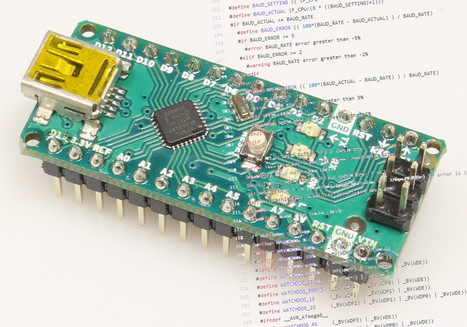
Stillschweigend hat Arduino den Bootloader für die Nano-Boards Anfang 2018 ausgetauscht. Wer sich ein neues Original-Board kauft, kann eine unangenehme Überraschung erleben.

Meistens benutzen wir in der Redaktion die billigen China-Kopien der Arduinos. Als wir jetzt allerdings Mal wieder einen mit FTDI-Chip brauchten, um etwas auszuprobieren, bestellten wir einen originalen Arduino Nano und kamen kurz ins Straucheln.


Learn more / En savoir plus / Mehr erfahren:


https://www.scoop.it/t/21st-century-learning-and-teaching/?&tag=ARDUINO


Gust MEES's insight:

Stillschweigend hat Arduino den Bootloader für die Nano-Boards Anfang 2018 ausgetauscht. Wer sich ein neues Original-Board kauft, kann eine unangenehme Überraschung erleben.

Meistens benutzen wir in der Redaktion die billigen China-Kopien der Arduinos. Als wir jetzt allerdings Mal wieder einen mit FTDI-Chip brauchten, um etwas auszuprobieren, bestellten wir einen originalen Arduino Nano und kamen kurz ins Straucheln.


Learn more / En savoir plus / Mehr erfahren:


https://www.scoop.it/t/21st-century-learning-and-teaching/?&tag=ARDUINO


No comment yet.
Scooped by Gust MEES
April 7, 2018 10:01 AM
Scoop.it!

World's Simplest Electric Car: 6 Steps (with Pictures) | #Maker #MakerED #MakerSpaces #Motors

World's Simplest Electric Car: 6 Steps (with Pictures) | #Maker #MakerED #MakerSpaces #Motors | 21st Century Learning and Teaching | Scoop.it

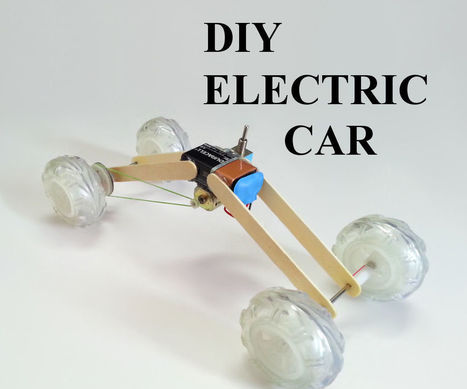
Playing with toy cars is synonymous to almost everyone's childhood. In this instructable, i decided to re-live those memories by making a simplest toy car powered by just a DC motor and a 9v battery. This project is for kids who are entering the world of DIY and need a simple project to start.


This car is a sure shot DIY project that will never fail even in the first attempt.


Learn more / En savoir plus / Mehr erfahren:


https://gustmees.wordpress.com/2017/04/07/maker-easy-to-build-mini-car-with-battery-holder-case-and-motor-as-self-made-propeller/


Gust MEES's insight:

Playing with toy cars is synonymous to almost everyone's childhood. In this instructable, i decided to re-live those memories by making a simplest toy car powered by just a DC motor and a 9v battery. This project is for kids who are entering the world of DIY and need a simple project to start.


This car is a sure shot DIY project that will never fail even in the first attempt.


Learn more / En savoir plus / Mehr erfahren:


https://gustmees.wordpress.com/2017/04/07/maker-easy-to-build-mini-car-with-battery-holder-case-and-motor-as-self-made-propeller/


Emmanuel Gomez's curator insight, April 8, 2018 1:01 PM
Just incredible. This is a great and interesting topic that can be taught  to children with no risks, with fun and easy steps, and with an amazing toy as a result. It can be taught by teachers, parents, and even older brothers to children who are interested in sciences; moreover, the most important part is that this is learning through playing, things that children love. 
Scooped by Gust MEES
April 2, 2018 8:10 AM
Scoop.it!

First Steps with the Arduino-UNO R3 | Maker, MakerED, Coding | 2.8″ TFT Touch Screen with SDCard | #ElectronicsBadge #LEARNingByDoing

First Steps with the Arduino-UNO R3 | Maker, MakerED, Coding | 2.8″ TFT Touch Screen with SDCard | #ElectronicsBadge #LEARNingByDoing | 21st Century Learning and Teaching | Scoop.it

I was very happy when I got delivered that nice looking 2.8 inches TFT with incorporated SDCard. I ordered it on Amazon and it is from ELEGOO. It was delivered with a small CD where a lot of coding examples are integrated and a well done manual. SO, I started as soon…


Learn more / En savoir plus / Mehr erfahren:


https://www.scoop.it/t/21st-century-learning-and-teaching/?&tag=ARDUINO


Gust MEES's insight:

I was very happy when I got delivered that nice looking 2.8 inches TFT with incorporated SDCard. I ordered it on Amazon and it is from ELEGOO. It was delivered with a small CD where a lot of coding examples are integrated and a well done manual. SO, I started as soon…


Learn more / En savoir plus / Mehr erfahren:


https://www.scoop.it/t/21st-century-learning-and-teaching/?&tag=ARDUINO


No comment yet.
Scooped by Gust MEES
March 30, 2018 2:40 AM
Scoop.it!

How AI Has Already Changed Your Life

How AI Has Already Changed Your Life | 21st Century Learning and Teaching | Scoop.it

For some people, artificial intelligence still makes them feel a little…uneasy. It’s often depicted as sinister-looking robots who will take over our lives and our jobs, or even replace humanity. 

The reality is, we are already in an age in which AI is infused into our everyday lives in ways that augment rather than replace people. Digital assistants such as Cortana can find you the closest restaurant, dictate a text to your friend, manage your email inbox and even help you create more beautiful PowerPoint presentations.  Whether you realise it or not, AI is an integral part of all these interactions. And while it’s not something you can often see or touch, I bet you’re already experiencing the benefits of AI every day.

So, how does AI technology actually work? AI is a machine’s ability to recognise images and words, learn and reason in ways that are similar to people. Data is the fuel for AI, and our world is awash with data as our daily interactions are increasingly digital. AI uses sophisticated algorithms to sort through piles of data, spot patterns and make predictions – tasks that would be repetitive and time-consuming, if not practically impossible, for people to do manually. AI can do this work on our behalf and give us back more of life’s most precious commodity - time.


Learn more / En savoir plus / Mehr erfahren:


https://www.scoop.it/t/21st-century-learning-and-teaching/?&tag=AI


Gust MEES's insight:

For some people, artificial intelligence still makes them feel a little…uneasy. It’s often depicted as sinister-looking robots who will take over our lives and our jobs, or even replace humanity. 

The reality is, we are already in an age in which AI is infused into our everyday lives in ways that augment rather than replace people. Digital assistants such as Cortana can find you the closest restaurant, dictate a text to your friend, manage your email inbox and even help you create more beautiful PowerPoint presentations.  Whether you realise it or not, AI is an integral part of all these interactions. And while it’s not something you can often see or touch, I bet you’re already experiencing the benefits of AI every day.

So, how does AI technology actually work? AI is a machine’s ability to recognise images and words, learn and reason in ways that are similar to people. Data is the fuel for AI, and our world is awash with data as our daily interactions are increasingly digital. AI uses sophisticated algorithms to sort through piles of data, spot patterns and make predictions – tasks that would be repetitive and time-consuming, if not practically impossible, for people to do manually. AI can do this work on our behalf and give us back more of life’s most precious commodity - time.


Learn more / En savoir plus / Mehr erfahren:


https://www.scoop.it/t/21st-century-learning-and-teaching/?&tag=AI


Miklos Szilagyi's curator insight, March 31, 2018 5:43 AM
Félünk (félünk?) a mesterséges intellingenciától, pedig különböző szintű megjelenési formáit full használjuk... az átalakulás, a változás folyamatos, az is lesz, hol lineáris, hol helyenként ugrásszerű, de hozzászokni már elkezdtünk... nem a távoli jövő az, amikor majd egyszerre csak ránk ugrik, mint egy tigris...:-)))
Miklos Szilagyi's curator insight, March 31, 2018 5:47 AM
“...AI is a machine’s ability to recognise images and words, learn and reason in ways that are similar to people. Data is the fuel for AI, and our world is awash with data as our daily interactions are increasingly digital...” - The AI is already makes a part of our daily life... it gives time for us to become acclimatized to it...
Scooped by Gust MEES
March 29, 2018 2:58 AM
Scoop.it!

10 AMAZING SCIENCE EXPERIMENTS! - YouTube | #STEM #LEARNingByDoing

10 AMAZING SCIENCE EXPERIMENTS! and TRICKS compilation they are awesome easy to do at home, using copper wire battery and magnets gyroscopes chain and ring, electric train etc.


Learn more / En savoir plus / Mehr erfahren:


https://www.scoop.it/t/21st-century-learning-and-teaching/?&tag=Science


Gust MEES's insight:

10 AMAZING SCIENCE EXPERIMENTS! and TRICKS compilation they are awesome easy to do at home, using copper wire battery and magnets gyroscopes chain and ring, electric train etc.


Learn more / En savoir plus / Mehr erfahren:


https://www.scoop.it/t/21st-century-learning-and-teaching/?&tag=Science


Graphics Design's curator insight, March 29, 2018 3:34 AM

Custom Brochure Design is the best way of direct marketing where you can attract the customers.

Joe Rodriguez Harlingen CISD's curator insight, March 29, 2018 7:16 AM

10 AMAZING SCIENCE EXPERIMENTS! and TRICKS compilation they are awesome easy to do at home, using copper wire battery and magnets gyroscopes chain and ring, electric train etc.


Learn more / En savoir plus / Mehr erfahren:


https://www.scoop.it/t/21st-century-learning-and-teaching/?&tag=Science


Scooped by Gust MEES
March 27, 2018 6:55 PM
Scoop.it!

130+ Arduino Projects with Source Code, Schematics & Complete DIY Explanation

130+ Arduino Projects with Source Code, Schematics & Complete DIY Explanation | 21st Century Learning and Teaching | Scoop.it

Arduino Projects


Arduino is a popular open-source development board for engineers and makers to develop electronics projects in an easy way. It consists of both a physical programmable development board (based on AVR series of microcontrollers) and a piece of software or IDE which runs on your computer and used to write and upload the code to the microcontroller board.

Explore below some interesting arduino projects and tutorials based on different types of arduino baords like Arduino Uno, Arduino Pro Mini, etc. These DIY arduino projects for beginners are explained well and you can find the complete guide to DIY these projects with the help of circuit diagrams, source codes and videos. You can also browse below pages to get new arduino project ideas.


Learn more / En savoir plus / Mehr erfahren:


https://www.scoop.it/t/21st-century-learning-and-teaching/?&tag=ARDUINO


Gust MEES's insight:

Arduino Projects


Arduino is a popular open-source development board for engineers and makers to develop electronics projects in an easy way. It consists of both a physical programmable development board (based on AVR series of microcontrollers) and a piece of software or IDE which runs on your computer and used to write and upload the code to the microcontroller board.

Explore below some interesting arduino projects and tutorials based on different types of arduino baords like Arduino Uno, Arduino Pro Mini, etc. These DIY arduino projects for beginners are explained well and you can find the complete guide to DIY these projects with the help of circuit diagrams, source codes and videos. You can also browse below pages to get new arduino project ideas.


Learn more / En savoir plus / Mehr erfahren:


https://www.scoop.it/t/21st-century-learning-and-teaching/?&tag=ARDUINO


No comment yet.
Scooped by Gust MEES
April 21, 2018 7:06 PM
Scoop.it!

ESP8266 WiFi Weather Station with Color TFT Display - YouTube | #Maker #MakerED #MakerSpaces #Coding 

In this project we’ll show you how to make a WiFi enabled, portable Weather Station using an ESP8266. LINKS BELOW! The software, written by Daniel Eichhorn, uses the Wunderground API to pull weather data. It shows the date, time, current weather conditions, 4-day forecast and even moon phases.


The user interface features lovely typography and icons that makes really a clean layout. The 2.4” TFT Feather Wing combined with the Adafruit Feather HUZZAH ESP8266 make assembling this project incredibly easy. Full Tutorial, Files and Code: https://learn.adafruit.com/wifi-weath...


Learn more / En savoir plus / Mehr erfahren:


https://www.scoop.it/t/21st-century-learning-and-teaching/?&tag=ARDUINO


https://www.scoop.it/t/21st-century-learning-and-teaching/?&tag=ESP8266+WiFi+Module


Gust MEES's insight:

In this project we’ll show you how to make a WiFi enabled, portable Weather Station using an ESP8266. LINKS BELOW! The software, written by Daniel Eichhorn, uses the Wunderground API to pull weather data. It shows the date, time, current weather conditions, 4-day forecast and even moon phases.


The user interface features lovely typography and icons that makes really a clean layout. The 2.4” TFT Feather Wing combined with the Adafruit Feather HUZZAH ESP8266 make assembling this project incredibly easy. Full Tutorial, Files and Code: https://learn.adafruit.com/wifi-weath...


Learn more / En savoir plus / Mehr erfahren:


https://www.scoop.it/t/21st-century-learning-and-teaching/?&tag=ARDUINO


https://www.scoop.it/t/21st-century-learning-and-teaching/?&tag=ESP8266+WiFi+Module


No comment yet.
Scooped by Gust MEES
April 19, 2018 12:03 PM
Scoop.it!

Einfacher Ultraschall-Levitationsapparat | #Maker #MakerED #MakerSpaces #Coding #Arduino #LEARNingByDoing

Einfacher Ultraschall-Levitationsapparat | #Maker #MakerED #MakerSpaces #Coding #Arduino #LEARNingByDoing | 21st Century Learning and Teaching | Scoop.it

Wer mit Ultraschall-Levitation experimentieren und Objekte rein durch die Energie von Schallwellen schweben lassen möchte, benötigt dafür keine wissenschaftliche Gerätschaften, komplizierte Steuerungen oder teuren Bausätze. Ein Arduino, ein Stepper-Motor-Treiber und ein umgebauter Abstandssensor reichen aus.

Das fertige Micro Ultrasonic Levitation Device und einige der nötigen Zutaten (Bild:  Ulrich Schmerold)
Zugegeben: Unser Mini Ultrasonic Levitation Device kann keine schweren Gegenstände in der Luft halten. Doch auch kleine Styroporkügelchen sind faszinierend, wenn sie wie von Geisterhand schweben. Anders als bei magnetischer Levitation benötigt man für die Ultraschallvariante keine Regelung, die das schwebende Objekt überwacht. Bei der akustischen Levitation "nistet" sich ein Objekt in einem Knoten einer stehenden akustischen Welle ein. Dadurch können auch mehrere Dinge gleichzeitig übereinander schweben – und nehmen sogar gleichmäßig verteilte Positionen ein.


Learn more / En savoir plus / Mehr erfahren:


https://www.scoop.it/t/21st-century-learning-and-teaching/?&tag=ARDUINO


Gust MEES's insight:

Wer mit Ultraschall-Levitation experimentieren und Objekte rein durch die Energie von Schallwellen schweben lassen möchte, benötigt dafür keine wissenschaftliche Gerätschaften, komplizierte Steuerungen oder teuren Bausätze. Ein Arduino, ein Stepper-Motor-Treiber und ein umgebauter Abstandssensor reichen aus.

Das fertige Micro Ultrasonic Levitation Device und einige der nötigen Zutaten (Bild:  Ulrich Schmerold)
Zugegeben: Unser Mini Ultrasonic Levitation Device kann keine schweren Gegenstände in der Luft halten. Doch auch kleine Styroporkügelchen sind faszinierend, wenn sie wie von Geisterhand schweben. Anders als bei magnetischer Levitation benötigt man für die Ultraschallvariante keine Regelung, die das schwebende Objekt überwacht. Bei der akustischen Levitation "nistet" sich ein Objekt in einem Knoten einer stehenden akustischen Welle ein. Dadurch können auch mehrere Dinge gleichzeitig übereinander schweben – und nehmen sogar gleichmäßig verteilte Positionen ein.


Learn more / En savoir plus / Mehr erfahren:


https://www.scoop.it/t/21st-century-learning-and-teaching/?&tag=ARDUINO


No comment yet.
Scooped by Gust MEES
April 15, 2018 10:04 AM
Scoop.it!

Microsoft’s smart mat project could blend Lego and Minecraft together « Adafruit Industries – Makers, hackers, artists, designers and engineers! | #AR #NFC #Coding #MakerED #MakerSpaces 

Microsoft’s smart mat project could blend Lego and Minecraft together « Adafruit Industries – Makers, hackers, artists, designers and engineers! | #AR #NFC #Coding #MakerED #MakerSpaces  | 21st Century Learning and Teaching | Scoop.it

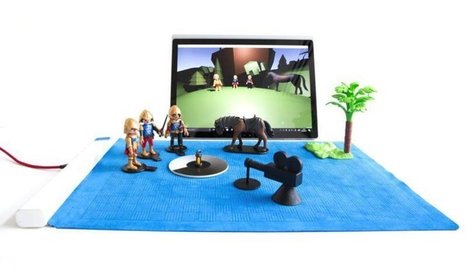
Microsoft has unveiled its latest research project today, Project Zanzibar. It’s a smart mat that’s designed to blend the digital and physical worlds by sensing touch, gestures, and objects. A team of researchers, with a love of toys, created the project at Microsoft’s research labs in the UK. The mat folds and combines sensing, near field communication (NFC), and multi-touch to imagine a future where you could place objects on this smart mat and play games.

Microsoft’s video (above) demonstrates a number of different games that track the position, movement, and orientation of objects — all thanks to NFC stickers. The smart mat, that reminds me of the Surface Music Cover, can even detect inputs like button presses, and works with existing devices via Bluetooth. While the software maker demonstrates basic games for learning, programming, and augmented reality, this looks like the perfect hardware to combine the company’s Minecraft game with real-world Lego blocks. Objects can be easily tagged with NFC stickers, so you could stack them and have the mat translate that physical object into Minecraft.


Learn more / En savoir plus / Mehr erfahren:


https://www.scoop.it/t/21st-century-learning-and-teaching/?&tag=makered


Gust MEES's insight:

Microsoft has unveiled its latest research project today, Project Zanzibar. It’s a smart mat that’s designed to blend the digital and physical worlds by sensing touch, gestures, and objects. A team of researchers, with a love of toys, created the project at Microsoft’s research labs in the UK. The mat folds and combines sensing, near field communication (NFC), and multi-touch to imagine a future where you could place objects on this smart mat and play games.

Microsoft’s video (above) demonstrates a number of different games that track the position, movement, and orientation of objects — all thanks to NFC stickers. The smart mat, that reminds me of the Surface Music Cover, can even detect inputs like button presses, and works with existing devices via Bluetooth. While the software maker demonstrates basic games for learning, programming, and augmented reality, this looks like the perfect hardware to combine the company’s Minecraft game with real-world Lego blocks. Objects can be easily tagged with NFC stickers, so you could stack them and have the mat translate that physical object into Minecraft.


Learn more / En savoir plus / Mehr erfahren:


https://www.scoop.it/t/21st-century-learning-and-teaching/?&tag=makered

No comment yet.
Scooped by Gust MEES
April 13, 2018 8:43 AM
Scoop.it!

lcd-image-converter download | #Coding #Maker #MakerED #MakerSpaces #LEARNingByDoing

lcd-image-converter download | #Coding #Maker #MakerED #MakerSpaces #LEARNingByDoing | 21st Century Learning and Teaching | Scoop.it

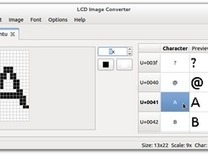
This program allows you to create bitmaps and fonts, and transform them to "C" source format for embedded applications.

The transformation of the images to the source code is made by using templates. Therefore, by modifying the templates, you can change the format of the output within certain limits.


Learn more / En savoir plus / Mehr erfahren:


https://www.scoop.it/t/21st-century-learning-and-teaching/?&tag=ARDUINO


Gust MEES's insight:

This program allows you to create bitmaps and fonts, and transform them to "C" source format for embedded applications.

The transformation of the images to the source code is made by using templates. Therefore, by modifying the templates, you can change the format of the output within certain limits.


Learn more / En savoir plus / Mehr erfahren:


https://www.scoop.it/t/21st-century-learning-and-teaching/?&tag=ARDUINO


No comment yet.
Scooped by Gust MEES
April 11, 2018 6:22 AM
Scoop.it!

100 outils pour lancer sa startup sans développeur ni graphiste (et presque sans argent) | #StartUPs #Entrepreneurs 

100 outils pour lancer sa startup sans développeur ni graphiste (et presque sans argent) | #StartUPs #Entrepreneurs  | 21st Century Learning and Teaching | Scoop.it

Ce qui suit est le résultat de sept années de veille : blogs, articles d’entrepreneurs et de mentors, rencontres avec des accélérateurs et incubateurs, discussions dans des communautés privées sur Facebook et Slack, listes dressées par des journalistes Tech, classements de Product Hunt…


Tous ces outils ont été glanés sur internet. J’ai trouvé utile de les mettre en favoris sur Chrome pour les garder sous la main. Ils vous aideront à créer, lancer et faire grandir ce que l’écosystème appelle un MVP : une première version hyper-simplifiée de votre idée de produit, censée validée votre hypothèse (et sa viabilité économique). Certains sont plus pointus et présentent souvent un modèle freemium.


Learn more / En savoir plus / Mehr erfahren:


https://www.scoop.it/t/best-freeware-software


Gust MEES's insight:

Ce qui suit est le résultat de sept années de veille : blogs, articles d’entrepreneurs et de mentors, rencontres avec des accélérateurs et incubateurs, discussions dans des communautés privées sur Facebook et Slack, listes dressées par des journalistes Tech, classements de Product Hunt…


Tous ces outils ont été glanés sur internet. J’ai trouvé utile de les mettre en favoris sur Chrome pour les garder sous la main. Ils vous aideront à créer, lancer et faire grandir ce que l’écosystème appelle un MVP : une première version hyper-simplifiée de votre idée de produit, censée validée votre hypothèse (et sa viabilité économique). Certains sont plus pointus et présentent souvent un modèle freemium.


Learn more / En savoir plus / Mehr erfahren:


https://www.scoop.it/t/best-freeware-software


No comment yet.
Scooped by Gust MEES
April 10, 2018 11:08 AM
Scoop.it!

How to check if your Facebook data was shared with Cambridge Analytica | #SocialMedia #BigData

How to check if your Facebook data was shared with Cambridge Analytica | #SocialMedia #BigData | 21st Century Learning and Teaching | Scoop.it

Instead, CA persuaded enough people to trust and approve its Facebook app, called “This is Your Digital Life”, that it was able to access, accumulate and allegedly to abuse personal data from millions of users.

That’s because the app grabbed permission to access data not only about you, but about your Facebook friends.

In other words, if one of your friends installed the app, then they might have shared with CA various information that you’d shared with them.

But how to find out which of your friends (some of whom may be ex-friends by now) installed the app, and how to be sure that they remember correctly whether they used the app or not?

Facebook has now come up with a way, given that it has logs that show who used the app, and who was friends with them.

We used this link:

https://www.facebook.com/help/1873665312923476


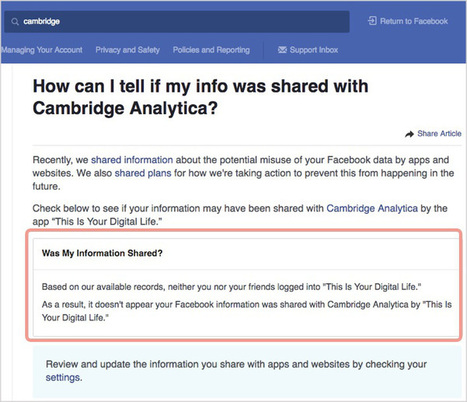
After we’d logged into Facebook, we got the result we hoped for:


Learn more / En savoir plus / Mehr erfahren:


https://www.scoop.it/t/21st-century-learning-and-teaching/?&tag=Big+Data...


Gust MEES's insight:

Instead, CA persuaded enough people to trust and approve its Facebook app, called “This is Your Digital Life”, that it was able to access, accumulate and allegedly to abuse personal data from millions of users.

That’s because the app grabbed permission to access data not only about you, but about your Facebook friends.

In other words, if one of your friends installed the app, then they might have shared with CA various information that you’d shared with them.

But how to find out which of your friends (some of whom may be ex-friends by now) installed the app, and how to be sure that they remember correctly whether they used the app or not?

Facebook has now come up with a way, given that it has logs that show who used the app, and who was friends with them.

We used this link:

https://www.facebook.com/help/1873665312923476


After we’d logged into Facebook, we got the result we hoped for:


Learn more / En savoir plus / Mehr erfahren:


https://www.scoop.it/t/21st-century-learning-and-teaching/?&tag=Big+Data...


No comment yet.
Scooped by Gust MEES
April 9, 2018 6:43 PM
Scoop.it!

Lateral thinking - Wikipedia | #QuerDenker #StartUPs OUT of #SchoolCocoon #Mentality | #ModernSociety

Lateral thinking - Wikipedia

Lateral thinking is solving problems through an indirect and creative approach, using reasoning that is not immediately obvious and involving ideas that may not be obtainable by using only traditional step-by-step logic. The term was promulgated in 1967 by Edward de Bono.

Lateral thinking is solving problems through an indirect and creative approach, using reasoning that is not immediately obvious and involving ideas that may not be obtainable by using only traditional step-by-step logic.


The term was promulgated in 1967 by Edward de Bono. He cites as an example the Judgment of Solomon, where King Solomon resolves a dispute over the parentage of a child by calling for the child to be cut in half, and making his judgment according to the reactions that this order receives.[2] Edward de Bono also links lateral thinking with humour, arguing there's a switchover from a familiar pattern to a new, unexpected one. It is in this moment of surprise that generates laughter and new insight which demonstrates an ability to see a different thought pattern that initially was not obvious.[3]

According to de Bono, lateral thinking deliberately distances itself from the standard perception of creativity as "vertical" logic (the classic method for problem solving).

To understand lateral thinking, it is necessary to compare lateral thinking and critical thinking. Critical thinking is primarily concerned with judging the true value of statements and seeking errors. Lateral thinking is more concerned with the "movement value" of statements and ideas.


A person uses lateral thinking to move from one known idea to creating new ideas. Edward de Bono defines four types of thinking tools:

idea-generating tools intended to break current thinking patterns—routine patterns, the status quo


focus tools intended to broaden where to search for new ideas


harvest tools intended to ensure more value is received from idea generating output


treatment tools that promote consideration of real-world constraints, resources, and support


Learn more / En savoir plus / Mehr erfahren:


https://www.scoop.it/t/21st-century-learning-and-teaching/?&tag=Entrepreneurs


Gust MEES's insight:

Lateral thinking is solving problems through an indirect and creative approach, using reasoning that is not immediately obvious and involving ideas that may not be obtainable by using only traditional step-by-step logic.


The term was promulgated in 1967 by Edward de Bono. He cites as an example the Judgment of Solomon, where King Solomon resolves a dispute over the parentage of a child by calling for the child to be cut in half, and making his judgment according to the reactions that this order receives.[2] Edward de Bono also links lateral thinking with humour, arguing there's a switchover from a familiar pattern to a new, unexpected one. It is in this moment of surprise that generates laughter and new insight which demonstrates an ability to see a different thought pattern that initially was not obvious.[3]

According to de Bono, lateral thinking deliberately distances itself from the standard perception of creativity as "vertical" logic (the classic method for problem solving).

To understand lateral thinking, it is necessary to compare lateral thinking and critical thinking. Critical thinking is primarily concerned with judging the true value of statements and seeking errors. Lateral thinking is more concerned with the "movement value" of statements and ideas.


A person uses lateral thinking to move from one known idea to creating new ideas. Edward de Bono defines four types of thinking tools:

idea-generating tools intended to break current thinking patterns—routine patterns, the status quo


focus tools intended to broaden where to search for new ideas


harvest tools intended to ensure more value is received from idea generating output


treatment tools that promote consideration of real-world constraints, resources, and support


Learn more / En savoir plus / Mehr erfahren:


https://www.scoop.it/t/21st-century-learning-and-teaching/?&tag=Entrepreneurs


Spplimited's comment, April 10, 2018 3:31 AM
Very useful
Karen Quintero's curator insight, April 22, 2018 2:41 AM
 From my point of view, lateral thinking must be taken into account in real education and life because different from critical thinking it allows that the brain make deep thinking about questioning, analizing current cultural patterns that society present currently.It not also promotes deep thinkind, it promotes creativity and motivation because its goal is based on the prior knowledge learners or people will come up with new ideas about the same topic.

Scooped by Gust MEES
April 9, 2018 5:18 AM
Scoop.it!

Teachers as Designers of Learning Environments | #OECD #LifeLongLEARNing #Creativity #SoftSkills #ModernEDU #ModernLEARNing

Teachers as Designers of Learning Environments | #OECD #LifeLongLEARNing #Creativity #SoftSkills #ModernEDU #ModernLEARNing | 21st Century Learning and Teaching | Scoop.it
Teachers as Designers of Learning Environments

The Importance of Innovative Pedagogies

Centre pour la recherche et l'innovation dans l'enseignement

Pedagogy is at the heart of teaching and learning. Preparing young people to become lifelong learners with a deep knowledge of subject matter and a broad set of social skills requires a better understanding of how pedagogy influences learning.
 
Focusing on pedagogies shifts the perception of teachers from technicians who strive to attain the education goals set by the curriculum to experts in the art and science of teaching. Seen through this lens, innovation in teaching becomes a problem-solving process rooted in teachers’ professionalism, rather than an add-on applied by only some teachers in some schools.
 
Teachers as Designers of Learning Environments: The Importance of Innovative Pedagogies provides a snapshot of innovative pedagogies used in classrooms around the world. It sets the stage for educators and policy makers to innovate teaching by looking at what is currently taking place in schools as potential seeds for change. At the heart of all of these approaches is a sensitivity to the natural inclinations of learners towards play, creativity, collaboration and inquiry. To illustrate how teachers use these innovative practices, the publication presents examples from 27 national and international networks of schools. It is now generally acknowledged that the quality of an education system cannot exceed the quality of its teachers.
 
This volume goes a step further to argue that a teacher cannot help students meet new educational challenges by continuing to draw on a limited and perhaps even inherited set of pedagogies. And here lies the genuine importance of innovative pedagogies.
 
Learn more / En savoir plus / Mehr erfahren:


Gust MEES's insight:

Teachers as Designers of Learning Environments

The Importance of Innovative Pedagogies

Centre pour la recherche et l'innovation dans l'enseignement

Pedagogy is at the heart of teaching and learning. Preparing young people to become lifelong learners with a deep knowledge of subject matter and a broad set of social skills requires a better understanding of how pedagogy influences learning.
 
Focusing on pedagogies shifts the perception of teachers from technicians who strive to attain the education goals set by the curriculum to experts in the art and science of teaching. Seen through this lens, innovation in teaching becomes a problem-solving process rooted in teachers’ professionalism, rather than an add-on applied by only some teachers in some schools.
 
Teachers as Designers of Learning Environments: The Importance of Innovative Pedagogies provides a snapshot of innovative pedagogies used in classrooms around the world. It sets the stage for educators and policy makers to innovate teaching by looking at what is currently taking place in schools as potential seeds for change. At the heart of all of these approaches is a sensitivity to the natural inclinations of learners towards play, creativity, collaboration and inquiry. To illustrate how teachers use these innovative practices, the publication presents examples from 27 national and international networks of schools. It is now generally acknowledged that the quality of an education system cannot exceed the quality of its teachers.
 
This volume goes a step further to argue that a teacher cannot help students meet new educational challenges by continuing to draw on a limited and perhaps even inherited set of pedagogies. And here lies the genuine importance of innovative pedagogies.
 
Learn more / En savoir plus / Mehr erfahren:
 
Scooped by Gust MEES
April 4, 2018 8:45 AM
Scoop.it!

How to write engaging tweets in 280 characters | #SocialMedia #Twitter #Communication #Publishing #DigitalMarketing #Press #Journalism 

How to write engaging tweets in 280 characters | #SocialMedia #Twitter #Communication #Publishing #DigitalMarketing #Press #Journalism  | 21st Century Learning and Teaching | Scoop.it

If you want to be a successful digital marketer, then you should be aware of the latest updates related to social media. Being one of the most widely used social media platforms out there, Twitter keeps on redefining itself. A while back, it announced the latest update regarding the 280 character limit for tweets. The update was certainly a big relief to many as almost all the marketers used to struggle with the previous 140 character limit.

Now, you can easily level up your social media marketing game on Twitter and reach out to a wider audience for sure. To make things easier for you, I have come up with some expert suggestions that will help you make the most of the Twitter’s latest update.

Details of Twitter’s new update (in a nutshell)
For almost a year now, there have been speculations about the Twitter’s new character limit. It was in the last quarter of 2017 when Twitter finally announced the 280-character update for posting tweets. For languages except Chinese, Japanese, and Korean, Twitter has increased the character limit for tweets from 140 to 280 characters. The attached photos, GIFs, polls, etc. won’t be counted as characters. Though, if you will include a URL, then it will increase the character count. Therefore, it is still recommended to use a URL shortening service while including website links in tweets.

12 ways to make the most of Twitter’s new update
Now when you can tweet in 280 characters, you don’t need to double-check every word you write. Furthermore, it can help you answer customer queries or explain a product to your audience. Here are some interesting ways to use Twitter’s new update.


Learn more / En savoir plus / Mehr erfahren:


https://www.scoop.it/t/21st-century-learning-and-teaching/?&tag=press


Gust MEES's insight:

If you want to be a successful digital marketer, then you should be aware of the latest updates related to social media. Being one of the most widely used social media platforms out there, Twitter keeps on redefining itself. A while back, it announced the latest update regarding the 280 character limit for tweets. The update was certainly a big relief to many as almost all the marketers used to struggle with the previous 140 character limit.

Now, you can easily level up your social media marketing game on Twitter and reach out to a wider audience for sure. To make things easier for you, I have come up with some expert suggestions that will help you make the most of the Twitter’s latest update.

Details of Twitter’s new update (in a nutshell)
For almost a year now, there have been speculations about the Twitter’s new character limit. It was in the last quarter of 2017 when Twitter finally announced the 280-character update for posting tweets. For languages except Chinese, Japanese, and Korean, Twitter has increased the character limit for tweets from 140 to 280 characters. The attached photos, GIFs, polls, etc. won’t be counted as characters. Though, if you will include a URL, then it will increase the character count. Therefore, it is still recommended to use a URL shortening service while including website links in tweets.

12 ways to make the most of Twitter’s new update
Now when you can tweet in 280 characters, you don’t need to double-check every word you write. Furthermore, it can help you answer customer queries or explain a product to your audience. Here are some interesting ways to use Twitter’s new update.


Learn more / En savoir plus / Mehr erfahren:


https://www.scoop.it/t/21st-century-learning-and-teaching/?&tag=press


No comment yet.
Scooped by Gust MEES
March 30, 2018 1:04 PM
Scoop.it!

PID Controller Basics Using XOD and Arduino | #Coding #Maker #MakerED #MakerSpaces #VisualProgramming #LEARNingByDoing

PID Controller Basics Using XOD and Arduino | #Coding #Maker #MakerED #MakerSpaces #VisualProgramming #LEARNingByDoing | 21st Century Learning and Teaching | Scoop.it

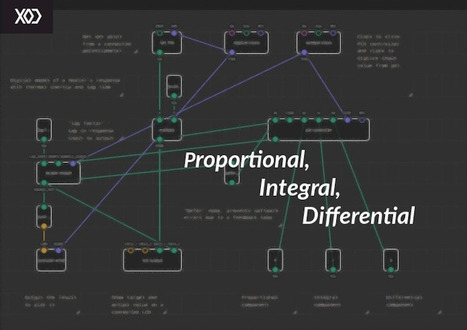
As a beginning student of the Arduino environment and aspiring maker, you’ve probably done some experiments with interfacing the board to some external hardware, such as LEDs, relays, sensors, or…


Learn more/ En svoir plus / Mehr erfahren:


https://www.scoop.it/t/21st-century-learning-and-teaching/?&tag=ARDUINO


https://www.scoop.it/t/21st-century-learning-and-teaching/?&tag=Visual+programming


Gust MEES's insight:

As a beginning student of the Arduino environment and aspiring maker, you’ve probably done some experiments with interfacing the board to some external hardware, such as LEDs, relays, sensors, or…


Learn more/ En svoir plus / Mehr erfahren:


https://www.scoop.it/t/21st-century-learning-and-teaching/?&tag=ARDUINO


https://www.scoop.it/t/21st-century-learning-and-teaching/?&tag=Visual+programming


No comment yet.
Scooped by Gust MEES
March 29, 2018 3:19 AM
Scoop.it!

Do Just 1 Thing Differently to Learn Faster and Remember Longer: No Extra Time, Effort, or Technology Required | #Interleaving #LEARNing2LEARN

Do Just 1 Thing Differently to Learn Faster and Remember Longer: No Extra Time, Effort, or Technology Required | #Interleaving #LEARNing2LEARN | 21st Century Learning and Teaching | Scoop.it

Even though many people feel that success is all about whom you know, success is almost always based on what you know. That's why so many people want to learn faster, retain more information, and improve their memories.

And that's why most successful people are constant learners; that's how they stay successful.

So if you want to improve your ability to learn, here's an approach you should try: Instead of blocking (focusing on one subject, one task, or one skill during a learning session) learn or practice several subjects or skills in succession. 

The process is called interleaving: Studying related concepts or skills in parallel. And it turns out interleaving is a much more effective way to train your brain (and your motor skills.) 


Learn more / En savoir plus / Mehr erfahren:


https://www.scoop.it/t/21st-century-learning-and-teaching/?&tag=Learning+2+Learn


https://www.scoop.it/t/21st-century-learning-and-teaching/?&tag=learning+faster


Gust MEES's insight:

Even though many people feel that success is all about whom you know, success is almost always based on what you know. That's why so many people want to learn faster, retain more information, and improve their memories.

And that's why most successful people are constant learners; that's how they stay successful.

So if you want to improve your ability to learn, here's an approach you should try: Instead of blocking (focusing on one subject, one task, or one skill during a learning session) learn or practice several subjects or skills in succession. 

The process is called interleaving: Studying related concepts or skills in parallel. And it turns out interleaving is a much more effective way to train your brain (and your motor skills.) 


Learn more / En savoir plus / Mehr erfahren:


https://www.scoop.it/t/21st-century-learning-and-teaching/?&tag=Learning+2+Learn


https://www.scoop.it/t/21st-century-learning-and-teaching/?&tag=learning+faster


Nadene Canning's curator insight, March 30, 2018 5:04 AM

Even though many people feel that success is all about whom you know, success is almost always based on what you know. That's why so many people want to learn faster, retain more information, and improve their memories.

And that's why most successful people are constant learners; that's how they stay successful.

So if you want to improve your ability to learn, here's an approach you should try: Instead of blocking (focusing on one subject, one task, or one skill during a learning session) learn or practice several subjects or skills in succession. 

The process is called interleaving: Studying related concepts or skills in parallel. And it turns out interleaving is a much more effective way to train your brain (and your motor skills.) 


Learn more / En savoir plus / Mehr erfahren:


https://www.scoop.it/t/21st-century-learning-and-teaching/?&tag=Learning+2+Learn


https://www.scoop.it/t/21st-century-learning-and-teaching/?&tag=learning+faster


Scooped by Gust MEES
March 27, 2018 7:13 PM
Scoop.it!

IoT Analytics - ThingSpeak Internet of Things | #Coding #Maker #MakerSpaces #Analyzing #Visualizing

IoT Analytics - ThingSpeak Internet of Things | #Coding #Maker #MakerSpaces #Analyzing #Visualizing | 21st Century Learning and Teaching | Scoop.it

ThingSpeak is the open IoT platform with MATLAB analytics.


Learn more / En savoir plus / Mehr erfahren:


https://www.scoop.it/t/21st-century-learning-and-teaching/?&tag=ARDUINO


Gust MEES's insight:

ThingSpeak is the open IoT platform with MATLAB analytics.


Learn more / En savoir plus / Mehr erfahren:


https://www.scoop.it/t/21st-century-learning-and-teaching/?&tag=ARDUINO


Kami Campbell's curator insight, March 29, 2018 1:20 AM
Share your insight