



It's no secret that many people avoid feedback like it's a plague.
The more frequent the feedback, the easier it is to learn and improve.
Via Les Howard

 Your new post is loading...
 Scoop.it! It's no secret that many people avoid feedback like it's a plague. The more frequent the feedback, the easier it is to learn and improve. Via Les Howard 
No comment yet.
Sign up to comment
Scoop.it!

Through entrepreneurship education, young people learn organizational skills, including time management, leadership development and interpersonal skills, all of which are highly transferable skills sought by employers. According to a report by the D.C. Children and Youth Investment Corporation, other positive outcomes include:
Gust MEES's insight:
Through entrepreneurship education, young people learn organizational skills, including time management, leadership development and interpersonal skills, all of which are highly transferable skills sought by employers. According to a report by the D.C. Children and Youth Investment Corporation, other positive outcomes include: read more in the article...
Scoop.it!
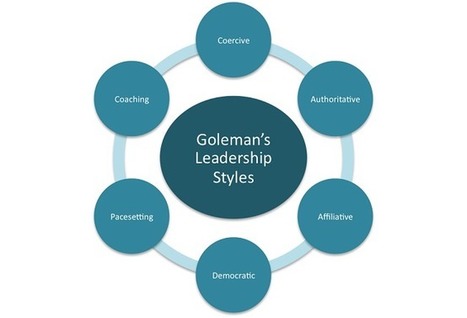
Daniel Goleman, in his article “Leadership That Gets Results”, has identified six different leadership styles, and he believes that good leaders will adopt one of these six styles to meet the needs of different situations.
None of the six leadership styles by Daniel Goleman are right or wrong – each may be appropriate depending on the specific context. Whilst one of the more empathetic styles is most likely to be needed to build long-term commitment, there will be occasions when a commanding style may need to be called upon, for example, when a rapid and decisive response is required. Learn more: - http://www.scoop.it/t/21st-century-learning-and-teaching/?tag=LeaderShip - http://www.scoop.it/t/21st-century-learning-and-teaching/?tag=Daniel-GOLEMAN Via The Learning Factor, Deborah Orlowski, Ph.D., juandoming

Lauran Star's curator insight,
September 21, 2014 2:56 PM
While type does matter - I believe a successful leader has a bit of all 
Dian J Harrison, MSW, MPA's curator insight,
February 5, 2015 6:51 PM
What is your leadership style! 
CCM Consultancy's curator insight,
July 17, 2018 2:16 AM
The best leaders don’t know just one style of leadership – they are skilled at several, and have the flexibility to switch between styles as the circumstances dictate.
Scoop.it!

According to the Content Marketing Institute, original content should be the cornerstone of your content marketing. And curating content can raise your brand awareness and bring more visitors to your website. So how do these two fundamental marketing pieces work together? Very nicely. In terms of content marketing in any industry, how you marry creation and curation could mean your success or failure.
Gust MEES's insight:
Some great "BestPracTICEs" to follow!
Scoop.it!

Gust MEES's insight:
A MUST READ!!!

Ilkka Olander's curator insight,
May 16, 2014 10:10 AM
Each year, CORE Education’s experienced staff of researchers, education trainers, and technology experts pool their knowledge and expertise, and through a thorough process put together and publish CORE’s prognosis on what are the coming ten major trends in eLearning and education generally that will make an impact upon education in New Zealand (and other parts of the world) in the coming year. 
Alan Ovens's curator insight,
May 17, 2014 5:33 PM
Interesting while not attending to the fact that the education is becoming a market place where business principles and ethics will dominate and constrain education.
Scoop.it!

By Linda Fisher Thornton Leadership may have once been defined by eloquence, power, or charisma, but today’s successful leadership is defined by creating value for others. In a human development sense, our understanding of leadership has essentially “grown up” and moved past personal ego and a self-centered view of things. It has progressed from being “all about us” to being about our long-term impact on others.
Gust MEES's insight:
Leadership may have once been defined by eloquence, power, or charisma, but today’s successful leadership is defined by creating value for others. In a human development sense, our understanding of leadership has essentially “grown up” and moved past personal ego and a self-centered view of things. It has progressed from being “all about us” to being about our long-term impact on others.
Scoop.it!

More than anything else, off-site employees need to know they’re not alone – that you’re behind them, you support them, and you understand their challenges. With these four important points in mind, you’ll be leading the pack on your way to being a first-class virtual leaders.
Gust MEES's insight:
More than anything else, off-site employees need to know they’re not alone – that you’re behind them, you support them, and you understand their challenges. With these four important points in mind, you’ll be leading the pack on your way to being a first-class virtual leaders.
Scoop.it!

By Linda Fisher Thornton
Gust MEES's insight:
Scoop.it!

Mental toughness is not ignoring feelings or refusing to express them; instead, it is the emotional intelligence to perceive, use, understand, and manage them.
Gust MEES's insight:
Scoop.it!
Exceptional leaders are not always perfect, and sometimes downright quirky. But they display a set of behaviors that make them admired and loved. Here is a look at seven rare ones. Via David Ednie, Bobby Dillard, John Michel, Amy Ragsdale
Gust MEES's insight:

Denis Fortier's curator insight,
February 23, 2014 2:04 PM
Listening is tough but hearing is even tougher. 
Madhav Sharma's curator insight,
February 24, 2014 8:49 PM
How many have you come across, I have come across one in Jet Airways, who always asked this question Why ? and How ? made us think and helped us to win.
Scoop.it!

Bold leadership isn’t reserved for the chosen few, and it certainly isn’t limited to popular culture’s definition of big, brash, loud leadership. Bold leadership is about the everyday behaviors we use to build trust, focusing on the needs of others, leading with confident humility, and vulnerably engaging with our people in authentic and genuine ways. Be BOLD!
Gust MEES's insight:

Gaetan Klein's curator insight,
February 14, 2014 11:52 AM
It is intereting to think about what is bold leadership. One must have quality in my opinion is presence : the quality of the relationship.
Scoop.it!

Reputation is the basis of leadership, no matter the job. It is built over many years, one word at a time, one action at a time, one deed at time. In leadership, few things matter more. Reputation is among the most treasured and powerful assets. It is what others think of us, and it’s at the
Gust MEES's insight:
|
Scoop.it!
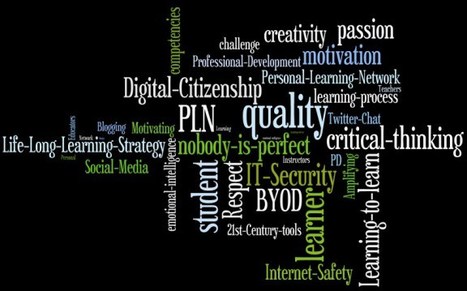
The 21st century leader must have the ability to make the most out of every situation. They are courageous and not afraid to challenge the status quo and push the boundaries to make things better. Because of these qualities and many others, the best leaders know how to get the most out of people; they enable the full potential in others. Learn more: - http://www.scoop.it/t/21st-century-learning-and-teaching/?tag=LeaderShip - http://gustmees.wordpress.com/2014/07/10/education-collaboration-and-coaching-the-future/ Via Anne Leong, Tony Phillips
Gust MEES's insight:
The 21st century leader must have the ability to make the most out of every situation. They are courageous and not afraid to challenge the status quo and push the boundaries to make things better. Because of these qualities and many others, the best leaders know how to get the most out of people; they enable the full potential in others. Learn more: - http://www.scoop.it/t/21st-century-learning-and-teaching/?tag=LeaderShip - http://gustmees.wordpress.com/2014/07/10/education-collaboration-and-coaching-the-future/

Sandeep Gautam's curator insight,
August 6, 2014 6:16 AM
One of your primary role as a leader is to ensure the blooming of your team members and co-workers.
Scoop.it!
Gust MEES's insight:
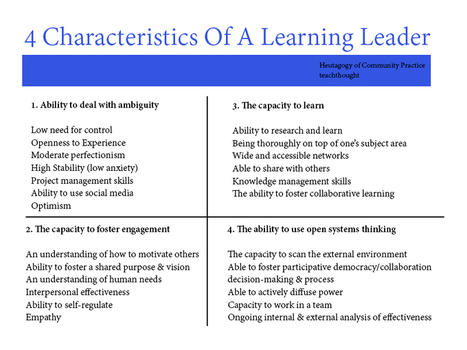
4 Characteristics Of Learning Leaders.
Scoop.it!

Think about how you or the people you work with approach the creation of a blended learning lesson plan. The first steps of coming up with and flushing out your initial idea. Then, scouring the web to find safe, factually accurate sites that are not blocked by your school filters and checking the fine print … This method of teaching does require a certain amount of bravery. There is a very real chance that when a student asks you a question (How do I add media? How do I change the font? How do I import pictures? etc. etc.) you will have to say the dreaded “I don’t know”. But the neat thing is, your students are ok with this. You’re all learning as you go. More often than not another child in the class will be using the same site or will have at least used it before. If a classmate knows the answer, they can step into the role of teacher – from which much confidence is gained and leadership skills are learned. Even the most reserved kid really enjoys teaching their teacher a trick or two. If no one knows the answer, they can collaborate to find the solution; an activity that provides important life skills with many real-world applications. All while leaving the initiative, process development and ownership of the learning itself right where it belongs, in the hands of the learners. Gust MEES: I started with it in 2002 already and was a pioneer in my country, BUT I got BEST results! Make sure to work TOGETHER as a TEAM with the students, learners, create ALSO some groups where the BEST work together with the weakest. YOU will love it later and YOU will miss it as it gives YOU a direct feedback of WHAT THEY learned and YOU adjust on demand and necessity... WHEN the BEST feel boring, give THEM a special task to motivate THEM ;) ===> Adjust <===. Concerning the questions from the students, please check my advice here: - http://gustmees.wordpress.com/2014/01/04/practice-better-ways-to-say-i-dont-know-in-the-classroom/ - http://gustmees.wordpress.com/2012/05/02/work-sheet-teachers-best-practiceshowto/
Gust MEES's insight:
Gust MEES: I started with it in 2002 already and was a pioneer in my country, BUT I got BEST results! Concerning the questions from the students, please check my advice here: - http://gustmees.wordpress.com/2014/01/04/practice-better-ways-to-say-i-dont-know-in-the-classroom/ - http://gustmees.wordpress.com/2012/05/02/work-sheet-teachers-best-practiceshowto/

Gust MEES's comment,
May 28, 2014 3:40 PM
@Ivon Prefontaine, PhD Hi, give me some time (???), please and I will create a blog about how I did it ages ago (2002-2003), thanks. For the moment GO for #DeepTHINKing and try to find out (paper & notes & ideas) how You could realize it with your actual #ProfessionalDevelopment, make some #Brainstorming with THE #LEARNERS in mind ;) A good exercise ;) Let me know, thanks ;)
Gust MEES's comment,
May 28, 2014 7:18 PM
@Ivon Prefontaine, PhD I will take it is a priority to create THAT blog, stay tuned, please ;)

Alan Jordan's curator insight,
April 3, 2016 4:13 PM
I am not sure what is being suggested is putting students in charge. It is more about a complicated conversation between teachers and students about the subject matter. There is an in-between space where teachers and students meet.
Scoop.it!

From
hbr

Business management magazine, blogs, case studies, articles, books, and webinars from Harvard Business Review, addressing today's topics and challenges in business management. It was Daniel Goleman who first brought the term “emotional intelligence” to a wide audience with his 1995 book of that name, and it was Goleman who first applied the concept to business with his 1998 HBR article, reprinted here. In his research at nearly 200 large, global companies, Goleman found that while the qualities traditionally associated with leadership—such as intelligence, toughness, determination, and vision—are required for success, they are insufficient. Truly effective leaders are also distinguished by a high degree of emotional intelligence, which includes self-awareness, self-regulation, motivation, empathy, and social skill. Learn more: - http://www.scoop.it/t/21st-century-learning-and-teaching/?tag=Daniel-GOLEMAN
Gust MEES's insight:
Scoop.it!

From
www
A Different Approach Teacher-driven observation addresses these problems by empowering teachers with a classroom-embedded process to refine their instruction. Through teacher-driven observation, teachers engage peers in gathering and analyzing classroom data—data that speak to the unique context of their own classrooms. This approach has demonstrated potential to meaningfully improve instruction and student achievement. . Existing approaches to observation generally serve the observer. Teacher-driven observation flips this approach, placing the observed teacher as leader and primary learner in the observation process.
Gust MEES's insight:
Through teacher-driven observation, teachers engage peers in gathering and analyzing classroom data—data that speak to the unique context of their own classrooms. This approach has demonstrated potential to meaningfully improve instruction and student achievement.
Scoop.it!

Cultural Intelligence: The Key to Global Leadership We live and work in a world that is an integrated entity, increasingly influenced by external cultural factors. For those in leadership positions it is now not only necessary to have a high IQ and EQ (emotional intelligence), but strong Cultural Intelligence (CQ) is also increasingly regarded as a necessary skill to succeed in today's global business community. Via Dr. Susan Bainbridge, Gust MEES
Gust MEES's insight:
We live and work in a world that is an integrated entity, increasingly influenced by external cultural factors. For those in leadership positions it is now not only necessary to have a high IQ and EQ (emotional intelligence), but strong Cultural Intelligence (CQ) is also increasingly regarded as a necessary skill to succeed in today's global business community.
Gust MEES's curator insight,
April 16, 2014 9:04 AM
We live and work in a world that is an integrated entity, increasingly influenced by external cultural factors. For those in leadership positions it is now not only necessary to have a high IQ and EQ (emotional intelligence), but strong Cultural Intelligence (CQ) is also increasingly regarded as a necessary skill to succeed in today's global business community.
Scoop.it!

America is currently facing a crisis of leadership in business and in government. Yet at the same time – participation in leadership seminars and programs has never been higher. The leadership industry, with many of its roots in America, is now a $50 billion industry. If America is so good at [...] Kellerman explains that the current state of leadership is no better understood or produced than it was 40 years ago and that followers are becoming more and more disenchanted by those who are leading them. Though the leadership industry thrives, leadership in practice is declining in performance. Learn more.
Gust MEES's insight:
Kellerman explains that the current state of leadership is no better understood or produced than it was 40 years ago and that followers are becoming more and more disenchanted by those who are leading them. Though the leadership industry thrives, leadership in practice is declining in performance. Learn more.

John Ludike's curator insight,
March 29, 2014 3:43 AM
Hence the trend being many organisations and practitioners not endorsing American based approaches and either creating their own locally as well as those of Europe, Asia and Middle East many of which are currently producing better economic outcomes.
Scoop.it!

The conversation around must-have, 21st century leadership skills has been in full swing for years. From business to education; classroom to community... Although it’s almost certain we will never all agree to a singular list of skills, strategies, and competencies leaders must embody for success now and in the future, we do know what effectively operating and leading in a fluid, dynamic and every changing 21st Century world requires:
Gust MEES's insight:
Scoop.it!
Leaders serve. They aren't slaves. Slaves are owned, oppressed, and abused. Servant leadership has nothing to do with slavery. ======> Servant leadership: Servant leaders make life better for others. <======
Gust MEES's insight:
Scoop.it!

Here are 9 essential habits and practices of mentally strong people that can help you get through any challenge or hardship.
Read the full article, very interesting...
Gust MEES's insight:
A MUST read!!! .

María Dolores Díaz Noguera's curator insight,
February 19, 2014 1:20 PM
The 9 Essential....Very nice sharing. Thanks
Scoop.it!

We must lead the shift to a way that maximizes opportunities for investigation, problem solving, and collaboration while maintaining assurance that each child is gaining knowledge, and is able to apply it both alone and with others.

Kirsten Wilson's curator insight,
February 10, 2014 11:33 AM
Excellent argument and validation for Instructional Leaders to be at the forefront of the cutting edge in instruction. That involves conceptual learning, instructional technology that redefines the learning, and quality instructional implementation both in classrooms and in professional development.
Scoop.it!
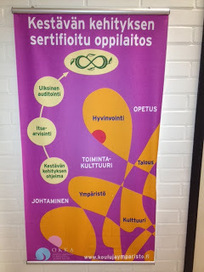
Muurame Senior High School has been several years highly qualified institute. This means lot of development work day by day. Our school has gained three times the certificate for promoting sustainable development. Our school was the very first senior high school to achieve this status. Today there are only 5 senior high school in Finland who has reached this certificate.Certificate stands for quality.
|







The more frequent the feedback, the easier it is to learn and improve.