21st Century Learning and Teaching
791.7K views | +4 today
21st Century Learning and Teaching
Related articles to 21st Century Learning and Teaching as also tools...
Curated by Gust MEES
Your new post is loading...

Popular Tags

Current selected tag: 'Learning 2 Learn'. Clear
Scooped by Gust MEES
November 20, 2015 3:18 AM
Scoop.it!

A beginner’s guide to content curation | LEARNing To LEARN

A beginner’s guide to content curation | LEARNing To LEARN | 21st Century Learning and Teaching | Scoop.it
Why do content curation? What is it exactly? Here is the guide to content curation you need to become successful in content marketing.


Learn more:


https://gustmees.wordpress.com/2013/04/25/learn-every-day-a-bit-with-curation/


http://www.scoop.it/t/21st-century-learning-and-teaching/?tag=Curation


https://globaleducationandsocialmedia.wordpress.com/2014/01/19/pkm-personal-professional-knowledge-management/


Gust MEES's insight:
Why do content curation? What is it exactly? Here is the guide to content curation you need to become successful in content marketing.


Learn more:


https://gustmees.wordpress.com/2013/04/25/learn-every-day-a-bit-with-curation/


http://www.scoop.it/t/21st-century-learning-and-teaching/?tag=Curation


https://globaleducationandsocialmedia.wordpress.com/2014/01/19/pkm-personal-professional-knowledge-management/


No comment yet.
Scooped by Gust MEES
November 19, 2015 7:40 PM
Scoop.it!

3 things teachers need to stop doing | Stop, Start, Continue: Conceptual Understanding Meets Applied Problem Solving

3 things teachers need to stop doing | Stop, Start, Continue: Conceptual Understanding Meets Applied Problem Solving | 21st Century Learning and Teaching | Scoop.it
To better understand how educating individuals can make a global difference, consider what we should stop doing, what we should start doing, and what we should continue doing.


What Should We Stop Doing?Stop teaching as if we have the answers.Stop rushing.Stop talking.What Should We Start Doing?Start looking for problems to solve, actions to take, and beauty to create.Start seeking out authentic, high-stakes audiences for student work.


Gust MEES's insight:

To better understand how educating individuals can make a global difference, consider what we should stop doing, what we should start doing, and what we should continue doing.


What Should We Stop Doing?Stop teaching as if we have the answers.Stop rushing.Stop talking.What Should We Start Doing?Start looking for problems to solve, actions to take, and beauty to create.Start seeking out authentic, high-stakes audiences for student work.


Rescooped by Gust MEES from E-Learning-Inclusivo (Mashup)
November 14, 2015 11:32 AM
Scoop.it!

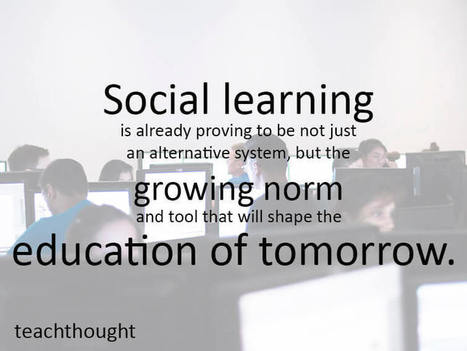
Are You Prepared For The Future Of Social Learning?

Are You Prepared For The Future Of Social Learning? | 21st Century Learning and Teaching | Scoop.it

"

Are You Prepared For The Future Of Social Learning?

by Krish Kupathil, Mobiliya


R = e –t/s where R is retention, T is time and S is strength. A formula detailing a chemical reaction, or the new math behind a social media outreach strategy? Actually, an expression of the ability to remember, discovered by the German psychologist Herman Ebbinghaus. Known as the famous Forgetting Curve, it hypothesized the decline of memory retention over time. In fact we now know that 50 percent of formal learning is forgotten within the first hour.

With this statistic in mind, it is surprising that our formal education system –our schools, colleges and universities— has primarily relied on conventional learning methods to deliver information. Until even a few decades ago, schools, colleges and even professional organizations saw learning happening through structured modules, courses and programs delivered by the ‘head’ of the class, typically a teacher or trainer, to a group of passive listeners.


With the Internet exploding with information resources and tools for learning, teachers can be facilitators of information with a greater emphasis on explanation and critical thinking as opposed to the dissemination source. Formal learning systems have in some cases been slower to adopt this model, rightfully concerned with accuracy of material and consistency; yet with ever increasing numbers of individuals accessing information in learning environments, the necessity of these formal systems to adopt technological change is very clear."


Learn more:


https://gustmees.wordpress.com/2015/10/29/if-i-would-own-a-company-what-skills-would-i-expect-from-my-workers-in-21st-century/


https://gustmees.wordpress.com/2015/07/19/learning-path-for-professional-21st-century-learning-by-ict-practice/


Via EDTECH@UTRGV, juandoming
Gust MEES's insight:

Are You Prepared For The Future Of Social Learning?

by Krish Kupathil, Mobiliya


R = e –t/s where R is retention, T is time and S is strength. A formula detailing a chemical reaction, or the new math behind a social media outreach strategy? Actually, an expression of the ability to remember, discovered by the German psychologist Herman Ebbinghaus. Known as the famous Forgetting Curve, it hypothesized the decline of memory retention over time. In fact we now know that 50 percent of formal learning is forgotten within the first hour.

With this statistic in mind, it is surprising that our formal education system –our schools, colleges and universities— has primarily relied on conventional learning methods to deliver information. Until even a few decades ago, schools, colleges and even professional organizations saw learning happening through structured modules, courses and programs delivered by the ‘head’ of the class, typically a teacher or trainer, to a group of passive listeners.


With the Internet exploding with information resources and tools for learning, teachers can be facilitators of information with a greater emphasis on explanation and critical thinking as opposed to the dissemination source. Formal learning systems have in some cases been slower to adopt this model, rightfully concerned with accuracy of material and consistency; yet with ever increasing numbers of individuals accessing information in learning environments, the necessity of these formal systems to adopt technological change is very clear."


Learn more:


https://gustmees.wordpress.com/2015/10/29/if-i-would-own-a-company-what-skills-would-i-expect-from-my-workers-in-21st-century/


https://gustmees.wordpress.com/2015/07/19/learning-path-for-professional-21st-century-learning-by-ict-practice/


Sonia Santoveña's curator insight, November 16, 2015 4:11 AM

añada su visión ...

ANA PAULA SENA DE ALMEIDA's curator insight, November 16, 2015 8:00 AM

Aos queridos professores.

Tony Guzman's curator insight, November 18, 2015 11:52 AM

This article poses the question: Are you ready for having social learning be the norm in the classroom of the future?

Scooped by Gust MEES
November 11, 2015 7:03 PM
Scoop.it!

Fachidiot – Wikipedia | Lesenswert für #EDUcators #TEACHers #EDU #EdChatDE

Fachidiot - Wikipedia

Als (vor allem in Österreich auch Fachtrottel ) wird ein Experte bezeichnet, der eine Problematik nur aus der Perspektive seines Fachgebietes kennt, nur aus seiner Sichtweise ( Borniertheit) erfassen kann und nicht alle Möglichkeiten und Richtungen in Betracht zieht, die für die vollständige Verständlichkeit und Erfassbarkeit eines Gegenstandes, einer Sache oder Thematik erforderlich wären.

Gust MEES's insight:

Als (vor allem in Österreich auch Fachtrottel ) wird ein Experte bezeichnet, der eine Problematik nur aus der Perspektive seines Fachgebietes kennt, nur aus seiner Sichtweise ( Borniertheit) erfassen kann und nicht alle Möglichkeiten und Richtungen in Betracht zieht, die für die vollständige Verständlichkeit und Erfassbarkeit eines Gegenstandes, einer Sache oder Thematik erforderlich wären.


No comment yet.
Rescooped by Gust MEES from Supports for Leadership
November 10, 2015 9:41 AM
Scoop.it!

How Provocative dare you be? - Coaching through Change Problems

How Provocative dare you be? - Coaching through Change Problems | 21st Century Learning and Teaching | Scoop.it
Provocative coaching is a great tool during change processes. Dare you disrupt your client to help them find a resourceful response to the change problem?


“Content is verbal and already known. I advise you to not get drawn into the story the client tells. Instead, look at how they are and who they are. The information you need to help them get unstuck is IN the process.


Points excerpted:

Look for nonverbal cues. Don’t always listen to what the client says!Keep your attention with them completely: notice their nonverbal communication, and their patterns of telling their story, their patterns of behaving. The key is to interrupt their patterns – to distract them – to take them out of their current state of mind – to help them see the situation with fresh eyes and wake up and learn.”“When you’re thinking what to do next – you’re away from the present. Stay aware in the here and now with your client.”The three demons that jeopardize a person’s effectiveness: muscle tension, inner noise and tunnel vision. 

To serve the client and nothing but the client – we must provoke a resourceful response – to let them find and appreciate what is true and what is helpful in their change process.

 
Learn more:


Via Deb Nystrom, REVELN, Mark E. Deschaine, PhD
Gust MEES's insight:
Provocative coaching is a great tool during change processes. Dare you disrupt your client to help them find a resourceful response to the change problem?


“Content is verbal and already known. I advise you to not get drawn into the story the client tells. Instead, look at how they are and who they are. The information you need to help them get unstuck is IN the process.


Points excerpted:

Look for nonverbal cues. Don’t always listen to what the client says!Keep your attention with them completely: notice their nonverbal communication, and their patterns of telling their story, their patterns of behaving. The key is to interrupt their patterns – to distract them – to take them out of their current state of mind – to help them see the situation with fresh eyes and wake up and learn.”“When you’re thinking what to do next – you’re away from the present. Stay aware in the here and now with your client.”The three demons that jeopardize a person’s effectiveness: muscle tension, inner noise and tunnel vision. 

To serve the client and nothing but the client – we must provoke a resourceful response – to let them find and appreciate what is true and what is helpful in their change process.

 
Learn more:
PresentationLoad's comment, November 9, 2015 5:26 AM
Nice! Change Management is realisable with PowerPoint too: http://blog.presentationload.de/grundlagen-des-change-managements/
Scooped by Gust MEES
November 5, 2015 6:53 PM
Scoop.it!

If I Would OWN a Company, WHAT Skills Would I Expect From MY Workers In 21st Century!? | LEARNing To LEARN

If I Would OWN a Company, WHAT Skills Would I Expect From MY Workers In 21st Century!? | LEARNing To LEARN | 21st Century Learning and Teaching | Scoop.it

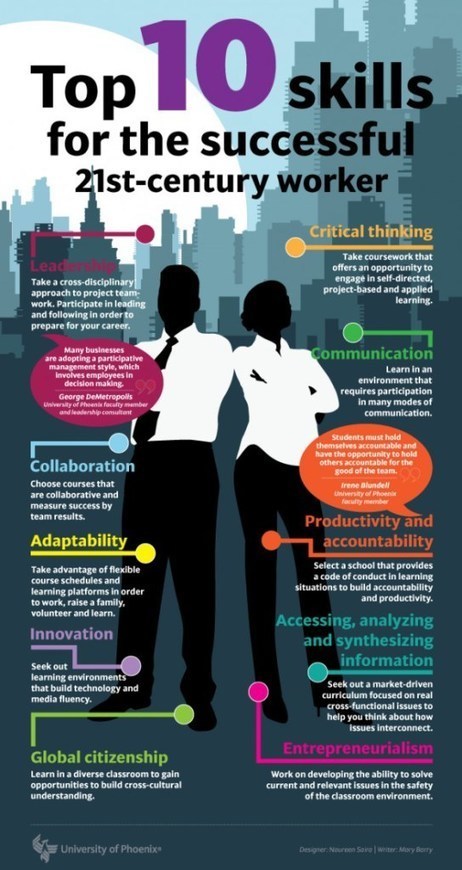
Because of ICT there are sooooo many NEW possibilities to use with the computers and the internet. Just imagine that a company owner should employ people for each special application, NO WAY! (S)He wouldn’t have enough money to afford it!!! So it is necessary that the 21st Century worker/employee would be an all-rounder! An all-rounder WHO comes straight out of school and from whom the business/workforce could profit directly!!!


Learn more:


https://gustmees.wordpress.com


Gust MEES's insight:

Because of ICT there are sooooo many NEW possibilities to use with the computers and the internet. Just imagine that a company owner should employ people for each special application, NO WAY! (S)He wouldn’t have enough money to afford it!!! So it is necessary that the 21st Century worker/employee would be an all-rounder! An all-rounder WHO comes straight out of school and from whom the business/workforce could profit directly!!!


Learn more:


https://gustmees.wordpress.com


Violeta Garcia's curator insight, November 6, 2015 7:01 AM

#SCEUNED15

Jerry Busone's curator insight, November 6, 2015 8:52 AM

Some good insight about working in the 21st century

Michelle Gilstrap's curator insight, November 7, 2015 11:02 AM

Adding in the computer skills in database management and I think you have it.

Scooped by Gust MEES
November 2, 2015 3:19 PM
Scoop.it!

Strategies to Build Intrinsic Motivation

Strategies to Build Intrinsic Motivation | 21st Century Learning and Teaching | Scoop.it
Encouraging student commitment ultimately brings better results than the external motivations of reward or punishment. These seven self-persuasion strategies will get you started.


Learn more:


https://gustmees.wordpress.com/2015/03/04/learning-to-learn-preparation-for-better-learning-how-to/


https://gustmees.wordpress.com/2015/07/19/learning-path-for-professional-21st-century-learning-by-ict-practice/


Gust MEES's insight:

Encouraging student commitment ultimately brings better results than the external motivations of reward or punishment. These seven self-persuasion strategies will get you started.


Learn more:


https://gustmees.wordpress.com/2015/03/04/learning-to-learn-preparation-for-better-learning-how-to/


https://gustmees.wordpress.com/2015/07/19/learning-path-for-professional-21st-century-learning-by-ict-practice/


No comment yet.
Scooped by Gust MEES
October 30, 2015 10:22 PM
Scoop.it!

BEE SECURE sensibilise le public au Cloud | eLEADERship | ICT | eSkills | Digital CitiZEN

BEE SECURE sensibilise le public au Cloud | eLEADERship | ICT | eSkills | Digital CitiZEN | 21st Century Learning and Teaching | Scoop.it
Sensibiliser le grand public aux problématiques du cloud computing, tel est le nouvel objectif de BEE SECURE pour 2015 et 2016. Le 9 octobre 2015, l’initiative BEE SECURE a fêté ses 5 ans
Gust MEES's insight:

Sensibiliser le grand public aux problématiques du cloud computing, tel est le nouvel objectif de BEE SECURE pour 2015 et 2016. Le 9 octobre 2015, l’initiative BEE SECURE a fêté ses 5 ans.


No comment yet.
Scooped by Gust MEES
October 29, 2015 10:56 AM
Scoop.it!

Learning in the Modern Workplace is a mix of Experiences (the infographic) | LEARNing To LEARN | ICT | eSkills

Learning in the Modern Workplace is a mix of Experiences (the infographic) | LEARNing To LEARN | ICT | eSkills | 21st Century Learning and Teaching | Scoop.it
Learning in the modern workplace is not just about training and e-learning but is a mix of both company-organised and personal experiences. L&D departments can no longer design, deliver and man...
Gust MEES's insight:

Learning in the modern workplace is not just about training and e-learning but is a mix of both company-organised and personal experiences. L&D departments can no longer design, deliver and man...


Carlos Rodrigues Cadre's curator insight, October 30, 2015 8:14 AM

adicionar sua visão ...

Scooped by Gust MEES
October 29, 2015 8:12 AM
Scoop.it!

How People Learn: An Evidence-Based Approach | LEARNing To LEARN

How People Learn: An Evidence-Based Approach | LEARNing To LEARN | 21st Century Learning and Teaching | Scoop.it
Deans for Impact believes that teacher educators should focus on how students acquire and retain information to help them build their critical-thinking and problem-solving skills.


6 Scientific Principles Every Teacher Should Know

Unfortunately, our education system is rife with misconceptions and confusion about learning. So let's clear away the myths and focus on well-established cognitive principles and their implications for the classroom:

1. Students learn new ideas by relating them to what they already know, and then transferring them into their long-term memory.

This means that teachers should make sure that students have -- or should provide students with -- the background knowledge needed for understanding new content. Students without adequate background knowledge, or who are otherwise not given enough instructional guidance, can be quickly overwhelmed in the classroom.

...


Gust MEES's insight:
Deans for Impact believes that teacher educators should focus on how students acquire and retain information to help them build their critical-thinking and problem-solving skills.


6 Scientific Principles Every Teacher Should Know

Unfortunately, our education system is rife with misconceptions and confusion about learning. So let's clear away the myths and focus on well-established cognitive principles and their implications for the classroom:

1. Students learn new ideas by relating them to what they already know, and then transferring them into their long-term memory.

This means that teachers should make sure that students have -- or should provide students with -- the background knowledge needed for understanding new content. Students without adequate background knowledge, or who are otherwise not given enough instructional guidance, can be quickly overwhelmed in the classroom.

...


Sonia Santoveña's curator insight, November 2, 2015 8:19 AM

añada su visión ...

Scooped by Gust MEES
October 28, 2015 11:35 AM
Scoop.it!

In Europe Digital Skills Matter: An Interview with Telecentre Europe Managing Director, Gabriel Rissola

In Europe Digital Skills Matter: An Interview with Telecentre Europe Managing Director, Gabriel Rissola | 21st Century Learning and Teaching | Scoop.it

Young people and children may know how to operate devices but are not necessarily prepared to think digitally. The idea that the new generations are all “digital natives” is a fallacy. Interestingly, the school is now considered as THE place that should undertake the mission to prepare them for the challenges of the digital-by-default society in which they will live. But schools are not ready yet. For example, when one of my daughters recently started secondary school she was immersed in a new pedagogic model that is based on the use of a handheld device instead of books. The model came from a partnership with the industry and counted with the support of the school principal. Although I welcomed the initiative, I soon noticed a mix of new and old ways of teaching that weakened its effectiveness. The intention was great but it was not accompanied by an adequate preparation of teachers to act as learning facilitators. This is one of the major challenges for schools, in my view.

When we think of young people today we also deal with another contradiction. Many of them are unemployed; with some regions in Europe where as far as one out of two youths are unemployed. But at the same time, digital skills are increasingly demanded by the labour market (there will be about 825,000 ICT vacancies in EU by 2020). We tend to think that young people automatically have these skills. But they don’t. Therefore, digital literacy is becoming as important as traditional literacy and numeracy. Digital literacy is not only about the ability to use office or social media tools. It also implies understanding the logic behind it- what some call “computational thinking”- and this can be acquired, for example, by coding.

Another problem, as pointed out by many experts, is the lack of students in STEM (Science, Technology, Engineering and Mathematics) and this will only make the skills gap deeper. STEM studies are apparently not fashionable. So we need to make them more appealing, for example, by adding topics such as Arts or Creativity to stimulate interest and innovation in these fields. We can also work on better aligning university career plans to the labour market demands and expectations.

Gust MEES's insight:

Young people and children may know how to operate devices but are not necessarily prepared to think digitally. The idea that the new generations are all “digital natives” is a fallacy. Interestingly, the school is now considered as THE place that should undertake the mission to prepare them for the challenges of the digital-by-default society in which they will live. But schools are not ready yet. For example, when one of my daughters recently started secondary school she was immersed in a new pedagogic model that is based on the use of a handheld device instead of books. The model came from a partnership with the industry and counted with the support of the school principal. Although I welcomed the initiative, I soon noticed a mix of new and old ways of teaching that weakened its effectiveness. The intention was great but it was not accompanied by an adequate preparation of teachers to act as learning facilitators. This is one of the major challenges for schools, in my view.

When we think of young people today we also deal with another contradiction. Many of them are unemployed; with some regions in Europe where as far as one out of two youths are unemployed. But at the same time, digital skills are increasingly demanded by the labour market (there will be about 825,000 ICT vacancies in EU by 2020). We tend to think that young people automatically have these skills. But they don’t. Therefore, digital literacy is becoming as important as traditional literacy and numeracy. Digital literacy is not only about the ability to use office or social media tools. It also implies understanding the logic behind it- what some call “computational thinking”- and this can be acquired, for example, by coding.

Another problem, as pointed out by many experts, is the lack of students in STEM (Science, Technology, Engineering and Mathematics) and this will only make the skills gap deeper. STEM studies are apparently not fashionable. So we need to make them more appealing, for example, by adding topics such as Arts or Creativity to stimulate interest and innovation in these fields. We can also work on better aligning university career plans to the labour market demands and expectations.

No comment yet.
Scooped by Gust MEES
October 26, 2015 7:24 AM
Scoop.it!

Why IoT Security Is So Critical | Internet of Things | CyberSecurity | Privacy

Why IoT Security Is So Critical | Internet of Things | CyberSecurity | Privacy | 21st Century Learning and Teaching | Scoop.it

Twenty years ago, if you told me my phone could be used to steal the password to my email account or to take a copy of my fingerprint data, I would’ve laughed at you and said you watch too much James Bond. But today, if you tell me that hackers with malicious intents can use my toaster to break into my Facebook account, I will panic and quickly pull the plug from the evil appliance.

What is evident is that the IoT will become an important part of our lives very soon, and its security is one of the major issues that must be addressed via active participation by the entire global tech community. Will we be able to harness this most-hyped, emerging technology that will undoubtedly revolutionize the world, or will we end up opening a Pandora’s Box that will spiral the world into a new age of mayhem and chaos? Let’s hope for the former.


Learn more:


http://www.scoop.it/t/21st-century-learning-and-teaching/?tag=Internet+of+Things


https://globaleducationandsocialmedia.wordpress.com/2014/01/21/why-is-it-a-must-to-have-basics-knowledge-of-cyber-security-in-a-connected-technology-world/


Gust MEES's insight:

Twenty years ago, if you told me my phone could be used to steal the password to my email account or to take a copy of my fingerprint data, I would’ve laughed at you and said you watch too much James Bond. But today, if you tell me that hackers with malicious intents can use my toaster to break into my Facebook account, I will panic and quickly pull the plug from the evil appliance.

What is evident is that the IoT will become an important part of our lives very soon, and its security is one of the major issues that must be addressed via active participation by the entire global tech community. Will we be able to harness this most-hyped, emerging technology that will undoubtedly revolutionize the world, or will we end up opening a Pandora’s Box that will spiral the world into a new age of mayhem and chaos? Let’s hope for the former.


Learn more:


http://www.scoop.it/t/21st-century-learning-and-teaching/?tag=Internet+of+Things


https://globaleducationandsocialmedia.wordpress.com/2014/01/21/why-is-it-a-must-to-have-basics-knowledge-of-cyber-security-in-a-connected-technology-world/


No comment yet.
Scooped by Gust MEES
October 25, 2015 6:35 PM
Scoop.it!

Speziallinse fürs Smartphone - mit Gelee | MakerED | Maker | MakerSpaces | Science

Speziallinse fürs Smartphone - mit Gelee | MakerED | Maker | MakerSpaces | Science | 21st Century Learning and Teaching | Scoop.it
Bastele eine Art Lupe für die Kamera eines Smartphones um kleine Details zu vergrössern - und davon Bilder zu machen.
Gust MEES's insight:

Bastele eine Art Lupe für die Kamera eines Smartphones um kleine Details zu vergrössern - und davon Bilder zu machen.


No comment yet.
Scooped by Gust MEES
November 19, 2015 7:52 PM
Scoop.it!

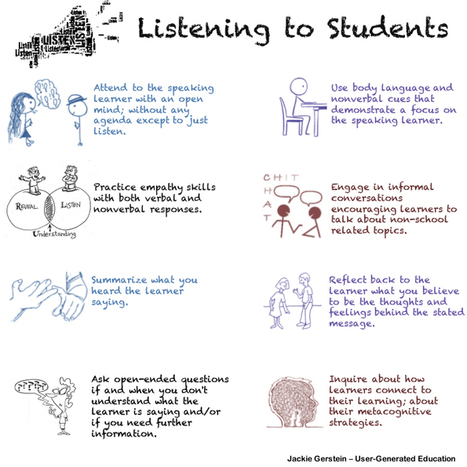
Student Voice Comes With Teachers as Listeners | LEARNing To LEARN

Student Voice Comes With Teachers as Listeners | LEARNing To LEARN | 21st Century Learning and Teaching | Scoop.it

This piece was actually sparked by an interview of Lady Gaga by Soledad O' Brien at the Born This Way Emotion Revolution Summit where Gaga stated, "It's time to stop telling learners what to do and 

start listening for we can do for them.”


One of those accepted practices, sadly, in most educational settings is that the teacher is the authority to be respected and listened to without question. Listening to students is not a practice that is often taught in teacher education programs.


There is a current movement, in some circles, to promote and honor student voice.  But, and this is a huge but, if educators are serious about honoring student voice, they need to first learn how to listen, really listen to their students.

Students who are given a voice in setting goals gain ownership in what they’re learning. Teachers who listen to what students tell them they need to learn gain more than just a better understanding of the children they teach — they gain clarity on their roadmap to better teaching. And when conversations about teaching and learning are allowed to happen, teachers and students develop mutual trust and high expectations. (Want to Improve Teaching? Listen to Students)

Learn more:


https://gustmees.wordpress.com/2014/10/03/design-the-learning-of-your-learners-students-ideas/


https://gustmees.wordpress.com/2014/05/29/practice-put-students-in-the-drivers-seat-how-to/


https://gustmees.wordpress.com/2014/01/04/practice-better-ways-to-say-i-dont-know-in-the-classroom/


http://www.scoop.it/t/21st-century-learning-and-teaching/?tag=students+voice


Gust MEES's insight:

This piece was actually sparked by an interview of Lady Gaga by Soledad O' Brien at the Born This Way Emotion Revolution Summit where Gaga stated, "It's time to stop telling learners what to do and 

start listening for we can do for them.”


One of those accepted practices, sadly, in most educational settings is that the teacher is the authority to be respected and listened to without question. Listening to students is not a practice that is often taught in teacher education programs.


There is a current movement, in some circles, to promote and honor student voice.  But, and this is a huge but, if educators are serious about honoring student voice, they need to first learn how to listen, really listen to their students.

Students who are given a voice in setting goals gain ownership in what they’re learning. Teachers who listen to what students tell them they need to learn gain more than just a better understanding of the children they teach — they gain clarity on their roadmap to better teaching. And when conversations about teaching and learning are allowed to happen, teachers and students develop mutual trust and high expectations. (Want to Improve Teaching? Listen to Students)

Learn more:


https://gustmees.wordpress.com/2014/10/03/design-the-learning-of-your-learners-students-ideas/


https://gustmees.wordpress.com/2014/05/29/practice-put-students-in-the-drivers-seat-how-to/


https://gustmees.wordpress.com/2014/01/04/practice-better-ways-to-say-i-dont-know-in-the-classroom/


http://www.scoop.it/t/21st-century-learning-and-teaching/?tag=students+voice


Mauro Marino Jiménez's curator insight, November 25, 2015 8:37 AM

Para docentes

Dixie Binford's curator insight, November 30, 2015 10:25 AM

As I visit classrooms, I see teachers working hard at lecturing and students passively receiving.  A few students may be actively taking notes of some kind but most are just listening, maybe.  In John Hattie's , Visible Learning (pp.43-44), one of the most effective predictors of student performance is the student's own reporting of his/her level of knowledge of the content.

Prometheus's curator insight, December 3, 2015 2:41 PM
Listening to students is important. The emphasis on this and it's repercussions for learning in the classroom are something that ties in with the Te Kotahitanga program that is in place across school in New Zealand. Getting to know students and developing relationships with them for me has always been key and listening to students is an essential part of this.
Scooped by Gust MEES
November 15, 2015 11:25 AM
Scoop.it!

Internet: La sécurité en ligne spéciale seniors au Luxembourg | DigitalCitiZEN | DigitalLuxembourg | ICT

Internet: La sécurité en ligne spéciale seniors au Luxembourg | DigitalCitiZEN | DigitalLuxembourg | ICT | 21st Century Learning and Teaching | Scoop.it
Bee Secure a créé un site web dédié spécialement aux seniors, afin de les informer et les conseiller quant à une utilisation plus maîtrisée d'internet.


Learn more / Mehr erfahren / En savoir plus :


https://gustmees.wordpress.com/2014/11/18/why-cybersecurity-starts-at-home-and-is-concerning-all-of-us/


https://globaleducationandsocialmedia.wordpress.com/2014/01/21/why-is-it-a-must-to-have-basics-knowledge-of-cyber-security-in-a-connected-technology-world/


Gust MEES's insight:

Bee Secure a créé un site web dédié spécialement aux seniors, afin de les informer et les conseiller quant à une utilisation plus maîtrisée d'internet.


Learn more / Mehr erfahren / En savoir plus :


https://gustmees.wordpress.com/2014/11/18/why-cybersecurity-starts-at-home-and-is-concerning-all-of-us/


https://globaleducationandsocialmedia.wordpress.com/2014/01/21/why-is-it-a-must-to-have-basics-knowledge-of-cyber-security-in-a-connected-technology-world/


No comment yet.
Scooped by Gust MEES
November 14, 2015 10:02 AM
Scoop.it!

Wie sicher ist das Internet der Dinge? | Internet of Things | IoT | IoE | CyberSecurity

Wie sicher ist das Internet der Dinge? | Internet of Things | IoT | IoE | CyberSecurity | 21st Century Learning and Teaching | Scoop.it
Das Internet of Things entwickelt sich rasend schnell – die Hacker halten Schritt. Nun muss das Engineering bei der IoT-Absicherung eng mit den Security-Experten der IT zusammenarbeiten.


Learn more / En savoir plus / Mehr erfahren:


http://www.scoop.it/t/securite-pc-et-internet/?tag=Linux.Wifatch


http://www.scoop.it/t/21st-century-learning-and-teaching/?tag=Internet+of+Things


http://www.scoop.it/t/securite-pc-et-internet/?tag=Router


http://www.scoop.it/t/securite-pc-et-internet/?tag=smart-TV


http://www.scoop.it/t/securite-pc-et-internet/?tag=Internet+of+things


http://globaleducationandsocialmedia.wordpress.com/2014/01/21/why-is-it-a-must-to-have-basics-knowledge-of-cyber-security-in-a-connected-technology-world/


http://www.scoop.it/t/securite-pc-et-internet/?tag=Cars

Gust MEES's insight:
Das Internet of Things entwickelt sich rasend schnell – die Hacker halten Schritt. Nun muss das Engineering bei der IoT-Absicherung eng mit den Security-Experten der IT zusammenarbeiten.


Learn more / En savoir plus / Mehr erfahren:


http://www.scoop.it/t/securite-pc-et-internet/?tag=Linux.Wifatch


http://www.scoop.it/t/21st-century-learning-and-teaching/?tag=Internet+of+Things


http://www.scoop.it/t/securite-pc-et-internet/?tag=Router


http://www.scoop.it/t/securite-pc-et-internet/?tag=smart-TV


http://www.scoop.it/t/securite-pc-et-internet/?tag=Internet+of+things


http://globaleducationandsocialmedia.wordpress.com/2014/01/21/why-is-it-a-must-to-have-basics-knowledge-of-cyber-security-in-a-connected-technology-world/


http://www.scoop.it/t/securite-pc-et-internet/?tag=Cars


No comment yet.
Scooped by Gust MEES
November 11, 2015 1:14 PM
Scoop.it!

5 Myths About Being an Online Learning Expert

5 Myths About Being an Online Learning Expert | 21st Century Learning and Teaching | Scoop.it
What does it take to become an online learning expert? Here are five common myths and a tip on how to help the field progress.


A MUST READ!!!


Gust MEES's insight:
What does it take to become an online learning expert? Here are five common myths and a tip on how to help the field progress.


A MUST READ!!!

Tony Guzman's curator insight, November 12, 2015 5:00 PM

This article shares some myths regarding online learning and its experts. Favorite myth point: Best practice is not always best practice.

Rescooped by Gust MEES from Personalized Professional Development
November 9, 2015 10:08 AM
Scoop.it!

Developing Digital Literacy Through Content Curation

Developing Digital Literacy Through Content Curation | 21st Century Learning and Teaching | Scoop.it
With the amount of content that is shared on the Internet every minute, it’s no surprise that many people feel overwhelmed by the quantity of information out there. This is why content curation is becoming an essential digital literacy skill for teachers and students.


Learn more:


http://www.scoop.it/t/21st-century-learning-and-teaching/?tag=Curation


https://gustmees.wordpress.com/2013/04/25/learn-every-day-a-bit-with-curation/


https://gustmees.wordpress.com/2015/10/29/if-i-would-own-a-company-what-skills-would-i-expect-from-my-workers-in-21st-century/


https://globaleducationandsocialmedia.wordpress.com/2014/01/19/pkm-personal-professional-knowledge-management/


Via Guillaume Decugis, Manuel Pinto, michel verstrepen, Stephania Savva, Ph.D, Mark E. Deschaine, PhD
Gust MEES's insight:
With the amount of content that is shared on the Internet every minute, it’s no surprise that many people feel overwhelmed by the quantity of information out there. This is why content curation is becoming an essential digital literacy skill for teachers and students.


Learn more:


http://www.scoop.it/t/21st-century-learning-and-teaching/?tag=Curation


https://gustmees.wordpress.com/2013/04/25/learn-every-day-a-bit-with-curation/


https://gustmees.wordpress.com/2015/10/29/if-i-would-own-a-company-what-skills-would-i-expect-from-my-workers-in-21st-century/


https://globaleducationandsocialmedia.wordpress.com/2014/01/19/pkm-personal-professional-knowledge-management/


delmy's curator insight, November 10, 2015 7:27 PM

# sceuned15

T. Ryno's curator insight, November 13, 2015 5:13 AM

Content curation is certainly an important digital literacy skill, very useful for citizenship as a whole. An awesome tool to increase the current level of critical thinking. 

Janine Roy's curator insight, November 29, 2015 8:33 PM

Content curation has become an essential digital literacy skill for teachers and students.

Scooped by Gust MEES
November 2, 2015 3:57 PM
Scoop.it!

Why are the best players sitting on the bench? | CTQ

Why are the best players sitting on the bench? | CTQ | 21st Century Learning and Teaching | Scoop.it

Teacher expertise.


Why? Here are a few reasons from the researchers on why teacher expertise in education policy (development, implementation, reflection, etc.) is important:


  • Reform can be problematic if teachers do not have a voice in education policy changes and the policy agenda (Wells, 2012; Bangs & Frost, 2012).
  • Teacher voice and teacher leadership is vital for the success of reform movements (Little, 1988; Organisation for Economic Co-operation and Development, 2011; Wells, 2012; York-Barr & Duke, 2004).
  • There is a chasm between current education policy and what teachers know and experience as practitioners (Bangs & Frost, 2012).
  • There is a huge gap between policy and practice in education (Berry et al., 2013).
  • We have a history of failed education reforms and policies with very little teacher input, and if there is teacher input, it may not be in meaningful ways. Think “rubber stamp” (Goldstein, 2014; Ravitch, 2011; anyone who looks at the history of education).


Teachers are the experts who will help identify the problem, the root cause of the problem, and the possible policy solution(s).

So the checklist? It’s a great start. But I have a to ask a question that could make it even stronger.

In the words of Goldstein (2013), “Why are the best players in the game of education reform sitting on the bench?” 

Gust MEES's insight:

Teacher expertise.

Why? Here are a few reasons from the researchers on why teacher expertise in education policy (development, implementation, reflection, etc.) is important:


  • Reform can be problematic if teachers do not have a voice in education policy changes and the policy agenda (Wells, 2012; Bangs & Frost, 2012).
  • Teacher voice and teacher leadership is vital for the success of reform movements (Little, 1988; Organisation for Economic Co-operation and Development, 2011; Wells, 2012; York-Barr & Duke, 2004).
  • There is a chasm between current education policy and what teachers know and experience as practitioners (Bangs & Frost, 2012).
  • There is a huge gap between policy and practice in education (Berry et al., 2013).
  • We have a history of failed education reforms and policies with very little teacher input, and if there is teacher input, it may not be in meaningful ways. Think “rubber stamp” (Goldstein, 2014; Ravitch, 2011; anyone who looks at the history of education).


Teachers are the experts who will help identify the problem, the root cause of the problem, and the possible policy solution(s).

So the checklist? It’s a great start. But I have a to ask a question that could make it even stronger.

In the words of Goldstein (2013), “Why are the best players in the game of education reform sitting on the bench?” 


No comment yet.
Scooped by Gust MEES
October 30, 2015 10:31 PM
Scoop.it!

Leading ‘Real World’ Learning by @GarethLewis76 | UKEdChat - Supporting the Education Community | LEARNing To LEARN

Leading ‘Real World’ Learning by @GarethLewis76 | UKEdChat - Supporting the Education Community | LEARNing To LEARN | 21st Century Learning and Teaching | Scoop.it
Reasons to link learning to the real world

Linking learning in a classroom has further benefits. It will engage the learner by giving them a real reason to have this skill or knowledge. It should not just be for a test that they will have to do! Let’s face it, for a lot of students this will automatically dis-engage them from the subject. On a side note; if learning is always based around having to learn it for the exam then I can say that take up in that subject later in life will become less likely… We all know the students who say that they are not doing this subject or that subject because it is boring! So make it interesting… As a teacher pass on that passion you have for your subject and engage the young person. Again, this can easily be done through a real world context.

Another positive side effect of a young person being engaged in learning is that they will demonstrate a positive behaviour for learning. As a teacher you will start to notice that they are now starting to ask questions (inquire) about the subject or learning outcome. Why not take this further? What about rewarding the learner for asking questions about the real world context, rather than for what they get right? I liken this to being a fisherman. You use the hook (real world context) to catch the fish (learner). Then in order to reel them in you get them to ask questions and then reward them for the question that they ask. All the time that this is happening the fisherman (teacher) is bringing the fish (learner) closer to the shore (learning outcome) through the deep waters (inquiry led deeper learning strategy). This thinking can form the basis of many lesson activities in the classroom.

This is how learners demonstrate deeper learning and it will ultimately ensure that they do not forget that learning. Learning stays in their mind because it has a purpose for them, a real reason to have it. It also creates the spark for them to want to know more.


Learn more:


https://gustmees.wordpress.com/2015/07/19/learning-path-for-professional-21st-century-learning-by-ict-practice/


Gust MEES's insight:
Reasons to link learning to the real world

Linking learning in a classroom has further benefits. It will engage the learner by giving them a real reason to have this skill or knowledge. It should not just be for a test that they will have to do! Let’s face it, for a lot of students this will automatically dis-engage them from the subject. On a side note; if learning is always based around having to learn it for the exam then I can say that take up in that subject later in life will become less likely… We all know the students who say that they are not doing this subject or that subject because it is boring! So make it interesting… As a teacher pass on that passion you have for your subject and engage the young person. Again, this can easily be done through a real world context.

Another positive side effect of a young person being engaged in learning is that they will demonstrate a positive behaviour for learning. As a teacher you will start to notice that they are now starting to ask questions (inquire) about the subject or learning outcome. Why not take this further? What about rewarding the learner for asking questions about the real world context, rather than for what they get right? I liken this to being a fisherman. You use the hook (real world context) to catch the fish (learner). Then in order to reel them in you get them to ask questions and then reward them for the question that they ask. All the time that this is happening the fisherman (teacher) is bringing the fish (learner) closer to the shore (learning outcome) through the deep waters (inquiry led deeper learning strategy). This thinking can form the basis of many lesson activities in the classroom.

This is how learners demonstrate deeper learning and it will ultimately ensure that they do not forget that learning. Learning stays in their mind because it has a purpose for them, a real reason to have it. It also creates the spark for them to want to know more.


Learn more:


https://gustmees.wordpress.com/2015/07/19/learning-path-for-professional-21st-century-learning-by-ict-practice/


Koen Mattheeuws's curator insight, November 3, 2015 3:28 AM

Een krachtige leeromgeving moet o.a. ECHT zijn.

Scooped by Gust MEES
October 29, 2015 12:18 PM
Scoop.it!

Finnland reformiert sein Schulsystem | Competency | LEARNing To LEARN for the workplace

Finnland reformiert sein Schulsystem | Competency | LEARNing To LEARN for the workplace | 21st Century Learning and Teaching | Scoop.it

"Von Lehrern kann erwartet werden, dass sie über ihr Fach hinausdenken, mit anderen Berufen kooperieren."


Von den Schülern kann man keine wesentlich besseren Fähigkeiten zur Interaktion und Beteiligung erwarten, als das alltägliche Vorbild in der Schulgemeinschaft zulässt. Die wichtigste Aufgabe der Schule ist es daher, den Boden für eine Gesellschaft des Vertrauens zu bereiten. Und von Lehrern kann erwartet werden, dass sie über ihr Fach hinausdenken, mit anderen Berufen kooperieren. So werden die Schüler in Problemsituationen die jeweils angemessene fachliche Hilfe erhalten.


Learn more / En savoir plus / Mehr erfahren:


https://gustmees.wordpress.com/2015/07/19/learning-path-for-professional-21st-century-learning-by-ict-practice/


http://www.scoop.it/t/21st-century-learning-and-teaching/?tag=Jane-Hart


http://www.scoop.it/t/21st-century-learning-and-teaching/?tag=Competency


Gust MEES's insight:

"Von Lehrern kann erwartet werden, dass sie über ihr Fach hinausdenken, mit anderen Berufen kooperieren."


Von den Schülern kann man keine wesentlich besseren Fähigkeiten zur Interaktion und Beteiligung erwarten, als das alltägliche Vorbild in der Schulgemeinschaft zulässt. Die wichtigste Aufgabe der Schule ist es daher, den Boden für eine Gesellschaft des Vertrauens zu bereiten. Und von Lehrern kann erwartet werden, dass sie über ihr Fach hinausdenken, mit anderen Berufen kooperieren. So werden die Schüler in Problemsituationen die jeweils angemessene fachliche Hilfe erhalten.


Learn more / En savoir plus / Mehr erfahren:


https://gustmees.wordpress.com/2015/07/19/learning-path-for-professional-21st-century-learning-by-ict-practice/


http://www.scoop.it/t/21st-century-learning-and-teaching/?tag=Jane-Hart


http://www.scoop.it/t/21st-century-learning-and-teaching/?tag=Competency


Sonia Santoveña's curator insight, November 2, 2015 8:19 AM

añada su visión ...

Scooped by Gust MEES
October 29, 2015 8:39 AM
Scoop.it!

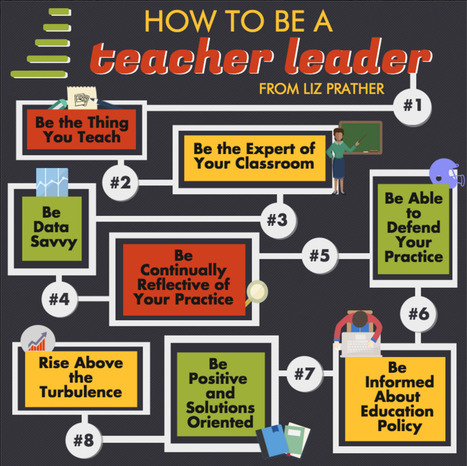
How To Be a Teacher Leader | CTQ | LEARNing To Learn

How To Be a Teacher Leader | CTQ | LEARNing To Learn | 21st Century Learning and Teaching | Scoop.it
  • Be the thing you teach.
  • Be the expert of your classroom.
  •  Be data savvy.
  • Be continually reflective on your practice.
  • Be able to defend your practice.
This directive is similar to the data-savvy and expert points, but teacher leaders need to be able to explain their craft. Your administrator will be trotting all kinds of people through your classroom.  As a teacher leader, you might be a maverick, doing things a little differently than the rest of the herd. Be prepared to defend that road less traveled.  Know why you do the things you do.  Then, as a leader, share everything you know.
Gust MEES's insight:
  • Be the thing you teach.
  • Be the expert of your classroom.
  •  Be data savvy.
  • Be continually reflective on your practice.
  • Be able to defend your practice.
This directive is similar to the data-savvy and expert points, but teacher leaders need to be able to explain their craft. Your administrator will be trotting all kinds of people through your classroom.  As a teacher leader, you might be a maverick, doing things a little differently than the rest of the herd. Be prepared to defend that road less traveled.  Know why you do the things you do.  Then, as a leader, share everything you know.
Pantelopoulou Dimitra's curator insight, October 30, 2015 1:54 AM

Be the thing you teach.

María Dolores Díaz Noguera's curator insight, October 30, 2015 9:01 AM

Aprendiendo a ser líder...How To Be a Teacher Leader | CTQ | LEARNing To Learn | @scoopit via @knolinfos http://sco.lt/...

Angela Ribo's curator insight, October 30, 2015 11:40 AM

Very practical insight.

Scooped by Gust MEES
October 28, 2015 11:44 AM
Scoop.it!

15 Ways to Promote the Adoption of a New Innovation in Your Learning Organization

15 Ways to Promote the Adoption of a New Innovation in Your Learning Organization | 21st Century Learning and Teaching | Scoop.it
How do you get a new innovation adopted in your school? How do you convinced people it is a good direction. These 15 ideas will get you started.
Gust MEES's insight:

How do you get a new innovation adopted in your school? How do you convinced people it is a good direction. These 15 ideas will get you started.


Willex Okumu's curator insight, December 9, 2015 8:45 AM

 A good reading piece

Scooped by Gust MEES
October 27, 2015 3:00 PM
Scoop.it!

Erste „Cryptoparty for Kids“ während der Konferenz Hack.lu | Digital CitiZEN | Cryptography

Erste „Cryptoparty for Kids“ während der Konferenz Hack.lu | Digital CitiZEN | Cryptography | 21st Century Learning and Teaching | Scoop.it
Am 22. Oktober fand im Alvisse Hotel in Dommeldange die erste „Cryptoparty for Kids“ im Rahmen der Hack.lu statt.An die zwanzig  Kinder im Alter von 7 bis 12 hatten sich zu diesem BEE SECURE Event eingefunden und erhielten umfassende Erklärungen zu den gegenwärtigen Informations- und Kommunikationstechnologien und wie sie sich mit existierenden Sicherheits-Methoden gegen Gefahren im Internet schützen können. Desweiteren wurden sie spielerisch in die Kunst der Verschlüsselung eingeführt.
Gust MEES's insight:

Am 22. Oktober fand im Alvisse Hotel in Dommeldange die erste „Cryptoparty for Kids“ im Rahmen der Hack.lu statt.An die zwanzig  Kinder im Alter von 7 bis 12 hatten sich zu diesem BEE SECURE Event eingefunden und erhielten umfassende Erklärungen zu den gegenwärtigen Informations- und Kommunikationstechnologien und wie sie sich mit existierenden Sicherheits-Methoden gegen Gefahren im Internet schützen können. Desweiteren wurden sie spielerisch in die Kunst der Verschlüsselung eingeführt.


No comment yet.
Scooped by Gust MEES
October 26, 2015 6:22 AM
Scoop.it!

How to build a learning worker mindset

How to build a learning worker mindset | 21st Century Learning and Teaching | Scoop.it

Why in this day and age, it is important to become a “learning worker”, and that for me  “learning to learn” doesn’t just mean “learning how to study” in formal courses. etc – although that’s a part of it, but nowadays it also means:

  • building a habit of continuous, everyday learning – and keeping your eyes and ears constantly open and learn from everything around you
  • extracting the learning from your work experiences – this, after all, is how most of how we learn to do our work takes place – as we do our job 
  • keeping up to date with what’s happening in your industry and profession – not just by going to an annual conference or reading a few industry magazines – that pretty much tells you what’s happening now, not what’s happening next – the place to find that out is in on the Social Web, in your professional social networks
  • recognising serendipitous learning – the accidental, unplanned learning that takes place everyday as a consequence of other things.

For me, this is the new work of learning professionals – one that involves helping and supporting individuals – rather than creating and delivering one-size-fits-all content!


Learn more:


https://gustmees.wordpress.com/2015/05/26/what-are-the-skills-needed-from-students-in-the-future/


https://gustmees.wordpress.com/2015/07/19/learning-path-for-professional-21st-century-learning-by-ict-practice/


Gust MEES's insight:

Why in this day and age, it is important to become a “learning worker”, and that for me  “learning to learn” doesn’t just mean “learning how to study” in formal courses. etc – although that’s a part of it, but nowadays it also means:

  • building a habit of continuous, everyday learning – and keeping your eyes and ears constantly open and learn from everything around you
  • extracting the learning from your work experiences – this, after all, is how most of how we learn to do our work takes place – as we do our job 
  • keeping up to date with what’s happening in your industry and profession – not just by going to an annual conference or reading a few industry magazines – that pretty much tells you what’s happening now, not what’s happening next – the place to find that out is in on the Social Web, in your professional social networks
  • recognising serendipitous learning – the accidental, unplanned learning that takes place everyday as a consequence of other things.

For me, this is the new work of learning professionals – one that involves helping and supporting individuals – rather than creating and delivering one-size-fits-all content!


Learn more:


https://gustmees.wordpress.com/2015/05/26/what-are-the-skills-needed-from-students-in-the-future/


https://gustmees.wordpress.com/2015/07/19/learning-path-for-professional-21st-century-learning-by-ict-practice/