21st Century Learning and Teaching
791.5K views | +11 today
21st Century Learning and Teaching
Related articles to 21st Century Learning and Teaching as also tools...
Curated by Gust MEES
Your new post is loading...

Popular Tags

Current selected tag: 'ICT'. Clear
Scooped by Gust MEES
March 1, 2018 10:40 AM
Scoop.it!

Content intelligence: a new step in the Scoop.it journey | #Curation #ContentCuration #ContentStrategy #ContentMarketing #BigData #AI

Content intelligence: a new step in the Scoop.it journey | #Curation #ContentCuration #ContentStrategy #ContentMarketing #BigData #AI | 21st Century Learning and Teaching | Scoop.it

Everyday, there are 4 million blog posts, 100,000 news articles and 500,000 hours of video published on the Internet. A wealth of information and knowledge. A wealth of information and knowledge that is lost for most companies, at least for the most part.

Lost?

Step 1: content curation
Not entirely. Thanks to content curation technology, the Web can now be filtered. With content curation tools and platforms such as Scoop.it (among others of course), we can use more or less sophisticated ways to filter this huge amount of content that is published daily to zoom in on what matters to us. Good content curation technology is essential. It saves people a huge amount of time looking for content to share for marketing purposes or information that helps their organization make better decisions. And perhaps as importantly, without these filters, we would just be able to search – not discover. We would still find answers to what we don’t know but we wouldn’t know what we don’t know.

But until recently, all the solutions we’ve offered to deal with information overload – ours included – have revolved around the same basic idea: more – or more sophisticated – filters.


Learn more / En savoir plus / Mehr erfahren:


https://www.scoop.it/t/21st-century-learning-and-teaching/?&tag=Curation


Gust MEES's insight:

Everyday, there are 4 million blog posts, 100,000 news articles and 500,000 hours of video published on the Internet. A wealth of information and knowledge. A wealth of information and knowledge that is lost for most companies, at least for the most part.

Lost?

Step 1: content curation
Not entirely. Thanks to content curation technology, the Web can now be filtered. With content curation tools and platforms such as Scoop.it (among others of course), we can use more or less sophisticated ways to filter this huge amount of content that is published daily to zoom in on what matters to us. Good content curation technology is essential. It saves people a huge amount of time looking for content to share for marketing purposes or information that helps their organization make better decisions. And perhaps as importantly, without these filters, we would just be able to search – not discover. We would still find answers to what we don’t know but we wouldn’t know what we don’t know.

But until recently, all the solutions we’ve offered to deal with information overload – ours included – have revolved around the same basic idea: more – or more sophisticated – filters.


Learn more / En savoir plus / Mehr erfahren:


https://www.scoop.it/t/21st-century-learning-and-teaching/?&tag=Curation


No comment yet.
Scooped by Gust MEES
March 1, 2018 9:19 AM
Scoop.it!

Considering Community: Communities of practice as vital tools for knowledge management | #PKM #LEARNing2LEARN

Considering Community: Communities of practice as vital tools for knowledge management | #PKM #LEARNing2LEARN | 21st Century Learning and Teaching | Scoop.it

Considering Community: Communities of practice as vital tools for knowledge management


Social in silico includes a series of occasional posts focused on community management tips and related information. I’m tagging these Considering Community and you can find all the posts in the series here. 

Previously on this blog, I’ve reflected on the different types of community that I’ve observed within science and specifically in the first cohort of the community engagement fellowship program that I run at AAAS. I identified four initial broad types of scientific communities – from professional associations to communities of practice. I’m currently delving deeper into communities of practice and am enjoying reading “Cultivating communities of practice” by Etienne Wenger, Richard McDermott and William M. Snyder.

Communities of practice and coffee – breaking down those silos one latte at a time…

What’s a community of practice – and what does it have to do with knowledge management?
A community of practice is a group of people who gather to learn more about a topic together and in doing so deepen their knowledge and expertise. The group may not have a specifically defined goal, but rather meet regularly to continually refine what they know about a subject. As such, communities of practice are key to knowledge management.

Wenger et al list 5 ways in which communities of practice are key to how we manage knowledge...


Learn more / En savoir plus / Mehr erfahren:


https://globaleducationandsocialmedia.wordpress.com/2014/01/19/pkm-personal-professional-knowledge-management/


Gust MEES's insight:

Considering Community: Communities of practice as vital tools for knowledge management


Social in silico includes a series of occasional posts focused on community management tips and related information. I’m tagging these Considering Community and you can find all the posts in the series here. 

Previously on this blog, I’ve reflected on the different types of community that I’ve observed within science and specifically in the first cohort of the community engagement fellowship program that I run at AAAS. I identified four initial broad types of scientific communities – from professional associations to communities of practice. I’m currently delving deeper into communities of practice and am enjoying reading “Cultivating communities of practice” by Etienne Wenger, Richard McDermott and William M. Snyder.

Communities of practice and coffee – breaking down those silos one latte at a time…

What’s a community of practice – and what does it have to do with knowledge management?
A community of practice is a group of people who gather to learn more about a topic together and in doing so deepen their knowledge and expertise. The group may not have a specifically defined goal, but rather meet regularly to continually refine what they know about a subject. As such, communities of practice are key to knowledge management.

Wenger et al list 5 ways in which communities of practice are key to how we manage knowledge...


Learn more / En savoir plus / Mehr erfahren:


https://globaleducationandsocialmedia.wordpress.com/2014/01/19/pkm-personal-professional-knowledge-management/


No comment yet.
Scooped by Gust MEES
February 24, 2018 8:27 AM
Scoop.it!

7 skills your child needs to survive the changing world of work | #ModernEDU #ModernLEARNing

7 skills your child needs to survive the changing world of work | #ModernEDU #ModernLEARNing | 21st Century Learning and Teaching | Scoop.it

Education may be the passport to the future, but for all the good teaching out there, it would seem that schools are failing to impart some of the most important life skills, according to one educational expert.

Dr. Tony Wagner, co-director of Harvard's Change Leadership Group, argues that today’s school children are facing a “global achievement gap”, which is the gap between what even the best schools are teaching and the skills young people need to learn.

This has been exacerbated by two colliding trends: firstly, the global shift from an industrial economy to a knowledge economy, and secondly, the way in which today’s school children – brought up with the internet – are motivated to learn.

In his book The Global Achievement Gap, Wagner identifies seven core competencies every child needs in order to survive in the coming world of work.

1. Critical thinking and problem-solving


2. Collaboration across networks and leading by influence


3. Agility and adaptability


4. Initiative and entrepreneurialism


5. Effective oral and written communication


6. Accessing and analysing information


7. Curiosity and imagination


Learn more / En savoir plus / Mehr erfahren:


https://gustmees.wordpress.com


Gust MEES's insight:

Education may be the passport to the future, but for all the good teaching out there, it would seem that schools are failing to impart some of the most important life skills, according to one educational expert.

Dr. Tony Wagner, co-director of Harvard's Change Leadership Group, argues that today’s school children are facing a “global achievement gap”, which is the gap between what even the best schools are teaching and the skills young people need to learn.

This has been exacerbated by two colliding trends: firstly, the global shift from an industrial economy to a knowledge economy, and secondly, the way in which today’s school children – brought up with the internet – are motivated to learn.

In his book The Global Achievement Gap, Wagner identifies seven core competencies every child needs in order to survive in the coming world of work.

1. Critical thinking and problem-solving


2. Collaboration across networks and leading by influence


3. Agility and adaptability


4. Initiative and entrepreneurialism


5. Effective oral and written communication


6. Accessing and analysing information


7. Curiosity and imagination


Learn more / En savoir plus / Mehr erfahren:


https://gustmees.wordpress.com


Kim Flintoff's curator insight, February 24, 2018 9:02 PM
In his book The Global Achievement Gap, Wagner identifies seven core competencies every child needs in order to survive in the coming world of work. 1. Critical thinking and problem-solving 2. Collaboration across networks and leading by influence 3. Agility and adaptability 4. Initiative and entrepreneurialism 5. Effective oral and written communication 6. Accessing and analysing information 7. Curiosity and imagination
Koen Mattheeuws's curator insight, February 25, 2018 5:07 AM
Share your insight
Pablo Peñalver's curator insight, March 2, 2018 1:17 AM

Education may be the passport to the future, but for all the good teaching out there, it would seem that schools are failing to impart some of the most important life skills, according to one educational expert.

Dr. Tony Wagner, co-director of Harvard's Change Leadership Group, argues that today’s school children are facing a “global achievement gap”, which is the gap between what even the best schools are teaching and the skills young people need to learn.

This has been exacerbated by two colliding trends: firstly, the global shift from an industrial economy to a knowledge economy, and secondly, the way in which today’s school children – brought up with the internet – are motivated to learn.

In his book The Global Achievement Gap, Wagner identifies seven core competencies every child needs in order to survive in the coming world of work.

1. Critical thinking and problem-solving


2. Collaboration across networks and leading by influence


3. Agility and adaptability


4. Initiative and entrepreneurialism


5. Effective oral and written communication


6. Accessing and analysing information


7. Curiosity and imagination


Learn more / En savoir plus / Mehr erfahren:


https://gustmees.wordpress.com


Scooped by Gust MEES
February 20, 2018 7:07 PM
Scoop.it!

What's the difference between adaptive and responsive web design? | #MobileDesign #Desktopdesign #ContentMarketing #ContentStrategy #ContentManagement #Press #Journalism 

What's the difference between adaptive and responsive web design? | #MobileDesign #Desktopdesign #ContentMarketing #ContentStrategy #ContentManagement #Press #Journalism  | 21st Century Learning and Teaching | Scoop.it

Many people use the terms Responsive Design and Adaptive Design interchangeably, but creating a distinction between them does help clarify two different approaches to the modern challenge of designing web pages that work on small and large screens.

In the world of web design, the only thing harder than keeping up with the ever-evolving standards in HTML, CSS, and other technologies, is keeping up with the vocabulary. This article is about helping you understand what responsive and adaptive design mean, and how these approaches differ.


Learn more / En savoir plus / Mehr erfahren:


https://www.scoop.it/t/21st-century-learning-and-teaching/?&tag=Web-Design


https://www.scoop.it/t/21st-century-learning-and-teaching/?&tag=press


Gust MEES's insight:

Many people use the terms Responsive Design and Adaptive Design interchangeably, but creating a distinction between them does help clarify two different approaches to the modern challenge of designing web pages that work on small and large screens.

In the world of web design, the only thing harder than keeping up with the ever-evolving standards in HTML, CSS, and other technologies, is keeping up with the vocabulary. This article is about helping you understand what responsive and adaptive design mean, and how these approaches differ.


Learn more / En savoir plus / Mehr erfahren:


https://www.scoop.it/t/21st-century-learning-and-teaching/?&tag=Web-Design


https://www.scoop.it/t/21st-century-learning-and-teaching/?&tag=press


Graphics Design's curator insight, February 21, 2018 1:24 AM

Kool Design Maker is Best Graphic Designing and Printing Company in the USA Now KDM Provides you Custom Door Hanger Design & Printing in the USA You not just get the plan of Custom Door Hanger yet additionally you can Print your most loved outline at Kool design maker.

Scooped by Gust MEES
February 20, 2018 6:08 PM
Scoop.it!

The Biggest Content Trends in 2018, According to 11 Experts | #Curation #ContentCuration #ContentMarketing #ContentStrategy 

The Biggest Content Trends in 2018, According to 11 Experts | #Curation #ContentCuration #ContentMarketing #ContentStrategy  | 21st Century Learning and Teaching | Scoop.it


The Biggest Content Trends in 2018, According to 11 Experts
Reaching the members of your audience through a content-cluttered landscape -- and their ad blockers -- will be harder than ever in 2018. Fortunately, there are new technologies and techniques that can help.

Marketing moves fast, and working in this industry means you've got to get comfortable with change. At the drop of a hat, new marketing tools can change how we create and distribute our messaging, emerging technologies change how we track ROI, and trends can impact our decision-making processes.

Earlier this year, I made my own predictions for some of the biggest social media trends and content marketing trends brands should prepare for in 2018. To help us all get a more thorough understanding of what the future holds for content marketing, my team and I reached out to 11 marketing leaders for their predictions about the biggest trends in content in 2018:


1. Audience experience will become more important than ever.

2. High-quality content clusters are the future of search.

3. Content strategies will expand.

4. Channel experimentation will be critical to reaching your audience.

5. Brands will need to think like media companies.

6. Dynamic content will continue rising.

...


Read more in the article!


Learn more / En savoir plus / Mehr erfahren:


https://www.scoop.it/t/21st-century-learning-and-teaching/?&tag=Content+curation

 

Gust MEES's insight:

The Biggest Content Trends in 2018, According to 11 Experts
Reaching the members of your audience through a content-cluttered landscape -- and their ad blockers -- will be harder than ever in 2018. Fortunately, there are new technologies and techniques that can help.

Marketing moves fast, and working in this industry means you've got to get comfortable with change. At the drop of a hat, new marketing tools can change how we create and distribute our messaging, emerging technologies change how we track ROI, and trends can impact our decision-making processes.

Earlier this year, I made my own predictions for some of the biggest social media trends and content marketing trends brands should prepare for in 2018. To help us all get a more thorough understanding of what the future holds for content marketing, my team and I reached out to 11 marketing leaders for their predictions about the biggest trends in content in 2018:


1. Audience experience will become more important than ever.

2. High-quality content clusters are the future of search.

3. Content strategies will expand.

4. Channel experimentation will be critical to reaching your audience.

5. Brands will need to think like media companies.

6. Dynamic content will continue rising.

...


Read more in the article!


Learn more / En savoir plus / Mehr erfahren:


https://www.scoop.it/t/21st-century-learning-and-teaching/?&tag=Content+curation


Chuck Bartok's curator insight, February 22, 2018 10:44 AM
We are experiencing a continued increase in Traffic from delivering quality content to people who WANT it. Posted a chapter on one site two days ago and enjoyed 7,760-page reads organically.
 
Scooped by Gust MEES
February 19, 2018 9:04 AM
Scoop.it!

An IoT-driven economy requires technology-empowered firstline workers | #InternetOfThings

An IoT-driven economy requires technology-empowered firstline workers | #InternetOfThings | 21st Century Learning and Teaching | Scoop.it

We continue to bask in the glory of the information technology revolution, now a three-decade-long event, which has reshaping the jobs of professionals and corporate staffs across the globe. However, it seems most workers have actually been left out of the equation -- the so-called firstline workforce, consisting of field technicians, healthcare providers, retail clerks, drivers, and so on.


They're called "firstline" for a reason -- they're the people with whom your customers are most likely to have first and only contact. If they can't deliver the goods or services because they are missing out on technology, then your company is seen as unable to deliver, simple as that.


With the rise of the Internet of Things and associated artificial intelligence, it's more important than ever that firstline workers receive the training, support and technology tools they need to deliver on meeting their customers' needs. Manufacturers, in particular, are seeing a dramatic shift in their business models, with more revenue coming from aftermarket service and support, especially as they develop the ability to monitor products and run analytics for predictive maintenance.

More than 80 percent of executives in a recent survey from Forbes Insights and Microsoft agree that empowering firstline workers with the tools and platforms they need has a direct impact on customer satisfaction, growth and worker job satisfaction,. In this survey, which I helped design and analyze, we found that this important component of the workforce continues to be overlooked.


Learn more / En savoir plus / Mehr erfahren:


http://www.scoop.it/t/21st-century-learning-and-teaching/?&tag=IoT


http://www.scoop.it/t/securite-pc-et-internet/?&tag=iot


https://www.scoop.it/t/21st-century-learning-and-teaching/?&tag=blockchain


Gust MEES's insight:

We continue to bask in the glory of the information technology revolution, now a three-decade-long event, which has reshaping the jobs of professionals and corporate staffs across the globe. However, it seems most workers have actually been left out of the equation -- the so-called firstline workforce, consisting of field technicians, healthcare providers, retail clerks, drivers, and so on.


They're called "firstline" for a reason -- they're the people with whom your customers are most likely to have first and only contact. If they can't deliver the goods or services because they are missing out on technology, then your company is seen as unable to deliver, simple as that.


With the rise of the Internet of Things and associated artificial intelligence, it's more important than ever that firstline workers receive the training, support and technology tools they need to deliver on meeting their customers' needs. Manufacturers, in particular, are seeing a dramatic shift in their business models, with more revenue coming from aftermarket service and support, especially as they develop the ability to monitor products and run analytics for predictive maintenance.

More than 80 percent of executives in a recent survey from Forbes Insights and Microsoft agree that empowering firstline workers with the tools and platforms they need has a direct impact on customer satisfaction, growth and worker job satisfaction,. In this survey, which I helped design and analyze, we found that this important component of the workforce continues to be overlooked.


Learn more / En savoir plus / Mehr erfahren:


http://www.scoop.it/t/21st-century-learning-and-teaching/?&tag=IoT


http://www.scoop.it/t/securite-pc-et-internet/?&tag=iot


https://www.scoop.it/t/21st-century-learning-and-teaching/?&tag=blockchain


Ian Berry's curator insight, February 19, 2018 7:16 PM
I think many people are leaving out or paying little attention to humans/humanity and being human. Any technological or digital advance is wasted unless in enhances the human experience
Scooped by Gust MEES
February 18, 2018 7:44 AM
Scoop.it!

Regtech will reduce wealth management compliance budgets | #Fintech

Regtech will reduce wealth management compliance budgets | #Fintech | 21st Century Learning and Teaching | Scoop.it

Wealth managers will again find themselves dedicating much of 2018 to adopting new compliance requirements. With this comes associated increases in operating costs. However, regtech will make the process more cost-efficient, according to GlobalData Financial Services

In 2018 the wealth management sector will face another wave of regulatory changes that aim to make the industry more transparent and restore consumer confidence. #

In Europe, MiFID II entered into force in January 2018 and the General Data Protection Regulation will be effective from May.


On the other side of the ocean, the US financial services industry is getting ready for the Fiduciary Rule, which is due to enter into force in 2019.

Across the board, as of January 2018 all countries that signed the OECD’s agreement on automatic exchange of information must now be fully compliant with the Common Reporting Standard and report on accounts held by their residents.

Regulation has weighed heavily on wealth managers’ operating costs in the past few years.


Learn more / En savoir plus / Mehr erfahren:


https://www.scoop.it/t/21st-century-learning-and-teaching/?&tag=blockchain


https://www.scoop.it/t/21st-century-learning-and-teaching/?&tag=AI


https://www.scoop.it/t/luxembourg-europe/?&tag=FinTech


https://www.scoop.it/t/luxembourg-europe/?&tag=LHoFT


Gust MEES's insight:

Wealth managers will again find themselves dedicating much of 2018 to adopting new compliance requirements. With this comes associated increases in operating costs. However, regtech will make the process more cost-efficient, according to GlobalData Financial Services

In 2018 the wealth management sector will face another wave of regulatory changes that aim to make the industry more transparent and restore consumer confidence. #

In Europe, MiFID II entered into force in January 2018 and the General Data Protection Regulation will be effective from May.


On the other side of the ocean, the US financial services industry is getting ready for the Fiduciary Rule, which is due to enter into force in 2019.

Across the board, as of January 2018 all countries that signed the OECD’s agreement on automatic exchange of information must now be fully compliant with the Common Reporting Standard and report on accounts held by their residents.

Regulation has weighed heavily on wealth managers’ operating costs in the past few years.


Learn more / En savoir plus / Mehr erfahren:


https://www.scoop.it/t/21st-century-learning-and-teaching/?&tag=blockchain


https://www.scoop.it/t/21st-century-learning-and-teaching/?&tag=AI


https://www.scoop.it/t/luxembourg-europe/?&tag=FinTech


https://www.scoop.it/t/luxembourg-europe/?&tag=LHoFT


No comment yet.
Scooped by Gust MEES
February 17, 2018 10:22 AM
Scoop.it!

5 ways to build a blog from scratch | #Blogs #Blogging #WritingSkills #DigitalSkills

5 ways to build a blog from scratch | #Blogs #Blogging #WritingSkills #DigitalSkills | 21st Century Learning and Teaching | Scoop.it

You don’t need to make excuses. There are lots of legitimate reasons why you haven’t prioritized your blog. Maybe you are a one-person marketing team and need to focus your attention on paid promotion and social media. Perhaps you come from an industry that is traditionally offline and your company has only recently started building a digital presence. Maybe you used to have a blog, but due to other pressing concerns, it has remained stagnant for months or even years.

Whatever your excuse, it’s not too late to get a blog up and running before the new year. And it’s easier than you think! Maintaining a content hub on your website is essential for building organic traffic and generating inbound leads. A good blog helps google find you, provides material for you to share on social media, and demonstrates your industry expertise and brand credibility. Here are 5 simple tips to help you activate an older blog, or start blogging from scratch...


Learn more / En savoir plus / Mehr erfahren:


https://gustmees.wordpress.com/?s=blogs


https://www.scoop.it/t/21st-century-learning-and-teaching/?&tag=blogs


Gust MEES's insight:

You don’t need to make excuses. There are lots of legitimate reasons why you haven’t prioritized your blog. Maybe you are a one-person marketing team and need to focus your attention on paid promotion and social media. Perhaps you come from an industry that is traditionally offline and your company has only recently started building a digital presence. Maybe you used to have a blog, but due to other pressing concerns, it has remained stagnant for months or even years.

Whatever your excuse, it’s not too late to get a blog up and running before the new year. And it’s easier than you think! Maintaining a content hub on your website is essential for building organic traffic and generating inbound leads. A good blog helps google find you, provides material for you to share on social media, and demonstrates your industry expertise and brand credibility. Here are 5 simple tips to help you activate an older blog, or start blogging from scratch...


Learn more / En savoir plus / Mehr erfahren:


https://gustmees.wordpress.com/?s=blogs


https://www.scoop.it/t/21st-century-learning-and-teaching/?&tag=blogs


No comment yet.
Scooped by Gust MEES
February 17, 2018 8:09 AM
Scoop.it!

Gamasutra - Alt.Ctrl.GDC Showcase: Mark Wars | #Coding #Maker #MakerED #MakerSpaces #LEARNingByDoing #Robots

Gamasutra - Alt.Ctrl.GDC Showcase: Mark Wars | #Coding #Maker #MakerED #MakerSpaces #LEARNingByDoing #Robots | 21st Century Learning and Teaching | Scoop.it

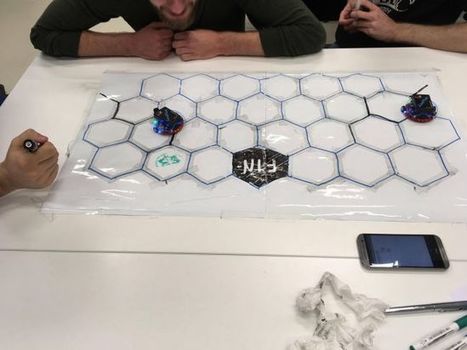
The 2018 Game Developer's Conference will feature an exhibition called Alt.Ctrl.GDC dedicated to games that use alternative control schemes and interactions. Gamasutra will be talking to the developers of each of the games that have been selected for the showcase. You can find all of the interviews here.

Mark Wars will have players drawing lines with markers in order to guide their ever-moving robot to a goal before their opponent can. However, as they take turns drawing lines, there is nothing stopping them from drawing a line that will mislead their opponent's robot, creating a constant sabotage between players as well.


Learn more / En savoir plus / Mehr erfahren:


https://www.scoop.it/t/21st-century-learning-and-teaching/?&tag=Coding


https://www.scoop.it/t/21st-century-learning-and-teaching/?&tag=makerspace


Gust MEES's insight:

The 2018 Game Developer's Conference will feature an exhibition called Alt.Ctrl.GDC dedicated to games that use alternative control schemes and interactions. Gamasutra will be talking to the developers of each of the games that have been selected for the showcase. You can find all of the interviews here.

Mark Wars will have players drawing lines with markers in order to guide their ever-moving robot to a goal before their opponent can. However, as they take turns drawing lines, there is nothing stopping them from drawing a line that will mislead their opponent's robot, creating a constant sabotage between players as well.


Learn more / En savoir plus / Mehr erfahren:


https://www.scoop.it/t/21st-century-learning-and-teaching/?&tag=Coding


https://www.scoop.it/t/21st-century-learning-and-teaching/?&tag=makerspace


No comment yet.
Scooped by Gust MEES
February 16, 2018 6:40 PM
Scoop.it!

Thinking Classroom | #ModernEDU #ModernLEARNing #Communication #SoftSkills #Analyzing 

Thinking Classroom | #ModernEDU #ModernLEARNing #Communication #SoftSkills #Analyzing  | 21st Century Learning and Teaching | Scoop.it

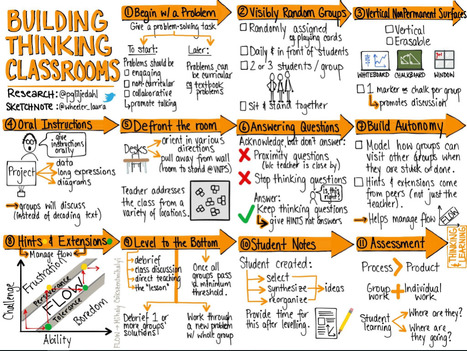
THINKING CLASSROOM PHILOSOPHY IN 4 QUESTIONS


What ?

Teach learners how to think and learn Discover, value and use learners' strengths and interests
Combine the best new educational practices with the best traditional ones
Build and enrich learning relationships
Develop growth mindset characteristics and grit


Why ?

Because learners need knowledge, flexible skills and grit to succeed
Because future economic & life success depends on skills and creativity
Because everyone learns in a unique way
Because education must continually prepare learners for an exciting but uncertain future
Because of Article 13a, UN Convention on the Rights of the Child


How ?

By continually increasing the effectiveness of teaching
By teaching for character as well as content
By valuing each learner for what they do well
By educating for skills, character and values as well as knowledge
By preparing learners for their futures not our pasts
By valuing, supporting and resourcing all educators


What if...

All learners were engaged, excited and interested in their lessons?
'School' evolved to match different lifestyles and different learning styles?
Teachers had time to enjoy their profession and real opportunities to thrive?
There was only one initiative and it was called "Learning"?


Learn more / En savoir plus / Mehr erfahren:


https://www.scoop.it/t/21st-century-learning-and-teaching/?&tag=Soft+Skills


http://peterliljedahl.com/wp-content/uploads/Building-Thinking-Classrooms-Feb-14-20151.pdf


Gust MEES's insight:

THINKING CLASSROOM PHILOSOPHY IN 4 QUESTIONS


What ?

Teach learners how to think and learn Discover, value and use learners' strengths and interests
Combine the best new educational practices with the best traditional ones
Build and enrich learning relationships
Develop growth mindset characteristics and grit


Why ?

Because learners need knowledge, flexible skills and grit to succeed
Because future economic & life success depends on skills and creativity
Because everyone learns in a unique way
Because education must continually prepare learners for an exciting but uncertain future
Because of Article 13a, UN Convention on the Rights of the Child


How ?

By continually increasing the effectiveness of teaching
By teaching for character as well as content
By valuing each learner for what they do well
By educating for skills, character and values as well as knowledge
By preparing learners for their futures not our pasts
By valuing, supporting and resourcing all educators


What if...

All learners were engaged, excited and interested in their lessons?
'School' evolved to match different lifestyles and different learning styles?
Teachers had time to enjoy their profession and real opportunities to thrive?
There was only one initiative and it was called "Learning"?


Learn more / En savoir plus / Mehr erfahren:


https://www.scoop.it/t/21st-century-learning-and-teaching/?&tag=Soft+Skills


No comment yet.
Scooped by Gust MEES
February 16, 2018 1:02 PM
Scoop.it!

4D Systems | 4D-Workshop-4-IDE | #Coding #Maker #MakerED #MakerSpaces 

Introducing 4D Systems' All New Workshop4 IDE Supports multiple development environments, to cater for different user requirements and skill level. Workshop4 is a comprehensive software IDE for Microsoft Windows that provides an integrated software development platform for all of the 4D family of processors and modules.


The IDE combines the Editor, Compiler, Linker and Downloader to develop complete 4DGL application code. All user application code is developed within the Workshop4 IDE. Workshop4 includes four development environments, for the user to choose based on application requirements or even user skill level. Designer This environment enables the user to write 4DGL code in its natural form to program the display module. ViSi - Genie An advanced environment that doesn’t require any 4DGL coding at all, it is all done automatically for you.


Simply lay the display out with the objects you want (similar to ViSi), set the events to drive them and the code is written for you automatically. ViSi -Genie provides the latest rapid development experience from 4D Systems. ViSi A visual programming experience that enables drag-and-drop type placement of objects to assist with 4DGL code generation and allows the user to visualise how the display will look while being developed.


Serial This environment is also provided to transform the display module into a slave serial display module, allowing the user to control the display from any host microcontroller or device with a serial port. 


Learn more / En savoir plus / Mehr erfahren:


https://www.scoop.it/t/21st-century-learning-and-teaching/?&tag=ARDUINO


https://www.scoop.it/t/21st-century-learning-and-teaching/?&tag=Visuino+-+Visual+Development+for+Arduino


https://www.scoop.it/t/21st-century-learning-and-teaching/?&tag=4D+Systems


Gust MEES's insight:
Introducing 4D Systems' All New Workshop4 IDE Supports multiple development environments, to cater for different user requirements and skill level. Workshop4 is a comprehensive software IDE for Microsoft Windows that provides an integrated software development platform for all of the 4D family of processors and modules.


The IDE combines the Editor, Compiler, Linker and Downloader to develop complete 4DGL application code. All user application code is developed within the Workshop4 IDE. Workshop4 includes four development environments, for the user to choose based on application requirements or even user skill level. Designer This environment enables the user to write 4DGL code in its natural form to program the display module. ViSi - Genie An advanced environment that doesn’t require any 4DGL coding at all, it is all done automatically for you.


Simply lay the display out with the objects you want (similar to ViSi), set the events to drive them and the code is written for you automatically. ViSi -Genie provides the latest rapid development experience from 4D Systems. ViSi A visual programming experience that enables drag-and-drop type placement of objects to assist with 4DGL code generation and allows the user to visualise how the display will look while being developed.


Serial This environment is also provided to transform the display module into a slave serial display module, allowing the user to control the display from any host microcontroller or device with a serial port. 


Learn more / En savoir plus / Mehr erfahren:


https://www.scoop.it/t/21st-century-learning-and-teaching/?&tag=ARDUINO


https://www.scoop.it/t/21st-century-learning-and-teaching/?&tag=Visuino+-+Visual+Development+for+Arduino


https://www.scoop.it/t/21st-century-learning-and-teaching/?&tag=4D+Systems


No comment yet.
Scooped by Gust MEES
February 16, 2018 9:41 AM
Scoop.it!

Arduino: Connect 4D Systems ViSi Genie Smart Display | #Coding #Maker #MakerED #MakerSpaces 

Arduino: Connect 4D Systems ViSi Genie Smart Display | #Coding #Maker #MakerED #MakerSpaces  | 21st Century Learning and Teaching | Scoop.it
Connect 4D Systems ViSi Genie smart Touch Screen Display to Arduino, and program it - Quick and Easy!. Find this and other hardware projects on Hackster.io.


Learn more / En savoir plus / Mehr erfahren:


https://www.scoop.it/t/21st-century-learning-and-teaching/?&tag=ARDUINO


https://www.scoop.it/t/21st-century-learning-and-teaching/?&tag=Visuino+-+Visual+Development+for+Arduino


Gust MEES's insight:
Connect 4D Systems ViSi Genie smart Touch Screen Display to Arduino, and program it - Quick and Easy!. Find this and other hardware projects on Hackster.io.


Learn more / En savoir plus / Mehr erfahren:


https://www.scoop.it/t/21st-century-learning-and-teaching/?&tag=ARDUINO


https://www.scoop.it/t/21st-century-learning-and-teaching/?&tag=Visuino+-+Visual+Development+for+Arduino


No comment yet.
Scooped by Gust MEES
February 15, 2018 6:56 AM
Scoop.it!

The Blockchain Economy: A beginner’s guide to institutional cryptoeconomics | #Blockchain

The Blockchain Economy: A beginner’s guide to institutional cryptoeconomics


Chris Berg, Sinclair Davidson and Jason Potts are from the RMIT Blockchain Innovation Hub, the world’s first social science research centre into the economics, politics, sociology, and law of blockchain technology.

The blockchain is a digital, decentralised, distributed ledger.

Most explanations for the importance of the blockchain start with Bitcoin and the history of money. But money is just the first use case of the blockchain. And it is unlikely to be the most important.

It might seem strange that a ledger — a dull and practical document associated mainly with accounting — would be described as a revolutionary technology. But the blockchain matters because ledgers matter.


Learn more / En savoir plus / Mehr erfahren:


https://www.scoop.it/t/21st-century-learning-and-teaching/?&tag=blockchain


No comment yet.
Scooped by Gust MEES
March 1, 2018 10:03 AM
Scoop.it!

Exploring Curation as a core competency in digital and media literacy education | #SocialMedia #PLN #PKM #LEARNing2LEARN

Exploring Curation as a core competency in digital and media literacy education | #SocialMedia #PLN #PKM #LEARNing2LEARN | 21st Century Learning and Teaching | Scoop.it

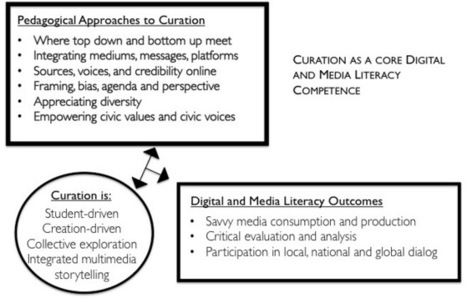
In today’s hypermedia landscape, youth and young adults are increasingly using social media platforms, online aggregators and mobile applications for daily information use. Communication educators, armed with a host of free, easy-to-use online tools, have the ability to create dynamic approaches to teaching and learning about information and communication flow online. In this paper we explore the concept of curation as a student- and creation-driven pedagogical tool to enhance digital and media literacy education.


We present a theoretical justification for curation and present six key ways that curation can be used to teach about critical thinking, analysis and expression online. We utilize a case study of the digital curation platform Storify to explore how curation works in the classroom, and present a framework that integrates curation pedagogy into core media literacy education learning outcomes.


Learn more / En savoir plus / Mehr erfahren:


https://gustmees.wordpress.com/?s=curation


https://globaleducationandsocialmedia.wordpress.com/2014/01/19/pkm-personal-professional-knowledge-management/


Gust MEES's insight:

In today’s hypermedia landscape, youth and young adults are increasingly using social media platforms, online aggregators and mobile applications for daily information use. Communication educators, armed with a host of free, easy-to-use online tools, have the ability to create dynamic approaches to teaching and learning about information and communication flow online. In this paper we explore the concept of curation as a student- and creation-driven pedagogical tool to enhance digital and media literacy education.


We present a theoretical justification for curation and present six key ways that curation can be used to teach about critical thinking, analysis and expression online. We utilize a case study of the digital curation platform Storify to explore how curation works in the classroom, and present a framework that integrates curation pedagogy into core media literacy education learning outcomes.


Learn more / En savoir plus / Mehr erfahren:


https://gustmees.wordpress.com/?s=curation


https://globaleducationandsocialmedia.wordpress.com/2014/01/19/pkm-personal-professional-knowledge-management/


No comment yet.
Scooped by Gust MEES
February 26, 2018 10:20 AM
Scoop.it!

The 5th ‘C’ of 21st Century Skills? Try Computational Thinking (Not Coding) | #ModernEDU #ModernLEARNing #ModernSociety #STEM

The 5th ‘C’ of 21st Century Skills? Try Computational Thinking (Not Coding) | #ModernEDU #ModernLEARNing #ModernSociety #STEM | 21st Century Learning and Teaching | Scoop.it
There is growing recognition in the education systems around the globe that being able to problem-solve computationally—that is, to think logically and algorithmically, and use computational tools for creating artifacts including models and data visualizations—is rapidly becoming a prerequisite competency for all fields.

In 2012, the U.K. national curriculum began introducing computer science (CS) to all students. Singapore, as part of its “Smart Nation” initiative, has labeled developing CT as a “national capability.” Other countries, from Finland to South Korea, China to Australia and New Zealand, have launched large-scale efforts to introduce CT in schools, as either a part of new CS curricula or integrated into existing subjects. Here in the U.S., former President Barack Obama called on all K-12 students to be equipped with CT skills as part of an “Computer Science for All” initiative in 2016. Most emergent efforts in the US involving CT are currently part of CS curricula, although CT is increasingly seeing integration into STEM (especially science) learning.


Learn more / En savoir plus / Mehr erfahren:


https://www.scoop.it/t/21st-century-learning-and-teaching/?&tag=Computational+Thinking


Sharon Berman's curator insight, February 26, 2018 4:01 PM
Interesting perspective - great to see that CT can be associated with learning areas other than STEM.
Vivalist's curator insight, March 1, 2018 10:21 AM
Computational Thinking (CT) is "the thought processes involved in understanding a problem and expressing its solutions in such a way that a computer can potentially carry out the solution."

Toys such as the recently Kickstarted Turing Tumble do just this: introduce kids to the notion of algorithms.

It's a very powerful field of studies for kids and grown-ups alike, because it helps understanding what's behind the curtains when it comes to computation.

It teaches how to divide a big problem into bunch of smaller ones that are easier to solve - and this is a solid skill to own.
Angela's curator insight, July 12, 2019 10:20 AM
Multiple representations of computational thinking may encourage those with math anxiety to make  connections between the processes to how they see and solve the world. Not one right way to see and solve  even though there may be one right answer. 
Scooped by Gust MEES
February 22, 2018 4:23 PM
Scoop.it!

Comment j’utilise les médias sociaux dans mes cours à l’université | #SocialMedia #PierreLÉVY #ModernPedagogy #ModernLEARNing #Curation #Blogs #PLN #PKM #IntelligenceCollective #Communication

Comment j’utilise les médias sociaux dans mes cours à l’université | #SocialMedia #PierreLÉVY #ModernPedagogy #ModernLEARNing #Curation #Blogs #PLN #PKM #IntelligenceCollective #Communication | 21st Century Learning and Teaching | Scoop.it

Pierre Lévy Professeur à l’Université d’Ottawa. Ce travail est la pré-impression d’un article dans le numéro 58 de RED. Il sera publié en tant que contribution d’invité, dans le genre «histoire personnelle comme recherche éducative» (Personal History as Educational Research).   Cet article n’a d’autre but que de raconter mon expérience...


Learn more / En savoir plus / Mehr erfahren:


https://gustmees.wordpress.com/?s=curation


https://gustmees.wordpress.com/?s=blogging


https://globaleducationandsocialmedia.wordpress.com/2014/01/19/pkm-personal-professional-knowledge-management/


Gust MEES's insight:

Pierre Lévy Professeur à l’Université d’Ottawa. Ce travail est la pré-impression d’un article dans le numéro 58 de RED. Il sera publié en tant que contribution d’invité, dans le genre «histoire personnelle comme recherche éducative» (Personal History as Educational Research).   Cet article n’a d’autre but que de raconter mon expérience...


Learn more / En savoir plus / Mehr erfahren:


https://gustmees.wordpress.com/?s=curation


https://gustmees.wordpress.com/?s=blogging


https://globaleducationandsocialmedia.wordpress.com/2014/01/19/pkm-personal-professional-knowledge-management/


Yasmina BADE's curator insight, February 22, 2018 5:18 PM
Share your insight
Scooped by Gust MEES
February 20, 2018 6:26 PM
Scoop.it!

11 Things Your Website Needs or Risk Losing Potential Customers Before They Even START! | #Press #Journalism #ContentMarketing #Contentmanagement #ContentStrategy #Responsibility #Audience #Profess...

11 Things Your Website Needs or Risk Losing Potential Customers Before They Even START! | #Press #Journalism #ContentMarketing #Contentmanagement #ContentStrategy #Responsibility #Audience #Profess... | 21st Century Learning and Teaching | Scoop.it

An excellent website is an invaluable tool for an inbound organization because an inbound organization starts the buyer journey by creating a website that provides education first. An inbound organization’s website functions as an online portal for actively first attracting, then engaging, a target audience and persona.


One of the biggest mistakes we see companies make is thinking that a website is only an expense and not viewing it as an asset.


Remember, your company website is your very first impression for most contacts. Your website communicates your brand message, engages your audience, and should act as a digital salesperson.


Too often companies cut corners. They don’t use the best tools to accomplish their goals or refuse to hire the best talent to manage their web presence (sorry, but your geeky nephew might not be the BEST choice). Many companies believe that if you build it, they will come. So, once their website is up and running they just set it and forget it.


A part of this mindset is the idea that a quality website is a one-time expense. The idea that you have a big expenditure of resources once and then the website should stand on its own is flawed. A great website can be within any company’s reach as long as they optimize for user experience. A part of good optimization is creating content consistently over time so that your website grows in a meaningful way. An Inbound Organizations website becomes a better resource over time.


As a result, an Inbound Organizations website is an asset, not just an expense.


With that in mind, here are some concrete suggestions for improving your website so you can keep me, and all the other prospects like me, engaged.


Learn more / En savoir plus / Mehr erfahren:


https://www.scoop.it/t/21st-century-learning-and-teaching/?&tag=press


Gust MEES's insight:

An excellent website is an invaluable tool for an inbound organization because an inbound organization starts the buyer journey by creating a website that provides education first. An inbound organization’s website functions as an online portal for actively first attracting, then engaging, a target audience and persona.


One of the biggest mistakes we see companies make is thinking that a website is only an expense and not viewing it as an asset.


Remember, your company website is your very first impression for most contacts. Your website communicates your brand message, engages your audience, and should act as a digital salesperson.


Too often companies cut corners. They don’t use the best tools to accomplish their goals or refuse to hire the best talent to manage their web presence (sorry, but your geeky nephew might not be the BEST choice). Many companies believe that if you build it, they will come. So, once their website is up and running they just set it and forget it.


A part of this mindset is the idea that a quality website is a one-time expense. The idea that you have a big expenditure of resources once and then the website should stand on its own is flawed. A great website can be within any company’s reach as long as they optimize for user experience. A part of good optimization is creating content consistently over time so that your website grows in a meaningful way. An Inbound Organizations website becomes a better resource over time.


As a result, an Inbound Organizations website is an asset, not just an expense.


With that in mind, here are some concrete suggestions for improving your website so you can keep me, and all the other prospects like me, engaged.


Learn more / En savoir plus / Mehr erfahren:


https://www.scoop.it/t/21st-century-learning-and-teaching/?&tag=press


Graphics Design's curator insight, February 21, 2018 1:25 AM

Kool Design Maker is Best Graphic Designing and Printing Company in the USA Now KDM Provides you Custom Door Hanger Design & Printing in the USA You not just get the plan of Custom Door Hanger yet additionally you can Print your most loved outline at Kool design maker.

Scooped by Gust MEES
February 19, 2018 9:21 AM
Scoop.it!

These AI bots are solving customer problems - Video | #ArtificialIntelligence #CustomerCare 

These AI bots are solving customer problems - Video | #ArtificialIntelligence #CustomerCare  | 21st Century Learning and Teaching | Scoop.it

Robert Locascio, founder and CEO of LivePerson, talks about how artificial intelligence is improving the customer experience.


Learn more / En savoir plus / Mehr erfahren:


https://www.scoop.it/t/21st-century-learning-and-teaching/?&tag=AI


https://www.scoop.it/t/21st-century-innovative-technologies-and-developments/?&tag=AI


Gust MEES's insight:

Robert Locascio, founder and CEO of LivePerson, talks about how artificial intelligence is improving the customer experience.


Learn more / En savoir plus / Mehr erfahren:


https://www.scoop.it/t/21st-century-learning-and-teaching/?&tag=AI


https://www.scoop.it/t/21st-century-innovative-technologies-and-developments/?&tag=AI


No comment yet.
Scooped by Gust MEES
February 19, 2018 8:49 AM
Scoop.it!

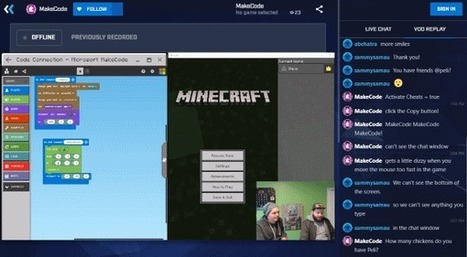
Microsoft MakeCode is a free, open-source Block and JavaScript learn-to-code editor | #Coding #Maker #MakerED #MakerSpaces 

Microsoft MakeCode is a free, open-source Block and JavaScript learn-to-code editor | #Coding #Maker #MakerED #MakerSpaces  | 21st Century Learning and Teaching | Scoop.it
Microsoft MakeCode is a free, open-source Block and JavaScript learn-to-code editor that promotes a more inclusive approach to computing education.


Learn more / En savoir plus / Mehr erfahren:


https://www.scoop.it/t/21st-century-learning-and-teaching/?&tag=Coding


https://www.scoop.it/t/21st-century-learning-and-teaching/?&tag=makerspace


Gust MEES's insight:
Microsoft MakeCode is a free, open-source Block and JavaScript learn-to-code editor that promotes a more inclusive approach to computing education.


Learn more / En savoir plus / Mehr erfahren:


https://www.scoop.it/t/21st-century-learning-and-teaching/?&tag=Coding


https://www.scoop.it/t/21st-century-learning-and-teaching/?&tag=makerspace


Graphics Design's curator insight, February 20, 2018 2:27 AM

Just Kool Design Maker can give your custom letterhead Design a little promoting and publicizing touch, so you can get a decent presentation and consideration from your business clients.

Graphics Design's curator insight, February 20, 2018 2:36 AM

Just Kool Design Maker can give your custom letterhead Design a little promoting and publicizing touch, so you can get a decent presentation and consideration from your business clients.

Scooped by Gust MEES
February 17, 2018 7:39 PM
Scoop.it!

Internet of Things (IoT) Network Architecture, Connectivity and Technology Solutions | Do you know what’s connecting? | #ModernSociety #Benefits | #CyberSecurity #Dangers | #Blockchain

Internet of Things (IoT) Network Architecture, Connectivity and Technology Solutions | Do you know what’s connecting? | #ModernSociety #Benefits | #CyberSecurity #Dangers | #Blockchain | 21st Century Learning and Teaching | Scoop.it

Do you know what’s connecting?


Learn more / En savoir plus / Mehr erfahren:


http://www.scoop.it/t/21st-century-learning-and-teaching/?&tag=IoT


http://www.scoop.it/t/securite-pc-et-internet/?&tag=iot


https://www.scoop.it/t/21st-century-learning-and-teaching/?&tag=blockchain


Gust MEES's insight:

Do you know what’s connecting?


Learn more / En savoir plus / Mehr erfahren:


http://www.scoop.it/t/21st-century-learning-and-teaching/?&tag=IoT


http://www.scoop.it/t/securite-pc-et-internet/?&tag=iot


https://www.scoop.it/t/21st-century-learning-and-teaching/?&tag=blockchain


No comment yet.
Scooped by Gust MEES
February 17, 2018 8:26 AM
Scoop.it!

DIYODE Magazine is a print and digital publication supporting electronics enthusiasts and makers | #Coding #MakerED #MakerSpaces

DIYODE Magazine is a print and digital publication supporting electronics enthusiasts and makers | #Coding #MakerED #MakerSpaces | 21st Century Learning and Teaching | Scoop.it

DIYODE Magazine is a print and digital publication supporting electronics enthusiasts and makers.


Learn more / En savoir plus / Mehr erfahren:


https://www.scoop.it/t/21st-century-learning-and-teaching/?&tag=Coding


https://www.scoop.it/t/21st-century-learning-and-teaching/?&tag=makerspace


Gust MEES's insight:

DIYODE Magazine is a print and digital publication supporting electronics enthusiasts and makers.


Learn more / En savoir plus / Mehr erfahren:


https://www.scoop.it/t/21st-century-learning-and-teaching/?&tag=Coding


https://www.scoop.it/t/21st-century-learning-and-teaching/?&tag=makerspace


No comment yet.
Scooped by Gust MEES
February 16, 2018 9:31 PM
Scoop.it!

Visual Programming | Visuino Arduino tutorials - YouTube | #VideoTutorials #Coding #Maker #MakerED #MakerSpaces #PracTICE 

In computing, a visual programming language (VPL) is any programming language that lets users create programs by manipulating program elements graphically rather than by specifying them textually.[1][2] A VPL allows programming with visual expressions, spatial arrangements of text and graphic symbols, used either as elements of syntax or secondary notation.


For example, many VPLs (known as dataflow or diagrammatic programming)[3] are based on the idea of "boxes and arrows", where boxes or other screen objects are treated as entities, connected by arrows, lines or arcs which represent relations.


Learn more / En savoir plus / Mehr erfahren:


https://www.scoop.it/t/21st-century-learning-and-teaching/?&tag=Visual+programming


https://en.wikipedia.org/wiki/Visual_programming_language


No comment yet.
Scooped by Gust MEES
February 16, 2018 4:37 PM
Scoop.it!

BIBB - Bundesinstitut für Berufsbildung (BIBB) | #WeiterBildung #ModernEDU #ModernSociety #PracTICE

BIBB - Bundesinstitut für Berufsbildung (BIBB) | #WeiterBildung #ModernEDU #ModernSociety #PracTICE | 21st Century Learning and Teaching | Scoop.it

Die Arbeitswelt der Zukunft bedingt einen höheren Stellenwert der beruflichen Weiterbildung, so der Präsident des Bundesinstituts für Berufsbildung (BIBB), Friedrich Hubert Esser. "In einer Arbeitswelt von morgen mit steigenden Datenmengen, kürzer werdenden Halbwertszeiten von Wissen sowie einer erhöhten Flexibilität am Arbeitsplatz ist berufliche Weiterbildung schon lange nicht mehr Kür, sondern Pflicht", betont Esser in der aktuellen Ausgabe der BIBB-Fachzeitschrift "Berufsbildung in Wissenschaft und Praxis - BWP" mit dem Schwerpunktthema "Weiterbildung".

Der digitale Transformationsprozess, der Einsatz von Robotern sowie der wachsende Einfluss künstlicher Intelligenz sorge für bislang nicht gekannte strukturelle Verschiebungen in Arbeits- und Produktionsprozessen. Arbeiten und Lernen werden sich von Grund auf ändern. "Der Umgang mit leistungsstarken IT-Infrastrukturen sowie das Arbeiten und Lernen in Virtual- und Augmented-Reality-Umgebungen oder mithilfe von Erklärvideos und Tutorials sind längst keine Zukunftsmusik mehr", so der BIBB-Präsident weiter.


Learn more / En savoir plus / Mehr erfahren:


https://gustmees.wordpress.com/2016/09/19/some-practice-examples-that-will-influence-education/


Gust MEES's insight:

Die Arbeitswelt der Zukunft bedingt einen höheren Stellenwert der beruflichen Weiterbildung, so der Präsident des Bundesinstituts für Berufsbildung (BIBB), Friedrich Hubert Esser. "In einer Arbeitswelt von morgen mit steigenden Datenmengen, kürzer werdenden Halbwertszeiten von Wissen sowie einer erhöhten Flexibilität am Arbeitsplatz ist berufliche Weiterbildung schon lange nicht mehr Kür, sondern Pflicht", betont Esser in der aktuellen Ausgabe der BIBB-Fachzeitschrift "Berufsbildung in Wissenschaft und Praxis - BWP" mit dem Schwerpunktthema "Weiterbildung".

Der digitale Transformationsprozess, der Einsatz von Robotern sowie der wachsende Einfluss künstlicher Intelligenz sorge für bislang nicht gekannte strukturelle Verschiebungen in Arbeits- und Produktionsprozessen. Arbeiten und Lernen werden sich von Grund auf ändern. "Der Umgang mit leistungsstarken IT-Infrastrukturen sowie das Arbeiten und Lernen in Virtual- und Augmented-Reality-Umgebungen oder mithilfe von Erklärvideos und Tutorials sind längst keine Zukunftsmusik mehr", so der BIBB-Präsident weiter.


Learn more / En savoir plus / Mehr erfahren:


https://gustmees.wordpress.com/2016/09/19/some-practice-examples-that-will-influence-education/


No comment yet.
Scooped by Gust MEES
February 16, 2018 12:22 PM
Scoop.it!

IJNet - International Journalist's Network | #Press #Publishers #ContentCuration #Curation #Journalism 

IJNet - International Journalist's Network | #Press #Publishers #ContentCuration #Curation #Journalism  | 21st Century Learning and Teaching | Scoop.it

IJNet delivers the latest on global media innovation, news apps and tools, training opportunities and expert advice for professional and citizen journalists worldwide. Produced by the International Center for Journalists, IJNet follows the shifting journalism scene from a global perspective in seven languages - Arabic, Chinese, English, Persian, Portuguese, Russian and Spanish.


Learn more / En savoir plus / Mehr erfahren:


https://www.scoop.it/t/21st-century-learning-and-teaching/?&tag=press


Gust MEES's insight:

IJNet delivers the latest on global media innovation, news apps and tools, training opportunities and expert advice for professional and citizen journalists worldwide. Produced by the International Center for Journalists, IJNet follows the shifting journalism scene from a global perspective in seven languages - Arabic, Chinese, English, Persian, Portuguese, Russian and Spanish.


Learn more / En savoir plus / Mehr erfahren:


https://www.scoop.it/t/21st-century-learning-and-teaching/?&tag=press


Gilbert C FAURE's comment, February 16, 2018 1:24 PM
scoop.it inside october 2017!
Scooped by Gust MEES
February 15, 2018 7:32 AM
Scoop.it!

Was ist eigentlich Netzneutralität? | #BEESECURE #Luxembourg #NetNeutrality

Was ist eigentlich Netzneutralität? | #BEESECURE #Luxembourg #NetNeutrality | 21st Century Learning and Teaching | Scoop.it

In den USA wurde vor kurzem die Netzneutralität abgeschafft. Das zuständige Gremium, die FCC, hat seine Regeln diesbezüglich zurückgenommen. Unter Präsident Obama war die Netzneutralität nämlich eigentlich verankert worden – sein Nachfolger bzw. dessen FCC-Chef hat dies Ende letzten Jahres rückgängig gemacht.

Doch was heißt das eigentlich? Im "Urzustand" des Internets, so wie es seit seinem Beginn funktionierte, werden alle Datenpakete gleich behandelt. Das heißt, dass eine private E-Mail genauso schnell oder langsam durch die Unterseekabel reist wie beispielsweise ein Video einer Streaming-Plattform oder ein Telefonat mit einem Messenger. Seitens der Netzbetreiber gibt es seit langem Bestrebungen, diesen Zustand zu beenden.


Sie könnten dann sowohl die Betreiber von Webseiten und Diensten zur Kasse bitten – als auch ihre Nutzer. Wer ruckelfrei Netflix oder Youtube schauen will, müsste dann ein spezielles „Streaming-Paket“ bezahlen. Gleichzeitig könnte ein Internet-Provider aber auch einen Deal mit einem Streaming-Dienst eingehen und dessen Mitbewerber künstlich verlangsamen.


Learn more / En savoir plus / Mehr erfahren:


https://www.scoop.it/t/securite-pc-et-internet/?&tag=net+neutrality


https://www.scoop.it/t/securite-pc-et-internet/?&tag=Netzneutralit%C3%A4t


Gust MEES's insight:

In den USA wurde vor kurzem die Netzneutralität abgeschafft. Das zuständige Gremium, die FCC, hat seine Regeln diesbezüglich zurückgenommen. Unter Präsident Obama war die Netzneutralität nämlich eigentlich verankert worden – sein Nachfolger bzw. dessen FCC-Chef hat dies Ende letzten Jahres rückgängig gemacht.

Doch was heißt das eigentlich? Im "Urzustand" des Internets, so wie es seit seinem Beginn funktionierte, werden alle Datenpakete gleich behandelt. Das heißt, dass eine private E-Mail genauso schnell oder langsam durch die Unterseekabel reist wie beispielsweise ein Video einer Streaming-Plattform oder ein Telefonat mit einem Messenger. Seitens der Netzbetreiber gibt es seit langem Bestrebungen, diesen Zustand zu beenden.


Sie könnten dann sowohl die Betreiber von Webseiten und Diensten zur Kasse bitten – als auch ihre Nutzer. Wer ruckelfrei Netflix oder Youtube schauen will, müsste dann ein spezielles „Streaming-Paket“ bezahlen. Gleichzeitig könnte ein Internet-Provider aber auch einen Deal mit einem Streaming-Dienst eingehen und dessen Mitbewerber künstlich verlangsamen.


Learn more / En savoir plus / Mehr erfahren:


https://www.scoop.it/t/securite-pc-et-internet/?&tag=net+neutrality


https://www.scoop.it/t/securite-pc-et-internet/?&tag=Netzneutralit%C3%A4t


No comment yet.