Your new post is loading...

|
Scooped by
Gust MEES
August 31, 2012 9:20 AM
|
The amount of technology flooding into classrooms may vary widely, but there’s no denying that it’s a red-hot trend in education. A new study further bolsters this idea as it’s found that digital devices are saving students time, are widely accepted, and are actually making students more likely to do their homework. All these factoids and more are presented in the study by CourseSmart and Wakefield Research which focused on more than 500 currently enrolled college students. It found that nearly all of the students (98%) that own a device have used it in school. 90% of these students say it saves them time, too. Here’s the rundown of what the study found according to a recent MarketWatch article (also check out the handy infographic below for even more details)... Read more, very interesting...: http://edudemic.com/2012/08/new-study-finds-11-real-ways-technology-is-affecting-education-right-now/
|
|
Scooped by
Gust MEES
August 29, 2012 12:38 PM
|
Simply put, technology exists in some for or another across education. With that technology comes a push for understanding. That understanding has taken the form of ‘big data‘ entering the classroom. By ‘big data’ I mean high-tech software and analyzation of all the data being created by technology in education. In other words, we’re finally trying to all figure out the best way to use technology in education. From measuring test scores to recommending courses, there’s a big push to leverage data. This should come as no surprise as the rapid growth of MOOCs, online colleges, and digital learning have gotten a lot of attention. This infographic from Online Degrees sheds some light on projects currently underway at colleges, the pros and cons of ‘big data’ and a whole lot more. Have you started to use more data in your classroom? Would you take a course recommended by data or by a friend? A tough decision for sure. Looking forward to hearing your answers! Check out: http://edudemic.com/2012/08/20-things-to-know-about-how-big-data-is-changing-schools/
|
|
Scooped by
Gust MEES
August 29, 2012 12:06 PM
|
Nik's Learning Technology Blog: How I use social media for my professional development
This has been a common theme to many of the presentations, workshops, webinars and seminars that I have been asked to do over the last few years, but however many times I try to present on this subject I never really feel that I get the message across as clearly and persuasively as I would like.
So here it is. This my own attempt to outline my digital media learning experience, or at least part of it. I’ll split this into 3 sections which I’ll call
- Information in - This is how and where I find information
- Information processing - This is how I process, engage with and capture information - Information out - This is how I share what I’ve learned or discovered Read more: http://nikpeachey.blogspot.co.uk/2012/06/how-i-use-social-media-for-my.html
|
|
Scooped by
Gust MEES
August 29, 2012 11:40 AM
|
|
|
Scooped by
Gust MEES
August 29, 2012 11:03 AM
|
|
|
Scooped by
Gust MEES
August 29, 2012 7:06 AM
|
Un programme complet de formation des maîtres, en une page Concrètement, un prof dans une classe moderne applique ce qu'il a appris et aussi plusieurs autres choses... Le tableau «Les tâches et les pratiques d’enseignement» détaille presque toutes les actions qu’un professeur fera à un moment ou un autre dans sa classe. Il a été créé par Henri Boudrault, professeur à L'UQAM en enseignement de la formation professionnelle et technique, qui nous avait accordé cette entrevue pour Thot Cursus. Il s'agit d'un tableau synthétisant tout ce qu'un prof "idéal" devrait faire. Il est basé sur la formule administrative classique «PODC» : - Planifier
- Organiser
- Diriger (réaliser)
- Contrôler (évaluer)
En savoir plus : http://cursus.edu/dossiers-articles/articles/9969/programme-complet-formation-des-maitres-une/
|
|
Rescooped by
Gust MEES
from Learning & Technology News
August 29, 2012 5:31 AM
|
|
|
Scooped by
Gust MEES
August 28, 2012 5:39 PM
|
|
|
Rescooped by
Gust MEES
from Social Media and its influence
August 28, 2012 4:05 PM
|
Integrating social media into academia is not a novel idea. And since you are reading this, chances are you probably have been utilizing some feature of social media in the classroom for years. What is more interesting is asking why academia should exploit social media and, more specifically, Twitter.
Via NLafferty, michel verstrepen, Gust MEES
|
|
Scooped by
Gust MEES
August 28, 2012 2:52 PM
|
|
|
Scooped by
Gust MEES
August 28, 2012 12:49 PM
|
Proverbs from all German speaking areas in the world. Gust MEES: A great resource for anyone whos mother tongue is not English.This WikiQuote helps a lot to find the right expressions... Also a great tool to teach English by proverbs and to show that a 1:1 translation from German into English does not bring the same results, the same meaning! Explore more...: http://en.wikiquote.org/wiki/German_proverbs#W
|
|
|
Scooped by
Gust MEES
August 31, 2012 9:16 AM
|
|
|
Scooped by
Gust MEES
August 29, 2012 12:29 PM
|
|
|
Scooped by
Gust MEES
August 29, 2012 11:45 AM
|
Die Mozilla-Entwickler haben turnusmäßig neue Versionen ihrer Programme Firefox, Thunderbird und Seamonkey bereit gestellt. Darin haben sie bis zu 34 Sicherheitslücken geschlossen, die sie überwiegend als kritisch einstufen. ===> UPDATE!!! <===
|
|
Scooped by
Gust MEES
August 29, 2012 11:07 AM
|
Over the last couple of months, Educational Technology and Mobile Learning has been working diligently on a variety of educational technology guides for teachers and educators. The majority of them have been posted here and , thankfully, have received a huge and unprecedented interaction from our readers. We are glad our hard work did not go in vain. Find out more: http://www.educatorstechnology.com/2012/08/teacher-educational-technology-guides.html
|
|
Scooped by
Gust MEES
August 29, 2012 9:01 AM
|
|
|
Scooped by
Gust MEES
August 29, 2012 7:20 AM
|
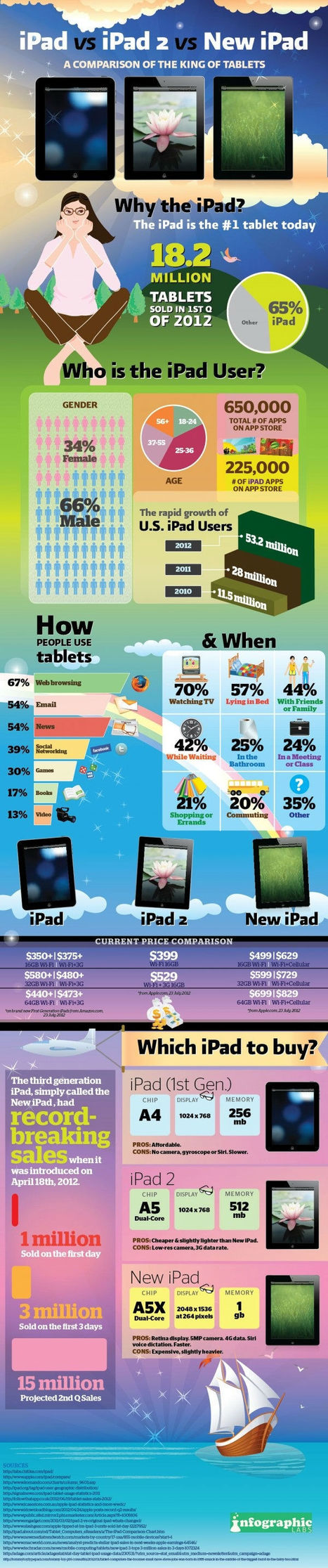
If you are one of the 53.2 million people with an iPad, you've probably developed habits related to how you best like to use your device. The team at Infographic Labs has put together an infographic that details how users have embraced the iPad over the years, from using it while watching TV to cozying up to it in bed or even using it in the bathroom. Read more: http://mashable.com/2012/08/28/ipad-consumer-behaviors-infographic/
|
|
Scooped by
Gust MEES
August 29, 2012 6:33 AM
|
|
|
Scooped by
Gust MEES
August 28, 2012 5:43 PM
|
|
|
Scooped by
Gust MEES
August 28, 2012 4:29 PM
|
As the technologies of the 21st century evolve and mature, we become the beneficiaries of exciting approaches for designing learning experiences. The convergence of informal and social media learning, combined with the explosion of smartphone and tablet use, is having a huge impact on how we think about training and education.
So while last year’s list of learning technology trends to watch in 2011 is still viable, there are new and important learning trends to follow and explore this year. Here are the ones that stand out to me (in alphabetical order). What stands out to you? Comment below.
Read more from the eLearning Coach: http://theelearningcoach.com/elearning2-0/learning-technology-trends-for-2012/
|
|
Rescooped by
Gust MEES
from Education et TICE
August 28, 2012 3:24 PM
|
2002 - 2012 : seulement 10 ans d'intervalle et pourtant tant de choses ont changé. 2002 – 2012 : seulement 10 ans d’intervalle et pourtant tant de choses ont changé. L’évolution d’internet illustre très bien à elle seule les nombreux changements qui ont marqué notre univers numérique, où tout doit aller vite et où tout évolue très vite. Retour infographique sur les choses qui ont changé depuis 10 ans sur la Toile. Réalisée par BestedSites, cette infographique intitulée « A Decade Later » (10 ans plus tard) révèle quelques données intéressantes sur l’internet de 2002, à mettre en comparaison avec celui d’aujourd’hui. En 2002, du temps où seulement 569 millions de personnes étaient reliées à Internet (soit presque moitié moins que le nombre d’utilisateurs inscrits sur Facebook aujourd’hui !), charger une page demandait en moyenne 16 secondes. Dix ans plus tard, la population mondiale compte un tiers d’internautes et le temps de chargement n’excède pas, en moyenne là-encore, 6 secondes. Original Link in English here: http://www.bestedsites.com/the-internet-a-decade-later/
Via Laurent Blanquer
URI took a publicly available server offline after a breach compromised the information of faculty and students. University of Rhode Island (URI) officials disabled the school's College of Business Administration computer server, after the personal information of more than 1,000 faculty and students, as well as students from another school, was publicly available. How many victims? About 1,000 current and former URI faculty members, in addition to 22 former students of the university and 80 students from an unnamed out-of-state school. What type of personal information? The names, birth dates, Social Security numbers and some compensation information of faculty members. Former URI students had their Social Security numbers and names exposed, while students from the out-of-state school had their grades, names and Social Security numbers posted to the server. Read more: http://www.scmagazine.com/university-of-rhode-island-server-breach-exposes-staff-and-student-data/article/256398/
|