Your new post is loading...

|
Scooped by
Gust MEES
November 8, 2012 5:31 PM
|
Once upon a time (as all good fairy tales start) employees had a job for life. Having left school or college you could start work for an organization and remain there for your whole professional life. The company would provide you with all the training you needed, give you all the promotions you deserved and then at your retirement, reward your long service with the gift of a clock or a gold watch. But things have changed; there is no longer such a thing as a job for life, and nowadays when you work for an organization they are only likely to provide you with the minimum training you require to get started and carry out your basic duties, together with all the necessary regulatory/compliance/statutory/ mandatory training they are obliged to provide to keep their CEO out of jail! If you are very lucky they might pay for you to attend a professional conference once a year. A MUST read: http://www.c4lpt.co.uk/blog/2012/10/29/the-future-belongs-to-those-who-take-charge-of-their-own-learning/
|
|
Scooped by
Gust MEES
November 8, 2012 3:51 PM
|
|
|
Scooped by
Gust MEES
November 8, 2012 12:55 PM
|
A Generation of Personalized Learners
The data from the 2011 Speak Up survey demonstrates that by very young ages, students are using digital and, more increasingly, mobile technologies to collaborate with their peers. What is Personalized Learning? A personalized learning environment is one that puts a learner in control of her pathway. She becomes empowered to make choices about how she learns, what she learns, and how she demonstrates her proficiencies. She is empowered to use the tools that are relevant to her and to express her findings through a variety of media. She is encouraged to share her work and to leverage the feedback of her community, of which she views herself a part, to improve her knowledge. She views learning as a lifelong journey and sees the value in connecting what is produces today with where she will be five or twenty years from now. ============================================ Gust MEES Pezonalized Learning is working great, I did it with adults (25-75 years old) for 8 years long with 10 persons and 10 computers. It is possible and for me the best method of learning as the instructor works as a guide (a coach) who obeserves how the taught is getting made into practice and lets work the people in a group where anyone helps the other(s), learning by doing, dynamic in the class, knowledge transfer also by learners to learners (social learning), which gives also motivation to the learners to continue learning at home on their own pace, you don't even need to tell them to make homework as they have fun to learn and the success is guaranteed... I came out with 95-96% success of how the learners understood the taught, that is great! After a certain time I checked back the taught by observing again how the learners did in practice by walking through the class and observing each alone on how they did on the computer, so I realized and saw the way they used to get to the final result... This showed me where I had to teach more, which I did by switching on the beamer and where I explained it again, on a different way as previous one, and so they learnt on the best possible way; they learned to have competencies, they were able to work alone! And even to teach the learnt to others ;) ============================================
|
|
Scooped by
Gust MEES
November 8, 2012 10:43 AM
|
|
|
Scooped by
Gust MEES
November 7, 2012 12:16 PM
|
|
|
Scooped by
Gust MEES
November 7, 2012 1:43 AM
|
|
|
Rescooped by
Gust MEES
from Digital Delights
November 6, 2012 4:21 PM
|
Online Systems for Behavior Change
I've always believe that to truly have impact on performance, we need to be experts at Behavior Change. I've written a few times over the years on aspects of solutions that ultimately drive a change in behavior that leads to performance improvement. I'm now working on an very interesting project that is designed to lead to some important changes in behavior that has already had dramatic impacts. But we want to push for more, so ultimately this post is asking for help, please comment or tweet (add @tonykarrer) on:
What online systems have you seen that ultimately drive behavior change? What do these systems do that leads to behavior change? Read more, very interesting...: http://elearningtech.blogspot.fr/2012/10/online-systems-for-behavior-change.html
Via Ana Cristina Pratas
|
|
Scooped by
Gust MEES
November 6, 2012 11:52 AM
|
The Resource for Education Technology Leaders focusing on K-12 educators. Most of us recognize that schools should be helping students learn how to do deep, rich, technology-infused knowledge work that prepares them for future citizenship, college, work, and other life needs. Many principals and superintendents, however, are struggling to balance the need to technologically empower students with countervailing organizational concerns regarding safety, respectful behavior, and the law. In my conversations with school administrators about Internet safety and student technology usage, I use many of the talking points below. Use some of them to spark a conversation with your local educators and community. Read more, a MUST: http://www.techlearning.com/features/0039/schoolcio-27-talking-points-about-internet-safety/53127
|
|
Scooped by
Gust MEES
November 6, 2012 9:59 AM
|
Fuzion.ie have made a poster for teachers and students to enjoy social media properly and to help deal with an inappropriate or bullying situation should it occur. ========================================== Gust MEES Check out also my Curation about Cyberbullying, Bullying here please: - http://www.scoop.it/t/cyberbullying-it-s-not-a-game-it-s-your-life ==========================================
|
|
Scooped by
Gust MEES
November 5, 2012 6:22 PM
|
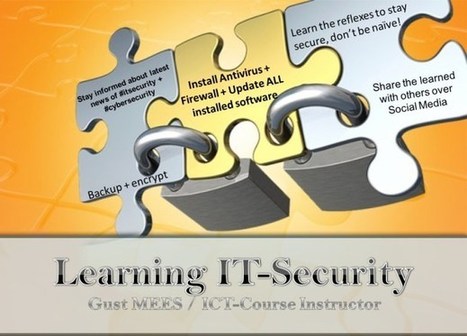
. Naivety in the Digital Age means not realizing and accepting the dangers of the Internet, the ignorance of the need to secure its computer and any other device connecting to the Internet (smartphones + TV, fridge …), having no clue about Cyber-Security and people who think that Internet-Safety ALONE is enough! ===> Naif means ALSO thinking that a certain Operating System is secure and perfect! Nobody is perfect: <=== Read more: http://gustmees.wordpress.com/2012/11/05/naivety-in-the-digital-age/
|
|
Scooped by
Gust MEES
November 5, 2012 5:01 PM
|
Data breaches happen on a near daily basis, and often they have a profoundly negative impact on the attacked business. But in some cases, they can change the security industry and influence legislation. “Security breaches are relatively immeasurable, but the economic impact is small compared to the loss of confidence in security from the populace and from customers,” Carl Herberger of security solutions company Radware, told Mashable. From millions of credit cards stolen from a national retailer to attacks conducted by other countries, here's a look at some noteworthy data breaches. Read more, a MUST: http://mashable.com/2012/10/15/corporate-security-attacks/
|
|
Scooped by
Gust MEES
November 5, 2012 4:43 PM
|
|
|
Rescooped by
Gust MEES
from A New Society, a new education!
November 5, 2012 12:28 PM
|
|
|
|
Scooped by
Gust MEES
November 8, 2012 4:11 PM
|
|
|
Rescooped by
Gust MEES
from Spaces for Innovation
November 8, 2012 2:40 PM
|
|
|
Scooped by
Gust MEES
November 8, 2012 12:44 PM
|
Denver — Clay Shirky is one of the country’s most prominent Internet thinkers—“a spiritual guide to the wired set,” as The Chronicle Review put it in a 2010 profile of him. In his latest book, Cognitive Surplus, the New York University professor argues that a flowering of creative production will arise as the ===> Internet turns people “from consumers to collaborators.” <=== Mr. Shirky also offered some advice to people interested in experimenting with openness: “Do not put together an interdisciplinary team from 12 departments and give them a budget of a quarter of a million dollars, and a year and a half deadline. Find five people and ask them what can you do in a month—for free. I think the results will surprise you.” Read more, very interesting...: http://chronicle.com/blogs/wiredcampus/the-real-revolution-is-openness-clay-shirky-tells-tech-leaders/40894?cid=wc Thanks to http://www.scoop.it/t/digital-delights to have shared this.
|
|
Scooped by
Gust MEES
November 7, 2012 5:15 AM
|
|
|
Scooped by
Gust MEES
November 6, 2012 5:07 PM
|
|
|
Scooped by
Gust MEES
November 6, 2012 12:21 PM
|
|
|
Scooped by
Gust MEES
November 6, 2012 10:46 AM
|
|
|
Scooped by
Gust MEES
November 5, 2012 7:12 PM
|
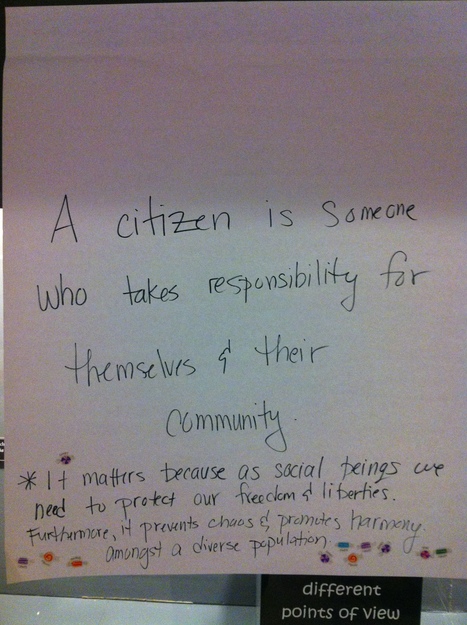
What we discovered was that there are a lot of parallels between face to face citizenship and digital citizenship, though the biggest differences are based upon the tools we use to communicate. Read more, very interesting...: http://mbteach.com/?p=906
|
|
Scooped by
Gust MEES
November 5, 2012 5:12 PM
|
|
|
Scooped by
Gust MEES
November 5, 2012 4:55 PM
|
With big names such as Zappos, Amazon, LinkedIn and Android gracing the list, there's a good chance you have fallen victim to a security breach this year. It’s been a chilling year so far for web and mobile security. Cybercriminals continue to think of clever and sneaky ways to strip millions of consumers of credit card information and personal data, thanks largely in part to malicious links, phishing scams and password hacks. The team at cybercrime prevention company ThreatMetrix has put together an infographic detailing the top 10 spookiest cyberattacks of the year so far. And with big names such as Zappos, Amazon, LinkedIn and Android gracing the list, there’s a good chance you or someone you know has fallen victim to a security breach. Read more, a MUST: http://mashable.com/2012/10/18/cyber-attacks-201/
|
|
Scooped by
Gust MEES
November 5, 2012 4:15 PM
|
[Start Text from Wikipedia] Naivety (or naïvety, naïveté, etc.), is the state of being naive—having or showing a lack of experience, understanding or sophistication, often in a context where one neglects pragmatism in favor of moral idealism. One who is naive may be called a naif. [End Text from Wikipedia] ============================================= Gust MEES Naivety in the Digital Age means not realizing and accepting the dangers of Internet, the ignorance of the need to secure its computer and any other device connecting to the Internet (smartphones + ...), having no clue about Cyber-Security and people who think that Internet-Safety ALONE is enough! ===> Naif means ALSO thinking that a certain Operating System is secure and perfect! Nobody is perfect: <=== - Apple: http://www.scoop.it/t/apple-mac-ios4-ipad-iphone-and-in-security - Linux: http://www.scoop.it/t/securite-pc-et-internet?q=Linux - Windows: everybody knows that already... In 21st Century Internet-Safety ALONE isn't enough anymore, a need for sure, but there is a MUST to teach and to learn ALSO about basics of Cyber-Security! Both together are a MUST! NOT ONLY one alone! Would YOU like to get called a naif because not having those skills? Certainly NOT, so check out my FREE courses please to become a good eCitizen, Digital Citizen and share it with YOUR family, colleagues, friends and... - https://gustmeesen.wordpress.com/2012/03/16/beginners-it-security-guide/ - http://gustmees.wordpress.com/2012/10/11/learning-basics-of-cyber-security-by-easy-to-follow-steps/ There will be soon a blog created about that topic, so stay tuned and follow my blog here to get the news: - http://gustmees.wordpress.com/category/get-smart-with-5-minutes-tutorials/ Update: the blog is online now http://gustmees.wordpress.com/2012/11/05/naivety-in-the-digital-age/ =============================================
|