21st Century Learning and Teaching
751.6K views | +3 today
21st Century Learning and Teaching
Related articles to 21st Century Learning and Teaching as also tools...
Curated by Gust MEES
Your new post is loading...

Popular Tags

Current selected tag: 'Learning 2 Learn'. Clear
Scooped by Gust MEES
April 28, 2017 1:33 PM
Scoop.it!

WAS ist ein Tausendsassa? – Wikipedia | #Multitasking #LEARNing2LEARN #Understanding

Tausendsassa - Wikipedia

Tausendsassa, in Österreich umgangssprachlich auch Wunderwuzzi, in der Schweiz Siebesiech, ist eine Bezeichnung für eine Person, die sich durch zahlreiche Begabungen auszeichnet. Vergleichbare Bezeichnungen sind „Multitalent" und „Alleskönner" oder „Universalgenie".

Learn more / En savoir plus / Mehr erfahren:


http://www.scoop.it/t/21st-century-learning-and-teaching/?&tag=Gifted+kids


http://www.scoop.it/t/21st-century-learning-and-teaching/?&tag=Gifted+adults+are+different+from+an+early+age


Gust MEES's insight:

Tausendsassa, in Österreich umgangssprachlich auch Wunderwuzzi, in der Schweiz Siebesiech, ist eine Bezeichnung für eine Person, die sich durch zahlreiche Begabungen auszeichnet. Vergleichbare Bezeichnungen sind „Multitalent" und „Alleskönner" oder „Universalgenie".


Learn more / En savoir plus / Mehr erfahren:


http://www.scoop.it/t/21st-century-learning-and-teaching/?&tag=Gifted+kids


http://www.scoop.it/t/21st-century-learning-and-teaching/?&tag=Gifted+adults+are+different+from+an+early+age


No comment yet.
Scooped by Gust MEES
April 28, 2017 10:21 AM
Scoop.it!

Verstehen – Wikipedia | #Understanding

Verstehen - Wikipedia

Verstehen ist das inhaltliche Begreifen eines Sachverhalts, das nicht nur in der bloßen Kenntnisnahme besteht, sondern auch und vor allem in der intellektuellen Erfassung des Zusammenhangs, in dem der Sachverhalt steht. Verstehen bedeutet nach Wilhelm Dilthey, aus äußerlich gegebenen, sinnlich wahrnehmbaren Zeichen ein „Inneres", Psychisches zu erkennen.

Verstehen im obigen Sinn (Abschnitt Deutungsrahmen) und als Interpretation setzt Intelligenz bzw. Geist voraus. Nach Werner Sombart beruht das Verstehen auf der Identität des Menschengeistes.


Es ist also nur aufgrund der prinzipiellen Identität von Erkenntnissubjekt und Erkenntnisobjekt möglich. Nur Menschen können daher im eigentlichen Sinne – von Menschen – verstanden werden.


Learn more / En savoir plus / Mehr erfahren:


https://gustmees.wordpress.com/2016/11/14/pssst-the-most-important-in-education-understanding/


Gust MEES's insight:

Verstehen im obigen Sinn (Abschnitt Deutungsrahmen) und als Interpretation setzt Intelligenz bzw. Geist voraus. Nach Werner Sombart beruht das Verstehen auf der Identität des Menschengeistes.


Es ist also nur aufgrund der prinzipiellen Identität von Erkenntnissubjekt und Erkenntnisobjekt möglich. Nur Menschen können daher im eigentlichen Sinne – von Menschen – verstanden werden.


Learn more / En savoir plus / Mehr erfahren:


https://gustmees.wordpress.com/2016/11/14/pssst-the-most-important-in-education-understanding/


No comment yet.
Scooped by Gust MEES
April 26, 2017 4:30 PM
Scoop.it!

Empathy in Action: How Teachers Prepare Future Citizens | #DigitalCitiZENship #digcit #ModernEDU

Empathy in Action: How Teachers Prepare Future Citizens | #DigitalCitiZENship #digcit #ModernEDU | 21st Century Learning and Teaching | Scoop.it

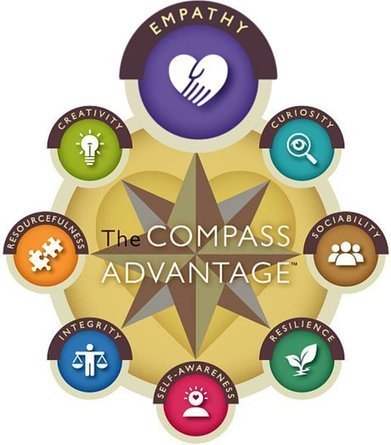
Empathy is systemically related to all of the abilities on the compass, particularly to self-awareness at "true south." Research suggests that the more children become aware of themselves, the better they become at understanding others. Volumes have been written about how to teach empathy, and there is still much to learn. In an excellent article from the Greater Good Science Center at the University of California, Berkeley, author Roman Krznaric, Ph.D., claims that highly empathetic people:

Cultivate curiosity about strangers


Challenge prejudices and discover commonalities


Gain direct experience of other people's lives


Listen and open themselves to others


Inspire mass action and social change


Develop an ambitious imagination


All of these behaviors foster personal growth and lifelong learning while contributing to the growth of society, particularly empathy's role in inspiring social change.


Learn more / En savoir plus / Mehr erfahren:


http://www.scoop.it/t/21st-century-learning-and-teaching/?&tag=Empathy


Gust MEES's insight:

Empathy is systemically related to all of the abilities on the compass, particularly to self-awareness at "true south." Research suggests that the more children become aware of themselves, the better they become at understanding others. Volumes have been written about how to teach empathy, and there is still much to learn. In an excellent article from the Greater Good Science Center at the University of California, Berkeley, author Roman Krznaric, Ph.D., claims that highly empathetic people:

Cultivate curiosity about strangers


Challenge prejudices and discover commonalities


Gain direct experience of other people's lives


Listen and open themselves to others


Inspire mass action and social change


Develop an ambitious imagination


All of these behaviors foster personal growth and lifelong learning while contributing to the growth of society, particularly empathy's role in inspiring social change.


Learn more / En savoir plus / Mehr erfahren:


http://www.scoop.it/t/21st-century-learning-and-teaching/?&tag=Empathy


Oskar Almazan's curator insight, April 26, 2017 7:05 PM
How do children learn to care enough about others that they reap the personal rewards associated with giving? When young people develop empathy, they not only thrive in school and life, but they also impact their communities in positive, often extraordinary ways. Individual and societal success depends on raising and educating children who care about others. But we have misled today's children to believe that success is achieved through test scores, material wealth, and personal gain. In turn, there has been a measurable shift toward self-centeredness at a time when society depends more, not less, on people who give of themselves.
2
PEEP Matisse's curator insight, April 28, 2017 4:46 AM
Eh oui, le site s'appelle "edutopia" : on est dans l'utopie. En France tout au moins...
Scooped by Gust MEES
April 24, 2017 8:01 PM
Scoop.it!

How To Make a Powered Car | Electric Car | #Maker #MakerED #MakerSpaces #LEARNingByDoing #Creativity #PracTICE

Learn How to make a Powered Car. Make this easy powered car out of household items, DC motor and Paperboard Electric Car DIY. Template


Learn more / En savoir plus / Mehr erfahren:


https://gustmees.wordpress.com/?s=makered


http://www.scoop.it/t/21st-century-learning-and-teaching/?&tag=Ideas+for+makerspaces


Gust MEES's insight:
Learn How to make a Powered Car. Make this easy powered car out of household items, DC motor and Paperboard Electric Car DIY. Template


Learn more / En savoir plus / Mehr erfahren:


https://gustmees.wordpress.com/?s=makered


http://www.scoop.it/t/21st-century-learning-and-teaching/?&tag=Ideas+for+makerspaces


No comment yet.
Scooped by Gust MEES
April 24, 2017 4:17 PM
Scoop.it!

Scrum (software development) - Wikipedia

Scrum (software development) - Wikipedia

Scrum is an iterative and incremental agile software development framework for managing product development. It defines "a flexible, holistic product development strategy where a development team works as a unit to reach a common goal", challenges assumptions of the "traditional, sequential approach" to product development, and enables teams to self-organize by encouraging physical co-location or close online collaboration of all team members, as well as daily face-to-face communication among all team members and disciplines involved.

Scrum is an iterative and incremental agile software development framework for managing product development.[1][2] It defines "a flexible, holistic product development strategy where a development team works as a unit to reach a common goal",[3] challenges assumptions of the "traditional, sequential approach"[3] to product development, and enables teams to self-organize by encouraging physical co-location or close online collaboration of all team members, as well as daily face-to-face communication among all team members and disciplines involved.

A key principle of Scrum is its recognition that during product development, the customers can change their minds about what they want and need (often called requirements volatility[4]), and that unpredicted challenges cannot be easily addressed in a traditional predictive or planned manner. As such, Scrum adopts an evidence-based empirical approach—accepting that the problem cannot be fully understood or defined, focusing instead on maximizing the team's ability to deliver quickly, to respond to emerging requirements and to adapt to evolving technologies and changes in market conditions.


Learn more / En savoir plus / Mehr erfahren:


http://www.scoop.it/t/wordpress-annotum-for-education-science-journal-publishing


Gust MEES's insight:
Scrum is an iterative and incremental agile software development framework for managing product development.[1][2] It defines "a flexible, holistic product development strategy where a development team works as a unit to reach a common goal",[3] challenges assumptions of the "traditional, sequential approach"[3] to product development, and enables teams to self-organize by encouraging physical co-location or close online collaboration of all team members, as well as daily face-to-face communication among all team members and disciplines involved.

A key principle of Scrum is its recognition that during product development, the customers can change their minds about what they want and need (often called requirements volatility[4]), and that unpredicted challenges cannot be easily addressed in a traditional predictive or planned manner. As such, Scrum adopts an evidence-based empirical approach—accepting that the problem cannot be fully understood or defined, focusing instead on maximizing the team's ability to deliver quickly, to respond to emerging requirements and to adapt to evolving technologies and changes in market conditions.


Learn more / En savoir plus / Mehr erfahren:


http://www.scoop.it/t/wordpress-annotum-for-education-science-journal-publishing


Suzy Romanelli's curator insight, April 27, 2017 6:11 PM
Share your insight
Scooped by Gust MEES
April 19, 2017 7:32 AM
Scoop.it!

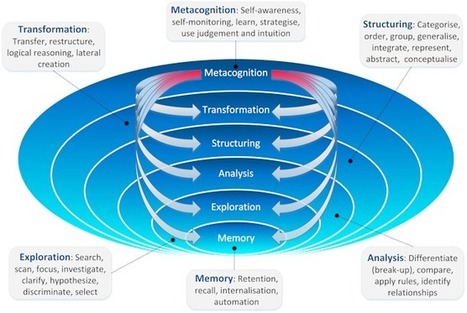
Meta-cognitive projection of analytics and personalized learning | #MetaCognition #LEARNing2LEARN #ModernEDU

Meta-cognitive projection of analytics and personalized learning | #MetaCognition #LEARNing2LEARN #ModernEDU | 21st Century Learning and Teaching | Scoop.it

By Juan Domingo Farnós, independent researcher in education technologies, e-Learning and knowledge management.


Text: We are at a moment when, first of all, we need to be clear on how our mind works – and therefore the synergies that are produced at a neuronal level – and, second of all, its correspondence with our…


Learn more / En savoir plus / Mehr erfahren:


http://www.scoop.it/t/21st-century-learning-and-teaching/?&tag=reflection


http://www.scoop.it/t/21st-century-learning-and-teaching/?&tag=Psychology


http://www.scoop.it/t/21st-century-learning-and-teaching/?&tag=Metacognition


http://globaleducationandsocialmedia.wordpress.com/2014/01/19/pkm-personal-professional-knowledge-management/


Gust MEES's insight:

By Juan Domingo Farnós, independent researcher in education technologies, e-Learning and knowledge management.


Text: We are at a moment when, first of all, we need to be clear on how our mind works – and therefore the synergies that are produced at a neuronal level – and, second of all, its correspondence with our…


Learn more / En savoir plus / Mehr erfahren:


http://www.scoop.it/t/21st-century-learning-and-teaching/?&tag=reflection


http://www.scoop.it/t/21st-century-learning-and-teaching/?&tag=Psychology


http://www.scoop.it/t/21st-century-learning-and-teaching/?&tag=Metacognition


http://globaleducationandsocialmedia.wordpress.com/2014/01/19/pkm-personal-professional-knowledge-management/


No comment yet.
Scooped by Gust MEES
April 14, 2017 4:47 PM
Scoop.it!

#Maker-Easy to build mini #car with Battery-Holder case and #motor, as also a self-made #propeller | #MakerED

#Maker-Easy to build mini #car with Battery-Holder case and #motor, as also a self-made #propeller | #MakerED | 21st Century Learning and Teaching | Scoop.it

Easy to build mini car with Battery-Holder case and motor, as also self-made propeller . . In our last projects WE were using electronics, which is a bit more for teens up from 10 years. WE will now also create some projects where the younger ones can tinker around as well under the…


Learn more / En savoir plus / mehr erfahren:


https://gustmees.wordpress.com/?s=maker


https://www.scoop.it/t/21st-century-learning-and-teaching/?&tag=Ideas+for+makerspaces


Gust MEES's insight:

Easy to build mini car with Battery-Holder case and motor, as also self-made propeller . . In our last projects WE were using electronics, which is a bit more for teens up from 10 years. WE will now also create some projects where the younger ones can tinker around as well under the…


Learn more / En savoir plus / mehr erfahren:


https://gustmees.wordpress.com/?s=maker


https://www.scoop.it/t/21st-century-learning-and-teaching/?&tag=Ideas+for+makerspaces


No comment yet.
Scooped by Gust MEES
April 13, 2017 7:15 PM
Scoop.it!

What Would Happen If Learning in School Became More Like Working at a Startup? | #LEARNing2LEARN 

What Would Happen If Learning in School Became More Like Working at a Startup? | #LEARNing2LEARN  | 21st Century Learning and Teaching | Scoop.it
At its most basic level, a startup is a learning machine—one that helps its founders understand and serve the real world in a manner that enables itself to continuously gather information and grow. If it doesn’t learn and adjust, a startup ends.

Successful students, like startups, are those who are resilient, constantly absorbing new information and challenging their assumptions.


We’re not surprised, then, to see a proliferation of startup and entrepreneurial programs springing up in and around K-12 schools. What’s more, an entrepreneurial culture, carefully scaffolded, can help schools transform and unlock learning in ways that more traditional coursework can not.


Learn more / En savoir plus / Mehr erfahren:


http://www.scoop.it/t/21st-century-learning-and-teaching/?&tag=Startups


Gust MEES's insight:
At its most basic level, a startup is a learning machine—one that helps its founders understand and serve the real world in a manner that enables itself to continuously gather information and grow. If it doesn’t learn and adjust, a startup ends.

Successful students, like startups, are those who are resilient, constantly absorbing new information and challenging their assumptions.


We’re not surprised, then, to see a proliferation of startup and entrepreneurial programs springing up in and around K-12 schools. What’s more, an entrepreneurial culture, carefully scaffolded, can help schools transform and unlock learning in ways that more traditional coursework can not.


Learn more / En savoir plus / Mehr erfahren:


http://www.scoop.it/t/21st-century-learning-and-teaching/?&tag=Startups


Scooped by Gust MEES
April 13, 2017 12:39 PM
Scoop.it!

Philistinism - Wikipedia | #KulturBanause (DE) 

Philistinism - Wikipedia

In the fields of philosophy and æsthetics, the derogatory term philistinism describes the social attitude of anti-intellectualism that undervalues and despises art, beauty, spirituality, and intellect; "the manners, habits, and character, or mode of thinking of a philistine".

In the fields of philosophy and æsthetics, the derogatory term philistinism describes the social attitude of anti-intellectualism that undervalues and despises art, beauty, spirituality, and intellect; "the manners, habits, and character, or mode of thinking of a philistine".[1] A philistine person is a man or woman of smugly narrow mind and of conventional morality whose materialistic views and tastes indicate a lack of and an indifference to cultural and æsthetic values.[2]


Learn more / En savoir plus / Mehr erfahren:


http://www.scoop.it/t/21st-century-learning-and-teaching/?&tag=Character


Gust MEES's insight:

In the fields of philosophy and æsthetics, the derogatory term philistinism describes the social attitude of anti-intellectualism that undervalues and despises art, beauty, spirituality, and intellect; "the manners, habits, and character, or mode of thinking of a philistine".[1] A philistine person is a man or woman of smugly narrow mind and of conventional morality whose materialistic views and tastes indicate a lack of and an indifference to cultural and æsthetic values.[2]


Learn more / En savoir plus / Mehr erfahren:


http://www.scoop.it/t/21st-century-learning-and-teaching/?&tag=Character


No comment yet.
Scooped by Gust MEES
April 12, 2017 5:51 PM
Scoop.it!

Why Making Is Essential to Learning | #LEARNingByDoing #Maker #MakerED #MakerSpaces #Creativity

Why Making Is Essential to Learning | #LEARNingByDoing #Maker #MakerED #MakerSpaces #Creativity | 21st Century Learning and Teaching | Scoop.it
Research shows that hands-on learning is an effective way to teach students science. A 2009 study found that eighth-grade students who were involved in hands-on science projects demonstrated a deeper understanding of concepts than students who were taught with traditional methods such as textbook readings, lectures, and tests (Riskowski et al., 2009).

Why is hands-on learning effective? We can look to neuroscience for insight. Students who participate in science experiments, instead of just observing them, have a deeper conceptual understanding of science. Through brain imaging, researchers found that physical experience activates the sensorimotor region of students' brains, which helps reinforce what they're learning (Kontra et al., 2015).


If students use their hands as well as their minds, they're essentially learning twice.


Learn more / En savoir plus / Mehr erfahren:


https://gustmees.wordpress.com/?s=maker


https://www.scoop.it/t/21st-century-learning-and-teaching/?&tag=Ideas+for+makerspaces


Gust MEES's insight:
Research shows that hands-on learning is an effective way to teach students science. A 2009 study found that eighth-grade students who were involved in hands-on science projects demonstrated a deeper understanding of concepts than students who were taught with traditional methods such as textbook readings, lectures, and tests (Riskowski et al., 2009).

Why is hands-on learning effective? We can look to neuroscience for insight. Students who participate in science experiments, instead of just observing them, have a deeper conceptual understanding of science. Through brain imaging, researchers found that physical experience activates the sensorimotor region of students' brains, which helps reinforce what they're learning (Kontra et al., 2015).


If students use their hands as well as their minds, they're essentially learning twice.


Learn more / En savoir plus / Mehr erfahren:


https://gustmees.wordpress.com/?s=maker


https://www.scoop.it/t/21st-century-learning-and-teaching/?&tag=Ideas+for+makerspaces


No comment yet.
Scooped by Gust MEES
April 6, 2017 11:17 AM
Scoop.it!

How to make the simplest electric car - homemade mini car | #Maker #MakerED #MakerSpaces #Creativity 

How to make the simplest mini electric car - homemade car subscribe to my channel at http://www.youtube.com/subscription_center?add_user=MCIsection 


Learn more / En savoir plus / Mehr erfahren:


http://www.scoop.it/t/21st-century-learning-and-teaching/?&tag=Ideas+for+makerspaces


Gust MEES's insight:

How to make the simplest mini electric car - homemade car subscribe to my channel at http://www.youtube.com/subscription_center?add_user=MCIsection 


Learn more / En savoir plus / Mehr erfahren:


http://www.scoop.it/t/21st-century-learning-and-teaching/?&tag=Ideas+for+makerspaces


No comment yet.
Scooped by Gust MEES
April 3, 2017 5:01 PM
Scoop.it!

Nothing To Hide (rien à cacher) : Film documentaire sur la vie privée et les données personnelles | #Privacy 

Nothing To Hide (rien à cacher) : Film documentaire sur la vie privée et les données personnelles | #Privacy  | 21st Century Learning and Teaching | Scoop.it

Nothing To Hide


 (Rien à cacher)
, c’est le nom d’un film documentaire sur la surveillance, la vie privée et les données personnelles, réalisé par Marc Meillassoux et Mihaela Gladovic qui questionne sur les enregistrements automatiques des données individuelles (voir la bande annonce à la fin de cet article).

Projeté pour la première fois à Paris, le mardi 27 mars 2017 à l’amphithéâtre Binet de l’Université Paris Descartes, le long métrage Nothing To Hide a reçu un accueil très favorable de la part d’une assistance de plus de 300 personnes, une projection suivi d’un débat avec des enseignants en informatique de la faculté et en présence du coréalisateur  Marc Meillassoux.


Le documentaire Nothing To Hide est une production qui a bénéficié d’un financement participatif grand public sur la plate-forme Kickstarter en 2016.


Learn more / En savoir plus / Mehr erfahren:


https://gustmees.wordpress.com/2013/12/21/privacy-in-the-digital-world-shouldnt-we-talk-about-it/


Gust MEES's insight:

Nothing To Hide


 (Rien à cacher)
, c’est le nom d’un film documentaire sur la surveillance, la vie privée et les données personnelles, réalisé par Marc Meillassoux et Mihaela Gladovic qui questionne sur les enregistrements automatiques des données individuelles (voir la bande annonce à la fin de cet article).

Projeté pour la première fois à Paris, le mardi 27 mars 2017 à l’amphithéâtre Binet de l’Université Paris Descartes, le long métrage Nothing To Hide a reçu un accueil très favorable de la part d’une assistance de plus de 300 personnes, une projection suivi d’un débat avec des enseignants en informatique de la faculté et en présence du coréalisateur  Marc Meillassoux.


Le documentaire Nothing To Hide est une production qui a bénéficié d’un financement participatif grand public sur la plate-forme Kickstarter en 2016.


Learn more / En savoir plus / Mehr erfahren:


https://gustmees.wordpress.com/2013/12/21/privacy-in-the-digital-world-shouldnt-we-talk-about-it/


No comment yet.
Scooped by Gust MEES
April 2, 2017 12:24 PM
Scoop.it!

ISTE - International Society for Technology in Education | #ModernEDU

ISTE - International Society for Technology in Education | #ModernEDU | 21st Century Learning and Teaching | Scoop.it
ISTE | International Society for Technology in Education


Learn more / En savoir plus / Mehr erfahren:


http://www.scoop.it/t/21st-century-learning-and-teaching/?&tag=ISTE


Gust MEES's insight:
ISTE | International Society for Technology in Education


Learn more / En savoir plus / Mehr erfahren:


http://www.scoop.it/t/21st-century-learning-and-teaching/?&tag=ISTE


No comment yet.
Scooped by Gust MEES
April 28, 2017 10:31 AM
Scoop.it!

Understanding - Wikipedia

Understanding - Wikipedia

Understanding is often, though not always, related to learning concepts, and sometimes also the theory or theories associated with those concepts. However, a person may have a good ability to predict the behaviour of an object, animal or system - and therefore may, in some sense, understand it - without necessarily being familiar with the concepts or theories associated with that object, animal or system in their culture.

Someone who has a more sophisticated understanding, more predictively accurate understanding, and/or an understanding that allows them to make explanations that others commonly judge to be better, of something, is said to understand that thing "deeply".


Conversely, someone who has a more limited understanding of a thing is said to have a "shallow" understanding. However, the depth of understanding required to usefully participate in an occupation or activity may vary greatly.


Learn more / En savoir plus / Mehr erfahren:


https://gustmees.wordpress.com/2016/11/14/pssst-the-most-important-in-education-understanding/


Gust MEES's insight:

Someone who has a more sophisticated understanding, more predictively accurate understanding, and/or an understanding that allows them to make explanations that others commonly judge to be better, of something, is said to understand that thing "deeply".


Conversely, someone who has a more limited understanding of a thing is said to have a "shallow" understanding. However, the depth of understanding required to usefully participate in an occupation or activity may vary greatly.


Learn more / En savoir plus / Mehr erfahren:


https://gustmees.wordpress.com/2016/11/14/pssst-the-most-important-in-education-understanding/


Syl Ro Con Guz's curator insight, May 1, 2017 10:31 AM
Share your insight
Scooped by Gust MEES
April 28, 2017 9:18 AM
Scoop.it!

Ironie – Wikipedia

Ironie - Wikipedia

Ironie ( altgriechisch εἰρωνεία , wörtlich „Verstellung, Vortäuschung") bezeichnet zunächst eine rhetorische Figur (auch als rhetorische Ironie oder instrumentelle Ironie bezeichnet). Dabei behauptet der Sprecher etwas, das seiner wahren Einstellung oder Überzeugung nicht entspricht, diese jedoch für ein bestimmtes Publikum ganz oder teilweise durchscheinen lässt.

Die einfachste Form der rhetorischen Ironie besteht darin, das Gegenteil dessen zu sagen, was man meint. Um Missverständnissen vorzubeugen, kann Ironie dabei von sogenannten Ironiesignalen (Mimik, Gestik, Betonung, Anführungszeichen usw.) begleitet sein, die den Zuhörer erkennen lassen, dass der Sprecher das Gesagte nicht wörtlich, sondern ironisch verstanden wissen will.

In der Regel beruht das Verstehen von Ironie darauf, dass Sprecher und Hörer wissen, dass sie bestimmte Überzeugungen teilen, man spricht auch von „geteilten Wissensbeständen“. Die ironische Äußerung verstößt anscheinend gegen den gemeinsamen Kenntnisstand: der Sprecher verletzt die Erwartung des Hörers, dass gemeinsame Wissensbestände beachtet werden. Als theoretisches Modell zur Erklärung der Entschlüsselung der ironischen Äußerung gilt die Theorie der konversationellen Implikaturen von Paul Grice. Diese Theorie liefert Kriterien zur Entdeckung, jedoch keinen Hinweis auf die Funktion der Ironie.

In der Linguistik wird diese Funktion als Bewertungskommunikation diskutiert.[2][3] Die ironische Äußerung bringt indirekt Wertungen zur Sprache, die mit dem Inhalt der geteilten Wissensbestände verbunden sind. Warum Ironie die gemeinte Bewertung nicht direkt, sondern indirekt ausdrückt, ist bisher nicht abschließend geklärt. Derzeit werden mehrere Ansätze parallel verfolgt: Die Anzeige einer Bewertungskluft zwischen dem Geschehen und Gemeinten[4] oder die Kommunikation zusätzlicher Beziehungsbotschaften. So kann Ironie auf der Beziehungsebene Einvernehmlichkeit kommunizieren, indem ein geteilter Wert grundsätzlich bestätigt, in der konkreten Situation aber dem Anderen zuliebe zurückgenommen wird.


Der ironisch Sprechende zeigt durch die ironische Indirektheit an, dass er den ironisch Kritisierten als einsichtig einschätzt und er auf direkte Kritik verzichten kann.[5] Obwohl Ironie Bewertungskommunikation ist, müssen die fraglichen Bewertungen nicht von Sprecher und Hörer geteilt werden. Zum Verständnis der Ironie reicht es aus, dass beide um die Bewertung des anderen wissen.


Als sokratische Ironie bezeichnet man häufig ein sich klein machendes Verstellen (man stellt sich dumm), um den sich überlegen wähnenden Gesprächspartner in die Falle zu locken, ihn zu belehren oder ihn zum Nachdenken zu bringen. Gemeint ist hiermit ein echtes Verstellen, das im Gegensatz zur rhetorischen Ironie nicht unbedingt als Verstellung erkannt werden will.


Dieser Ironiebegriff entspricht der Bedeutung zur Zeit Sokrates’ und auch noch Aristoteles’.[9] Erst mit der Ausbildung der Rhetorik bekam der Begriff der Ironie seine heutige Bedeutung. Als echtes Verstellen galt in der Antike die Ironieverwendung auch als moralisch verwerflich. Sokrates bezeichnete seine Art der Gesprächsführung als Hebammenkunst (Mäeutik). Die sokratische Ironie ist allerdings eine Fehlinterpretation von außen, z. B. aus Sicht des Alkibiades in PlatonsSymposion, und keine Beschreibung von Sokrates’ wahrer Einstellung.


Tatsächlich verstellte sich Sokrates nicht; er war von seinem Nichtwissen überzeugt[10] (zur weiteren Diskussion der Frage „Verstellen“ versus „Echtes Nichtwissen“ → Sokrates: Abschnitt Sinn und Methode Sokratischer Dialoge). Der Philosoph ist kein Weiser, er strebt nach Weisheit. Im alltäglichen Sprachgebrauch wird mit dem Begriff der sokratischen Ironie aber doch zumeist auf ein echtes sich klein machendes Verstellen verwiesen.


Learn more / En savoir plus / Mehr erfahren:


http://www.scoop.it/t/21st-century-learning-and-teaching/?tag=Irony


http://www.scoop.it/t/21st-century-learning-and-teaching/?tag=Rhetorik


http://www.scoop.it/t/21st-century-learning-and-teaching/?&tag=Humor


Gust MEES's insight:
Die einfachste Form der rhetorischen Ironie besteht darin, das Gegenteil dessen zu sagen, was man meint. Um Missverständnissen vorzubeugen, kann Ironie dabei von sogenannten Ironiesignalen (Mimik, Gestik, Betonung, Anführungszeichen usw.) begleitet sein, die den Zuhörer erkennen lassen, dass der Sprecher das Gesagte nicht wörtlich, sondern ironisch verstanden wissen will.

In der Regel beruht das Verstehen von Ironie darauf, dass Sprecher und Hörer wissen, dass sie bestimmte Überzeugungen teilen, man spricht auch von „geteilten Wissensbeständen“. Die ironische Äußerung verstößt anscheinend gegen den gemeinsamen Kenntnisstand: der Sprecher verletzt die Erwartung des Hörers, dass gemeinsame Wissensbestände beachtet werden. Als theoretisches Modell zur Erklärung der Entschlüsselung der ironischen Äußerung gilt die Theorie der konversationellen Implikaturen von Paul Grice. Diese Theorie liefert Kriterien zur Entdeckung, jedoch keinen Hinweis auf die Funktion der Ironie.

In der Linguistik wird diese Funktion als Bewertungskommunikation diskutiert.[2][3] Die ironische Äußerung bringt indirekt Wertungen zur Sprache, die mit dem Inhalt der geteilten Wissensbestände verbunden sind. Warum Ironie die gemeinte Bewertung nicht direkt, sondern indirekt ausdrückt, ist bisher nicht abschließend geklärt. Derzeit werden mehrere Ansätze parallel verfolgt: Die Anzeige einer Bewertungskluft zwischen dem Geschehen und Gemeinten[4] oder die Kommunikation zusätzlicher Beziehungsbotschaften. So kann Ironie auf der Beziehungsebene Einvernehmlichkeit kommunizieren, indem ein geteilter Wert grundsätzlich bestätigt, in der konkreten Situation aber dem Anderen zuliebe zurückgenommen wird.


Der ironisch Sprechende zeigt durch die ironische Indirektheit an, dass er den ironisch Kritisierten als einsichtig einschätzt und er auf direkte Kritik verzichten kann.[5] Obwohl Ironie Bewertungskommunikation ist, müssen die fraglichen Bewertungen nicht von Sprecher und Hörer geteilt werden. Zum Verständnis der Ironie reicht es aus, dass beide um die Bewertung des anderen wissen.


Als sokratische Ironie bezeichnet man häufig ein sich klein machendes Verstellen (man stellt sich dumm), um den sich überlegen wähnenden Gesprächspartner in die Falle zu locken, ihn zu belehren oder ihn zum Nachdenken zu bringen. Gemeint ist hiermit ein echtes Verstellen, das im Gegensatz zur rhetorischen Ironie nicht unbedingt als Verstellung erkannt werden will.


Dieser Ironiebegriff entspricht der Bedeutung zur Zeit Sokrates’ und auch noch Aristoteles’.[9] Erst mit der Ausbildung der Rhetorik bekam der Begriff der Ironie seine heutige Bedeutung. Als echtes Verstellen galt in der Antike die Ironieverwendung auch als moralisch verwerflich. Sokrates bezeichnete seine Art der Gesprächsführung als Hebammenkunst (Mäeutik). Die sokratische Ironie ist allerdings eine Fehlinterpretation von außen, z. B. aus Sicht des Alkibiades in PlatonsSymposion, und keine Beschreibung von Sokrates’ wahrer Einstellung.


Tatsächlich verstellte sich Sokrates nicht; er war von seinem Nichtwissen überzeugt[10] (zur weiteren Diskussion der Frage „Verstellen“ versus „Echtes Nichtwissen“ → Sokrates: Abschnitt Sinn und Methode Sokratischer Dialoge). Der Philosoph ist kein Weiser, er strebt nach Weisheit. Im alltäglichen Sprachgebrauch wird mit dem Begriff der sokratischen Ironie aber doch zumeist auf ein echtes sich klein machendes Verstellen verwiesen.


Learn more / En savoir plus / Mehr erfahren:


http://www.scoop.it/t/21st-century-learning-and-teaching/?tag=Irony


http://www.scoop.it/t/21st-century-learning-and-teaching/?tag=Rhetorik


http://www.scoop.it/t/21st-century-learning-and-teaching/?&tag=Humor


No comment yet.
Scooped by Gust MEES
April 26, 2017 3:54 PM
Scoop.it!

The Nature of Problem Solving - Using Research to Inspire 21st Century Learning - en - OECD #Books

The Nature of Problem Solving - Using Research to Inspire 21st Century Learning - en - OECD #Books | 21st Century Learning and Teaching | Scoop.it

Solving non-routine problems is a key competence in a world full of changes, uncertainty and surprise where we strive to achieve so many ambitious goals. But the world is also full of solutions because of the extraordinary competences of humans who search for and find them. We must explore the world around us in a thoughtful way, acquire knowledge about unknown situations efficiently, and apply new and existing knowledge creatively.


The Nature of Problem Solving presents the background and the main ideas behind the development of the PISA 2012 assessment of problem solving, as well as results from research collaborations that originated within the group of experts who guided the development of this assessment. It illustrates the past, present and future of problem-solving research and how this research is helping educators prepare students to navigate an increasingly uncertain, volatile and ambiguous world.


Learn more / En savoir plus / Mehr erfahren:


http://www.scoop.it/t/21st-century-learning-and-teaching/?&tag=Problem-Solving


Gust MEES's insight:

Solving non-routine problems is a key competence in a world full of changes, uncertainty and surprise where we strive to achieve so many ambitious goals. But the world is also full of solutions because of the extraordinary competences of humans who search for and find them. We must explore the world around us in a thoughtful way, acquire knowledge about unknown situations efficiently, and apply new and existing knowledge creatively.


The Nature of Problem Solving presents the background and the main ideas behind the development of the PISA 2012 assessment of problem solving, as well as results from research collaborations that originated within the group of experts who guided the development of this assessment. It illustrates the past, present and future of problem-solving research and how this research is helping educators prepare students to navigate an increasingly uncertain, volatile and ambiguous world.


Learn more / En savoir plus / Mehr erfahren:


http://www.scoop.it/t/21st-century-learning-and-teaching/?&tag=Problem-Solving


No comment yet.
Scooped by Gust MEES
April 24, 2017 5:55 PM
Scoop.it!

Getting ready for Modern Education | #Video #SlideShow #LEARNing2LEARN #ModernEDU #ICT

Getting ready for Modern Education


Learn more / En savoir plus / Mehr erfahren:


https://gustmees.wordpress.com


https://www.scoop.it/webwizard


Gust MEES's insight:
Getting ready for Modern Education


Learn more / En savoir plus / Mehr erfahren:


https://gustmees.wordpress.com


https://www.scoop.it/webwizard


No comment yet.
Rescooped by Gust MEES from Learning & Technology News
April 23, 2017 6:59 AM
Scoop.it!

To Boost Higher-Order Thinking, Try Curation | #LEARNing2LEARN #ModernEDU

To Boost Higher-Order Thinking, Try Curation | #LEARNing2LEARN #ModernEDU | 21st Century Learning and Teaching | Scoop.it
Higher-level thinking has been a core value of educators for decades. We learned about it in college. We hear about it in PD. We’re even evaluated on whether we’re cultivating it in our classrooms


In an educational setting, curation has a ton of potential as an academic task. Sure, we’re used to assigning research projects, where students have to gather resources, pull out information, and synthesize that information into a cohesive piece of informational or argumentative writing. This kind of work is challenging and important, and it should remain as a core assignment throughout school, but how often do we make the collection of resources itself a stand-alone assignment?


That’s what I’m proposing we do. Curation projects have the potential to put our students to work at three different levels of Bloom’s Taxonomy:


  • Understand, where we exemplify and classify information
  • Analyze, where we distinguish relevant from irrelevant information and organize it in a way that makes sense
  • Evaluate, where we judge the quality of an item based on a set of criteria


If we go beyond Bloom’s and consider the Framework for 21st Century Learning put out by the Partnership for 21st Century Learning, we’ll see that critical thinking is one of the 4C’s listed as an essential skill for students in the modern age (along with communication, creativity, and collaboration) and a well-designed curation project requires a ton of critical thinking.


Learn more / En savoir plus / Mehr erfahren:


https://gustmees.wordpress.com/2013/04/25/learn-every-day-a-bit-with-curation/


https://gustmees.wordpress.com/2014/02/20/curation-tips-and-tricks-with-scoop-it-rescoop-and-tags/


Via Nik Peachey
Gust MEES's insight:
Higher-level thinking has been a core value of educators for decades. We learned about it in college. We hear about it in PD. We’re even evaluated on whether we’re cultivating it in our classrooms


In an educational setting, curation has a ton of potential as an academic task. Sure, we’re used to assigning research projects, where students have to gather resources, pull out information, and synthesize that information into a cohesive piece of informational or argumentative writing. This kind of work is challenging and important, and it should remain as a core assignment throughout school, but how often do we make the collection of resources itself a stand-alone assignment?


That’s what I’m proposing we do. Curation projects have the potential to put our students to work at three different levels of Bloom’s Taxonomy:


  • Understand, where we exemplify and classify information
  • Analyze, where we distinguish relevant from irrelevant information and organize it in a way that makes sense
  • Evaluate, where we judge the quality of an item based on a set of criteria


If we go beyond Bloom’s and consider the Framework for 21st Century Learning put out by the Partnership for 21st Century Learning, we’ll see that critical thinking is one of the 4C’s listed as an essential skill for students in the modern age (along with communication, creativity, and collaboration) and a well-designed curation project requires a ton of critical thinking.


Learn more / En savoir plus / Mehr erfahren:


https://gustmees.wordpress.com/2013/04/25/learn-every-day-a-bit-with-curation/


https://gustmees.wordpress.com/2014/02/20/curation-tips-and-tricks-with-scoop-it-rescoop-and-tags/


Kim Flintoff's comment, April 23, 2017 8:35 PM
Identified some of this years ago in: http://clt.curtin.edu.au/events/conferences/tlf/tlf2014/refereed/flintoff.html
Sarah's curator insight, June 4, 2017 8:20 PM
This is a bit of inception with an article on the benefits of curation, curated into a collection on Scoop It. This article discusses the way that curation can enhance higher order thinking by allowing students understand, analyze and evaluate content matter as they curate it. It gives examples of tasks as well as way to present the information. It is a great resource for planning activities to cultivate higher order thinking.
GwynethJones's curator insight, February 11, 2018 7:47 PM

To Boost Higher-Order Thinking, Try Curation by @cultofpedagogy Super GREAT Post with LOTS of Great ideas!

Scooped by Gust MEES
April 18, 2017 1:03 PM
Scoop.it!

The Role of Metacognition in Learning and Achievement | #Understanding #LEARNing2LEARN #ModernEDU 

The Role of Metacognition in Learning and Achievement | #Understanding #LEARNing2LEARN #ModernEDU  | 21st Century Learning and Teaching | Scoop.it
Learning how to think about thinking can help students develop strategies for solving problems and understand tasks at hand.


Learn more / En savoir plus / Mehr erfahren:


http://www.scoop.it/t/21st-century-learning-and-teaching/?&tag=reflection


http://www.scoop.it/t/21st-century-learning-and-teaching/?&tag=Psychology


http://www.scoop.it/t/21st-century-learning-and-teaching/?&tag=Metacognition


Gust MEES's insight:
Learning how to think about thinking can help students develop strategies for solving problems and understand tasks at hand.


Learn more / En savoir plus / Mehr erfahren:


http://www.scoop.it/t/21st-century-learning-and-teaching/?&tag=reflection


http://www.scoop.it/t/21st-century-learning-and-teaching/?&tag=Psychology


http://www.scoop.it/t/21st-century-learning-and-teaching/?&tag=Metacognition


Koen Mattheeuws's curator insight, May 3, 2017 4:10 AM
Een leerkracht vroeg me onlangs wat metacognitie precies betekende en wat de meerwaarde ervan is in het leerproces? Het was het startschot voor een boeiend gesprek over leren. Het was tevens een uitdagende vraag. Ik wil het immers eenvoudig uitleggen zonder afbreuk te doen aan de complexiteit van het begrip. Dit artikel helpt me bij die uitdaging. 
Scooped by Gust MEES
April 13, 2017 8:39 PM
Scoop.it!

Google bringt Virtual Reality in den Chrome-Browser | #VR #Browsers 

Google bringt Virtual Reality in den Chrome-Browser | #VR #Browsers  | 21st Century Learning and Teaching | Scoop.it
Google hat Chrome mit WebVR-Technologie ausgestattet und eine kompatible Webseite mit VR-Inhalten gelauncht. Nutzer von VR-Brillen können die Technologie damit direkt über den Web-Browser erleben.


Learn more / En savoir plus / Mehr erfahren:


http://www.scoop.it/t/21st-century-learning-and-teaching/?&tag=VR


http://www.scoop.it/t/21st-century-innovative-technologies-and-developments/?&tag=VR


Gust MEES's insight:
Google hat Chrome mit WebVR-Technologie ausgestattet und eine kompatible Webseite mit VR-Inhalten gelauncht. Nutzer von VR-Brillen können die Technologie damit direkt über den Web-Browser erleben.


Learn more / En savoir plus / Mehr erfahren:


http://www.scoop.it/t/21st-century-learning-and-teaching/?&tag=VR


http://www.scoop.it/t/21st-century-innovative-technologies-and-developments/?&tag=VR


No comment yet.
Scooped by Gust MEES
April 13, 2017 1:17 PM
Scoop.it!

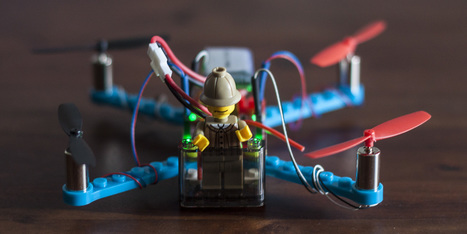
I took my Tinder date to build a drone out of LEGO and it was great | #Drones #Maker #MakerED #MakerSpaces 

I took my Tinder date to build a drone out of LEGO and it was great | #Drones #Maker #MakerED #MakerSpaces  | 21st Century Learning and Teaching | Scoop.it

Flybrix's drone kit lets you build and fly a custom drone using LEGO bricks - and it made for one of the best Tinder dates I've ever been on.


Learn more / En savoir plus / Mehr erfahren:


https://gustmees.wordpress.com/?s=maker


https://www.scoop.it/t/21st-century-learning-and-teaching/?&tag=Ideas+for+makerspaces


https://www.scoop.it/t/21st-century-learning-and-teaching/?&tag=LEGO


Gust MEES's insight:

Flybrix's drone kit lets you build and fly a custom drone using LEGO bricks - and it made for one of the best Tinder dates I've ever been on.


Learn more / En savoir plus / Mehr erfahren:


https://gustmees.wordpress.com/?s=maker


https://www.scoop.it/t/21st-century-learning-and-teaching/?&tag=Ideas+for+makerspaces


https://www.scoop.it/t/21st-century-learning-and-teaching/?&tag=LEGO


No comment yet.
Rescooped by Gust MEES from All digital
April 13, 2017 7:11 AM
Scoop.it!

Let’s learn about Learning | #ModernEDU #LEARNing2LEARN

Let’s learn about Learning | #ModernEDU #LEARNing2LEARN | 21st Century Learning and Teaching | Scoop.it

I often say, “Learning is complicated. If it weren’t, there’d be an app for it.” So for the moment, learning how to learn is one of the most valuable endeavors we can give to this generation of continuous learners.


Self-awareness of how people learn as individuals and in teams becomes the springboard for change and innovative growth. To make learning meaningful, understandable, and motivating requires continued exploration in some basic learning principles: engagement, connection, interaction, attention, memory, intervention, and reflection.

Our ability to continuously learn and adapt determines the extent to which we thrive in today's organizations, in our personal lives, and in these disruptive times. By examining strategies for learning at the pace of change, based on learning analytics data of LyndaCampus users, as well as exploring the recent research, data, and practices in neuroscience and the cognitive sciences, we are able to see behaviors and actions that make learning easier and better.

The marriage of studies in the areas of learning, neuroscience, and cognitive science is moving what educators knew anecdotally to a data-driven understanding of how people learn—and how people can learn better. In an age of access to all knowledge, exploring learning principles or what I term learning strategies is the great gift educators can give students and colleagues.


Learn more / En savoir plus / Mehr erfahren:


https://gustmees.wordpress.com/2015/07/19/learning-path-for-professional-21st-century-learning-by-ict-practice/


https://gustmees.wordpress.com/2015/12/19/teaching-was-yesterday-today-is-coaching-the-learners-students-for-learning-to-learn/


https://www.scoop.it/t/21st-century-learning-and-teaching/?&tag=Learning+2+Learn


Via Edumorfosis, Mark E. Deschaine, PhD, Stephania Savva, Ph.D
Gust MEES's insight:

I often say, “Learning is complicated. If it weren’t, there’d be an app for it.” So for the moment, learning how to learn is one of the most valuable endeavors we can give to this generation of continuous learners.


Self-awareness of how people learn as individuals and in teams becomes the springboard for change and innovative growth. To make learning meaningful, understandable, and motivating requires continued exploration in some basic learning principles: engagement, connection, interaction, attention, memory, intervention, and reflection.

Our ability to continuously learn and adapt determines the extent to which we thrive in today's organizations, in our personal lives, and in these disruptive times. By examining strategies for learning at the pace of change, based on learning analytics data of LyndaCampus users, as well as exploring the recent research, data, and practices in neuroscience and the cognitive sciences, we are able to see behaviors and actions that make learning easier and better.

The marriage of studies in the areas of learning, neuroscience, and cognitive science is moving what educators knew anecdotally to a data-driven understanding of how people learn—and how people can learn better. In an age of access to all knowledge, exploring learning principles or what I term learning strategies is the great gift educators can give students and colleagues.


Learn more / En savoir plus / Mehr erfahren:


https://gustmees.wordpress.com/2015/07/19/learning-path-for-professional-21st-century-learning-by-ict-practice/


https://gustmees.wordpress.com/2015/12/19/teaching-was-yesterday-today-is-coaching-the-learners-students-for-learning-to-learn/


https://www.scoop.it/t/21st-century-learning-and-teaching/?&tag=Learning+2+Learn


No comment yet.
Rescooped by Gust MEES from Makerspaces, libraries and education
April 12, 2017 1:58 PM
Scoop.it!

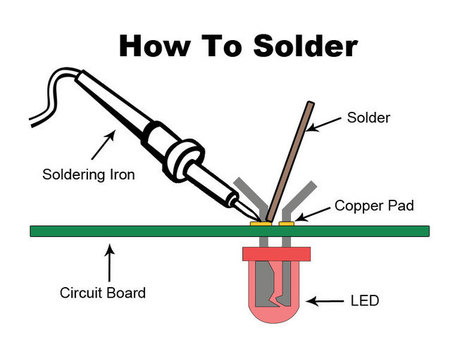
How To Solder: A Complete Beginners Guide | #Soldering | #Maker #MakerED #MakerSpaces

How To Solder: A Complete Beginners Guide | #Soldering | #Maker #MakerED #MakerSpaces | 21st Century Learning and Teaching | Scoop.it
One of the most fundamental skills a maker should be able to master is the ability to solder electronics.  Whether you’re building a robot or working with Arduino, knowing how to solder will come in handy.  The best thing about soldering is that it’s really fun to learn and easy to master.

What Is Soldering?

If you were to take apart any electronic device that contains a circuit board, you’ll see the components are attached using soldering techniques.  Soldering is the process of joining two or more electronic parts together by melting solder around the connection.  Solder is a metal alloy and when it cools it creates a strong electrical bond between the parts.  Even though soldering can create a permanent connection, it can also be reversed using a desoldering tool as described below.


Learn more / En savoir plus / Mehr erfahren:


https://gustmees.wordpress.com/?s=maker


https://www.scoop.it/t/21st-century-learning-and-teaching/?&tag=Ideas+for+makerspaces


Via Kim Flintoff
Gust MEES's insight:
One of the most fundamental skills a maker should be able to master is the ability to solder electronics.  Whether you’re building a robot or working with Arduino, knowing how to solder will come in handy.  The best thing about soldering is that it’s really fun to learn and easy to master.

What Is Soldering?

If you were to take apart any electronic device that contains a circuit board, you’ll see the components are attached using soldering techniques.  Soldering is the process of joining two or more electronic parts together by melting solder around the connection.  Solder is a metal alloy and when it cools it creates a strong electrical bond between the parts.  Even though soldering can create a permanent connection, it can also be reversed using a desoldering tool as described below.


Learn more / En savoir plus / Mehr erfahren:


https://gustmees.wordpress.com/?s=maker


https://www.scoop.it/t/21st-century-learning-and-teaching/?&tag=Ideas+for+makerspaces


Kim Flintoff's curator insight, April 11, 2017 7:16 PM
When advising about Makerspace activities its fascinating to find how many people do not know the basic skill of soldering.  This article is a step-by-step- guide.
Scooped by Gust MEES
April 4, 2017 11:44 AM
Scoop.it!

eConfidence | Confidence in behaviour changes through serious games | #ModernEDU 

eConfidence | Confidence in behaviour changes through serious games | #ModernEDU  | 21st Century Learning and Teaching | Scoop.it

The project aims at researching the use of serious game for positive behavioural changes.


Serious games have become a popular tool for knowledge transfer, behavioural, perceptual or cognitive change, but at the same time, their effectiveness has been analysed in several studies aiming to answer the question whether they are an effective instrument for behaviour change.


Learn more / En savoir plus / Mehr erfahren:


http://www.scoop.it/t/21st-century-learning-and-teaching/?&tag=Behavior+Change


Gust MEES's insight:

The project aims at researching the use of serious game for positive behavioural changes.


Serious games have become a popular tool for knowledge transfer, behavioural, perceptual or cognitive change, but at the same time, their effectiveness has been analysed in several studies aiming to answer the question whether they are an effective instrument for behaviour change.


Learn more / En savoir plus / Mehr erfahren:


http://www.scoop.it/t/21st-century-learning-and-teaching/?&tag=Behavior+Change


No comment yet.
Scooped by Gust MEES
April 3, 2017 8:39 AM
Scoop.it!

Softlink | Make Magazin | Conductive Ink Projects | #Maker #MakerED #MakerSpaces #STEM #Creativity #PracTICE

Softlink | Make Magazin | Conductive Ink Projects | #Maker #MakerED #MakerSpaces #STEM #Creativity #PracTICE | 21st Century Learning and Teaching | Scoop.it

Make 1/2017, Seite 82

Leitungen malen


Learn more / En savoir plus / Mehr erfahren:


http://www.scoop.it/t/21st-century-learning-and-teaching/?&tag=Ideas+for+makerspaces


Gust MEES's insight:

Make 1/2017, Seite 82

Leitungen malen


Learn more / En savoir plus / Mehr erfahren:


http://www.scoop.it/t/21st-century-learning-and-teaching/?&tag=Ideas+for+makerspaces


No comment yet.