21st Century Learning and Teaching
791.6K views | +0 today
21st Century Learning and Teaching
Related articles to 21st Century Learning and Teaching as also tools...
Curated by Gust MEES
Your new post is loading...

Popular Tags

Current selected tag: 'Learning 2 Learn'. Clear
Scooped by Gust MEES
May 27, 2017 11:01 AM
Scoop.it!

Where does machine learning fit in the education sector? | #ModernEDU 

Where does machine learning fit in the education sector? | #ModernEDU  | 21st Century Learning and Teaching | Scoop.it
Those who understand learning and work with young people know that in an uncertain world of rapid change we urgently need to be helping learners to take risks, to work in teams, to develop a greater understanding of the way systems and societies work, and to become more creative. Fundamentally, these things have been washed out of the system in favour of a ‘learn fact, repeat fact’ model.


To get the best out of this technology in the future, educators need to turn the current systems upside down.


In previous technology developments in education – such as multimedia, whiteboards or the internet – initially, most worried that they would upset the world they were used to and feared for their jobs. Only a few imagined how these technologies could change the world and make things better. In reality, new technologies are typically highjacked to inappropriately maintain the status quo and end up powering the exam sausage factory.


Moving forward into 2017, it is not the tech itself that needs to change. In most aspects of our lives, technology has made significant changes (for good and bad), but in education, particularly schools, there is still stubborn resistance.


Learn more / En savoir plus / Mehr erfahren:


https://gustmees.wordpress.com/2015/04/13/dos-and-donts-adapting-to-21st-century-education/


https://gustmees.wordpress.com/2015/07/19/learning-path-for-professional-21st-century-learning-by-ict-practice/


https://gustmees.wordpress.com/2015/12/27/what-are-the-best-ways-of-teaching-and-learning-ideas-and-reflections/


Jan Swanepoel's curator insight, May 28, 2017 12:41 AM
To maximise the use of technology in the future, educators need to embrace these technologies that can change the world and make things better. Moving forward into 2017, it is not the technology itself that needs to change, but rather people's attitudes, particularly in education where there is still often stubborn resistance.
Belinda 's curator insight, June 12, 2017 12:44 AM
Perhaps I am being naive but if 21st Century Teachers are to be teaching 21st Century Students with 21st Century technology in a 21st Century Society isn't it time for a 21st Century Education System?  It seems that exams and assignments necessary to allocate a student a grade that is then provided to parents/caregivers is still what drives the education system.   Schools/Teachers plan their units based on the assessment items and teach students according to 'what is on the exam'. Is quantifying a child's knowledge for statistics as important as generating higher order thinking, creativity, cultural and ethical awareness and active citizenship?  Surely there is another way of reporting on a student's progression during their education?  And this isn't the School/Teachers fault - society has become so set on students being labelled as an 'A' student or B, C, D etc that this is what is expected.   

There is a high amount of anxiety in children from a very young age and I have seen students become quite confused and anxious when there is no 'correct answer' to a question.  Does this stem from crushing the imagination and being told that there is a certain way things must be done?  Why not nurture the creativity in children and we may have them building robots and inventing devices that can change the world by the time they are 10 years old.   

If teachers are to implement the technology to its full advantage then measuring a students' success, knowledge and how to apply this knowledge needs to change in line with the technology.  In such a dramatically changing world, 'assessing' a student hasn't changed for decades - they are still assessed by how much they can cram for an exam and then that information is often forgotten and not used again or when it is required it is re-learnt.  Lets get students creating and using their knowledge more and not be so subject specific - in the real world we use and apply a set of skills not just a subject. So why not start giving students 1-2 projects that encompass a holistic view of the subjects we teach (science, maths, english, humanities, social sciences, art, information technology) and have students use technology to implement the four C's - critical thinking and problem solving, communicating, collaboration, creativity and innovation. While we're at it why not report on the four C's and nothing else.  
Scooped by Gust MEES
May 25, 2017 5:18 PM
Scoop.it!

Developing a Growth Mindset in Teachers and Staff | #ProfessionalDevelopment #ModernEDU

Developing a Growth Mindset in Teachers and Staff | #ProfessionalDevelopment #ModernEDU | 21st Century Learning and Teaching | Scoop.it
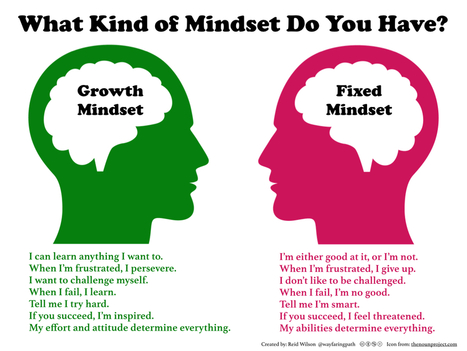
An idea that is beginning to gain a lot of favour in educational circles at the moment is the notion of fixed versus growth mindsets, and how they might relate to students and learning. Based on the work of Stanford University psychologist, Carol Dweck, the idea of mindset is related to our understanding of where ability comes from. It has recently been seized upon by educators as a tool to explore our knowledge of student achievement, and ways that such achievement might be improved.


Learn more / En savoir plus / Mehr erfahren:


http://www.scoop.it/t/21st-century-learning-and-teaching/?&tag=Growth+Mindset


Gust MEES's insight:
An idea that is beginning to gain a lot of favour in educational circles at the moment is the notion of fixed versus growth mindsets, and how they might relate to students and learning. Based on the work of Stanford University psychologist, Carol Dweck, the idea of mindset is related to our understanding of where ability comes from. It has recently been seized upon by educators as a tool to explore our knowledge of student achievement, and ways that such achievement might be improved.


Learn more / En savoir plus / Mehr erfahren:


http://www.scoop.it/t/21st-century-learning-and-teaching/?&tag=Growth+Mindset


Tea Vella's curator insight, May 31, 2017 7:26 PM
A really insightful article about Carol Dweck's Fixed vs Growth mindset theory. 
Alana Ford's comment, June 3, 2017 4:58 AM
Found this article very insightful.
Jillian Schaibly's curator insight, July 25, 2017 9:43 PM
This article talks about professional development with teachers and staff and understanding how to make us worth while for everyone. As a administrator professional development needs to be planned and thought out. Also needs to be relevant to the staff that is participating.
Scooped by Gust MEES
May 23, 2017 6:28 PM
Scoop.it!

It's Your Life to Live. Own It! | #SoftSkills #Character

It's Your Life to Live. Own It! | #SoftSkills #Character | 21st Century Learning and Teaching | Scoop.it

Everyone is born with the potential for greatness. What happens next is up to you. You get to choose which path you take, how high to set the bar for yourself, and how hard you’re willing to work to clear it. You get to decide how to spend your time, who to spend it with, and what you’re willing to forgo when time runs short. Every choice that you make and every action that you take has consequences, but who better to decide what’s best for you –– than you.


It’s your life to live. Own it!


Securing the ultimate prize takes strength and courage. You’re going to face challenges that seem insurmountable and suffer setbacks along the way, but faith, hard work, and determination will see you through. Don’t listen to naysayers or allow others to lead you astray; follow your heart and let your dreams lead the way. You owe it to yourself to be the best you can be. You’ll travel this road only once. Believe in yourself and make yourself proud. There are no dress rehearsals in life.


Learn more / En savoir plus / Mehr erfahren:


http://www.scoop.it/t/21st-century-learning-and-teaching/?&tag=Character


http://www.scoop.it/t/21st-century-learning-and-teaching/?&tag=Frank+SONNENBERG


Gust MEES's insight:

Everyone is born with the potential for greatness. What happens next is up to you. You get to choose which path you take, how high to set the bar for yourself, and how hard you’re willing to work to clear it. You get to decide how to spend your time, who to spend it with, and what you’re willing to forgo when time runs short. Every choice that you make and every action that you take has consequences, but who better to decide what’s best for you –– than you.


It’s your life to live. Own it!


Securing the ultimate prize takes strength and courage. You’re going to face challenges that seem insurmountable and suffer setbacks along the way, but faith, hard work, and determination will see you through. Don’t listen to naysayers or allow others to lead you astray; follow your heart and let your dreams lead the way. You owe it to yourself to be the best you can be. You’ll travel this road only once. Believe in yourself and make yourself proud. There are no dress rehearsals in life.


Learn more / En savoir plus / Mehr erfahren:


http://www.scoop.it/t/21st-century-learning-and-teaching/?&tag=Character


http://www.scoop.it/t/21st-century-learning-and-teaching/?&tag=Frank+SONNENBERG


Jan Swanepoel's curator insight, May 26, 2017 7:19 PM
We are all born with the potential for great success, however how we embrace that potential is up to ourselves. We choose which path to take, how high we set the bar for ourselves, and how hard we are willing to work to clear that bar and achieve ultimate success. Ultimately, we are in control of our time and how we spend it, who we spend it with, and what we are willing to sacrifice when we sometimes run out of time. Each one of our choices and actions has consequences, but who better to decide what’s best for you – than you!
Scooped by Gust MEES
May 19, 2017 3:45 PM
Scoop.it!

Study: Snapchat and Instagram are the worst for young people

Study: Snapchat and Instagram are the worst for young people | 21st Century Learning and Teaching | Scoop.it

A new study lends credence to what you’ve probably always suspected: social media is having a pretty negative effect on teenagers — Instagram and Snapchat being the worst culprits. The study, published today and called “Status of Mind,” was conducted by researchers for the Royal Society for Public Health in the UK. The researchers surveyed 1,479 British youths ages 14-24, asking them how they felt the different social media networks effected their mental health. They took in several factors such as body image, sleep deprivation, bullying, and self-identity.


The results suggest the two worst social media networks for kids are Instagram and Snapchat, as they had terrible scores for body image, bullying, and anxiety. Twitter and Facebook weren’t much better, though. YouTube was the only one that apparently inspired more positive feelings than negative ones.


Learn more / En savoir plus / Mehr erfahren:


http://www.scoop.it/t/social-media-and-its-influence


Gust MEES's insight:

A new study lends credence to what you’ve probably always suspected: social media is having a pretty negative effect on teenagers — Instagram and Snapchat being the worst culprits. The study, published today and called “Status of Mind,” was conducted by researchers for the Royal Society for Public Health in the UK. The researchers surveyed 1,479 British youths ages 14-24, asking them how they felt the different social media networks effected their mental health. They took in several factors such as body image, sleep deprivation, bullying, and self-identity.


The results suggest the two worst social media networks for kids are Instagram and Snapchat, as they had terrible scores for body image, bullying, and anxiety. Twitter and Facebook weren’t much better, though. YouTube was the only one that apparently inspired more positive feelings than negative ones.


Learn more / En savoir plus / Mehr erfahren:


http://www.scoop.it/t/social-media-and-its-influence


No comment yet.
Scooped by Gust MEES
May 18, 2017 7:36 PM
Scoop.it!

Why the AI hype cycle won’t end anytime soon | #ArtificialIntelligence #Future 

Why the AI hype cycle won’t end anytime soon | #ArtificialIntelligence #Future  | 21st Century Learning and Teaching | Scoop.it
Eric Schmidt, the executive chairman of Alphabet, says AI can be harnessed to help solve major challenges like climate change, food security, and many other problems in health care, energy, and other critical sectors. Machine learning algorithms can directly analyze thousands of previous cases of different types of diseases and make their own conclusions as to what constitutes a sick individual versus a healthy individual, and consequently help diagnose dangerous conditions including cancer. Also, the technology is being fed big data to help scientists understand and predict the effects of climate change.


Learn more / En savoir plus / Mehr erfahren:


http://www.scoop.it/t/21st-century-learning-and-teaching/?&tag=AI


Gust MEES's insight:
Eric Schmidt, the executive chairman of Alphabet, says AI can be harnessed to help solve major challenges like climate change, food security, and many other problems in health care, energy, and other critical sectors. Machine learning algorithms can directly analyze thousands of previous cases of different types of diseases and make their own conclusions as to what constitutes a sick individual versus a healthy individual, and consequently help diagnose dangerous conditions including cancer. Also, the technology is being fed big data to help scientists understand and predict the effects of climate change.


Learn more / En savoir plus / Mehr erfahren:


http://www.scoop.it/t/21st-century-learning-and-teaching/?&tag=AI


Paul B.'s curator insight, May 18, 2017 8:35 PM
Most young people are interested in the AI concept from popular culture (movies, computer games); this invites their interest and relates it to real-world learning (links to Maths/science.).
Scooped by Gust MEES
May 18, 2017 10:27 AM
Scoop.it!

Six Ways the Teacher's Role is Changing | #LEARNing2LEARN #ModernEDU

Six Ways the Teacher's Role is Changing | #LEARNing2LEARN #ModernEDU | 21st Century Learning and Teaching | Scoop.it
During this time of significant educational change, we are forced to ask ourselves, what is the role of the teacher?

Teachers continue to be central to learning, but the role is changing significantly. Our children still need to develop real skills and real knowledge, but they also need to be self-reliant, resilient, and fully capable of re-inventing themselves. This means students must learn how to self-direct their learning.

So if students are self-directing their learning, what's the role of the teacher?

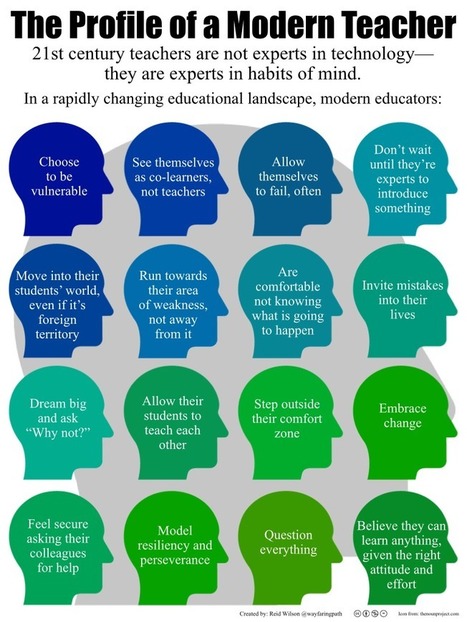
Teachers build the curriculum/lessons with the individual student based on his/her needs and interests rather than move through a fixed curriculum en masse.


Teachers provide the experiences and tools to access new knowledge in specific areas of interest as facilitators of individual pathways, rather than being a provider of the content or expert in one or every area,Teachers become experts in how people learn, not only in teaching.


Teachers support a community of learners in teams, possibly of multiple ages, rather than alone in classrooms with fixed grades of students.


Teachers have more autonomy over their daily schedule, and can be flexible to adjust their schedules to support student needs.


Teachers provide opportunities for real-world, connected, practical learning rather than isolated academics.
These are the types of changes in the teacher's role that are fundamental to developing students who are capable of independent learning and reinvention in a rapidly changing world.


Learn more / En savoir plus / Mehr erfahren:


https://gustmees.wordpress.com/2013/05/25/so-whats-the-change-for-teachers-in-21st-century-education/
 

Gust MEES's insight:
During this time of significant educational change, we are forced to ask ourselves, what is the role of the teacher?

Teachers continue to be central to learning, but the role is changing significantly. Our children still need to develop real skills and real knowledge, but they also need to be self-reliant, resilient, and fully capable of re-inventing themselves. This means students must learn how to self-direct their learning.

So if students are self-directing their learning, what's the role of the teacher?

Teachers build the curriculum/lessons with the individual student based on his/her needs and interests rather than move through a fixed curriculum en masse.


Teachers provide the experiences and tools to access new knowledge in specific areas of interest as facilitators of individual pathways, rather than being a provider of the content or expert in one or every area,Teachers become experts in how people learn, not only in teaching.


Teachers support a community of learners in teams, possibly of multiple ages, rather than alone in classrooms with fixed grades of students.


Teachers have more autonomy over their daily schedule, and can be flexible to adjust their schedules to support student needs.


Teachers provide opportunities for real-world, connected, practical learning rather than isolated academics.
These are the types of changes in the teacher's role that are fundamental to developing students who are capable of independent learning and reinvention in a rapidly changing world.


Learn more / En savoir plus / Mehr erfahren:


https://gustmees.wordpress.com/2013/05/25/so-whats-the-change-for-teachers-in-21st-century-education/


Sarah's curator insight, June 4, 2017 8:25 PM
This is a short article on the ways that teachers' roles are changing. It is important to note that teachers are not becoming obsolete, but are just as important as ever. Teachers are here to facilitate learning and assisting the students in becoming resilient, self directed and capable learners.
Mariann Gissella Castillo Herrera's curator insight, December 3, 2020 12:07 PM
These are the types of changes in the teacher's role that are fundamental to developing students who are capable of independent learning and reinvention in a rapidly changing world.
Luisa Fernanda Giraldo 's curator insight, December 4, 2020 11:58 PM
We can observe a significant change in the teacher's role. Nowadays, students are more independent in the learning process, and due to the pandemic situation, students are forced to create new study habits to learn by themselves. However, the teacher still plays a fundamental role in classes and provides different tools to help students improve while learning. 
Scooped by Gust MEES
May 18, 2017 8:17 AM
Scoop.it!

What is Your Character and is it Helping or Hurting You as a Leader? | #LEADERship

What is Your Character and is it Helping or Hurting You as a Leader? | #LEADERship | 21st Century Learning and Teaching | Scoop.it
Every day, it seems, we’re bombarded with news of leaders, corporate heads, politicians and other key figures in our society whose behavior shocks and deeply disappoints us.


Whether it’s egregious lying, or a lack of accountability, or rampant narcissism or indifference to others, we’re reminded daily of how important character is in our lives and in the successes (or failures) we create and achieve.


Learn more / En savoir plus / Mehr erfahren:


http://www.scoop.it/t/21st-century-learning-and-teaching/?&tag=LeaderShip


http://www.scoop.it/t/21st-century-learning-and-teaching/?&tag=LeaderSkills


http://www.scoop.it/t/21st-century-learning-and-teaching/?&tag=Character


Gust MEES's insight:
Every day, it seems, we’re bombarded with news of leaders, corporate heads, politicians and other key figures in our society whose behavior shocks and deeply disappoints us.


Whether it’s egregious lying, or a lack of accountability, or rampant narcissism or indifference to others, we’re reminded daily of how important character is in our lives and in the successes (or failures) we create and achieve.


Learn more / En savoir plus / Mehr erfahren:


http://www.scoop.it/t/21st-century-learning-and-teaching/?&tag=LeaderShip


http://www.scoop.it/t/21st-century-learning-and-teaching/?&tag=LeaderSkills


http://www.scoop.it/t/21st-century-learning-and-teaching/?&tag=Character


Jan Swanepoel's curator insight, May 26, 2017 7:43 PM
This article shares groundbreaking information about character, and how people at any level can acquire the character habits that can harness the power of doing good and achieving success.
Ebony Egyed's curator insight, June 1, 2017 2:12 AM
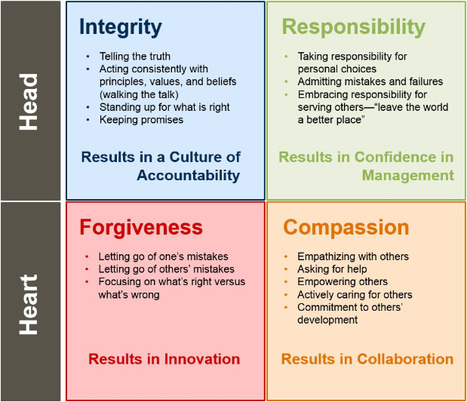
 This article, Scooped from a fellow pre-service teacher, Jan (thanks Jan!) spoke to me on many levels.  Although not directly linked to my teaching areas of health and science, these aspects of learning are often forgotten in the classroom.  I am a gentle, nurturing person and I hope that reflects when I am teaching.  Reiterating to my students the importance of being responsible, forgiving and compassionate to themselves and others is vital in creating working relationships in a classroom environment.
Scooped by Gust MEES
May 17, 2017 8:33 AM
Scoop.it!

Bionic Learning Network | Festo Corporate | Bionics Robotics

Bionic Learning Network | Festo Corporate | Bionics Robotics | 21st Century Learning and Teaching | Scoop.it
Bionic Learning Network

Inspiration for factory and process automation 

Automation technology carries out everyday tasks in factories such as gripping, moving and positioning goods as well as controlling processes. Nature performs all of these tasks instinctively, easily and efficiently. What could be more logical than to examine these natural phenomena and learn from them?

That is why Festo set up the Bionic Learning Network, a research network linking Festo to well-known universities, institutes, development companies and private inventors.


Learn more / En savoir plus / Mehr erfahren:


http://www.scoop.it/t/21st-century-learning-and-teaching/?&tag=robotics


Gust MEES's insight:
Bionic Learning Network

Inspiration for factory and process automation 

Automation technology carries out everyday tasks in factories such as gripping, moving and positioning goods as well as controlling processes. Nature performs all of these tasks instinctively, easily and efficiently. What could be more logical than to examine these natural phenomena and learn from them?

That is why Festo set up the Bionic Learning Network, a research network linking Festo to well-known universities, institutes, development companies and private inventors.


Learn more / En savoir plus / Mehr erfahren:


http://www.scoop.it/t/21st-century-learning-and-teaching/?&tag=robotics


No comment yet.
Scooped by Gust MEES
May 13, 2017 7:28 PM
Scoop.it!

Stereotype - Wikipedia | #Character

Stereotype - Wikipedia

In social psychology, a stereotype is a thought that can be adopted about specific types of individuals or certain ways of doing things. These thoughts or beliefs may or may not accurately reflect reality. However, this is only a fundamental psychological definition of a stereotype.

Stereotypes, prejudice, and discrimination are understood as related but different concepts.[8][9][10][11] Stereotypes are regarded as the most cognitive component and often occurs without conscious awareness, whereas prejudice is the affective component of stereotyping and discrimination is one of the behavioral components of prejudicial reactions.[8][9][12] In this tripartite view of intergroup attitudes, stereotypes reflect expectations and beliefs about the characteristics of members of groups perceived as different from one's own, prejudice represents the emotional response, and discrimination refers to actions.[8][9]

Although related, the three concepts can exist independently of each other.[9][13] According to Daniel Katz and Kenneth Braly, stereotyping leads to racial prejudice when people emotionally react to the name of a group, ascribe characteristics to members of that group, and then evaluate those characteristics.[10]

Possible prejudicial effects of stereotypes[3] are:

  • Justification of ill-founded prejudices or ignorance
  • Unwillingness to rethink one's attitudes and behavior towards stereotyped groups
  • Preventing some people of stereotyped groups from entering or succeeding in activities or fields[14]


Learn more / En savoir plus / Mehr erfahren:


http://www.scoop.it/t/21st-century-learning-and-teaching/?&tag=Character


Gust MEES's insight:

Stereotypes, prejudice, and discrimination are understood as related but different concepts.[8][9][10][11] Stereotypes are regarded as the most cognitive component and often occurs without conscious awareness, whereas prejudice is the affective component of stereotyping and discrimination is one of the behavioral components of prejudicial reactions.[8][9][12] In this tripartite view of intergroup attitudes, stereotypes reflect expectations and beliefs about the characteristics of members of groups perceived as different from one's own, prejudice represents the emotional response, and discrimination refers to actions.[8][9]

Although related, the three concepts can exist independently of each other.[9][13] According to Daniel Katz and Kenneth Braly, stereotyping leads to racial prejudice when people emotionally react to the name of a group, ascribe characteristics to members of that group, and then evaluate those characteristics.[10]

Possible prejudicial effects of stereotypes[3] are:

  • Justification of ill-founded prejudices or ignorance
  • Unwillingness to rethink one's attitudes and behavior towards stereotyped groups
  • Preventing some people of stereotyped groups from entering or succeeding in activities or fields[14]


Learn more / En savoir plus / Mehr erfahren:


http://www.scoop.it/t/21st-century-learning-and-teaching/?&tag=Character


No comment yet.
Scooped by Gust MEES
May 13, 2017 7:18 PM
Scoop.it!

Vorurteil – Wikipedia | #Character 

Vorurteil - Wikipedia

Ein Vorurteil kann grundsätzlich sowohl positiv als auch negativ sein, wird aber häufiger in der öffentlichen Meinung als negativ verstanden, wenn nicht ausdrücklich „positiv" als Eigenschaft vorangestellt wird. Vorurteile gibt es in allen Gesellschaften und allen gesellschaftlichen Gruppen, Klassen und Schichten mehr oder weniger ausgeprägt, nur nicht bei Säuglingen und Kleinkindern bis zu einem Alter, in dem diese ihre Erfahrungen und Umwelt bewusst wahrnehmen und mit sich und ihrem Ich verknüpfen.

Positive und negative Vorurteile

„Das negative Vorurteil ist mit dem positiven eins. Sie sind zwei Seiten einer Sache“, so formuliert es Max Horkheimer in seinem Aufsatz „Über das Vorurteil“. Vorurteile werden heute meist per se als negativ empfunden: Wenn in Debatten über Vorurteile gestritten wird, geht es fast ausschließlich um negative Vorurteile.


Wie entscheidend Vorurteile für unser tägliches Überleben sind, gerät darüber in Vergessenheit. Der moderne Alltag ist ohne Vorurteile nicht zu bewältigen. Horkheimer erklärt: „Im Dschungel der Zivilisation reichen angeborene Instinkte noch weniger aus als im Urwald. Ohne die Maschinerie der Vorurteile könnte einer nicht über die Straße gehen, geschweige denn einen Kunden bedienen.“ Alle Eigenschaften, die dazu führen, dass negative Vorurteile kritisch gesehen werden, bergen umgekehrt positive Folgen. Der von Albert Einstein überlieferte Satz „Ein Vorurteil ist schwerer zu spalten als ein Atom“ birgt bezüglich der sozialen Orientierung eine entscheidende Hilfestellung.


Jedes Individuum hat den Wunsch die Welt zu beurteilen, sein Ge- oder Missfallen an den Geschehnissen auszudrücken – dies ist ohne Vorurteile ein unmögliches Unterfangen. Oft sind kollektive Vorurteile das Ergebnis historisch gewachsener Interpretationsmuster, eine „normale“ Vereinfachung um die Vielfalt der sozialen Wirklichkeit irgendwie zu bündeln.


Learn more / En savoir plus / Mehr erfahren:


http://www.scoop.it/t/21st-century-learning-and-teaching/?&tag=Character


Gust MEES's insight:

Positive und negative Vorurteile

„Das negative Vorurteil ist mit dem positiven eins. Sie sind zwei Seiten einer Sache“, so formuliert es Max Horkheimer in seinem Aufsatz „Über das Vorurteil“. Vorurteile werden heute meist per se als negativ empfunden: Wenn in Debatten über Vorurteile gestritten wird, geht es fast ausschließlich um negative Vorurteile.


Wie entscheidend Vorurteile für unser tägliches Überleben sind, gerät darüber in Vergessenheit. Der moderne Alltag ist ohne Vorurteile nicht zu bewältigen. Horkheimer erklärt: „Im Dschungel der Zivilisation reichen angeborene Instinkte noch weniger aus als im Urwald. Ohne die Maschinerie der Vorurteile könnte einer nicht über die Straße gehen, geschweige denn einen Kunden bedienen.“ Alle Eigenschaften, die dazu führen, dass negative Vorurteile kritisch gesehen werden, bergen umgekehrt positive Folgen. Der von Albert Einstein überlieferte Satz „Ein Vorurteil ist schwerer zu spalten als ein Atom“ birgt bezüglich der sozialen Orientierung eine entscheidende Hilfestellung.


Jedes Individuum hat den Wunsch die Welt zu beurteilen, sein Ge- oder Missfallen an den Geschehnissen auszudrücken – dies ist ohne Vorurteile ein unmögliches Unterfangen. Oft sind kollektive Vorurteile das Ergebnis historisch gewachsener Interpretationsmuster, eine „normale“ Vereinfachung um die Vielfalt der sozialen Wirklichkeit irgendwie zu bündeln.


Learn more / En savoir plus / Mehr erfahren:


http://www.scoop.it/t/21st-century-learning-and-teaching/?&tag=Character


No comment yet.
Scooped by Gust MEES
May 13, 2017 8:27 AM
Scoop.it!

Introduction to Basic Electronics, Electronic Components and Projects | #Maker #MakerED #MakerSpaces

Introduction to Basic Electronics, Electronic Components and Projects | #Maker #MakerED #MakerSpaces | 21st Century Learning and Teaching | Scoop.it
Learning about basic electronics and creating your own projects is a lot easier than you may think.  In this tutorial, we’re going to give you a brief overview of common electronic components and explain what their functions are.  You will then learn about schematic diagrams and how they are used to design and build circuits.  And finally, you will put this information to use by creating your first basic circuit.


Learn more / En savoir plus / Mehr erfahren:


https://gustmees.wordpress.com/?s=electronics


Gust MEES's insight:
Learning about basic electronics and creating your own projects is a lot easier than you may think.  In this tutorial, we’re going to give you a brief overview of common electronic components and explain what their functions are.  You will then learn about schematic diagrams and how they are used to design and build circuits.  And finally, you will put this information to use by creating your first basic circuit.


Learn more / En savoir plus / Mehr erfahren:


https://gustmees.wordpress.com/?s=electronics


Justin Moore's curator insight, May 16, 2017 7:46 PM
Great resource for students science projects.
Scooped by Gust MEES
May 7, 2017 11:47 AM
Scoop.it!

4 raisons pour un apprentissage à l’aide de jeux numériques | #Infographic #Gaming

4 raisons pour un apprentissage à l’aide de jeux numériques | #Infographic #Gaming | 21st Century Learning and Teaching | Scoop.it
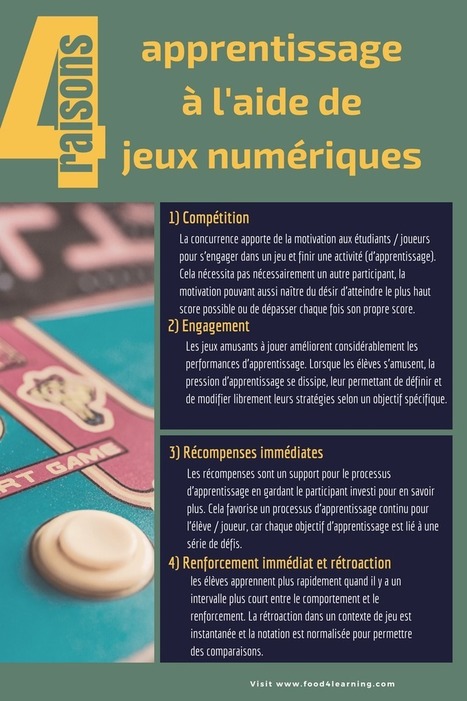
1. Compétition. Les éléments compétitifs d'un jeu ne se trouvent généralement pas dans les méthodes d'apprentissage traditionnelles, comme un cours magistral ou une discussion en classe. La concurrence apporte de la motivation aux étudiants / joueurs pour s'engager dans un jeu et finir une activité (d'apprentissage). Cela nécessita pas nécessairement un autre participant, la motivation…


Learn more / En savoir plus / Mehr erfahren:


http://www.scoop.it/t/21st-century-learning-and-teaching/?&tag=Game+Based+Learning


http://www.scoop.it/t/21st-century-learning-and-teaching/?&tag=Gamification


http://www.scoop.it/t/21st-century-learning-and-teaching/?&tag=games


Gust MEES's insight:
1. Compétition. Les éléments compétitifs d'un jeu ne se trouvent généralement pas dans les méthodes d'apprentissage traditionnelles, comme un cours magistral ou une discussion en classe. La concurrence apporte de la motivation aux étudiants / joueurs pour s'engager dans un jeu et finir une activité (d'apprentissage). Cela nécessita pas nécessairement un autre participant, la motivation…


Learn more / En savoir plus / Mehr erfahren:


http://www.scoop.it/t/21st-century-learning-and-teaching/?&tag=Game+Based+Learning


http://www.scoop.it/t/21st-century-learning-and-teaching/?&tag=Gamification


http://www.scoop.it/t/21st-century-learning-and-teaching/?&tag=games


No comment yet.
Scooped by Gust MEES
May 4, 2017 10:39 AM
Scoop.it!

NEW PRODUCTS – Star Simpson’s Circuit Classics! | #Electronics #Maker #MakerED #MakerSpaces #PracTICE

NEW PRODUCTS – Star Simpson’s Circuit Classics! | #Electronics #Maker #MakerED #MakerSpaces #PracTICE | 21st Century Learning and Teaching | Scoop.it

Forrest M. Mims III is a trusted name in the electronics world for good reason: his charming and engaging texts have drawn millions of people into the world of electronics for the first time.


[Gust MEES] I agree!! I learned from him ;)


Star Simpson has created an electronic tribute to those hand-drawn circuits by bringing the projects to life. These kits are an exquisitely designed series of finely crafted and highly detailed boards. These are the Circuit Classics. They make a great gift for a first-time learner, an expert tinkerer, or even just as a fun conversation piece for your desk.


This initial release includes three of Forrest’s circuit designs in kit form: the Dual-LED Flasher, the Stepped Tone Generator, and the Bargraph Voltage Indicator. Each kit includes:


  • Printed Circuit Board (PCB): Includes the circuit itself, the circuit’s schematic, and a description of the circuit, all in Forrest’s iconic hand-drawn style, traced directly from his books. (Prototypes are OSHPark purple, but the final production run will be blue.)
  • Through-hole Components: All the components you need to build a working circuit. Easy to place and solder on the PCB thanks to clear footprints and large, friendly solder pads.
  • Display Stand: made of high-quality blond ash wood, each stand is crafted to let you proudly display your work.


Learn more / En savoir plus / Mehr erfahren:


http://www.scoop.it/t/21st-century-learning-and-teaching/?&tag=Ideas+for+makerspaces


Gust MEES's insight:

Forrest M. Mims III is a trusted name in the electronics world for good reason: his charming and engaging texts have drawn millions of people into the world of electronics for the first time.


[Gust MEES] I agree!! I learned from him ;)


Star Simpson has created an electronic tribute to those hand-drawn circuits by bringing the projects to life. These kits are an exquisitely designed series of finely crafted and highly detailed boards. These are the Circuit Classics. They make a great gift for a first-time learner, an expert tinkerer, or even just as a fun conversation piece for your desk.


This initial release includes three of Forrest’s circuit designs in kit form: the Dual-LED Flasher, the Stepped Tone Generator, and the Bargraph Voltage Indicator. Each kit includes:


  • Printed Circuit Board (PCB): Includes the circuit itself, the circuit’s schematic, and a description of the circuit, all in Forrest’s iconic hand-drawn style, traced directly from his books. (Prototypes are OSHPark purple, but the final production run will be blue.)
  • Through-hole Components: All the components you need to build a working circuit. Easy to place and solder on the PCB thanks to clear footprints and large, friendly solder pads.
  • Display Stand: made of high-quality blond ash wood, each stand is crafted to let you proudly display your work.


Learn more / En savoir plus / Mehr erfahren:


http://www.scoop.it/t/21st-century-learning-and-teaching/?&tag=Ideas+for+makerspaces


No comment yet.
Scooped by Gust MEES
May 26, 2017 4:09 PM
Scoop.it!

Phishing-Know-How: So entlarven Sie bösartige Mails

Phishing-Know-How: So entlarven Sie bösartige Mails | 21st Century Learning and Teaching | Scoop.it
Jeder zweite Internetnutzer ist Opfer von Cybercrime. Wir zeigen, wie Sie solche Phishing-Attacken erkennen und sich schützen können.


Learn more / En savoir plus / Mehr erfahren:


http://www.scoop.it/t/securite-pc-et-internet/?&tag=Phishing


http://www.scoop.it/t/21st-century-learning-and-teaching/?&tag=Phishing


Gust MEES's insight:
Jeder zweite Internetnutzer ist Opfer von Cybercrime. Wir zeigen, wie Sie solche Phishing-Attacken erkennen und sich schützen können.


Learn more / En savoir plus / Mehr erfahren:


http://www.scoop.it/t/securite-pc-et-internet/?&tag=Phishing


http://www.scoop.it/t/21st-century-learning-and-teaching/?&tag=Phishing


No comment yet.
Scooped by Gust MEES
May 25, 2017 10:21 AM
Scoop.it!

Botnetze: The Connected Dead | #ICT #CyberSecurity #Botnet #IoT #InternetOfThings 

Botnetze: The Connected Dead | #ICT #CyberSecurity #Botnet #IoT #InternetOfThings  | 21st Century Learning and Teaching | Scoop.it
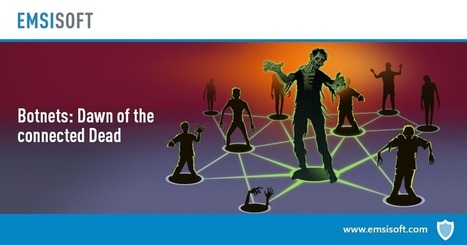
Botnetze steuern Computer und IoT-Geräte, um einflussreiche Websites vom Netz zu nehmen und online für Chaos zu sorgen. Gehören Ihre Geräte dazu?


Learn more / En savoir plus / Mehr erfahren:


https://gustmees.wordpress.com/2012/05/21/visual-it-securitypart2-your-computer-as-a-possible-cyber-weapon/
 

http://www.scoop.it/t/securite-pc-et-internet/?&tag=Internet+of+things


Gust MEES's insight:
Botnetze steuern Computer und IoT-Geräte, um einflussreiche Websites vom Netz zu nehmen und online für Chaos zu sorgen. Gehören Ihre Geräte dazu?


Learn more / En savoir plus / Mehr erfahren:


https://gustmees.wordpress.com/2012/05/21/visual-it-securitypart2-your-computer-as-a-possible-cyber-weapon/


http://www.scoop.it/t/securite-pc-et-internet/?&tag=Internet+of+things


No comment yet.
Scooped by Gust MEES
May 23, 2017 4:34 PM
Scoop.it!

WHAT’S the MOST IMPORTANT in Professional Development-Teacher Training in Modern EDUcation!?

WHAT’S the MOST IMPORTANT in Professional Development-Teacher Training in Modern EDUcation!? | 21st Century Learning and Teaching | Scoop.it

WHAT'S the MOST IMPORTANT in Professional Development-Teacher Training in Modern EDUcation!? Is it the use of #EdTech (Apps and WHATEVER), technology,

WHAT MOST of educators, teachers are advocating on Social-Media twitter and OTHER platforms!??? Certainly NOT!!! WE are living in a world WHERE WE need more than EVER to work together and to…


Learn more / En savoir plus / Mehr erfahren:


https://gustmees.wordpress.com/?s=modern+education


Gust MEES's insight:

WHAT'S the MOST IMPORTANT in Professional Development-Teacher Training in Modern EDUcation!? Is it the use of #EdTech (Apps and WHATEVER), technology,

WHAT MOST of educators, teachers are advocating on Social-Media twitter and OTHER platforms!??? Certainly NOT!!! WE are living in a world WHERE WE need more than EVER to work together and to…


Learn more / En savoir plus / Mehr erfahren:


https://gustmees.wordpress.com/?s=modern+education


No comment yet.
Scooped by Gust MEES
May 19, 2017 11:32 AM
Scoop.it!

How Design Thinking Builds Empathy, Gives Purpose and Honors Educators

How Design Thinking Builds Empathy, Gives Purpose and Honors Educators | 21st Century Learning and Teaching | Scoop.it

In her early teaching years, Wanny Hersey learned how hands-on projects—which would eventually become known as “making”— could engage and motivate her English students like nothing she’d seen before. She’d witnessed the heartbreak of watching a one-size-fits-all education system fail to engage students who needed it most. And the joy of nurturing students’ natural desire to solve problems and create.


Design thinking gives purpose to making. It's a problem-solving, action-oriented, human-centered process that we engage in to assist our students in their journeys as makers.

These experiences as a teacher and administrator inspired her to found Bullis Charter school—with both her past and future students in mind. The award winning K-8 public school is focused on design thinking, making, and project-based learning—all of which Wanny believes engage children, and grow their natural curiosity.


Wanny spoke to EdSurge about how making builds empathy, why it’s important to compensate teachers for continuously learning, and her advice for administrators who want to drive change through design thinking.


Learn more / En savoir plus / Mehr erfahren:


http://www.scoop.it/t/21st-century-learning-and-teaching/?&tag=Design-Thinking


https://gustmees.wordpress.com/2014/10/03/design-the-learning-of-your-learners-students-ideas/


Gust MEES's insight:

In her early teaching years, Wanny Hersey learned how hands-on projects—which would eventually become known as “making”— could engage and motivate her English students like nothing she’d seen before. She’d witnessed the heartbreak of watching a one-size-fits-all education system fail to engage students who needed it most. And the joy of nurturing students’ natural desire to solve problems and create.


Design thinking gives purpose to making. It's a problem-solving, action-oriented, human-centered process that we engage in to assist our students in their journeys as makers.

These experiences as a teacher and administrator inspired her to found Bullis Charter school—with both her past and future students in mind. The award winning K-8 public school is focused on design thinking, making, and project-based learning—all of which Wanny believes engage children, and grow their natural curiosity.


Wanny spoke to EdSurge about how making builds empathy, why it’s important to compensate teachers for continuously learning, and her advice for administrators who want to drive change through design thinking.


Learn more / En savoir plus / Mehr erfahren:


http://www.scoop.it/t/21st-century-learning-and-teaching/?&tag=Design-Thinking


https://gustmees.wordpress.com/2014/10/03/design-the-learning-of-your-learners-students-ideas/


Lorena Lepe's curator insight, May 21, 2017 10:45 PM
This is a really interesting article, i recommend reading it. 
Scooped by Gust MEES
May 18, 2017 6:20 PM
Scoop.it!

May I Have a Word With You | #Communication #ICT #Social #SoftSkills #EQ #Empathy #Character #LEADERship 

May I Have a Word With You | #Communication #ICT #Social #SoftSkills #EQ #Empathy #Character #LEADERship  | 21st Century Learning and Teaching | Scoop.it
Communication matters. While a few words can make someone feel special, words poorly chosen have the power to kill a relationship or tarnish a reputation.


Learn more / En savoir plus / Mehr erfahren:


http://www.scoop.it/t/21st-century-learning-and-teaching/?&tag=communication


http://www.scoop.it/t/21st-century-learning-and-teaching/?&tag=Frank+SONNENBERG


Gust MEES's insight:
Communication matters. While a few words can make someone feel special, words poorly chosen have the power to kill a relationship or tarnish a reputation.


Learn more / En savoir plus / Mehr erfahren:


http://www.scoop.it/t/21st-century-learning-and-teaching/?&tag=communication


http://www.scoop.it/t/21st-century-learning-and-teaching/?&tag=Frank+SONNENBERG


No comment yet.
Scooped by Gust MEES
May 18, 2017 9:48 AM
Scoop.it!

Return on Character | Character-driven leaders deliver five times greater financial returns for their organizations.

Return on Character | Character-driven leaders deliver five times greater financial returns for their organizations. | 21st Century Learning and Teaching | Scoop.it
Does the character of our leaders matter? According to research done by KRW International it really, really, does!

Welcome to a Leadership Channel Podcast on TotalPicture. Joining Peter Clayton today is Fred Kiel, PhD, co-founder of KRW International, the author of Return On Character. For more than thirty years, he has helped Fortune 500 CEOs and senior executives build organizational effectiveness through leadership excellence and mission alignment.


Strategy+Business considers Return on Character one of the best business books of 2015.

With Credit Suisse replacing their CEO after years of fines and the future of companies like Uber and Yahoo! being questioned because of bad CEO behavior, (or the current CEO poster boy, infamous former Turing CEO Martin Shkreli), could this be the wakeup call we need to start measuring how the character of a leader impacts their organization's performance?

For the first time we now have data to measure the correlation. In Return On Character (Harvard Business Review Press,), the findings are revealed from KRW International's seven-year study on the financial impact of character.


Learn more / En savoir plus / Mehr erfahren:


http://www.scoop.it/t/21st-century-learning-and-teaching/?&tag=LeaderShip


http://www.scoop.it/t/21st-century-learning-and-teaching/?&tag=LeaderSkills


http://www.scoop.it/t/21st-century-learning-and-teaching/?&tag=Character


http://www.scoop.it/t/21st-century-learning-and-teaching/?&tag=Soft+Skills


Check also:


- http://www.scoop.it/t/21st-century-learning-and-teaching?tag=Emotional-Intelligence


- http://www.scoop.it/t/21st-century-learning-and-teaching?tag=Emotions-and-Learning


- http://www.scoop.it/t/21st-century-learning-and-teaching?tag=Empathy


- http://www.scoop.it/t/21st-century-learning-and-teaching?tag=EQ


- http://www.scoop.it/t/21st-century-learning-and-teaching?tag=Daniel-GOLEMAN


Gust MEES's insight:
Does the character of our leaders matter? According to research done by KRW International it really, really, does!

Welcome to a Leadership Channel Podcast on TotalPicture. Joining Peter Clayton today is Fred Kiel, PhD, co-founder of KRW International, the author of Return On Character. For more than thirty years, he has helped Fortune 500 CEOs and senior executives build organizational effectiveness through leadership excellence and mission alignment.


Strategy+Business considers Return on Character one of the best business books of 2015.

With Credit Suisse replacing their CEO after years of fines and the future of companies like Uber and Yahoo! being questioned because of bad CEO behavior, (or the current CEO poster boy, infamous former Turing CEO Martin Shkreli), could this be the wakeup call we need to start measuring how the character of a leader impacts their organization's performance?

For the first time we now have data to measure the correlation. In Return On Character (Harvard Business Review Press,), the findings are revealed from KRW International's seven-year study on the financial impact of character.


Learn more / En savoir plus / Mehr erfahren:


http://www.scoop.it/t/21st-century-learning-and-teaching/?&tag=LeaderShip


http://www.scoop.it/t/21st-century-learning-and-teaching/?&tag=LeaderSkills


http://www.scoop.it/t/21st-century-learning-and-teaching/?&tag=Character


http://www.scoop.it/t/21st-century-learning-and-teaching/?&tag=Soft+Skills


Check also:


- http://www.scoop.it/t/21st-century-learning-and-teaching?tag=Emotional-Intelligence


- http://www.scoop.it/t/21st-century-learning-and-teaching?tag=Emotions-and-Learning


- http://www.scoop.it/t/21st-century-learning-and-teaching?tag=Empathy


- http://www.scoop.it/t/21st-century-learning-and-teaching?tag=EQ


- http://www.scoop.it/t/21st-century-learning-and-teaching?tag=Daniel-GOLEMAN


Gerd Ingunn Opdal's curator insight, May 18, 2017 5:03 PM

Leiarskap; "klart hovud, varmt hjarta"

Rescooped by Gust MEES from ED 262 Research, Reference & Resource Skills
May 17, 2017 12:24 PM
Scoop.it!

The seven techniques of Learning to Learn

The seven techniques of Learning to Learn | 21st Century Learning and Teaching | Scoop.it
Learning should not be as hard as you think. There is a method to the art and just like any skill, learning to learn needs practice and mastery. It is much like speed reading. If you know how to read faster, you can end up reading more books in a given time. Similarly, if you learn how to learn efficiently you can spend less time doing the learning and more time enjoying what you have learned.

As a trainer, the topic of learning to learn is even more important since it is not only beneficial to you, but it also helps you to improve your training. As such, it is worth investing time in.

In this article, you will be introduced to seven highly effective techniques that help you maximise learning in a given time. The following methods are presented as if you are applying them to yourself, but you should consider how you can take advantage of them for your learners in a training environment.


Learn more / En savoir plus / Mehr erfahren:


https://gustmees.wordpress.com/2014/10/03/design-the-learning-of-your-learners-students-ideas/


https://gustmees.wordpress.com/2015/07/19/learning-path-for-professional-21st-century-learning-by-ict-practice/


https://gustmees.wordpress.com/2015/08/01/21st-century-education-is-learning-to-learn-for-life-long-learning-and-nothing-else-matters/


Via Edumorfosis, Dennis Swender
Gust MEES's insight:
Learning should not be as hard as you think. There is a method to the art and just like any skill, learning to learn needs practice and mastery. It is much like speed reading. If you know how to read faster, you can end up reading more books in a given time. Similarly, if you learn how to learn efficiently you can spend less time doing the learning and more time enjoying what you have learned.

As a trainer, the topic of learning to learn is even more important since it is not only beneficial to you, but it also helps you to improve your training. As such, it is worth investing time in.

In this article, you will be introduced to seven highly effective techniques that help you maximise learning in a given time. The following methods are presented as if you are applying them to yourself, but you should consider how you can take advantage of them for your learners in a training environment.


Learn more / En savoir plus / Mehr erfahren:


https://gustmees.wordpress.com/2014/10/03/design-the-learning-of-your-learners-students-ideas/


https://gustmees.wordpress.com/2015/07/19/learning-path-for-professional-21st-century-learning-by-ict-practice/


https://gustmees.wordpress.com/2015/08/01/21st-century-education-is-learning-to-learn-for-life-long-learning-and-nothing-else-matters/


Koen Mattheeuws's curator insight, May 19, 2017 5:40 AM
Zeven toetsstenen om na te gaan of je in jouw klas leert leren. 
Andrea Mejia Medina's curator insight, May 23, 2017 2:35 PM
A paper published in Psychological Science in the Public Interest evaluated some techniques for improving learning. Be aware that everyone thinks they have their own style of learning (they don't, according to the latest research), and the evidence suggests that just because a technique works or does not work for other people does not necessarily mean it will or won’t work well for you. If you want to know how to revise or learn most effectively you will still want to experiment on yourself a little with each technique. Elaborative Interrogation (Rating = moderate) A method involving creating explanations for why stated facts are true. The method involves concentrating on why questions rather than what questions and creating questions for yourself as you are working through a task. This is a good method because it is simple, so anyone can apply it easily. It does however require enough prior knowledge to enable you to generate good questions for yourself, so this method may be best for learners with experience in a subject. Self Explanation (Rating = moderate) A technique that is useful for abstract learning. The technique involves explaining and recording how one solves or understands problems as they work and giving reasons for choices that are made. This was found to be more effective if done while learning as opposed to after learning. Self explanation has been found to be effective with learners ranging from children in kindergarten to older students working on algebraic formulas and geometric theorems. Like elaborative explanation, self explanation benefits from its simplicity. Summarisation (Rating = low) An old staple, tested by having participants summarise every page of text in to a few short lines. Summarising and note taking were found to be beneficial for preparing for written exams but less useful for types of tests that do not require students to generate information – such as multiple choice tests. Highlighting and underlining (Rating = low) The runaway favourite technique of students was found to perform spectacularly poorly when done on its own under controlled conditions. It seems pretty intuitive that highlighting alone is ineffective for the same reasons it is so popular – it requires no training, it takes practically no additional time and crucially, it involves very little thought above the effort taken to simply read a piece of text. The keyword mnemonic (Rating = low) A technique for memorising information involving linking words to meanings through associations based on how a word sounds and creating imagery for specific words. Much research has found that mnemonics are useful for memorising information in the short term in a range of situations including learning foreign language, learning people’s names and occupations, learning scientific terms etc. However, it seems the keyword mnemonic is only effective in instances where keywords are important and the material includes keywords which are inherently easy to memorise. Imagery for Text Learning (Rating = low) Experiments asking students to simply imagine clear visual images as they are reading texts have found advantages when memorising sentences, but these advantages seem much less pronounced when longer pieces of text are involved. Interestingly, visualisation was found to be more effective when students listened to a text than when they read text themselves, implying the act of reading may make it harder to focus on visualizing. Rereading (Rating = low) Overall, rereading is found to be much less effective than other techniques – however the research has drawn some interesting conclusions. Massed rereading – rereading immediately after reading - has been found more effective than outlining and summarising for the same amount of time. It does seem however, that rereading spaced over a longer amount of time has a much stronger effect than massed rereading. Practice Testing (Rating = High) testing is often seen as a necessary evil of education. practice testing seems to result in benefits. Unlike many of the other techniques mentioned, the benefits of practice testing are not modest – studies have found that a practice test can double free recall! Research has found that though multiple choice testing is indeed effective, practice tests that require more detailed answers to be generated are more effective. Importantly, practice testing is effective when you create the questions yourself. Distributed Practice (Rating = High) if you want to remember something for a year you should study at least every month, if you want to remember something for five years you should space your learning every six to twelve months. If you want to remember something for a week you should space your learning 12-24 hours apart. It does seem however that the distributed-practice effect may work best when processing information deeply – so for best results you might want to try a distributed practice and self-testing combo. 

 So it is clear that we are all expected to be able to learn but currently we don’t ever really get taught how to learn. The trick is to experiment with different methods or techniques and to discover the ideal technique for us according to our needs and the one that suits our learning style, as we know there are techniques that can work for many people but for us they do not work as effectively as We expect it.
Sarah's curator insight, May 24, 2017 6:19 PM
Share your insight
Scooped by Gust MEES
May 15, 2017 11:58 AM
Scoop.it!

The need for urgent collective action to keep people safe online | #Cyberattacks #CyberSecurity #Updates 

The need for urgent collective action to keep people safe online | #Cyberattacks #CyberSecurity #Updates  | 21st Century Learning and Teaching | Scoop.it

Early Friday morning the world experienced the year’s latest cyberattack. Starting first in the United Kingdom and Spain, the malicious “WannaCrypt” software quickly spread globally, blocking customers from their data unless they paid a ransom using Bitcoin. The WannaCrypt exploits used in the attack were drawn from the exploits stolen from the National Security Agency, or NSA, in the United States. That theft was publicly reported earlier this year. 


Learn more / en savoir plus / Mehr erfahren:


https://gustmees.wordpress.com/?s=cybersecurity


https://gustmees.wordpress.com/?s=5+minutes


Gust MEES's insight:

Early Friday morning the world experienced the year’s latest cyberattack. Starting first in the United Kingdom and Spain, the malicious “WannaCrypt” software quickly spread globally, blocking customers from their data unless they paid a ransom using Bitcoin. The WannaCrypt exploits used in the attack were drawn from the exploits stolen from the National Security Agency, or NSA, in the United States. That theft was publicly reported earlier this year. 


Learn more / en savoir plus / Mehr erfahren:


https://gustmees.wordpress.com/?s=cybersecurity


https://gustmees.wordpress.com/?s=5+minutes


No comment yet.
Scooped by Gust MEES
May 13, 2017 7:24 PM
Scoop.it!

Prejudice - Wikipedia | #Character

Prejudice - Wikipedia

Prejudice is an affective feeling toward a person or group member based solely on their group membership. The word is often used to refer to preconceived, usually unfavorable, feelings toward people or a person because of their sex, gender, beliefs, values, social class, age, disability, religion, sexuality, race/ ethnicity, language, nationality, beauty, occupation, education, criminality, sport team affiliation or other personal characteristics.

Another contemporary theory is the integrated threat theory (ITT), which was developed by Walter G Stephan.[14] It draws from and builds upon several other psychological explanations of prejudice and ingroup/outgroup behaviour, such as the realistic conflict theory and symbolic racism.[15] It also uses the social identity theory perspective as the basis for its validity; that is, it assumes that individuals operate in a group-based context where group memberships form a part of individual identity. ITT posits that outgroup prejudice and discrimination is caused when individuals perceive an outgroup to be threatening in some way. ITT defines four threats:


  • Realistic threats
  • Symbolic threats
  • Intergroup anxiety
  • Negative stereotypes


Learn more / En savoir plus / Mehr erfahren:


http://www.scoop.it/t/21st-century-learning-and-teaching/?&tag=Character


Gust MEES's insight:

Another contemporary theory is the integrated threat theory (ITT), which was developed by Walter G Stephan.[14] It draws from and builds upon several other psychological explanations of prejudice and ingroup/outgroup behaviour, such as the realistic conflict theory and symbolic racism.[15] It also uses the social identity theory perspective as the basis for its validity; that is, it assumes that individuals operate in a group-based context where group memberships form a part of individual identity. ITT posits that outgroup prejudice and discrimination is caused when individuals perceive an outgroup to be threatening in some way. ITT defines four threats:


  • Realistic threats
  • Symbolic threats
  • Intergroup anxiety
  • Negative stereotypes


Learn more / En savoir plus / Mehr erfahren:


http://www.scoop.it/t/21st-century-learning-and-teaching/?&tag=Character


No comment yet.
Scooped by Gust MEES
May 13, 2017 9:49 AM
Scoop.it!

Lateral Thinking - How can Lateral Thinking help you? | #Creativity #ProblemSolving

Lateral Thinking - How can Lateral Thinking help you? | #Creativity #ProblemSolving | 21st Century Learning and Teaching | Scoop.it
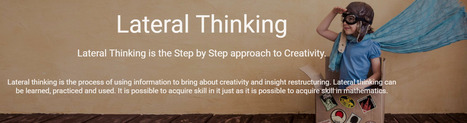
With logic you start out with certain ingredients just as in playing chess you start out with given pieces. But what are those pieces? In most real life situations the pieces are not given, we just assume they are there. We assume certain perceptions, certain concepts and certain boundaries. Lateral thinking is concerned not with playing with the existing pieces but with seeking to change those very pieces. Lateral thinking is concerned with the perception part of thinking. This is where we organise the external world into the pieces we can then 'process'.

A healthy human brain does not want to always be creative, it is designed to figure out how to do things or how to think about things and then 'locks' that automatic response or behaviour into a subconscious process so that your conscious brain can focus on other matters.


Learn more / En savoir plus / Mehr erfahren:


http://www.scoop.it/t/21st-century-learning-and-teaching/?&tag=Thinking


http://www.scoop.it/t/21st-century-learning-and-teaching/?&tag=Think-Different


http://www.scoop.it/t/21st-century-learning-and-teaching/?&tag=Think+outside+the+box


Gust MEES's insight:
With logic you start out with certain ingredients just as in playing chess you start out with given pieces. But what are those pieces? In most real life situations the pieces are not given, we just assume they are there. We assume certain perceptions, certain concepts and certain boundaries. Lateral thinking is concerned not with playing with the existing pieces but with seeking to change those very pieces. Lateral thinking is concerned with the perception part of thinking. This is where we organise the external world into the pieces we can then 'process'.

A healthy human brain does not want to always be creative, it is designed to figure out how to do things or how to think about things and then 'locks' that automatic response or behaviour into a subconscious process so that your conscious brain can focus on other matters.


Learn more / En savoir plus / Mehr erfahren:


http://www.scoop.it/t/21st-century-learning-and-teaching/?&tag=Thinking


http://www.scoop.it/t/21st-century-learning-and-teaching/?&tag=Think-Different


http://www.scoop.it/t/21st-century-learning-and-teaching/?&tag=Think+outside+the+box


Matt Manfredi's curator insight, May 14, 2017 9:08 PM
Thanks Gus-A healthy human brain does not want to always be creative, it is designed to figure out how to do things or how to think about things and then 'locks' that automatic response or behaviour into a subconscious process so that your conscious brain can focus on other matters.
Begoña Pabón's curator insight, May 15, 2017 4:24 PM
Pensar de forma diferente...mirar mas allá de lo evidente... conduce a soluciones inesperadas a viejos problemas.
Andrea Mejia Medina's curator insight, May 23, 2017 7:38 PM
Lateral thinking is the art of looking at things sideways, and not choosing the obvious answer. When we think laterally, we look a little bit deeper into things. Lateral thinking makes new ideas posible If we are able to look at things differently, and make an unlikely connection, this will take us to a new way of problem solving, as suggested by O’Sullivan, 2008, “search as far outside the boundaries of convention as you can” (p.57). Lateral thinking leads us away from the rules and structure we normally encounter; this can be a mental block on our creativity.
Rescooped by Gust MEES from Process Improvement Guidelines
May 8, 2017 2:10 PM
Scoop.it!

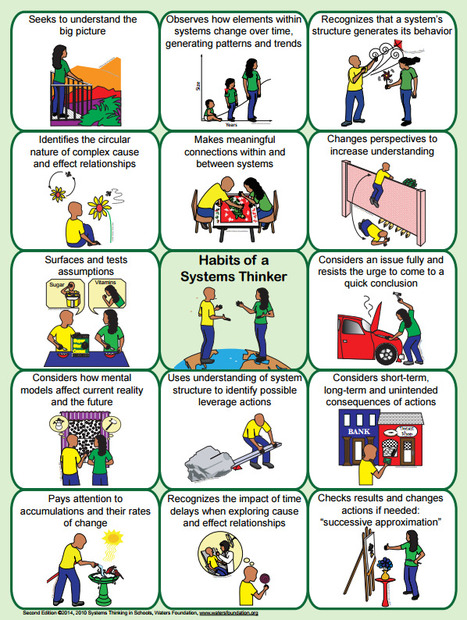
Habits of a Systems Thinker (PDF) | #LEARNing2LEARN on How-To THINK in #PracTICE

Habits of a Systems Thinker (PDF) | #LEARNing2LEARN on How-To THINK in #PracTICE | 21st Century Learning and Teaching | Scoop.it

Learning-To-Learn on How-To THINK in PracTICE!


Via Mark E. Deschaine, PhD
christophe Keromen's curator insight, January 26, 2018 1:12 AM
Pas d'agilité sans approche systémique
Scooped by Gust MEES
May 4, 2017 12:50 PM
Scoop.it!

#Update YOUR #knowledge and START #LEARNing about #SoftSkills: My #curation | #eLEADERship #ModernEDU 

#Update YOUR #knowledge and START #LEARNing about #SoftSkills: My #curation | #eLEADERship #ModernEDU  | 21st Century Learning and Teaching | Scoop.it

Learn more: http://www.scoop.it/t/21st-century-learning-and-teaching/?&tag=Soft+Skills


#ModernEDU with/about #ICT: #eSkills #eLEADERship


Gust MEES's insight:

Learn more: http://www.scoop.it/t/21st-century-learning-and-teaching/?&tag=Soft+Skills


#ModernEDU with/about #ICT: #eSkills #eLEADERship


No comment yet.