


If kids can’t socialize, who should parents blame? Simple: They should blame themselves. Teenagers would love to socialize face-to-face with their friends. But adult society won’t let them.
Get Started for FREE
Sign up with Facebook Sign up with X
I don't have a Facebook or a X account


 Your new post is loading...
 Your new post is loading...
Your new post is loading...
 Scoop.it!
If kids can’t socialize, who should parents blame? Simple: They should blame themselves. Teenagers would love to socialize face-to-face with their friends. But adult society won’t let them.
Gust MEES's insight:

Scoop.it!

Der Kinderpsychiater Michael Winterhoff schlägt in seinem neuen Buch Alarm: Eltern zögen eine Generation von Narzissten und Egomanen heran.
Gust MEES's insight:
A MUST READ!!!
Learn more:
- http://www.scoop.it/t/21st-century-learning-and-teaching/?tag=Psychology
Scoop.it!

Resilience is the process of adapting well in the face of adversity,trauma, tragedy, threats, or even significant sources of stress — such as family and relationship problems, serious health problems, or workplace and financial stressors. It means “bouncing back” from difficult experiences.
Gust MEES's insight:
Resilience is the process of adapting well in the face of adversity,trauma, tragedy, threats, or even significant sources of stress — such as family and relationship problems, serious health problems, or workplace and financial stressors. It means “bouncing back” from difficult experiences.
Learn more:
- http://www.scoop.it/t/21st-century-learning-and-teaching/?tag=Psychology
Scoop.it!

Emotional abuse is elusive. Unlike physical abuse, the people doing it and receiving it may not even know it's happening. It can be more harmful than
Gust MEES's insight:
Scoop.it!

by Marilyn Price-Mitchell PhD. The roots of lifelong learning begin in childhood. Learn how you can help children prepare for lifelong learning success.
Gust MEES's insight:
Scoop.it!
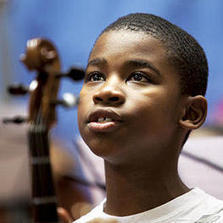
How music improves the lives of children.
Gust MEES's insight:
A MUST read!!!
Scoop.it!
![The Power of Suggestion: Using Psychology To Improve Student Intelligence [Infographic] | 21st Century Learning and Teaching | Scoop.it](https://img.scoop.it/JripGqmOEopQGfeiPzOuKzl72eJkfbmt4t8yenImKBVvK0kTmF0xjctABnaLJIm9)
So how can educators use psychology to improve student intelligence and academic achievement? BrainTrack have produced this infographic looking at the power of suggestion.
Gust MEES's insight:
A very GOOD trick to use that is to show the students some tools and telling them that they are YOUR "Secret Tools" and give them the download link! Show them also examples which YOU created, BUT these examples shouldn't be perfect (even weak...) and challenge them to do BETTER, NOT TIME LIMIT to do that!!!
Wait and see and be SURPRISED ;)
Scoop.it!

People skills to help you stand your ground
Gust MEES's insight:
Very interesting, a MUST read!
Scoop.it!

By Jim Taylor, Ph. D.
"There is...a growing body of research that technology can be both beneficial and harmful to different ways in which children think. Moreover, this influence isn’t just affecting children on the surface of their thinking. Rather, because their brains are still developing and malleable, frequent exposure by so-called digital natives to technology is actually wiring the brain in ways very different than in previous generations. What is clear is that, as with advances throughout history, the technology that is available determines how our brains develops. For example, as the technology writer Nicholas Carr has observed, the emergence of reading encouraged our brains to be focused and imaginative. In contrast, the rise of the Internet is strengthening our ability to scan information rapidly and efficiently.
"The effects of technology on children are complicated, with both benefits and costs. Whether technology helps or hurts in the development of your children’s thinking depends on what specific technology is used and how and what frequency it is used. At least early in their lives, the power to dictate your children’s relationship with technology and, as a result, its influence on them, from synaptic activity to conscious thought.
"Over the next several weeks, I’m going to focus on the areas in which the latest thinking and research has shown technology to have the greatest influence on how children think: attention, information overload, decision making, and memory/learning. Importantly, all of these areas are ones in which you can have a counteracting influence on how technology affects your children." Via Deborah McNelis, M.Ed, Terry Doherty, Meryl Jaffe, PhD, Jim Lerman, Lynnette Van Dyke

Jim Siders's curator insight,
March 20, 2013 12:06 PM
to tech or not to tech........that is the question. Not just a casual question if this report is accurate. 
Larry Heuser's curator insight,
August 8, 2015 3:27 PM
Using the Internet is like jet skiing. Skimming along the surface of the water at high speed, exposed to a broad vista, surrounded by many distractions, and only able to focus fleetingly on any one thing. 
Audrey's curator insight,
August 13, 2015 5:56 PM
This is true. They seem to be absorbing ideas faster.
Scoop.it!

From
99u

Pop psychology tells us we can't go wrong with positive thinking. But new studies show that taking account of our obstacles is essential to success.
Gust MEES: Bring negative things into postive ones...
Read more: http://99u.com/articles/7232/The-Power-of-Negative-Thinking
Scoop.it!

How should teachers handle inappropriate comments from students?
In her post, Heitin shared the story of Heather Wolpert-Gawron who, after explaining she’d be off to celebrate a Jewish holiday, was asked by a student: “”So, if you’re Jewish, does that mean you’re going to hell?”
Wolpert-Gawron responded, ===> “So I thought about my goal as a teacher to ===> create independent learners and thinkers <===, and I responded the only way I could. I said, “I’ll let you decide that, Eduardo.” <===
He crossed his arms, nodded at me thoughtfully and … [w]e continued on our merry way” (qtd. in Heitin, L. 30 August, 2012).
Read more, a MUST READ:
Scoop.it!
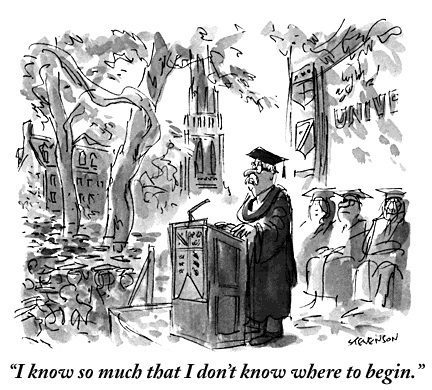
Editors’ Note: The introductory paragraphs of this post appeared in similar form in an October, 2011, column by Jonah Lehrer for the Wall Street Journal. We regret the duplication of material. Here’s a simple arithmetic question: A bat and ball...
Read more: http://www.newyorker.com/online/blogs/frontal-cortex/2012/06/daniel-kahneman-bias-studies.html
Scoop.it!

Your Performance Appraisall can be inspirational...here's how! By Dr Hendrie Weisinger...
Read more:
|
Scoop.it!

In a sense, narcissism is the dark side of individualism — freedom without responsibility, relationships without personal sacrifice, and positive self-views without grounding in reality.
What comes next? How will narcissism further evolve? In order to maintain elevated self-views in a world with the standard economic and social pathways blocked, individuals will need to migrate into other social realms that are less constrained by reality. For example, individuals could move to online social realities where they can succeed (e.g., social networking, gaming, Reddit), fantasy or “geek” subcultures (e.g., science fiction, live action role-playing), or other alternatives. In essence, growing income inequality in the real world could lead a population of narcissists to feed their self-views in fantasy cultures.
Gust MEES's insight:

Vivian V's curator insight,
January 13, 2014 11:20 PM
"In a sense, narcissism is the dark side of individualism — freedom without responsibility, relationships without personal sacrifice, and positive self-views without grounding in reality." This particular sentence struck me. We as a society, have been raised to believe in individualism and success to be determined by the quantity one has rather than the quality of one's life. I never realized that narcissism was actually increasing in prevalence and to take it a step further I question what aspect epigentics may play in future generations. I have often seen children, particularly in a school setting, that always receive positive feedback because we are afraid to upset them, upset their parents, rock the boat....etc. Employees are the same way. I wonder what ever happened to real? I hear others value it beyond riches, but to see this article, it seems they are very far and few between.
Scoop.it!
 Complex (psychology)A complex is a core pattern of emotions, memories, perceptions, and wishes in the personal unconscious organized around a common theme, such as power or status (Schultz, D. & Schultz, S., 2009). Primarily a psychoanalytic term, it is found extensively in the works of Carl Jung and Sigmund Freud.
Gust MEES's insight:
Some country and people from it SHOULD THINK on it !!! 21st Century is greating ;)
Learn more:
- http://www.scoop.it/t/21st-century-learning-and-teaching/?tag=Psychology
Scoop.it!

Six qualities that make you a good mentor for teens
Gust MEES's insight:
Scoop.it!

Try something new with your kids every day! Find tips on reading, learning, and raising a well-rounded child.
Make a point of writing your child’s name in the books that are hers to keep, in simple block letters. In part, this helps her begin to recognize the symbols that she’ll eventually learn as the unique sequence of letters that make up her name.
===> And it’ll make her (his) “library” feel that much more special and precious, something to build and save. <===
Gust MEES's insight:
===> And it’ll make her (his) “library” feel that much more special and precious, something to build and save. <===
Learn more:
- http://www.scoop.it/t/21st-century-learning-and-teaching/?tag=Psychology
Scoop.it!

YES, we can win the race with wolves; yes we can live, learn and lead forward….one person, one organization, one community at a time. Each shift forward will take us from ME to WE, from a focus on our individuality to a new balance between independence and interdependence that drives our best selves, best work, best organizations…and ultimately our best world. Success is a 3Q equation, with three powerful components that draw strength/success from each other. ===> It is an alignment of enhanced IQ (intelligence)-EQ (emotional mastery) and SQ (values alignment/positive purpose or spiritual quotient. <=== These are my favorite steps because they are steps you can take and use in small ways. Small consistent steps that create a BIG difference in your life, your work, your people, your organization…your world.
Gust MEES's insight:
===> It is an alignment of enhanced IQ (intelligence)-EQ (emotional mastery) and SQ (values alignment/positive purpose or spiritual quotient. <===
Scoop.it!
How music improves the lives of children.
Gust MEES's insight:
Scoop.it!

How emotionally intelligent are you, and why should you care?
Successful intelligence requires that we know how to put our intellectual best foot forward. Sometimes this means having just plain common sense, or “street smarts.” Successful intelligence also involves having “emotional intelligence,” also called "EI," which is being to read people’s feelings- and your own.
Gust MEES's insight:
Successful intelligence requires that we know how to put our intellectual best foot forward. Sometimes this means having just plain common sense, or “street smarts.”
===> Successful intelligence also involves having “emotional intelligence,” also called "EI," which is being to read people’s feelings- and your own. <===
A MUST read!

ThePinkSalmon's comment,
February 2, 2013 12:08 PM
Many times you get the best results just by applying "street smarts" along with "a bit of" empathy.

Gust MEES's comment,
February 2, 2013 12:17 PM
@ThePinkSalmon Full agreed! That's the way I am working ;)
Gust MEES's comment,
February 2, 2013 12:20 PM
@ThePinkSalmon When giving courses + by observing learners one gets the feedback 2 feel how the learners "Understand" without asking even ;)
Scoop.it!

How adults help teens become life-long learners
Scoop.it!

A study that examines traits that predict psychological distress...
Excessive concerns about making mistakes, pernicious self-doubt, harsh self-criticism, impossibly high standards or expectations for performance, a strong and chronic tendency to evaluate one’s performance as not measuring up to levels expected by oneself or others - these are features of maladaptive perfectionism that predict psychological distress.
Read more, very interesting...: http://www.psychologytoday.com/blog/dont-delay/201210/perfectionism-procrastination-and-distress

Carly Armstrong's curator insight,
March 11, 2014 4:11 PM
This article shows that perfectionism can be just as big a cause of stress as procrastination. That the correlation between the two is modest. Procrastinators seem only minimally self-critical. They have previous research as well as credible sources that they used in their research as well.
Scoop.it!
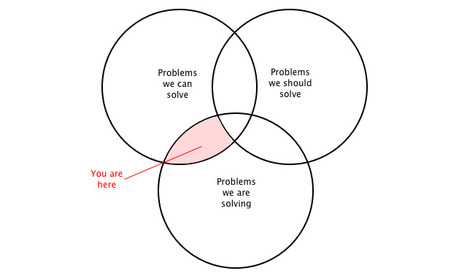
Depending on who you ask, Jack Dorsey started off the latest Disrupt on either a very controversial or a very non-controversial note.
Read more, very interesting...: http://techcrunch.com/2012/09/14/how-to-disrupt-petty-inconveniences/
Scoop.it!

Use this psychological trick when a colleague makes your skin crawl.
Read more: http://blogs.hbr.org/bregman/2012/09/what-to-do-when-you-have-to-work-with-someone.html
Scoop.it!
Five ways to think like Galileo and Steve Jobs.
Skepticism, on the other hand, is a key part of critical thinking – a goal of education. The term skeptic is derived from the Greek skeptikos, meaning “to inquire” or “look around.” Skeptics requires additional evidence before accepting someone’s claims as true. They are willing to challenge the status quo with open-minded, deep questioning of authority.
Read more: http://www.psychologytoday.com/blog/the-moment-youth/201206/the-art-positive-skepticism
|





Learn more:
- http://www.scoop.it/t/21st-century-learning-and-teaching/?tag=Psychology
- http://www.scoop.it/t/social-media-and-its-influence/?