Einem internationalen Forscherteam mit Beteiligung des Max-Planck-Instituts für Polymerforschung ist es gelungen, Nanotransistoren aus nur wenigen Atomen breiten Graphenbändern zu produzieren.
Forschung für die Nanotechnologie der Zukunft: Nur wenige Atome breite Graphenbänder, sogenannte Graphen-Nanoribbons, haben spezielle elektrische Eigenschaften, die sie zu viel versprechenden Kandidaten für die Nanoelektronik der Zukunft machen: Während Graphen – eine nur ein Atom dünne, bienenwabenförmige Kohlenstoffschicht – ein leitendes Material ist, kann es in Form von Nanobändern zum Halbleiter werden.
Das bedeutet, es hat eine genügend große Energie- oder Bandlücke, in der keine elektronischen Zustände möglich sind: Dadurch lässt es sich an- und abschalten – und wird so möglicherweise zu einem zentralen Bestandteil von Nanotransistoren.
Les Etats-Unis viennent d'autoriser la mise sur le marché d'un pilule connectée, capable de surveiller les patients.
(CCM) — La FDA américaine a récemment autorisé (lien en anglais) un premier médicament connecté, qui surveille la prise des traitements par les patients. Cette pilule connectée baptisée Abilify MyCite pourrait révolutionner le rapport que les malades entretiennent avec leur santé.
Une fois avalée, la pilule se loge dans l’estomac. De là, elle transmet ses données à un patch porté par le patient, qui à son tour peut communiquer avec un médecin ou un proche du malade. Pour fonctionner, le système repose sur un capteur mesurant en permanence l’acidité de l’estomac. Ainsi, il est possible de savoir si le malade prend régulièrement son traitement. La capteur permet également de suivre les doses de médicament ingérées, leur régularité et d'autres données de santé plus personnelles comme le sommeil, l'activité physique etc.
Cette pilule connectée pourrait donc permettre de surveiller très étroitement le comportement de patients à risque. Le mauvais suivi des traitements coûte cher au système de santé américain, et le micro-capteur mis au point par les chercheurs d’Abilify permettraient de le réduire considérablement.
President Donald Trump may not acknowledge this, but October was the second-warmest such month on record, worldwide, according to new data released by NASA.
There is now about a 94 percent likelihood that 2017 will rank as the second-warmest year, globally since at least 1880, when record-keeping began, according to Gavin Schmidt, who directs NASA's Goddard Institute for Space Studies in New York.
With a temperature anomaly of 1.62 degrees Fahrenheit, or 0.90 degrees Celsius, the month barely exceeded the temperature departure from average recorded in 2016. In NASA's temperature database, the warmest October on record took place in 2015, when global average temperatures were 1.9 degrees Fahrenheit above average. At that time, though, an intense El Niño event was emerging in the Pacific Ocean.
The department of Mechanical Engineering at Stanford University have developed a snake-like robot that is able to to squeeze through tight gaps which could prove to be invaluable in search and rescue scenarios.
By using a process known as 'eversion' the tube is able to unfurl itself from the inside using pressurised air. By gently pulling the tube in different directions, the operator is able to manipulate the robot's shape making it easy to navigate past small obstacles.
Allison Okamura, Professor of Mechanical Engineering at Stanford University, said:
"We can make it sneak through very small crevices in order to get access to places where people can't go. And also we can deliver material through the centre of it whether it be a sensor or water, for example, to reach a disaster victim."
Why This New Quantum Computing Startup Has a Real Shot at Beating Its Competition
A startup called Quantum Circuits plans to compete with the likes of IBM, Google, Microsoft, and Intel to bring quantum computing out of the lab and into the wider world. There’s one good reason to think it might be able to beat them all.
That’s because Quantum Circuits was founded by Robert Schoelkopf, a professor at Yale, whose work in many ways has helped kick-start this exciting new era of quantum advances.
Quantum computers exploit two strange features of quantum physics, entanglement and superposition, to process information in a fundamentally different way from traditional computers. The approach allows the power of such machines to scale dramatically with even just a few quantum bits, or qubits. Those racing to build practical quantum computers are nearing the point where quantum machines will be capable of doing things that no conventional machine could—an inflection point known as quantum supremacy.
The promise of reaching such a milestone has transformed the field from a mostly academic endeavor into a high-stakes competition between the research arms of several big companies and a few startups. And everyone is using the superconducting circuits Schoelkopf pioneered.
Robert Schoelkopf is at the forefront of a worldwide effort to build the world’s first quantum computer. Such a machine, if it can be built, would use the seemingly magical principles of quantum mechanics to solve problems today’s computers never could.
Three giants of the tech world — Google, IBM, and Intel — are using a method pioneered by Mr. Schoelkopf, a Yale University professor, and a handful of other physicists as they race to build a machine that could significantly accelerate everything from drug discovery to artificial intelligence. So does a Silicon Valley start-up called Rigetti Computing. And though it has remained under the radar until now, those four quantum projects have another notable competitor: Robert Schoelkopf.
After their research helped fuel the work of so many others, Mr. Schoelkopf and two other Yale professors have started their own quantum computing company, Quantum Circuits.
MUST read to understand!!!
Today’s computers store information as “bits,” with each transistor holding either a 1 or a 0. But thanks to something called the superposition principle — behavior exhibited by subatomic particles like electrons and photons, the fundamental particles of light — a quantum bit, or “qubit,” can store a 1 and a 0 at the same time. This means two qubits can hold four values at once. As you expand the number of qubits, the machine becomes exponentially more powerful.
Todd Holmdahl, who oversees the quantum project at Microsoft, said he envisioned a quantum computer as something that could instantly find its way through a maze. “A typical computer will try one path and get blocked and then try another and another and another,” he said. “A quantum computer can try all paths at the same time.”
Männer erkranken häufiger und schwerer als Frauen an Infekten. Wissenschaftler machen Unterschiede im Immunsystem dafür verantwortlich, die unter anderem von Hormonen und genetischer Disposition beeinflusst werden. Aber auch der Lebensstil spielt eine Rolle.
Ist eine Erkältung im Anflug und setzt "Mann" eine Leidensmiene auf, sollte "Frau" nicht gleich genervt mit den Augen rollen. Denn: Männern machen Infekte offenbar in der Regel tatsächlich mehr zu schaffen als ihrem weiblichen Gegenüber.
"Grob verallgemeinert erkranken Männer im Vergleich zu Frauen häufiger und schwerer an Infekten und sprechen auch auf Impfungen nicht so gut an", sagt Beatrix Grubeck-Loebenstein vom Institut für Biomedizinische Alternsforschung an der Universität Innsbruck.
Zahlreiche Studien belegen die erhöhte Anfälligkeit von Männern für Infektionen mit Bakterien, Viren, Parasiten und auch für eine Sepsis, die als Folge von Infektionen auftreten kann. In Europa erkranken beispielsweise 1,3-mal mehr Männer als Frauen an einer Influenza. Mit Tuberkulosebakterien sind je nach Region weltweit bis zu dreimal mehr Männer infiziert als Frauen. Männer sterben außerdem häufiger an der Tuberkulose als infizierte Leidensgenossinnen. Das männliche Geschlecht erkrankt schwerer an Meningokokken, Pneumokokken und Infektionen mit Hepatitisviren. Ausnahmen gibt es auch. Von Keuchhusten und Diphtherie sind im Durchschnitt Frauen häufiger betroffen.
Lamborghini is working with engineers from the Massachusetts Institute of Technology on a new all-electric supercar that won't have batteries.
Instead, the body of the Lamborghini Terzo Millennio concept car, made from exotic carbon nanotubes, would be used as a supercapacitor. Supercapacitors store and release energy in a manner different from that employed by batteries. They have certain advantages, but also serious disadvantages.
It could be years, if ever, before scientists from MIT and Lamborghini, which is part of the Volkswagen Group (VLKAF), can overcome the downsides. But the effort would be worth it, said Mauricio Reggiani, Lamborghini's head of research and development.
Wissenschaftler haben zum ersten Mal einen Himmelskörper entdeckt, der mit hoher Wahrscheinlichkeit nicht aus unserem Sonnensystem stammt. Worum es sich bei dem Objekt genau handelt und wo es herkommt, wissen die Forscher unterdessen noch nicht.
Wissenschaftler haben zum ersten Mal einen Himmelskörper entdeckt, der mit hoher Wahrscheinlichkeit nicht aus unserem Sonnensystem stammt. Worum es sich bei dem Objekt genau handelt und wo es herkommt, wissen die Forscher unterdessen noch nicht.
Die Cheops Pyramide ist die älteste der sieben Weltwunder der Antike. Es dauerte 20 Jahre, um sie zu bauen. Und was ihre Entstehung betrifft, gibt es noch immer viele Fragen. Auf eine dieser Fragen gibt es aber nun eine Antwort, die 4.600 Jahre alter Papyrus liefert.
Die Cheops-Pyramide besteht aus Kalkstein, der aus Tura – ein Ort, der zwischen dem südlichen Stadtrand von Kairo und Helwan liegt – geholt wurde und aus Granit, der aus der Stadt Assuan stammt. Nun stellt sich die Frage, wie es die alten Ägypter geschafft haben, das Material ohne moderne Technologie über 800 Kilometer hinweg zum Gizeh-Plateau zu transportieren.
In einem Dokumentarfilm, der kürzlich von Channel 4 im britischem Fernsehen gezeigt wurde, präsentierten Archäologen neue Beweise, die beschreiben, wie die Große Pyramide gebaut wurde. Die neuen Erkenntnisse stammen aus Papyrus, der im Hafen von Wadi al-Jarf, am Roten Meer entdeckt wurde.
Forscher machen sich schon wieder Sorgen um die Antarktis: Sie haben herausgefunden, dass sich warmes Meerwasser gerade einen Tunnel durch immens wichtiges Schelfeis im Westen der Antarktis gräbt. Bricht das Schelfeis zusammen, könnte das verheerende Auswirkungen haben.
Erst im Juni hielt die Wissenschaftswelt den Atem an, als ein Billionen Tonnen schwerer Eisberg von der Antarktis abgebrochen war. Verursacht durch einen langen Riss, der nach und nach einen Teil des ewigen Eises abgetrennt hatte. Die gute Nachricht: Er wird den Meeresspiegel nicht anheben, da Schelfeis immer auf dem Wasser schwimmt und damit keine zusätzliche Masse hinzugekommen ist.
Jetzt droht eine neue Gefahr. In einer am Dienstag veröffentlichten Studie stellte das Team um Wissenschaftler Noel Gourmelen von der University of Edinburgh einen erschreckenden Tunnel vor, den sie entdeckt hatten. Die Westantarktis ist ein wunder Punkt des gesamten Kontinents. Das betroffene Schelfeis Dotson ist zwar „nur“ etwa 3.500 Quadratkilometer groß, stützt aber zwei riesige, separate Gletscher. Auf der einen Seite hat es eine Dicke von 300 bis 490 Metern. Das ist die gute Seite.
Intel liefert 17-Qubit-Testchip aus Auch Intel arbeitet an Quantencomputern: Ein neuer Testchip weist 17 Qubits auf und ist an Qutech geschickt worden. Wichtig bei diesem Schritt ist das spezielle Package samt den Anschlüssen, weniger die Leistung des supraleitenden Prozessors.
Intel hat einen Testchip mit 17 Qubits für Quanten-Computing versendet, dieser ist mittlerweile bei Qutech angekommen. Gemeinsam wollen Intel und das niederländische Institut weiter daran forschen, wie es gelingen kann, einen Quantencomputer zu bauen, und welche Materialien sowie Herstellungsverfahren dafür notwendig sind.
We once thought of Mars as a dried up husk of a planet with no significant water resources on its surface. After further study, scientists have discovered the Red Planet has vast amounts of water ice, and there may even be some water flowing on its surface. Mars’ water reserves may even be more accessible than we believed. A new analysis of past NASA data points to water ice near the Martian equator where scientists thought it could not exist.
NASA didn’t have to send a new probe to Mars to figure this out. In fact, the instrument used to obtain this data has long since been retired. Scientists reevaluated data from the NASA Odyssey Spacecraft, which was in operation between 2002 and 2009. The goal of this mission was to map the surface of Mars while also looking for evidence of water. It was used to identify landing sites for surface missions, and to this day still acts as a data relay for the Curiosity rover.
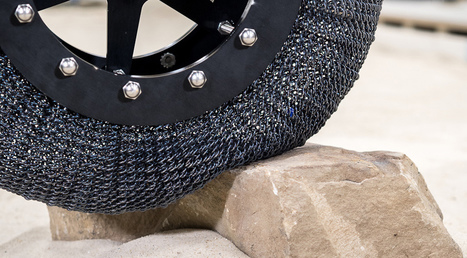
NASA initially worked with Goodyear in the mid-2000s to develop a prototype spring tire. These tires were composed of a flexible mesh with hundreds of coiled steel wires. It gave the tires the ability to support heavy loads with good traction, but even the strongest steel springs deform. On Mars, rolling over rocks while carrying a heavy loadout of instruments would cause the steel to change shape over time.
The answer was a new material based on a stoichiometric nickel-titanium alloy. Like regular spring tires, there’s no air inside. It’s just a lattice of coiled metal that flexes as it rolls over obstacles. That means it won’t get punctured by sharp Martian rocks. The bonds in the nickel-titanium alloy can rearrange in response to stress instead of stretching, so the tire snaps back — no deformation.
NASA plans to use shape memory tires on future Mars rovers, possibly even on the upcoming 2020 rover that will take over for Curiosity in the next few years. It’s even possible we could see this design on Earth-based tires one day.
Volvos Mutterkonzern Geely gab bekannt, die Verhandlungen zur Übernahme des Flugauto-Entwicklers Terrafugia abgeschlossen zu haben. Das ehemalige Startup arbeitet derzeit an mehreren Protoypen - ein Modell kann man sogar jetzt schon vorbestellen. Terrafugia gehört jetzt Geely
Bereits im Juli gab der chinesische Konzern Geely, Volvos-Mutterkonzern, bekannt, den Flugauto-Hersteller Terrafugia zu übernehmen. Jetzt veröffentlichte das Unternehmen in einer Pressemitteilung, dass die Verhandlungen um die Übernahme nun abgeschlossen seien. Was nach Science Fiction klingt, ist bei Terrafugia schon lange Realität.
Das ehemalige Startup-Unternehmen, welches 2006 von fünf Ingenieuren des MIT gegründet wurde, stellte sein erstes Flugauto schon vor einigen Jahren vor.
We haven’t seen much of ATLAS since Google sold Boston Dynamics to Softbank, aside from a few bloopers that gave humanity a false sense of superiority. But this brief one-minute video shows the robot jumping on and off platforms, spinning in the air, and performing a perfect backflip.
A BACKFLIP! That’s the kind of thing you only see robots doing in the movies, but it’s apparently now our sobering reality.
Détectée par le spectrographe HARPS, installé sur le télescope de 3,6 mètres de l'ESO au Chili, la planète orbite autour d'une étoile naine (Ross 128) en 9,9 jours.
Selon les chercheurs, Ross 128b est susceptible d'héberger des signes de vie: elle a une masse similaire à celle de la Terre (1.35 plus massive) et "sa température de surface pourrait également être proche de celle de la Terre", donc peut-être compatible avec la présence d'eau à l'état liquide indispensable à la vie telle qu'on la connaît.
De plus, cette nouvelle planète orbite autour d'une étoile "calme", son atmosphère a donc une chance d'avoir résisté aux vents et éruptions stellaires.
Following what Einstein called “spooky action at a distance,” entangled particles exist in a special state that allows information carried in one to be instantaneously reflected in another — a sort of quantum teleportation.
Researchers have recently made significant progress in building this quantum communication network. China launched the world’s first quantum communication satellite last year, and they’ve since been busy testing and extending the limitations of sending entangled photons from space to ground stations on Earth and then back again. They’ve also managed to store information using quantum memory. By the end of August, the nation plans to have a working quantum communication network to boost the Beijing-Shanghai internet.
Leading these efforts is Jian-Wei Pan of the University of Science and Technology of China, and he expects that a global quantum network could exist by 2030. That means a quantum internet is just 13 years away, if all goes well.
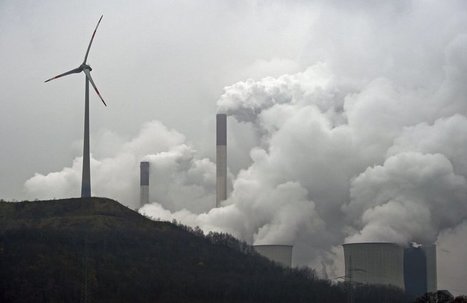
Researchers say extreme weather like the events of recent months — including hurricanes in the Caribbean, heatwaves in Europe and flooding in south Asia — are going to become more frequent as a result of climate change. To prevent catastrophic consequences, they say countries must make concerted efforts to shift the global economy away from fossil fuels and to adjust to some inevitable impacts, such as rising sea levels.
“This COP is more important than most people realize,” Andrew Steer, head of the World Resources Institute, a Washington-based environmental think tank, said.
Steer said a growing number of commitments from governments, as well as from major companies and cities around the world was “broadly encouraging.” He noted the falling cost of renewable energy — a key technology required to help power-hungry economies kick the carbon habit.
Most of the 195 countries coming to Bonn — where the U.N. climate agency is located — appear willing to continue hammering out the details needed to make the Paris 2015 accord work, German Environment Minister Barbara Hendricks said ahead of the two-week talks.
Bonner Forscher finden schlagkräftigere Krebstherapie
Tumore entgehen Immunsystem durch Bremsmechanismus. Bonner Forscher haben Weg gefunden, diesen zu schwächen. Körpereigenes Protein steht im Zentrum der Studie. Eine Studie der Universität Bonn weist einen neuen Weg zu schlagkräftigeren Krebstherapien: Viele Tumore verfügen über einen Bremsmechanismus, mit denen sie ihrer Vernichtung durch das Immunsystem entgehen. Bonner Wissenschaftler konnten nun eine dieser Bremsen lösen.
Das menschliche Immunsystem verfügt über eine wirksamen Abwehrmechanismus. Mit den sogenannten Killer-T-Zellen kann es einen Angriff, beispielsweise durch eine Virusinfektion, abwehren.
‘AutoPulse’ by Zoll is an automated CPR device that claims to deliver customized, powerful CPR by automatically calculating the size, shape, and resistance of each patient’s chest.
AutoPulse’ by Zoll is an automated CPR device that claims to deliver customized, powerful CPR by automatically calculating the size, shape, and resistance of each patient’s chest.
There's always a blue sky technology waiting in the wings, and for enterprise computing, quantum computing takes that role. With Satya Nadella convening a panel of Microsoft's best physicists at the end of his Ignite conference keynote, it's fair time to ask, what will this mean to the enterprise and how long will the adoption curve take?
There's always a blue sky technology waiting in the wings, and for enterprise computing, quantum computing takes that role. With Satya Nadella convening a panel of Microsoft's best physicists at the end of his Ignite conference keynote, it's fair time to ask, what will this mean to the enterprise and how long will the adoption curve take?
Une nouvelle colle adhésive permettant de sceller hermétiquement les plaies internes en 60 secondes, sans agrafes ni sutures, a fat l'objet d'une publication australo-américaine.
Une combinaison triple pour une efficacité à la demande : élasticité, activation et dégradation
MeTro se présente sous la forme d'un gel liquide, qui se solidifie dès qu'il entre en contact avec les tissus, remplissant la plaie et se conformant à sa forme. Il contient 3 composants aux fonctions distinctes : des protéines pour l'élasticité, des molécules sensibles à la lumière pour l'activation et des enzymes pour son élimination.
To get content containing either thought or leadership enter:
To get content containing both thought and leadership enter:
To get content containing the expression thought leadership enter:
You can enter several keywords and you can refine them whenever you want. Our suggestion engine uses more signals but entering a few keywords here will rapidly give you great content to curate.


 Your new post is loading...


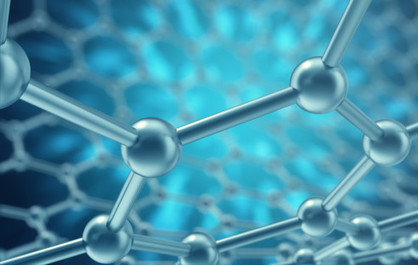


















Forschung für die Nanotechnologie der Zukunft: Nur wenige Atome breite Graphenbänder, sogenannte Graphen-Nanoribbons, haben spezielle elektrische Eigenschaften, die sie zu viel versprechenden Kandidaten für die Nanoelektronik der Zukunft machen: Während Graphen – eine nur ein Atom dünne, bienenwabenförmige Kohlenstoffschicht – ein leitendes Material ist, kann es in Form von Nanobändern zum Halbleiter werden.
Das bedeutet, es hat eine genügend große Energie- oder Bandlücke, in der keine elektronischen Zustände möglich sind: Dadurch lässt es sich an- und abschalten – und wird so möglicherweise zu einem zentralen Bestandteil von Nanotransistoren.
Learn more / En savoir plus / Mehr erfahren:
https://www.scoop.it/t/21st-century-innovative-technologies-and-developments/?&tag=Nano