 Your new post is loading...

|
Scooped by
Gust MEES
October 26, 2020 12:34 PM
|
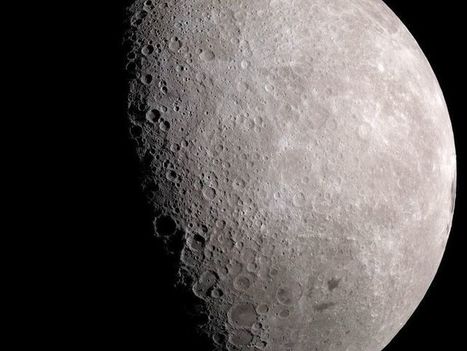
Having dropped tantalising hints days ago about an "exciting new discovery about the Moon", the US space agency has revealed conclusive evidence of water on our only natural satellite.
This "unambiguous detection of molecular water" will boost Nasa's hopes of establishing a lunar base.
The aim is to sustain that base by tapping into the Moon's natural resources.
The findings have been published as two papers in the journal Nature Astronomy.
While there have previously been signs of water on the lunar surface, these new discoveries suggest it is more abundant than previously thought. "It gives us more options for potential water sources on the Moon," said Hannah Sargeant, a planetary scientist from the Open University in Milton Keynes, told BBC News. Learn more / Mehr erfahren: https://www.scoop.it/t/21st-century-innovative-technologies-and-developments/?tag=Space
|
|
Scooped by
Gust MEES
September 17, 2020 7:17 AM
|
(CNN)A Japanese company has announced the successful test drive of a flying car.
Sky Drive Inc. conducted the public demonstration on August 25, the company said in a news release, at the Toyota Test Field, one of the largest in Japan and home to the car company's development base. It was the first public demonstration for a flying car in Japanese history.
The car, named SD-03, manned with a pilot, took off and circled the field for about four minutes.
"We are extremely excited to have achieved Japan's first-ever manned flight of a flying car in the two years since we founded SkyDrive... with the goal of commercializing such aircraft," CEO Tomohiro Fukuzawa said in a statement.
What's more fancy than a Porsche? A flying Porsche. Luxury automakers race to perfect the flying car
"We want to realize a society where flying cars are an accessible and convenient means of transportation in the skies and people are able to experience a safe, secure, and comfortable new way of life. Learn more / En savoir plus / Mehr erfahren: https://www.scoop.it/topic/21st-century-innovative-technologies-and-developments/?&tag=Flying
|
|
Scooped by
Gust MEES
August 16, 2020 7:57 AM
|
The background: Ceres, a dwarf planet located in the asteroid belt between Mars and Jupiter, was studied intensely by the Dawn orbiter from March 2015 to November 2018. In its final weeks, the orbiter came as close as 22 miles from Ceres’s surface and collected a tremendous amount of data about the dwarf planet’s chemical composition. Dawn found many sodium chloride deposits on the surface, which scientists thought likely came from liquid that had seeped up onto the surface and evaporated, leaving behind a salty crust.
What’s new: But there still remained a question of exactly how that liquid got there. In a new analysis of the high-resolution images Dawn collected during those last weeks, Italian researchers found that the liquid comes from an underground reservoir of briny water, 25 miles below the surface of the Occator Crater, that could measure hundreds of miles wide. The salts found on the surface are important in helping to maintain liquid water within an environment like Ceres. Learn more / Mehr erfahren: https://www.scoop.it/t/21st-century-innovative-technologies-and-developments/?tag=Space https://www.scoop.it/topic/21st-century-innovative-technologies-and-developments/?&tag=CERES
|
|
Scooped by
Gust MEES
May 19, 2020 3:09 PM
|
LONDON, May 13 (Thomson Reuters Foundation) - A university professor has launched a computer game called "Can You Save the World?" to help children understand how social distancing can save lives during the coronavirus pandemic.
Richard Wiseman said he came up with the idea for what is thought to be the world's first COVID-19 computer game after going for a walk during lockdown in Britain and finding it "felt like a computer game" as he dodged pedestrians and cyclists.
Wiseman, a professor of psychology at the University of Hertfordshire, said research showed that games which encourage positive social behaviour can influence people's actions in the real world.
"It's a fun way of getting quite a scary message across," said Wiseman, who created the game, which has already gone viral, with designer Martin Jacob.
"There's quite a lot of research showing that if you get people - kids in particular - to behave in certain ways in video games it really does transfer to real life."
The creators, who are now looking at developing an app, say governments, schools and health authorities could use the game to encourage social distancing - a key measure to keep the virus in check as countries emerge from lockdown. Learn more / En savoir plus / Mehr erfahren: https://www.scoop.it/topic/21st-century-innovative-technologies-and-developments/?&tag=Research https://www.scoop.it/topic/21st-century-innovative-technologies-and-developments/?&tag=Coronavirus
|
|
Scooped by
Gust MEES
March 14, 2020 10:15 AM
|
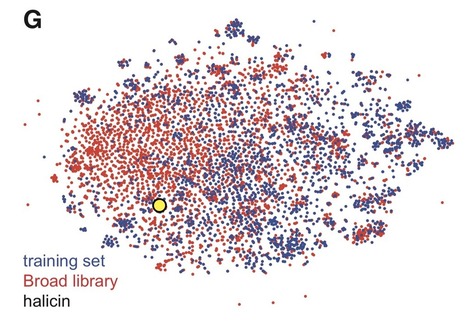
MIT’s deep learning found an antibiotic for a germ nothing else could kill
Scientists at MIT and Harvard’s Broad Institute and MIT’s CSAIL built a deep learning network that can acquire a broad representation of molecular structure and thereby discover novel antibiotics. The resulting compound, halicin, can destroy a pathogen for which no cure has existed, and it could even help in the fight against coronavirus.
Learn more / En savoir plus / Mehr erfahren: https://www.scoop.it/topic/21st-century-innovative-technologies-and-developments/?&tag=Research
|
|
Scooped by
Gust MEES
February 23, 2020 9:23 AM
|
A deep learning algorithm developed at MIT has discovered new antibiotics that can treat drug-resistant diseases by killing 35 powerful bacteria.
The pathogens that the halicin antibiotic has targetted include Acinetobacter baumannii, which was nicknamed “Iraqibacter” after it infected thousands of US service personnel returning from the war in Iraq. Learn more / En savoir plus / Mehr erfahren: https://www.scoop.it/t/21st-century-innovative-technologies-and-developments/?&tag=Antibiotics
|
|
Scooped by
Gust MEES
December 19, 2019 1:33 PM
|
Israeli scientists say a new study has shown that a small molecule called PJ34 has triggered the self-destruction of human pancreatic cancer cells in mice. According to the research, published in the peer-reviewed open-access biomedical journal Oncotarget, the administration of the molecule reduced the number of cancer cells in developed tumors by up to 90 percent in 30 days.
The study was led by Professor Malka Cohen-Armon and her team at Tel Aviv University’s Sackler Faculty of Medicine, in collaboration with Dr. Talia Golan and her team at the Cancer Research Center at Sheba Medical Center, and conducted with transplantations of human pancreatic cancer cells into immunocompromised mice, or xenografts. Learn more / En savoir plus / Mehr erfahren: https://www.scoop.it/t/21st-century-innovative-technologies-and-developments/?&tag=Cancer
|
|
Scooped by
Gust MEES
November 2, 2019 8:21 AM
|
|
|
Scooped by
Gust MEES
August 29, 2019 9:14 AM
|
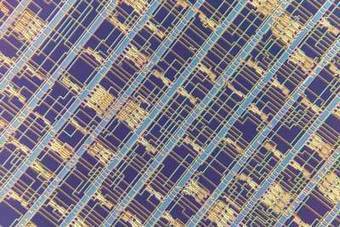
(Nanowerk News) After years of tackling numerous design and manufacturing challenges, MIT researchers have built a modern microprocessor from carbon nanotube transistors, which are widely seen as a faster, greener alternative to their traditional silicon counterparts.
The microprocessor, described in the journal Nature ("Modern microprocessor built from complementary carbon nanotube transistors"), can be built using traditional silicon-chip fabrication processes, representing a major step toward making carbon nanotube microprocessors more practical.
Learn more / En savoir plus / Mehr erfahren: https://www.scoop.it/t/21st-century-innovative-technologies-and-developments/?&tag=Nano
|
|
Scooped by
Gust MEES
July 11, 2019 7:00 PM
|
Unser Gehirn ist keine Festplatte
"Wenn ein Störgeräusch eingespielt wird, reagieren die Kinder meist langsamer oder machen mehr Fehler", sagt Wetzel. "Und je jünger die Kinder sind, desto mehr sind sie beeinträchtigt in ihrer Leistung."
Nun ist unser Denkapparat keine Festplatte, auf der man nur speichert und abruft, sondern ein empfindliches, hochgradig wandelbares Organ. Das Hirn reagiert schnell auf Einflüsse von außen, es ändert seine Vernetzungen. Experten sprechen von Plastizität.
Forscher melden unterschiedliche Ergebnisse
Da ist noch vieles offen und zu erforschen.
Nicole Wetzel
"Man kann sich das vereinfacht so wie ein Wegenetz vorstellen: Am Anfang, bei einem Kleinkind, sind viele Wege angelegt", erläutert Wetzel. "Und die Wege, die die Kinder häufig nutzen, die werden zu großen, breiten Straßen ausgebaut, wo der Verkehr schnell fließt." Wenig genutzte Wege verkümmern - ihr Ausbau wird später im Leben mühsamer. "Wenn ich jeden Tag viele Male mein Handy hervorziehe, wird das irgendwann auch so eine breite Straße - um im Bild zu bleiben."
Wenn Menschen in jungen Jahren schnell abgelenkt sind von Handy-Nachrichten und Pieptönen, wenn sie Störeinflüsse schwer kontrollieren können, wird so das tiefe Verstehen behindert? "Da ist noch vieles offen und zu erforschen", sagt Wetzel. Forscher würden sehr unterschiedliche Ergebnisse vermelden: Aufmerksamkeit kann mit bestimmten Computerspielen trainiert werden. Einerseits. "Andererseits wird über Zusammenhänge zwischen übermäßigem Medienkonsum und beeinträchtigter Aufmerksamkeit berichtet." Learn more / En savoir plus / Mehr erfahren: https://www.scoop.it/topic/21st-century-innovative-technologies-and-developments/?&tag=Smartphones
|
|
Scooped by
Gust MEES
June 12, 2019 11:26 AM
|
Sie soll die Lebenserwartung deutlich verlängern oder gar zur Heilung führen: eine neue Gen-Therapie gegen Krebs. Jetzt kam sie zum ersten Mal an der Uniklinik Leipzig zum Einsatz - an einem Patienten mit Lymphdrüsenkrebs. Die Therapie habe bei ihm angeschlagen, berichten die Ärzte.
Am Leipziger Universitätsklinikum (UKL) wurde ein Patient mit Lymphdrüsenkrebs zum ersten Mal mit einer Gen-Therapie behandelt – mit Aussicht auf Erfolg. Nachdem sie alle anderen Therapiemöglichkeiten ausgeschöpft hatten, entschieden sich die Ärzte für eine Kombination aus Zell- und Gen-Therapie, die erst im August vergangenen Jahres in Europa zugelassen wurde. Ihr Name: Kymriah. Learn more / En savoir plus / Mehr erfahren: https://www.scoop.it/t/21st-century-innovative-technologies-and-developments/?&tag=Cancer
|
|
Scooped by
Gust MEES
May 29, 2019 3:07 PM
|
Onkologen sind besorgt, weil bei den Unter-30-Jährigen die Darmkrebsfälle deutlich zunehmen. Gesündere Ernährung und mehr Bewegung von Kindheit an könnte das Risiko senken. Aber auch das familiäre Risiko müsste mehr beachtet werden – es führt häufig zu Darmkrebs in jungen Jahren.
Die meisten Krebspatienten sind bei der Diagnose jenseits der 60. Das gilt auch für Darmkrebs, die zweithäufigste Krebserkrankung in Deutschland. Die Hälfte der Patienten ist über 70, wenn sie von ihrer Erkrankung erfährt. Allerdings registrieren Onkologen in den letzten Jahren eine Zunahme von Darmkrebsfällen bei Menschen unter 50. Besonders groß ist der Zuwachs bei den ganz jungen Erwachsenen von 20 bis 29 Jahren. Learn more / En savoir plus / Mehr erfahren: https://www.scoop.it/t/21st-century-innovative-technologies-and-developments/?&tag=Cancer
|
|
Scooped by
Gust MEES
April 22, 2019 10:19 AM
|
|
|
|
Scooped by
Gust MEES
October 15, 2020 3:35 PM
|
Artemis ist das neue Apollo-Programm der USA. Es soll die erste Frau auf den Mond bringen. Mehr ist derzeit nicht finanziert. Aber den Plänen zufolge soll es der Start für eine dauerhafte Erforschung und Nutzung des Mondes sein. Um nicht das ganze Artemis-Programm selbst finanzieren zu müssen, sollen internationale Partner einige Teile zum US- Programm beisteuern. In den Artemis Accords wird beschrieben, wie diese Zusammenarbeit geregelt wird. Die Nasa hat am Dienstag die Unterzeichnung durch acht Mitgliedstaaten verkündet. Anschließend hat sie die Artemis Accords, die bis dahin nur als Werbebroschüre verbreitet wurden, nun auch im Wortlaut veröffentlicht.
Inhalt:
Artemis Accords: Mondverträge mit bitterem Beigeschmack
Artemis Accords: Sicherheitszonen für sicheren und effizienten Rohstoffabbau.
Was in diesen Verträgen geregelt ist - und vor allem was nicht-, lässt tiefe Einblicke in die Weltraumpläne der USA zu und zeigt, wie die Zusammenarbeit aussehen soll. Dabei spielt Sektion 11 der Artemis Accords die wichtigste Rolle. Sie ist dreimal so lang wie die längste andere Sektion und beschäftigt sich vorgeblich detailliert mit Konfliktlösung.
Learn more / En savoir plus / Mehr erfahren: https://www.scoop.it/t/luxembourg-europe/?&tag=Research https://www.scoop.it/t/luxembourg-europe/?&tag=Space https://www.scoop.it/topic/luxembourg-europe/?&tag=Artemis
|
|
Scooped by
Gust MEES
September 13, 2020 2:26 PM
|
Et ginn nei Erkenntnisser, wat d'Parkinson-Krankheet ubelaangt. En Duerchbroch fir d'Fuerscher vum "Luxembourg Center for Systems Biomedicine".
Um Ursprong steet en eenzegaartege Prozess: D'Fuersche mat gespenten Hautzelle vu Lëtzebuerger Patienten. De Schlëssel zum Erfolleg läit an der Zesummenaarbecht vum "Luxembourg Center for Systems Biomedicine" mat der Parkinson Research Clinic, der Biobank an dem Fond National de la Recherche. Wärend 7 Joer huet d'Team vum LCSB zesumme mat internationale Kolleege geschafft. "Eng ganz seele Mutatioun, déi um Ursprong vu Parkinson ass, konnt net just identifizéiert ginn. Ma och d'Manéier, wéi déi Mutatioun derzou bäidréit, dat de Patient krank gëtt, konnt entschlësselt ginn", sou den Dokter Ibrahim Boussaad vum Luxembourg Centre for Systems Biomedicine.
D'Fuerscher ronderëm de Prof. Dr. Rejko Krüger hunn deemno an den Zelle vun engem Patient Substanzen entdeckt, mat deenen et méiglech gëtt, op d'mannst zum Deel, d'Parkinson-Krankheet ze heelen. Klinesch Tester um Mënsch, wat e Medikament ubelaangt, gouf et bis elo nach keng. Just a Kulturen am Labo. Learn more / En savoir plus / Mehr erfahren: http://www.scoop.it/t/21st-century-innovative-technologies-and-developments/?tag=Parkinson
|
|
Scooped by
Gust MEES
July 6, 2020 7:44 AM
|
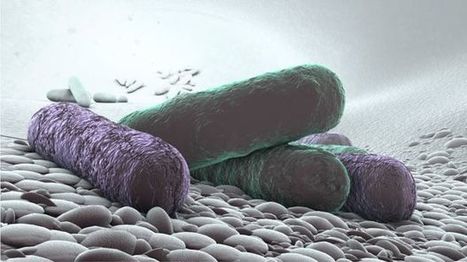
Spider silk made by photosynthetic bacteria
(Nanowerk News) Spiders produce amazingly strong and lightweight threads called draglines that are made from silk proteins. Although they can be used to manufacture a number of useful materials, getting enough of the protein is difficult because only a small amount can be produced by each tiny spider.
In a new study published in Communications Biology ("A marine photosynthetic microbial cell factory as a platform for spider silk production"), a research team led by Keiji Numata at the RIKEN Center for Sustainable Resource Science (CSRS) reported that they succeeded in producing the spider silk using photosynthetic bacteria. This study could open a new era in which photosynthetic bio-factories stably output the bulk of spider silk.
In addition to being tough and lightweight, silks derived from arthropod species are biodegradable and biocompatible. In particular, spider silk is ultra-lightweight and is as tough as steel.
Learn more / En savoir plus / Mehr erfahren: https://www.scoop.it/topic/21st-century-innovative-technologies-and-developments/?&tag=Research
|
|
Scooped by
Gust MEES
March 31, 2020 8:30 AM
|
A new blood test that can detect more than 50 types of cancer has been revealed by researchers in the latest study to offer hope for early detection.
The test is based on DNA that is shed by tumours and found circulating in the blood. More specifically, it focuses on chemical changes to this DNA, known as methylation patterns.
Researchers say the test can not only tell whether someone has cancer, but can also shed light on the type of cancer they have.
Dr Geoffrey Oxnard of Boston’s Dana-Farber Cancer Institute, part of Harvard Medical School, said the test was now being explored in clinical trials. “You need to use a test like this in an independent group at risk of cancer to actually show that you can find the cancers, and figure out what to do about it when you find them,” he said. Learn more / En savoir plus / Mehr erfahren: https://www.scoop.it/t/21st-century-innovative-technologies-and-developments/?&tag=Cancer
|
|
Scooped by
Gust MEES
February 26, 2020 5:39 PM
|
A new study suggests that the aerosol vape users inhale deposits bad bacteria into the mouth. The bad bacteria increase a person's risk of cavities, infection, bad breath, and oral cancer.
If left untreated, poor oral health conditions can affect the rest of a person's body. Chronic oral health problems have been linked to diabetes, Alzheimer's, and heart disease.
The study author suggested e-cigarette users work towards cessation to prevent oral health problems. Learn more / En savoir plus / Mehr erfahren: https://www.scoop.it/t/21st-century-innovative-technologies-and-developments/?&tag=eCigarettes
|
|
Scooped by
Gust MEES
February 13, 2020 8:32 AM
|
|
|
Scooped by
Gust MEES
December 7, 2019 4:26 PM
|
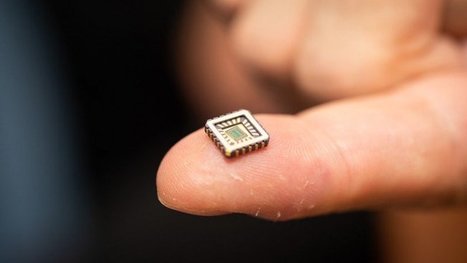
Artificial neurons that mimic the way our body's nerve cells transfer electrical signals could one day help patients with nerve damage.
Messengers: The neurons are built into small silicon chips (pictured above) and could be used to pass signals between nerve cells that may be damaged by disease or injury. Crucially, the chips only need one billionth the power of a standard microprocessor, meaning they could theoretically be used in medical implants to help treat chronic diseases like heart failure or Alzheimer’s.
How they were developed: The researchers used a simulation to model how two types of neurons in rats fire in response to stimuli: respiratory ones that are responsible for breathing and ones in the hippocampus. The models were translated to silicon chips in which replicas of biological ion channels (which transmit signals in the body) were created. The process was described in a paper in Nature Communications.
Stand-in: In theory, circuits of artificial neurons could replicate the healthy function of failing nerve cells and pass on electrical messages between different parts of the body. For example, when someone’s heart fails, neurons in the brain don’t respond properly to nervous system feedback, so the heart doesn’t pump as hard as it should. A chip containing artificial neurons could transmit the right signal to get it back on track.
In fact, some of the researchers are now developing smart pacemakers with these chips embedded. Tests in rats showed that this approach was more effective than just a standard pacemaker—although it’s still a long time before any such device is ready to be implanted in human patients. Learn more / En savoir plus / Mehr erfahren: http://www.scoop.it/t/21st-century-innovative-technologies-and-developments/?tag=MIT
|
|
Scooped by
Gust MEES
September 2, 2019 2:23 PM
|
Wie der erste ist auch der neue Aptera ein Dreirad, das ein wenig an ein Flugzeug ohne Flügel erinnert. In der stromlinienförmigen Kabine ist Platz für zwei Personen. Angetrieben sind die beiden vorderen Räder, in denen jeweils ein Radnabenmotor sitzt. Eine Version mit Allradantrieb ist für später geplant. Die Motoren sollen von einem osteuropäischen Hersteller kommen und haben eine Leistung von jeweils 50 kW.
Aptera will das Fahrzeug mit mehreren Akkuvarianten auf den Markt bringen, von 40 bis 100 Kilowattstunden (kWh) Kapazität. Die 1.600 Kilometer Reichweite beziehen sich auf den größten Akku. Mit dem 60-kWh-Akku soll das Fahrzeug lediglich 800 kg wiegen. Zum Vergleich: Der Nissan Leaf+ mit einem 62-kWh-Akku ist fast doppelt so schwer.
Wegen des geringen Gewichts soll das Auto eine sehr hohe Effizienz haben: Laut den Entwicklern wird der Verbrauch bei 6,2 kWh pro 100 km liegen. Aktuell gilt Teslas Model 3 mit 15,5 kWh pro 100 km als das sparsamste Elektroauto.
Aptera sucht derzeit über eine Crowdfunding-Kampagne nach Investoren - an der ersten Auflage des Unternehmens hatte sich Google beteiligt. Das Unternehmen brauche 2,5 Millionen US-Dollar, um drei Prototypen zu bauen, sagten die Gründer dem US-Wissenschaftsmagazin IEEE Spectrum. Die Prototypen solle Ende des Jahres fertig sein und im kommenden erstmals der Öffentlichkeit vorgeführt werden. Learn more / En savoir plus / Mehr erfahren: https://www.scoop.it/t/21st-century-innovative-technologies-and-developments/?&tag=Cars
|
|
Scooped by
Gust MEES
August 25, 2019 11:22 AM
|
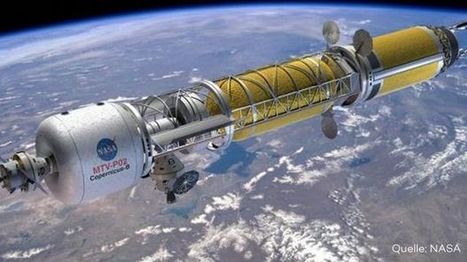
RAUMFAHRT-REVOLUTION: NASA PLANT NUKLEAREN ANTRIEB FÜR REISE ZUM MARS
23.08.2019 • 10:56
© Wochit
Schneller durchs Weltall reisen! Die NASA möchte einen nuklearen Antrieb nutzen, um die Reise zum Mars deutlich zu verkürzen. Wie Wissenschaft.de berichtet, spricht NASA-Chef Jim Bridenstine von einer Revolution für die gesamte Raumfahrt. Learn more / En savoir plus / Mehr erfahren: https://www.scoop.it/t/21st-century-innovative-technologies-and-developments/?&tag=Space
|
|
Scooped by
Gust MEES
June 21, 2019 6:05 PM
|
There are plenty of good reasons that people should cycle more. People who exercise more are healthier and can score higher on cognitive tests, for one thing. And replacing short car trips with journeys by bike (or on foot) is probably a good thing if we want to try to deal with this whole climate change thing. But that will only work if people feel safe swapping their two-ton deathmobiles for a pair of pedals. And it may well mean providing cyclists with bike lanes protected from vehicle traffic with more than a coat of paint. In fact, a study from Monash University in Australia suggests that merely painting bike lanes onto the roads may be counterproductive.
The researchers conducted an observational study, gathering data from 60 cyclists in Melbourne, Australia. For a week or two, the cyclists were equipped with sensors and cameras to capture data over the course of their riding. GNSS satellite navigation was used for location, ultrasonic sensors measured the passing distances of objects as the cyclists rode, and cameras allowed the researchers to classify passing events—was the bicycle passed by a vehicle, did the pass happen while the cyclist was in a bike lane, and so on. Over the study period (between April and August 2017) there were 422 trips covering a total of 3,294 miles (5,302km), 91 percent of which were on-road. Learn more / En savoir plus / Mehr erfahren: https://www.scoop.it/topic/luxembourg-europe/?&tag=Cyclisme https://www.scoop.it/topic/21st-century-innovative-technologies-and-developments/?&tag=Cycling
|
|
Scooped by
Gust MEES
May 29, 2019 4:53 PM
|
Researchers used to think that after adolescence, people were pretty well stuck with the brain cells they’d already formed. No so anymore. Discoveries in recent years have shown that neurogenesis—the formation of new neurons—can occur much later than this, well into adulthood. And now, a new study from the University of Illinois at Chicago finds that brain cells can form into one’s nineties, even if one has cognitive decline and Alzheimer’s disease (though at a much decelerated rate). The question is how the late-in-life growth of new neurons fits into what’s already known about degenerative diseases.
The study was published last week in the journal Cell Stem Cell. Learn more / En savoir plus / Mehr erfahren: http://www.scoop.it/t/21st-century-innovative-technologies-and-developments/?tag=Brain...
|
|
Scooped by
Gust MEES
May 26, 2019 8:51 AM
|
Ford, best known for its cars, pick-up trucks and SUVs, is experimenting with something totally different: a package-carrying robot.
The automaker announced Tuesday it's testing a robot to carry deliveries from its self-driving cars to customers' doorsteps.
Ford is already piloting deliveries with self-driving cars inspired by the popularity of online shopping.
But the company found it was sometimes inconvenient for people to walk outside their homes and take a package from a self-driving car waiting at the curb. So it partnered with Agility Robotics, an Albany, Oregon-based startup that makes a human-like robot capable of carrying 40-pound packages. Learn more/ En savoir plus / Mehr erfahren: https://www.scoop.it/t/21st-century-innovative-technologies-and-developments/?&tag=Robotics
|


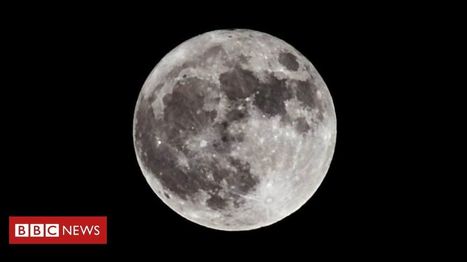




















Having dropped tantalising hints days ago about an "exciting new discovery about the Moon", the US space agency has revealed conclusive evidence of water on our only natural satellite.
This "unambiguous detection of molecular water" will boost Nasa's hopes of establishing a lunar base.
The aim is to sustain that base by tapping into the Moon's natural resources.
The findings have been published as two papers in the journal Nature Astronomy.
While there have previously been signs of water on the lunar surface, these new discoveries suggest it is more abundant than previously thought. "It gives us more options for potential water sources on the Moon," said Hannah Sargeant, a planetary scientist from the Open University in Milton Keynes, told BBC News.
Learn more / Mehr erfahren:
https://www.scoop.it/t/21st-century-innovative-technologies-and-developments/?tag=Space