


The war in Ukraine is forcing Europeans to consider life without Russian oil and gas. Yet, most efforts are focused on supply-side measures and not on energy demand-cutting solutions that are crucial to avoid the risk of blackouts, advocates say.


 Your new post is loading...
 Your new post is loading...
Your new post is loading...
 Scoop.it!
The war in Ukraine is forcing Europeans to consider life without Russian oil and gas. Yet, most efforts are focused on supply-side measures and not on energy demand-cutting solutions that are crucial to avoid the risk of blackouts, advocates say.

No comment yet.
Sign up to comment
Scoop.it!

EU policymakers should deliver a comprehensive whole-life carbon roadmap in the Energy Performance of Buildings Directive. A strong stance on whole-life carbon impacts would have the power to nudge national governments and industry towards decisive climate action, writes Zsolt Toth.
Scoop.it!

The European Commission’s proposal on the energy efficiency of buildings in exchange for more funds to support renovations would have devastating effects in Italy, said the President of Confedelizia Giorgio Spaziani Testa who called on politicians to defend the savings of Italian families.
Scoop.it!
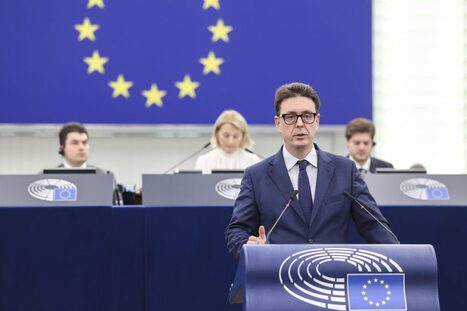
The EU directive on the energy efficiency of buildings has triggered strong reactions in Italy, but the legislative process is still ongoing, and the text may be amended, MEP Nicola Danti told EURACTIV Italy in an interview, adding that anti-EU propaganda over the case must be addressed with the facts.
Scoop.it!
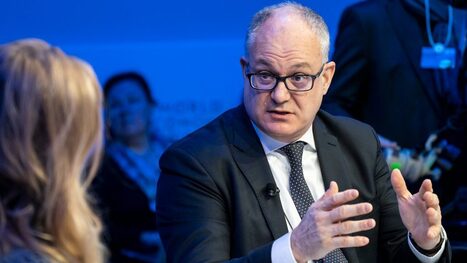
Buildings are accountable for 53% of carbon emissions in the city of Rome, and this is the main issue that needs to be addressed in order to achieve climate neutrality, Rome mayor Roberto Gualtieri told EURACTIV in an interview.
Scoop.it!

Europe must triple investments in the annual retrofitting of buildings, starting with the most vulnerable households, in order to meet the EU's 2030 climate targets and curb dependence on fossil gas, writes Júlia López Ventura.
Scoop.it!

Helsinki has been using competitions to encourage sustainable construction and is leading the way in reducing the sector's carbon impact, write Tomi Rantala and Kaisa-Reeta Koskinen.
Scoop.it!

Revamping Europe's building stock is not only expected to reduce energy bills and help tackle climate change, it is also widely supported by the construction sector, which sees a business opportunity in renovation.
Scoop.it!

Member states not building owners must be responsible for meeting objectives of the directive on the mandatory renovation of old and energy-intensive buildings, the director of Budovy21 and energy-saving construction expert Petr Holub said as EU Parliament backing the directive in mid-March caused quite a stir in Czechia.
Scoop.it!

Europe is packed with landmarks such as historical buildings, business towers, or sport stadiums. As Europe aims to reach net-zero emissions by mid-century, decarbonising large buildings is both a huge challenge and an opportunity.
Scoop.it!

From
venticool

Other AT_Gleisdorf_Stadtsaal AT_Graz_Bezirksgericht Graz WestAT_Graz_Karmeliterhof AT_Hirschwang_Naturfreundehaus Knofeleben AT_Hörsching_Logistikhalle Schachinger AT_Korneuburg_Justizzentrum AT_Lauterach_Unternehmenszentrale AT_Allgemeine Sonderschule 4_Linz AT_Thüringen_Hilti AT_Wels_Volksschule Mauth DK_Aarhus_Det Nye Universitetshospital DK_Copenhagen K_Lynette DK_Copenhagen S_Field’s DK_Frederiksberg_Elefanthus DK_Høje Taastrup_City 2 DK_Slagelse_Psykiatrisygehus (GASP) ES_Valladolid_Mercado del Val
Scoop.it!
From
venticool
Educational AT_Gänserndorf_NÖ Landeskindergarten AT_Klaus_Hauptschule AT_Krems_Bundesrealgymnasium Kremszeile AT_Neumarkt_Schule in Naturpark AT_Rainbach im Mühlkreis_Schule AT_Vienna_Bildungscampus Sonnwendviertel DK_ Amager_Københavns Universitet (KUA1) DK_Copenhagen N_Green Lighthouse DK_Copenhagen_Ørestad Gymnasium DK_ Hirtshals_Spirehuset DK_Højbjerg_Kragelundskolen DK_ Kongens Lyngby _DTU building 324 IE_Cork_CIT Zero 2020 IE_Cork_UCC Western Gateway Building IT_Imola_LOrsini … Continue reading →
|
Scoop.it!
As Brussels pushes to renovate the EU’s worst-performing buildings, member states are pushing back, leaving the European Parliament’s chief negotiator alone in the fight.
Scoop.it!

When policymakers address the climate impact of buildings, most of their attention is focused on reducing emissions released during the building’s operation. Embodied emissions – those linked to all the other phases of a building’s whole life – must not be forgotten, writes Roxana Dela Fiamor.
Scoop.it!

The revised directive on the energy performance of buildings should ensure the cost neutrality of renovations and not penalise low and middle-income groups, argue Sorcha Edwards, Christophe Robert, Freek Spinnewijn, and Barbara Steenbergen.
Scoop.it!

The Italian government led by Prime Minister Giorgia Meloni has adopted a radical overhaul of the country's feted 'superbonus' incentive scheme aimed renovating buildings and improving energy efficiency.
Scoop.it!
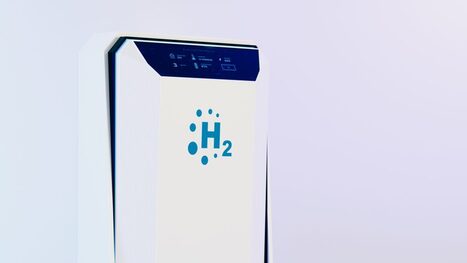
Opening the door to hybrid heat pumps and hydrogen boilers will impact consumers, and make it more difficult for them to transition to clean heating while increasing energy costs, argues Monique Goyens.
Scoop.it!

Liquid petroleum gas firms want a directive to favour biofuels and hydrogen, to which they could pivot, reports The Guardian, EURACTIV's media partner.
Scoop.it!

Italian right-wing parties are united against the Energy Performance of Buildings Directive and call on the government to show its opposition in negotiations with the European Parliament following a vote set for Tuesday in Strasbourg.
Scoop.it!

Current public procurement practices will not put the EU on track to meet its climate goals, even though public spending is widely recognised as a key lever to decarbonise hard-to-abate sectors like road transport and construction, writes Evelin Piirsalu.
Scoop.it!

The European Union is currently revamping its green buildings law. Ahead of finals talks on the proposal, EURACTIV interviewed Ciarán Cuffe, a Green MEP who will represent the European Parliament in negotiations with the other EU institutions.
Scoop.it!

Given the importance of nuclear power in public investment, energy transition and decarbonised energy, production infrastructures will, through necessity, require private investment. Some private equity investment houses have prioritised this societal demand.
Scoop.it!
Some different approaches are used to identify Urban Heat Island (UHI) as Land Surface Temperature or microclimatic simulation … This small study aims to compare our own method, based on the User Comfort Index, with those more classical methods. We also want to assess that this method, developed on French cities, may be used in other countries. Four cities have been chosen: Montreal (Canada), Geneva (Switzerland), Brussels (Belgium) and Baltimore (USA).
Scoop.it!
From
venticool
Offices AT_Ernstbrunn_Windkraft Simonsfeld AG AT_Feldkirchen_Ecoport AT_Gleisdorf_Officebuilding AEE Intec AT_Graz_Karmeliterhof AT_Großwilfersdorf_Oststeiermarkhaus AT_Innsbruck_Faculty of Technical Sciences AT_Korneuburg_Justizzentrum AT_Krems_Niederösterreich-Haus AT_Lustenau_2226 AT_Weiz_Energie und Innovationszentrum AT_Wien_Aspern IQ AT_Wien_Plus-Energie-Bürogebäude BE_Schoten_Police Office DK _Copenhagen C_DR Byen DK_Aarhus_Aarhus Kommune DK_Albertslund_Albertslund Rådhus DK_Ballerup_Ballerup Kommune DK_Copenhagen E_Kontorhus DK_Copenhagen K_Vandflyverhangaren DK_Copenhagen … Continue reading →
|




