 Your new post is loading...

|
Scooped by
INIVE vzw
April 27, 2023 8:02 PM
|
The AIVC -TightVent - venticool 2023 Conference: “Ventilation, IEQ and health in sustainable buildings” will be held during 4-5 October 2023 in Copenhagen, Denmark.Abstract submission is still open. Authors should submit their abstracts by March 20, 2023.Detailed information & other important deadlines for the call for abstracts can be found at: https://aivc2023conference.org/call-for-abstracts-papers/For further information and updates visit us at: https://aivc2023conference.org/
|
|
Scooped by
INIVE vzw
April 27, 2023 8:01 PM
|
Lorem ipsum.... Lorem ipsum.... Lorem ipsum.... Lorem ipsum.... Lore
|
|
Scooped by
INIVE vzw
April 27, 2023 8:01 PM
|
With buildings accounting for more than 40% of energy consumption in Europe, renewable technologies and related measures provide an opportunity to reduce fossil fuel use. The EU-funded RES4BUILD project hosted a workshop in Brussels on 29 March 2023 with participants from research, industry, policy, and end users to discuss the developments required to accelerate this change.
|
|
Scooped by
INIVE vzw
April 26, 2023 8:01 PM
|
The February & April 2023 editions of the REHVA Journal have been released, including a selection of articles presented at the 42nd AIVC conference - 10th TightVent - 8th venticool conference: "Ventilation Challenges in a Changing World" held in Rotterdam, the Netherlands on October 5-6, 2022.Specific articles include:Estimation of Cross-Ventilation Through Roof Windows in Attics | Valérie Leprince (Cerema, France), Nolwenn Hurel (PLEIAQ, France), Christoffer Plesner (Velux, Denmark)Energy Savings with Aeroseal Ductwork Sealing in Europe | Nolwenn Hurel Nolwenn Hurel (PLEIAQ, France), Valérie
|
|
Scooped by
INIVE vzw
April 26, 2023 7:02 PM
|
Significant discrepancies have been observed among European countries, regarding the building and ductwork airtightness trends, attributed to differences between national policies, building practices and climate conditions. In Spain and Latvia, minimum requirements for building airtightness are included in national regulations and Energy Performance calculations, but without a mandatory justification by testing and therefore few new buildings are controlled.
|
|
Scooped by
INIVE vzw
April 26, 2023 7:02 PM
|
The recordings and the slides of the Dynastee On-Line Training Webinar Series: “Dynamic Calculation Methods for Building Energy Performance Assessment” parts 1 to 5, held on September 2nd, 9th, 16th, 23rd & 30th September 2020, are now available online. Please click … Continue reading →
|
|
Scooped by
INIVE vzw
April 26, 2023 7:01 PM
|
The seventeenth issue of the DYNASTEE newsletter is now available for download. Contents include: Foreword Energy House 2.0 Evaluation of the DYNASTEE training webinars Data-based modelling for thermal performance assessment Pre-announcement of DYNASTEE Summer School 2021 Call for papers: special … Continue reading →
|
|
Scooped by
INIVE vzw
April 26, 2023 7:01 PM
|
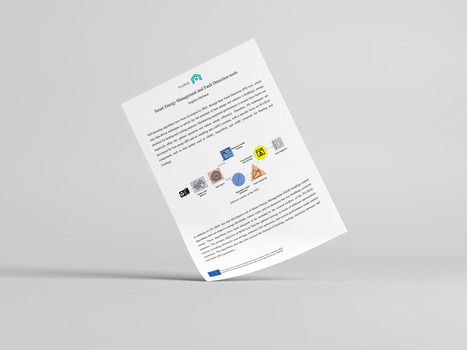
Partners Angelos Mylonas, Jordi Macia and Jordi Pascual from IREC - Institut de Recerca en Energia de Catalunya have written a press release about the PLURAL project's latest development in smart energy management and fault detection tools.
|
|
Scooped by
INIVE vzw
April 25, 2023 7:01 PM
|
The DYNASTEE board looks for enthusiastic people that like to help organising the events that the informal network undertakes. DYNASTEE will have to say goodbye to two of the co-founders of the original network, PASLINK eeig. Peter Wouters and Luk … Continue reading →
|
|
Scooped by
INIVE vzw
April 25, 2023 6:06 PM
|
Dynastee – the network for energy modellers and building performance, has recently added two new board members: Twan Rovers – Twan is a Researcher at Saxion University of Applied Science Luke Smith – Luke is a building performance expert and … Continue reading →
|
|
Scooped by
INIVE vzw
April 25, 2023 6:06 PM
|
The European Parliament ITRE committee adopted its position on the revision of the Energy Performance of Buildings Directive (EPBD) after long and difficult negotiations. The compromise amendments contain significant changes, and more ambitious targets than the EC recast proposal, including … Continue reading →
|
|
Scooped by
INIVE vzw
April 25, 2023 6:06 PM
|
The Slovak Environmental Agency launched the submission of applications in the third call of the Renew House programme on Monday morning.
|
|
Scooped by
INIVE vzw
April 25, 2023 6:06 PM
|
The European Commission has launched a new initiative for a new set of EU taxonomy criteria for economic activities contributing to:
|
|
|
Scooped by
INIVE vzw
April 27, 2023 8:01 PM
|
In the framework of The Trento EEMI Bauhaus Week, the European Mortgage Federation - European Covered Bond Council (EMF-ECBC) released a video-”call to action” (for distribution to 2000 banks and 5000 major companies) about the decarbonisation of buildings and the heat mitigation in cities.In this video, Mat Santamouris, professor at the University of New South Wales (UNSW) in Sydney, Australia, and a member of the AIVC board, shares his insights and provides information about the severity of local climate warming and its serious impact on energy, health, vulnerability and human productivity i
|
|
Scooped by
INIVE vzw
April 27, 2023 8:01 PM
|
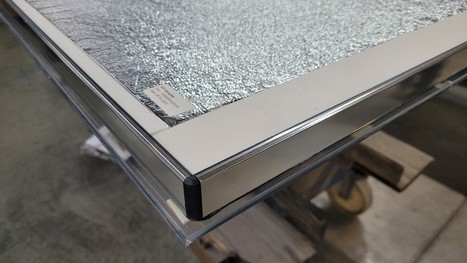
POWERSKIN+ Project is excited to share the process of assembly of the opaque modules for the Powerskin+ demo site.
|
|
Scooped by
INIVE vzw
April 27, 2023 8:01 PM
|
|
|
Scooped by
INIVE vzw
April 26, 2023 7:02 PM
|
The AIVC is inviting you to register for the upcoming webinars "Building and ductwork airtightness trends and regulations in France, Belgium and Greece" to be held on May 4th, 2023 (10:00 - 11:30 CET) & "Building and ductwork airtightness trends and regulations in the Czech Republic, Latvia and Spain" to be held on May 9th, 2023 (10:00 - 11:30 CET). Participation is free for all, but prior registration is required.For further information on the detailed agendas, registration etc.
|
|
Scooped by
INIVE vzw
April 26, 2023 7:02 PM
|
The sixteenth issue of the DYNASTEE newsletter is now available for download. Contents include: Foreword DYNASTEE Management Board Postponement of DYNASTEE Summer school 2020 DYNASTEE Online Training Online Summer School at DTU 2nd European SimStadt Workshop at Saxion UAS Model … Continue reading →
|
|
Scooped by
INIVE vzw
April 26, 2023 7:02 PM
|
Title: DYNASTEE On-line Training for Dynamic Calculation Methods for Building Energy Performance Assessment A series of 4 webinars (e.g. 9 lectures) distributed over a period of 4 weeks in September and October 2021. These webinars should be considered as the … Continue reading →
|
|
Scooped by
INIVE vzw
April 26, 2023 7:01 PM
|
Annex 71 of the International Energy Agency is holding an event to disseminate the learnings and outputs of a 5 year global research programme. We will be discussing the latest work and delivering our final reports around the following areas: … Continue reading →
|
|
Scooped by
INIVE vzw
April 26, 2023 7:01 PM
|
We are pleased to announce our upcoming webinar where our experts discuss consumption and savings in the industrial sector to help you identify areas of improvement and opportunities, using real-life examples. Hosted by our team of energy experts, the webinar will take place on Wednesday the 4th of May at 11am.
|
|
Scooped by
INIVE vzw
April 25, 2023 6:06 PM
|
The eighteenth issue of the DYNASTEE newsletter is now available for download. Contents include: Foreword Announcement of DYNASTEE Summer School 2022 Retirement of Paul Baker Call for new DYNASTEE Board Members The effect of secondary pollutants with respect to indoor … Continue reading →
|
|
Scooped by
INIVE vzw
April 25, 2023 6:06 PM
|
Indoor Environments: Global Research to Action is a video show & podcast that explores how research can be translated to practice on a variety of topics related to our built indoor environments. The International Society of Indoor Air Quality and Climate (ISIAQ) and … Continue reading →
|
|
Scooped by
INIVE vzw
April 25, 2023 6:06 PM
|
We are pleased to announce and invite you to REHVA’s expert talk at ISH Frankfurt on New standards and health-based ventilation practice for good indoor air quality in homes. We spend up to 90 % of our time indoors, and indoor climate quality … Continue reading →
|
|
Scooped by
INIVE vzw
April 25, 2023 6:06 PM
|
Power network operators are calling for greater transparency regarding electric cars and heat pumps connected to the grid in order to reinforce the EU’s network where necessary and tap into the potential of energy savings from households.
|










![Indoor Environments Show Episode 15: Rethinking Bioaerosols | January 31, 2023 [01:00-02:00 PM ET] | ventilation | Scoop.it](https://img.scoop.it/J8ieZFIUgixMkFt9R5IjEzl72eJkfbmt4t8yenImKBVvK0kTmF0xjctABnaLJIm9)





