

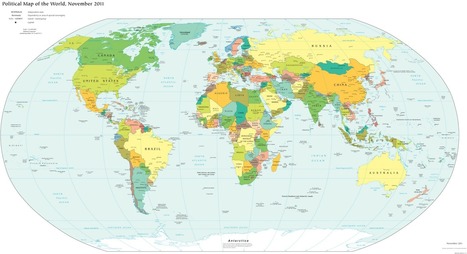

Most world political maps aren't telling you the whole story. Learn about five ways your map is misleading you about borders, territories, and even the roster of the world's countries.
Via Matthew Wahl


 Your new post is loading...
 Your new post is loading...
Your new post is loading...
 Scoop.it!
Most world political maps aren't telling you the whole story. Learn about five ways your map is misleading you about borders, territories, and even the roster of the world's countries. Via Matthew Wahl 
Scoop.it!
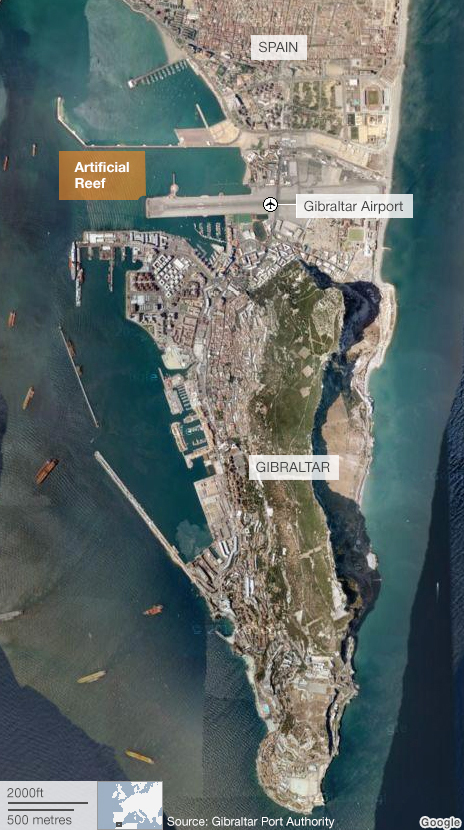
"Prime Minister David Cameron is 'seriously concerned' about the escalation of tensions on the border between Spain and the British territory of Gibraltar."

megan b clement's curator insight,
October 13, 2013 12:37 AM
"The video explains about Spain and Gibraltar and how they have feuded back and forth with one another and their borders for some time now. Gibraltar has made a articfical reef to mess with the Spainish fisherman and SPain has made travel to Gibraltar nearly impossible and dreadfully long for tourists. Spain understands how essential tourism is to their economy. Until they are able to come to an agreement thei matter is only going to intenisfy more and worsen." 
Elizabeth Bitgood's curator insight,
March 3, 2014 10:55 AM
I was unaware that the UK owned this part of Gibraltar. It seems like a throwback to the UK’s naval policies of the past that they would still to control this point of entry into the Mediterranean. It will be interesting to see how this will be resolved. As it is a dispute between two countries that are both part of the EU.
Scoop.it!
Colonialism in Africa. Edited for content so it's school appropriate. From the documentary Uganda Rising.
Scoop.it!

The Design Office is a project/work space for artists and designers in downtown Providence.
Adrian Bahan (MNPS)'s insight:
This is a great visual tool. Also could have students create matrix for future topics and units.
Scoop.it!
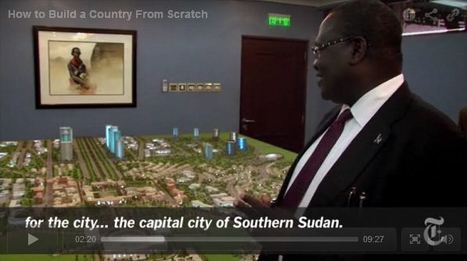
The filmmakers present a 12-step program to establish the world’s newest country: South Sudan. Via Matthew Wahl

Cam E's curator insight,
March 18, 2014 12:51 PM
This is a really interesting dynamic to look into, as it's not everyday the process of founding a country can be seen at work. That's a true once in a lifetime experience for those involved, and is likely one of the harder jobs in the entirety of history.
Elizabeth Bitgood's curator insight,
March 19, 2014 10:46 AM
This video and article highlight the steps a new country takes when it is carved out of an old one. The problems and tribulations the new country faces and how it responds to the rest of the international community will decide if it will be a long lasting country or just a blip on the road of the original countries history. 
Kendra King's curator insight,
March 15, 2015 6:33 PM
I think building a country from scratch mostly needs a plan for strong governance. Some of the items mentioned in the video would eventually be necessary (i.e. an anthem or a flag), but not exactly a top priority as the country could function without these. Rather the items like taxes and training the police are hugely important. A society needs the revenue to grow and the police to keep order. However, what disturbed me about this video is there were no other real mention of government institutions. Now I am not saying that the Constitution needs to be exactly like the United States, but the following is needed: a plan for how to treat the citizens, implement social programs, create/review the law, get officials into office, etc. Without looking at these basic questions of government, there is no way the country can function because there aren’t actually the procedures in place when problems do arise.
After strong governance, I also think that recognition in our globalized world is needed as well. In order for a country to prosper, the country will need to rely on other nations at one point in time for things like trading. If enough countries just refused to recognize the area and as such refused to trade then the country would more than likely fail. Luckily, Sudan is recognized by the United States and the UN did come to speak with the nation. SO that doesn’t seem to be an issue.
To me these are the top two things needed and since one is greatly missing, I am not surprised by the problems Sudan has.
Scoop.it!

Lauren Stahowiak's curator insight,
March 17, 2014 5:08 PM
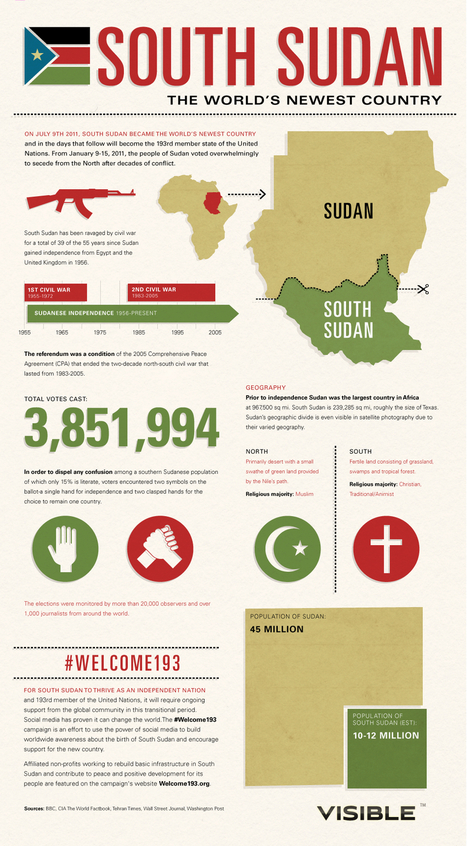
South Sudan recently gained its independence from Sudan. South Sudan is now home to 10-12 million people and is the 193rd member of the United Nations. However, just because South Sudan became independent from Sudan does not mean it does not no longer carry some of the remaining issues. 
Nathan Chasse's curator insight,
March 25, 2014 1:26 PM
This infographic gives an idea of why South Sudan seceded from the rest of the country. Decades of civil war preceded the secession, and it is clear the cultural differences between the two areas were a contributing factor. South Sudan is a part of the fertile Sahel, with the majority of its people Christian, while Sudan is mostly desert, with the majority of its people Muslims. South Sudan, as a new nation, faces a number of difficulties. Its new government needed to remain stable to focus on nation building, but war has broken out between the government and a rebel faction. South Sudan, should it become stable again, should work to improve the education of its people, as the infographic explains, since the vote to secede needed symbols rather than words due to only 15% of its people being literate. 
Jess Deady's curator insight,
May 4, 2014 4:05 PM
South Sudan has separated itself two years ago from the rest of Sudan. Its powers have become acknowledged by other countries and its messages to the outside world are ones of peace. |
Scoop.it!
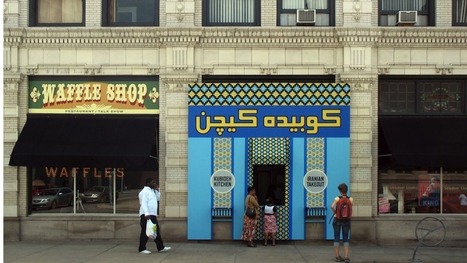
Conflict Kitchen is the only restaurant in the world that serves cuisine solely from countries with which the U.S. is in conflict.

Courtney Burns's curator insight,
November 20, 2013 3:04 PM
Initially I wasn't really sure what I thought about this resturant. My initial reaction was that I hated it and thought it was a bad idea. I to seemed like we were supporting another country by serving their food. However there is a cultural experience involved when we go out to eat. Many people go out to italian resturants to get the experience of italy and etc. However after really thinking about it the US is typically in conflict with another countries government, not the people who live there. By selling the food of countries we are in conflict with almost gives us an idea about what exactly the culture is there. I think it almost educates people in such a way. I think that might be the purpose on the resturant. By eating at this resturant it opens peoples eyes to what people of that particular country are consuming on a regular day basis. That experience can be good or bad, but either way it still opens up peoples eyes to the type of world other countries are living in. I think by eating there you open yourslef up to a new cultural experience, which I belive is exactly the point that the kitchen is trying to serve. Even if it is through food. 
Victoria McNamara's curator insight,
December 11, 2013 12:06 PM
Conflict Kitchen serves foods from the countries the United States is in conflict with. They might be doing this to show Americans a little bit of how their culture is b eating their foods.
Scoop.it!
Scholars Online Videos feature top scholars answering a specific question in his or her field of expertise. These brief and informative videos are designed to supplement the Choices Program curricula.

Mark Hathaway's curator insight,
October 20, 2015 7:15 AM
Afghanistan's current borders are the result of political maneuvering between empires. Afghanistan's Wakhan Corridor is a result of this political maneuvering. The corridor was created in order to prevent the Russian Empire and British India from sharing a common border. While many afghans may decry the notion, Afghanistan has been shaped by foreign influence. The same can be said for almost every other nation on the globe. Almost all borders are determined by some from of political maneuvering. Our borders with Mexico and Canada have been determined through treaties and wars. 
Chris Costa's curator insight,
October 21, 2015 12:24 PM
As I have learned more about the world, it's been interesting to see how arbitrary national borders can sometimes be. I think we are taught in school to associate "nations" with "nationalism," and although that is generally the case for most industrialized nations (whose citizens generally feel they are "nationals" within their own borders), it is not always true for the rest of the world. We see this in the numerous ethnic disputes in African nations, in the violent Yugoslav wars in Europe, and today with the Kurd uprising in Syria and Iraq- we see ill-defined borders that do not meet the needs of their peoples, nations that do not encompass the same sentiments of nationalism. As a result, we see indifference between these various peoples at best, or open conflict between varying ethnic and ideological groups at worst. Afghanistan as we know it today is not the result of self-determination or a sense of nationalism, but geopolitical jockeying between Russia and the United Kingdom. It is not a nation, but a political buffer. As a result, Afghanistan does not act as a single nation- it may have a central government, but that government is incredibly weak, and people in remote areas often do not even know of its existence. Afghanistan is a series of small city-states and even more isolated settlements clumped together behind arbitrarily drawn lines, living their lives in much the same manner their ancestors did 1,000 years ago. This has made the mountainous, isolated regions of the nation a haven for terrorists and religious extremism, posing a serious issue in the region that, despite billions of dollars and a decade of fighting, the US has been unable to find a solution for. Divided amongst itself, Afghanistan is a nation in name only, something that the West likes to place on the map because of a dispute between two global powers nearly 2 centuries ago.

Katie Kershaw's curator insight,
March 15, 2018 3:28 PM
People often wonder why Afghanistan is so conflict ridden and point fingers at one thing or another. This video sheds some light on why Afghanistan actually is what it is today. The country did not get to chose its own borders and so cultural groups were thrown together that may not necessarily like to be associated. The modern borders were set up as a buffer zone between the Soviet Union and the British Empire in India and Pakistan, which is why there is one small land strip known as the Wahkan Corridor sticking off of Afghanistan. The border between modern-day Pakistan and Afghanistan was set up in the late 1800s in order to stop British troops from invading Afghan territory and prevent the Afghans from assisting Pakistani rebels. This explains why the present borders of Afghanistan exist, but the establishment of these borders doesn’t seem to be very fair to Afghanistan, who were basically forced by imperial powers to comply. Another imperial power that changed Afghanistan was the Persian Empire, hundreds of years ago. The Persian influence is more cultural. Afghanistan’s New Year was adopted from the Persian New Year so they’re celebrated on the same day. Additionally one of the recognized languages in Afghanistan is a dialect of Farsi, which the Persian language. All of this predates any of the influences of Islam, which shows what a hodgepodge of cultures Afghanistan has become. This video briefly touches upon American involvement in the region during the Cold War, which escalated tensions even farther and left behind both Soviet and American influences. The geographical changes that have occurred in the region for centuries has shaped Afghanistan’s history.
Scoop.it!
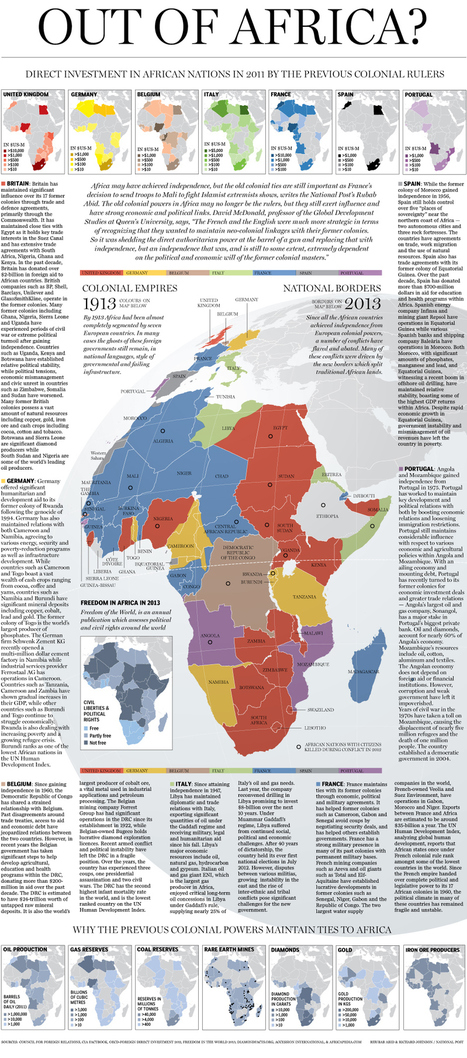
Africa may have achieved independence, but the old colonial ties are still important as France’s decision to send troops to Mali to fight Islamist extremists shows. Via Matthew Wahl
Jess Deady's curator insight,
May 4, 2014 4:04 PM
Colony powers are still located within Africa. Just because Africa is technically independent doesn't mean that British Colonial power isn't still in place. 
Felix Ramos Jr.'s curator insight,
March 26, 2015 11:08 AM
This article reminds us all of the growth-stunt that colonialism in Africa brought to the continent. It is not surprising to see that most African countries still depend heavily on their old colonial masters for survival. People who may casually follow African politics might think that colonialism started with the Berlin Conference and ended in 1990 or so, but one could argue that it hasn't ended due to the urgent dependency African countries still have on their old colonizers. Africa might be the most beautiful continent in the world but has the worst story of any in the world.
Scoop.it!

The Design Office is a project/work space for artists and designers in downtown Providence.
Adrian Bahan (MNPS)'s insight:
It would be cool to have students create their own matrix for other topics.
Scoop.it!
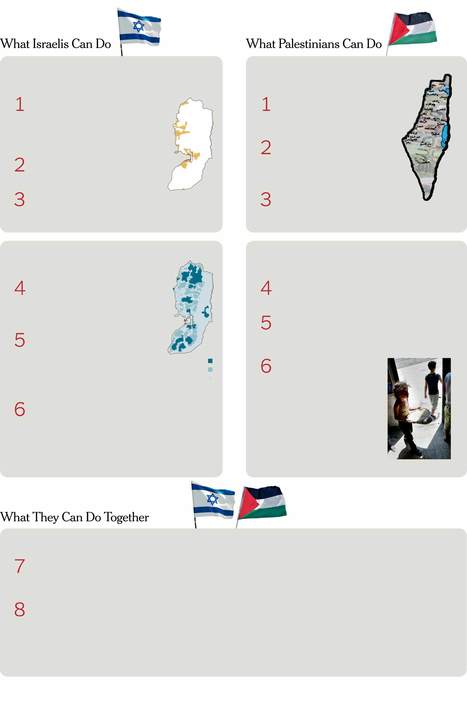
In the search for Middle East peace, the most fundamental problem is the problem of disbelief.

Jessica Martel's curator insight,
April 4, 2013 6:05 PM
This article explains the conflicts that are such a problem within the country of Israel, the conflict of religion and space. The Palestinians believe that they belong in the area, where the land was given to the Jewish people. These people are at war each day because they are fighting to hold on to a certain piece of land to claim for their own religion, yet they still incorrectly get blended together as one large group of people who are all the same due to the area they live.
Scoop.it!

Uhuru Kenyatta Taking the Lead in Kenya Presidential Elections 2013: According to the Independent Boundaries a... http://t.co/ekm2Ffi6nP
Adrian Bahan (MNPS)'s insight:
Remember the eletions we studied in Kenya. Hopefully the losers will behave better this time around.
|








unit 1--always always ask questions about your sources!