 Your new post is loading...

|
Scooped by
UK Data Service
June 20, 2019 4:12 AM
|
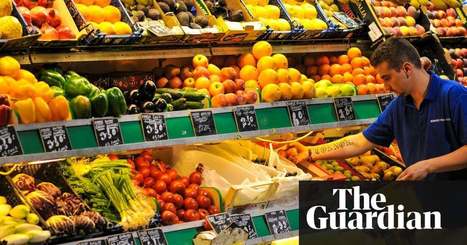
Avocado on toast was the snack that became a synonym for millennial excess. But along with holidays and tickets to shows, dining out is proving beyond the budget of Britain’s youngest adults, who, according to new figures, have suffered a slump in their spending power for life’s non-essentials while their parents’ generation have splashed out with increasing abandon.
|
|
Scooped by
UK Data Service
June 19, 2019 2:51 AM
|
Almost one in five Britons living in wage-earning households was in relative poverty in 2017, according to the Institute for Fiscal Studies.
In a report published Wednesday, the think tank said in-work poverty now affected around 8 million people, up sharply from the early 1990s.
But while rising housing costs and weak wage growth were partly to blame, the increase also reflected the fact that many more people are now in work, including those on low incomes such as lone parents, the IFS said.
|
|
Scooped by
UK Data Service
June 19, 2019 2:47 AM
|
Britain has seen a big jump in the working poor since the 1990s, with almost three out of five people below the official poverty line living in a household where at least one person is working.
The Institute for Fiscal Studies found that a drop in the number of workless households, better-off pensioners and higher rents had resulted in 8 million in poverty from working households.
The thinktank said that between 1994 and 2017 the share of poverty accounted for by working households had jumped from 37% to 58%.
|
|
Scooped by
UK Data Service
October 1, 2018 10:07 AM
|
Consumer spending is a major component of GDP and, to assist in its analysis, the Office for National Statistics has just produced an analysis of spending within regions across the UK. The data was collected using two surveys – the Living Costs and Food Survey (also used as the basis of the Consumer Price Index) and the Annual Business Survey which records sales of businesses. The former looks at 5,000 households (not a particularly large number when broken down into regions) which are interviewed and keep a diary of their expenditure for a two-week period; the latter records retail sales of 80,000 businesses, so provides a larger sample, but suffers in accuracy because some sales go to businesses, not consumers.
|
|
Scooped by
UK Data Service
September 6, 2018 4:20 AM
|
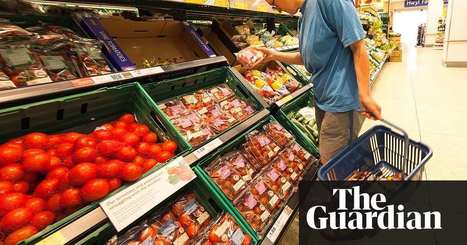
Almost 4 million children in the UK live in households that would struggle to afford to buy enough fruit, vegetables, fish and other healthy foods to meet the official nutrition guidelines, a groundbreaking food poverty study reveals.
The research, by the Food Foundation thinktank, says the diminishing ability of low-income families to pay for healthy food is consigning the least well-off to a greater risk of diet related illness, such as obesity and diabetes, as well as widening health inequalities across society.
|
|
Scooped by
UK Data Service
August 2, 2018 6:32 AM
|
Tomorrow the Bank of England Monetary Policy Committee (MPC) will be voting on whether to raise the interest base rate rise for only the second time since July 2007. There has been plenty of…
|
|
Scooped by
UK Data Service
July 11, 2018 7:01 AM
|
People living outside of the capital look set to be hit hardest by an increased cost of living after Brexit… but Londoners will not escape unscathed , a new report shows.
|
|
Scooped by
UK Data Service
July 11, 2018 6:55 AM
|
"They voted for Brexit, but are apparently going to be hardest hit when we leave the EU. New research by the think tank, the IPPR, claims that households in Brexit-voting areas will see the steepest fall in income and an increase in the cost of living. We report from…
|
|
Scooped by
UK Data Service
July 4, 2018 9:29 AM
|
SCOTS consumers face the highest price rises in Britain on food, transport and fuel after Brexit, according to a new report by an influential think tank.
Published today by the IPPR, the report was based on an assessment of how people in different parts of the UK spend their money on different items.
|
|
Scooped by
UK Data Service
June 20, 2018 7:45 AM
|
In 2013, Revised Dietary Goals for Scotland were published, updating the 1996 Scottish Dietary Targets. These
goals encompassed recommendations for intakes of both foods and nutrients, similar to those in the original targets
regarding fruit and vegetables, oily fish, total fat, saturated fat, sugar (NMES), and salt. However, goals were added
with regard to red meat, energy, energy density, trans fatty acids, and fibre as non-starch polysaccharides (NSP).
Progress towards the goals is monitored using a combination of surveys, but principally via secondary analysis of
the Living Costs and Food Survey (LCFS) data from 2001 to date, following the endorsement of the 2004 Working
Group Report on Monitoring Scottish Dietary Targets which concluded that it was the most appropriate method for
Scotland. Other Scottish surveys that collect data on dietary intake, such as the Scottish Health Survey, do not
provide data suitable for monitoring the goals.
The results provided in this report support work by Food Standards Scotland and the Scottish Government to
facilitate improvements to the diet in Scotland to help reduce the burden of obesity and diet-related disease.
|
|
Scooped by
UK Data Service
May 15, 2018 6:35 AM
|
"The proportion of working-age mothers with a job has risen by nearly 50% in the past four decades, a study says. The Institute for Fiscal Studies (IFS) found the increase was behind a wider rise in the number of women in employment in the UK. It credited a "huge change in working patterns", with women much less likely to stop work when they have children. But it said the rise in maternal employment had been most noticeable among partners of higher-earning men. According to the think tank, the proportion of mothers aged 25-54 in paid work grew from 50% in 1975 to 72% in 2015."
|
|
Scooped by
UK Data Service
February 28, 2018 10:27 AM
|
Incomes of low earners are set to stagnate for at least another three years, leading to record levels of inequality, a new study has found. While household incomes for richer people will begin to rise next year, those on middle and low incomes will not see an increase until at least 2020, the Resolution Foundation think tank said. It means income inequality is likely to rise for the first time since the 1980s and hit record highs during the early 2020s, having fallen in recent years. The Resolution Foundation said government benefit cuts were largely to blame.
|
|
Scooped by
UK Data Service
February 28, 2018 10:21 AM
|
Low and middle income households face three years of stagnating living standards lasting until 2020, according to the Resolution Foundation’s annual living standards report.The think tank reports that high inflation following the referendum has caused the return of falling real pay and deepened cuts to working age benefits, meaning typical household incomes are projected to have fallen marginally this financial year (2017-18).
|
|
|
Scooped by
UK Data Service
June 19, 2019 2:51 AM
|
Between 1994 and 2017 there was an increase from 13% to 18% in the proportion of people in working households living in relative poverty that’s an increase of 40%
By 2017 8 million people in the UK living in working households were in relative poverty.
These are among the key findings of new research funded by the Joseph Rowntree Foundation and published today by the Institute for Fiscal Studies as part of its annual report on Living Standards, Poverty and Inequality in the UK.
|
|
Scooped by
UK Data Service
June 19, 2019 2:50 AM
|
As care worker Liam Doherty knows all too well, if you're in a low-paid job, the slightest setback can capsize your finances.
The Irishman moved to the UK in September 2013, bringing his wife Debbie and four children from County Limerick to take up a job in Dawlish in Devon.
"We were struggling to get by," he says. With his wife unable to work because of ill-health, he was the sole provider in the family.
|
|
Scooped by
UK Data Service
December 18, 2018 10:33 AM
|
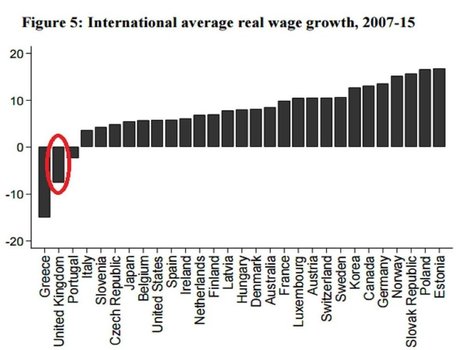
Firstly, the graph does not show what Raab is claiming. The graph does show that after 8 years of Conservative government, real wages are lower than when the coalition took office. In fact they are lower now than they were during the Great Global Recession in 2008. This shows an appalling and shameful record.
After the global recession in 2008, consumer prices rose faster than the average wage, so the real value of wages fell. They continued to fall until 2014.
|
|
Scooped by
UK Data Service
September 6, 2018 10:04 AM
|
The Food Foundation compared the cost of following the Eatwell Guide, calculated from existing research, to household expenditure data from the 2015/16 Living Costs and Food Survey and to disposable income data from the 2015/16 Family Resources Survey.
They found that 26.9% of households would need to spend more than a quarter of their disposable income after housing costs to meet the Eatwell Guide costs, and more than half of these households contain at least one child.
|
|
Scooped by
UK Data Service
August 2, 2018 6:58 AM
|
There has been little progress towards improving Scotland's national diet and health over a 15-year period, according to research conducted by Robert Gordon, Abertay and Newcastle Universities.
The study, funded by Food Standards Scotland, examined annual trends in food consumption and nutrient intakes between 2013 and 2015, using food purchase data from the UK Living Costs and Food Survey. This data was then evaluated alongside a previously published report which focused on figures from 2001 to 2012.
The aim of the research was to monitor the nation's progress towards the Scottish Dietary Goals – first published in 1996, before being updated in 2013 and 2016.
It found that intakes of fruit and vegetables, oil rich fish, and dietary fibre remain too low, with free sugars, total fat and saturated fat being too high in relation to the goals.
|
|
Scooped by
UK Data Service
July 11, 2018 7:34 AM
|
The North and the Midlands have the closest trade links with the EU.
|
|
Scooped by
UK Data Service
July 11, 2018 6:59 AM
|
"The cost of living will rise more in the North than in London, according to new research by think-tank IPPR."
|
|
Scooped by
UK Data Service
July 11, 2018 6:52 AM
|
Price rises will disproportionately affect people in Northern Ireland, Wales, the Midlands and the north-east, reports say
|
|
Scooped by
UK Data Service
June 26, 2018 11:29 AM
|
"Childcare debt is set to soar under Universal Credit as claimant families are denied help to afford upfront nursery fees, a charity has warned."
|
|
Scooped by
UK Data Service
June 6, 2018 10:09 AM
|
New figures show that while nearly 15million people in Britain say they are surviving on very low amounts of money, many are spending much more than the incomes they admit to.
|
|
Scooped by
UK Data Service
February 28, 2018 10:30 AM
|
Resolution Foundation warns of rising inequality amid cuts to working-age benefits
|
|
Scooped by
UK Data Service
February 28, 2018 10:25 AM
|
"Life for eight million low-paid families in Britain who are 'just about managing' is unlikely to improve over the next few years, a new report warns. The Resolution Foundation..."
|


























This article references research using data which is part of the UK Data Service collection:
Annual Population Survey
Annual Survey of Hours and Earnings
British Household Panel Survey
English Housing Survey
English Private Landlord Survey
Family Resources Survey
Households Below Average Income
Labour Force Survey
Living Costs and Food Survey
New Earnings Survey Panel Dataset
Understanding Society
Wealth and Assets Survey