 Your new post is loading...
Today many HR and Training Professionals are challenged with increased expectations and reduced resources.Many of these leaders now leverage outsourcing as a means to meet the demands of changing business conditions. There are a number of benefits to strategically outsourcing training activities. This article explore some of the key benefits.
Via The Learning Factor
If you're on the hunt for a new position that will let you shine, practice demonstrating these top seven traits that CEOs look for in star employees. Your resume can get you the interview. But these traits can get you hired: 1. Happiness No one wants to work with an unhappy person. Negativity, unnecessary drama, and melancholy attitudes can bring the entire company down, so although your own personal happiness may not seem important when applying for a job, it most certainly is. Happiness also reflects your ability to tackle challenges without becoming discouraged. If you show the hiring CEO that you're a positive, mentally healthy person, your chances of becoming the company's next star employee will vastly improve.
Via The Learning Factor

|
Scooped by
Jess Chalmers
June 30, 2014 6:57 PM
|
Small businesses can do better in retaining customers than big brands. Here's why and how you should do it.
No one likes getting criticism. But it can be a chance to show off a rare skill: taking negative feedback well. It is a skill that requires practice, humility and a sizable dose of self-awareness. But the ability to learn from criticism fuels creativity at work, studies show, and helps the free flow of valuable communication. Tempering an emotional response can be hard, especially "if you're genuinely surprised and you're getting that flood of adrenaline and panic," says Douglas Stone, a lecturer at Harvard Law School and co-author of "Thanks for the Feedback."
Via The Learning Factor
What stands in the way of our being more satisfied and productive at work? That’s the fundamental question we sought to answer in a survey we conducted with HBR last fall. More than 19,000 people, at all levels in companies, across a broad range of industries, have so far responded to the questions we posed. What we discovered is that people feel better and perform better and more sustainably when four basic needs are met: renewal (physical); value (emotional), focus (mental) and purpose (spiritual).
Via The Learning Factor
|
|
Scooped by
Jess Chalmers
June 26, 2014 7:36 PM
|
You customers won't always reveal what they're really thinking. Here are nine of their most common reactions.
|
|
Scooped by
Jess Chalmers
June 26, 2014 7:25 PM
|
We all fall victim to expressing ourselves in ways that alienate the very people we're trying to impress. Here are five annoying communication traits to avoid.
|
|
Scooped by
Jess Chalmers
June 22, 2014 7:46 PM
|
No one likes getting criticism. But it can be a chance to show off a rare skill: responding to negative feedback well.
|
|
Scooped by
Jess Chalmers
June 19, 2014 7:00 AM
|
How to approach six tricky workplace scenarios.
|
|
Scooped by
Jess Chalmers
June 19, 2014 6:12 AM
|
If you are not trying to put yourself out of business, someone else will be.
|
|
Scooped by
Jess Chalmers
June 14, 2014 6:53 PM
|
Even something as innocent as a phone ringing can jolt you out of your flow.
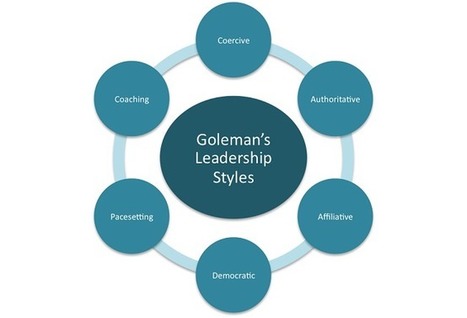
Daniel Goleman, in his article “Leadership That Gets Results”, has identified six different leadership styles, and he believes that good leaders will adopt one of these six styles to meet the needs of different situations. None of the six leadership styles by Daniel Goleman are right or wrong – each may be appropriate depending on the specific context. Whilst one of the more empathetic styles is most likely to be needed to build long-term commitment, there will be occasions when a commanding style may need to be called upon, for example, when a rapid and decisive response is required. Learn more: - http://www.scoop.it/t/21st-century-learning-and-teaching/?tag=LeaderShip - http://www.scoop.it/t/21st-century-learning-and-teaching/?tag=Daniel-GOLEMAN
Via The Learning Factor, Deborah Orlowski, Ph.D., juandoming, Gust MEES
This is the ninth post in a series of eleven which will examine how to motivate the virtual learner. The first post introduces the series.
Motivation Category 8: Provide Rewards and Recognition for Virtual Learning Participation and Success.
Via Edumorfosis, juandoming
|
|
|
Scooped by
Jess Chalmers
July 5, 2014 7:27 AM
|
Giving actionable EP feedback marks you as a great leader. From our interviews, consensus emerged on what constitutes truly constructive criticism:
Strike while the iron is hot. Deliver the feedback when your employee is most receptive to receiving it: either right before he might blunder or right after he did. For example, upon returning from a conference, Tara, a new addition to Anand's team, got this direction on how to better represent the company in the future: "Look, this job requires a lot of networking. I see, when I take you to events, that you're not mingling except with people on your team. I want you to come back from these gatherings with a stack of business cards. I want you to forge at leave five new relationships and follow up on each of them, because as a member of this team, it's important that potential clients know you personally."
Via The Learning Factor
|
|
Scooped by
Jess Chalmers
June 30, 2014 6:55 PM
|
Layoffs, scandal, and office gossip can all take a toll--but there are always ways to win back your workers.
|
|
Scooped by
Jess Chalmers
June 30, 2014 6:53 PM
|
They like you, they really like you! Or do they? Likeability can make you a better manager and leader. And you'll like being more likeable.
We’ve been listening to the buzz around Big Data and Talent Analytics for a couple of years now. It was nearly a year to the day that I wrote about why Big Data is HR’s new BFF. It has a lot of potential, Cloud-sized trove of information that, with the right algorithms and filters – can be turned into actionable insight. The existence of these new streams of verifiable information about potential hires adds a hefty dose of science to one facet of business that, surprisingly, has often felt like more like an art. Sure, the resume looks great and the interview was a standout. “Star player” one recruiter claims, “I can feel it in my gut.”
Via The Learning Factor
|
|
Rescooped by
Jess Chalmers
from Innovations in e-Learning
June 26, 2014 7:29 PM
|
Don’t ignore the problem
Too often these issues go unaddressed. “Most performance problems aren’t dealt with directly,” says Weintraub. “More often, instead of taking action, the manager will transfer the person somewhere else or let him stay put without doing anything.” This is the wrong approach. Never allow underperformance to fester on your team. It’s rare that these situations resolve themselves. It’ll just get worse. You’ll become more and more irritated and that’s going to show and make the person uncomfortable,” says Manzoni. If you have an issue, take steps toward solving it as soon as possible.
Via The Learning Factor
You might think the “perfect employee” works around the clock, constantly checks email and never takes a break or goes on vacation. But it turns out this perception is all wrong. In fact, the most successful people tend to know when to switch off, kick back, and refocus their energy. So whether you’re angling for a raise, a promotion or just a few kind words from your boss, here are a few common workplace mistakes you should quickly correct. Your employer will appreciate your newfound productivity, and so will you.
Via The Learning Factor
|
|
Scooped by
Jess Chalmers
June 19, 2014 6:59 AM
|
Let them do the talking first.
|
|
Scooped by
Jess Chalmers
June 19, 2014 6:10 AM
|
Most leaders try to be the best boss they can but some end up in the hall of shame. Here are nine boss types you should never become. Slideshow Options Loop Through: Don't loop
|
|
Rescooped by
Jess Chalmers
from LeadershipABC
June 14, 2014 6:51 PM
|
How corporate idioms got in the way of workers' and leaders' ability to see the severity of the company's problems in GM.
Via Kenneth Mikkelsen
Managing people is never easy, but when the animosity between two of your direct reports escalates to the level of hatred, how do you minimize the drama and keep your team on track? Before you call for a professional mediator, remember that this is a fundamental part of your job as a manager. If you can get to the root of your employees’ fear, you can help them rebuild their relationship. And if you do it the right way, the shared vulnerability will start to foster trust in place of hate. Try the following approach to get at the root of the problem and resolve the conflict once and for all:
Via The Learning Factor
|


















Some of the world's leading companies outsource their training to The Learning Factor. Find out why.
#soloprivilegios en #CUCUTA y #HOTELCASINOINTERNACIONAL comparten para ti
1- https://twitter.com/hotelcasinoint
2- http://www.hotelcasinointernacional.com.co
3- https://www.facebook.com/hotelcasinointernacionalcucuta
4- http://www.pinterest.com/hotelcasinoint