The debate over the impact of automation has been going on for several centuries, from the Luddites in 1811 to John Maynard Keynes’ prediction of technological unemployment in the 1930's, to Stephen Hawking's recent warnings over Artificial Intelligence. Most recently, the topic has been chosen as the primary theme for the 2016 World Economic Forum meeting in Davos and the Financial Times awarded their 2015 Business Book of the Year to Martin Ford’s ‘The Rise of the Robots’.
In our February 2015 Citi GPS report Technology At Work we cited three primary reasons why we believed the impact of technology change on the economy was different this time: (1) the pace of change has accelerated; (2) the scope of technological change is increasing; and (3) unlike innovation in the past, the benefits of technological change are not being widely shared — real median wages have fallen behind growth in productivity and inequality has increased. In the report that follows, Citi again teams up with Carl Benedikt Frey and Michael Osborne from the Oxford Martin School to answer a number of the questions that were generated post the original report – on a range of topics from susceptibility to solutions.
There seems little doubt that the pace of technology change has accelerated. Whereas it took on average 119 years for the spindle to diffuse outside of Europe, the Internet spread across the globe in only 7 years. Going forward, as argued in the Citi GPS Disruptive Innovations III report, the cost of innovation continues to fall as cheaper smartphones will help bring 4 billion more people online. The next stage of connectivity will move from people to 'things' with Cisco estimating 500 billion devices will be connected by 2030, up from 13 billion in 2013. Increasing digital connectivity is fuelling a data boom, with data volume estimated to be doubling every 18 months, and computers are likely far better able to handle this volume than people.
In 2015, the Edelman Trust Barometer found that more than half of the global "informed public" believe that the pace of development and change in business today is “too fast" with 70% citing technology as the driver of change. Over 96% of institutional clients who participated in Citi’s survey on technology and work believe that automation will accelerate over the next five years vs. the previous five years. Our work also suggests the scope of technology change is increasing. The big data revolution and improvements in machine learning algorithms means that more occupations can be replaced by technology, including tasks once thought quintessentially human such as navigating a car or deciphering handwriting. Carl Benedikt Frey and Michael Osborne's original study on employment suggested 47% of US jobs were at risk of computerisation. In the chapter ‘How Susceptible are
Countries Worldwide?’, we use data from the World Bank to
show that the risks of automation are actually higher in many other countries —- for example in the OECD the data shows on average 57% of jobs are susceptible to automation, this number rises to 69% in India and 77% in China.
La explosión de datos que estamos viviendo y el cambio de modelo, de una informática tradicional a infraestructuras distribuidas, convierten a los expertos en Big Data en unos de los profesionales más demandados del momento.
Si hay una profesión sin apenas desempleo, con más demanda que oferta de trabajadores y unas posibilidades de crecimiento laboral impresionantes, esa es la de experto en Big Data.
La ingente cantidad de información que se produce, almacena y gestiona a diario en todo el mundo hacen imprescindibles estas posiciones en todos y cada uno de los sectores productivos que podamos imaginar.
In yet another awkwardly rational response to government intervention in deciding what's "fair", the blowback from minimum wage demanding fast food workers has struck again. Wendy's plans to install self-ordering kiosks in 1,000 of its stores - 16% of its locations nationwide.
"Last year was tough — 5 percent wage inflation," said Bob Wright, Wendy's chief operating officer, during his presentation to investors and analysts last week. He added that the company expects wages to rise 4 percent in 2017. "But the real question is what are we doing about it?"
Wright noted that over the past two years, Wendy's has figured out how to eliminate 31 hours of labor per week from its restaurants and is now working to use technology, such as kiosks, to increase efficiency.
Clueless. This is exactly how I felt as I entered the world of employment and I know I’m not alone.
Having spent time developing my knowledge and skills since leaving school, I’ve realised how ill prepared I was for leaving full-time education. Whilst I worked hard at school to get the best grades I could, the skills I learnt seem like they may never be used, whilst the skills I’ve actually needed in the real world I’ve had to learn.
Industry has changed, students no longer enter into careers that will last their entire working lives, freelance roles and flexible working have become more common, along with working from home. Students need to be taught life skills within the secondary curriculum to better prepare them for life after school, along with skills-based teaching that can be transferred to any career.
There has been much research into the skills shortage in the UK, reflecting that both digital skills and soft skills are needed to succeed, and whilst there is already a large amount of pressure on teachers to deliver curriculum content, I believe it’s essential for students to learn the skills to succeed in everyday life if we are to have a workforce equipped for the future.
In the U.S., many smart city initiatives “address the challenge of developing a highly educated workforce and creating more jobs,” write the authors. For example, enabled by an IBM Smarter Cities Challenge grant, Chicago integrated career and technical education, building a pipeline from high school to college to employment, and creating the Roadmap for Career and Technical Education.
Pepe Álvarez, el secretario general de la Unión General de Trabajadores, tiene dos soluciones a la desigualdad que podría traer la implantación de robots. Su primera receta es muy sencilla: como no hay trabajo para todos, todos tenemos que trabajar menos e implantaría una renta básica universal con matices.
El 12% de los trabajadores españoles podrían ser sustituidos a corto plazo por robots en su puesto de trabajo. Son datos de la OCDE. ¿Has pensado alguna vez en cuánto tiempo tardarán las máquinas en robarte el empleo? Te ofrecemos el orden de profesiones que más difícil tienen su supervivencia ante el empuje de la robotización del mercado laboral.
Every successful business in today’s market is undergoing some degree of digital transformation. With the advancing pace of technology, no business will remain unchanged. Mobile platforms and increased connectivity are quickly altering long-standing business structures and changing roles and responsibilities. Begging the question, are you transforming along with your industry? If not, you risk being left behind.
While the digital landscape is different for every industry, all are evolving. Digital transformation can be stressful, but you can also cultivate traits to help you survive—even thrive—in the new landscape, and become invaluable to your company. The future of business depends on flexible, proactive employees, and digital transformation should not only be a top-down process, but a process where leaders throughout an organization participate to make digital change successful.
El modelo burocrático piramidal que tenemos ya no nos funciona en esta era. El tiempo de creer en líderes mesíanicos y quijotescos que vengan a rescatarnos de todas las crisis se ha convertido en una ilusión utópica. Este es el momento de cambiar el modelo organizacional del Top-Down al All-in-the-Top. La democracia participativa se está convirtiendo en el nuevo modelo de trabajo, porque todos los líderes están formando parte de equipos. Los equipos que se ocupan de solucionar los problemas están produciendo mejores resultados que las cadenas de mando de los organismos jerárquico-burocráticos. Aprovechemos estas nuevas ideas para crear Nuevos Organismos Redárquicos.
Los robots han salido de las jaulas, advierten los expertos; ya no están en los laboratorios y centros de investigación sino que han invadido nuestras vidas. Esta situación ha sumido al Parlamento Europeo en un enjambre de preguntas. ¿Debemos tratarlos como personas electrónicas? ¿Qué va a pasar con el trabajo de los miles de humanos sustituidos por máquinas inteligentes? ¿Necesitaremos un salario mínimo solo por existir? Y lo más importante: ¿quiere Europa ser espectador o líder en este futuro?
All of those new business models, to me, signal old ones that are going away. Autonomous vehicles will eliminate truck and taxi drivers. The Bureau of Labor Statistics counts 1.8 million trucking jobs, at $40,000 per year. Gone. Taxi drivers: 233,700 jobs at $23,510 per year, gone. That's just from autonomous vehicles.
Amazon's Go grocery-store concept promises cashier-less stores. That's 3.4 million jobs gone, probably offset by a smaller increase in security guards. And if we're shopping by augmented and virtual reality, we may not even need those guards, as storefronts go dark across the nation.
It’s time to face facts: Employees throughout the world are are struggling to compete in a fast-moving and dynamic global job market, thanks to an unprecedented number of technological advancements and highly linked information networks.
The pace of transformational technological change has been greater in the past few decades than we have seen in all of human history. We are now living in a period of exponential growth. These technologies are beneficial in the long term, but they often come with a short-term displacement of jobs, which creates workforce anxiety and temporary unemployment.
La rápida evolución de la robótica y la inteligencia artificial ha despertado los temores al impacto que estas tecnologías tendrán en el mercado laboral. La posibilidad de introducir un impuesto a los robots para compensar el empleo humano destruido es un debate de plena actualidad: esta misma semana, el Parlamento Europeo ha rechazado el gravamen, mientras que Bill Gates, uno de los gurús de la tecnología, se ha alzado como firme defensor.
Over the next 15 years, 2 to 3 million Americans who drive for a living – truckers, bus drivers and cabbies – will be replaced by self-driving vehicles, according to a December 2016 White House report on the ascent of artificial intelligence (AI). An estimate by the University of Oxford and Citi, a bank, predicts that 77 percent of Chinese jobs are at risk of automation over roughly the same period.
Millions of people around the world would lose their jobs under these scenarios, potentially sparking mass social unrest and upheaval.
Yet mechanization has always been a feature of modern economies. For example, while American steel output remained roughly even between 1962 and 2005, the industry shed about 75 percent of its workforce, or 400,000 employees, according to a 2015 paper in the American Economic Review. Since 1990, the United States has lost 30 percent (5.5 million) of its manufacturing jobs while manufacturing output has grown 148 percent, according to data from the Federal Reserve Bank of St. Louis
Thirty years ago, it was a big deal when schools got their first computers. Today, it's a big deal when students get their own laptops.
According to futurist Thomas Frey, in 14 years it'll be a big deal when students learn from robot teachers over the internet.
It's not just because the technology will be that sophisticated, Frey says, but because the company responsible for it will be the largest of its kind.
"I've been predicting that by 2030 the largest company on the internet is going to be an education-based company that we haven't heard of yet," Frey, the senior futurist at the DaVinci Institute think tank, tells Business Insider.
Frey's prediction comes amid a boom in artificial intelligence research. Google is developing DeepMind, a complex piece of machine-learning software. IBM is developing Watson-powered robots. Amazon is developing drone delivery.
At JPMorgan Chase & Co., a learning machine is parsing financial deals that once kept legal teams busy for thousands of hours.
The program, called COIN, for Contract Intelligence, does the mind-numbing job of interpreting commercial-loan agreements that, until the project went online in June, consumed 360,000 hours of work each year by lawyers and loan officers. The software reviews documents in seconds, is less error-prone and never asks for vacation.
Attendees discuss software on Feb. 27, the eve of JPMorgan’s Investor Day. Photographer: Kholood Eid/Bloomberg
While the financial industry has long touted its technological innovations, a new era of automation is now in overdrive as cheap computing power converges with fears of losing customers to startups. Made possible by investments in machine learning and a new private cloud network, COIN is just the start for the biggest U.S. bank. The firm recently set up technology hubs for teams specializing in big data, robotics and cloud infrastructure to find new sources of revenue, while reducing expenses and risks.
Interpersonal relationships are hard. We’re all trying to figure out how to get along, and we’re going to screw up. Nevertheless, some people are much, much better at it than others. What’s their secret? The answer, if there is one, is the quest in the burgeoning field of social intelligence.
Researchers are looking at the entire range of social intelligence, from how to help people with autism better understand the world, how managers can lead more effective teams and how to integrate machines into more aspects of life. MIT’s Center for Brains, Minds & Machines is one of many research groups that are trying to sort out the differences between learning and biology when it comes to social interaction. Their efforts make such things as type indicators and personality tests seem quaint.
Phones, cars, paperwork – it feels like there’s not much left that can’t be digitised or made better, faster or stronger through technology.
However, we're not all adapting to this new digital age at the same rate. For every “digital native” who thinks that coding a website is a walk in the park, there’s a less technologically-inclined person who finds setting up their smartphone to receive emails daunting and difficult.
Technophobic team members are an issue if you’re a growing business that wants to implement changes across the whole company. Here’s how three SMEs approached it.
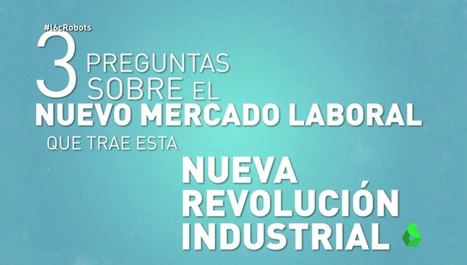
Robots, impresoras 3D e Inteligencia Artificial son los tres avances que marcan esta gran transformación que viene, por eso laSexta Columna se hace y responde a tres preguntas sobre el nuevo mercado laboral que dejará esta nueva revolución industrial.
Los robots nos han mostrado en inumerables ocasiones que pueden llegar a ser más inteligentes que los humanos y ganarnos en juegos como el ajedrez. La eterna pregunta es si son una amenaza, y la ficción muchas veces supera la realidad.
The traditional classroom works, so why change it? This is something anyone involved in leading educational change hears at some stage.
The traditional classroom, where direct instruction is the primary method of teaching, does work. It has worked for decades. It has educated people who have then changed civilization in all areas; the sciences, politics, health, industry…everywhere.
However, to imply that it should not change assumes that we have reached the peak of educational techniques; that no major improvements are possible. Just because the traditional classroom “works” doesn’t mean that it has reached a peak or an optimal level of effectiveness.
Move over humans, the robot revolution is here.Even as a debate rages worldwide over the danger technology poses to employment rates, with Microsoft founder Bill gates recently saying that robots stealing human jobs should pay income tax, the surge in their use at workplaces seems unstoppable.
According to the International Federation of Robotics’ report late last year, 2015 saw a whopping 15% increase in sales of units across the world, by far the highest level ever recorded for one year.
Precarización, desempleo y falta de libertad. La Renta Básica es una medida contra la pobreza que además nos capacita para llevar vidas más dignas, más nuestras. No es limosna, sino la garantía del derecho a la existencia.
La Renta Básica Incondicional se define por los cuatro criterios siguientes: incondicional, universal, individual y suficiente para garantizar una existencia digna y la participación en la sociedad.
Incondicional: Consideramos la Renta Básica como un derecho humano que no podrá depender de condiciones previas, ya sea la obligación de aceptar un empleo remunerado, participar en servicios a la comunidad, o comportarse acuerdo a los roles de género tradicionales. Tampoco será objeto de ingresos, ahorros o límites de propiedad.
Universal: cada persona, independientemente de la edad, ascendencia, lugar de residencia, profesión, etc. tendrá derecho a recibir esta asignación. Por tanto el objetivo es la implantación de una Renta Básica Incondicional para cada persona del planeta Tierra.
Individual: Cada mujer, cada hombre, cada niño tiene derecho a una Renta Básica de forma individual, y no en base a un hogar o núcleo familiar. La RBI será independiente de sus circunstancias: estado civil, convivencia del hogar, ingresos o propiedad de otros miembros del hogar o de la familia. Esta es la única forma de garantizar la privacidad y evitar el control sobre otros individuos. Permite que las personas tomen sus propias decisiones.
Suficiente: La cantidad debe prever un nivel de vida digno, que cumpla con los estándares culturales y sociales de la sociedad del país en cuestión. Debe evitar la pobreza material y ofrecer la oportunidad de participar en la sociedad. Esto significa que la renta neta debe como mínimo, situarse por encima de la línea de la pobreza según los acuerdos de la Unión Europea.
A decade ago, smartphones (as we know them by today's standards) didn't exist. Three decades earlier, no one even owned a computer. Think about that—the first personal computers arrived about 40 years ago. Today, it seems nearly everyone is gazing at a glowing, handheld computer. (In fact, two-thirds of Americans own one, according to a Pew Report.)
Intuitively, it feels like technology is progressing faster than ever. But is it really? According to Ray Kurzweil—yes, it absolutely is. In his book The Singularity Is Near, Kurzweil shows technology's quickening pace and explains the force behind it all.
This article will explore Kurzweil's explanation of this driving force, which he dubbed the law of accelerating returns, and the surprising implications of technology's acceleration.
El 47% de los empleos en los Estados Unidos se encontrarán en peligro de extinción en las próximos 20 años. Esta fue la conclusión de un estudio de Carl Benedikt Frey y Michael A. Osborne, de la Universidad de Oxford, que analiza un reciente artículo de The Economist .
El estudio estima cuáles trabajos –o, más bien, categorías– son más susceptibles de desaparecer del mercado laboral luego del análisis de la correlación entre los avances de la tecnología, los salarios y el nivel de educación necesaria para realizar ciertas labores.
To get content containing either thought or leadership enter:
To get content containing both thought and leadership enter:
To get content containing the expression thought leadership enter:
You can enter several keywords and you can refine them whenever you want. Our suggestion engine uses more signals but entering a few keywords here will rapidly give you great content to curate.


 Your new post is loading...