By Kevin Parr My son Mason recently turned three years old and to celebrate the fact that my wife and I made it through the first three years of his life intact, we had a cookout with friends. Fortunately for Mason, many of our friends have kids his age so he was able to celebrate, too. When toddlers get together there are times when each one is off doing his own thing and times when they all want to do the same thing at the same time. When toddlers are playing alone there is peace. When another joins in they earn the attention of nearby adults. When more than two congregate there is a sense that chaos is right around the corner. Once the screaming begins, little bodies scatter to their moms and dads and fingers point at the perceived wrongdoer. This happens because, as toddlers, they don’t know how to work together. They can learn, however. Interestingly enough, when the new school year begins, this same scenario will play out in classrooms across the country. Students will be fine working independently, but when teachers put them in groups and expect them to work together on a common task, things will break down. The teacher, wrongly assuming students are unwilling to work together rather than unable, will say things like “Solve your problem,” “Work together,” or even “You are in ___ grade now. You should be able to cooperate.” The teacher may even go as far as putting students back into rows because they do not seem ready to work in teams. Often, though, students want to work together, they just don’t know how. Fortunately, just like with Mason and his friends, all students can learn to be effective members of a team. In any academic discipline, the ability to function as a team requires a host of skills. Because teamwork skills translate across content areas and provide the foundation for learning in today’s classrooms, they demand significant attention in our classrooms. So, how can teachers support students in acquiring these skills? The answer is a simple acronym: TEAM. Teach: Teachers can best teach teamwork skills early in the year by having students practice them with activities that are independent of academic content. This way, students can practice the skills in isolation and can then apply them along with content-specific knowledge and skills when necessary. Depending on students’ ages, teachers may want to introduce one or more of the following teamwork skills during activities: developing and sharing ideas, listening, positive behavior, individual participation, and coming to consensus. Teachers should introduce these skills just like any other skill. That is, teachers should work with students to establish a common understandings of the desired skills and model examples and nonexamples before allowing students to practice on their own. Fortunately, there is no shortage of activities that will get students eager to think and work together. In addition to more well-known team-building activities, such as the “human knot,” there has recently been an influx of stand-alone team activities known as STEM activities. Everyone, Every day, Everywhere: Once students learn about and experience a functioning team, teachers should expect students—all of them—to demonstrate teamwork skills every hour of every day no matter where they are. Sometimes teachers downplay the ubiquity of teamwork by saying things like “We are going to do a teamwork activity so I expect to see x, y, and z.” Instead, teamwork skills should pervade every activity—from the moment they wake up to the moment they go to bed. In fact, it is possible for students to learn more about what it means to work as a team outside of the classroom than inside. For example, recess is an important time for students to work on teamwork skills, and teachers can further emphasize these skills by debriefing with students afterward. Likewise, afterschool activities such as sports teams and clubs are also potential outlets for students to strengthen their teamwork skills. Ultimately, students need to actively practice working as a team in the classroom so that they can continue using their teamwork skills in all other aspects of their lives. Assess: Just like with any content that is taught, teachers should regularly assess students’ teamwork skills to determine how effective their instruction is and what needs to be done to ensure every student grows as a successful team member. If regular assessment is overlooked, teachers risk falling back on the assuming-and-blaming game that this protocol attempts to avoid. Although any combination of assessment methods (self-reflection, teacher observation, peer assessment, etc.) that informs instruction and helps students grow as members of a team accomplishes the goal, I encourage teachers to create a rubric with their students help guide the conversation. I also encourage teachers to be flexible with the rubric, as new skills or increased expectations of skills may need to be added throughout the year. Modify: Even after all their efforts teaching teamwork skills, teachers will still have students who struggle in team settings or with specific skills. When such issues arise, teachers tend to try to solve them by moving the problematic student to a new group. Instead, teachers should modify their instruction and levels of support to ensure that each student is as successful a team member as possible. On the other hand, if the majority of the class struggles with a certain aspect of teamwork, teachers can then look for whole-group activities that emphasize a particular skill. As classrooms and the way students learn become more collaborative in nature, teachers need to respond accordingly by actively teaching the skills necessary for students to be successful members of a team. Taking time at the beginning of the year to allow students to practice working as a team with activities that are independent of academic content is simple and beneficial. If students don’t learn teamwork skills, teachers risk recreating the scene of a three-year-old’s birthday party. As an added bonus, these types of collaborative activities also help teachers get to …
Tim and Scott have a whirlwind discussion with the Cool Cat Teacher herself, Vicki Davis. Vicki is the cofounder of the Flat Classroom, and one of education'...
"Teaching is simultaneously one of the hardest and one of the most rewarding jobs in the world. We often say that students make it worth it, but there’s something else that can make or brea
Research shows that the most common problems English language learners is that of understanding meaning of academic texts. Teachers need to ensure they are also helping their students making important literary and deeper comprehension connections....
I spent last week learning about transformational coaching with educators from all over our country, plus one participant from Kenya! Some fifty teacher-leaders, coaches, and administrators came to Oakland and participated in my "Art of Coaching" institutes and dug deep into the what, how and why of transformational coaching. I love facilitating these workshops and always come away with a deeper understanding of coaching because of the questions that are asked, the connections that are made, the ways in which I'm pushed to think and articulate and share. So first--thank you to all who participated! Spending so much time this...
How do we develop the capacity to envision, inspire, create, become trusted and have integrity in our work? These are personal qualities that we alone can develop within ourselves.
Regardless of your content area, the standard you are covering on a particular day, and the abilities of your students, there’s an unwritten set of separate skills all effective teachers hope to instill in their students day after day. Skills such as grit, perseverance, and collaboration are all essential to student success, but how do you enable your students to practice them? In particular, how do you support positive collaboration in your classroom?
Diane Staehr Fenner, President of DSF Consulting, explains that all teachers should share the responsibility and the joy of teaching ELs and gives concrete s...
Research shows that the most common problems English language learners is that of understanding meaning of academic texts. Teachers need to ensure they are also helping their students making important literary and deeper comprehension connections....
In order for teachers to encourage student innovation, they need the freedom to be innovative as well. Eight ways school leaders can support faculty who want to develop engaging curriculum.
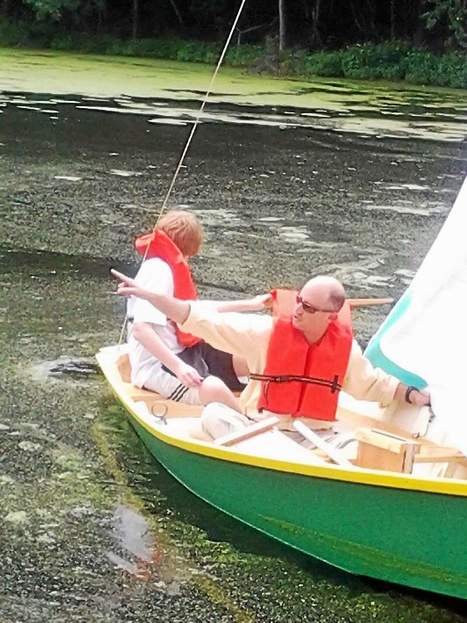
HAMDEN >> Sailing on a boat at a country club is not your typical summer school assignment, but two teachers from Hamden Middle School are making it work.
By Sean Slade Play is what humans do; but there’s an inaccuracy in our perception of it. We consider play to be something trivial, something unimportant. We dismiss things as being easy when we use the common phrase, “that’s child’s play.” When we think of ‘playful’ as if it were the opposite of ‘serious,’ or when we dichotomize work and play, we create a world where possibility is limited and fun seems inconsequential.
From the pedagogy of educational theorists and design thinkers to the passion of tinkers and hobbyists, the Maker movement finds its way into mainstream education.
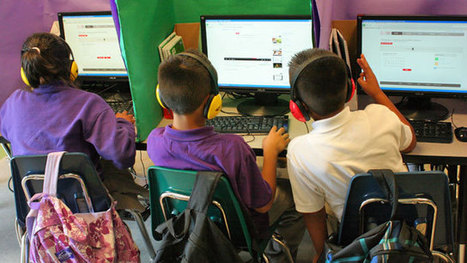
The way kids interact with computers and software -- and the support they get from adults -- is more important to improve learning outcomes than merely having access to the technology, study finds.
Collaborative learning should be an essential element for world language teachers who want their students to understand, enjoy, and use that new language.
To get content containing either thought or leadership enter:
To get content containing both thought and leadership enter:
To get content containing the expression thought leadership enter:
You can enter several keywords and you can refine them whenever you want. Our suggestion engine uses more signals but entering a few keywords here will rapidly give you great content to curate.


 Your new post is loading...