Eleven-year-old Jolia Bossette on being a Black kid in America.
Welcome to our first-ever week of programming for kids!
The killings of George Floyd, Breonna Taylor, and hundreds of other Black Americans at the hands of police officers have inspired protests across the country and around the world.
The news coverage has been impossible for most of us to ignore, and it begs the question: How are kids, especially Black kids, processing this reality? How do they make sense of these deaths and the systemic factors that made them possible?
In June of 2020,11-year-old Californian Jolia Bossette decided to use her fifth-grade graduation speech as an occasion to give voice to her thoughts and feelings. In her speech, she reminisced about how she was "the cutest thing," as a toddler and asked, "But when did I stop being cute and start being scary?"
"Does my dad scare you? Does my mom scare you? Does my auntie scare you? Because let me tell you something: We are not scary."
We designed these episodes for kids ages 9-13, but we hope all of our audience enjoys them! You can find all of our kids videos here: https://bit.ly/3hLA3Ro
You may notice that comments are disabled on our kids’ videos. This is a default function of YouTube for kids' programming.
If you’re a parent, educator, or a kid at heart, please sign up for our newsletter for updates on all of our upcoming kids’ programming at Vox, from podcasts to videos to new shows: http://www.vox.com/kids
Through the Authentic Youth Engagement in Policy Project, Child Trends and the project’s Research Group composed of youth and adult representatives tested and refined existing models of youth engagement in the policy process, resulting in the Authentic Youth Engagement in Policy Framework (“the...
Research already documents rising levels of emotional and mental health problems among young people and suggests that concern about climate change might be a factor in this negative trend. Youth’s understanding of climate change is reflected in how they feel and perceive their lives.
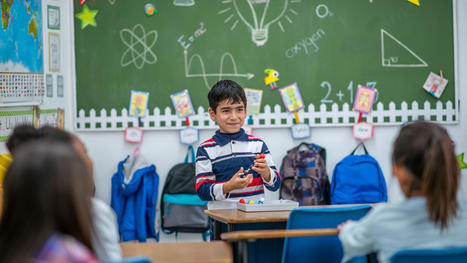
Project-based learning allows very young students to explore, research, and grow their knowledge. Presenting their work to the community validates their efforts.
Racial stereotypes and myths persist only with our continuous active consent—in the stories we teach and tell, and those we don’t. And the price we pay for this is monumental.
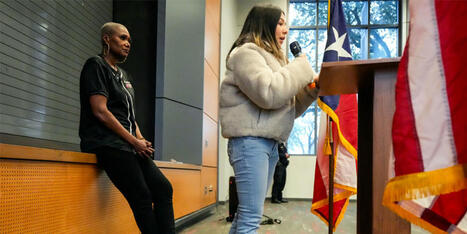
A youth-led town hall to discuss some of the challenges youth are currently facing and discuss possible solutions to alleviate some of these challenges.
This policy memo is centered on student recommendations put forth at the conclusion of a six-week summer institute between the Cuba Independent School District and the University of Colorado Boulder. Students were asked to engage with different research mediums in order to better understand the context of education, its history, and the present equity goals within Cuba, New Mexico. This policy memo aims to be a launching point for future debate and discussion in Cuba ISD, and to provide district and state leaders a succinct summary of recommendations directly from their own student researchers.
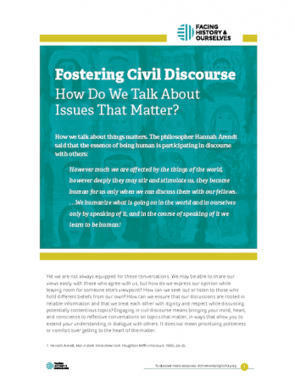
The ideas and tools in this guide will help you prepare students to engage in reflective conversations on topics that matter, whether you are in a remote, hybrid, or in-person setting.
Anyone who works, or lives with kids, will have strong opinions on the ways they’re taught. Jal Mehta presents his unexpected findings after leading a nationwide project researching the best ways children learn. Using stunning animations from Lisa Arora and Shawn Wagara, Jal reveals that the answers to learning are hidden in plain sight. Jal Mehta is a Professor at the Harvard Graduate School of Education. More info at https://www.gse.harvard.edu/faculty/jal-mehta
We identify strategic collaborations with university-based researchers, educational research firms, and like-minded non-profits to establish strong partnerships with districts, schools, and teachers. Below are collections of publications resulting from our research, split into three categories: research briefs, white papers, and published articles. You may also browse the publications by tag.
Student voice practices the opportunities students have to participate in and influence the educational decisions that shape their lives and the lives of their peers.
When it comes to measuring student achievement most schools rely on standardized test scores. “Street Data: A Next-Generation Model for Equity Pedagogy and School Transformation,” by Shane Safir and Jamila Dugan offers asset-based strategies for centering students beyond their academic gaps.
What messages do youth voice policies send to students? Are young people viewed primarily as consultants or collaborators? How can you go from merely informing youth of existing policies, to leading together with shared ownership between students and adult staff?View our Student Voice Continuum to see how you can level up student voice in your work -- building engagement and racial equity as you move towards student governance.
Imagine how schools might be different if educators co-crafted their content, policies, procedures, and expectations with the young people they teach. Critical pedagogy centers those who are experiencing a problem as experts on developing a solution — essentially creating a collaboration between those impacted by a problem and those with the power to change the policies perpetuating it. Youth Participatory […]
Project-based learning is a dynamic classroom approach in which students actively explore real-world problems and challenges and acquire a deeper knowledge.
To get content containing either thought or leadership enter:
To get content containing both thought and leadership enter:
To get content containing the expression thought leadership enter:
You can enter several keywords and you can refine them whenever you want. Our suggestion engine uses more signals but entering a few keywords here will rapidly give you great content to curate.


 Scoop.it!


 Your new post is loading...