Social and emotional skills and competencies are essential for young people to succeed in school, work, and life. In the past decade, there has been an increasing number of studies, systematic reviews, meta-analyses, and syntheses that focus on the key role that social and emotional learning (SEL) plays in the success and well-being of children and youth. AIR, supported by the Robert Wood Johnson Foundation, designed and executed two related activities to explore and describe SEL for practitioners and researchers.
This brief by Harvard’s Easel Lab describes features and best practices of effective social and emotional learning programs and offers a set of recommendations.
Classroom management is a fundamental element of a strong learning environment, but it has been a struggle at MLK Middle School. Principal Michael Essien is
Studies show that sustained and well-integrated social and emotional learning (SEL) engages students and improves achievement. Explore classroom practices that make up the most effective SEL programs.
When a preschooler repeatedly acts out — ignoring directions, throwing, hitting — teachers may reach a breaking point, where bonds with that child weaken or don’t get established at all. Teachers may encourage less, berate more, or ignore the child, even though this is the very student who often needs the most support.
A daily meeting provides space for students to reflect on their behavior and find positive ways to resolve conflicts. Pearl-Cohn Entertainment Magnet Hig
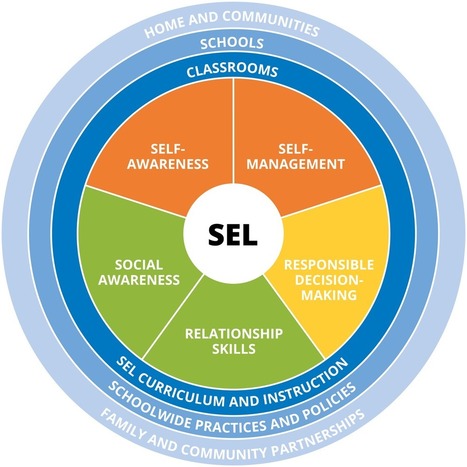
You’ve read the articles about the importance of social and emotional learning , or SEL, and you believe that a nurturing environment, high expectations and meaningful participation are keys to students’ academic success. You are familiar with CASEL’s five competencies: self-management, self-awareness, responsible decision-making, relationship management and social awareness. Now what? It is time for your belief to shape your actions. Here are some practical tips for creating and sustaining buy-in for yourself and others in your organization.
Restorative practices promote strengthened relationships and community building while providing meaningful and supported opportunities for students to be held accountable and take responsibility for making their school community a safe and nurturing environment.
As the benefits of social-emotional learning (SEL) have become clear, schools have seen a blossoming of programs that aim to equip students with fundamental executive function, emotional, and interpersonal skills. But with so many areas of focus under the SEL umbrella, how can system leaders choose which program will be effective in their specific settings?
Some students can feel so difficult to work with that the challenge begins to strain a teacher's empathy. Alex Shevrin offers some tips for how she shifts her
Educators across the country have boosted student performance by weaving social-emotional lessons—such as regulating emotion, accepting mistakes and coping with stress—into everyday instruction.
Public schools have not adapted to address students’ mental, social, and emotional barriers to learning, and children of color are disproportionately affected.
To get content containing either thought or leadership enter:
To get content containing both thought and leadership enter:
To get content containing the expression thought leadership enter:
You can enter several keywords and you can refine them whenever you want. Our suggestion engine uses more signals but entering a few keywords here will rapidly give you great content to curate.


 Your new post is loading...


 Scoop.it!