

We must challenge our unconscious bias against ageing.Here are 10 steps for happiness in later life...


|
Revalued
How to enjoy every phase of life, particularly post-retirement: health, finances, culture, entertainment and intellectual activity. See my website at www.revalued.com.au for more succinct guides and charts to support your relationship with ageing. Celebrate your own life before others have to do it for you! Curated by Susan Myburgh |
 Your new post is loading...

|
Scooped by
Susan Myburgh
July 24, 2020 5:17 AM
|
 Scoop.it!
We must challenge our unconscious bias against ageing.Here are 10 steps for happiness in later life...
|
|
Scooped by
Susan Myburgh
July 24, 2020 5:17 AM
|
Scoop.it!

Life, an international, peer-reviewed Open Access journal.
|
|
Scooped by
Susan Myburgh
July 24, 2020 5:16 AM
|
Scoop.it!

Read about ARU's research into health and wellbeing in later life.
|
|
Scooped by
Susan Myburgh
July 24, 2020 5:16 AM
|
Scoop.it!
Clinical science Prevalence and incidence of age-related macular degeneration in Europe: a systematic review and meta-analysis http://orcid.org/0000-0002-9771-3431Jeany Q Li1, Thomas Welchowski2, Matthias Schmid2, Matthias Marten Mauschitz1, Frank G Holz1, Robert P Finger1 Department of Ophthalmology, University of Bonn, Bonn, Germany Department of Medical Biometry, Informatics and Epidemiology, University of Bonn, Bonn, Germany Correspondence to Professor Robert P Finger, Department of Ophthalmology, University of Bonn, Bonn 53127, Germany; Robert.Finger{at}ukbonn.de Abstract Background/Aims Age-related macular degeneration (AMD) is the main cause of visual impairment and blindness in Europe. A further increase in the number of affected persons is expected and current European data are needed for healthcare resource planning. Methods We performed a systematic review on the prevalence and incidence of AMD based on the meta-analysis of observational studies in epidemiology guideline. Meta-analysis and meta-regression on time-trends, age, countries, regions, sex and classification systems for AMD were performed. Based on Eurostat population projections, the pooled prevalence estimates were extrapolated to the year 2050. Results Twenty-two prevalence and four incidence studies published since 1996 were included. Our pooled prevalence estimate of early or intermediate AMD and any late AMD in those 60 years and older was 25.3% (95% CI 18.0% to 34.4%) and 2.4% (95% CI 1.8% to 3.3%), respectively. A significant increase in prevalence was seen in older populations. In the meta-analysis of incidence, the pooled annual incidence of any late AMD was 1.4 per 1 000 individuals (95% CI 0.8 to 2.6). Overall, the number of EU inhabitants with any AMD is expected to increase from 67 to 77 million until 2050. Incident late AMD is estimated to increase from 400 000 per year today to 700 000 per year in 2050. Conclusions Approximately 67 million people in the EU are currently affected by any AMD and, due to population ageing, this number is expected to increase by 15% until 2050. Monitoring and treatment of people with advanced disease stages will require additional healthcare resources and thorough healthcare planning in the years and decades to come. View Full Text Statistics from Altmetric.com View Full Text Footnotes Correction notice This paper has been amended since it was published online. Unfortunately, the authors have become aware of an error in their abstract, which reads: 'Overall, the number of EU inhabitants with any late AMD is expected to increase from 67 to 77 million until 2050.', but it should read '… with any AMD is expected'. We are happy to update the manuscript. Contributors RPF conceived and designed the study. JQL, Julie Letow (JLe, Department of Ophthalmology, University of Bonn, Germany) and Caroline Wolpers (CW, Department of Ophthalmology, University of Bonn, German) undertook the literature search, extracted data and performed quality assessment of the included studies. JQL, TW and MS performed the data analysis. JQL, TW, MS, FGH and RPF interpreted data. JQL, TW, MS and RPF wrote the first draft of the report. RPF as guarantor accepts full responsibility for the work and the conduct of the study, had access to the data and controlled the decision to publish. All authors provided critical comments and approved the final version. Funding European Society of Retina Specialists (EURETINA) project grant, the Jackstaedt Stiftung and the Else Kroehner Fresenius. Disclaimer None of the funders were involved in the study design, in the collection, analysis and interpretation of data, in the writing of the report or in the decision to submit the article for publication. All researchers confirm their independence from funders. All authors, external and internal, had full access to all of the data (including statistical reports and tables) in the study and can take responsibility for the integrity of the data and the accuracy of the data analysis. The sponsor of the study had no role in design and conduct of the study; collection, management, analysis and interpretation of the data; preparation, review or approval of the manuscript and decision to submit the manuscript for publication. The corresponding author had full access to all the data in the study and had final responsibility for the decision to submit for publication. Competing interests None declared. Patient consent for publication Not required. Ethics approval Ethics committee approval or written informed consent was not required, as our review relied entirely on publicly available published data. Provenance and peer review Not commissioned; externally peer reviewed. Data availability statement Data are available on request. Request Permissions If you wish to reuse any or all of this article please use the link below which will take you to the Copyright Clearance Center’s RightsLink service. You will be able to get a quick price and instant permission to reuse the content in many different ways. Copyright information: © Author(s) (or their employer(s)) 2019. No commercial re-use. See rights and permissions. Published by BMJ. Linked Articles Editorial Tiarnan D Keenan Emily Y Chew British Journal of Ophthalmology 2020; 104 449-450 Published Online First: 14 Feb 2020. doi: 10.1136/bjophthalmol-2020-315890 Read the full text or download the PDF: Subscribe Log in
|
|
Scooped by
Susan Myburgh
July 21, 2020 8:05 AM
|
Scoop.it!

Dry Eye Syndrome occurs when there is a lack of moisture and lubrication on the front surface of the eye. This results in a range of symptoms listed below: - Dry sensation - Gritty sensation - Tired eyes - Sore eyes - Burning sensation - Red eyes - Blurred vision - Aching sensation - Sensitivity to bright light - Watery eyes - As a result of LASIK or cataract surgery Dry eye syndrome is one of the most common eye conditions worldwide. The tears are made up of 3 parts: an oily layer, a watery layer and a mucous layer. If any of these layers are not working properly, the result is a dry eye. The oily part is produced in the Meibomian glands which lie on the eyelid margin. If they do not produce enough oil, or the oil is a thick consistency, (Meibomian gland dysfunction), the tears evaporate off the surface of the eye too quickly. This is considered to be a significant factor in dry eye syndrome. There are a number of reasons that can increase your risk of dry eye: - Computer / smartphone / hand held digital device use - Contact lens wear - Ageing - Menopause - Decreased indoor humidity - Dry and windy outdoor environments - Frequent flying - Smoking - Systemic diseases eg. Diabetes, rheumatoid arthritis Dry eye is a condition that requires good management as there is no cure. This is why Scartho Eyecare offers a range of Dry Eye Management Packages. DRY EYE ASSESSMENT Scartho Eyecare Dry Eye Assessment involves an initial patient questionnaire to establish an individual’s dry eye problems. An assessment is then made on the CSO Antares machine. A grading of how red the front of the eye is made. The Meibomian glands are viewed under ultra-violet light which allows the machine to analyse the condition of the glands. The tear meniscus is measured, which is the thin strip of tear fluid on the lower lid margin. The lower the height of the tear meniscus, the greater the likelihood of dry eye. Tear Break Up Time is measured using the non-invasive Placido disc technology. This is a way of determining the tear film stability and checking for evaporative dry eye. DRY EYE TREATMENT Scartho Eyecare are proud to be able to offer the Espansione My-Mask Therapy for Meibomian gland dysfunction. It uses light modulation technology to gently stimulate the Meibomian glands. Both eyelids are treated together in a safe, controlled environment. Treatment usually takes approximately 20 minutes. PRICES Initial assessment and one Espansione My-Mask Treatment £55 After the initial assessment and treatment we can choose which package from the options below best suit your eyes. BRONZE PACKAGE 1 Assessment per year. + 1 Treatment at 1 week + 1 Treatment at 1 month + 1 Treatment per year thereafter + 1 Blephasol bottle per year + 1 Hycosan bottle per year + 5% discount on extra dry eye products purchased £7.50 per month SILVER PACKAGE - MOST POPULAR 2 Assessments per year. + 1 Treatment at 1 week + 1 Treatment at 1 month + 1 Treatment at 6 months + 1 Treatment every 4 months thereafter + 1 'The Eyebag' + 2 Blephasol bottle per year + 2 Hycosan bottle per year + 10% discount on extra dry eye products purchased £16.00 per month GOLD PACKAGE 2 Assessments per year. + 1 Treatment at 1 week + 1 Treatment at 1 month + 1 Treament at 3 months + 1 Treatment every 2 months thereafter + 1 'The Eyebag' + 4 Blephasol bottle per year + 4 Hycosan bottle per year + 15% discount on extra dry eye products purchased £23.00 per month
|
|
Scooped by
Susan Myburgh
July 21, 2020 8:04 AM
|
Scoop.it!
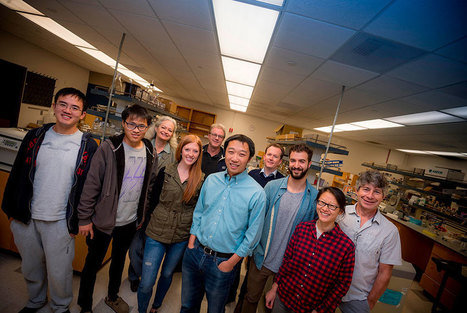
Molecular biologists and bioengineers at the a href= https://ucsd.edu/ target= _blank University of California San Diego /a have unraveled key mec...
|
|
Scooped by
Susan Myburgh
July 21, 2020 7:59 AM
|
Scoop.it!

Key statistics Disability In 2018 there were 4.4 million Australians with disability, 17.7% of the population, down from 18.3% in 2015. The prevalence of disability increased with age - one in nine (11.6%) people aged 0-64 years and one in two (49.6%) people aged 65 years and over had disability. Disability prevalence was similar for males (17.6%) and females (17.8%). 5.7% of all Australians had a profound or severe disability. Almost one-quarter (23.2%) of all people with disability reported a mental or behavioural disorder as their main condition, up from 21.5% in 2015. Of those with disability (living in households): one-third (33.4%) of those aged 15 years and over had completed year 12 or equivalent, up from 31.4% in 2015 one in six (16.1%) aged 15 years and over had a Bachelor degree or above, up from 14.9% in 2015 37.9% of those aged 15-64 years said their main source of personal income was a government pension or allowance, down from 41.9% in 2015 59.7% of people had their need for assistance fully met, down from 62.1% in 2015 one in 10 (9.6%) aged 15 years and over had experienced discrimination in the previous 12 months because of their disability, up from 8.6% in 2015 labour force participation for those aged 15-64 years has remained stable since 2015 at 53.4%, in contrast to an increase in the participation rate for people without disability (84.1%) 11.4% of those with a profound or severe disability (aged 15-64 years) were working full-time up from 7.9% in 2015. Older people One in every six Australians (15.9% or 3.9 million people) was aged 65 years and over (up from 15.1% in 2015). Most older Australians (persons aged 65 years and over) were living in households (95.3%), with 4.6% living in cared accommodation. Half (49.6%) of all older Australians had disability (similar to 2015). 1.3 million older Australians living at home needed some assistance with everyday activities, and of these, almost two-thirds (65.9%) had their need fully met (down from 69.2% in 2015). Two-thirds (68.1%) of older Australians (who reported income) lived in a low income household (a household earning less than $756 per week). Almost all older Australians had participated in social activities at home (97.4%) or outside their home (94.4%) in the previous three months. Carers There were 2.65 million carers, representing 10.8% of all Australians (down from 11.6% in 2015). Females were more likely to be carers (12.3% of all females) than males (9.3% of all males). There were 235,300 young carers (under the age of 25), down from 274,700 in 2015. 3.5% of all Australians were primary carers. Seven in ten (71.8%) primary carers were women. Over one-third (37.4%) of primary carers had disability, twice the rate of non-carers (15.3%). The most common reason primary carers gave for taking on a caring role was a sense of family responsibility (70.1% of all primary carers). Half (50.2%) of all carers lived in a household in the lowest two equivalised gross income quintiles, twice that of non-carers (25.6%).
|
|
Scooped by
Susan Myburgh
July 12, 2020 6:26 PM
|
Scoop.it!

Chili peppers have been used to help treat numerous ailments throughout history...
|
|
Scooped by
Susan Myburgh
July 12, 2020 6:25 PM
|
Scoop.it!

The more people visit a nursing home, the more likely they are to think life there is lonely and unhappy.
|
|
Scooped by
Susan Myburgh
July 12, 2020 6:25 PM
|
Scoop.it!

from The Conversation-- this post authored by Marty Parker, Keele University; Carol Jagger, Newcastle University; Milica Blagojevic-Bucknall, and Ross Wilkie, Keele University...
|
|
Scooped by
Susan Myburgh
July 12, 2020 6:23 PM
|
Scoop.it!

Much is known today about the strategies to live longer, healthier lives. | What is Recent Research Telling Us about Successful Aging?Friday, July 10, 2020 on Living to 100 Club | VoiceAmerica - The Leader in Internet Media...
|
|
Scooped by
Susan Myburgh
July 8, 2020 11:17 PM
|
Scoop.it!

Having high selenium levels is linked to a longer, healthier life, says a recent study published in The Journal of Nutrition, Health & Aging.The study used data from an earlier research known as the ilSIRENTE Study, which involved nearly 350 men and women aged 80 years and older who live in...
|
|
Scooped by
Susan Myburgh
July 8, 2020 11:15 PM
|
Scoop.it!

In the beauty and skin health industry, the majority of skin care products and tips are directed toward and depicted by women. However, as human beings we all have skin and a responsibility to take care of it in order to look and feel our best.
|
|
Scooped by
Susan Myburgh
July 8, 2020 11:14 PM
|
Scoop.it!

The purpose of this study is to examine the relationship between perceived ageism and depression in later life and to clarify the mechanism underlying this relationship by examining the mediating e...
|
|
Scooped by
Susan Myburgh
July 8, 2020 11:13 PM
|
Scoop.it!

DEMENTIA symptoms include difficulty concentrating, mood changes, and having slower thoughts. But, you could also be at risk of Alzheimer's disease if you notice a subtle change to the way you walk. When should you consider speaking to a doctor about Alzheimer's disease symptoms?
|
|
Scooped by
Susan Myburgh
July 8, 2020 11:12 PM
|
Scoop.it!

From medical alert systems to smart assistants, we'll walk you through all tech options that can help you keep a digital eye on your loved one.
|
|
Scooped by
Susan Myburgh
July 8, 2020 11:12 PM
|
Scoop.it!

Misconceptions can keep you from getting proper care...
|
|
Scooped by
Susan Myburgh
July 8, 2020 11:11 PM
|
Scoop.it!

Start your day the right way and it will end the right way. My routine consist of giving thanks and prayer each morning before I run out the door to the gym six days a week.On the seventh day, like…...
|
|
Scooped by
Susan Myburgh
July 8, 2020 11:11 PM
|
Scoop.it!

A naturally occurring polyphenol in red grapes and berries may provide a prophylactic benefit for preventing bone loss in postmenopausal women without osteoporosis, according to data published in the Journal of Bone and Mineral Research.
|
|
Scooped by
Susan Myburgh
July 8, 2020 11:11 PM
|
Scoop.it!

Blood tests can help to detect your present health and it is important to perform them with GP supervision. Book a private GP appointment and improve your overall health.
|
|
Scooped by
Susan Myburgh
July 8, 2020 11:10 PM
|
Scoop.it!

Led by Julia Abbott, Certified Yoga Instructor and Mindfulness Practitioner, this webinar will cover various forms of self-care and strategies to connect…...
|
|
Scooped by
Susan Myburgh
July 8, 2020 11:09 PM
|
Scoop.it!

The suspension of most of the non-emergency services at public hospitals during the COVID-19 outbreak is a source of worries to senior citizens with chronic illnesses, as they have not been able to attend scheduled medical appointments. A recent survey by Lingnan University (LU) reveals that over 60 per cent of senior citizens are willing or very willing to try online medical consultations when the relevant technology is fully developed. The online survey was conducted by the Asia-Pacific Institute of Ageing Studies (APIAS) of LU in May 2020. With 638 valid responses from elderly residents aged 55 years or above, the study aimed to assess their perceptions of the COVID-19 outbreak and telemedicine service. Prof Huang Genghua, Research Assistant Professor and Education Officer of APIAS, who was responsible for the survey, said that most of the elderly citizens interviewed were aware of the severity of the outbreak. Over 80 per cent of respondents (83.7%) said the COVID-19 outbreak was much more severe than the SARS epidemic in 2003 (Figure 1). More than 55 per cent (58.15%) considered they were at moderate or high risk of infection. According to the survey, about 70 per cent of the elderly interviewed have paid more attention to their health conditions during the outbreak (Figure 3). Over 60 per cent of them (61.3%) said they are willing or very willing to try online medical consultations when relevant technology is fully developed (Figure 4). Prof Huang was not surprised that most of the respondents expressed willingness to try online medical consultation. He explained the improved information flow in the community has increased anti-epidemic awareness among senior citizens who, as a result try to stay away from high-risk areas, particularly hospitals and clinics. In addition, although the survey found more than 70 per cent of the elderly interviewed think Hong Kong has done a “good job” in fighting the coronavirus, over 40 per cent estimated the epidemic will last for over a year. The use of telemedicine has therefore become a viable option for elderly patients with chronic illnesses requiring regular follow-up medical consultations. The research team also found that the willingness to undergo online medical consultations may vary. For instance, respondents with a tertiary or above education are more willing to try telemedicine than those with a secondary or below education (70.6%vs 55.2%) (Figure 5). Elderly groups living in owner-occupied flats, including private housing and home ownership scheme are also more willing to use online services than their counterparts living in rental and public housing (65.7% vs 47.4%) (Figure 6). Prof Joshua Mok Ka-ho, Vice-President of LU, said that perceptions such as “older people are reluctant to accept new things or adopt new technologies” are already outdated, and that a high proportion of baby boomers born between 1940s and 1960s have benefited from Hong Kong’s rapid economic development. Many of them received a formal education and accept new technological products more easily. Prof Mok added Hong Kong is lagging behind Europe, America and Mainland China in the development of telemedicine, and that as innovation and technology are priority industries here, Hong Kong must apply new technologies to help solve problems and ease the healthcare burden imposed by the aging local population. “The COVID-19 pandemic offers an opportunity for Hong Kong to develop telemedicine platforms in the forthcoming 5G era. The Smart City Blueprint for Hong Kong was published by the HKSAR Government in December 2017, and its vision is to build Hong Kong into a world-class smart city. Developing smart healthcare must be a key component in the building of a smart city,” Prof Mok observed. Figure 1 Figure 2 Figure 3 Figure 4 Figure 5 Figure 6 Media Report Ta Kung Pao (Chinese only) Think HK (Chinese only) Tap 2 World (Chinese only) Beijing - Hong Kong Academic Exchange Centre (Chinese only) Sky Post (Chinese only) Lion Rock Daily (Chinese only) healthyD (Chinese only)
|
|
Scooped by
Susan Myburgh
July 8, 2020 11:07 PM
|
Scoop.it!

A Baby Boomer Guide to Fitness by Robert Bresloff [VIDEO/BOOK]. The Baby Boomer's Guide to Fitness will attempt to teach you proper form and the proper progression of exercise done correctly.
|
|
Scooped by
Susan Myburgh
July 8, 2020 11:07 PM
|
Scoop.it!

Innovative technologies offer potential benefits for the health and care needs of an ageing population, but the processes by which these innovations are developed and implemented are not well under...







