With its complex interweaving of symbols, structure, and meaning, human language stands apart from other forms of animal communication. But where did it come from? A new paper suggests that researchers look to bird songs and monkey calls to understand how human language might have evolved from simpler, preexisting abilities.
Does anyone still say "full of beans"? The phrase is supposed to describe someone who's upbeat and energetic. Maybe we can revive the expression by attaching it specifically to coffee beans, as in, "I just had a double-shot cappuccino and boy, oh boy am I full of beans!"
Cognitive scientists have good news for linguistic purists terrified about the corruption of their mother tongue.Using an artificial language in a carefully controlled laboratory experiment, a team from the University of Rochester and Georgetown University has found that many changes to language are simply the brain's way of ensuring that communication is as precise and concise as possible.
Most people learn generic language by the time they enter preschool. New research suggests that hearing generic language that describes people, like "girls cry, boys don't" can act a foundation for a child to learn stereotypes and cultural biases.
A robot analogous to a child between 6 and 14 months old can develop rudimentary linguistic skills through interaction with a human participant, as reported June 13 in the open access journal PLoS ONE.
At Discover Magazine, Veronique Greenwood has a really interesting story about a mathematician who is helping to preserve Scottish Gaelic. How? The researcher, Anne Kandler, has put together some equations that can help native language supporters target their programs and plan their goals.
Innovative use of language, a firm grasp of technology, and a thirst for unusual words are just some of the findings revealed about how children use language according to new Oxford University Press (OUP) research.
A new study published in Science by Carnegie Mellon University's Charles Kemp and the University of California at Berkeley's Terry Regier shows that kinship categories across languages reflect general principles of communication. The same principles can potentially be applied to other kinds of categories, such as colors and spatial relationships. Ultimately, then, the work may lead to a general theory of how different languages carve the world up into categories.
The words we pay the least attention to in conversation--connectors like 'the', 'this', 'there', 'and' and 'that'--reflect our sexual desire and our place in society, says U of Texas psychologist James Pennebaker.
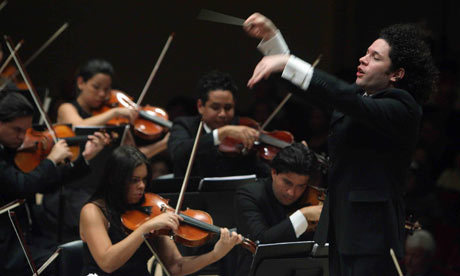
Musicians execute their performances better when the non-verbal sensorimotor communication between conductor and musician is maximized, according to research published May 9 in the open access journal PLoS ONE.
People of all ages and cultures gesture while speaking, some much more noticeably than others. But is gesturing uniquely tied to speech, or is it, rather, processed by the brain like any other manual action?
Theoretical physicist, Leonard Mlodinow appeared on the Dylan Ratigan show today to discuss his new book Subliminal: how your unconscious mind rules your behavior.
WHERE do new words come from? On Twitter at least, they often begin life in cities with large African American populations before spreading more widely, according to a study of the language used on the social network.
Your personality is revealed in the way you speak, according to new research. Introverts tend to use more concrete words and are more precise, in contrast to extraverts, whose words are more abstract and vague.
Robert Titzer, an educator with a doctorate in human performance from Indiana University, and his company claimed that more than a million families successfully used the “Your Baby Can Read” program and that they had studies to back up these claims. The FTC on the other hand says those studies were flawed.
By using language to help us reflect on positive ideas and emotions, we can enhance our overall well being, and we improve the functioning of our brain.
Sign language can greatly improve the communication capability of hearing-impaired people, but there’s still a major barrier in that most people don’t understand it. New prototype gadgets could change that, by automatically translating hand motions into audible speech that a non-signing person can interpret.
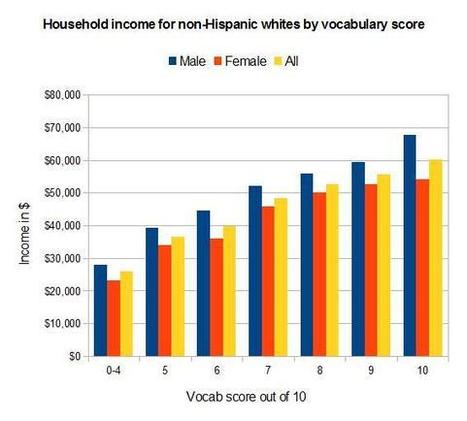
For all of our capacity for rational, analytical thought, we can have different feelings about the same thing—even make different decisions about it—depending on the language used to talk about it.
There are more facets to the mind-music connection than there are notes in a major scale, but it's fascinating to zoom in on a few to see the extraordinary affects music can have on your brain.
Every time the results of international test scores in mathematics are released, children from the United States usually perform dismally compared to children from other nations, particularly those from Asia. Differences in classroom instruction and curriculum may be partly to blame. But cultural differences in computational ability may have their roots in the words that different cultures use to represent numbers.
Evidence for a forgotten ancient language which dates back more than 2,500 years, to the time of the Assyrian Empire, has been found by archaeologists working in Turkey.
The conceptual metaphor explanation is transformative—it flies in the face of the accepted idea that metaphor is just a linguistic device based on similarity. In an instant, it made us rethink 2000 years of received wisdom.
To get content containing either thought or leadership enter:
To get content containing both thought and leadership enter:
To get content containing the expression thought leadership enter:
You can enter several keywords and you can refine them whenever you want. Our suggestion engine uses more signals but entering a few keywords here will rapidly give you great content to curate.


 Your new post is loading...