To conclude, research conducted in recent decades has taught us that many of the high-level functions that were traditionally associated with consciousness can occur nonconsciously … for example, learning, forming intuitions that determine our decisions, executive functions, and goal pursuit.
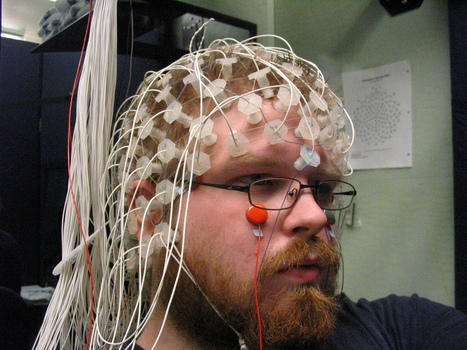
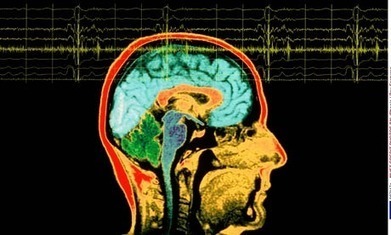
Earlier this month, some of the leading scientists from around the world congregated at the Hotel Du Vin in Cambridge to discuss the evidence that has amassed over the years. The experts reached a unanimous decision that animals – specifically mammals and birds – are in fact conscious beings. Through advancements in brain imaging techniques such as fMRI and EEG machines, the scientists concluded that animals show a sufficient degree of characteristics that indicate they are not as non-human as some had believed. The official decision was reached late into the night after the Francis Crick Memorial Conference on July 7th.
Organized by Philip Low, CEO of NeuroVigil and inventor of the iBrain, the group consisted of 25 of the planet’s top minds on the mind, including honorary guest Stephen Hawking. The scientists discerned the key differences in human and animal brains, mainly found in the frontal cortex, do not play a role in the phenomenon we associate with consciousness. The decision does not in any sense define what consciousness is, which will be a debate that continues to rage on. But moving forward, there are many consequences to this finding that will need to be addressed as we look to develop a more humane relationship with animals.
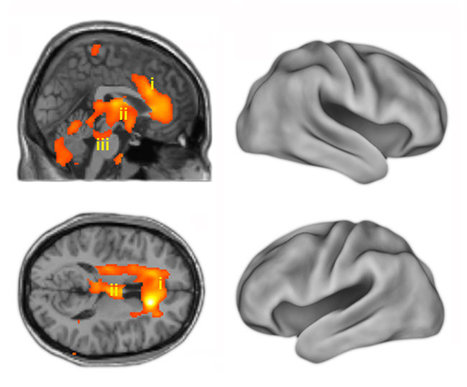
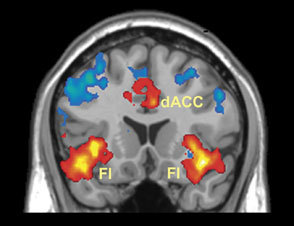
A study from Massachusetts General Hospital (MGH) researchers finds that a structure deep within the brain, believed to play an important role in regulating conscious control of goal-directed behavior, helps to optimize behavioral responses by predicting how difficult upcoming tasks will be. The report is receiving advance online publication in Nature.
According to a recent wave of books on developments in neuroscience, just about everything we thought we knew about ourselves is wrong. From the actions and reactions of chemicals in our brains to the decisions we tell ourselves are made rationally, the influence of "cognitive bias" goes deep.
Eagleman has referred to the brain as the body's "mission control center," arguing that the vast majority of our behavior is actually unconscious. If so much of our behavior is unconscious, we ask him, then why do we even have consciousness? What is the evolutionary purpose? "The brain is made up of many different subparts and systems always competing for control," he answered. Consciousness is an arbiter of these mechanisms.
If this demotion of free will is correct – and that’s a big if – then rights violations aren’t caused by people who decide to violate them. They are instead caused by their brains. This is a depressing idea because it implies that we can’t do much about rights violations, short of clinical or chemical interventions in the brain. It also implies that we can’t hold violators responsible for their actions, since it’s their brains rather than their conscious volition that is the real cause of those actions.
The question I wish to raise here is whether we can teleport our soul, and, specifically, how best we might do it. I’ll suggest that we may be able to get near-complete soul teleportation into the movie (or video game) experience, and we can do so with some fairly simple upgrades to the 3D-glasses we already wear in movies.
Using eye-tracking devices, Bodur and his colleauges investigated how location influences choices for products as varied as vitamins, meal replacement bars, and energy drinks. They found that consumers would increase their visual focus on the central option in a product display area in the final five seconds of the decision-making process – and that was the point at which they determined which option to choose. It turns out that the process is a subconscious one. When asked how they had come to decide on what product to buy, consumers did not accurately recall their choice process. What’s more, they were not aware of any conscious visual focus on one area of the display over another.
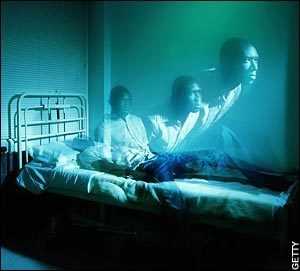
Traumatic events are well known for producing a sense of unreality as we watch a disaster unfold. Most of us can also produce this state far more pleasurably, by getting drunk, for example. For the less fortunate, though, it is also a known, if quite controversial, psychiatric diagnosis of dissociation.
You don't need to deliberate to be thoughtful, says commentator Alva Noë. In fact, it's better if you don't. We are at our most intelligent when we let the world guide us. And we can do this because we are expert at many things we take for granted.
Known as neuroplasticity, findings show you have an innate ability to restructure the gray matter of your brain, literally speaking, with your mind and conscious action. When you change what you think, say or do in response to an event or situation, you change inner emotional states.
A crucible is a vessel used for refining a substance, usually with the addition of extreme heat, which is exactly what I see happening to religion these days. Science, particularly neurotheology, has been turning up the heat under a crucible in which all religious experiences and beliefs are being scrutinized.
The essence of the dispute: Is it right to say that consciousness happens in the brain, that the brain thinks and feels? For language philosopher Hacker and neuroscientist Bennett, the answer is an unqualified “No.” For Dennett and Searle, it’s a qualified “Yes.”
Consciousness is not a simple state that is either on or off. Studies with anesthesia showed patients responding to commands or communicating, but later having no memory of doing so.
I’m going to be demonstrating how working together with your brain, instead of fighting against it, is the surest way to mental health and a better experience of your existence. Let’s start with asking the question, “What is really listening?”
To get content containing either thought or leadership enter:
To get content containing both thought and leadership enter:
To get content containing the expression thought leadership enter:
You can enter several keywords and you can refine them whenever you want. Our suggestion engine uses more signals but entering a few keywords here will rapidly give you great content to curate.


 Your new post is loading...


![[VIDEO] The Secret Lives of the Brain: David Eagleman LIVE on Big Think | Science News | Scoop.it](https://img.scoop.it/M48RApmA0MEeW992BPhe-jl72eJkfbmt4t8yenImKBVvK0kTmF0xjctABnaLJIm9)