


Obesity kills far more Americans than we think it does, according to a controversial new study that suggests obesity accounts of about 18...
Via Ken Donaldson


 Your new post is loading...
 Scoop.it! Obesity kills far more Americans than we think it does, according to a controversial new study that suggests obesity accounts of about 18... Via Ken Donaldson 
Scoop.it!

Ever since definitions of healthy bodyweight changed in the 1990s, the world has feared an obesity epidemic. But the food giants accused of making us fat are also profiting from the slimming industry. Via SustainOurEarth
Scoop.it!

Researchers can predict which children are most likely to become obese by examining their mothers' behaviour around their birth, according to a recent University of Montreal study published in the Archives of Pediatric and Adolescent Medicine. Via Sakis Koukouvis
Scoop.it!
Games and interactive media are powerful tools for health promotion and childhood obesity prevention
Children are naturally drawn toward gaming and other types of technology, creating an ideal opportunity to design interactive media tools to encourage physical activity and promote healthy eating habits, according to an article in a special issue... Via Sakis Koukouvis
Scoop.it!
Teensy 'Hairs' on Brain Cells Linked to Obesity | Obesity, Brain Cells & Primary Cilia | LiveScience
Studies in mice show that disrupted primary cilia, cellular hairs on the outside of cells, in the appetite-regulating area of the brain cause obesity. Defects in cilia could impact the obesity epidemic in humans. Via Sakis Koukouvis
Scoop.it!

FoodFacts.com is continually on the lookout for new research and information regarding the obesity epidemic. There have been a number of studies released over t Via foodfacts

foodfacts's curator insight,
July 17, 2013 11:56 AM
Are you or a loved one suffering from obesity? If so, this new insight on the obesity gene may be helpful. 
Nadine Brooks's curator insight,
August 9, 2013 9:00 AM
You can beat the "fat" gene, stop using it as an excuse to eat fatty foods.
Scoop.it!

FoodFacts.com is always interested in new information that helps us gain better insight into the skyrocketing obesity epidemic. We have great concern about the Via foodfacts
foodfacts's curator insight,
July 24, 2013 10:36 AM
Are your tax dollars helping to fuel the obesity epidemic? |
Scoop.it!
Dr. Robert Baron, UCSF Professor of Medicine, is an expert on obesity and related topics in nutrition and chronic disease. Here he explores ten things you th... Via Troy Mccomas (troy48)
Scoop.it!

A basic misconception has stymied our response to the obesity epidemic: the belief that food-related decisions are consciously and deliberately made. Our reluctance to interfere with or regulate the food environment is a direct consequence of the belief that people's food choices reflect their true desires. However, given the large proportion of people who claim that they want to lose weight and the small proportion who are actually able to do so, we must concede that human behavior doesn't always conform with professed goals. The reality is that food choices are often automatic and made without full conscious awareness. Placement of foods in prominent locations increases the rate at which they're purchased; purchase leads to consumption; and consumption of foods high in sugar, fat, and salt increases the risks of chronic diseases. Although placement is a factor that is right in front of our noses, we should consider treating it as a hidden risk factor, like carcinogens in water, because placement influences our food choices in a way that is largely automatic and out of our conscious control and that subsequently affects our risk of diet-related chronic diseases. Via Seth Bilazarian, MD

BCHS- Alyssa Snyder's curator insight,
February 26, 2013 4:04 PM
Many people believe it is their choice conciously of what they will buy and eat that night for their dinner. Sometimes it isnt, it could possibly be a subconcious decision made when we go to a store and look at the candy surrounding a cash register. Due to the placing of the sweet and sugar-rich foods, we are chosing them more than the nutrisous foods past generations would chose. Many things effect our eating ehaviour though, such as commercials, placings of food, whic many people would not think of as a major thing for chosing food, and also what our parents usually buy. We can prevent this by avoiding those aisles that have suh=gary foods or foods that are attractive to us located in them.
Scoop.it!
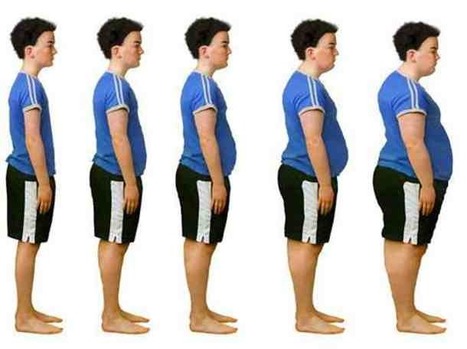
Why do people get fat, increasing their personal risk of heart disease, diabetes and other "lifestyle" diseases and society's risk of fiscal collapse from the expense of treating millions of people with those ailments? Conventional wisdom, favored by governments and a vast and growing "wellness industry" around the world, is that it's because individuals can't control themselves. Via Sakis Koukouvis

Grace Hennessy's curator insight,
November 4, 2013 6:13 PM
This Article implys that a poor diet increases the risk of heart disease, diabetetes and other lifestyle dieases. and its now becoming a serious issuse for people around the world as the percentage of obsesity has grown immesively over the past 5 years. 
Nicholas Grozdanov's curator insight,
November 13, 2013 7:33 PM
Why do people get fat, increasing their personal risk of heart disease, diabetes and other "lifestyle" diseases and society's risk of fiscal collapse from the expense of treating millions of people with those ailments? What the article is stating is tht rather telling people that you should be excersing, people should be educating others on the effects and how to avoid obesity
Scoop.it!
Stress can make you fat – and being obese can create stress. A new hypothesis seeks to explain how. Via Sakis Koukouvis
Scoop.it!
The 6th annual survey of top health concerns has been released by C.S. Mott Children's Hospital adults "rated not enough exercise as the leading health concern for children in their communities." The pdf file provides a variety of infographics including the top 10 U.S. child health concerns rated as a big problem by race/ethnicity (Hispanics, Blacks, Whites). Via Beth Dichter
Scoop.it!

The death toll of the nation's obesity epidemic may be close to four times higher than has been widely believed, and all that excess weight could reverse the steady trend of lengthening life spans for a generation of younger Americans, new... Via Texas Medical Association

Texas Medical Association's curator insight,
August 16, 2013 1:33 PM
Invest in obesity control
Overweight and obesity contribute to diabetes, hypertension, heart disease, cancer, and stroke. Texas has an easy-to-see obesity crisis. Some 66 percent of Texas adults are overweight or obese; the United States average is 63 percent. During the past three decades, obesity rates in children have more than tripled in the country. Today, 32 percent of Texas children (ages 10-17) are obese.
The obesity epidemic, and the ever-younger age groups that it strikes, threatens Texas’ physical and fiscal health. Texas’ continually expanding waistline correlates to our health care cost demands. Obesity is responsible for 27 percent of the growth in health care spending. Treating obese patients costs 37 percent more than treating normal-weight patients.
The rise in overweight and obesity is affecting the bottom line of Texas employers. The Texas Comptroller’s Office found that in 2009, obesity cost Texas businesses an estimated $9.5 billion, due to higher employee insurance costs, absenteeism, and other effects. Left unchecked, obesity could cost employers $32.5 billion annually by 2030.
Improved physical health in students has been linked to academic success. Conversely, children with obesity are more prone to absences and lower grades. In the United States, students who are physically active at least 60 minutes on most days, play on at least one sports team, or watch fewer than three hours of television per day consistently have “mostly A’s.”
A great proportion of obese adults were overweight or obese as children. This serious risk factor is found in Texas, where more than 30 percent of children in grades 4 through 11 are overweight or obese. A child who is overweight at age 12 has a 75-percent chance of being overweight as an adult.
There is no single solution to preventing or addressing obesity. Multiple evidence-based approaches must be pursued for physicians, communities, schools, and workplaces, and each must identify potential barriers to implementing local programs
Scoop.it!

ATLANTA - Adult obesity still isn't budging, the latest government survey shows.... - Your Health - Winnipeg Free Press. Via SustainOurEarth
|







Obesity comes from overeating...overeating comes from poor emotional regulation...poor emotional regulation comes from a lack of emotional intelligence...the good news is that you can raise your emotional intelligence.