Abstract
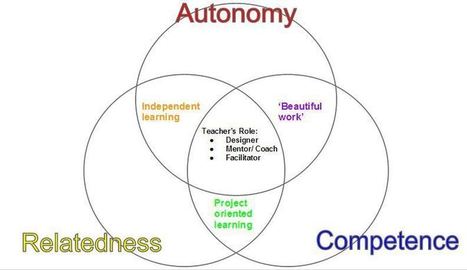
This study investigated to what extent secondary school teachers are motivated to work on their professional learning. To this end, profiles of motivational dimensions from self-determination theory were explored in a sample of 2360 teachers by means of latent profile analysis. The motivational dimensions included external regulation, introjected regulation, identified regulation, and intrinsic motivation. Additionally, the study investigated to what extent teachers' profile membership was related to their autonomy, competence, and relatedness satisfaction, and engagement in professional development. Four profiles were distinguished in the sample and were labelled ‘extremely autonomous’, ‘moderately motivated’, ‘highly autonomous’, and ‘externally regulated’. Profile membership could be predicted by autonomy satisfaction and relatedness satisfaction, but not by competence satisfaction. Moreover, teachers having profiles that had higher manifestations of identified regulation and intrinsic motivation engaged more in professional development activities. Results show the application of self-determination theory in the field of teacher learning and provide insight into what may be done to motivate teachers for professional learning.
Keywords Teacher professional development; Teacher professional learning; Motivation; Profiles; Self-determination theory; Latent profile analysis


 Your new post is loading...