From career guidance to substance abuse...bits and pieces to brighten up your LO classes brought to you courtesy of the Rondebosch Boys' High School Library (If you would like to receive a weekly newsletter of the latest items in this Scoop just mail me at library@rondebosch.com)
"Until recently, communist ideals valued natural beauty. Today, other things are considered beautiful", explains fashion photographer Zheng Chen. At just 19, young model Ai Xiao Qi has found success in China's fashion world. But she isn't under any illusions about the painful cause of her popularity: "when you're in front of cameras, your face must have a strong profile". A strong profile: the new Chinese euphemism for surgically-enhanced Western features. In a bid to be as tall as Westerners, Chinese girls are even undergoing gruesome procedures to break and extend their legs. After a botched surgery, tour guide Qi Lixia ended up horribly disfigured. "The doctors tried to re-assure me. But my nose was completely deformed." But such is the pressure on young girls that she's prepared to go under the knife again: "Looking good helps me in my job". As this mantra becomes more widely accepted, the message to young girls is clear: it's what's on the outside that counts.
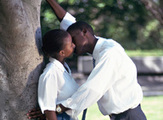
Sections of the Sexual Offences Act that say teenagers should be prosecuted for having consensual sex violates several children's rights, say NGOs.
Whether or not it is moral for teenagers between the ages of 12 and 16 to have consensual sex is perhaps a matter best left for their parents to decide. But sections of the Sexual Offences Act say teenagers should be criminally prosecuted for their decision to do so, and this is a measure that NGOs feel is a step too far – and one that violates several children's rights.
In addition, it is girls who will bear the brunt for consensual acts. Under the law, if a teenage girl falls pregnant and visits her doctor, her doctor is obliged to report her to the police. And if she is raped, and she cannot prove that the sex was not consensual, she can be charged with statutory rape. The stigma of defending herself in court would be severely traumatising, NGOs argue.
A new, three-minute ad by Coca-Cola, “Small World Machines,” starts with a relatively straightforward premise: India and Pakistan do not get along so well. It ends with the promise of peace: “Togetherness, humanity, this is what we all want, more and more exchange,” a woman, either Indian or Pakistani, narrates as the music swells. Sounds great. How do we get there? By buying Coke, of course.
For the ad, filmed in March, two high-tech Coca-Cola vending machines were wheeled into a shopping mall in Lahore, Pakistan, and another in New Delhi, India. On the front of each machine was a giant, touch-activated 3-D screen. The two were connected, such that the vending machine in Lahore looked like a giant window right into New Delhi, and vice-versa. The machines invited mall-goers on either end to interact with one another, for example by touching hands “through” the screen, by tracing peace signs, even by sharing a dance.
Admittedly, it's hard to ignore the video's promotionalgimmicks: Coke cans are dispensed whenever someone fulfills an instruction, for example. Nevertheless, the warm smiles and frank willingness of the people in the video -- people usually divided by armed barriers and political enmity -- to connect with each other will touch your heart.
By now, most online users have seen at least one outraged friend on Facebook share something about the recent controversy surrounding the fashion apparel company Abercrombie & Fitch after it came to light that the CEO purposefully does not cater to plus sizes shoppers.
The Internet has since erupted with outrage, with some attempting to create a Fitch The Homeless campaign.But Abercrombie especially rubbed Internet queen Ellen DeGeneres the wrong way. After hearing about the CEO’s policies, Ellen could only react with, “Oh Fitch, please!”
People aren't just cooking anymore -- they're cooking, texting, talking on the phone, watching YouTube and uploading photos of the awesome meal they just made. Designer Paolo Cardini questions the efficiency of our multitasking world and makes the case for -- gasp -- "monotasking." His charming 3D-printed smartphone covers just might help
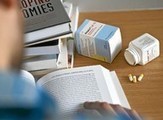
'My brother's mates at varsity used to ask me for pills, and whenever I would say no [he] would steal a few tablets anyway," Melissa* says. "One of his mates then got a prescription and started selling them at Wits," she adds. "I think few people realise how common it is."
Melissa used Concerta, a drug very similar to the attention deficit disorder pill Ritalin, for two years at university. "I have severe attention deficit and hyperactivity disorder [ADHD] and it helped me immensely while studying," she says.
These drugs have been a godsend to those with ADHD, often completely changing their lives. But the pills have attributes that also make them attractive to those without the disorder. They increase wakefulness and concentration – and have consequently become popular on university campuses all over the world, creating a black market for the drug.
A woman says the widespread use of explicit material is putting her off sex, and she wants protection from pornography. Mariella Frostrup says she is not alone
After the eight-story building that housed thousands of Bangladeshi sweatshop workers collapsed, the companies that sold the garments they made to Western retailers were apparently pretty quick to take down their websites. The sites were cached, though, and still easily accessible—and they still offer a striking look at the working conditions on the factory floors.
The images of the collapsed building, which killed at least 300 people and injured thousands more, are harrowing. The revelation that the women working in it made less than $40 for the privilege is repulsive. But the fact that these company websites broadcast, in plain terms, the devastatingly rigorous work schedule these women were subjected to directly to their clients—which include Primark, Walmart, Libra, and Matalan—makes it clear that those clients were either aware of the substandard conditions or staffed by idiots.
A fearful reluctance among teachers to talk about sex exacerbates their pupils' risk of contracting HIV and Aids, falling pregnant and being discriminated against on the basis of their sexual identities, academic research into sexual education at schools suggests.
"Teachers couldn't even say the word 'sex' when I spoke to them during my research. They'd say: 's-s-s-sex' or 'that thing' or 'you know what I mean'," said Jean Baxen, a professor of education at Rhodes University.
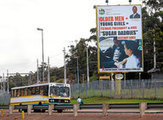
She was speaking at a two-day colloquium on sexuality, society and pedagogy at the University of the Free State this week. Academics from across the country presented papers on topics that included "sugar daddy" relationships and the teaching of sexuality in South African higher education.
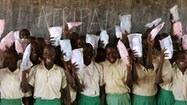
Monthly menstruation means that millions of girls in developing countries skip up to 20 per cent of the school year simply because they cannot afford to buy mainstream sanitary products.
Paul Grinvalds and Sophia Klumpp founded the AFRIpads company in Uganda to combat this. Their unique, reusable, affordable sanitary pads have already made a huge impact on Ugandan girls' lives: "They offer girls the ease, comfort and dignity of being able to attend school without worrying about periods," says Sophia.
It's a remarkably simple solution to a complex, long-standing problem. When a girl takes time off school it triggers a domino effect. Missing lessons means that she will fall behind in the curriculum, putting her at an immediate disadvantage to her male peers.
CALDERA is inspired by my father's struggle with schizoaffective disorder. In states of delusion, my father has danced on the rings of Saturn, spoken with angels, and fled from his demons. He has lived both a fantastical and haunting life, but one that's invisible to the most of us. In our differing understanding of reality, we blindly mandate his medication, assimilate him to our marginalizing culture, and entirely misinterpret him for all he is worth. CALDERA aims to not only venerate my father, but all brilliant minds forged in the haunted depths of psychosis.
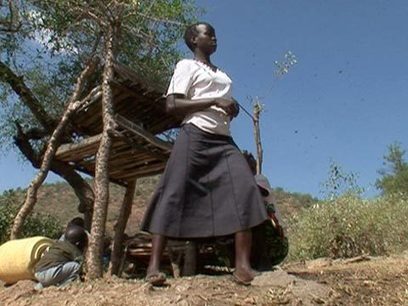
Video (5min 40sec): Nancy is a Kenyan girl about to face a brutal passage to womanhood. Narrated by Angela Griffin This video won a 2012 Webby and the People's Voice award for individual documentary
On Friday 24 May, a collection of Christian faith-based communities and theologians came together to build a platform to “re-enter each other's contexts”. It was called “Uninterrupted Conversations by SA Ordinary People: a co-journey by faith communities”, and asked the question: “Why are we stuck in our old paradigms?” Ironically, though, midway through the day, the conversation was verbally disrupted and its doctrine challenged by a critical pastor from Khayelitsha.
A new site that uses social media to fight sexism and demand change is getting attention on a global scale.
The Everyday Sexism Project was started a year ago by British actor Laura Bates. The site was first launched in the UK in 2012 but has now grown to include 15 countries including South Africa, by providing a space for ordinary women to share their experiences of gender bias in everyday life. Frustrated with the way the media and film industries portrayed women, Bates decided that women needed a digital shoulder to lean on and that is why she started the campaign. Initially, Bates thought the project would draw just a few hundred women to her site but it has turned out to be very popular.
The campaign has taken the fight to Facebook in a bid to fight gender-based discrimination and violence that can be found on Facebook pages such as Violently Raping Your Girlfriend Just for Laughs. In an open letter to Facebook, the Everyday Sexism Project urges the social media site to refrain from using advertisers who condone discrimination or hate-speech against women
A recent feature published by the BBC suggests that whites have no future in South Africa. It cites, among other things, the high rate of farm murders, and the increasing number of poor whites. What it doesn’t do is offer us any helpful insights.
I read with enormous dismay the BBC feature entitled, “Do whites have a future in SA?” The writer, a doyen journalist and BBC News World Affairs editor John Simpson, opens with “Apartheid South Africa looked after white people and nobody else. Now some of its white communities face a level of deprivation, or of violence, which threatens their future in the country…”
This should really tell you ev
The premise, which is never stated outright but is implied in every paragraph, is that it is somehow more shocking to see a poor white person than a poor black person. The idea – which is an Apartheid hangover – is that whites should be wealthy; it is a talking point when they are not.
erything you need to know about the tone of the piece.
Here’s an extraordinary film of the great Swiss psychologist Carl Gustav Jung speaking at length about some of his key contributions to psychology. Jung on Film (above) is a 77-minute collection of highlights from four one-hour interviews Jung gave to psychologist Richard I. Evans of the University of Houston in August of 1957. In “Sitting Across From Carl Jung,” an article for the Association of Psychological Science, Evans explains how the interviews came about...
In just a matter of a few decades, the world has literally been flipped upside-down with the culmination of the Internet. Sure, there are countless benefits we get from the web, but there are negatives too.
As educational YouTuber Epipheo discusses in his latest video, What the Internet is Doing to Our Brains, our brains rewards us for distracting new tid-bits of information which was helpful when he still lived in caves.
But now, many of us have created compulsions to check our emails and the latest tweets without ever getting to more critical thinking and memory making.
For 365 days, Paul Miller disconnected from the internet. We'd like to tell you it was an idyllic journey of self-discovery, but that isn't quite the truth. On the eve of Paul's return, we follow him on a road trip as he prepares for his return and takes a look back at the last twelve months.
Drinking and driving is stupid. Be part of the evolution, don't succumb to natural selection.
There isn’t much rationality in the desire to gamble. Most people do it because they feel lucky or desperate. But you’re always hoping that the outcome will be in your favour, right? It’s not even always the chance of winning that leads you to a casino, sometimes it’s just for fun, just to spend time with your mates, just because it got to that time of the night and everywhere else was closed, and let’s face it – for some reason you feel more lucky in a casino than in a strip club.
A standard roulette board has 36 numbers, meaning if you choose to try and pick the number the spinning ball might land on you have a 1 in 36 chance, or for the mathematicians out there, about a 2.7% chance. Small probability, but you could win big.
Few people do. They aren’t lying when they say the house always wins. The house always does. But there’s always the lure that you might strike it lucky and that keeps the punters coming back for more.
Now how often do you think about the fact that every time you go out for a few drinks with your mates you’re actually gambling with your life? Shock horror, cliché, you’ve heard it before and you’re a good driver, you trust yourself – last time you got home just fine and managed to buy yourself a happy meal on the way and anyway there is no public transport, taxis are expensive. Now let’s look at the maths.
What if Andy Warhol had it wrong, and instead of being famous for 15 minutes, we’re only anonymous for that long? In this short talk, Juan Enriquez looks at the surprisingly permanent effects of digital sharing on our personal privacy. He shares insight from the ancient Greeks to help us deal with our new “digital tattoos.”
Juan Enriquez thinks and writes about profound changes that genomics will bring in business, technology, and society
In a dusty Eastern Cape village on the road towards Port Elizabeth, I met a young man. He was surrounded by a collection of art made of wire. I bought a detailed, well-crafted windmill. As I picked it up I praised its creator, who smiled coyly as he muttered: “I have nothing to do uncle, no work – it is tough”.
I commended him again for his dexterity, paid and hit the road. As I put the windmill carefully on the car seat, I was perplexed by the utterance of the lad. Soon I came to realise that sometimes people fail to realise their potential and think they need to work for someone else to call anything real work. Here was brilliant young man who could open a huge industry manufacturing the windmills, yet he thought he was doing nothing because he was not reporting to anyone. This is an aspect not only schools miss, but institutions of higher education, too. High school and higher education graduates think employment is only when they toil for somebody else. This is a challenge that institutions of learning should instil in our young people; that they can create their own work to survive.
For Israelis and Palestinians trying to lead an ordinary life, the complications of living in a conflict zone can be extraordinary. Aziz Abu Sarah meets with people from both sides to understand how this conflict impacts their daily lives. He is a cultural educator, a native of Jerusalem, and a National Geographic Emerging Explorer who works in international conflict resolution.
If you are teaching the Middle East conflict you may want to check out this up-close and personal four-part series by National Geographic. The other parts cover Israel Defence Forces, Palestinian protestors and the possibility of a Space To Talk....
Women are their own worst beauty critics. Only 4% of women around the world consider themselves beautiful. At Dove, we are committed to creating a world where beauty is a source of confidence, not anxiety. So, we decided to conduct a compelling social experiment that explores how women view their own beauty in contrast to what others see
Experiments show that simple psychological preparations make a big difference
It is already well established that people who feel empowered pay more attention to rewarding information, express themselves more freely when interacting with others, and experience more positive emotion. They also tend to be more persuasive, less susceptible to the influence of others, and more confident. Power breeds optimism, higher self-esteem, and action in pursuit of goals. By contrast, those lacking in perceived power experience a reduced sense of control and diminished access to resources or rewards, which in turn may lead to pessimism, depression, a withdrawal from activity, and poor health.
To get content containing either thought or leadership enter:
To get content containing both thought and leadership enter:
To get content containing the expression thought leadership enter:
You can enter several keywords and you can refine them whenever you want. Our suggestion engine uses more signals but entering a few keywords here will rapidly give you great content to curate.


 Your new post is loading...


 Scoop.it!