Your new post is loading...

|
Scooped by
Ann Zaslow-Rethaber
October 30, 2020 7:00 AM
|
A bad hire can be the most expensive mistake a business could make. A bad hire at the senior level, in particular, can wreak havoc on a business’ reputation, among other hard-to-fix problems. “What can be costlier than a faulty product or poor budgeting is the price of repeatedly hiring underqualified, short-term employees,” says the San Francisco-based Whitham Group, in a new report. “Opposingly, the right hire can be significantly beneficial.” “The CEO and owner of Zappos has a net worth of about $840 million,” said the report. “But it cost him many bad hires before he learned how to get it right, according to him ‘well over $100 million,’ he estimates.” The first sign that your hiring process needs help is a high employee turnover rate, said the search firm. Considering that one in every two candidates will misrepresent themselves on their resume, and one in five candidates will be likely to blatantly lie in an interview, how can you decide who to invest in? The cost can be massive if such questions aren’t resolved quickly. Firing and replacing regularly dampens morale. While you make changes hoping to “get it right this time,” your employees, even the good ones, begin to feel dispensable and insecure. “This is not the employee infrastructure of a successful company,” said the report. “A high employee turnover rate makes you vulnerable to losing valuable team members who seek security and a place they can grow with.” Unfortunately, keeping the bad hire causes nearly double the damage. A study done by Career Builders shows that 60 percent of long-term, contributing employees could spot a bad hire by their inability to work in a team setting. This often resulted in reduced teamwork, less productivity, and diminished the work culture. As it goes, what happens within and the organization soon happens without it, said the report. The cost of a bad hire can be devastating to your company’s reputation, especially if the hire had a senior-level position or an executive role. “Repeated bad hires run the risk of damaging professional and customer relationships and significantly damaging your organization’s authority,” said The Whitham Group. Is hiring always going to be like a blind shot in the dark? Absolutely not, said the report. According to the U.S. Department of Labor, the cost of a bad hire can exceed 30 percent of that employee’s first-year earnings. And 74 percent of companies admit to making bad hires. But your hiring process no longer has to result in another bad statistic. “Stop relying on the untrackable HR process, make changes to exhaustive screening processes, and hire a specialized team of professional recruiters,” said The Whitham Group. “Collaborating with recruitment experts is an investment in your work environment, productivity, team morale, time, bottom line and scalability.” In a separate study, “The Three Parts of an Effective Executive Interview,” The Whitham Group offered some ways that one can sidestep bad hires. High-level executive recruiting requires interviews to be as efficient and precise as possible, said the study. And with the standard of candidates who make it this far, it’s expected to be. “Effective executive interviews follow a formula,” said The Whitham Group. “The goal is to use your interview time wisely, understand what to ask a potential executive, and what you can expect from a good candidate versus the best candidate.” What to Ask Executive Candidates When interviewing a senior-level candidate there are two types of questions to ask your potential executive, said the report. Even though a resume tells you a lot, it can never give you the full picture. Situational and motivational interview questions help you get to know the candidate professionally and personally. Here’s how: 1. Situational Interview Questions: Provide realistic situations that may arise in your organization to discover the candidate’s behaviors and approach to resolving them. For example, describe a recurring problem in a previous or current role that you wanted to resolve but didn’t. Ask, “Why not?” 2. Motivational Interview Questions: Ask questions to discover what motivates your candidate to excel or hinder their progress with your organization. For example, what three things in your current or last role gave you the most satisfaction? Which things didn’t? Noticing Red Flags During an interview, the interviewer often wants to be proven right. But in the search for reasons to hire someone, it’s easy for red flags to fly by unnoticed, said The Whitham Group. Here are a few ways your candidate may unknowingly disclose that they’re not the right fit for your organization: 1. Lack of Preparation Your executive candidate may not be able to recite your company mission statement during the interview, but the best candidate will know quite a bit about what the company represents, values, and is looking for in an executive. As you get to know your candidates, pay close attention to who is generalizing your company goals and who has actually done the research. 2. Poor Presentation Skills Your executive is going to represent your company in front of important clients, investors, customers and other team members. Confidence, clarity and professionalism in how they conduct themselves and communicate their points are telling of how they will perform as a leading position in your organization. 3. Arrogance Personality traits are just as important as skill-set and experience. An executive with an inflated ego is likely to create a toxic work environment and isn’t as interested in learning and growing, said the report. Additionally, arrogance can stifle one’s open-mindedness and is often a sign of limited emotional intelligence. Both of these are critical characteristics of successful executives. Let the Interview Wander a Bit A list of questions and a set direction is important for when conducting an executive interview, however, opportunities can be missed if you stick too closely to the script. “Let the conversation naturally wander,” said The Whitham Group. “It creates a more relaxed atmosphere and presents opportunities to really get to know who your candidate is, what motivates them, how they think, and most importantly if they fit with your organization.”
|
|
Scooped by
Ann Zaslow-Rethaber
October 29, 2020 7:00 AM
|
The expectations on leaders and bosses these days is huge. They are expected to work long hours, be on call, sort out complex problems, juggle competing demands, all the while knowing there is permanent job insecurity. The day-to-day working environment often operates like a pressure chamber. Actions and reactions are constantly at play up and down the organisational hierarchy, writes Michelle Gibbings The employee-boss dynamic impacts workplace productivity and culture, and ultimately organisational outcomes. The Great Places to Work Institute found that trust between managers and employees is a defining characteristic of organisations that are listed in their annual ‘100 Best Companies to Work for’ list. Similarly, a study by Alex Edmans, Professor of Finance at the London Business School, found that the top companies to work for increased their share value by 50 per cent. Despite research extoling the benefits, Gallup found 82 per cent of employees find their leaders uninspiring, only 15 per cent of employees are engaged at work, and only one in three employees strongly agree that they trust the leadership of their organisation. While it’s easy to point the finger, the root cause of challenging workplace dynamics is usually not down to one person or one incident. "The best leaders proactively seek feedback and continually assess their effectiveness. They critically and honestly reflect on what is going on in their world, how they are coping and notice the impact they are having on their team and colleagues." The pressures at play
The expectations on leaders and bosses these days is huge. They are expected to work long hours, be on call, sort out complex problems, juggle competing demands, all the while knowing there is permanent job insecurity. The day-to-day working environment often operates like a pressure chamber. Actions and reactions are constantly at play up and down the organisational hierarchy. When everything is going smoothly the working environment hums along. But when the pressure gets too much, ineffective behaviour rises to the surface. Pressures get placed on leaders from internal and external sources: - External – Customers, environment, political, legislative and regulatory, societal, technology, and economic
- Internal – Executive team/Board, cost pressures, mergers, downsizing, demands for increased revenue, strategic reviews, and cultural shifts
Those expectations and demands, regardless of the source, get passed down the organisational food chain from boss’s boss to boss to employee. How those expectations get passed down, and the reaction that comes back up the line depends on the level of pressure that’s applied – how hard, how fast, what type of pressure, its frequency, and the nature of the person applying the pressure. If it’s passed down in a way that the person on the receiving end is receptive, prepared and well positioned to cope with the pressure, then it will be managed well. When that person subsequently passes on the expectations to their team members and they too are similarly prepared then the impact is largely positive and so outcomes are progressed positively. This is because the release valve to manage the pressure, which may involve awareness, support, strong team dynamics, a collegiate environment, and a good working relationship with the boss are working well. Beware of unnecessary pressures
In contrast, if those expectations and demands are passed down badly, and the person receiving is ill-prepared, ill-equipped, not supported and not able to handle it well, then the result is a chain reaction of negativity. That person, likely a boss, pushes those expectations down to their team who don’t feel supported, and in a challenging environment the pressure builds, ructions in the team start to fissure and the tension bubbles to the surface. This workplace stress gets pushed back up the line through increased turnover, less productivity, poor engagement and disgruntled employees. This isn’t an isolated incident. So much so that in May 2019, the 194 members of the World Health Organisation (WHO) unanimously agreed to change the International Classification of Diseases and Related Health Problems to classify, for the first time, professional burnout as a recognised illness. The WHO defines professional burnout as ‘a syndrome conceptualised as resulting from chronic workplace stress that has not been successfully managed’. So what should leaders do? The need for greater recognition
The best leaders proactively seek feedback and continually assess their effectiveness. They critically and honestly reflect on what is going on in their world, how they are coping and notice the impact they are having on their team and colleagues. This takes awareness and courage. "Actions and reactions are constantly at play up and down the organisational hierarchy. When everything is going smoothly the working environment hums along. But when the pressure gets too much, ineffective behaviour rises to the surface." Academics Ronald Heifetz and Marty Linsky, experts in building adaptive leaders, note that when things get busy and tough and the adrenaline is pumping, it’s easy for leaders to convince themselves that they won’t succumb to the normal human frailties. However, the “…intellectual, physical and emotional challenges of leadership are fierce”. To manage they recommend leaders “…regularly step into the inner chamber of your being and assess the tolls those challenges are taking”. Take the leap
With feedback in hand, leaders can determine the actions they need to take to elevate their leadership. This is about them creating their own personal playbook filled with strategies and tactics that put them in the best possible position to lead with integrity, authenticity and courage, and in turn, create healthy, thriving workplaces. Making time to do this doesn’t automatically catapult a leader into a ‘good boss’ category. It does, however, make them someone who’s interested and invested in being the best leader they can be. And that’s the first step in progress.
|
|
Scooped by
Ann Zaslow-Rethaber
October 28, 2020 7:00 AM
|
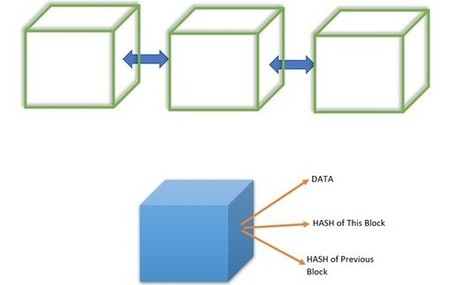
Blockchain technology promises to revolutionize practically every sector of the modern economy. In this post, we take a look at why everyone’s so excited about blockchain and what do all the wide applications of blockchain really boil down to. To create a basic level understanding of what blockchain is capable of, let’s look at the 10 things blockchain can do 1. Decentralized Database Blockchains are called so because they are blocks where data is stored in linear containers. These blocks form a chain, so the name blockchain. Anyone can notice that you’ve placed data there, since it is semi-public and carries your signature. However, only you can unlock what’s there in the block (container). You can do so securely by using the private keys to that data block. Essentially, blockchain is a database with the “header”, where the information is stored as public. If you think that’s not very good for a database, you’re right. Blockchain isn’t the best database, but that’s not a problem. Blockchain isn’t meant to be the substitute of a database. Instead, we expect developers to find ways to rewrite their applications that capitalize upon the strong points of blockchain’s state transition capabilities. Simply put, blockchain has disrupted the database transaction process paradigm. 2. Distributed and shared accounting ledger Firstly, blockchain is a semi-public and therefore distributed ledger. That makes it shareable across multiple entities without sacrificing security. What’s more, the ledger is time-stamped. This makes every single transaction verifiable and traceable. All computers on the network can validate every single transaction. That becomes one of the key strengths of blockchain – it automatically prevents double-counting. As a result, the chances of both errors as well as fraudulent transactions are virtually zero. This may appear to be the single most important application of blockchain but there are many more, equally powerful uses of blockchain. 3. Peer-to-Peer Network You would’ve noticed by now that being shareable, there’s nothing that is “central” about blockchain. It’s architectured in a way that there’s no central server that dictates transactions – it remains a peer-to-peer network over nodes. Your computer, if a part of the network, can verify transactions happening over the network. You could call it thin computing in its best decentralized format. Because of this, users can reach out to other users and transact with each other instantly, irrespective of geographical or time-zone differences. There are no intermediaries like a main server to filter or slow down the transaction. Hence, the transaction happens without delay. All nodes on the network have equal importance and can offer their knowledge of all transactions over the network. This goes beyond just being a peer-to-peer network and creates a marketplace for users, a distributed economy. The size of such marketplaces varies greatly in size without compromising the integrity of blockchain. 4. Cryptocurrency Without doubt, cryptocurrencies (aka token) are the most popularly known application of blockchain. Famous examples of cryptocurrency include Bitcoin (BTC), Ethereum (ETH) and Ripple. Basically, cryptocurrency is an economic proxy of the operations and security of blockchain, a cryptographically encrypted currency. Cryptocurrencies follow a set of protocols and are not dependent on a single government body, entity or authority. They have an open source code, which means anyone can available for everyone to use or modify. Cryptocurrencies, like other currencies, can have a compensatory as well as production role. Miners who mine out cryptocurrencies and successfully validate blockchain transactions can be awarded the currency. Additionally, there is a consumption role, where you pay a small fee for running smart, blockchain-backed contracts (using Ethereum), an equivalent of transaction fee (with Bitcoin or Ripple). These costs and compensations are placed so as to prevent abuse of the blockchain system. In a larger, more advanced case, tokens may be used simply for internal value, asin DOAs (Distributed Autonomous Organizations). Technically, it’s a currency and therefore can be traded over currency exchanges, pretty much the same way you trade Euros and Dollars. You can also buy goods and pay for services, with the help of Bitcoins. Such transactions are smooth and secure within the blockchain network. Of course, when it crosses over and has to interact with traditional, real-world currency, there’s a chance of friction and delay. Like any other asset, one can invest and transact in cryptocurrencies. As a result, it is susceptible to volatility and hence keeps away a large number of potential investors. The volatility originates from the genuine uncertainty. It is hoped that as it gains more acceptance and more understanding develops, the uncertainty will drop considerably. That would make cryptocurrency more stable in the long run. 5. Open Source Software Technologies with open source software are not just transparent. They have the benefit of huge improvements by way of collaborations that add massive, valuable features on the top of the core software. That way, users keep tinkering and adding value to the core. A good case is Bitcoin. Its core protocol is fully open source. From the time Satoshi Nakamoto was inspired by Nick Szabo, it was clear that open source was the way to go. Since its inception, Bitcoin is being maintained by a collaborative group of “core developers”. Their work is continually complemented by contribution from thousands of independent developers the world around. These independent developers constantly come up with complementary products, services and applications that benefit from the Bitcoin protocol and its robust nature. Eventually, we can see an extremely strong ecosystem being built around Bitcoin. Essentially, it’s the open source nature that has led to the level of excellence that Bitcoin is.
|
|
Scooped by
Ann Zaslow-Rethaber
October 26, 2020 7:00 AM
|
Skills gaps are exciting because they mean the industry is growing. In the case of blockchain, it also means that the industry can’t grow fast enough. Interrogating the Blockchain Skills Gap Cryptocurrency is one of the flashiest faces of blockchain technology. However, if you’re really in the know, you know that blockchain is a lot bigger than just Bitcoin, Ethereum and other cryptocurrencies. In fact, experts in the blockchain industry are in increasingly high demand. When the academic turnout of specialists fails to meet the demand of an industry, it’s called a “skill gap”. It’s a problem that faces many new technologies. While having this shortage is exciting for the industry – it means the industry is growing – it also means that the industry cannot meet its full potential until the skills gap is filled. What is Blockchain? The term “blockchain” is the key to visualizing how this open-source technology works. Each block is a discrete piece of data. Each block in a chain is linked to another block and contains all of the blocks that came before it. So, why is this so complicated? It’s definitely easier said than done. The computer know-how for creating chains out of blocks is hard to come by. Now, why is it so important? If “because cryptocurrencies” was the only answer, it would be a good enough answer. However, there’s so much more to distributed ledger than that. For one thing, it’s a secure and transparent way of accessing data. Because the discrete data sets are linked together, it’s very easy to tell if something has been changed. It’s also a very efficient way of storing and sending data. Understanding where blockchain exists outside of cryptocurrencies is important for understanding how crucial it is to have talent with in-depth knowledge of blockchain technology. It’s also important for understanding why so many experts are required. The Skill Gap As mentioned, there’s no shortage of blockchain-related job postings. LinkedIn first made the crisis known with their 2018 jobs report. The report listed “blockchain developer” as the year’s top emerging job. The top skills needed that the report listed aside from blockchain were also programming languages such as Solidity and Node.js. Demand was determined by looking at the skills of people on the site being hired compared to looking at hirers in pursuit of that skill. According to that report and subsequent analysis, there just aren’t as many blockchain developers to go around. In particular, the most in-demand job titles are software engineer, senior software engineer, software architect, front end and full stack developer. We did discuss the fact that there are uses for the technology beyond crypto. However, another recent report found that “crypto developer” is a rapidly growing job market. This demand from crypto puts even more demand on the talent market. The report mentions that in order to stand out, job seekers interested in various cryptocurrency and blockchain jobs should be familiar with blockchain development languages such as Hyperledger, Bitcoin Script, Ethereum’s Solidity, and the Ripple protocol. And the most recent LinkedIn report reveals that blockchain skills are actually the number one most in-demand hard skills in 2020. According to the LinkedIn Talent Blog post, blockchain “is the most in-demand skill in the United States, the United Kingdom, France, Germany, and Australia.” The post also emphasises that financial services are not the only sector that can benefit from blockchain talent. “Recruiters should start becoming familiar with how blockchain works, what its perceived benefits are, and who are the people best suited to help your company explore where this budding technology might have a role.”
|
|
Scooped by
Ann Zaslow-Rethaber
October 23, 2020 7:00 AM
|
I’m an open source learner: I like to share the knowledge I’m acquiring. A lot of people want to know how to find a job in blockchain, and I have a few tips to share. I’ll start by asserting that blockchain is in its early days but that the juggernaut technology unleashed upon the world by the invention of Bitcoin in 2009 is starting to make its general-purpose potential felt and known. Those who are curious about how and whether they can pivot into the industry while it’s still this young should take heart: there’s a lot of opportunity ahead. Sure, blockchain is an experiment without a verdict. Sure, some, especially Bitcoin maximalists, say the tech will only find longevity and utility in the brilliant economic policy and architecture of the Bitcoin blockchain, the implication being that blockchains like Ethereum and others being used by hundreds of enterprises and startups won’t be around for much longer (or their jobs). However, many others view blockchain as a foundational technological instrument that we’ve only just begun to make economic and non-economic music with. In the latest edition of MIT Technology Review, the front cover sports the word “Blockchain” in big letters. Beneath that are two boxes. One box reads “HYPE”. The other box reads “HOPE”. Overlapping at the intersection of the two is a much smaller square, with an arrow pointing at it. The arrow reads, simply: “The future is here.” It’s a nice symbol that at the intersection of hype and hope, an ever-growing box of opportunity now sits for the job-seeker to search. There’s no time like the present to dive in, because nobody knows when a blockchain-based “killer app” will come along or when a good time to dive into the industry is. So why wait? Those who are curious about how and whether they can pivot into the industry while it’s still this young should take heart: there’s a lot of opportunity ahead. Before We Start: Where to Look? The Devil is Definitely in the Details Here’s my opening advice to the aspiring blockchainist: find companies building core infrastructure technology if you can, especially protocols and layer two technologies. Let me provide some context. Because blockchains are still so young, and all companies creating blockchain solutions are building on one of the available blockchains, the most important and far-reaching work in the industry is currently happening behind the scenes, in the design of back-end infrastructure. These protocols and layers will be the building blocks companies are going to use to implement a variety of tech into their blockchain solution stacks. Are companies interested in such projects? According to Deloitte in a recent poll of 1,053 companies from around the world, yes: - 43% (452) said they view blockchain as a top 5 strategic priority, and
- 29% (305) said blockchain was not critical yet important to their business
Not only that, of the companies already active with blockchain proof of concepts and implementations in production, 52% are focused on permissioned blockchains, 44% on private (internal) blockchains, 44% on public blockchains (Bitcoin, Ethereum, and others), and 35% on consortium blockchains. In terms of infrastructure, despite this diversity of approaches, what all these companies have in common is that they need back-end tech to create front-end solutions to their problems. So if you’re able, find a company “building out the plumbing” of blockchain. Be a plumber. Soon there will be a need for the masons, carpenters, roofers, electricians, painters, interior designers, and landscapers, too. But first we need interoperability standards, scalability mechanisms, context-specific consensus algorithms, on-device key management, hardware enclaves, ASICs specializing in private key cryptography and security, industrial-grade IoT-to-blockchain bridges, and other “early-day infra”. These protocols and layers will be the building blocks companies are going to use to implement a variety of tech into their blockchain solution stacks. But As with All Things Blockchain, DYOR (Do Your Own Research) The caveat to the above is that not all buildings go up at the same speed, and they’re certainly not all built at the same time. There are thousands of blockchain startups and companies worldwide building a blockchain project of some form (and currently seeking to fill 1,500 positions), and they’re not all building infrastructure. Also, not every company has the same current hiring horizon: one company building self-sovereign identity technology might be hiring marketing teams for its two year-old project, whereas a newer company in the same space might be more focused on hiring back-end developers to build out its tech over the coming year. Then there are historical industries by geography: London and New York may have more fintech jobs, Connecticut might lean more towards insurance tech, Research Triangle and Boston might have more biotech-focused blockchain pilots, and so on. Political and legislative factors might also influence local opportunities: Wyoming, Arizona, Delaware, Nevada, and Vermont are among the states in the U.S. with the most blockchain-forward legislation, which might attract startups; the State of Illinois has already used blockchains to digitize land titles and launched an Illinois Blockchain Initiative in 2016; and Germany has a HODL law whereby owners of crypto pay no capital gains tax upon selling BTC, ETH LTC, XRP, and other altcoins if their owners don’t sell the crypto for a year. These localized differences might translate into differences in job prospects. So if your heart is set on making the leap, here are some tips to help you land a job in blockchain. First, Learn the Basics To be credible in conversations when networking, or during interviews, you need to at a very minimum develop situational fluency with some core concepts and terminology in this industry so that you can build meaningful relationships (see the next section, “Second, Get to Know the Founders and Developers of Startups in your City”). Working in your favor is the sheer amount of learning material on the web. Working against you is that “blockchain moves in dog-years”, therefore the clock to accrue an early mover advantage is ticking faster by the day. For perspective, the Ethereum Virtual Machine is three years old, yet it is already making global waves in the developer community, in businesses, and in governments because of its advanced smart contract capabilities. Three years is ancient in blockchain time, so an Ethereum-based company will likely expect an interviewer to be familiar with what Ethereum is and does. Therefore, you need to study, and to study, you need a foundation. My advice to any job-seeking blockchain newcomer is to invest, at a minimum, 5–20 hours to internalize every part of the following Merriam-Webster definition of blockchain: BLOCKCHAIN: a digital database containing information that can be simultaneously used and shared within a large decentralized, publicly accessible network; also the technology used to create such a database. The reason it could take five to 20 hours to understand every part of that sentence is that those 29 words contain a lot of information that, unless you have a technical or computer science background, may take you a while to digest and develop fluency around.
|
|
Scooped by
Ann Zaslow-Rethaber
October 22, 2020 5:27 PM
|
Out of all the industries that could leverage blockchain to join the 21st century with faster transactions, transparency and smoother processes, the financial industry has more to gain than most. One reason for this is that slow transactions, secrecy and bureaucratic processes used to be an intrinsic aspect of old school finance sectors, but all of that is changing thanks to a new generation of financial technology firms. By adding blockchain to the mix, the FinTech companies have evolved even further. What Is FinTech Blockchain? 2019 was arguably ‘the year of FinTech’. That is, a hybrid between technology and financial services. Several FinTech companies have thrived since the early 2000’s, but the last few years have seen massive success with companies applying modern technology and flexible, customer-centric ideas to help solve issues in the current conservative finance system. One example of this is the Richard Branson backed TransferWise, which recently became Europe’s most valuable FinTech company. DeFi (decentralized finance) is the next step in that evolution, by leveraging digital decentralized smart contracts into the mix. Most finance giants have started investing heavily into blockchain R&D for their businesses, so along with the new tech firms disrupting traditional banking services, a new future has arrived. This reinforces the idea that blockchain and finance companies are not necessarily at odds, but can instead complement each other greatly, thus furthering their success. DeFi is basically the merging of FinTech with blockchain. Although the two are not the same, there is a lot of crossover between their use cases in the finance sector. This marriage of 21st century technologies using trustless, transparent protocols which skip ‘the middleman’, have brought much needed competition to the banking and finance sectors, by lowering transaction fees, becoming more user-friendly, and providing more digital options for their clients. The future is bright for DeFi, in 2020. The Difference Between FinTech & Blockchain Blockchain is a decentralized way of digitally recording transactions, which can’t be manipulated or controlled by governments, banks, or companies. Once blockchain is unlocked to its full potential, it will mean the freedom of finance, among other benefits. The situation is slightly more complex, however, because of the power that incumbent finance firms and banks have in the political spectrum, swaying public opinion and governmental policy, to disallow newer technology to dethrone them. Having said that, the big finance players have seen ‘the writing on the wall’, which shows that the potential for blockchain is so vast, and so difficult to prevent (or control), that many have begun their own blockchain projects, or partnerships. Arguably the most famous of these is Ripple, which now has partnerships with over 200 banks and financial organizations around the world, using their ‘RippleNet’ to process cross-border payments in real-time with end-to-end tracking and certainty. FinTech is also changing the finance industry with 21st century tech, using deep learning AI for transactions and fraud detection, chatbots for advanced customer service, heightened security via biometrics, as well as intuitive smartphone apps to create omni-channel, customer-centric banking, aka, “NeoBanks”. However, many NeoBanks like N26 or Revolut do not use blockchain, or other decentralized processes, while still improving financial activities with the help of modern tech. How Blockchain Helps FinTech Blockchain helps FinTech with its distributed, decentralized, transparent and immutable digital ledger technology, providing a new type of freedom and security. There is no single authority controlling the information. Nobody can modify the data. Besides being safe, it provided real democracy and equality. This is a fantastic opportunity to provide banking services to billions of people around the world, without the need to go to typical banks or black markets for these type of services. DeFi companies, aka FinTech with blockchain elements, create a global, open alternative to all the everyday financial instruments out there — from trading to savings and loans, or even insurance — making them accessible to anyone on the planet with internet and a smartphone. This is the reality today, negating the need for a middleman, making use of stablecoins (digital currencies pegged to fiat currencies or assets), lending money to strangers, plus more advanced investment strategies. Blockchain & FinTech Team-up: Changing the World Some people like to picture blockchain as a revolution against the ‘evil, greedy bank sector’, but in reality, it is more of a cooperation. Although many banks have indeed exploited their power to get away with quasi-illegal operations, most won’t disappear overnight. Instead, they will be embracing the innovations of blockchain and FinTech startups, to survive in the future. In fact, 82% of traditional financial organizations have plans to increase collaboration with FinTech companies in the next 3 – 5 years. According to PwC, 88% of banks have been concerned since 2017 that they’ll lose revenue to innovators using blockchain. Further reports have found that investments in blockchain tech applications went up nearly 90% from 2018 to 2019 (to around 3 billion dollars), with billions more expected solely from FinTech in 2020. According to Fortunly, nearly 50% of people use digital channels exclusively for their financial needs, providing a huge opportunity for both FinTech and DeFi hybrid companies. What Are the Major Use Cases of Blockchain in FinTech? Among many benefits, blockchain greatly reduces transaction fees. For example, a $10,000 international transfer can cost around $200 with all the various fees and currency exchange losses added up, while using blockchain it’s less than $1. It also vastly lowers (or completely eliminates) delays in worldwide online payments, as well as making financial processes safer, immutable and more transparent overall. Another peripheral benefit is its capability to improve democracy and openness in financial services, by making these services available to the “unbanked”. That is, those without access to the standard banking system of their own countries. Additionally, smart contracts eliminate the need for most paperwork, by automating the transfer of currencies after certain preconditions are completed. Long term, it can drastically lower carbon footprint as well, making it much better for the environment.
|
|
Scooped by
Ann Zaslow-Rethaber
October 21, 2020 7:00 AM
|
As recently as March 2010, the value of Bitcoin was even less than a penny. Fast forward ten years, the value of Bitcoin in 2020 rose to $20,000, and people who invested early were riding around in luxury cars. The craze surrounding Bitcoin will always have an intrinsic relationship with its price; universality drove the Blockchain job market into the spotlight. Between 2017 and 2020, the demand for Blockchain rose by nearly 2000 percent, and it became one of the most highly-valued skills to have in the industry. By 2024, the net worth of the Blockchain market is expected to be around $20 billion. Today, 69% of banks are adopting Blockchain technology to add extra layers of security and to make their services hassle-free. The Current Status of Blockchain Job Market According to data collected from LinkedIn, Blockchain occupies the top spot in the list of skills that have high demand in 2020. The website created this ranking by considering those skills that are high demand in regard to the supply. The skillset of individuals who are getting hired most often is a clear proof of Blockchain’s growing demand. -
Companies Require More Blockchain Talent The high ranking of Blockchain jobs is a clear indication of how much it has penetrated the world of business. Just a year before, Blockchain did not feature on the list of most in-demand skills. Blockchain is the most in-demand skill currently in Australia, Germany, France, and the United Kingdom. It is beating other popular technologies like artificial intelligence and cloud computing. Blockchain was once hidden in the shadowy depths of the cryptocurrency realm. But it has now emerged as a viable business solution for several problems. Thus, recruiters don’t need to be with financial services to seek out new recruits for Blockchain jobs. With the refocus on bringing products to market and profitability, the number of Blockchain sales, marketing, and design roles have increased. Cryptocurrency exchanges are the major employers in this sector. About 42% of employees in the Blockchain industry work for these exchanges, while 10% work for mining and hardware manufacturers. All the big names in the corporate world like American Express, Amazon, Microsoft, JP Morgan Chase, Oracle, and IBM have adopted Blockchain as a line of business. The Blockchain job market now ranges across several industries, from healthcare to shipping, from gaming and entertainment to food safety and farming. -
High Salary for Blockchain Professionals Many organizations are using Blockchain now to solve complicated issues, and this is also creating a big boom in the Blockchain job market. There is enough data that serves as evidence for the growing demand and high salaries for Blockchain programmers. In 2019, the number of jobs related to Blockchain rose by 300 percent with respect to 2018. San Jose, San Francisco, and New York saw the most number of openings. This rise in demand for jobs in the Blockchain domain has also led to a growth in Blockchain job salary. According to Hired, the online jobs site, the average salary for a Blockchain developer lies somewhere between $150,000 and $175,000. This is significantly higher compared to what an average software engineer earns. The Blockchain job salary range for Blockchain developers is not at part with those working with another in-demand technology, Artificial Intelligence. Blockchain is a rich combination of programming concepts and technologies, like ledger economics and object-oriented programming, with a solid base of cryptography. This means that there is a great demand for requirement specialists and product managers in the industry. -
More Companies are Adopting Blockchain Technology Since the supply for Blockchain developers is quite low, the demand is also quite high, and this is the reason behind the growth of the Blockchain job market. While the benefits of Blockchain are still under scrutiny, everyone knows about the technology these days due to extensive media coverage. Several established organizations have adopted Blockchain and even taken initiatives exclusively related to this technology. Microsoft is one such organization that did this with Azure and introduced a Blockchain platform within it. IBM also has a dedicated Blockchain division that is based on Hyperledger.
|
|
Scooped by
Ann Zaslow-Rethaber
October 20, 2020 7:00 AM
|
Building a career in blockchain is one of the best decisions you can make at present. Blockchain technology is shaping the industries to make it more efficient and trustworthy. As the technology is new, there aren’t much-skilled personnel around to develop the solutions. As a result, big industries and enterprises are leaving no stone unturned for finding blockchain experts. Needless to say, the salary is incredible! So, when there’s a dire need of such a talent, and you are still wondering which career path to take, shouldn’t blockchain be on top of your list? If you are a blockchain enthusiast like I am, then working with the technology might be your dream job. It doesn’t matter if you aren’t skilled in coding or programming, there are lots of jobs out there that require specialties in other blockchain matters as well. So, if you are determined to build a career in blockchain, then this guide is definitely for you. Today, I’ll let you know how to build a career in blockchain. So, let’s start! Why Should You Go For A Career In Blockchain? You must be wondering why you really need to devote to a career in blockchain. I mean, I get the confusion, you are looking for blockchain career path benefits. In reality, there are lots of benefits that come with the blockchain career path. Let’s see what they are Better Pay First of all, a career in blockchain technology means a hefty amount of money. All of the salaries of the job surrounding this technology has a range of $50k-$130k. That’s a lot of money, even if you are not a developer or engineer. More so, even the interns within this industry get a handsome amount of payment. That’s a high starting point, and it should motivate you for a career in blockchain technology. Another great aspect is that, if you can prove that you are super skilled in blockchain, companies are willing to pay a great deal just to make you happy. Greater Hire Rate Basically, in every other industry, the hire rate varies from time to time, based on the situation and market conditions. For a fact, when there’s a new element in the marketplace, there’s always a rise in the hire rate. In reality, blockchain being relatively new on the market is grabbing all the companies’ attention. Now, most of the enterprises are willing to hire blockchain specialists that can make their blockchain solutions as much as lucrative as possible. So, there are always new career opportunities in blockchain. As there weren’t any previously defined traditional positions specifically for blockchain, companies are creating their very own form of employee positions. Less Competition There are fewer people skilled in this technology. Why? Well, basically, the technology is new, and people are still figuring out how it works. More so, the technology seems rather sophisticated. This discourages people from taking a risk and study in this sector. If you can power through all the hard work and can fully develop or even understand how the technology works, it would be fruitful for you. Also, as fewer people understand how technology works, let alone know about it, you have less competition. So, if you have a better chance to secure a career in blockchain technology. Global Revolution Who wouldn’t want to work with something new? Throughout the generations, people are drawn to new possibilities. Blockchain is undeniably exciting. In reality, blockchain still needs a lot of changes to be a perfect tech. This means that nobody is making it perfect anytime soon. On the other hand, you working on this technology will help you to come up with solutions that can be globally recognized. Wouldn’t that be a great success for your career? Participating in a global revolution is an excellent achievement in life, and with the blockchain career path, you can have it too. Exclusive Job Positions The best part about a career in blockchain is that all of the job positions are incredibly exclusive. It means that you can start your career from a very top spot in a company. And obviously, a top position in a company would mean you’ll get extra benefits as well. More so, all job positions will increase your social status significantly as well. Vacation days, unique treatments, authority, bonus payments are just a few of the benefits that you can hope for. And that’s why you should definitely get a blockchain career. Enterprise Environment This is the best part of getting a blockchain career. You get to work in an enterprise environment with high-end professionals. You’ll even get to meet high profile businessmen and speed up your networking. Basically, there are major names that are recruiting blockchain experts such as IBM, J.P. Morgan, etc. You’ll get a team and work in a strategic environment where you’ll have lots of scope for growth. More so, these enterprises are packed with access to high-end technologies, which will help you build your solution even faster. So, in your blockchain career path, you get a chance to work with these big names as well. Future Proof Blockchain is not going anywhere anytime soon. After analyzing the market, I can genuinely say that it’s here to stay. More so, it will get even more prominent in the future. As it’s going for a global impact, it’s just a matter of time when everyone vigorously switches to the blockchain, leaving centralized models behind. So, if you can secure a career in blockchain right now, you’ll have ultimate job security in the future. How to Build a Career in Blockchain Building a career in blockchain won’t be an easy task. But with a proper guideline, you can learn how to seal your future for good. Just follow the steps below and start your blockchain career path. -
Learn About the Fundamentals and Basics First of all, you need to learn about the basics of blockchain technology. If you are a newbie, then this is a very crucial step. You can’t go dive into the technical aspect of blockchain without knowing about the fundamentals. The key is to learn how the technology works, its history, about different pinpoints like consensus and smart contracts, possible use cases, etc. -
Start Developing Your Cross-discipline Broad Skills Cross-discipline skills are a must for possible career opportunities for blockchain. Even if you are on a blockchain developer career path, you would still require to sharpen your abilities. Nowadays, enterprises aren’t only looking for someone who knows how to program, they are also looking for talents that can solve critical issues in a short amount of time. So, skills like design thinking, analyzing, being agile, DevOps, adaptability, management, market predictions are essential. If you can couple these with your technical abilities, you’ll surely get a stable blockchain career.
|
|
Scooped by
Ann Zaslow-Rethaber
October 19, 2020 7:00 AM
|
If you are planning to start a new career this year, or just improve your value in the jobs market, the best thing that you can do is acquire some blockchain skills. Companies around the world are looking for people with capabilities in this field and it appears that demand far outpaces the supply. Companies Need Much More Blockchain Talent New research based on data from the employment-oriented networking platform Linkedin shows that blockchain tops the list of most in-demand hard skills for 2020. The ranking of the most needed skills was made by looking at those that are in high demand relative to their supply. Demand was measured by identifying the skills listed on the career profiles of people who are getting hired at the highest rates. It divided the skills into two groups. Hard skills include specialized knowledge and technical abilities to handle a specific task, while soft skills are more about behavior and thinking, personal traits and cognitive skills. This high ranking shows how rapid the technology is penetrating the business world, as blockchain wasn’t even on the list a year ago. It has also beaten to the top other popular corporate buzzword fields such as cloud computing and artificial intelligence. The research further shows that blockchain is the most in-demand skill right now in the United States, the United Kingdom, France, Germany, and Australia. This analysis was conducted to help corporate recruiters understand what skills are most required for their firms to stay competitive in the business world going forward. Linkedin’s Talent Blog head writer, Bruce Anderson, explained: “Blockchain has emerged from the once shadowy world of cryptocurrency to become a business solution in search of problems. Which means that you don’t have to be in financial services to be seeking new hires who have background and expertise in putting blockchain to use. So, recruiters should start becoming familiar with how blockchain works, what its perceived benefits are, and who are the people best suited to help your company explore where this budding technology might have a role.” Job Options Range From NASA Scientist to Meme Lord This isn’t the first time that the career focused social network has shown the rapid growth of employment needs in the field. For example, in December 2018 Linkedin published its “Emerging Jobs Report” for the United States, in which it named “Blockchain Developer” as the most rapidly emerging employment position of the year. According to that report, the position saw growth of 33x on Linkedin’s platform during 2018. As Linkedin’s Talent Blog explained to recruiters, “Blockchain has become a line of business for a who’s who of the corporate world — IBM, Oracle, JP Morgan Chase, Microsoft, Amazon, and American Express, to name just a few. Blockchain is now being used in industries ranging from shipping to healthcare, from farming and food safety to entertainment and gaming.” In September 2019, we reported that even NASA announced it needed a data scientist for its Jet Propulsion Laboratory research and development facility in California with experience in cryptocurrency and blockchain. If you have these much needed skills, a search for wanted ads containing the term ‘Blockchain’ on Linkedin currently shows that there are over 15,500 job vacancies around the world that might fit you. There are also more than 3,700 wanted ads on the site containing the term ‘Cryptocurrency.’ While there are more options for working at traditional companies with blockchain skills, only the crypto world can offer you such cool jobs as ‘Meme Lord,’ bitcoin street artist, and feeder of the hungry.
|
|
Scooped by
Ann Zaslow-Rethaber
October 16, 2020 7:00 AM
|
Doing business has been quite hard over the past few months. Many firms have lost their competitive edge they might have maintained for years as big players unleash unrivaled technology tools against them. The technology evolution is quite fast-paced in modern professional environments and coping up with varying dynamic situations can pose quite a problematic situation for small-medium sized businesses. The latest technology that has been discussed widely is blockchain technology. It has disrupted the previous Information technology networks as blockchain offers much better operational scalability. This has been the reason behind one of the most growing aspects of modern-day trading; virtual economy. Cryptocurrencies and their trading platforms such as bitcoin up official website are rigorously operated on blockchain networks and they have provided fascinating results. Now, we are discussing the use of this technology in various sectors including the governmental, educational, and corporations looking to make a technological makeshift. The time is surely the most appropriate for you to leverage the blockchain technology for your business operations. Walmart’s journey towards the adaptation of blockchain has set a benchmark for the business to follow. They have reaped exponential supply chain management benefits and ousted their competition with such ease. Let’s look at some of the benefits your business can gain to lead the industry you operate within. Read also: Nigeria stock investors gain N107bn following increased bargains Ultimate secure IT networking The prime reason for you to leverage blockchain technology would remain the security features. Hashing algorithms are quite complex and only authorized individuals can get into the systems? The transactions performed over this network remain unchangeable once done and this leads to transparency in business operations. Traceability also remains a quite stellar feature of this technology. Each of the transactions performed can be traced to its origins without any hassle. If your business faces numerous fraud threats or you feel you need to put unbreakable data security systems, blockchain technology is here to help you out. Smart Contracts helping digitalization Well, we have been longing for safe online working environments for a long time. Digitalization has caused immense convenience in our lives to engage in global business transactions, on the other side some scams were also feared. Now you can feel absolute mind peacefulness when you operate within the digital world with the presence of smart contracts. This all has been backed by the blockchain technology and you need to adapt to using these to scale your business operations. No Network Downtime The ability of blockchain networks to handle millions of transactions at one time is the main convincing factor for the companies and governments to think about technological makeshift. Existing systems don’t have that capacity to cater to the rising needs of globalized networking. When you want to scale your business as a global operating entity, you can’t back yourself with redundant IT systems. Blockchain technology holds immense importance in the near future. You can put your business in the driving seat if you are able to adapt to the technological changes happening around the world. There is a massive need to scale all of your operations and diversify things as instability is on the rise with recent global political environments.
|
|
Scooped by
Ann Zaslow-Rethaber
October 15, 2020 7:00 AM
|
From supply chain to human resources, blockchain (distributed ledger technology) will impact every industry it touches. However, myths around what the distributed ledger technology is and how it works threaten to prevent businesses from capitalizing on its far-reaching potential to impact positive change. When it comes to blockchain technology, there is a fear factor. Some of what frightens potential users is the technology's cryptocurreny origins. But blockchain has many uses beyond crypto. Let's take a look at some of the common misconceptions that persist around blockchain and separate the myths from the realities. MYTH 1 Blockchains Are Only Designed to Help Manage Money Yes, blockchains can (and are) being used to manage financial transactions, but they are also being used to accelerate the trading and settlement of transactions, to enhance cross-border payments and transfers, and to make the supply chain traceable from end-to-end. A blockchain can increase transparency around any type of transaction—from goods moving through a supply chain to the veri�fication of the education and degrees a student needs to earn a degree. Blockchain can also be used to verify the credentials of a job applicant, so future employers can ensure that the person they wish to hire actually has the skills they claim to have. MYTH 2 Blockchains Consume Insane Amounts of Energy, Driving Up Costs
While it's true that mining via permissionless blockchains (used to mine cryptocurrencies) drives up costs, this is not true of the permissioned blockchains most typically used to perform business transactions. Permissioned blockchains don't typically involve cryptocurrency mining.
The governing body of trusted participants creates the rules to validate information across the network on the chain. Permissioned blockchains have actually been proven to be cost-effective.
MYTH 3: Bitcoin is Blockchain and Blockchain is Bitcoin
Beyond serving as the underlying technology used by Bitcoin and other cryptocurrencies, blockchain has many other potential uses across all enterprise activities, including �insurance, healthcare, supply chain,and identity verification. So now that we've dispelled many of the misconceptions about blockchain, let's talk about the realities.
Blockchain can help revolutionize current business processes in the following ways: - Track & Trace: Enable distributed, autonomous marketplaces by allowing asset owners to track and trace things of value—such as outstanding invoices—in a secure, transparent, and private "chain" of transactions without need for reconciliation. This capability adds speed and �flexibility to cash and asset management.
- Speed: Accelerate business transactions through automated smart contracts, instant payments, and Internet of Things (IoT)-activated shipments. Without conflicting data and paper-based processes, errors and missing information are reduced and business transactions can happen in seconds instead of days or months.
- Security: Manage and secure decentralized private records with encryption of each individual data record or element using a blockchain member’s key. This is not to say that blockchain makes all data 100% secure, but a cybercriminal would need to have access to each key of each member to access all of the blockchain data.
- Provenance: Verify the authenticity of products,ingredients and raw materials to guarantee product quality and safety by making activities, like the recall of defective products like auto parts or spoiled lettuce, much faster and more effective. Goods can also be authenticated to prevent fakes.
With all these benefits, it's clear that blockchain is a technology you might want to explore. Here are a few resources to help you determine if blockchain might be right for your business.
|
|
Scooped by
Ann Zaslow-Rethaber
October 14, 2020 7:00 AM
|
A recent report by the most popular professional networking platform, LinkedIn states that blockchain is a top skill in demand. The findings of the report clearly showcase the rapid fluctuations in skill requirements in the IT job market, with Blockchain at the top in 2020. Hiring managers are constantly on edge with frequently changing trends in the requirements of hard skills and soft skills. The most striking highlight about the report is that it has stated, “blockchain is the most-demanded job skill in 2020”. On the other hand, there was no hint of blockchain among the requirements of hard skills in 2019. This article presents an in-depth perspective on the findings of LinkedIn’s report with an idea of career prospects in the blockchain. The requirements of soft skills for enterprises have the tendency to reform gradually over the course of time. On the other hand, the most demanded hard skills continue to transform drastically, especially with continuous technological advancements. LinkedIn had included analytical reasoning, artificial intelligence, and cloud computing as the top hard skills in 2019. All these skills are still present on LinkedIn’s list of most demanded hard skills this year. However, blockchain has been able to mark its own presence among the top skills of 2020. This has been a promising boost for driving awareness around career opportunities with blockchain technology. Blockchain is a top skill in 2020, and this statement coming from LinkedIn would have a huge impact on career prospects. Why Blockchain is a Top Skill in 2020? According to LinkedIn’s report, Blockchain is the top skill for its potential for inducing transformation. The blockchain technology has finally achieved a distinct recognition than cryptocurrency with different industries adopting its diverse functionalities. The different relevant use cases for blockchain also showcase the potential of blockchain for penetrating different job markets. Previously, blockchain expertise was limited to cryptocurrency markets, and gradually financial institutions started using blockchain technology, and slowly it has gained a substantial market base. Recruiters have to leverage the power of blockchain as one of the most in-demand skills for the future to drive business value. Recruiters have to develop familiarity with the working of blockchain, its potential benefits, and the professionals suited for helping businesses leverage the maximum potential of blockchain technology. Readers should also note that apart from LinkedIn’s report, blockchain is a top skill in the US, UK, Germany, Australia, and France. Many large enterprises continue to look for blockchain professionals with some top names includes Oracle and IBM. In addition, startups are also on the constant lookout for blockchain experts. Another critical aspect of blockchain is that professionals can explore a wide variety of job roles with blockchain expertise. The diversity of blockchain-based job roles includes opportunities for developers, business managers, coders, analysts, engineers, and many other roles. Industries that Demand Blockchain Expertise Presently, the demand for blockchain jobs would increase in specific sectors. The impact of the report would encourage the expansion of employment opportunities in the significant sectors that require blockchain expertise. Almost every industry ranging from financial institutions, banks, insurance, retail, accountancy, and even law offices, want to leverage the benefits of blockchain. Blockchain is a top skill in the case of these industries for the advantages of decentralization and secure transactions. Blockchain startups, which have been operational since the inception of the technology, could use individuals with blockchain expertise to drive innovation in their products and solutions. The decentralization aspect of blockchain is also driving its adoption in tech firms and governmental firms. While decentralization helps in simplifying internal and external transactions for tech firms while streamlining operations, governmental agencies are leveraging blockchain for the symbiotic balance between cryptography and transparency. Hard Skills and Soft Skills LinkedIn has used specific criteria for qualifying hard skills and soft skills in its report. Hard skills are basically the employee’s ability to carry out a particular task while soft skills are about the approaches for achieving the concerned task. Soft skills are particularly associated with the ability for collaboration, problem-solving, decision making, and adaptability. On the other hand, hard skills among which blockchain is the top skill in 2020 require technical abilities and specialization in areas such as patent law, software development, or financial accounting. Hard skills have easier criteria of definition and measurement in comparison to soft skills. Employers would look for soft skills in combination with blockchain skills for filling in crucial blockchain-based job roles. However, soft skills deal primarily with cognitive abilities, behavior, personal traits, and thinking. These aspects are particularly hard to measure and present notable difficulties for recruiters. So, what is the ideal soft skill that makes blockchain one of the high paying skills 2020? The answer to this question, according to LinkedIn’s report, is emotional intelligence. Emotional intelligence showcases the ability of blockchain professionals to recognize their emotions and that of others. It also helps a professional utilize emotional information for driving proactive and efficient thinking. Recruiters can use questions such as candidate’s responses to previous mistakes or performance in short-term projects for evaluating the emotional intelligence of candidates.
|
|
Scooped by
Ann Zaslow-Rethaber
October 13, 2020 10:00 AM
|
Everywhere you look, disruptive technologies are reshaping the future of finance. From robotic process automation (RPA) and artificial intelligence (AI) to machine learning and blockchain – new digital tools are offering CFOs unprecedented opportunities to streamline and automate back-office operations. AI and machine learning, for example, can analyze massive amounts of data, finding patterns that a human would never see and distributing data-driven insights throughout the organization. Process automation and touchless transactions can automate mundane tasks, freeing up the time and brainpower of every finance team member. Rather than spending the majority of their time on traditional responsibilities like internal controls, compliance, and closing the books, finance leaders can focus on uncovering new insights and opportunities to help drive top-line growth. Now more than ever, finance is equipped to become a true strategic partner to the business, supporting decision makers with precise, real time reporting, planning, budgeting and forecasting. With digital technology, the close is no longer a monthly event—it now has the potential to happen every day. And finance can drive innovation by establishing a culture of data, insights, and foresight. Clearing hurdles Yet despite the abundance of opportunities offered by digital finance, many organizations remain on the sidelines, preferring to focus on traditional ways to improve cost efficiency and effectiveness. What’s holding these organizations back from modernizing? A lot of common roadblocks come into play, but the combination of highly customized legacy systems, disparate systems with multiple versions of the truth, and a finance workforce trained in traditional, transactional skills are largely to blame. Digital technologies delivered in the cloud can help address these challenges and make finance more automated and efficient – and therefore, more effective. What’s exciting for CFOs is that many of these digital technologies fall squarely into the charter of the finance function. Blockchain, for example, promises to revolutionize the management of financial assets, cross-border settlements, exchange of business-critical transaction data across the ecosystem, as well as supply chains, health care networks, and other value chains. Machine learning is now automating many routine finance tasks, from fraud detection and internal audit to account reconciliations and other tasks associated with the finance close. Then there’s AI, cognitive computing, predictive analytics, and data visualization – technologies that provide finance teams with insights about how to compete and win in the digital economy. Six strategies for leveraging digital technologies How can CFOs harness the power of these emerging digital technologies? Here are six strategies to help your organization gain a competitive advantage in the digital age of finance. 1 - Deepen your understanding of the digital landscape Now is the time to review the potential of digital technologies, including process automation, and share the expected benefits with your entire team. Show the rest of the company you’re doing your part to reduce costs while freeing up time for more valuable work. 2 - Study both the digital leaders and the laggards Learn who’s leading the industry and who’s falling behind. Digital leaders consistently pursue automation and innovation and invariably outperform laggards in key performance measures such as income growth and profitability. Research from the Association of International Chartered Professional Accountants and Oracle identifies the key traits of digital finance leaders—including a digital-first, cloud-first mind set—and examines why the laggards continue to fall behind. 3 - Conduct a business readiness assessment Adopting digital technologies can be a transformational change for your organization, so you’ll want to conduct an assessment of business readiness and create a roadmap of your migration journey. It might be helpful to focus on one area to pilot, such as record-to-report, and map where you are now to where you’d like to be in the future. 4 - Enhance your finance talent model Running a digital-age finance organization requires new types of skills and talent, with a premium placed on data scientists, business analysts, and storytellers. Make sure your new hires represent the future you’re striving for. Important qualities include a strong customer service orientation, flexibility, and good collaboration and partnering skills. 5 - Take a “start small, start early, scale big” approach Prepare for your digital journey by taking time to look at the pros and cons of different implementation paths. But don’t hesitate to dive right in. You might begin by looking at your business processes and standardization, assigning a global business process owner to simplify and standardize the transformation. You can also use a value-and-complexity framework to identify use cases that have a good chance of success for initial deployment. 6 - Focus on “operate to innovate”—one key to sustainable growth Perhaps a better overall theme for this journey is, “operate to innovate” to develop a technology-enabled foundation. Innovation should be the primary strategy for moving to the cloud, not simply operational cost cutting; the rate of innovation delivered in the cloud, where providers update the software several times a year, is many times faster than with on-premise systems or hosted ERP. Focusing on innovation will be key to supporting sustainable business growth in an increasingly digital world. Change is now The Digital Age of Finance is upon us, and the changes we’re witnessing in finance organizations are just getting started. Deloitte predicts that by 2025 finance will focus less on booking accounting entries and reconciling data and more on delivering value and services that drive improvements across all business activity. Whether you’re focused on talent, technology, analytics, or any other part of finance, the end game is the same: business leaders want finance to deliver better insights faster, so they can make smarter decisions with less risk. Finance transformation in the digital age can help the business meet these expectations quickly and efficiently.
|
|
|
Scooped by
Ann Zaslow-Rethaber
October 29, 2020 10:00 AM
|
The latest research-based data from the LinkedIn, the employment-oriented digital networking platform manifested that Blockchain tops the list of most in-demand Hard skills of 2020. Blockchain is as an unchangeable record of time-stamped data which is commanded by a cluster of computers which cryptographically secured. The ranking was notified by categorising the skills of the user’s career profiles who are getting employed at the skyrocket rates. Blockchain Amongst Favorites According to Crypto News, the ranking of Blockchain portrays the penetration of technology in the business world. The top-ranked technology has beaten up the infamous techniques of Cloud Computing and Artificial Intelligence. The researchers further added that Blockchain technology is in demand in the countries like the United States, the United Kingdom, France, Germany and Australia. LinkedIn’s Opinion on Blockchain Technology Bruce Anderson, the blog head writer of LinkedIn, explained that Blockchain has transpired from the mysterious world of cryptocurrency to business solutions in search of troubles. He further cleared that recruiters should foresee the prospected benefits of the infamous technology of crypto-world. For the most renowned companies of the world, like IBM, Oracle, Microsoft, Amazon and many more, the technology has turned for better business prospects. This top-ranked technology has diversified from shipping to healthcare industries, from food safety to entertainment sectors. Emerging Buzzword The demand for top-ranked technology has increased since 2018. LinkedIn published the report in December 2018, “Emerging Job Reports” in which it acknowledged “Blockchain Developer” as the most rapidly emerging employment position of the year. In 2019, NASA had the requirement of a data scientist with experience in cryptocurrency and blockchain technology. Conclusion The crypto world is the brainchild supposedly of Satoshi Nakamoto. The world of cryptocurrency and Blockchain has evolving day by day as the technology is touching the daily lives. As digital technology is targeting the digital economy, employment in the most infamous field of Blockchain Technology is increasing. This technology is unveiling the prospects for hassle-free financial inclusion. Many experts have explained the outpaced demand for those who possess the implementation knowledge of top-ranked technology.
|
|
Scooped by
Ann Zaslow-Rethaber
October 28, 2020 10:00 AM
|
A fresh report from LinkedIn breaks down the top skills that employers are looking for in 2020. Moreover, it shows blockchain making an industry entry – in a big way. Specifically, blockchain has not just made the list, it’s the most sought after hard skill on it. LinkedIn says blockchain is most in-demand skill in 2020 On January 9th, LinkedIn released its yearly list of the most valuable skills for companies. According to its report, “The Skills Companies Need Most in 2020”, companies are now beginning to recognize the growing importance of blockchain. Although those who keep an eye on the cryptocurrency and blockchain sector will be aware of the massive demand for blockchain competence, this has yet to reach the general public. This is something that LinkedIn acknowledges, in that blockchain wasn’t even on their list last year: “Last year, cloud computing, artificial intelligence, and analytical reasoning led LinkedIn’s global list of the most in-demand hard skills. They’re all on the list again this year, but a skill we weren’t even looking at a year ago — blockchain — tops the list of most in-demand hard skills for 2020.” The LinkedIn list includes both “soft skills” and “hard skills”. Put simply, soft skills are more behavioral, and do not directly relate to how an employee executes the work itself. Rather, soft skills decide how they perform their assignments, how they solve problems, make decision etc. Blockchain talent is hired at the highest rates The “Top 5 Soft Skills” include creativity, persuasion, collaboration, adaptability and emotional intelligence. However, soft skills are necessary in practically any role. “Hard skills”, on the other hand, are directly specific to a person’s role in the company. As such, hard skills are the ones that are most likely to predict employment – and this is the list that blockchain technology tops. Notably, LinkedIn’s study is not only looking at the skills in high demand relative to their supply. It is also based on those getting hired at the highest rates. This means that blockchain is not only the most sought after hard skill in 2020. Instead, blockchain is also the most high-paying competence to hold. Keeping this in mind, it isn’t hard to see why people want to get a job in crypto 2020. But what some people don’t know is that there’s an easy way get the competence needed to work in blockchain yourself. What’s more, it’s even possible to do this with zero previous knowledge of blockchain. Get a job in blockchain with zero previous knowledge The answer to getting a job in blockchain is Ivan on Tech Academy. Specifically, Ivan on Tech Academy is the largest blockchain academy in the world with roughly 20,000 students. Moreover, the academy allows people to go from zero knowledge of blockchain to landing the job of their dreams. In fact, Ivan on Tech Academy is already responsible for a number of success stories. These include Peto, who went from being curious about crypto to landing a dream job at IBM. Another story is that of Juliana, who went from zero knowledge of blockchain to getting a full-time job as a Blockchain Developer. Ivan on Tech Academy has countless hours – described as “weeks” by Juliana – of content. This includes courses, tracks and tutorials. Moreover, anyone can sign up and learn with Ivan on Tech Academy, as it requires zero previous knowledge. Additionally, the content is adapted so that anyone of any previous level of knowledge can jump right into the courses they are best suited for. Ivan on Tech Academy is also currently running an affiliate program, so it’s easier than ever to recruit your friends to join the blockchain community. With this, it’s easier than ever to be part of this upcoming, high-earning segment. Consequently, it seems likely that 2020 will be the best year yet for the blockchain sector. LinkedIn themselves strongly encourage people to become more familiar with blockchain. If people are more aware of blockchain, they can adapt it to companies’ needs:
|
|
Scooped by
Ann Zaslow-Rethaber
October 26, 2020 10:00 AM
|
Blockchain technology has been a major disruptive force over the last couple of years. Its ability to guarantee transparency and eliminate intermediaries all the while ensuring the security of all sorts of transactions made it resist and overcome the initial skepticism of both the general public and especially financial institutions. And despite promising adoption rates and favourable feedback, blockchain is still relatively new compared to the systems it is designed to replace. Additionally, its complexity coupled with bad PR led by traditional financial entities (out of fear of losing ground to the technology) meant some myths, misconceptions and controversies arose and are now inevitably associated with blockchain. In this blog post, we debunk some common myths and misconceptions about blockchain to help you gather a more thorough understanding of the technology. Blockchain and cryptocurrencies are basically the same thing Ever since the introduction of Bitcoin in 2008, the terms blockchain and cryptocurrency have been used interchangeably. However, they don’t mean the same thing despite their strong ties. To figure out the difference, let’s first define each term. A cryptocurrency is a digital asset used as a medium of exchange, like the Euro or US dollar. It is stored in a decentral and transparent manner within public ledgers, typically a blockchain. But what exactly is a blockchain? Blockchain is a public ledger that uses a chain of blocks to store different kinds of records and transactions. It has key benefits for businesses, such as decentralization, persistency, anonymity and auditability. Both definitions show how blockchain is the system that enables the storage and exchange of cryptocurrencies. To put it simply, we wouldn’t have cryptocurrencies as we know them today if it wasn’t for blockchain. Blockchains can only be public Blockchains have always been portrayed as the alternative for traditional financial services, mainly because they are public. However, this statement isn’t entirely true. There are other types of blockchain, such as private, consortium and hybrid blockchains. All four types share some similarities as they more or less follow the same basic principles. They contain a cluster of nodes operating on a peer-to-peer network system. Nodes are the equivalent of servers that verify and exchange transactions and build the blockchain blocks. The differences between the four types are mainly the visibility, access and participation in the consensus process. - Public: Transactions are visible to everyone and there are no restrictions on who can participate in the consensus process.
- Consortium: As the name implies, consortium blockchains are managed by a group of members utilizing pre-defined nodes with access permissions, such as writing, reading blocks and performing transactions
- Private: A private blockchain is one used within an organization. Permissions are centralized and restricted to selected members.
- Hybrid: This is a combination of public and private blockchains. This type of blockchain offers flexibility and control since members can decide which data to keep private or to share publicly.
Blockchain is a database Since blockchain is relatively new and complex, there has always been a tendency to compare it with already available technologies, like databases. Sure, a blockchain can be considered as a form of database, but a database is definitely not a blockchain. Both technologies are used to store data, but they do this in different ways and following two distinct principles. Blockchains are decentralized public ledgers (in most cases) that typically store records and transactions within blocks. The stored information may be visible to everyone or to selected members who can handle data through read and write operations. On the other hand, databases are centralized collections of data stored within tables. The stored information is usually just visible to restricted members who have more control over the handling of data, whereby they can create, read, update and delete data. Blockchain use cases are only targeting the financial industry This statement would have been true a decade ago; however, blockchain has come a long way since then and now covers more use cases and industries other than just the financial industry. For instance, blockchains are being progressively used for knowledge sharing and record keeping within educational and healthcare institutions. For example, authorized users can access sensitive data securely thanks to methods that are not provided by other digital or cloud sharing platforms. Using a blockchain also reduces the number of intermediaries handling input, while bringing transparency to operations. Blockchains can also be used to engage employees and communities by combining gamification mechanisms with cryptocurrencies to create an internal economy. Users can gain tokens based on their work and contributions, which they can ultimately spend on perks or activities made available by their organization. Additionally, human resources is another field that has been significantly impacted by blockchain. Start-ups like Etch, ChronoBank and others cover the whole scope of HR operations, from recruitment to payroll management, by allowing companies to automate recruitment and payroll and to pay employees in a fast and secure way, all by taking advantage of the power of blockchain. Blokchain has moved from just being a new trend or buzzword to now playing a major role in a wide variety of industries. Interest from big corporations, such as JP Morgan, Goldman Sachs, Facebook and others, shows how far the technology has come. However, the technology is yet to reach its full potential with concerns over its scalability and a lack of qualified blockchain developers. But one thing is for sure, blockchain is here to stay.
|
|
Scooped by
Ann Zaslow-Rethaber
October 23, 2020 10:00 AM
|
In simple words, Blockchain is a cloud-based system to store information. Blockchain is the underlying network of cryptocurrency. There are many cryptocurrencies in the market. The most important ones are Bitcoin, Ethereum, Tether, and XRP. This technology enhances flexibility, security issues, and even data transfer processing due to its advantages. In this article, we will discuss Why Blockchain Technology is the future of digital pieces of information. We need in-depth knowledge of what Blockchain is, how it works, and it uses it to understand this. What is Blockchain? Scientists first proposed the Blockchain technology in 1991. The original motto of this technology was to store digital data so that not to get it modified. Blockchain acts as an open-source database. Later a group of Computer Scientists adopted Blockchain technology to form a digital cryptocurrency named Bitcoin. Once a blockchain contains written data, it is hard to change it. This property enhances the security of cryptocurrency. In this technology, each block represents a structural and functional unit. A block holds data, the hashed value of that block, and the hashed value of the last block. These blocks link each other similar to a chain. The Data in the block may vary based upon the usage of the Blockchain system. For instance, when we talk about Blockchain in bitcoin, the stored data refer to transaction details. A hash is like a fingerprint for digital information. Different systems use different hashing algorithms. For example, Bitcoin uses the SHA256 algorithm, while Ethereum uses the ethash algorithm. Simple manipulation of Data changes the hash code. Due to this technique, the Blockchain acts as such a secure system. The hash of the last block acts as a link to that block. It resembles a linked list structure with hashes in place of pointers. So, a change in data of any block changes its hash. So, the next block doesn’t point to this one and no other block too. That’s why it is secure. It resembles a linked list structure with hashes in place of pointers. A change in data of any block changes its hash. So, the next block doesn’t point to this one and no other block too. That’s why it is secure. Besides, a Blockchain network uses a P2P system. In this network, a copy of the Blockchain is present to every user. So, to tamper the network, one has to change the information in the whole chain. Thus, it becomes nearly impossible to break security. This is the reason why Blockchain is the future of modern data transfer technology. Benefits of Blockchain Data manipulation with time Blockchain shows the history of data. In other databases, we get the updated data only, but we get the history of updating in Blockchain’s case. Decentralized System Blockchain is a decentralized system. It means there is no single unique database to store information. Rather there are many copies of it. So, no one can target a single structure. Controls In Blockchain, there is no single control order. The copies of Blockchain are available in every node and updated everywhere too. So, the information is secured. Why is Blockchain the Future? Starting from Crypto-enthusiasts to ending with Business minds, Blockchain is a solution to many problems these days. The concern may be about security or smart transfer of data. Blockchain promises to provide ways. With the advent of Quantum computer security in classical systems is of great question. The future may ask to secure every system even more. Also, it reduces the risk of hacking and data tamper. A Blockchain is a primarily decentralized structure. So, the usage of this system also rests upon decentralized technologies. Before this, we need to know about Smart Contracts. 1. Smart Contracts A smart contract is a digital form of contract which has programmable architecture. So, the details of the contracts are stored in the Blockchain block. This enhances communication. It is also useful to keep track of assets for the long term. Also, relations with consumers are dependent upon smart contracts. 2. Web Servers In a web server, data security is very crucial. Typically, a web server has two parts. API and Data. Each block here serves as a node and joins the request-response cycle. 3. Banking It typically takes multiple hours to encash a cheque and update the statement. While using Blockchain technology, it will be done in merely ten minutes. The time needed is the same as the time necessary to add a block in the Blockchain. 4. Cryptocurrency Uses in Bitcoin and other cryptocurrencies is a well-known application of Blockchain. 5. Healthcare Healthcare professionals can use Blockchain to store patient’s records safely there. It will enhance the safety of the information. 6. Records Property records should use Blockchain with Smart Contracts. This will uphold the statements to all the parties.
|
|
Scooped by
Ann Zaslow-Rethaber
October 22, 2020 5:38 PM
|
Can you believe that Blockchain expertise is the fastest growing skill according to the latest skills index and is now one of the hottest in the United States job market? Did you see this technology evolution coming? Less than a decade ago very few people cared for this technology which has now become a significant career opportunity for professionals. The demand for people with Blockchain skills is high. Due to its many fields of application, it is looking to hire those who have skills set to navigate this new technology. Of course, just like with any other fantastic job opportunities, not everyone is cut out for these opportunities. You must have or acquire the skills that set you apart and make an employer want to entrust you with their investment. Who Is Hiring First of all, let’s explore who these potential employers are. There are four significant players in the crypto job market, these are: - Industries – these are big companies like banks, accountancy firms, oil & gas, insurance, retailer as well as law offices that want to keep up with the technology.
- Startups – these are independent businesses and products created since the invention of Blockchain.
- Tech firms – these are the companies that have the most to lose in case Blockchain tech takes over the world. As they try to shift to a decentralized system, they need all the expertise they can gather.
- Governments – many governments have been hiring crypto experts to advise them. Several governments are warming up to Blockchain due to its many advantages; Blockchain professionals are in high demand.
Career Opportunities In Blockchain You are probably wondering what these jobs and careers are and if they are available, let me answer that as walk with me. Here are some of those positions Blockchain Developer Blockchain developer with the expertise to help companies explore Blockchain platforms are on high demand. Blockchain development might be the most marketable career path today because people are eager to realize all the benefits of Blockchain. These individuals require absolute attention to detail as theirs is a high ranking position. Blockchain developers are programmers who create applications for blockchain. They typically have a lot of experience working with C++, Python, and Javascript before becoming Blockchain developers. Blockchain Solution Architect The Blockchain Solution Architect has the responsibility of designing, assigning and connecting Blockchain solution components with the team experts such as developers, network administrators, UX designers, and IT Operations whose to develop to complete the Blockchain solutions. Blockchain Project Manager This individual is entrusted with the responsibility of connecting Blockchain projects to experts whose duty it is to develop Blockchain solutions. Blockchain project managers need to be equipped with the skills of a traditional (cloud) project manager. They also need to master the technical bit to understand the technology thoroughly. Another important ability is excellent communication skills; this is essential when addressing non-technical workers, when providing useful updates or when trying to get resources from higher authorities. Blockchain UX Designer With the incorporation of Blockchain into so many industries, its design as well as user interface, is becoming critical. The role of a Blockchain designer is shaping a user interface that creates trust and is alluring to a regular user. These individuals need to be able to pay attention to detail, have an artistic touch, but most importantly they need to be hardworking as their line of work requires them to spend a countless number of hours behind their computers. Blockchain Quality Engineer In any development environment, we have quality assurance engineer who tests and ensures that all areas of the project are of the required quality. In the Blockchain world, a Blockchain engineer plays a similar role by guaranteeing that all operations are of excellence in the Blockchain development environment. In other words, they conduct the testing and automation of frameworks for Blockchain. These individuals need to have a third eye as far as payment to detail is concerned because a small mistake on their part affects everyone using their technology. Excellent communication skills would also go a long way in the maintaining of good work relationships. Blockchain Legal Consultant Of course, as organizations try to comprehend the adoption of Blockchain into their systems legal issues always arise. As companies launch this new technology, they are also looking for legal expertise on what considerations to make while investing. They are curious about the implications of their actions, about how to handle their finances and lastly how to manage their identity. Of course, for such an individual, proper communication skills are mandatory. You also need to have a good grasp of your international law as Blockchain is tech without borders for the same reason it is advisable that such people master as many universal languages as they Everyone In The Business Besides the specific roles of professionals working with Blockchain technologies, it is also important that everyone in the organization has a fundamental organization of the Blockchain. Only when everyone has an understanding of the benefits, key capabilities, use cases, and critical success factors, organizations can fully exploit the Blockchain. Other Connected Roles - Accountants
- Public Relations
- Marketers
- Crypto journalists
- Managers
- Crypto brokers
- Analysts
- ICO advisors
Are These Jobs Available? Did you know that there is a Blockchain job site? If you didn’t, check out Crypto Jobs List as it advertises vacancies in management, marketing, community, design, and many other roles. If you want to be successful in a crypto career, do the following: - Get certified
- Keep up to date with industry trends
- Be flexible; these careers come in many forms
- Love crypto and blockchain (I feel like that one goes without saying).
Conclusion As the Blockchain technology continues to evolve, so will it’s professional opportunities. The Blockchain is here with us to stay which means that Blockchain Expertise is to be in high demand for years and years to come. So whether you are a techie or not, a career in Blockchain is a new and exciting opportunity worth exploring.
|
|
Scooped by
Ann Zaslow-Rethaber
October 21, 2020 10:00 AM
|
In this blockchain era, enterprises from various sectors and industries are grasping the concept of the decentralized ledger, The global wave of blockchain adoption among businesses and companies has grown on everyone to address the fundamental business challenges. Do you have what it takes to earn money in this booming blockchain economy? Blockchain is consistently one of the highest paying developer fields. With a wide ecosystem, a range of factors determines the compensation beginner level blockchain developers get. Blockchain is quite a lucrative field from a developer’s perspective. You probably might have heard about this technology a lot but, Why should I learn blockchain? And how do I become industry ready?
The growing demand for blockchain developers in India has been gaining traction since the past few years. Being one of the fastest-growing skill sets in the jobs market, blockchain as a domain has been growing at a mind-blowing rate of 2000% to 6000%. Blockchain developers salaries are being higher-up than conventional developer jobs at about 50% to 100%. The demand for blockchain developers in India is not being created only by the BFSI sector but also by its use cases in multiple different sectors such as healthcare, education, supply-chain management, government agencies, stock trading, cloud-computing and real estate. The decentralized nature of projects with distributed teams can translate into lakhs of high paying jobs from companies all over the world. Gartner predicts that the business value of blockchain technology will reach 3 trillion dollars by 2030. What is the job market for Blockchain?
India has emerged as one of the top filers for blockchain patents last year as per the data from the World Intellectual Property Organisation. The country is seeing a rise in digital transactions and therefore industries are ramping up investments in blockchain.
With the shortage of talent and skills in the domain of blockchain, companies are always willing to pay higher compensation to blockchain professionals. As more companies and organisations are joining the blockchain field, annual blockchain developer salary in India has a range from 5 lacs to 30 lacs per annum. With higher experience and more profound skill sets, you can also get higher compensation as a salary package. The package also depends on the job position like an entry-level, mid-level or senior-level blockchain developer. Blockchain jobs have dynamic salary packages, a professional can also earn around INR 45 lacs if they have an experience of three years in the field. This is higher than double of what a professional with 5 years of work experience would get without experience in blockchain technology. Since the term blockchain is often used in parallel to the world cryptocurrency, a huge amount of jobs are available in the field of this technology. A lot of them are related to the technical aspect of it, but what about the non-technical aspect of the market? Yes, there are a huge amount of jobs in the non-technical aspect of blockchain. Below are some jobs listed in the top job portals: But before that, let’s segregate them into technical and non-technical jobs and start from the lower end of payscale. Technical Jobs in Blockchain 1. Blockchain Internship: Blockchain interns are responsible for the design and development of blockchain and distributed ledgers, depending on the open-source or proprietary platform. Entry-level positions also include developing proof of concepts and pilot blockchains as many companies are in test phases for DLT solutions. Skills required for blockchain internship: NodeJs, Go, Restful APIs, React, Java, C++, Solidity, Truffle, CSS and HTML 2. Blockchain Developer: Being a developer is the greatest opportunity in this nascent field of blockchain. Financial services, governments, technology companies, healthcare institutions and many more companies are looking to find ways to serve their clients in a better way. They are always eager to hire a blockchain developer. Skills required for blockchain developer: Microsoft SQL Server, Golang, .NET, MVC, C++, C, C#, Neural-Networks, Regression, Agile Scrum, MYSQL, SOAP, REST APIs, FTP, HTML, XML, XSLT, XCOD, JQuery, Javascript, Solidity, Truffle, NodeJs. 3. Blockchain Architect: A blockchain software architect is responsible for creating or selecting the most appropriate architecture for a system (or systems), such that it suits the business needs, satisfies stakeholder requirements, and achieves the desired results under given constraints. Skills required for blockchain architect: All the skills of a blockchain developer + you need to make sane decisions on the costs and risks related to the non-functional requirement son the system. (Don’t worry, you will develop these skills by experience) 4. Blockchain Engineer: A blockchain engineer has a good understanding of blockchain-related technologies and can conceptualize a blockchain system. They build applications using the blockchain technology and focus on developing the blockchain technology and the things that interact with it, like developing a new blockchain protocol and it’s currency. Skills required for a blockchain engineer: All the skills of a blockchain developer + Cryptography + Concepts like incentivisation, supply and demand, adopting a new mindset focusing on efficiency, scalability and distributed computing, data structures and architecture. Some ways to earn using your technical blockchain skills are by freelancing, working a 9 to 5, solving Gitcoin Bounties and having your blockchain-based startup. Non-Technical Jobs - Research Analytics: Research analyst is of high value and high ROI to a form. They compile and present their findings to relevant stakeholders. Their information regarding partnerships, deal flows, competitors and a whole bunch of other things are of very high value to a firm. With the nascent blockchain industry trying to find its foot, there is a lack of existing knowledge base and this is when research analysts are of high value.
- Smart Contract Auditing: This job lies more in the technical field but, is a lot different than writing smart contracts. With innumerous immutable smart contracts out there on the blockchain, they possess a lot of potential vulnerabilities and security threats. This leads to billions of dollars at risk and the sensitive data on the blockchain when we look into enterprise blockchains. With smart contracts growing, there is more need and opportunity for someone to combine cybersecurity skills and blockchain skills to capitalize on this domain.
- Investment Analytics: Investment analysts are responsible for financial portfolio analysis, quantitative and qualitative project research. Since DeFi is booming, with that, a lot of investment analytics opportunities come up as billions of dollars are locked in there and they need to provide a return to the HODLERs.The best way to explore this is by using analytics skills.
- Development Representative: The main reason why startups have a partner section on the landing page is that partnerships with larger companies prove extremely powerful for small startups. Startups and companies both need people who can make good B2B connections, get on calls, close deals, hold meetings and grow their business. So, startups and companies need business developers.
|
|
Scooped by
Ann Zaslow-Rethaber
October 20, 2020 10:00 AM
|
Are you a blockchain enthusiast? Want to take your career to new heights but don’t know where to start? We are here to help you out by providing an in-depth guide about how to become a successful blockchain professional from scratch. Overview Despite technology has taken the world by storm, many people still juggle blockchain and cryptocurrency. Blockchain is a decentralized ledger of all transactions across the P2P network, whereas cryptocurrency is a medium of crypto exchange, whose underlying technology is blockchain.
If you want to become a blockchain professional, it is mandatory to understand what exactly this technology is, how it works, its use-cases, and how it can be implemented. Sounds too much?
Yes, you need to learn a lot if you are a student at any level or an aspirant with little or no knowledge in this domain. So let’s start with the definition of blockchain so that you grab the understanding of what exactly blockchain all about. Understand ABC of Blockchain Technology Blockchain, in most simple words, is a peer-to-peer decentralized distributed ledger technology that works without involving any third party intermediaries or middlemen. It offers immutability, transparency, privacy, and security and ensures that there is no single entity controlling the information on the network and allows you to create a verifiable digital record of every record. Blockchain experts and technocrats believe that its distributed ledger database is a game-changer, with many people staking their fame and fortunes on it. This distributed ledger tech is facilitating solutions to the obstacles faced by various industries such as supply chain, healthcare, real estate, identity management, logistics, and much more. Learn its Fundamentals Undoubtedly top tech companies are hunting for blockchain developers and blockchain experts, but they prefer those who have comprehensive knowledge about blockchain technologies. Learn what is blockchain, its characteristics, decentralized and distributed ledger, consensus mechanisms, miners, cryptography, etc. If you are at an entry-level, these are the most commonly asked questions. You need to understand its features such as decentralization, dApps, smart contracts, and more, which are considered to be the essence of blockchain technology. If you are more into development and want to become a blockchain developer, you need to learn and practice technical skills that form the backbone. You should have hands-on experience in creating and implementing technical solutions for organizations by utilizing blockchain technology. Be a Part of Blockchain Community Volunteering and participating can be excellent ways to get some experience, build your resume, and create connections in the blockchain space. Secondly, for a great initial experience to get your feet wet and become immersed in the crypto space, at entry-level, you join an intern to know all the ins and outs of the technology. Also, going to meetups or community events will help you become more passionate. Go for Online Training and Certification Courses Certification courses can do wonders for your careers. It is believed that people who hold certificates have a better chance of getting a high paid job compared to others. Professional blockchain courses such as Certified Blockchain Expert, Certified Blockchain Developer, Certified Blockchain Architect educates you with blockchain lessons and valuable advice that guarantee an in-depth understanding of blockchains and its implementation. Blockchain courses offered by reputed organizations like Blockchain Council also helps aspirants in developing a sample blockchain application, making them fit for various domains, including supply chain, eCommerce, banks, telecom, manufacturing, and others. Choose the Best Path for Your Own The job market of blockchain is undoubtedly flourishing, but the future has even more opportunities for those working in this cutting-edge technological field. With blockchain, one can become a blockchain expert, blockchain developer or a blockchain architect, which solely depends on your learning interest. Here is a list of most on-demanding blockchain professional courses in 2020: Blockchain expert works closely with product teams to design and build Blockchain-based applications for enterprises and businesses. Blockchain Developers specialize in creating and implementing technical solutions for organizations with blockchain technology. Blockchain Architect utilizes his/her expertise to make important decisions about the blockchain project and craft the guidelines and structure of the whole blockchain system, considering the system’s requirement. Concluding Lines As blockchain space is booming with each passing day, this is the right time for blockchain enthusiasts to learn technology and get involved in the community and create their path for career success.
|
|
Scooped by
Ann Zaslow-Rethaber
October 19, 2020 10:00 AM
|
Blockchain is one of the fastest growing technologies ever known. However, much of that growth has happened “in the background”, as its development matures and the number of applications increases. A large number of developers will be needed to bring this game-changing technology to the masses, which creates an opportunity for those willing to transition their dev knowledge and skill-set to a decentralized system. As Roberto Capodieci, the Founder and CEO of Blockchain Zoo mentions, it is not easy “to shift from normal coding to coding for decentralized systems”, as it needs a shift in mindset as well as coding language, to implement solutions in a decentralized manner. Having said that, for those making this transition, the possibilities are huge. It’s not rare to hear stories of blockchain devs getting paid over US $1,000 per hour. What Are the Skills of a Blockchain Developer? For developers implementing solutions in a decentralized system, there are a few skills they need to succeed in this industry. One of the most important ones is being able to understand how data flow is different between a decentralized system, where something is broadcasted to the network, compared to a client server solution, where data can be kept secret and then processed in a centralized server. Additionally, it’s a fast-moving landscape, so an ability to adapt will be very rewarding for developers. To get a better understanding of the real world applications – and inner workings – of various blockchains, it’s a good idea to spend plenty of time researching the whole market, including Bitcoin, Ethereum and many other live product solutions. Additionally, having a solid grasp of cryptography will go a long way, since it’s needed to develop a blockchain’s code. This will make you even more valuable. Learning the basics: - Bitcoin – One of the most common programming languages, with a relatively easy learning curve, C++ was actually the language used to create Bitcoin
- Ethereum – C++, Ruby, Python, Java, Go, Rust and JavaScript, plus Solidity (a smart contract coding language, influenced by C++, Javascript and Python)
Next steps, to stand out: It’s important to have a clear understanding of dev concepts like Object Oriented Programming (OOP) and Fragmentation. Like web development, decentralized applications (DApps) typically have two parts – the front end and back end. The former is similar to a webdev stack using languages like CSS, HTML and AngularJS. The back end is the one involving blockchain, so developers working there will need a solid understanding of smart contracts. Some of the most recommended coding languages for back end devs are Mutan (like Go), Serpent (like Python) and Solidity. What Are the Types of Blockchain Developers? Something else to take into account are the different types of blockchain developers. For starters, a blockchain dev does not usually ‘build a blockchain’, but instead helps build DApps. This is similar to web developers, the majority of whom build web applications (as opposed to working on the browsers). There are a few core infrastructure jobs out there, but they are much less common or beginner-friendly. For the majority of jobs, building DApps heartily welcomes experience in working with web applications with Python, Javascript, React and Nodejs. Below are some of the different types of back end developers, with plenty of well-paying opportunities: - Blockchain Integration APIs Design & Development
- Performance Testing & Deployment
- Technical Support
- DApps Development & Maintenance
Smart-contract engineers: - Smart Contracts Audit & Development
- Smart Contract Business Flow & Security Checkups
- End-to-end Business Process Testing
More managerial roles: - Blockchain Projects Supervision & Planning
- ICO Company Advisory
- Project management
What is the Current Demand for Blockchain Developers? Currently, people capable of implementing the core aspect of a blockchain are quite expensive, and even more rare to find. As an industry, blockchain just had its 11th birthday in October of 2019 with the release of the Bitcoin white paper. However, there is still a lot of room for growth and development in this groundbreaking technology, as more and more companies continue exploring its many possibilities.
|
|
Scooped by
Ann Zaslow-Rethaber
October 16, 2020 10:00 AM
|
The Traditional work environment vs Work from Home Environment?
The work environment continues to evolve, change, and adapt according to the times and the workforce landscape. Traditionally, employee workplaces have consisted of company-designated office spaces structured by a specific function or department. The traditional workspace design was intended to create consistent performance, maintain professionalism, and increase employee collaboration to achieve company goals. In a traditional setting, employees are easily able to build relationships and establish connections within their teams when working together in one location or building. The traditional office space has helped employees to remain engaged, productive, and thriving in the work environment.
The introduction of the virtual or work from home option has disrupted the 21stcentury workplace. According to a Gallup: “43% of U.S. employees work remotely some or all of the time...show remote workers are more productive and profitable than in-house employees.” The virtual work or work from home environment is a new frontier shaping the workplace. Employees are faced with increasing challenges to adjust and remain productive in a geographically dispersed workforce.
There are three ways to remain productive when transitioning to a work from home environment:
- Create a balanced office structure
- Evaluate and monitor performance
- Maintain engagement and communication with your team
How do you create a balanced office structure?
Creating a balanced office structure is important to staying productive in a work from home setting. The work from home option often lacks organization and order. The benefit of working from home is the ability to create your own structure and workspace. It is important to create an office environment that you can easily remain motivated to perform well. Plan by arranging your office space to help you feel relaxed while working from home. Furnish your office with comfortable furniture, provide essential ergonomic office equipment and construct a pleasant setting to work in for 8 hours a day. In your virtual space, you may need your furniture arranged to have a view of a natural landscape, picturesque scene instead of a blank or gloomy wall. Delineate the workspace from your home environment to eliminate frequent interruptions and establish a boundary between business obligations and your personal life. Come prepared to start each day with a positive mindset to minimize distractions to your workflow. Your positivity will influence innovation and creativity. Incorporate an aspect of accountability into your office structure by implementing a daily schedule. The daily schedule will help with establishing a routine. Keeping a routine will help with creating a balanced structure and sustain the performance that you had prior to working from home.
How do you evaluate and monitor performance to stay productive?
Another way to remain productive is to continuously evaluate and monitor your performance. Remain focused on your individual and team goals by dedicating sufficient time to important tasks and staying abreast of deadlines. Schedule meetings with your manager to clarify performance expectations, update your goal status and check completed milestones. Your results are the best leading measurement of your performance.
How do you maintain engagement and communication with the team to stay productive?
Working from home often creates a feeling of isolation for employees. Employees lose the ability to have frequent interaction and engagement in comparison to staff in a traditional office environment. The Buffer State of the Remote Worker Report said that:
"20% of remote workers have stated a feeling of loneliness when working from home.” As a work from home employee, you must make the effort to build relationships virtually with your team through frequent communication and collaboration. Make use of your company's internal communication channels like Slack and Video Conferencing to remain connected to your team. Plan ad-hoc virtual breaks or team-building exercises to boost employee morale and connectivity to the team. You’re not alone because you simply work from home. So, resist the urge to work in a silo. Always ask for help when needed and offer to support your team when you can. Using a team-based approach is best to maintain engagement with your team members and manager and create an inclusive culture.
|
|
Scooped by
Ann Zaslow-Rethaber
October 15, 2020 10:00 AM
|
Blockchain, also known as distributed ledger technology, was once the realm of esoteric digital financial transactions. However, other industries are finding blockchain technology useful. In this article, we show you 60 real uses of blockchain. Any transaction requiring a virtual handshake and immutable agreement could benefit from this technology. Further, it cuts out the need for a third party to broker the deal, preserving anonymity and confidentiality — and saving costs. Learn more about the purpose of a blockchain and find out how this disruptive technology is impacting the supply chain, real estate, banking, and manufacturing. WHAT IS THE PURPOSE OF A BLOCKCHAIN? A blockchain (from block-chain or a chain of blocks) serves as an anonymous digital ledger to simplify transactions. Users can manipulate the ledger securely without the intervention of a third party such as a bank or legal representative. This is why more and more businesses must think about their uses of blockchain. WHAT ARE THE ADVANTAGES OF BLOCKCHAIN TECHNOLOGY? Blockchains are decentralized systems, which prevents any single authority from taking control. By using a blockchain, you can share a database with no central administration. Eliminating data storage in a computer system prevents unauthorized access to the details of the transaction. By using blockchain, individuals and companies can reduce the cost associated with hiring experts to coordinate transactions and contracts. Further, blockchains prevent cyber-attacks by using cryptography. Transparency All data in the blockchain is viewable to everyone. This includes changes made, which are publicly viewable. Take cryptocurrency for example. Every transaction gets recorded and displayed publicly. If you use cross border transactions in your business, you already know that banks can take days to complete transactions. With blockchain technology, you can transfer digital currency via decentralized blockchain transactions. No paperwork is required. This tends to be faster than traditional transactions. Immutable It’s not easy to change data recorded in a blockchain. Unlike traditional Ledger systems, you can’t go back and make corrections to the prior week’s transactions. This prevents changes to every block of data that comes after the transaction. A separate transaction is required to make changes to the original transaction results. The unchanging nature of blockchain lends itself to use as a historical record. Bitcoin has transactions dating all the way back to the day it began. Also, because there is no central data repository, there is no downtime for blockchain technology. WHERE IS BLOCKCHAIN USED? This game-changing technology is currently used in the real world. Uses of blockchain are manyfold as the number of business cases we have. Next, we introduce you to some of the ways that industries have started using blockchain technology to create more secure transactions. Starting from payment processing, up to monitoring supply chains. Even Retail loyalty rewards programs are done by using blockchain technologies. One of the biggest advantages of the blockchain is security. Therefore, digital ID’s are major use cases, same as digital e-voting. Data sharing is in the nature of this technology. Copyright and royalty protection are huge advantages for the media and entertainment industry. Even real estate transfers can be done without the need for a notary or any other 3rd party. When it comes to Agriculture and grocery stores, then blockchain is the big enabler food safety. In Healthcare, for example, medical recordkeeping is not just easier but much more secure. Finally, we all benefit from saver internet connections while blockchain is managing the Internet of Things (IoT).
|
|
Scooped by
Ann Zaslow-Rethaber
October 14, 2020 10:00 AM
|
Onboarding remote workers presents businesses with a new set of challenges not faced when onboarding in the workplace. The familiar induction process, built around face-to-face introductions and meetings, needs to be modified for the digital sphere especially when people are forced to work from home. Communication is often the biggest challenge for remote works. Having a timetable for the first couple of weeks with regular check-ins and clear tasks for the new employee to fulfil will enable them to adapt quickly to the culture and keep on top of their goals. The first few weeks for an employee will stay with them throughout their career with you, thus it’s important you set clear processes for yourself as well as your new recruits. 1. Introduce them to your company’s culture A strong company culture permeates throughout the workforce, but it’s harder to get a feel for this when everyone is working remotely. Building your company’s core values into the framework of your performance management system helps to clarify and promote it to your new hires from the outset. Providing them with a digital version of your company handbook or a digital welcome pack, along with any other text or video resources discussing your company’s culture can help to strengthen these values. You should also update any induction packages you have so they are relevant to a digital workplace. 2. Hold virtual meetings with their team members and direct reports When introducing a new hire to team members and key contacts, do this via video calls. While you can’t replicate the face-to-face induction process entirely, these calls will help to quickly establish relationships and strengthen communication. Hold these initial meetings on their first day, linking them with a sponsor or mentor to help them find their way in the company and keep them connected to their team through any other channels, both work-related and informal social digital spaces. Ask co-workers, managers and direct reports to introduce themselves and explain their roles and how they might be able to help. 3. Establish their work expectations and objectives Comprehensive performance management tools which allow everyone to track and update their objectives and key results are the backbone of your company. You can use these to clearly establish the work expectations and objectives of your new remote workers so that they are clear about their immediate tasks and longer-term goals. Set out their key projects and short-term deliverables up front and make sure they have liaised with the relevant team members they’ll be working with. Once you have defined the goals and added them to the relevant communication channels in your performance management tools, you can establish benchmarks for performance which managers can track directly.
|
|
Scooped by
Ann Zaslow-Rethaber
October 13, 2020 11:09 AM
|
Transformational moment:
“You can learn more – if you can survive it – from a setback than you can from success. Success is a dangerous thing if you have too much of it.”
“My best learning occurs when I hit one of those bumps in the road. I realize that there’s more to learn.”
Bob became CEO at 25 years old. At 35 the board fired him. Ultimately, the board granted him 3 months to demonstrate he had turned things around.
“I had a transformational moment in the midst of all this sadness, and shame, and failure … and began to grow … with some emotional intelligence.”
Bob’s leadership was transformed when he shifted toward humility and away from arrogance as a result of reading “The Best and the Brightest,” by David Halberstam.
Expressions of humility:
Learn to listen to others. Arrogance talks. Humility listens.
Learn to be thoughtful with the board. (I didn’t explore this with Bob.)
Create an advisory council of franchisees. “Where an awful lot of the wisdom of the system existed.”
Visit 100 locations a year to keep in touch with franchisees.
(Practiced by the entire senior management team.)
Always take 100% of the responsibility for the well-being of the system.
“We decided that we would never blame our followership.”
Own your mistakes. Bob said the board’s action was deserved. “I had lost my way.”
Apologize. “When we apologized to our franchisees and invited them in to fix it, they were more than willing to help.”
|