Your new post is loading...

|
Scooped by
Servicio de Geriatría
March 27, 3:52 AM
|
interRAI instruments consist of clinical information systems able to support integrated care. Through a scoping review, we describe how interRAI instruments are used: (1) as interventions (implementation category) and (2) to evaluate interventions (efficacy category) in older adults.
|
|
Scooped by
Servicio de Geriatría
March 5, 4:36 AM
|
Abstract Fragmented healthcare systems worldwide struggle to support patient populations with complex health and social needs. System integration requires a standardized clinical health information system to better care for these populations. This review describes how interRAI systems evolved into powerful solutions to support healthcare system integration.
|
|
Scooped by
Servicio de Geriatría
November 4, 2023 1:03 PM
|
Deprescribing reduces polypharmacy in older adults. A thorough study of the effect of deprescribing interventions on clinical outcomes in older adults is presently lacking. As a result, we evaluated the impact of deprescribing on clinical outcomes in older patients.
Read the full article at: www.jamda.com
|
|
Scooped by
Servicio de Geriatría
October 31, 2021 12:25 PM
|
Older people in several European countries remain living in their own homes despite deteriorating physical and cognitive skills. Home care services to this group have increased. This indicates that the government policy of long-term residence at own home among older people, even in increased frailty …
Read the full article at: pubmed.ncbi.nlm.nih.gov
|
|
Scooped by
Servicio de Geriatría
October 2, 2021 11:18 AM
|
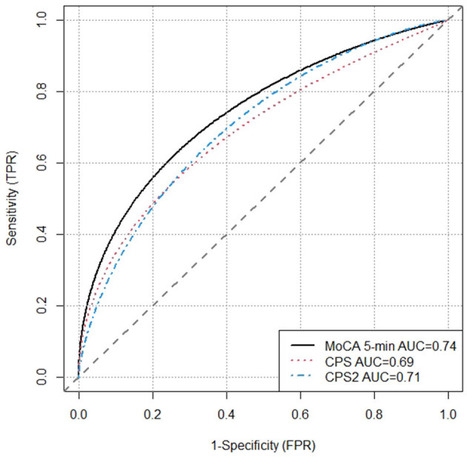
Background: Bridging scores generated from different cognitive assessment tools is necessary to efficiently track changes in cognition across the continuum of care. This study linked scores from the Montreal Cognitive Assessment-5 min (MoCA 5-min) to the interRAI cognitive Performance Scale Read the full article at: pubmed.ncbi.nlm.nih.gov
|
|
Scooped by
Servicio de Geriatría
May 30, 2021 1:30 AM
|
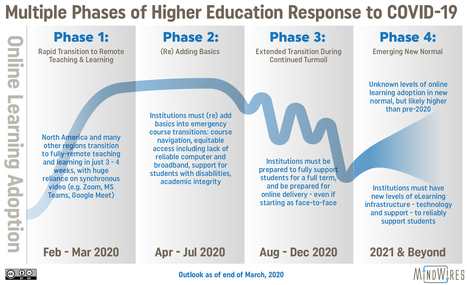
Kevin Kelly: What can we do now and what should prepare for for Fall 2020 and beyond with COVID-19 response? #MindWiresOnline Read the full article at: philonedtech.com
|
|
Scooped by
Servicio de Geriatría
May 28, 2021 11:54 PM
|
From the editor Happy New Year to all. It is pleasing to see how interRAI instruments are implemented across multiple situations which confirms the versatility of our systems. This newsletter also inc Read the full article at: myemail.constantcontact.com
|
|
Scooped by
Servicio de Geriatría
March 20, 2021 3:36 AM
|
Spasticity is a common movement disorder that arises from trauma or disease affecting the central nervous system. Untreated spasticity can result in limitations in completing activities of daily living, painful limb contractures, and other conditions associated with loss of mobility. In the long-term care setting, this treatable condition is prevalent, yet often unrecognized likely because of a lack of spasticity-trained practitioners.
A recently published spasticity referral tool holds promise for addressing the underdiagnosisof spasticity in the long-term care population.
Read the full article at: www.jamda.com
|
|
Scooped by
Servicio de Geriatría
December 28, 2020 6:27 PM
|
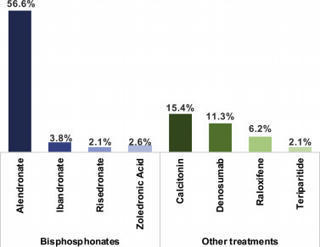
Clinicians struggle with whether to prescribe osteoporosis medications for fracture
prevention for older nursing home (NH) residents with dementia, given the lack of
evidence in this population. To better understand real-world clinical practice, we conducted a retrospective cohort study examining...
|
|
Scooped by
Servicio de Geriatría
December 28, 2020 11:21 AM
|
Frailty measures from the interRAI CA identified patients at higher risk for death, hospital admission and perceived need for CGA. In jurisdictions where the CHESS-CA and AUA are already built into the electronic home care platform, such as Ontario, patients identified as high risk should be prioritized for proactive referral and care planning, and may benefit from greater involvement of primary care and other health professionals in the circle of care.
|
|
Scooped by
Servicio de Geriatría
July 18, 2020 11:03 AM
|
John P. Hirdes, Anja Declercq, Harriet Finne-Soveri, Brant E. Fries, Leon Geffen, George Heckman, Terry Lum, Brigette Meehan, Nigel Millar and John N. Morris | Five major changes to long-term care can protect the elderly from the ravages of infectious disease and provide a greater quality of...
|
|
Scooped by
Servicio de Geriatría
May 14, 2020 2:30 PM
|
OBJECTIVES To compare the diagnostic accuracy of the Identification of Seniors at Risk, the Flemish version of Triage Risk Screening Tool, and the interRAI Emergency Department for predicting prolonged emergency department (ED) length of stay, hospitalization (following index ED stay), and unplanned ED readmission at 30 and 90 days among older (aged ≥70 years) community-dwelling adults admitted to the ED.
|
|
Scooped by
Servicio de Geriatría
April 11, 2020 7:20 AM
|
Download this DIVERT Scale SQL script and share with your IM/IT staff to generate reports to target patients using based on their most recent interRAI-HC.
|
|
|
Scooped by
Servicio de Geriatría
March 11, 12:13 PM
|
¿Es posible desarrollar indicadores de calidad basados en resultados clínicos que permitan evaluar y mejorar la atención de adultos mayores frágiles hospitalizados en unidades de agudos? Los autores buscan crear un conjunto de indicadores de resultado (Outcome Quality Indicators, QI) centrados en síndromes geriátricos y función, usando datos del interRAI Acute Care Comprehensive Geriatric Assessment (AC-CGA).
|
|
Scooped by
Servicio de Geriatría
July 1, 2024 3:49 AM
|
interRAI provides a suite of standardized, validated instruments used to assess health and psychosocial well-being, and to inform person-centered care planning. Data obtained from these standardized tools can also be used at a population level for research and to inform policy, and interRAI is currently used in more than 40 countries globally.
We present a brief overview of the use of interRAI internationally within research and policy settings, and then introduce how interRAI is used within the universal public health system in Aotearoa New Zealand (NZ), including considerations relating
to Māori, the Indigenous people of NZ. Read the full article at: www.jamda.com
|
|
Scooped by
Servicio de Geriatría
November 4, 2023 1:00 PM
|
There is growing acknowledgement that the proportion of adults with serious mental illness (SMI) in nursing homes (NHs) is increasing. SMI refers to a group of mental health conditions that result in serious functional impairment or limit participation in 1 or more major life activities.1-3 At present, there are 2 federally mandated tools that capture this information: the preadmission screening and resident review
program (PASRR) and minimum data set (MDS). PASRR is a 2-step assessment completed prior to NH admission with the intent of preventing inappropriate institutionalization, whereas the MDS is a comprehensive clinical assessment of functional capacity and
medical needs measured at admission, discharge, and periodically throughout one’s stay.
Read the full article at: www.jamda.com
|
|
Scooped by
Servicio de Geriatría
October 2, 2021 11:25 AM
|
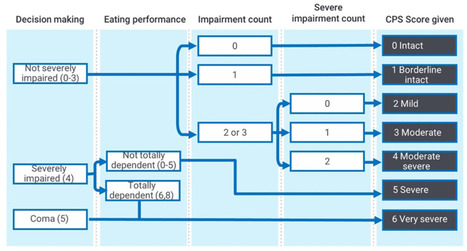
The Cognitive Performance Scale (CPS) in the widely used interRAI suite of instruments is of interest to clinicians and policy makers as a potential screening mechanism for detecting dementia. Read the full article at: pubmed.ncbi.nlm.nih.gov
|
|
Scooped by
Servicio de Geriatría
June 8, 2021 4:24 AM
|
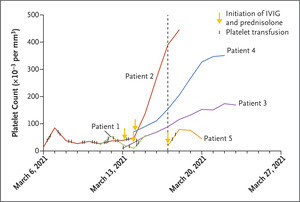
Summary We report findings in five patients who presented with venous thrombosis and thrombocytopenia 7 to 10 days after receiving the first dose of the ChAdOx1 nCoV-19 adenoviral vector vaccin Read the full article at: www.nejm.org
|
|
Scooped by
Servicio de Geriatría
May 28, 2021 11:58 PM
|
Background The understanding of appropriate or optimal care is particularly important for dementia, characterised by multiple, long-term, changing needs and the increasing expectations of people using services. However, the response of health and social care services is limited by resource constraints in most countries. This study sought to determine the optimal level, mix and cost of services for different dementia case types across the dementia continuum, and to better understand the resource allocation decision making process among health and social care professionals (HSCPs). Methods A balance of care framework was applied to the study questions and developed in three ways; firstly by considering optimality across the course of dementia and not just at the margin with residential care; secondly, through the introduction of a fixed budget to reveal constrained optimisation strategies; and thirdly through the use of a mixed methods design whereby qualitative data was collected at workshops using nominal group technique and analysed to obtain a more detailed understanding of the decision-making process. Twenty four HSCPs from a variety of disciplines participated in the resource allocation decision-making exercise. Results HSCPs differentiated between case type severity; providing 2.6 times more resources to case types with higher level needs than those with lower level needs. When a resource constraint was introduced there was no evidence of any disproportionate rationing of services on the basis of need, i.e. more severe case types were not favoured over less severe case types. However, the fiscal constraint led to a much greater focus on meeting physical and clinical dependency needs through conventional social care provision. There was less emphasis on day care and psychosocial provision when resources were scarcer following the introduction of a fixed budget constraint. Conclusions HSCPs completed complex resource allocation exercises for people with dementia, including expected differentiation across case type severity. When rationing was introduced, HSCPs did not discriminate in favour of case types with high levels of need. They did, however, support conventional home care provision over psychosocial care, although participants were still keen to provide some residual cover for the latter, especially for case types that might benefit. Read the full article at: bmchealthservres.biomedcentral.com
|
|
Scooped by
Servicio de Geriatría
March 20, 2021 4:45 AM
|
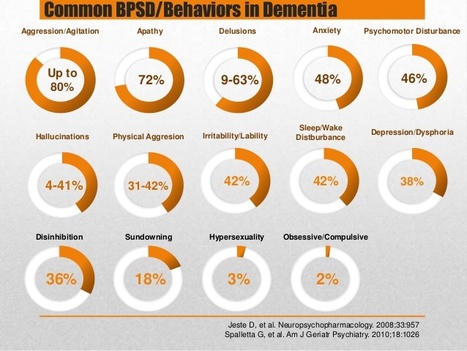
Background/Objectives Persons with dementia frequently demonstrate distress behaviors in dementia (DBD), associated with poorer outcomes. This study aimed to create a measure of DBD from routinely administered Minimum Data Set (MDS 3.0) behavior section items that demonstrated sensitivity to change, for evaluation of intervention efforts for VA Community Living Center (CLCs) residents exhibiting DBD. The Distress Behavior in Dementia Indicator (DBDI) was created as a consistent factor with internal consistency, and was related to a validated measure as predicted at baseline and post‐intervention. Sensitivity to change was demonstrated by using change score correlations (r = 0.40–0.50), effect size (d = 0.63), and reliable change indices. The DBDI is recommended for routine use in CLCs to evaluate impact of intervention effectiveness and provide quality improvement feedback. Read the full article at: agsjournals.onlinelibrary.wiley.com
|
|
Scooped by
Servicio de Geriatría
January 24, 2021 1:53 PM
|
In this cohort of older people with complex needs who had a mandated standardised interRAI-HC assessment, predictive models with 16 and 22 variables respectively provided accurate and precise risk predictions for one-year and three-month mortality. The calibratio was excellent and the AUCs, a measure of the ability of the model to discriminate between those who do and do not die, of 0.78 and 0.84 were good and were high compared with other similar models.
|
|
Scooped by
Servicio de Geriatría
December 28, 2020 11:54 AM
|
The study showed that the RUG-III system offers possibilities for identifying persons at risk of institutionalization. Interventions designed to avoid early nursing home admission can make use of the RUG-III system to optimize care planning and the allocation of services and resources. Based on the …
|
|
Scooped by
Servicio de Geriatría
September 1, 2020 2:10 PM
|
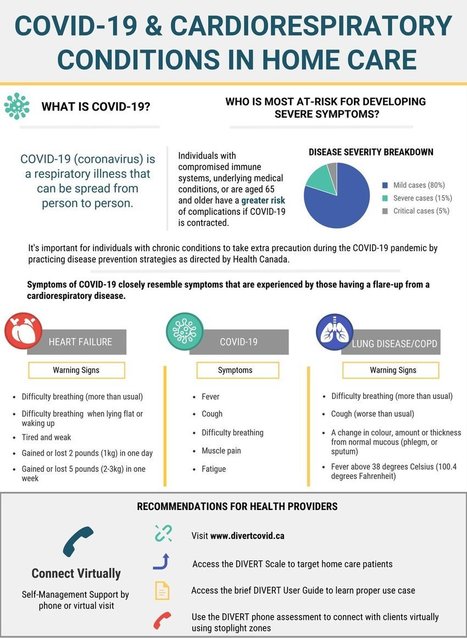
GERAS Frailty Rehabilitation at Home During COVID-19 - Full Text View.
|
|
Scooped by
Servicio de Geriatría
June 19, 2020 2:37 PM
|
To the best of our knowledge, this is the first study to predict hospital admission in older ED patients using a series of geriatric syndromes and functional assessments. We were able to predict hospital admission in older ED patients with good accuracy using the items available in the interRAI ED Contact Assessment. This information can be used to inform decision-making about ED disposition and may expedite admission processes and proactive discharge planning.
Geriatric assessment upon admission may reveal factors that contribute to adverse outcomes in hospitalized older patients. The purposes of this study were to derive a Frailty Index (FI-PAC) from the interRAI Post-Acute Care instrument (interRAI-PAC) and to analyse the predictive ability of the FI-PAC and interRAI scales for hospital outcomes. This retrospective cohort study was conducted by combining patient data from interRAI-PAC with discharge records from two post-acute care hospitals. The FI-PAC was derived from 57 variables that fulfilled the Frailty Index criteria. Associations of the FI-PAC and interRAI-PAC scales (ADLH for activities of daily living, CPS for cognition, DRS for mood, and CHESS for stability of health status) with hospital outcomes (prolonged hospital stay ≥90 days, emergency department admission during the stay, and in-hospital mortality) were analysed using logistic regression and ROC curves. The Frailty Index derived from interRAI-PAC predicts adverse hospital outcomes. Its predictive ability was similar to that of the ADLH scale, whereas other interRAI-PAC scales had less predictive value. In clinical practice, assessment of functional ability is a simple way to assess a patient’s prognosis.
|