Your new post is loading...

|
Scooped by
Beeyond
October 4, 2015 10:21 AM
|
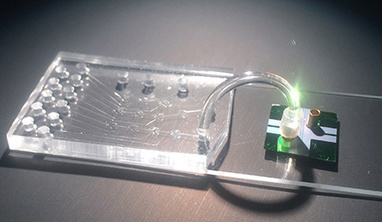
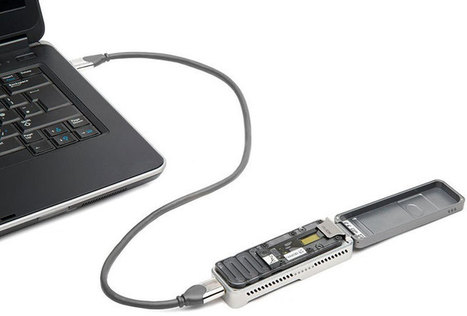
A team of researchers headed by scientists at University of California, Santa Cruz has developed a chip-based device that uses optical detection to spot Ebola and other viruses. The test identifies the RNA of the viral pathogens directly, without having to make DNA copies of the viral RNA as is done for PCR testing.
|
|
Scooped by
Beeyond
September 29, 2015 6:55 AM
|
An Australian research team is developing a nanotechnology patch that will detect disease-carrying proteins direct from your skin.
The device, once applied in the field, could remove the need for invasive blood extraction and lengthy diagnostic delays in laboratories.
Building on earlier work used to develop vaccination patches, the University of Queensland team hopes that detecting diseases such as malaria and dengue fever in the field will improve detection rates and the efficacy of drugs to counter such diseases.
|
|
Scooped by
Beeyond
September 22, 2015 8:55 AM
|
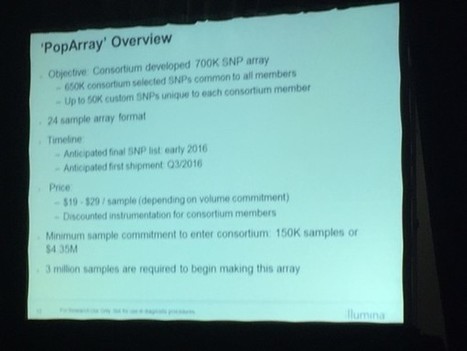
Illumina is gathering a consortium of companies and public health organizations to gather 3 million genetic samples to create a population health genomics test.
|
|
Scooped by
Beeyond
September 22, 2015 3:39 AM
|
Commercial fluorescence activated cell sorters have been highly successful in the past 40 years at rapidly and accurately aiding medical diagnosis and biological studies, but they are bulky and too expensive ($200,000 -$1,000,000) for many labs or doctors’ offices. Most significantly, these types of cell sorters can present biohazard concerns for operators and may damage cells or alter their properties, making them unfit for further study. To address these issues, researchers at Penn State have developed a new lab-on-a-chip cell sorting device based on acoustic waves.
|
|
Scooped by
Beeyond
September 15, 2015 10:24 AM
|
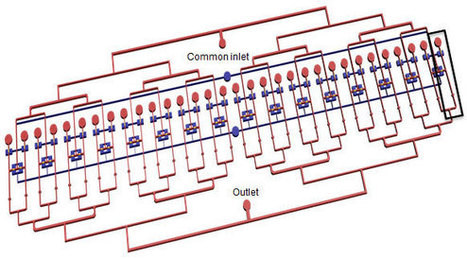
Immunoassays have been central to biomedical research and clinical diagnostics, but their use requires large sample volumes as well as expensive equipment and reagents to perform the tests. Microfluidic device have the potential to overcome these challenges, and a number of devices have been built that offer parallel processing, high sensitivity using small sample volumes, or the ability to screen for a wide number of markers. None have been able to have all three capabilities in one system, truly making microfluidics a viable option over traditional equipment.
|
|
Scooped by
Beeyond
September 11, 2015 6:06 PM
|
With increasing clinical applications, the global market for flow cytometry is experiencing a rise in active partnerships. The primary reason for this is the demand in underdeveloped nations to quantitate CD4 cell markers in human immunodeficiency virus (HIV) patients.
New analysis from Frost & Sullivan, Analysis of the Global Flow Cytometry Market (http://www.frost.com/nf0e), finds the market earned revenues of $2.50 billion in 2014 and estimates this to reach $3.52 billion in 2018 at a compound annual growth rate of 8.9 percent.
|
|
Scooped by
Beeyond
September 11, 2015 5:15 PM
|
A typical preliminary test for TB includes culturing the samples for at least 1-2 weeks in a lab, followed by examination under a fluorescence microscope. The lack of rapid, accurate, and inexpensive point-of-care tools for detecting low amounts of M. Tuberculosis is a critical bottleneck in early diagnosis and appropriate treatment.
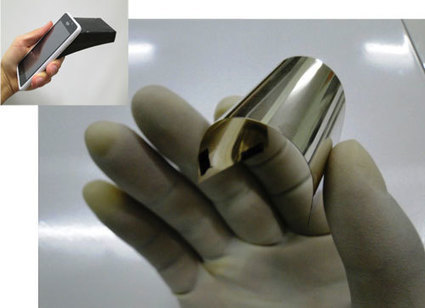
A team of researchers from Clemson University and Sri Sathya Sai Institute of Higher Learning has collaboratively developed a rapid and flexible nano-biosensor for diagnosing TB in early stages using smart phones. They reported their findings in the September 8, 2015 online edition of Physical Chemistry Chemical Physics ("Flexible Ag-C60 nano-biosensors based on surface plasmon coupled emission for clinical and forensic applications").
|
|
Scooped by
Beeyond
August 14, 2015 11:13 AM
|
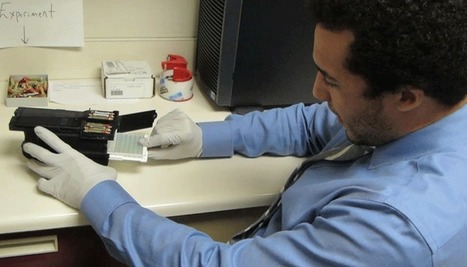
The device has room for 96 samples that are placed within an array of tiny wells. A set of LED lights illuminates the samples, while optic fibers below each sample direct the light to pass to the phone’s camera in tight beams. The phone is used to take pictures of the incoming light using a special app, which then automatically uploads these to remote servers that have the horsepower to process the images. Once that is done, the results are returned back to the app and displayed to the user. The whole process takes only a few minutes, with the results coming back from the servers within about only one minute.
|
|
Scooped by
Beeyond
August 6, 2015 9:17 AM
|
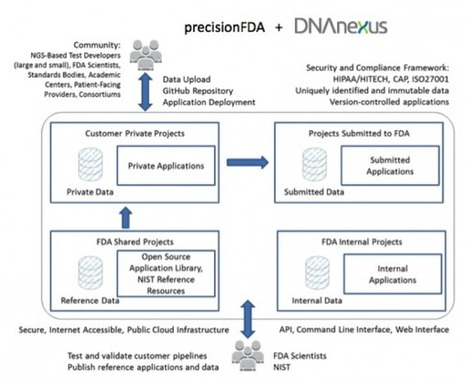
The new platform is meant to help researchers evaluate next generation sequencing technologies used in diagnostic tests. There can be open collaboration around the tests’ accuracy and reproducibility. It’ll also help the scientific community crowdsource reference datasets, and importantly, help guide federal regulators in building out policy for NGS technology.
|
|
Scooped by
Beeyond
August 3, 2015 6:46 AM
|
Small lab-on-a-chip devices may turn out to be excellent candidates for analyzing patient sputum because they require small sample sizes and can perform a number of steps automatically without exposing the operator to the potentially infectious samples. The problem is that sputum is hard to work with and has to be liquefied before tests can be performed on the cells within, particularly when using small microfluidic devices that are easily clogged.
|
|
Scooped by
Beeyond
July 22, 2015 10:40 AM
|
Although Theranos has operated largely in stealth mode since founder Elizabeth Holmes started the blood-testing biotech venture more than a decade ago, recent government approvals have shed light on the company's roadmap.
A few weeks ago, the Food and Drug Administration granted approval to Theranos' innovative finger-prick method, which requires mere drops of blood as opposed to vials to run complex tests. The agency also specifically gave its blessing to Theranos' test for the herpes simplex 1 virus.
|
|
Scooped by
Beeyond
July 13, 2015 11:51 AM
|
Diagnostic apps, wearables and bedside devices are about to go mainstream – but will they empty the doctor's waiting room, or send people stampeding to it?
|
|
Scooped by
Beeyond
July 12, 2015 6:34 AM
|
For the past year and a half, the Ebola virus has affected thousands, claiming over 11,000 lives to date. The disease is now considered contained, and Liberia has been free of cases for seven weeks, until a new case emerged this morning. The need to employ constant vigilance and surveillance remains high.
|
|
|
Scooped by
Beeyond
October 2, 2015 4:13 AM
|
The Montreal team, working with a scientist from Rome, have developed a straightforward, yet highly selective assay for rapid detection of proteins in whole blood, by taking advantage of steric hindrance effects on pairing of complementary DNA strands, as reported in the September issue of the Journal of the American Chemical Society.
|
|
Scooped by
Beeyond
September 24, 2015 1:23 PM
|
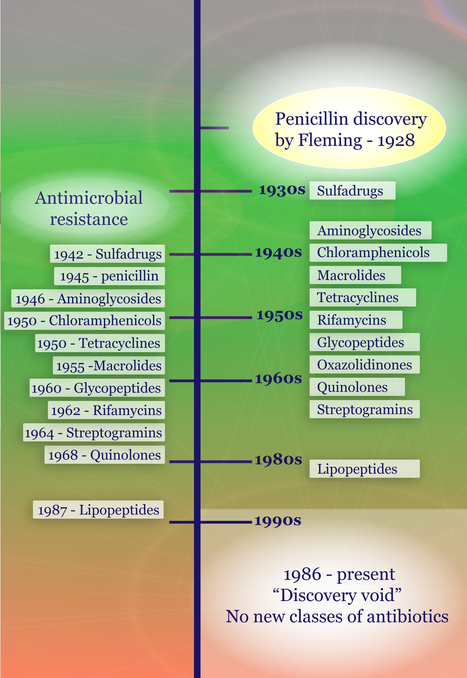
London, UK (Scicasts) — For over 80 years humanity has enjoyed the priviledge of antibiotic therapy. However, as the recent WHO report points out, bacteria have developed resistance to most of the current drugs. The latest review commissioned by UK Prime Minister David Cameron sets out an action program, whereas here we present an overview of the antibiotics timeline and the latest developments in the sector.
|
|
Scooped by
Beeyond
September 22, 2015 8:51 AM
|
Urinary tract infections (UTIs) are one of the most common indications for antibiotic use. While the majority of UTIs are mild, there are cases in which the infection spreads to the upper urinary tract, kidneys, or even bloodstream, the latter of which may be fatal. In such cases, timely and accurate antibiotic treatment is imperative. However, standard bacterial culturing requires two days to grow the bacteria and test their antibiotic susceptibility. Accordingly, broad spectrum antibiotics are often prescribed, increasing the probability of over-treatment and antibiotic resistance.
|
|
Scooped by
Beeyond
September 21, 2015 9:31 AM
|
Molecular diagnostics is a tool to improve clinical outcomes and medical decisions. Molecular diagnostic includes all tests used to identify a disease, by analyzing molecules such as DNA, protein or RNA in a fluid or tissue. Nowadays molecular diagnostics is used in early detection of infectious diseases, cancer and genetic disorder, by using molecular and genetic technologies. Molecular diagnostics is also used in detection of abnormalities in pre-natal stage. In addition, molecular diagnostic kits are used in pharmacogenetics testing and blood donor screening.
|
|
Scooped by
Beeyond
September 14, 2015 6:15 AM
|
|
|
Scooped by
Beeyond
September 11, 2015 6:04 PM
|
A range of dynamic trends are pushing market growth and company valuations.
|
|
Scooped by
Beeyond
August 24, 2015 5:16 AM
|
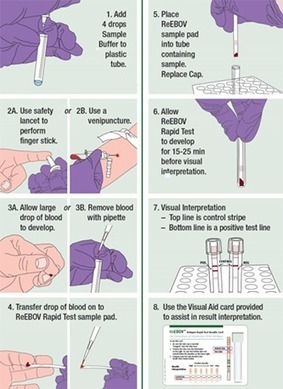
The tool works like a home pregnancy test and should help doctors assess potential disease outbreaks, according to the developers.
Standard approaches for testing viral infections accurately and reliably require technical expertise and expensive equipment such as Polymerase chain reaction (PCR) and enzyme-linked immunosorbent assay (ELISA).
But in developing areas far away from big hospitals and laboratories with such equipment, the immediate concern when fever strikes is to quickly establish whether the outbreak is a serious disease that might need quarantine or a less severe illness like the common flu.
|
|
Scooped by
Beeyond
August 9, 2015 7:43 AM
|
Adopted by over 120 genomic labs worldwide, GenoLogics’ Clarity LIMS™ software enables lab efficiencies and improved sample throughput with increased accuracy, fast turnaround, sample traceability, and preconfigured instrument integrations. GenoLogics has a number of current partnerships with Illumina, including the recently launched Clarity LIMS X, an edition of its industry-leading laboratory informatics platform that is optimized for use with Illumina SeqLab to address population-scale genomics workflows.
|
|
Scooped by
Beeyond
August 4, 2015 11:34 AM
|
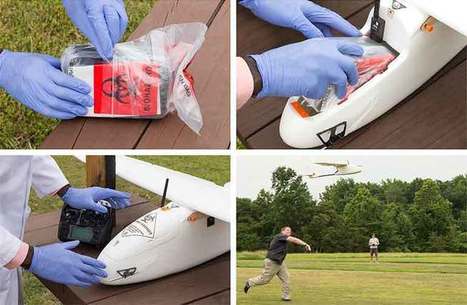
Drones, also known as unmanned aerial systems, will change the face of many industries and may in many ways affect how our society functions. They can give us a new perspective on the world around us and go places that are hard to reach, dangerous, or challenging to pass through. For medicine, drones may end up ferrying diagnostic tests, drugs, and life saving devices to patients far away from clinical facilities that require urgent care. Now a new study published in journal PLOS ONE aims to answer whether drones are a practical way of transporting lab specimens for analysis to distant clinics.
|
|
Scooped by
Beeyond
August 1, 2015 8:58 AM
|
The push towards creating handheld diagnostic devices and apps has led at least one telemedicine company, HealthSpot, to develop kiosks that allow patients to use these devices to generate data as a physician looks on remotely, from checking their ears for infections to getting vital signs. It was also an idea a Philadelphia area cardiologist had for a kiosk he rented from Walmart.
Israeli telemedicine startup Tyto Care is giving this approach its own signature and has raised $10 million in a Series B financing round led by strategic investor Cambia Health Solutions.
OrbiMed Advisors, Walgreens, Fosun Pharma and LionBird have also invested in TytoCare.
|
|
Scooped by
Beeyond
July 22, 2015 9:53 AM
|
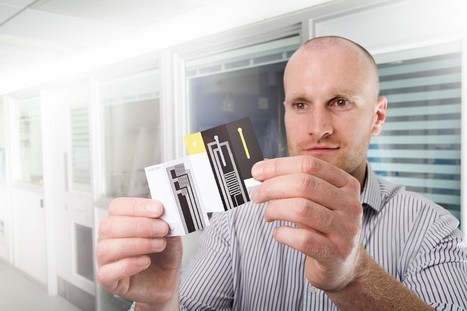
Think of it as origami that could save your life. A sheet of paper can be turned into a personalised diagnostic toolkit using nothing more than an inkjet printer and a few well-placed folds.
Developed by UK technology firm Cambridge Consultants, the system can test bodily fluids for medical conditions ranging from influenza to heart disease. It could make it easier and cheaper to diagnose populations at risk of infection.
|
|
Scooped by
Beeyond
July 12, 2015 6:38 AM
|
This week, at the World Congress of Dermatology, a smartphone powered mole tracking device is being introduced by MetaOptima, a Vancouver, B.C. firm. The MoleScope is a small attachment that clips over an iPhone’s built-in forward facing camera, which acts to illuminate and magnify suspected moles.
The MoleScope comes with its own app that is used to capture the images and to pass them (HIPAA compliant) to your dermatologist for professional review. The app can be set to remind the patient to take snapshots at particular intervals, allowing for close monitoring of suspected moles that may turn out to be melanoma tumors.
|